
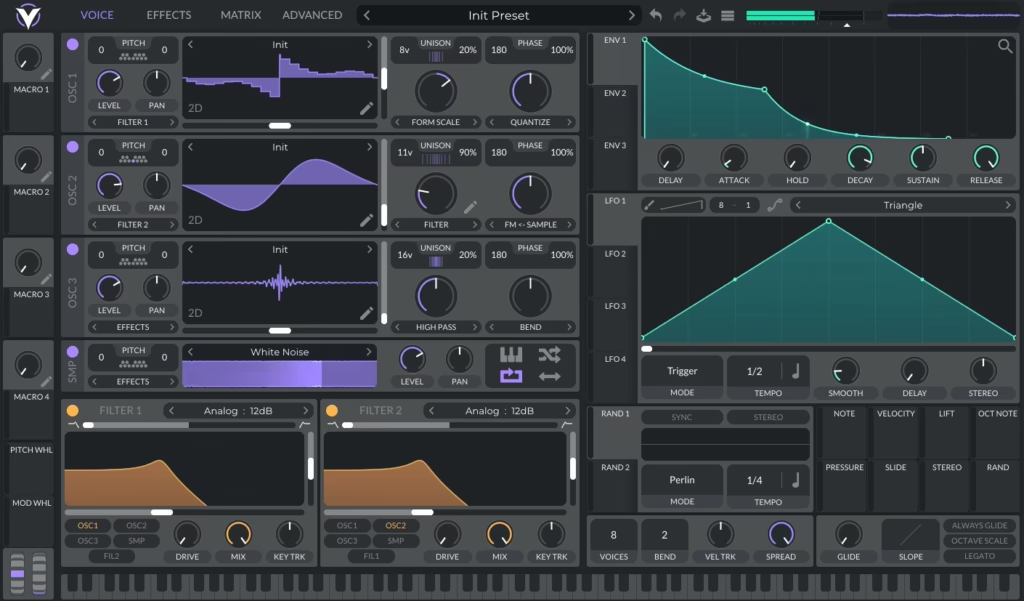
Vital has carved out one of the most unusual positions in the modern synth plugin world, sitting as a free, spectral-warping wavetable synthesizer that genuinely competes with paid plugins costing several hundred dollars. Created by Matt Tytel, who previously developed the well-regarded Helm synthesizer, Vital arrived in 2020 and quickly earned a reputation among producers for delivering professional-grade wavetable synthesis without the usual price tag that accompanies serious sound design tools.
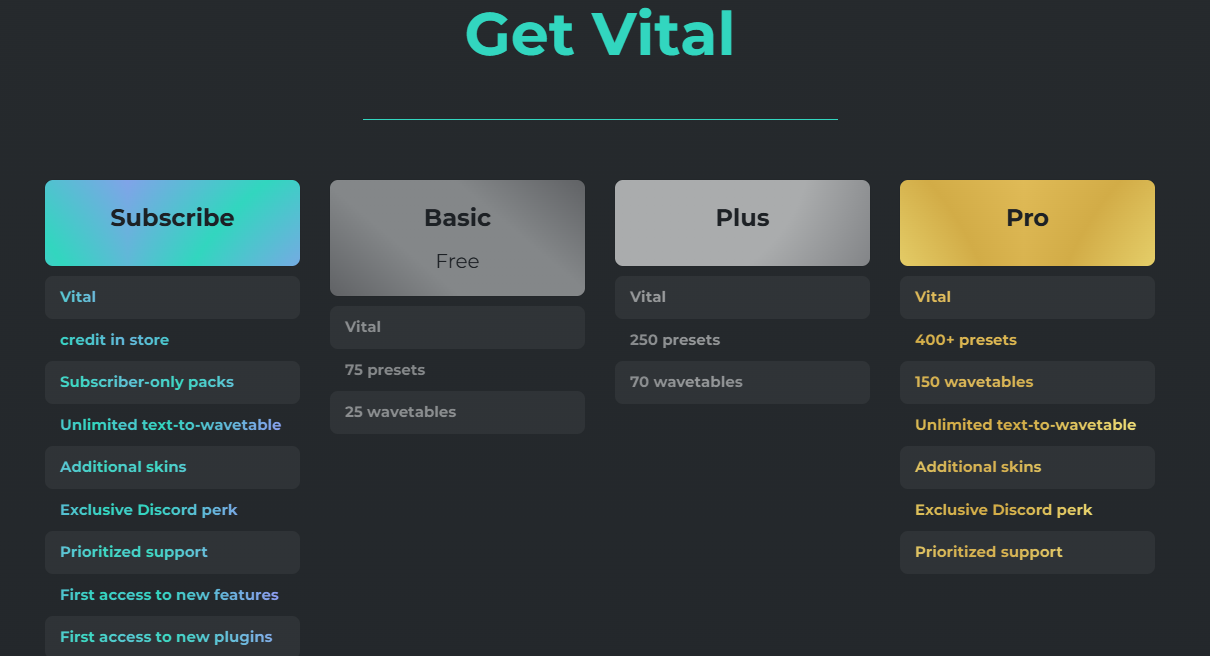
For context, the synth is available in multiple tiers ranging from a fully-featured free version through to Plus, Pro, and Subscriber plans that unlock additional factory content, presets, and wavetables. What’s genuinely unusual is that the free version isn’t a crippled demo with missing features, it’s the actual synthesizer with the same engine and capabilities as the paid versions.
Is Vital worth it? I’d say absolutely yes, and that answer holds whether you’re picking up the free version or upgrading to one of the paid tiers. The combination of spectral wavetable editing, drag-and-drop modulation, and CPU-efficient processing makes it one of the most capable wavetable synths you can get at any price, let alone free.
The Rise of Vital
Vital didn’t arrive as a marketing push from a major plugin company, it emerged as a one-developer project that challenged the dominance of paid wavetable synthesizers by offering something genuinely comparable at no cost.
The synth runs as a VST3, AU, LV2, and AAX plugin across Mac, Windows, and Linux, with native Apple Silicon support that has been solid from early in the plugin’s lifecycle. CPU usage remains impressively light even when you’re running multiple instances with complex modulation, which matters more than it sounds like it should when you’re building dense sessions with multiple synth parts.
“A free synthesizer that genuinely competes with paid plugins costing hundreds of dollars.”
The pricing tiers break down like this:
- Free (Basic):
You get a full synthesizer with limited factory presets and a smaller wavetable library, though the engine itself is identical to the paid versions.
- Plus ($25):
Expanded preset library and additional wavetables beyond the free version.
- Pro ($80):
Essentially, it’s a complete factory content including all presets, wavetables, and sample content.
- Subscriber ($5/month):
Ongoing access to new content as it’s added, plus all Pro-tier content.
What makes the free version particularly valuable is that third-party preset packs and wavetables work identically across all tiers, meaning the free version can be expanded significantly through external content.
Inside the Interface
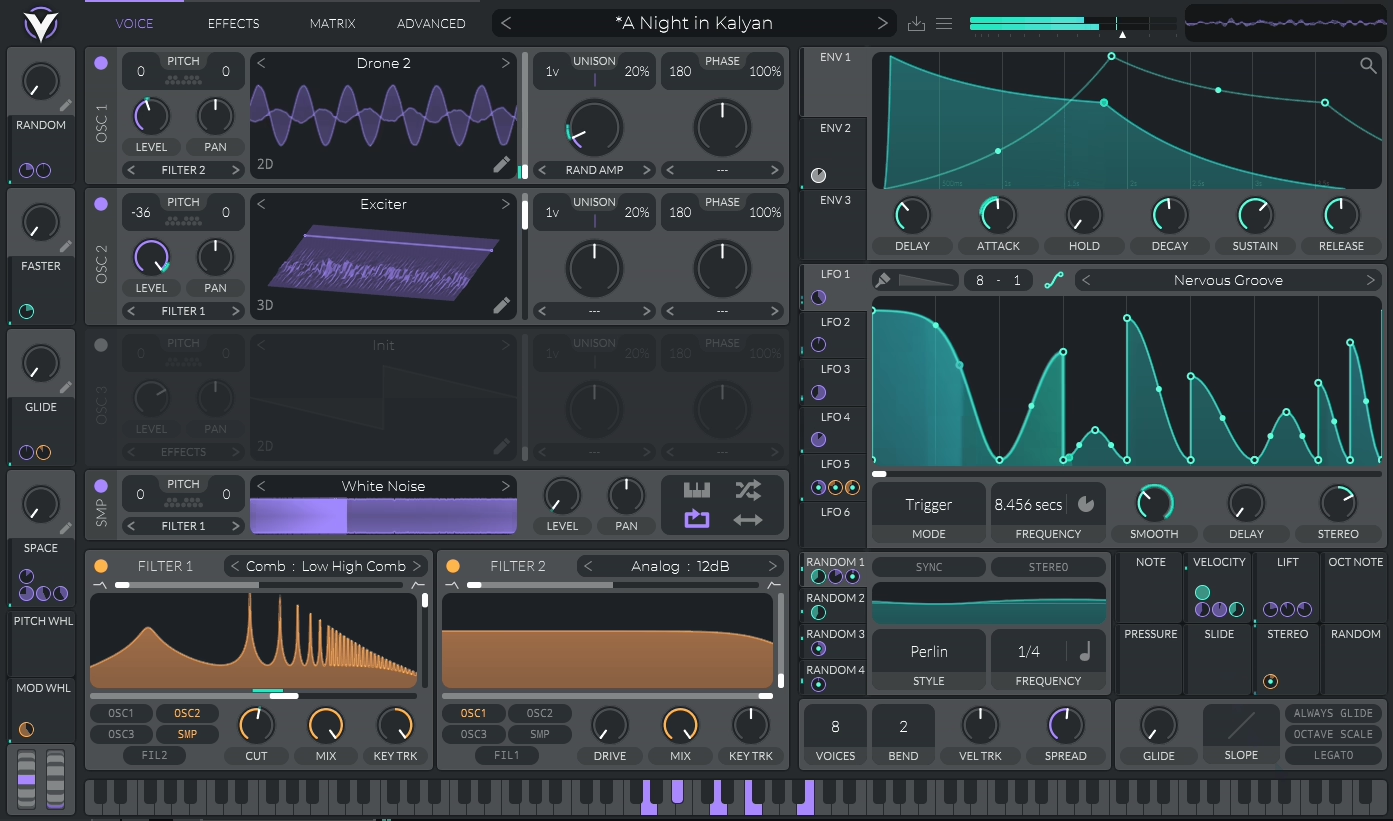
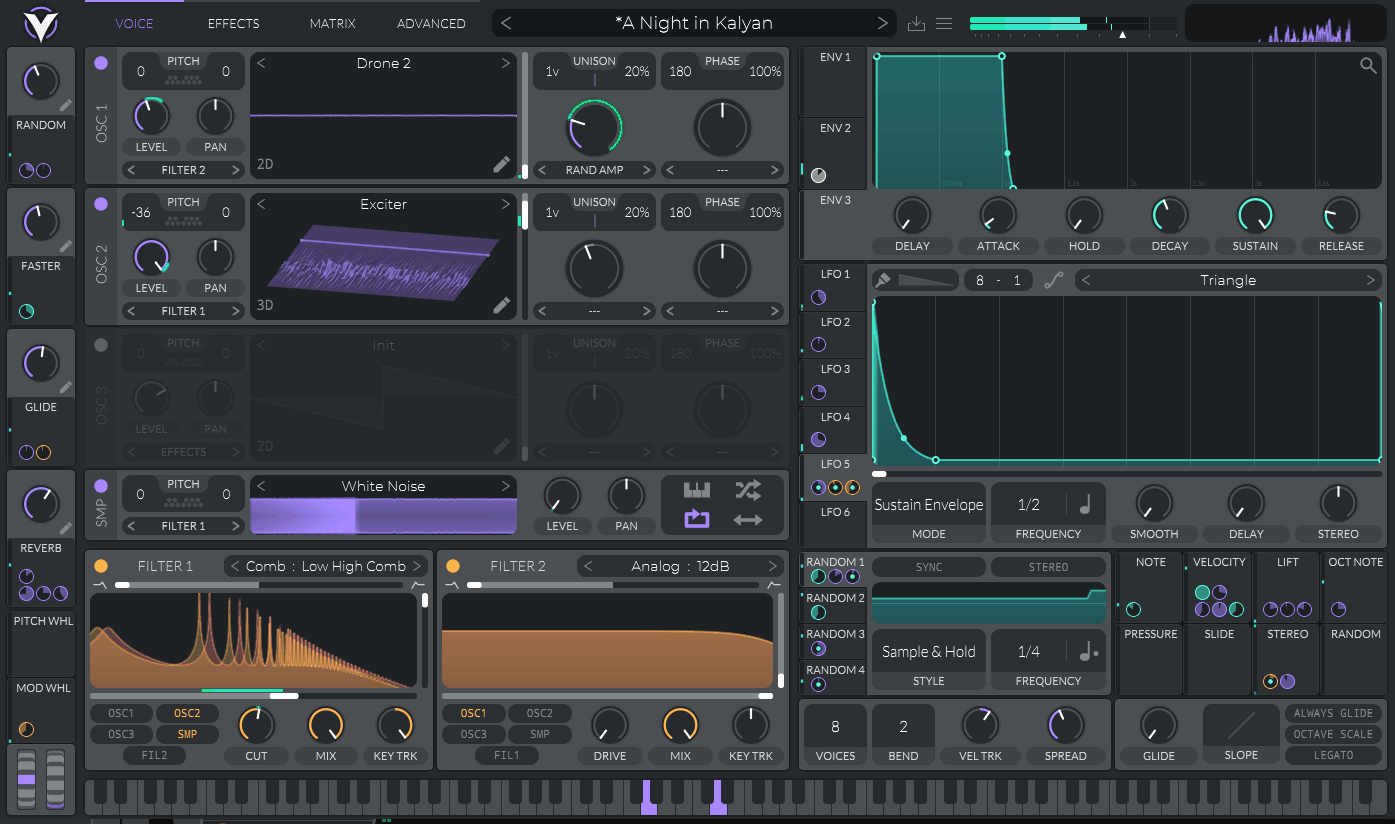
The interface is clean, modern, and organized around three main tabs that keep the most important controls accessible without overwhelming you with knobs and menus.
At the top sits the oscillator and wavetable editor section, in the middle the filter and effects routing, and at the bottom the modulation matrix and envelope/LFO controls. The whole layout is designed to make signal flow visually obvious, which genuinely helps when you’re designing sounds from scratch rather than just browsing presets.
The plugin window is fully resizable, which works properly across 4K monitors without the soft-text problems some older plugins have on high-resolution displays. Each oscillator gets its own dedicated editing area where you can visualize and modify wavetables directly, including the ability to draw custom waveforms and apply spectral transformations in real time.
Modulation sources like envelopes and LFOs display graphically while they’re running, and any parameter receiving modulation shows a circular indicator around its knob showing the modulation depth and direction. Each modulation source gets its own color, and those colors carry through to every parameter being modulated, making it genuinely easy to trace what’s affecting what in complex patches.

Oscillators, Filters & FX
This is where Vital earns its reputation, and I want to walk through the core signal path that makes this synth so capable.
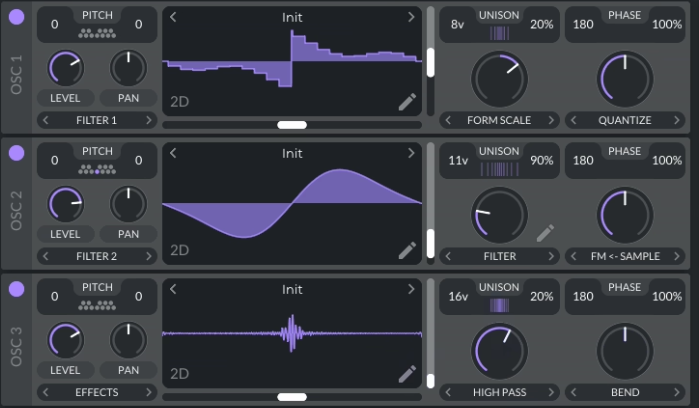
- Three Wavetable Oscillators:
Each oscillator can play custom or factory wavetables with independent pitch, phase, and spectral controls. The Warp modes include bend, sync, pulse width, and formant shifting, which expand the sonic range far beyond simple wavetable playback and let you morph between dramatically different tones with a single parameter.
- Sample Oscillator:
Beyond the three main oscillators, there’s a dedicated sample playback section that can import your own audio files and play them alongside the wavetables, useful for combining synthetic and organic textures in the same patch.

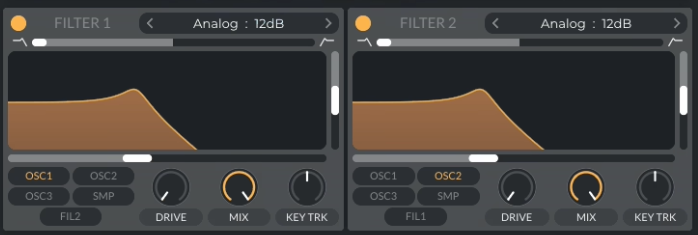
- Two Filter Slots:
Each filter slot offers multiple filter types including ladder, SVF, phaser, comb, and formant options, plus specialized modes for more creative filtering work. The filters can be arranged in series or parallel, giving you flexibility in how they shape the oscillator signal.
- Modulation Section:
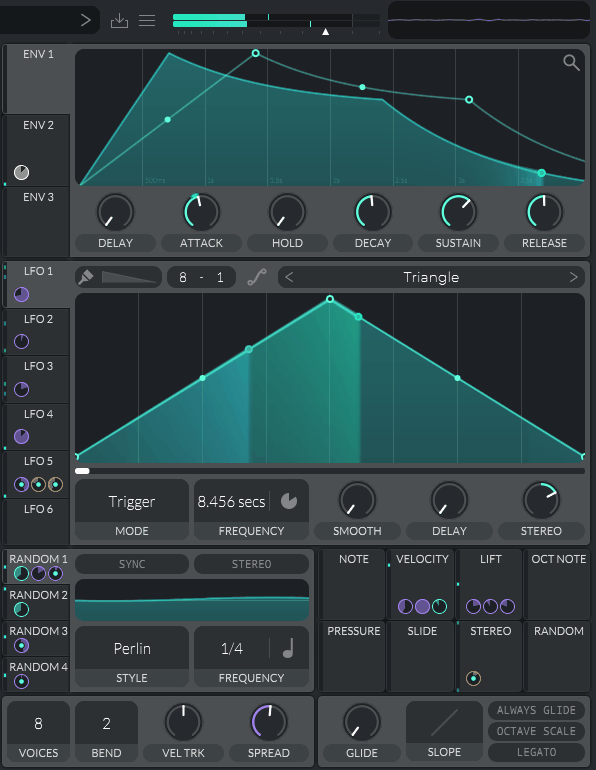
Vital packs in 6 envelopes, 8 LFOs, 4 random sources, and 4 macro controls in a dedicated modulation area at the bottom of the interface. The LFOs feature a custom waveform editor where you can draw your own shapes beyond the standard sine/triangle/square options, and all modulation sources route to parameters via drag-and-drop, with each connection displaying a visual ring around the target knob showing modulation depth and polarity.
The first bullet covers how oscillators interact with each other (cross-modulation), the second bullet covers the dedicated modulation section with LFOs, envelopes, and routing. They describe different parts of the synth, so both belong in your Oscillators, Filters & FX section.
- Effects Chain:
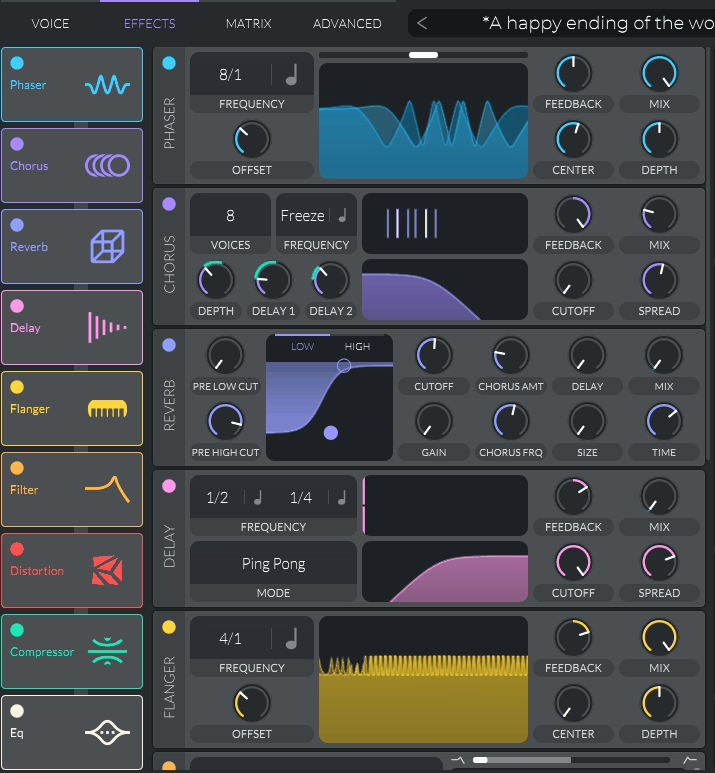
Built-in effects include chorus, compressor, delay, distortion, EQ, filter, flanger, phaser, and reverb, all with the same modulation routing capability as the rest of the synth. You can reorder them freely and modulate any parameter within them.
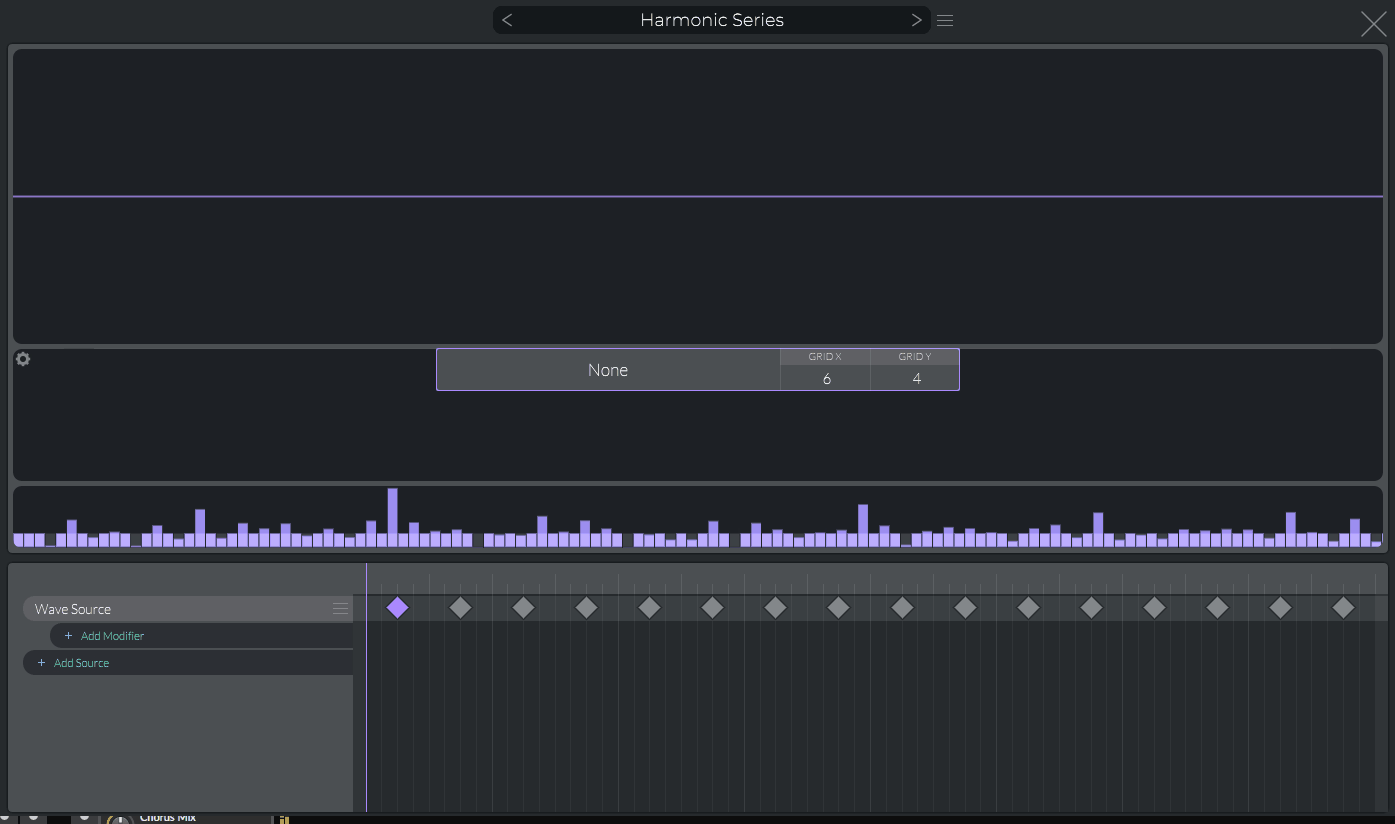
The spectral editing for wavetables is where Vital genuinely does something most other synths don’t, letting you manipulate wavetables in the frequency domain rather than just the time domain. This opens up harmonic manipulation that’s hard to achieve with conventional wavetable editors.
- Oscillator Cross-Modulation:
The three wavetable oscillators can modulate each other via FM (frequency modulation), RM (ring modulation), and Sync, which opens up aggressive metallic and harmonically complex tones alongside the normal wavetable playback. This is controlled through dedicated destination selectors on each oscillator rather than a separate modulator section.
Drag-and-Drop Modulation
The modulation system is probably Vital’s single most impressive feature, and it’s worth explaining why because it affects every aspect of how you use the synth.
Instead of navigating menus or typing in destinations, you literally drag a modulation source onto any parameter you want to modulate, and the connection is made instantly. The parameter gets a visual ring around its knob showing the modulation depth, which you can adjust by dragging on the ring itself.
“Instead of navigating menus or typing in destinations, you literally drag a modulation source onto any parameter.”
- Three Envelopes:
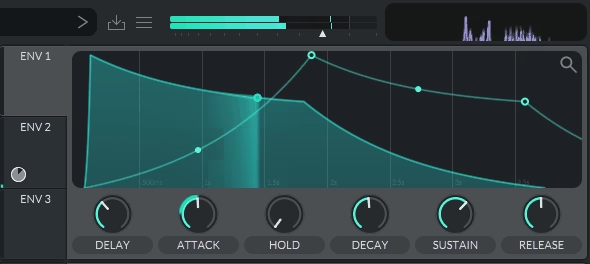
Standard ADSR-style envelopes with additional curve and loop options, any of which can be dragged to any parameter in the plugin.
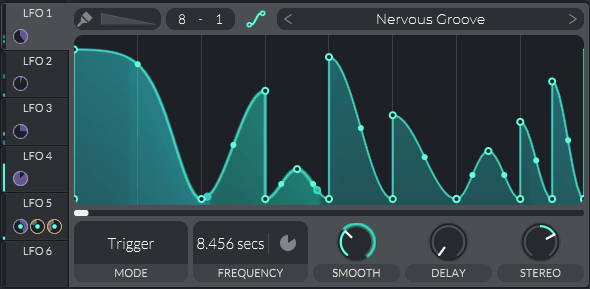
- Six LFOs:
Customizable low-frequency oscillators with editable waveforms, tempo sync, and various trigger modes. The LFO editor lets you draw custom shapes beyond the standard waveforms, which opens up rhythmic modulation patterns that static waveforms can’t produce.
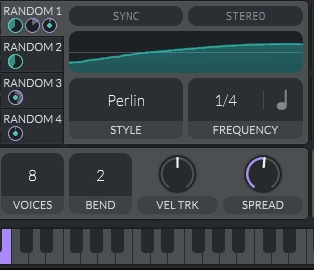
- Random Sources:
Sample-and-hold and perlin noise modulators for introducing controlled randomness into patches, particularly useful for evolving pad sounds where you want subtle movement without obvious cyclic patterns.
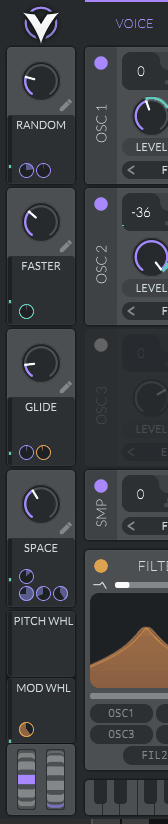
- 4 Macro Controls:
Assignable macro knobs that can control multiple parameters simultaneously, essential for creating expressive performance controls on complex patches.
- MPE and Performance Inputs:
The plugin supports MPE controllers, polyphonic aftertouch, and the usual MIDI CC inputs as modulation sources, which matters for anyone playing expressive hardware controllers alongside the synth.
The modulation matrix display shows every active modulation connection in a list view, letting you adjust depths and ranges numerically when drag-based adjustment isn’t precise enough.
Presets & Sound Design Potential
The factory preset content varies by tier, but the Pro version includes over 400 presets covering a broad range of genres and sound categories, with dedicated folders for bass, lead, pad, pluck, keys, and percussion sounds, each with multiple subcategories covering different sonic approaches within those types.
Beyond the factory content, the community around Vital is substantial, and there are both free preset packs from independent sound designers and commercial preset libraries that work across all tiers of the synth. This matters because the free version can be expanded dramatically through external content, which isn’t something most free plugins support.
The Pro version includes extensive factory wavetables covering analog-style, digital, granular, and experimental textures, plus you can import your own wavetables in standard formats. The Pro tier also adds factory samples that load into the Sample Oscillator for combining with wavetable synthesis, which opens up hybrid patches that blend synthetic and organic sources in the same voice.
“The community around Vital is substantial, with both free and commercial preset libraries covering every imaginable sound design approach.”
The sound design potential is genuinely deep because of how flexible the signal path and modulation systems are. You can build patches that range from clean analog-style leads through to complex evolving soundscapes that would be difficult to achieve in more conventional synthesizers, and the spectral wavetable editing means you’re not limited to the factory wavetables when you want something unusual.
Who Should Use It?
Vital works for a surprisingly broad range of producers, though it fits some use cases better than others.
- Electronic music producers:
The wavetable engine and modulation capabilities make Vital exceptionally well-suited to EDM, dubstep, future bass, and trap production where evolving, morphing synthesizer sounds are central to the genre.
- Film and game composers:
The sound design potential extends well into cinematic territory, particularly for composers who need evolving textures and unusual tonal material that doesn’t exist in orchestral libraries.
- Budget-conscious producers:
The free version is genuinely usable for professional work, making it one of the best plugins to recommend to producers who can’t justify paid wavetable synths yet.
- Sound designers:
The spectral wavetable editing and deep modulation routing give sound designers tools that match or exceed what’s available in more expensive plugins.
Who wouldn’t benefit as much? Producers working primarily in acoustic genres where wavetable synthesis isn’t central to their sound, or producers who specifically want vintage hardware emulation rather than modern digital synthesis. For those use cases, dedicated analog-modeled synths make more sense.
Closing Notes
Vital sits in a genuinely unusual position in the plugin market, offering free access to professional-grade wavetable synthesis that matches or exceeds many paid alternatives. The combination of spectral editing, drag-and-drop modulation, efficient CPU usage, and cross-platform support makes it one of the most practically useful synthesizers available at any price.
For anyone exploring wavetable synthesis or looking to expand their sound design toolkit, downloading the free version is genuinely a no-brainer because there’s no financial commitment and the synth itself is fully functional. Upgrading to Plus or Pro makes sense when you’ve used the free version enough to know you want the expanded content library.
What Matt Tytel has built here is remarkable, both as a piece of software and as a business model that proves free doesn’t have to mean compromised. Vital has earned its place as one of the essential synthesizers of the current generation of plugins, and it’s a genuine testament to what one dedicated developer can accomplish when they’re focused on building something excellent rather than maximizing short-term revenue.
Check here: Matt Tytel Vital Synth

Hello, I’m Viliam, I started this audio plugin focused blog to keep you updated on the latest trends, news and everything plugin related. I’ll put the most emphasis on the topics covering best VST, AU and AAX plugins. If you find some great plugin suggestions for us to include on our site, feel free to let me know, so I can take a look!