
Two names come up constantly when producers start building a serious plugin collection, and for good reason. Native Instruments and Arturia have both been shaping the software instrument world for decades, and both have reached a point where either one could realistically fill out a complete production setup on its own.
The real question isn’t which one wins some kind of head-to-head competition, because they’re genuinely different in how they approach things and what they’re built for. It‘s more about understanding what each brand is actually strong at, where the gaps are, and which one lines up with how you work and the music you’re making.
I’ve spent a lot of time with both brands, and I want to give you a real, grounded look at what each brand brings to the table so you can make a smarter decision about where to put your money.
Quick Comparison
| Category | Native Instruments | Arturia |
|---|---|---|
| Sound Identity | Modern, broad, genre-spanning | Warm, analog, vintage-rooted |
| Flagship Synth | Massive X, Reaktor 6 | Pigments, V Collection 11 |
| Sampler | Kontakt 8 (industry standard) | Limited (Pigments sample engine) |
| Effects | Guitar Rig 7, Raum, Replika XT | FX Collection (hardware modeled) |
| Bundle Entry | $599 (Komplete 15 Standard) | $499 (V Collection 11 Pro) |
| Free Tier | Komplete Start | Analog Lab Play |
| Hardware | Kontrol keyboards, Maschine | KeyLab, AstroLab, MiniFuse |
| Update Policy | Paid major versions | Free major updates (Pigments) |
| Disk Space | 300 GB to 1+ TB | ~20 GB (V Collection) |
| Best For | Scoring, sampling, beatmaking | Electronic music, sound design |
| Learning Curve | Steeper overall | More approachable |
Get the Free Plugin Starter Kit
The genuinely useful free DAWs and plugins worth installing. No filler. Straight to your inbox.
Sound Character
The most fundamental difference between these two brands is the direction they’re aiming for sonically, and I think getting this straight in your head saves a lot of confusion when comparing individual plugins.
Arturia
- Arturia’s Analog Identity
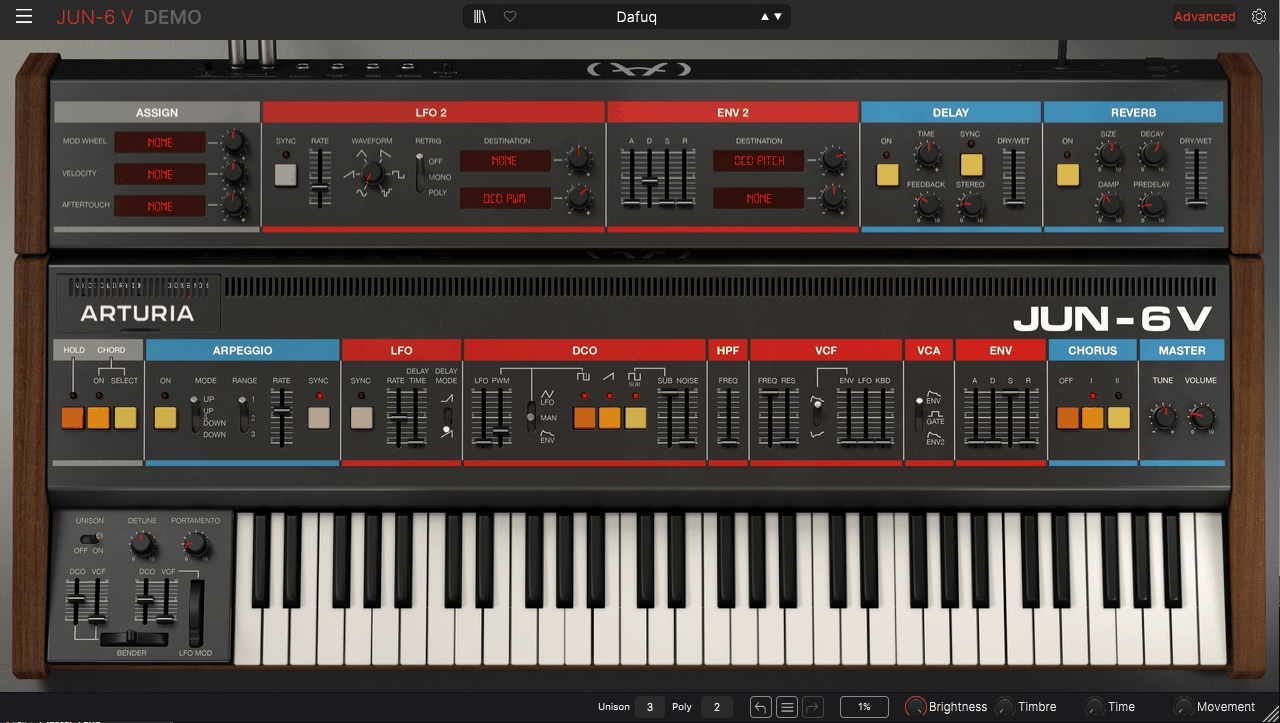
Arturia has a warm, analog-first character that runs through almost everything they make. Their synthesis and emulation work is built on TAE (True Analog Emulation) technology, which models circuits at a component level rather than approximating behavior mathematically at the surface.
What that means in practice is that when you push the filter on the Mini V, it saturates the way a Moog ladder filter actually saturates, not just the way a theoretical model predicts it should. When you run the chorus on the Jun-6 V, it produces the same subtle stereo widening you’d hear from the physical bucket-brigade circuit.
That attention to component behavior rather than just output creates a character that feels organic, and I think this is Arturia’s single biggest strength across the entire catalog.
Native Instruments
- Native Instruments’ Broader Palette
Native Instruments has a wider and harder-to-summarize sonic identity because their catalog spans such different territory. Kontakt instruments prioritize realism and accuracy in the sample domain, while Massive X leans toward dense, harmonically complex, and modern rather than warm and vintage.
Reaktor can sound like virtually anything depending on what you build or load into it. Guitar Rig covers amp character and analog-style processing, while Raum and Replika XT each have their own distinct voices.
NI doesn’t have one sound so much as a large, varied catalog where each tool stands on its own. That’s genuinely useful if you work across multiple genres, but it does mean you’re assembling a palette rather than developing the kind of consistent house sound that Arturia’s warmth tends to encourage.
Flagship Plugin Instruments
Both brands have instruments that define their identity, and understanding what those instruments actually do is central to understanding the brands themselves.
Arturia
- V Collection 11
For me, Arturia’s V Collection 11 is genuinely one of the most impressive things in the plugin world right now. You’re getting 45 vintage instrument emulations in a single bundle, covering the Mini V (Moog Minimoog), the CS-80 V (Yamaha CS-80), the Prophet-5 V, the OB-Xa V, the Matrix-12 V, the Jup-8 V (Roland Jupiter-8), the Buchla Easel V, the ARP 2600 V, the MS-20 V, and many more.
What makes these worth taking seriously isn’t the name recognition, it’s the quality of the circuit modeling. The CS-80 V captures the poly aftertouch expressiveness and the characteristic resonance of the hardware in a way that most emulations miss, and the Matrix-12 V preserves the complex 15-filter modulation routing of the original Oberheim.
I found that working with these instruments teaches you things about synthesis that purely digital instruments simply don’t, and that’s a bonus I didn’t fully expect going in.
- Pigments
Pigments is Arturia’s original modern synthesizer and one of the most capable soft synths available at any price right now. It runs up to three synthesis engines simultaneously, choosing from six synthesis methods: Wavetable, Virtual Analog, Granular, Sample, Harmonic additive, and the Modal physical modeling engine introduced in version 6.
A dedicated Utility engine adds a sub-oscillator and dual noise sources as a third parallel signal path. The filter section gives you 19 filter types across 68 filter modes including Moog-style ladder filters, formant filters, comb filters, and lo-fi digital models.
The modulation system works entirely by drag-and-drop with unlimited routings, and the 1,700-plus factory presets demonstrate the full range of what the engine can do. I believe Pigments is the most powerful thing Arturia makes, and the fact that every major update has been free for existing owners makes it an even stronger long-term purchase.

Native Instruments
- Kontakt 8
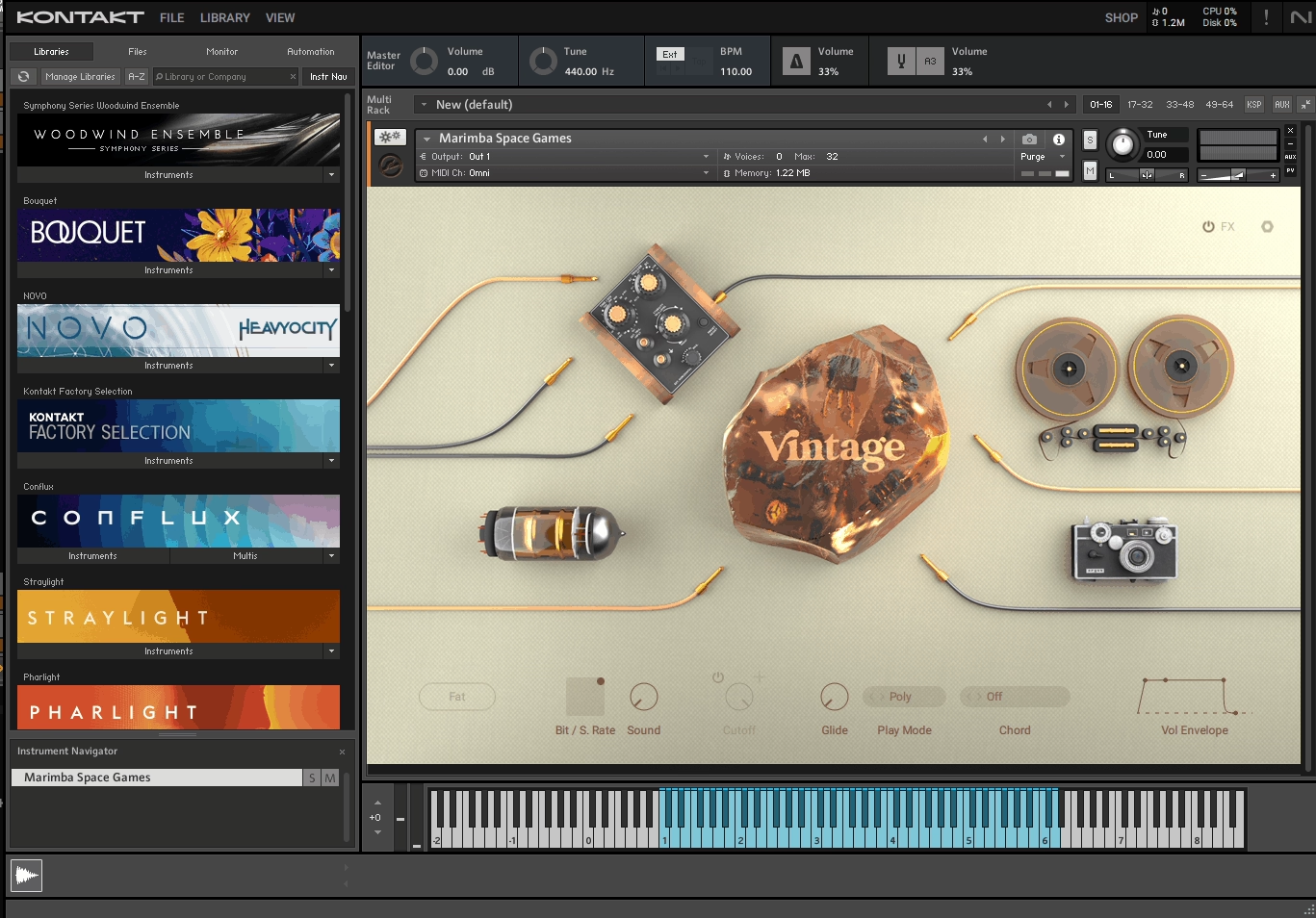
For Native Instruments, Kontakt 8 is the definitive flagship and the argument for it is straightforward: it has been the industry standard sampler for over two decades. The third-party library ecosystem around it is enormous, covering orchestral instruments, world instruments, vintage keyboards, drum machines, guitar libraries, vocal tools, and sound design instruments from hundreds of independent developers.
No other sampler platform comes close to this ecosystem, and that network effect is what makes Kontakt genuinely irreplaceable for composers and producers who rely on realistic instrument sounds. Kontakt 8 itself added a wavetable modulation engine alongside the sampling infrastructure, a loop playground for creative manipulation, and expanded scripting tools that push it well beyond a traditional sampler.
- Massive X
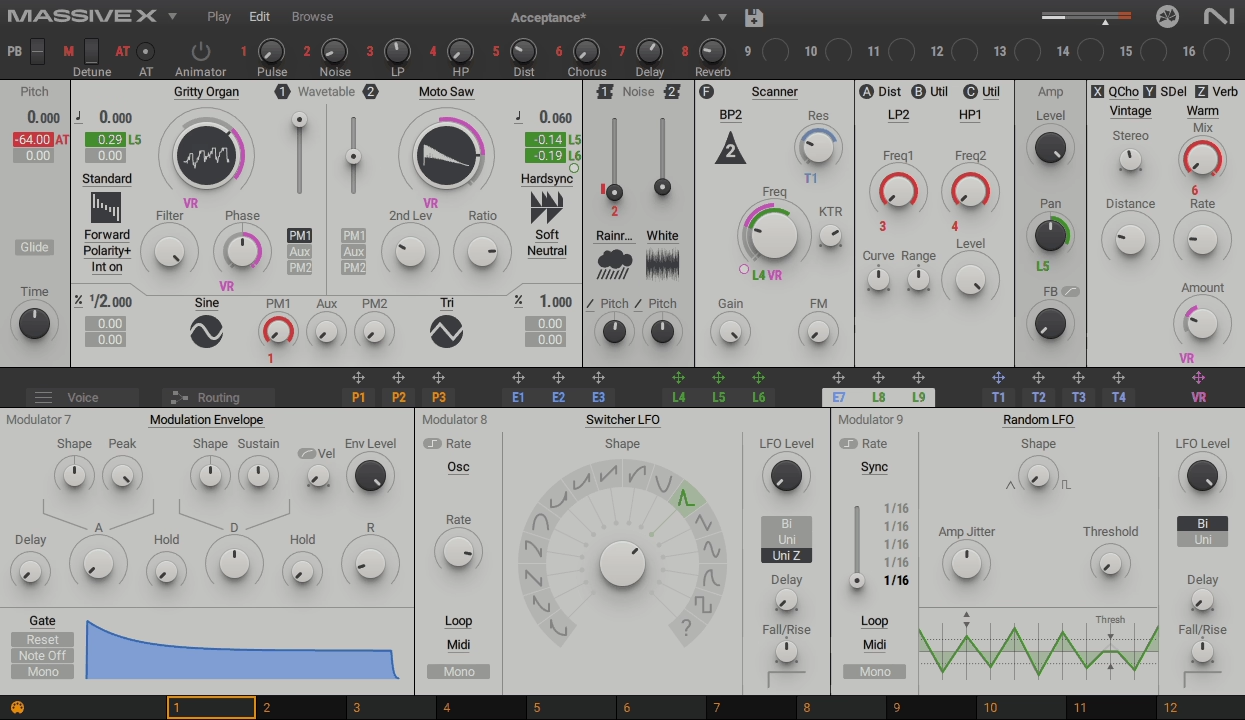
Massive X is NI’s flagship synthesizer, built around a semi-modular wavetable architecture with two primary wavetable oscillators, spectral modifiers, phase modulators, and a freely configurable routing page where the signal path can be rearranged in ways that produce genuinely unusual results. The modulation system assigns sources by drag-and-drop with mod range displayed visually on each parameter.
I must say the adoption was slower than NI probably expected, partially because the presets don’t immediately communicate what it can do and partially because the interface requires real study before it starts to feel comfortable. For producers willing to put in that time, it rewards you with sounds that are genuinely hard to get anywhere else.
- Reaktor 6
Reaktor 6 sits in its own category entirely. It’s a fully modular synthesis environment where you can build instruments and effects from component-level building blocks, and the Reaktor User Library contains thousands of community-built instruments covering virtually every synthesis architecture imaginable.
I appreciate what Reaktor makes possible, but I want to be honest that development has slowed significantly in recent years. For producers who want to go deep into custom synthesis architecture it remains one of the most powerful tools available, but for everyone else it’s likely to go unused.

Plugin Comparison by Category
Here’s how the two brands stack up across specific plugin categories, with the most comparable tools from each side.
| Category | Arturia | Native Instruments |
|---|---|---|
| Modern Synth | Pigments | Massive X |
| Analog Emulations | V Collection 11 (45 instruments) | Monark (Minimoog only) |
| Modular / Experimental | Buchla Easel V, ARP 2600 V | Reaktor 6 |
| Sampler | CMI V (Fairlight emulation) | Kontakt 8 |
| Piano | Piano V3, CP-70 V | Noire, Una Corda |
| Organ | B-3 V | Vintage Organs |
| Drums | Spark 2 | Battery 4 |
| Orchestral | Augmented Strings / Brass | Symphony Series, Session Strings Pro |
| Hybrid Instruments | Augmented Voices, Augmented Grand Piano | Play Series (Hybrid Keys, Ethereal Earth) |
| Compressor | Comp FET-76, Comp VCA-65 | Supercharger GT |
| Reverb | Rev LX-24, Rev INTENSITY | Raum |
| Delay | Delay TAPE-201 | Replika XT |
| EQ | EQ SITRAL-295 | Solid EQ (via iZotope Ozone) |
| Guitar / Amp | Not available | Guitar Rig 7 Pro |
| Mastering | Limited | iZotope Ozone 12 |
Effects Lineup
Both companies offer effects collections, but they come from very different design philosophies and the practical results are meaningfully different.
Arturia
- Arturia FX Collection
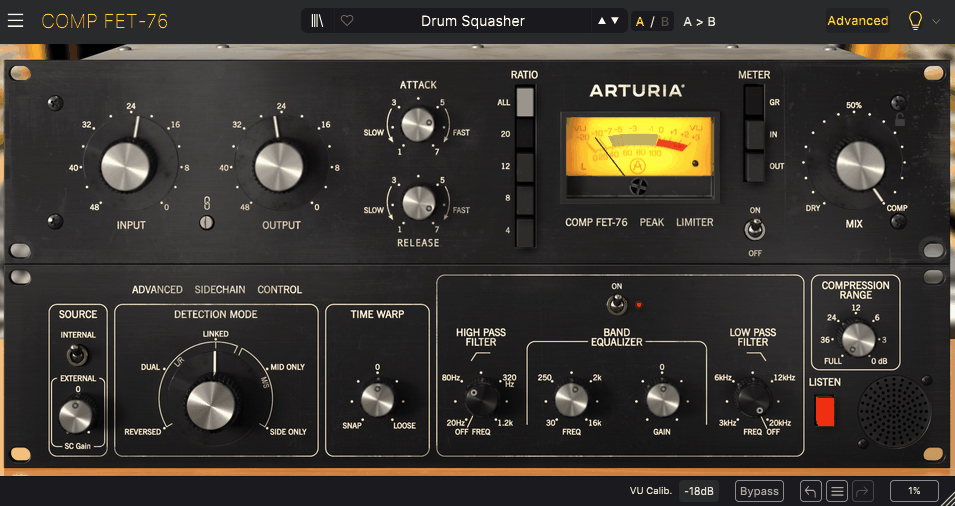
Arturia’s FX Collection is built entirely around hardware emulation, and every plugin in the collection is modeled on a specific piece of equipment. The Comp FET-76 is an 1176-style limiting amplifier capturing the fast attack behavior and the all-buttons-in mode, and the Comp VCA-65 models the SSL G-series bus compressor.
Delay TAPE-201 is based on the Roland RE-201 Space Echo, Chorus Jun-6 models the Juno-60’s chorus circuit specifically rather than using a generic algorithm, and Rev LX-24 is based on the Lexicon 224 reverb. Pre TridA and Pre 1973 model classic preamp circuits for harmonic coloring, and the EQ SITRAL-295 brings transformer-coupled console EQ character that parametric EQs without analog modeling simply don’t reproduce.
I love how focused the entire collection is, because each plugin is trying to do one specific thing at a high level rather than doing everything adequately, and that specificity tends to produce results that feel more musical in a real mix.
Native Instruments
- Native Instruments Effects
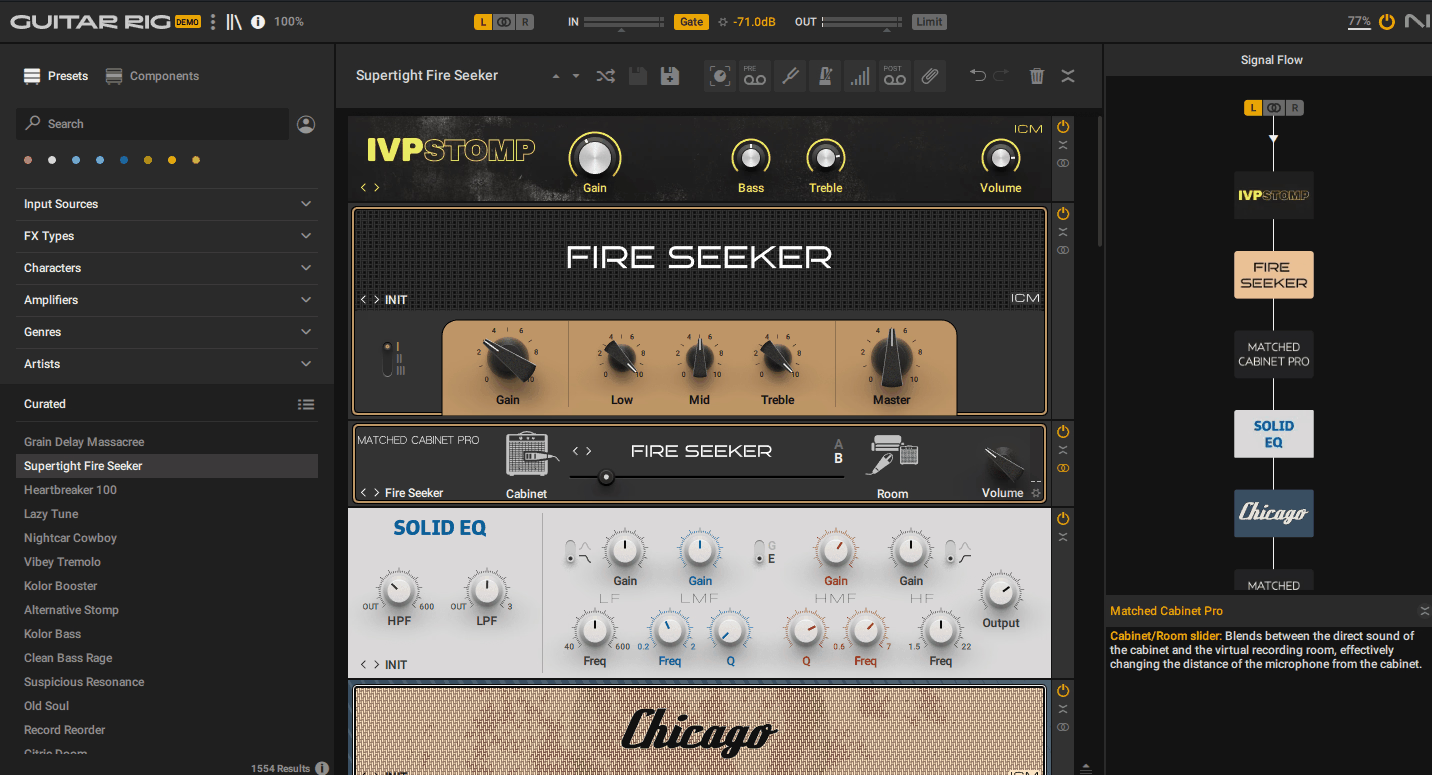
NI’s effects are spread across several tools rather than organized as a unified hardware-modeled collection. Guitar Rig 7 Pro is the most comprehensive, with a rack-based signal chain covering amp simulation, cabinet modeling, and a deep effects library that is genuinely useful on non-guitar material too.
Raum is a reverb with three distinct modes covering dense rooms, tight ambience, and large otherworldly spaces. Replika XT covers five delay modes spanning clean tape-style echoes through spectral and diffusion effects, and the Crush Pack and Mod Pack add creative saturation, distortion, chorus, flanger, phaser, and tremolo.
Through the upper Komplete tiers, iZotope Ozone 12 brings a complete mastering suite with AI-assisted processing, and Trash covers extreme distortion and mangling territory. It’s also worth noting that Arturia has no guitar amp plugin at all, which is a meaningful gap if that’s part of your workflow.

Sound Design
The depth available for building sounds from scratch is genuinely different between these two brands, and it affects how far you can push either one beyond the factory presets.
Arturia
- Pigments as a Sound Design Tool
Pigments is the strongest single argument for Arturia in this category. The combination of six synthesis engines, unlimited modulation routings, a built-in generative sequencer, 20 studio-grade effects across two insert buses and a send bus, and a function generator for complex multi-stage modulation curves gives you tools that go well beyond what most synthesizers offer.
I realized early on that Pigments rewards real time investment rather than just browsing presets. The more you push into the modulation system, the more it gives back, and I’d say it’s one of those instruments that genuinely grows with you over time.
- Augmented Series
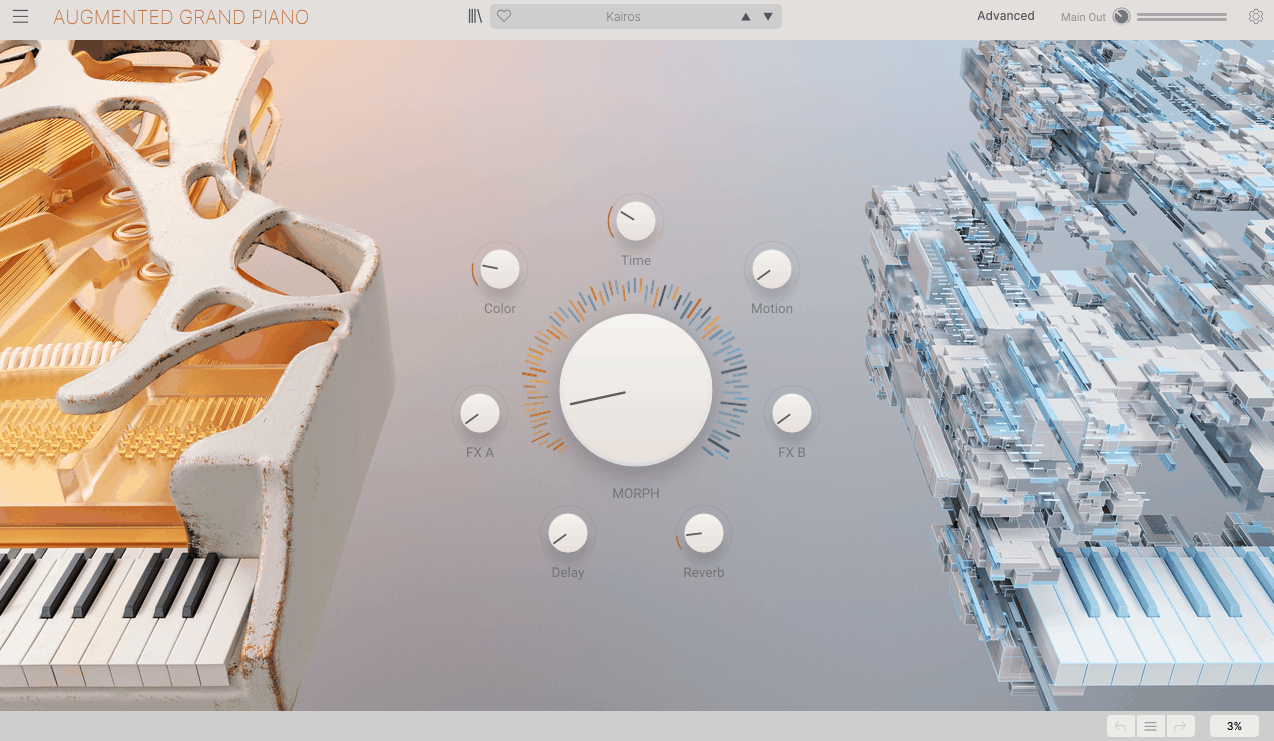
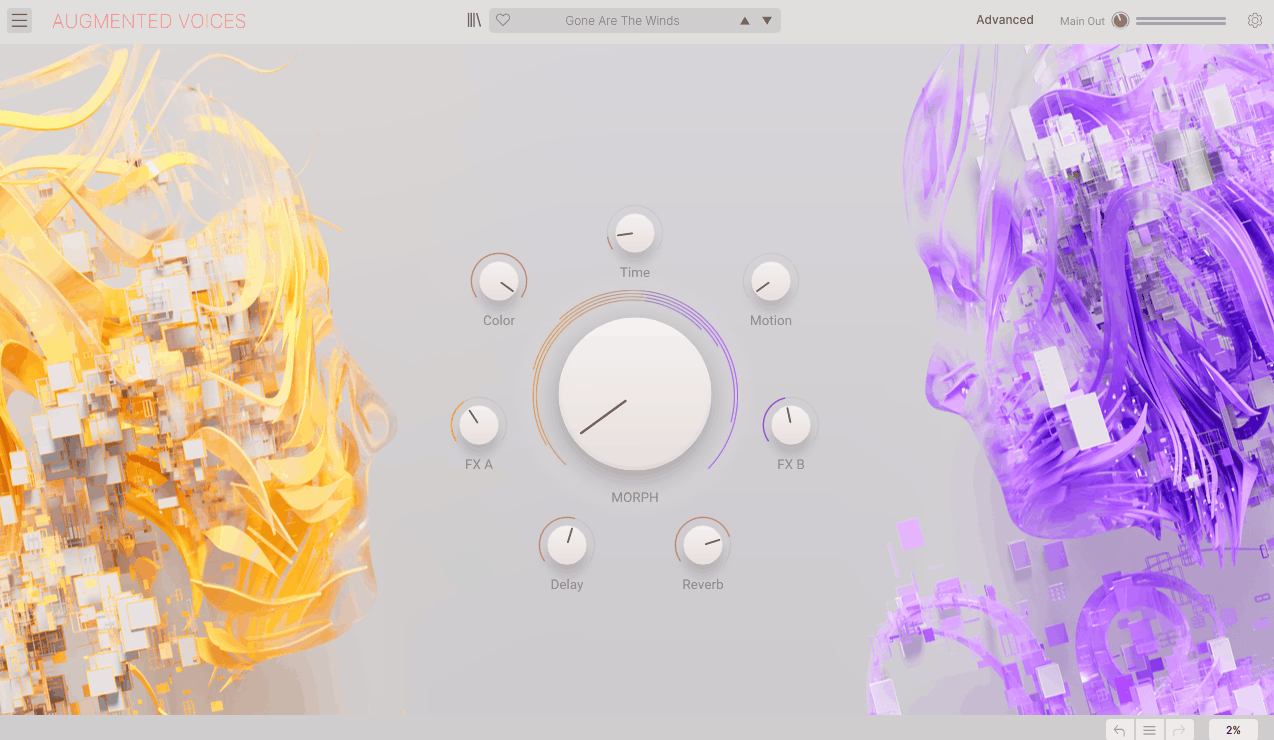
The Augmented series extends Arturia’s sound design territory into hybrid instrument territory. Augmented Strings, Augmented Voices, Augmented Grand Piano, Augmented Brass, and others combine high-quality multi-sampled recordings with Pigments-style synthesis engines for instruments that sit between realistic sampling and creative synthesis.
These are particularly useful for cinematic and atmospheric work where you want sounds that start from realistic acoustic sources but can be pushed well beyond them. I found the Augmented Grand Piano especially interesting because it goes places a standard piano sample library simply can’t.
Native Instruments
- Massive X for Modern Sounds
Massive X serves a more specific sound design role, excelling at dense, evolving, harmonically complex wavetable sounds. The spectral modifiers and phase mod sources give it tools that standard wavetable synthesizers don’t have, and the routing page lets you reconfigure the signal path in ways that go well beyond a fixed-architecture synth.
It’s a deep instrument for a specific modern aesthetic rather than a general-purpose sound design platform. If you’re working on heavy electronic music, film trailer sound design, or anything that needs that gritty, evolving, layered character, Massive X is genuinely strong territory.
- Reaktor for Custom Architecture
For producers who want to build synthesis from the ground up, Reaktor still has no real equivalent. The depth is extraordinary and the User Library gives you access to thousands of community instruments and effects built by other users.
I’d suggest treating it as a long-term investment rather than something you’ll get results from immediately, because the learning curve is real and the payoff comes gradually. Once you’re inside it though, what you can build is genuinely extraordinary.
Bundle Options
How each brand packages their catalog has a real impact on the value you get at different investment levels, and the structures are quite different.
Native Instruments
- Komplete 15 Tiers
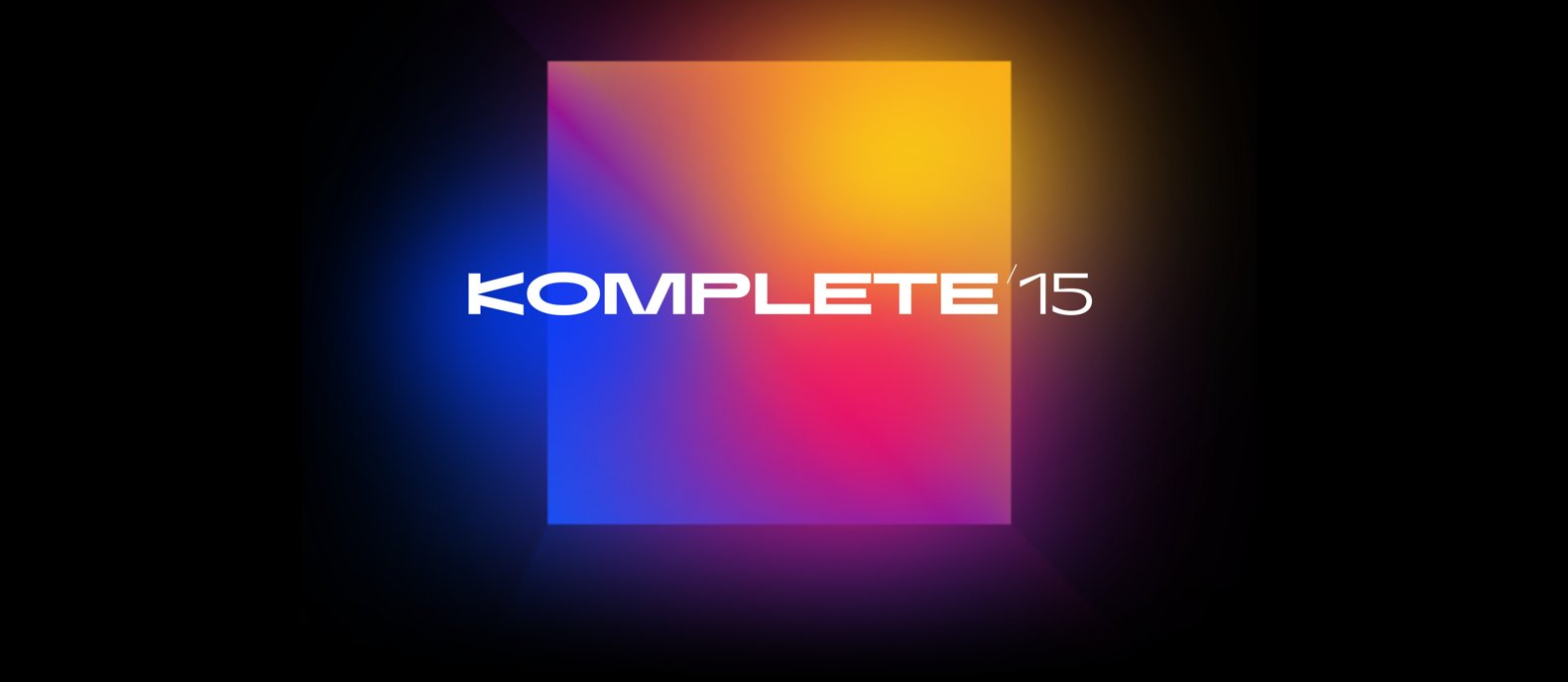
Native Instruments organizes their catalog around the Komplete bundles with three main tiers. Komplete 15 Standard runs around $599 and includes over 95 instruments and effects, covering Kontakt 8, Massive X, Reaktor 6, Guitar Rig 7 Pro, Raum, Replika XT, Crush Pack, Mod Pack, iZotope Ozone 12 Standard, iZotope VocalSynth 2, iZotope Trash, and 53 genre-based Expansions.
Komplete 15 Ultimate adds significantly more cinematic and orchestral content, while Komplete 15 Collector’s Edition at $1,799 covers the full NI catalog with over 290 total items including every orchestral tool currently available. Storage is a real factor here: Standard requires around 300 GB and the Collector’s Edition can exceed 1,100 GB.
The free entry point is Komplete Start, which includes Kontakt 8 Player, Massive X Player, Play Series instruments, and effects at no cost. I’d suggest downloading it regardless of which brand you end up going with, because Kontakt Player alone is worth having for the free third-party libraries that support it.
Arturia
- V Collection 11 and Pigments
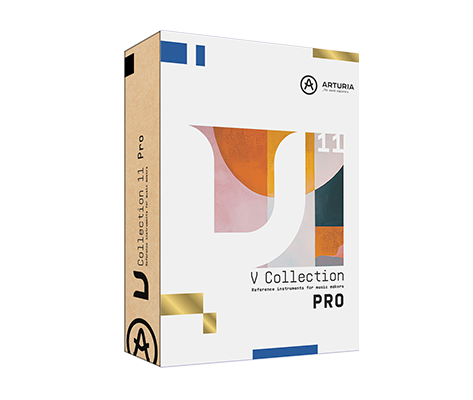
Arturia’s structure is simpler and considerably lighter on storage. V Collection 11 Pro is priced at $499 and covers all 45 instruments including the full vintage emulation library, the Augmented series, MiniFreak V, and Analog Lab Pro. A lighter V Collection 11 Intro is available at a lower price point for producers who want to start smaller.
Pigments is available separately at $199 and is genuinely worth owning independently of V Collection. The full V Collection footprint sits at around 20 GB, which is dramatically lighter than any Komplete tier and means faster downloads, fewer storage headaches, and quicker loading times across all instruments.
Both brands offer upgrade pricing for existing users and run frequent sales that can bring entry cost down considerably. I’d keep an eye on both during major sale periods because the discounts can be significant.
Hardware Offerings
Both companies make hardware controllers designed to work with their software, and the integration depth affects how these instruments actually feel to use in practice.
Native Instruments
- NI Kontrol and Maschine
Native Instruments’ hardware centers on Kontrol keyboard controllers and Maschine production hardware. The Kontrol S-Series keyboards use NKS 2.0 to communicate with NI instruments at a deeper level than generic MIDI: parameters map automatically to the eight knobs, the light guide shows chord and scale information on the keys, and the browser integrates directly with Native Access for searching across the full library.
The Maschine MK3 and Maschine+ are dedicated groove production hardware combining pad controllers, sequencing, and the Maschine software environment for beatmaking, sampling, and live performance. For producers who want a hardware-centric workflow that integrates tightly with software, NI’s hardware line offers a level of cohesion that generic controllers don’t replicate.
Arturia
- Arturia KeyLab and AstroLab
Arturia’s hardware lineup includes the KeyLab keyboard controllers and the MiniFuse audio interfaces. The KeyLab 88 MkII and KeyLab 61 MkII integrate with Analog Lab Pro so preset browsing, macro controls, and transport all work from the hardware without any additional setup.
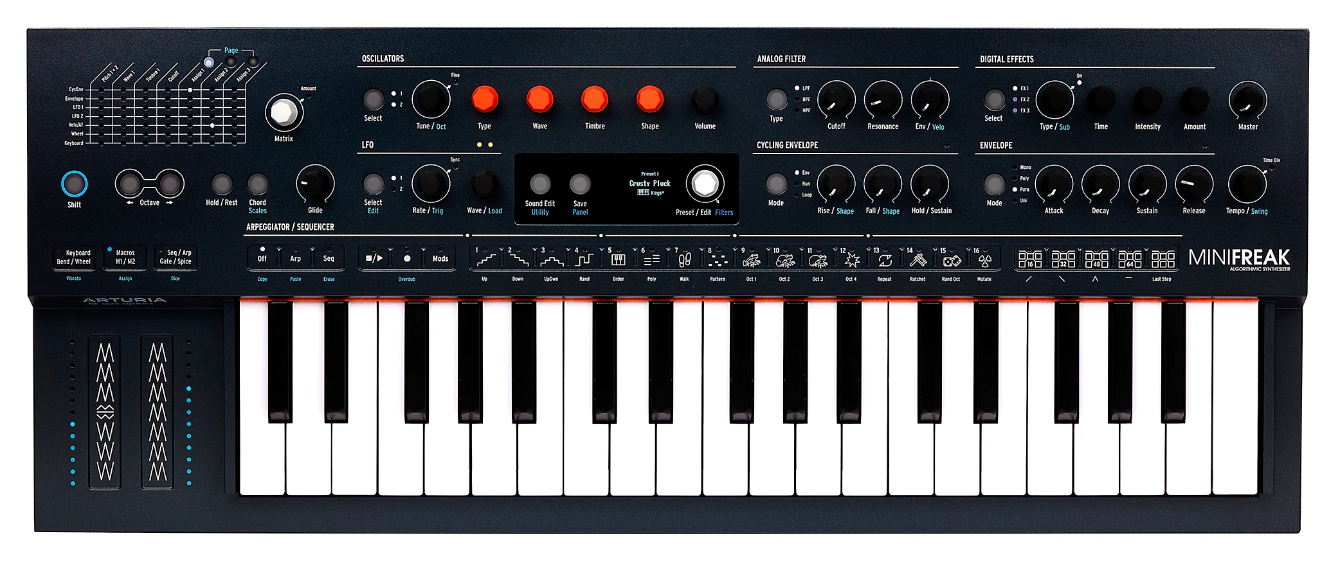
The AstroLab is a standalone stage keyboard that runs V Collection instruments natively without a computer, which is a practical option for live performance that NI doesn’t directly match. The MiniFreak hardware synthesizer also includes the companion MiniFreak V software version with the hardware purchase, which is a nice bonus for anyone who wants both the physical instrument and its software equivalent.
Update Policy
This sounds like a minor detail but it has a significant effect on the long-term value of what you’re buying, and the two brands handle it in meaningfully different ways.
Arturia
- Arturia’s Free Update Model
Arturia’s update policy for Pigments is genuinely one of the best in the industry. Every major version has been free for existing owners and the updates have been substantial: version 2 added a sample engine, version 3 added granular synthesis and a sequencer, version 5 added Harmonic additive synthesis, and version 6 added the Modal physical modeling engine.
You buy it once and it keeps growing. The V Collection also receives regular updates that bring new instruments and engine improvements, and while major version increments come with an upgrade price, the content jump is usually significant and the pricing is reasonable.
I’d say if long-term value without ongoing cost matters to you, Arturia’s Pigments policy is hard to argue with. Knowing the instrument you buy today will have significantly more synthesis capability in two or three years at no additional cost changes the calculation meaningfully.
Native Instruments
- NI’s Paid Version Model
Native Instruments’ update policy is more standard across the industry. Kontakt receives meaningful updates with each major version but those are paid for existing owners, with upgrade pricing available. Massive X has received updates since launch but more slowly than many users expected.
Reaktor has received very few updates in recent years and active development has effectively paused at this point. The iZotope tools bundled in Komplete follow iZotope’s own schedule, which has been more consistent. On the positive side, the Play Series instruments and Komplete Start receive ongoing additions, and NI has been consistent about keeping the platform infrastructure current.
Genre Fit
Both brands span a wide range of genres, but there are clear areas where each one is the more natural fit and I think being honest about that is more useful than claiming they’re equally suited to everything.
Arturia
- Where Arturia Fits Best
Arturia is the stronger choice for electronic music in almost all its forms: synthwave, techno, house, ambient, and experimental. The V Collection gives you the specific harmonic character of hardware instruments that producers in these genres have been referencing for decades, and Pigments gives you the modern synthesis depth to build sounds that are entirely your own.
The FX Collection hardware-modeled effects are also a natural fit here because the character of a Juno-60 chorus or an RE-201 tape echo is exactly what a lot of electronic production is chasing. For pop and singer-songwriter production requiring piano, electric piano, organs, and classic keys, instruments like the Piano V3, CP-70 V, B-3 V, Clavinet V, and Mellotron V sit naturally and sound great in a mix.
Native Instruments
- Where NI Fits Best
Native Instruments is the more natural fit for film scoring, TV music, and game audio where realistic orchestral and acoustic instrument sounds are central to the work. Kontakt’s third-party library ecosystem is where serious film composers live and there’s no practical alternative that covers the same range.
For hip-hop, trap, and sample-based production, NI’s tools come up more naturally because Maschine’s workflow and the Kontakt sampling infrastructure fit how these genres are made, and the Komplete Expansions covering these styles are directly usable starting material. Guitar Rig 7 Pro is also the clear choice for any genre involving electric guitar, which Arturia simply doesn’t address at all.
Brand Ecosystem
Beyond the individual plugins, both brands have built ecosystems of software infrastructure around their products, and those systems affect daily workflow in ways that are easy to underestimate when you’re focused on sounds.
Native Instruments
- Native Instruments Ecosystem
Native Instruments’ ecosystem is centered on Native Access, the management platform for downloading, installing, updating, and activating every NI and iZotope product. It handles a catalog that can run to hundreds of gigabytes across multiple libraries, and it does the job cleanly once you’re set up.
The NKS (Native Kontrol Standard) protocol is the technical backbone of the hardware-software integration, letting compatible controllers from NI and third-party manufacturers access instrument metadata, parameter mapping, and preset browsing in a standardized way. The Kontakt 8 Player is available for free, meaning you can run purchased third-party libraries without owning the full version of Kontakt.
Reaktor has its own User Library of thousands of community-built instruments and effects. Komplete Kontrol software ties keyboards, instruments, and the browser together, and the iZotope Product Portal manages the iZotope tools within the broader NI umbrella. It’s a large, interconnected system and once you’re fully inside it, navigating between tools is smooth, though the initial setup for large bundles can take days.
Arturia
- Arturia Ecosystem
Arturia’s ecosystem is organized around Arturia Software Center (ASC), which handles downloads, activations, and updates for the full Arturia catalog in a single lightweight application. It’s faster and simpler than Native Access simply because the download volumes are dramatically smaller and the catalog is more focused.
Analog Lab Pro is the central performance and browsing interface that pulls presets from across the entire V Collection into a single searchable library, letting you search across all 45 instruments at once without opening them individually. Analog Lab Play is the free tier of this system and gives you a genuine preview of the catalog’s sound.
The Arturia Software Center manages the FX Collection and Pigments alongside V Collection instruments so everything is in one place. For hardware users, AstroLab shares library settings and effects with the desktop software in real time, which makes moving between studio and stage seamless. The ecosystem is tighter, more focused, and faster to get oriented in, though it doesn’t reach the scale of what NI has built around Kontakt.
Learning Curve
How quickly you can get useful results from either brand’s tools matters more than most comparisons acknowledge, and it genuinely affects how much you’ll actually use what you buy.
Arturia
- Arturia’s Approachability
Arturia has a meaningful advantage here across most of their catalog. The V Collection instruments are laid out to match the hardware they emulate, so the controls are where you’d expect them and labeled the way the hardware labeled them. Even Pigments, which is a complex modern synthesizer with a lot going on, does a better job than most instruments at showing you what’s happening through color-coded modulation visualization and clear routing diagrams.
I noticed that producers who are newer to synthesis tend to get useful results from Arturia tools considerably faster than from NI’s synthesis tools. That’s a meaningful real-world advantage when you’re trying to get things done in a session rather than spending an hour learning a new interface.
Native Instruments
- NI’s Steeper Entry
Native Instruments’ catalog varies significantly by instrument. Kontakt’s interface for browsing and playing library instruments is manageable, though navigating a large third-party library collection has its own friction. Massive X has a steeper learning curve than it probably needs to, with the routing page and semi-modular signal flow requiring real study before the instrument feels comfortable.
Reaktor is a dedicated environment for synthesis and programming where the time investment to get results is measured in days rather than hours if you’re starting from scratch. The Play Series instruments within Komplete are the most approachable things NI makes, designed for immediate results with minimal setup. For anyone starting out, or anyone who wants to spend more time making music than learning interfaces, Arturia is the more practical first choice.
The Bottom Line
I feel like most comparisons between these two brands reach for a single verdict, and that approach misses the point of what makes each one worth owning.
Native Instruments built the infrastructure that much of modern music production runs on. Kontakt is still the industry standard sampler and its third-party ecosystem is genuinely irreplaceable for anyone doing serious sample-based production. The synthesis tools are powerful in specific ways, particularly Massive X for modern electronic sounds and Reaktor for custom synthesis work, and the Komplete bundles give you an enormous amount of content in a single purchase. The iZotope mastering tools bundled in Komplete add real value that Arturia doesn’t cover.
Arturia built a catalog where analog character and warmth run through everything, anchored by the most faithful vintage emulation library available anywhere and supported by Pigments as one of the most capable modern synthesizers on the market. The FX Collection gives you hardware-modeled effects that behave like the equipment they’re based on, the storage footprint is dramatically lighter, and the update policy for Pigments is among the best in the industry. The only real gap is guitar amp simulation, which NI covers with Guitar Rig 7 Pro and Arturia simply doesn’t address.
If sampling, orchestral libraries, and the Kontakt ecosystem are central to your work, start with Native Instruments. If synthesis, analog character, and vintage hardware sounds are where your music lives, start with Arturia. And if you have the budget for both, they cover genuinely different ground and work better together than either does alone.
Get the Free Plugin Starter Kit
The genuinely useful free DAWs and plugins worth installing. No filler. Straight to your inbox.

Hello, I’m Viliam, I started this audio plugin focused blog to keep you updated on the latest trends, news and everything plugin related. I’ll put the most emphasis on the topics covering best VST, AU and AAX plugins. If you find some great plugin suggestions for us to include on our site, feel free to let me know, so I can take a look!