
If you’re building a serious plugin collection and you’re trying to figure out where FabFilter and SoundToys fit relative to each other, the good news is that this comparison has a cleaner answer than most. These two companies have almost no functional overlap in what they do, and once you understand that, the decision becomes less about choosing one over the other and more about understanding what each one brings to your sessions and in what order you should invest.
FabFilter is a Dutch company that builds tools for precision mixing and mastering, with a focus on transparency, surgical accuracy, and visual feedback. SoundToys is an American company that builds character-driven effect plugins modeled after hardware, with a focus on saturation, delay, modulation, and the kind of vibes that come from running audio through real analog gear.
Both are among the most universally respected plugin brands in the industry, both are used daily by professional engineers at every level, and you’ll find both on the mix sessions of virtually every major-label release.
What they’re doing for your mixes, though, is completely different.
Quick Comparison
| Feature | FabFilter | SoundToys |
|---|---|---|
| Founded / Origin | Amsterdam, Netherlands | Burlington, Vermont, USA |
| Core Identity | Precision mixing and mastering tools | Character-driven effect plugins inspired by hardware |
| Total Plugin Count | 14 plugins (including synths and filters) | 23 plugins in the bundle |
| Flagship Plugins | Pro-Q 4, Pro-L 2, Pro-C 3, Pro-MB, Pro-R 2, Saturn 2 | EchoBoy, Decapitator, Little AlterBoy, Crystallizer, SuperPlate, PanMan |
| EQ | Pro-Q 4: industry-leading | Sie-Q only (vintage-flavored, not surgical) |
| Dynamics / Compression | Pro-C 3, Pro-MB, Pro-L 2, Pro-G, Pro-DS | Devil-Loc, Devil-Loc Deluxe (creative crushers only) |
| Saturation | Saturn 2 (multiband, with modulation) | Decapitator, Radiator, Little Radiator (hardware-modeled) |
| Delay / Echo | Timeless 3 (tape delay) | EchoBoy, EchoBoy Jr., PrimalTap, Little PrimalTap |
| Reverb | Pro-R 2 (algorithmic, highly controllable) | SuperPlate, Little Plate, SpaceBlender |
| Modulation | Volcano 3 (filter/modulation), Saturn 2 modulation | PanMan, Tremolator, PhaseMistress, FilterFreak |
| Synthesizer | Twin 3, One, Simplon (full synth included) | None |
| Vocal FX | Pro-DS (de-esser only) | Little AlterBoy (formant/pitch shifting), MicroShift |
| Full Bundle Price | Total Bundle ~$1,069 (often discounted) | Soundtoys 5 ~$499 (regular sales at $249-$399) |
| Free Trial | 30 days fully functional, no watermark | 30 days fully functional, no watermark |
| Best For | Mixing precision, mastering, EQ, dynamics, transparent processing | Character and vibe, delays, saturation, modulation, color |
Get the Free Plugin Starter Kit
The genuinely useful free DAWs and plugins worth installing. No filler. Straight to your inbox.
About FabFilter
FabFilter was founded in Amsterdam in 2002 and spent the first several years building a reputation among producers and engineers who cared deeply about two things above all else: sound quality and interface design.
The company released its first plugins in the filter and synthesizer space before making the turn toward professional mixing and mastering tools that defined the brand as it’s known today.
What consistently distinguished FabFilter from the competition, even in its early years, was a commitment to building interfaces that communicated information clearly and made complex processing feel intuitive, with every parameter available on a single screen and real-time visual feedback that helped you understand exactly what the plugin was doing to your audio.
Today, FabFilter’s catalog covers the full range of mixing and mastering tools a professional engineer needs: the Pro-Q 4 for EQ, Pro-L 2 for limiting and loudness control, Pro-C 3 for compression, Pro-MB for multiband dynamics, Pro-R 2 for reverb, Pro-DS for de-essing, Pro-G for gating and expansion, Saturn 2 for multiband saturation and distortion, Timeless 3 for delay, Volcano 3 for filter effects, and the synthesizer lineup of Twin 3, One, and Simplon for instrument creation.
The Total Bundle packages all 14 plugins together and is widely considered one of the most efficient professional toolkits available for producers and engineers who want to cover every fundamental mix processing need from a single company.
What FabFilter is known for, more than any specific plugin, is the consistent experience across the entire catalog: every plugin has a unified design language, every plugin responds to input the same way, and every plugin gives you the same level of real-time feedback and parameter interaction that makes working in FabFilter tools feel unlike working in anything else.
About SoundToys
SoundToys was founded in Burlington, Vermont, and the founding team came largely from Eventide, the legendary digital effects hardware company responsible for the H3000 and other iconic studio processors.
That heritage is visible throughout SoundToys’ philosophy: the company has always been more interested in capturing the feel and character of hardware than in building transparent processing tools, and the team’s deep knowledge of how analog hardware actually behaves is what makes their plugins sound different from most software alternatives.
The SoundToys catalog is organized around effects rather than utility, covering saturation (Decapitator, Radiator, Little Radiator, Devil-Loc), delay and echo (EchoBoy, EchoBoy Jr., PrimalTap, Little PrimalTap), reverb (SuperPlate, Little Plate, SpaceBlender), modulation (PanMan, Tremolator, PhaseMistress, FilterFreak 1 and 2, Crystallizer), vocal processing (Little AlterBoy, MicroShift, Little MicroShift), and the Sie-Q vintage-voiced equalizer.
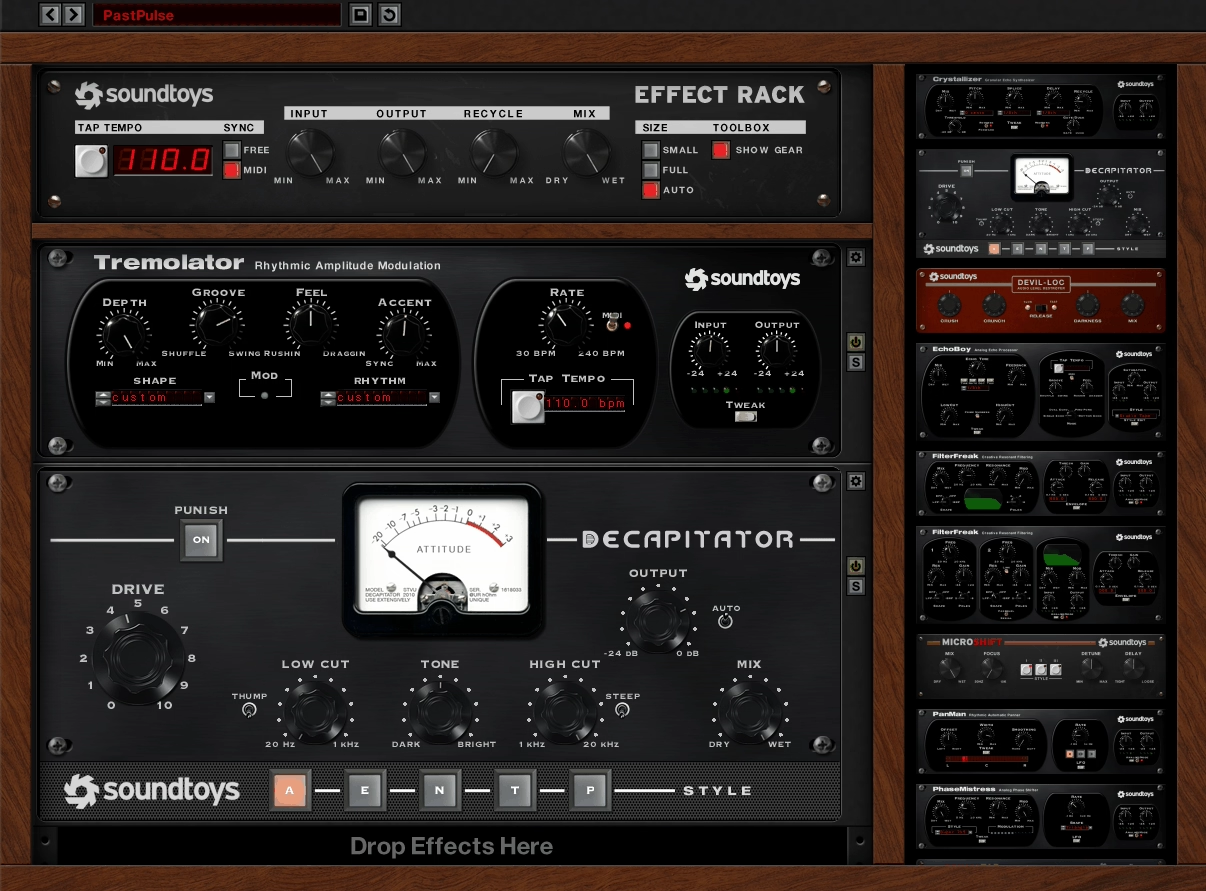
The Effect Rack is the centerpiece of the bundle and lets you chain multiple SoundToys effects into a single plugin, saving them as multi-effect presets and applying them to any track without managing multiple plugin windows.
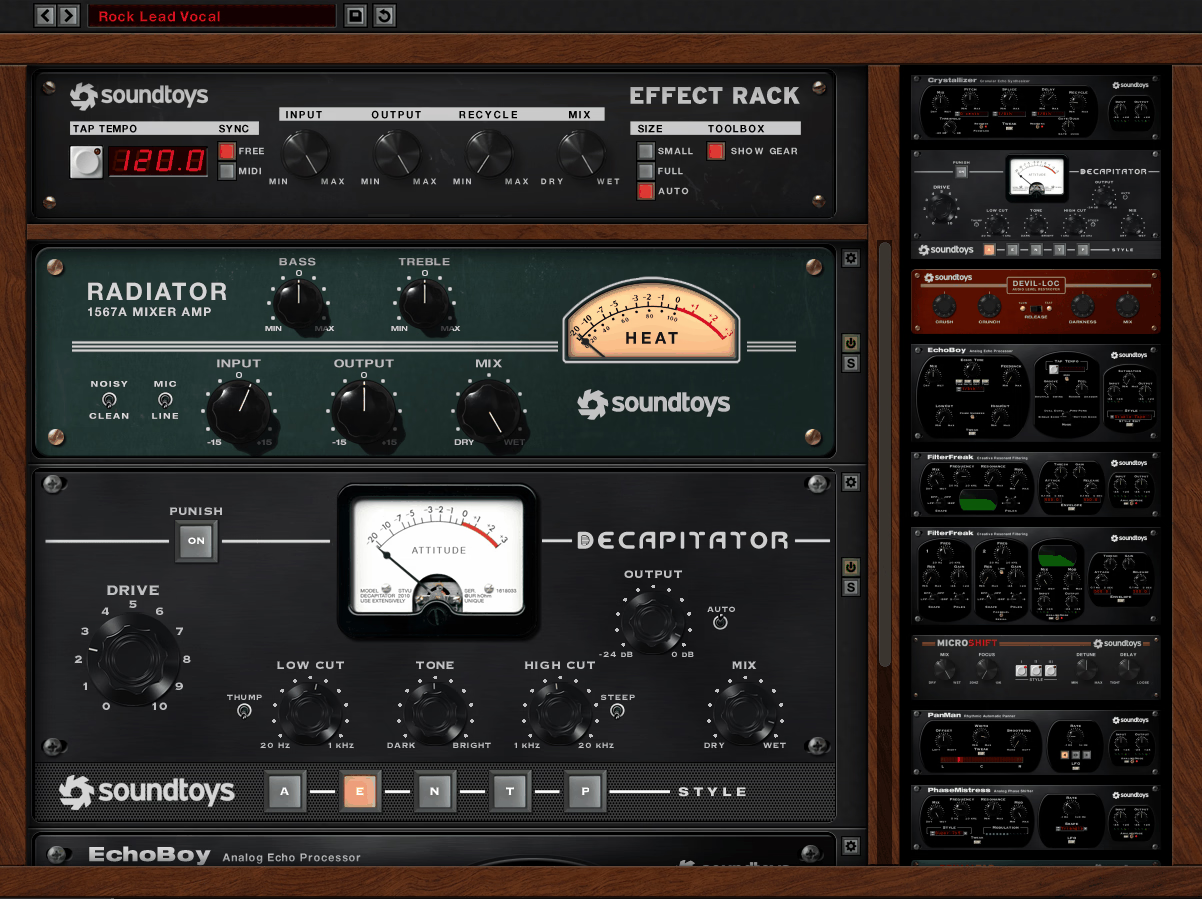
SoundToys 5 is the bundle that contains all 23 plugins, including the SpaceBlender experimental reverb added in version 5.5, which gives you algorithmic space simulation inspired by swarm synthesis with the ability to morph between different reverb types in real time. All plugins now feature resizable interfaces added in the 5.5 update.
Sound Character
- FabFilter: Transparency as a Starting Point
FabFilter’s sound character is deliberately minimal, and that is not a limitation but a design choice that serves its purpose. The Pro-Q 4‘s filters are specifically engineered to be as transparent as possible when you’re making small corrections, which means you can cut 6dB at a problem frequency and the surrounding material sounds untouched.
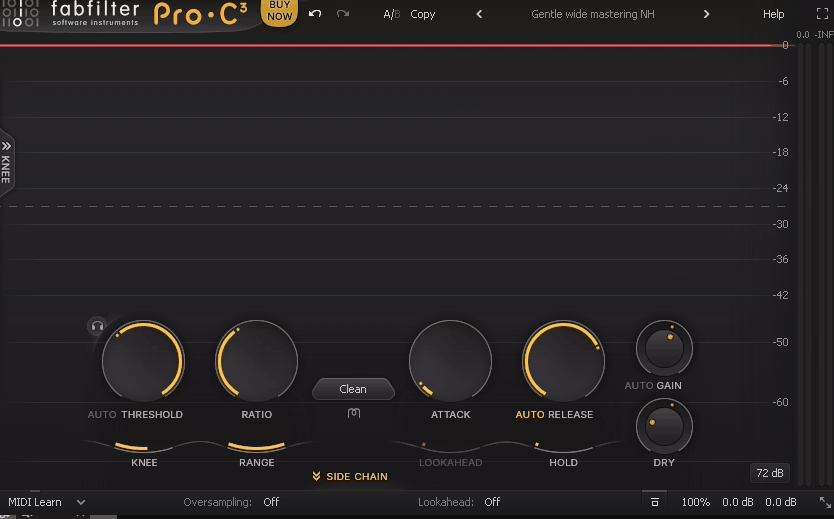
The Pro-L 2‘s limiting algorithm is designed to add gain without audible artifacts at normal settings. The Pro-C 3‘s multiple compression styles range from clean and transparent to colored and warm depending on which style you choose, giving you flexibility within the same plugin.
When FabFilter does lean into color, as in Saturn 2, it does so with control and nuance: you can dial in exactly how much saturation character you want across specific frequency bands, and the modulation system gives you dynamic behavior that responds to the audio rather than applying a static effect. FabFilter’s color is chosen and deliberate rather than inherent and always-on.
- SoundToys: Character as the Point
SoundToys plugins are built specifically to add character, and that character is what makes them irreplaceable for engineers who rely on them. Decapitator has a specific saturation texture that’s been described as instantly recognizable, a warmth and crunch that responds dynamically to the signal it’s processing in a way that static convolution processors can’t replicate.
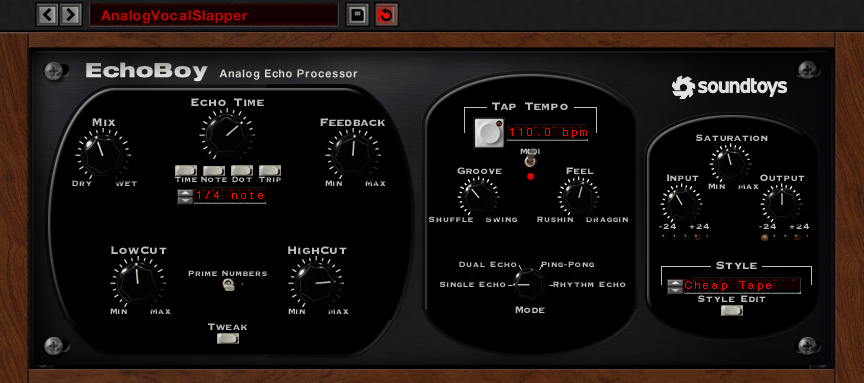
EchoBoy has a warmth and modulation character in its tape echo modes that creates a specific kind of musical smear that expensive hardware delays are famous for. SuperPlate captures the density and bloom of electromechanical plate reverbs in a way that algorithmic reverbs typically can’t fully replicate.
The consistent thread running through the SoundToys catalog is that these plugins don’t leave audio sounding the same way they found it, and that’s entirely the point. If you want transparency, FabFilter is doing it better. If you want vibe, SoundToys is the one you reach for.
Effect Plugins Overview
- FabFilter Effects
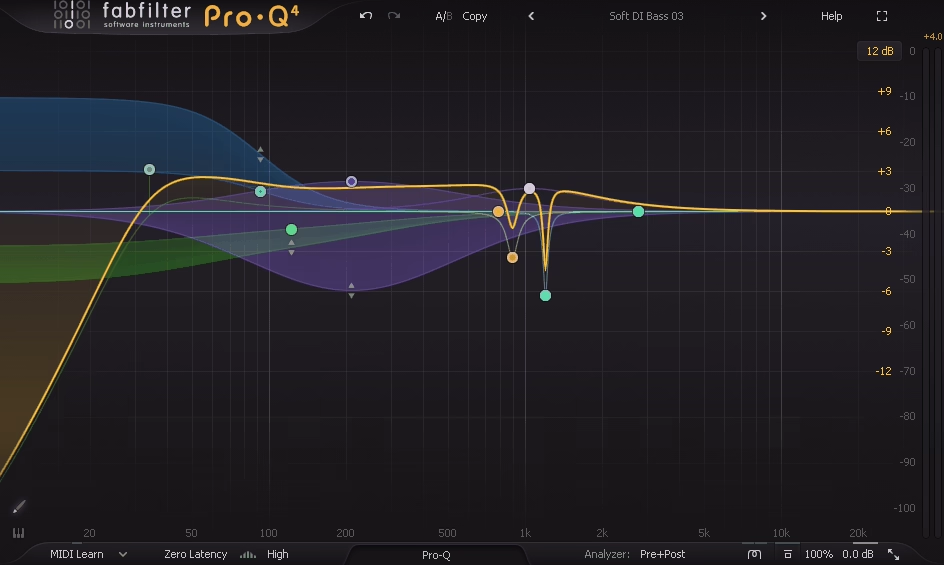
FabFilter’s effect plugins cover the signal chain from input to output. Pro-Q 4is the EQ, now with Spectral Dynamics mode that targets specific frequencies with dynamic processing, a new EQ Sketch tool for drawing filter curves intuitively, full Dolby Atmos support up to 9.1.6, and mid/side editing with the same visual clarity that made Pro-Q 3 the industry standard in the first place.
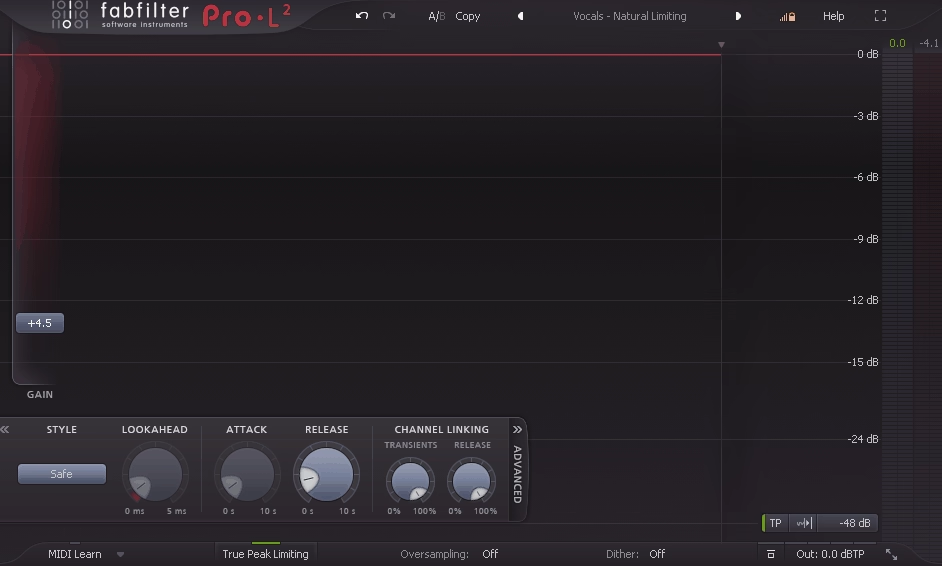
Pro-L 2 is the mastering limiter with eight different limiting algorithms ranging from transparent to aggressive, true peak limiting for D/A conversion accuracy, and extensive loudness metering including LUFS readouts that have become essential for streaming platform compliance. Pro-C 3 brings eight distinct compression styles from the clean and transparent to the vintage and pumping, with sidechain routing, mid/side processing, and an intuitive gain reduction display that shows you exactly what’s happening and when.
When it comes to Pro-MB, it extends the multiband dynamics into full expander territory, letting you compress and expand across specific frequency ranges with per-band controls and dynamic phase processing.
Next, Pro-DS is the de-esser with an intelligent algorithm that focuses on sibilance without affecting surrounding material, and Pro-G gives you flexible gate and expansion with an advanced sidechain and visual triggering display.

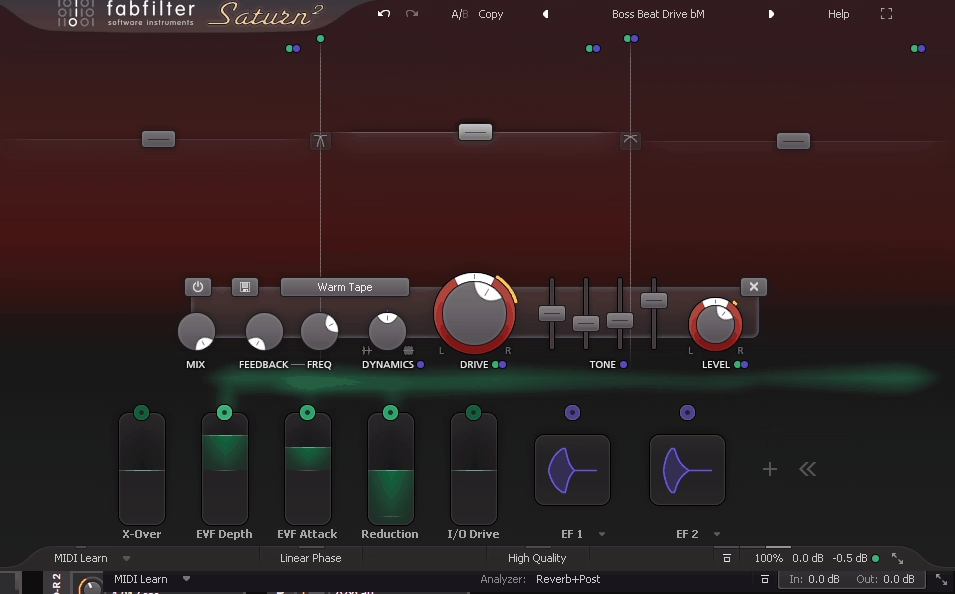
On the creative effects side, Saturn 2 is a multiband saturation and distortion plugin with 28 different distortion styles from gentle tape warmth to aggressive tube and transistor clipping, with per-band processing and a modulation system that lets you animate the saturation character over time.
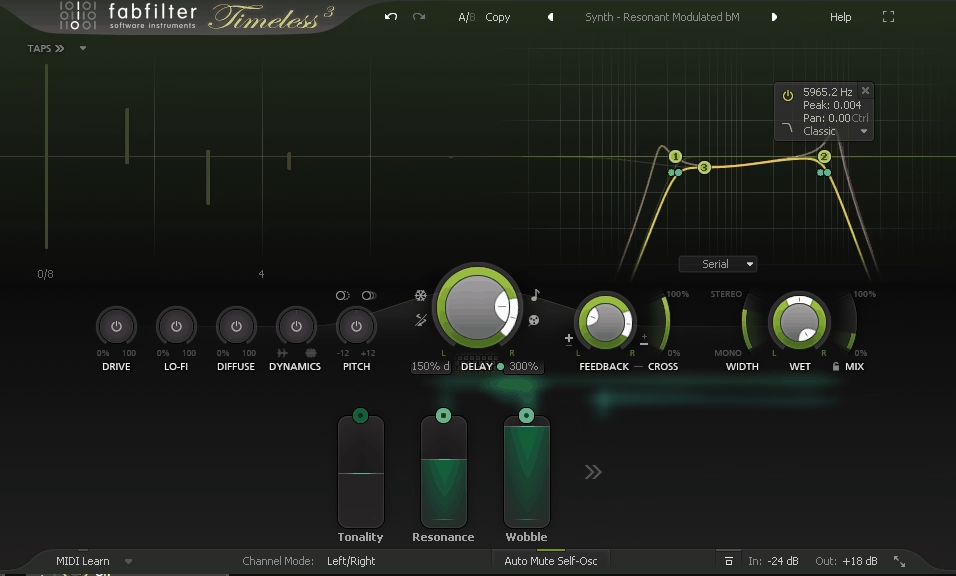
In addition, Timeless 3 is the tape delay with time-stretching, high-quality filters, and a modulation system that gives you everything from clean digital delays to lo-fi, wobbly tape textures.
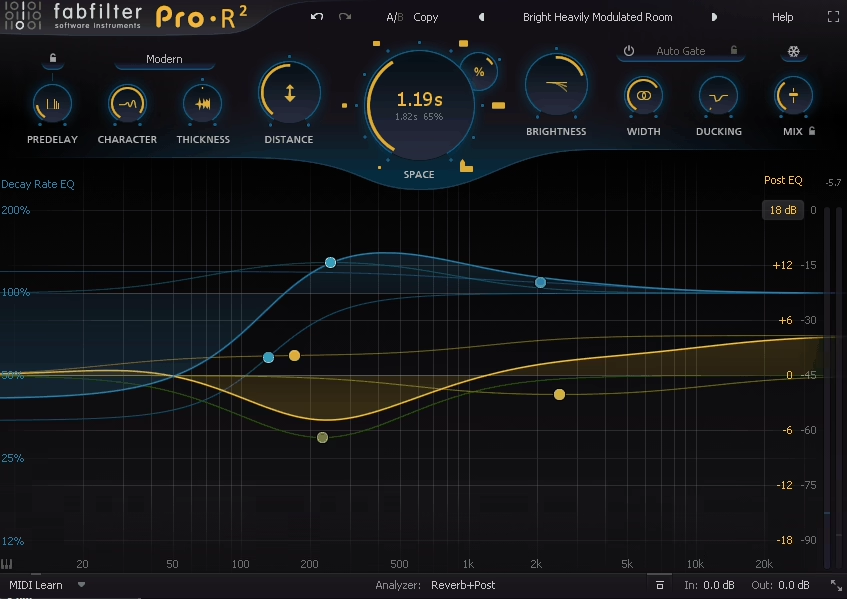
Lastly, Pro-R 2 is the algorithmic reverb with a unique decay rate control that shapes how the tail evolves over time, a character knob that moves between clean and colored room behavior, and support for immersive audio formats.
- SoundToys Effects
SoundToys’ plugin catalog is organized around specific effect types with a strong emphasis on hardware character. EchoBoy is the flagship delay and one of the most widely used delay plugins in professional studios globally: it contains models of the EchoPlex, Space Echo, Memory Man, DM-2, and other iconic hardware delays alongside digital modes, and its Rhythm Echo mode lets you program rhythmic delay patterns that sync to your DAW tempo in ways that hardware units couldn’t.
The Tweak panel in EchoBoy exposes circuit-level controls for each hardware model, letting you adjust things like the specific character of the tape or the response of the analog circuitry.
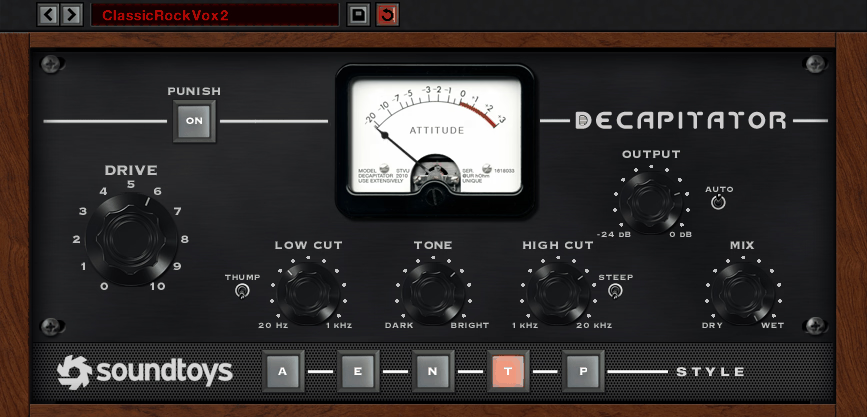
Decapitator is the saturation tool with five distinct analog drive modes inspired by hardware like the Culture Vulture, each with its own compression and harmonic character, and a variable tone control that lets you shape the frequency content of the saturation effect. SuperPlate emulates five classic electromechanical plate reverbs including the EMT 140 and 240, capturing the specific density and character of physical plates being excited by sound.
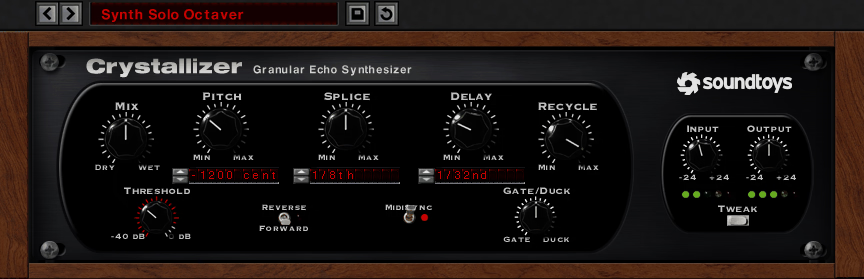
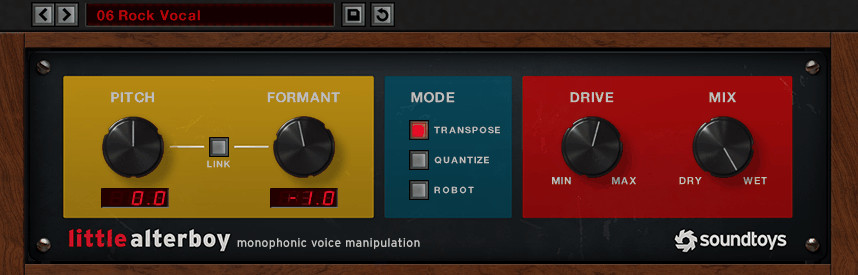
When it come s to Little AlterBoy, it’s the vocal pitch and formant shifting tool that has become a standard insert on vocal production sessions, capable of everything from subtle pitch correction and harmonizing to the hard-tuned robotic effect and the full vocal transformation range. Crystallizer is a granular reverse echo processor originally based on the Eventide H3000 that creates synth-like textures from any audio source by capturing grains and replaying them in various configurations.
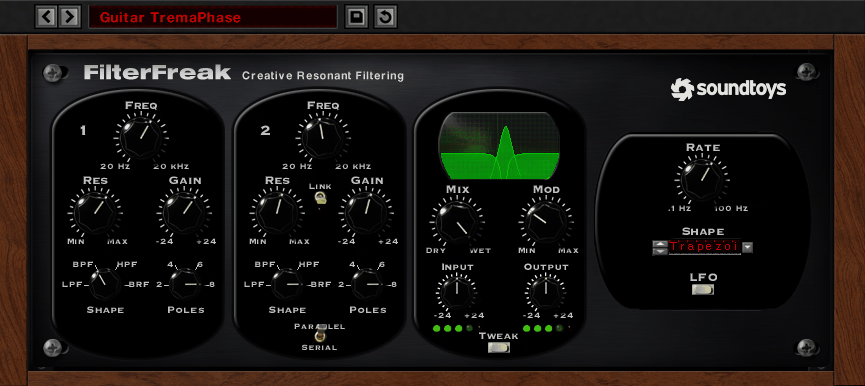
FilterFreak comes in dual versions and emulates rhythmically modulated analog filter sweeps inspired by classic hardware, great for creating the kind of pulsing filter effects that electronic music production relies on.
Lastly, PhaseMistress, PanMan, and Tremolator cover phasing, auto-panning, and tremolo respectively, all with the hardware-inspired character that defines the SoundToys sound.

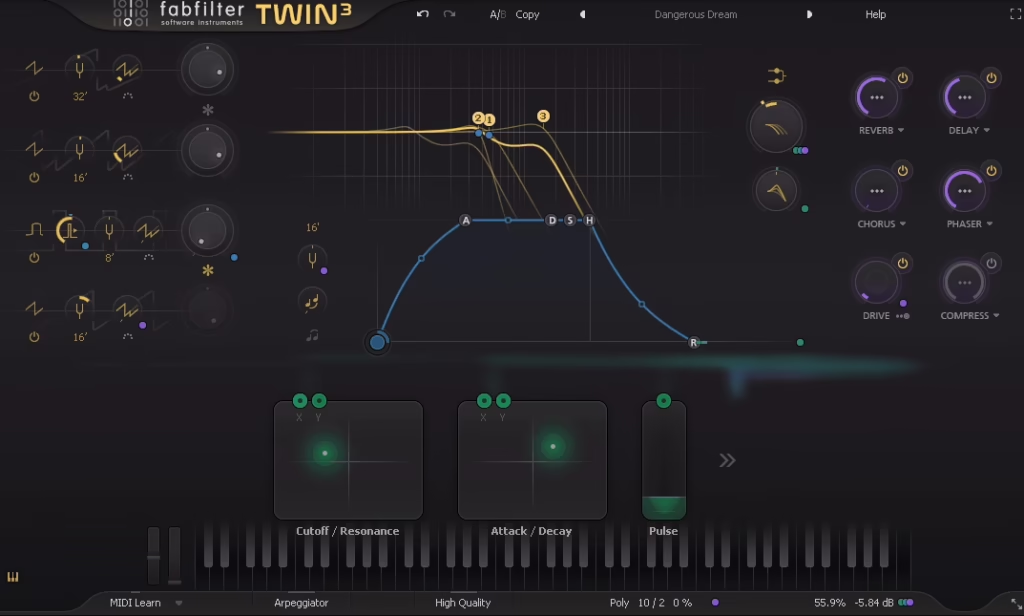
Twin 3 Synth by FabFilter
Twin 3 is worth its own focused discussion because it’s the piece of FabFilter’s catalog that most producers don’t think about when they think of FabFilter, and that’s a genuine oversight. This is a sophisticated and genuinely capable synthesizer plugin that has been part of FabFilter’s lineup since the early days of the company, and version 3 represents a significant maturation of the instrument.
Twin 3 is built around four highly flexible oscillators that can generate a wide range of waveforms with analog-modeled drift for organic variation, feeding into four multimode filters borrowed from the Volcano filter plugin, which means you have the same smooth, vintage-sounding filter character in your synthesis chain that engineers use as a mixing effect.
The oscillators can feed the filters in series or parallel, and the routing flexibility means you can configure instrument architectures that go beyond the standard serial signal path most synthesizers use.
The modulation system in Twin 3 is particularly strong, with what FabFilter describes as an ultra-flexible routing system that lets you connect any modulation source to any destination through drag-and-drop assignment.
This combined with six FX modules including the FabFilter-quality delay, chorus, reverb, and distortion units inside the instrument means you can produce sounds that are fully finished without additional processing. The preset library is comprehensive and covers the full range of synthesis applications from bass and lead synthesis to evolving pads and textural sounds.

What makes Twin 3 interesting in the context of a FabFilter vs SoundToys comparison is that it represents FabFilter’s design philosophy applied to synthesis: high sound quality, clean visual interface, and precise control over every parameter.
If you’re already invested in FabFilter’s aesthetic and workflow, Twin 3 is the synthesizer that fits naturally into that environment without the aesthetic discontinuity of working across multiple companies’ tools.
Surgical Precision vs Creative Color
This is the most important framing for understanding how FabFilter and SoundToys fit together in a professional workflow, and it’s worth being direct about it.
FabFilter is for what you need to fix and control. When a low-mid buildup is muddying your mix and you need to cut it without affecting the character of the surrounding material, Pro-Q 4 is the tool that does that with the most transparency and the best visual feedback of any EQ on the market.
When your mix is loud but you need it to be louder without audible pumping or distortion, Pro-L 2 is the mastering limiter that handles that most elegantly. When a vocal track has a sibilance problem that’s distracting and you need to address it without the listener noticing, Pro-DS does that better than nearly any alternative.
SoundToys is for what you want to add. When you want a vocal track to feel like it’s sitting inside a warm, slightly distant space rather than sitting right in front of you, Little Plate gives you that plate reverb character.
When you want your guitar chops to feel like they were played through a studio delay unit with all the warmth and organic modulation that entails, EchoBoy gives you that. When you want your synth bass to have a physical quality that makes it feel like it’s been run through real hardware rather than generated purely in software, Decapitator gives you that transformation.
The engineers who rely on both of these companies in their sessions aren’t choosing between them: they’re using FabFilter tools to clean, balance, and control the mix, and SoundToys tools to add character, depth, and movement to specific elements. Those two goals are completely compatible and together they cover the full range of what professional mix processing requires.
EQ and Dynamics: FabFilter’s Focus
FabFilter’s strongest territory is EQ and dynamics, and the tools in this category represent some of the most highly regarded processing in the professional mixing world.
- Pro-Q 4 is the most recent version of FabFilter’s flagship EQ, and it extended an already comprehensive feature set with the new Spectral Dynamics mode that goes beyond traditional dynamic EQ by targeting problem frequencies with greater precision. The EQ Sketch feature lets you draw a curve shape directly on the spectrum display and the plugin converts your sketch into filter nodes, which accelerates the creative workflow for producers who prefer to work visually rather than numerically. Dolby Atmos support up to 9.1.6 and full mid/side processing make it one of the few EQs that genuinely serves professional immersive audio workflows alongside traditional stereo and surround mixing.
- Pro-L 2’s eight limiting algorithms have become a reference standard in mastering, and its True Peak limiting mode is essential for final masters destined for streaming platforms where true peak intersample distortion is an issue. The LUFS metering is among the most accurate and detailed available in any plugin.
- Pro-C 3 brought eight compression styles to the platform, and each style has a distinct character that makes the plugin cover ground that usually requires multiple compressor plugins from different companies. The styles range from Clean (transparent, surgical) through Opto (optical character, slow and musical) to Punch (fast attack, aggressive) and Pumping (deliberately audible, for creative effect), which means you can match the compression character to the track without switching plugins.
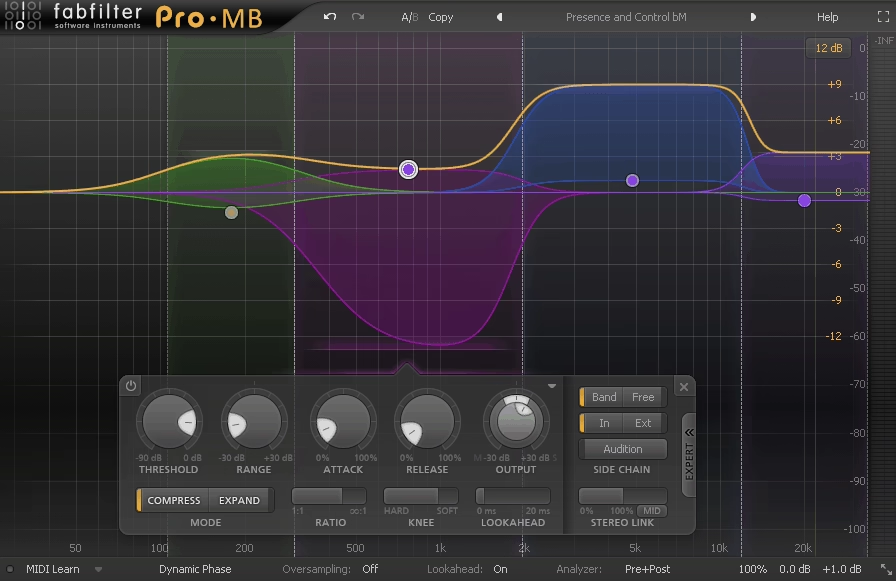
- Pro-MB handles multiband compression and expansion, which is a notoriously difficult tool to use without causing more problems than it solves, but FabFilter’s visual approach to showing you what each band is doing and when makes the setup process more manageable and transparent than in most alternatives.
SoundToys’ contribution to the EQ and dynamics world is more limited: the Sie-Q is a vintage-voiced equalizer inspired by the famous Siemens W295b hardware, with a musical quality that adds warmth rather than surgical control, and the Devil-Loc series offers what SoundToys calls an “audio level destroyer,” a creative compression tool designed for dramatic, audible gain reduction effects on drums and other rhythmic material.
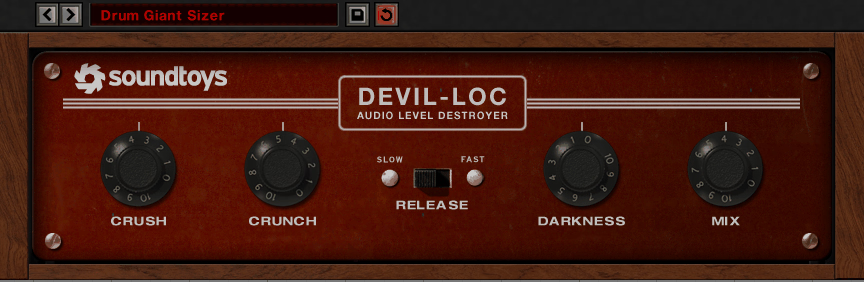
Neither of these is trying to compete with FabFilter in the professional EQ and dynamics territory; they’re doing something completely different with a much more specific application.
Saturation, Delay and Modulation: SoundToys’ Focus
Where SoundToys genuinely dominates and where FabFilter has less to offer is in the territory of hardware-modeled saturation, delay, and modulation effects.
- Decapitator stands alone in what it does at its price point. The five drive styles (A, E, N, T, and G standing for the specific hardware pieces they’re modeled after) each have a distinct sonic character that responds dynamically to the signal, and the Tone control shapes the harmonic emphasis of the saturation in a way that lets you dial in exactly how much top end or body you want the effect to add. At subtle settings it adds the kind of warmth and density that makes elements feel like they’ve been through real hardware. At aggressive settings it gives you a specific kind of distortion that’s difficult to replicate with any other tool.
- EchoBoy contains an entire history of delay hardware in a single plugin. The 15 different echo modes cover the specific characters of physical tape delay units, spring-based delays, oil can delays, and digital delays, and each mode has its own unique degradation, modulation, and filtering characteristics. The Rhythm Echo feature lets you program rhythmic delay patterns on a grid that stays locked to your DAW tempo, which opens up delay programming possibilities that hardware units can’t manage. On top of that, each hardware model’s Tweak panel gives you circuit-level parameter access that most delay emulations don’t expose.
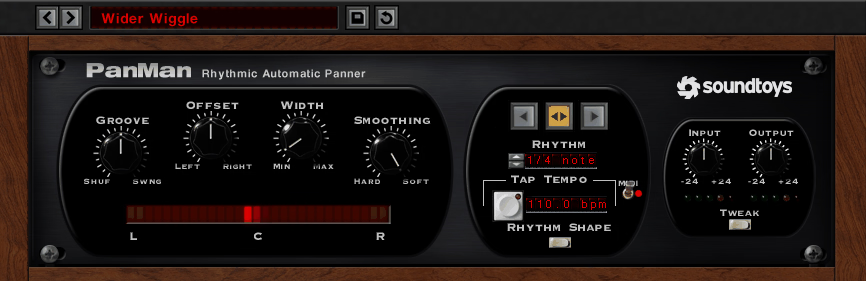
- PanMan takes auto-panning well beyond the basic left-right sweep and adds tempo-locked rhythmic patterns, an LFO with extended range down to 0.01 Hz for extremely slow movement, and the analog color that gives the panning motion physical weight and character rather than the mechanical precision of most software panning tools.
- Crystallizer is one of those plugins that people often struggle to describe but recognize immediately when they hear it. Built around granular reverse echo technology inspired by the Eventide H3000, it captures small grains of audio and plays them back in reversed order with pitch shifting and time manipulation, creating effects that range from subtle shimmer and sparkle to completely alien textures that transform their source material into something unrecognizable.
- FilterFreak (in its dual-filter version) emulates the kind of analog filter sweeps that defined a certain era of electronic music production, with a warmth and responsiveness in the cutoff movement that software filter plugins often feel too precise and clinical to replicate. Synced to tempo, FilterFreak creates pulsing, rhythmic filter effects that feel physical and energetic in a way that standard filter plugins don’t.
FabFilter’s Saturn 2 covers the saturation territory with more technical control and less of the hardware-specific coloring that SoundToys specializes in. Saturn 2 is exceptional at controlled, multiband saturation where you want to add specific amounts of harmonic content to specific frequency ranges with modulation capabilities that respond to the dynamics of the signal. For a different kind of saturation job, Decapitator and Saturn 2 are not really competing: they’re producing different results that serve different applications.
Workflow and Visual Interface
Both brands have strong interface philosophies, but they land on opposite ends of the design spectrum.
- FabFilter’s Interface
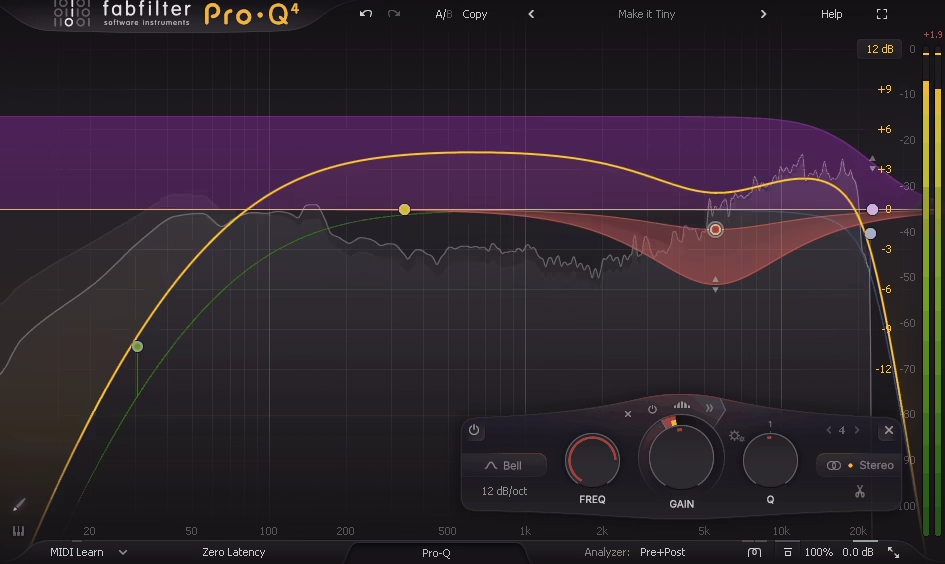
FabFilter’s interface design is built around information density and real-time feedback. Every parameter change is reflected immediately in a visual display that makes it clear what’s happening to the audio. The Pro-Q 4 shows you the spectrum of the audio being processed behind the filter curve at all times, with different colors for different tracks if you’ve opened it in the spectrum analyzer mode, so you can see frequency buildup and clashes between elements without switching windows.
The Pro-C 3 shows the exact amount and timing of gain reduction in a visual display that makes it easy to dial in attack and release settings by eye. The Pro-L 2 shows peak levels, true peak levels, and LUFS readings simultaneously so you have all the metering information you need in one view.
The underlying design logic is that what you see should be exactly what you’re doing, with no hidden parameters and no black-box processing. Every knob, slider, and button is visible and labeled, and the interface scales smoothly to any screen size.
- SoundToys’ Interface
SoundToys’ interfaces are built around immediacy and usability, with controls that feel like hardware units you’d encounter in a professional studio.
The interfaces have a vintage-instrument aesthetic that reflects the hardware inspiration behind each plugin, and the Tweak panels that expand to show deeper circuit-level controls are structured to keep the most common parameters front and center while hiding the more specialized options for when you need them. Version 5.5 added resizable interfaces to all individual plugins, which was a frequently requested feature that modernized the workflow meaningfully.
The Effect Rack is SoundToys’ most distinctive workflow innovation: it lets you chain up to 14 SoundToys effects into a single plugin window, assign each effect to specific input channels, and save the entire chain as a named preset.
This means you can build your personal vocal chain, your drum bus processing chain, or your creative effects setup in advance and recall it as a single unit on any track, without opening multiple windows or managing individual plugin instances.
Bundle Options and Pricing
- FabFilter Total Bundle
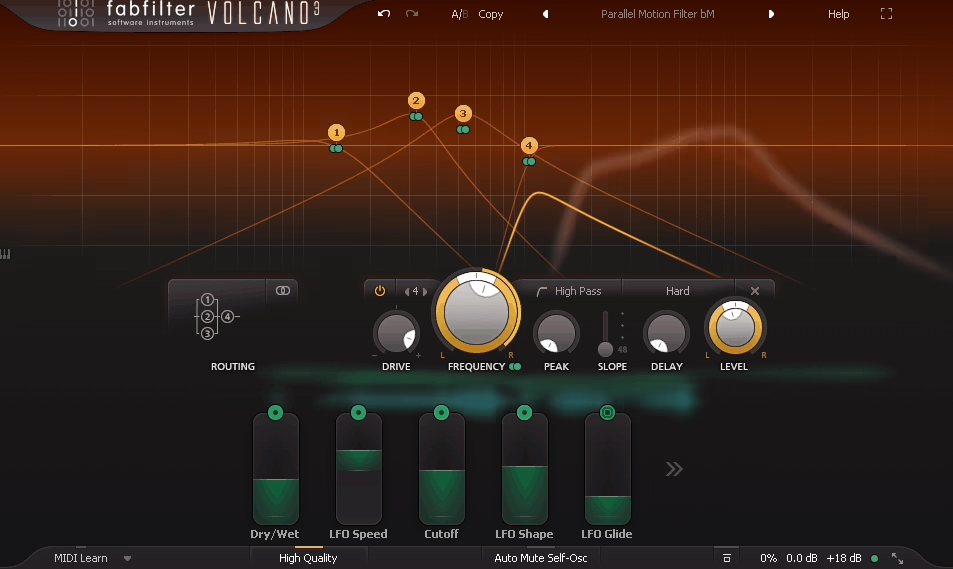
The FabFilter Total Bundle contains all 14 plugins: Pro-Q 4, Pro-L 2, Pro-C 3, Pro-MB, Pro-R 2, Pro-DS, Pro-G, Saturn 2, Timeless 3, Volcano 3, Twin 3, One, Simplon, and Micro. At a full price of approximately $1,069, it’s a significant investment, though it’s one of the few bundles in the industry that represents a clear professional toolkit from start to finish with no gaps in coverage.
FabFilter sells plugins individually at prices ranging from $29 for Micro up to $199 for Pro-Q 4, and they offer an upgrade system that lets you apply what you’ve already spent on individual plugins toward bundle purchases. This means you can start with Pro-Q 4 or Pro-L 2 as your entry point and work toward the Total Bundle over time rather than committing the full price upfront.
FabFilter runs periodic promotions but doesn’t have aggressive sale cycles the way many plugin companies do. The most common price reductions appear during the company’s anniversary sales and occasional product-specific promotions. Student and educator discounts are available and bring prices down substantially.
- SoundToys 5 Bundle
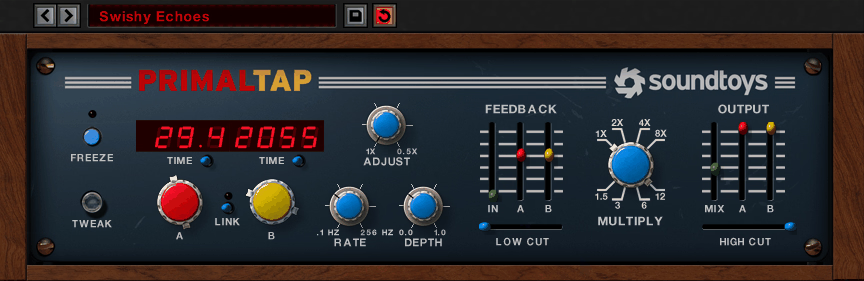
The SoundToys 5.5 bundle contains all 23 plugins including the Effect Rack, Decapitator, EchoBoy, SuperPlate, SpaceBlender, Little AlterBoy, Crystallizer, FilterFreak 1 and 2, PanMan, PhaseMistress, Tremolator, PrimalTap, MicroShift, Sie-Q, Radiator, Devil-Loc, and the Little versions of several of these. At a regular price of approximately $499, it represents strong value for the scope of what’s included.
SoundToys runs deep sales regularly, with promotional periods bringing the bundle down to as low as $249 to $399 depending on the promotion.
Most of the flagship plugins including Decapitator, EchoBoy, and Little AlterBoy are available individually for prices between $99 and $199, which gives you a targeted entry point if you’re only after one or two specific tools. Some of the smaller plugins (EchoBoy Jr., Little MicroShift, Little PrimalTap, Devil-Loc, and Little Radiator) are only available inside the bundle and can’t be purchased separately.
Genre Fit
- FabFilter
FabFilter’s tools are genre-agnostic by design, since precision EQ, transparent compression, and accurate limiting serve every style of music equally well. That said, certain genres benefit from FabFilter’s specific strengths more acutely than others. Mastering engineers across all genres rely on Pro-Q 4, Pro-L 2, and Pro-MB as foundational tools.
Electronic music producers who work in high-headroom productions with precise frequency management tend to reach for FabFilter more than any other brand. Film and TV mixing engineers use Pro-Q 4’s spectrum analyzer to identify and solve dialogue frequency conflicts. Podcasters and broadcast engineers use Pro-L 2’s LUFS metering for loudness compliance.
Saturn 2’s multiband saturation also serves electronic music, hip-hop, and pop production particularly well for the kind of controlled harmonic enhancement that makes synths and programmed elements feel more physical without adding the obvious hardware character of Decapitator.
- SoundToys
SoundToys’ plugins have strong genre associations based on the hardware they emulate and the type of processing they deliver. EchoBoy appears in virtually every genre where delay is used musically, which is effectively all of them, but it’s most associated with pop, R&B, hip-hop, and rock production where the warmth of hardware tape echo is a defining part of the aesthetic.
Decapitator is considered essential in hip-hop, trap, and R&B production for the specific saturation character it adds to 808s, kick drums, and bass, and is equally used in rock and indie production for guitar and drum bus warmth. Little AlterBoy is a staple in pop and contemporary R&B vocal production, where pitch shifting and formant manipulation have become central production tools.
FilterFreak and PhaseMistress are most at home in electronic music and dance music production where rhythmic modulation effects define the sound character of tracks.
Trials and Demo Policy
- FabFilter Trials
FabFilter offers a 30-day fully functional free trial for every plugin in the catalog, with no watermark, no output limitation, and no save restrictions. You download the full version of the plugin, use it for 30 days exactly as you would the purchased version, and at the end of 30 days you either buy it or stop using it.
The trial experience is identical to the purchased experience, which means you can actually evaluate the plugin in real production sessions rather than trying to judge it through artificially constrained previews.
All FabFilter plugins are available for trial simultaneously as part of the Total Bundle trial, so if you download the trial bundle you can evaluate all 14 plugins across a full month of production work before deciding what to buy.
- SoundToys Trials
SoundToys also offers a 30-day fully functional trial for the complete Soundtoys 5 bundle, with the same no-limitation approach as FabFilter. You get full access to all 23 plugins for 30 days and can use them exactly as you would the purchased version.
For a bundle as large as Soundtoys 5, this is genuinely the right way to evaluate it, because some of the plugins like Crystallizer and SpaceBlender take time to understand and incorporate into your workflow, and a 30-day trial gives you real production time to find how they fit into your sessions.
Both companies take the trial experience seriously, which reflects confidence in the quality of the products and gives you a fair way to evaluate without committing money upfront.
Do You Need Both?
The honest answer is yes, and most professional mixing engineers own both for exactly the reasons this comparison has been laying out throughout.
You need FabFilter for the things that require precision and control: your EQ, your mastering chain, your compressor and multiband dynamics, your de-esser, your reverb when you need controllable algorithmic room.
These are the tools that help you build a mix that’s balanced, translates well across playback systems, and meets loudness targets for whatever platform you’re delivering to. They’re the tools where FabFilter’s commitment to transparency and visual feedback creates a genuinely different experience from any alternative.
You need SoundToys for the things that require character and vibe: your vocal delays where the warmth of EchoBoy makes the singer feel like they’re in a specific kind of room, your saturation where Decapitator’s analog response makes a kick drum or synth bass feel physical, your plate reverb where SuperPlate gives you the density that algorithmic reverbs never fully replicate, your vocal pitch effects where Little AlterBoy gives you the formant and pitch control that’s become a standard part of contemporary vocal production.
If you’re building your collection from scratch and budget is a concern, the most efficient starting path for most producers is Pro-Q 4 and Pro-L 2 from FabFilter as your first investments (covering EQ and mastering limiting, the two most universally essential precision tools), and Decapitator and EchoBoy from SoundToys as your first investments on the character side (covering saturation and delay, where SoundToys’ advantage over alternatives is most clear). From there you can work outward in either direction based on what gaps appear in your productions.
The Bottom Line
FabFilter and SoundToys are the two most commonly mentioned brands when professional mixing engineers talk about their plugin essentials, and the reason they keep coming up together is that they answer genuinely different questions about what a mix needs.
Choose FabFilter first if your mixing and mastering process needs stronger, more precise foundations: if your EQ work is imprecise, if your limiting is distorting at normal levels, if your dynamics processing is inconsistent, or if your mix doesn’t translate well across speakers, FabFilter’s transparency-focused tools will have the most immediate impact on the quality of what you’re delivering.
Pro-Q 4 is worth the investment for most producers even if it’s the only FabFilter plugin you buy, because no other EQ gives you the same combination of precision, flexibility, and real-time visual feedback that makes mixing decisions easier and faster to execute.
Choose SoundToys first if your mix is technically solid but feels lifeless or clinical, if the delays and reverbs you’re using feel generic and forgettable, if the saturation on your drums and bass doesn’t have the physical quality you’re hearing in reference tracks, or if your vocals feel like they’re sitting on top of the mix rather than inside it.
EchoBoy and Decapitator are the two plugins most likely to give you an immediate sense of what SoundToys is doing that your current tools aren’t, and they represent the most approachable entry points to the brand’s catalog before buying the full bundle.
For most working producers, both collections end up in the toolkit eventually, and the investment is one that rarely gets questioned once both are in regular use.
Get the Free Plugin Starter Kit
The genuinely useful free DAWs and plugins worth installing. No filler. Straight to your inbox.

Hello, I’m Viliam, I started this audio plugin focused blog to keep you updated on the latest trends, news and everything plugin related. I’ll put the most emphasis on the topics covering best VST, AU and AAX plugins. If you find some great plugin suggestions for us to include on our site, feel free to let me know, so I can take a look!