
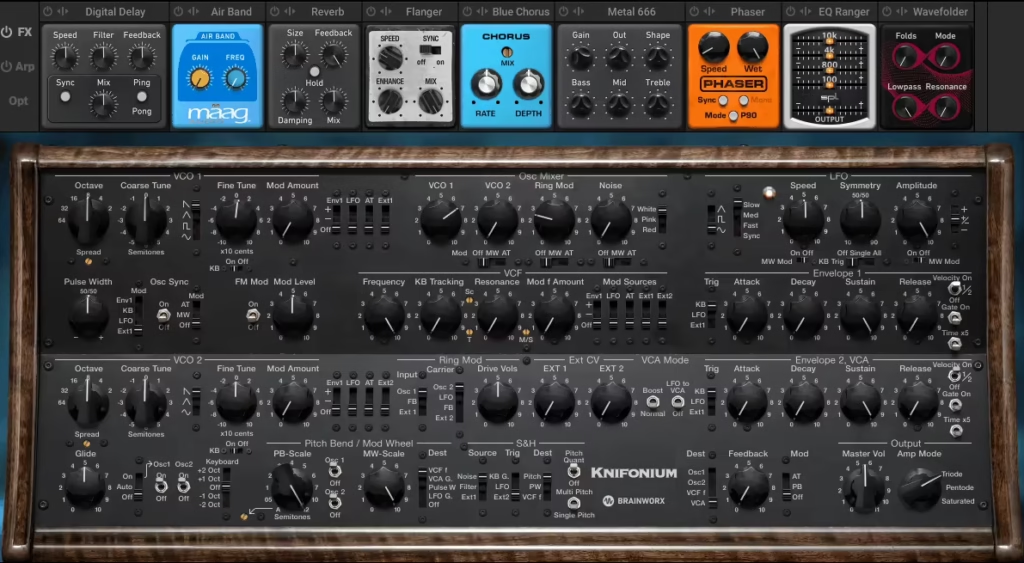
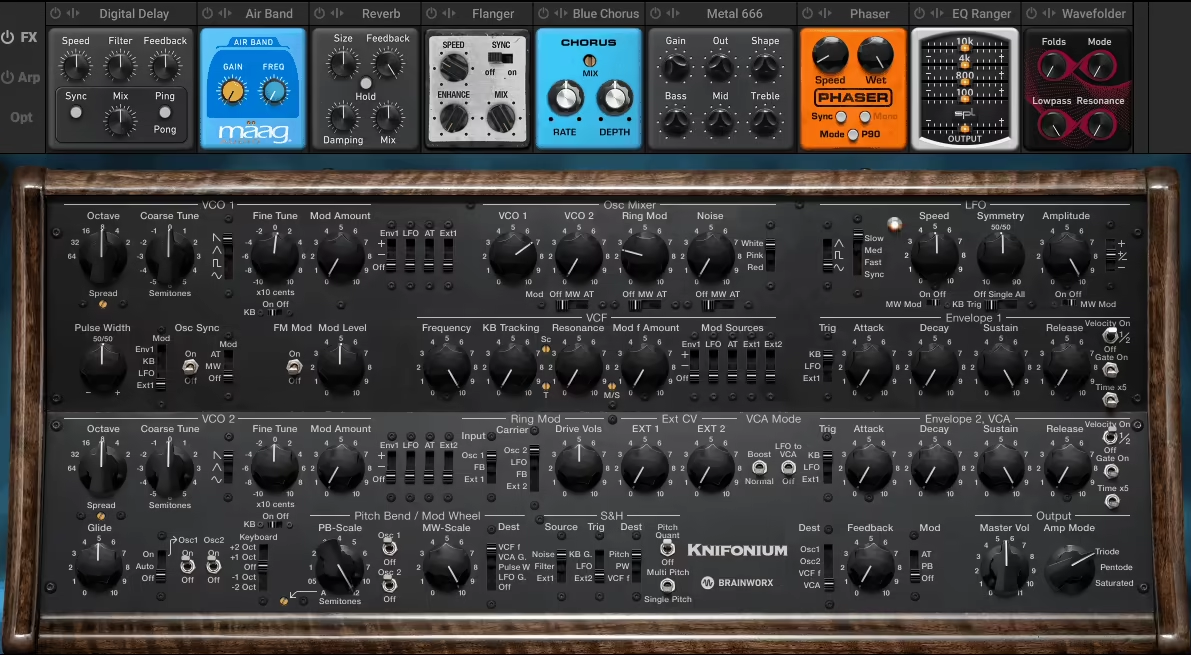
Knifonium has one of the more unusual origin stories in the plugin world. The original hardware is a handmade boutique monosynth designed by Finnish audio engineer Jonte Knif, built in extremely small batches, each unit driven by 26 vacuum tubes and featuring reverse-color ebony keys with a steampunk aesthetic that looks like something out of a science fiction film.
Fewer than two dozen hardware units have ever been made. The original is so expensive that most producers will never even see one in person, which is exactly where the plugin version comes in.
Brainworx partnered with Knif Audio through Plugin Alliance to create a faithful emulation that captures the character of the original while adding features that wouldn’t be possible in the analog world, putting this rare boutique instrument in reach of regular producers.
So, is Knifonium worth the investment? Definitely it is. Especially if you care about character, tube warmth, and sounds that stand out from the usual analog emulation crowd. There’s genuinely nothing else quite like it on the market, and the blend of tube-driven sound, M/S processing, polyphony, and the BX effects section makes it a unique tool rather than just another analog synth plugin.
For me, what makes this plugin so compelling is how immediately characterful the sound is. Load up a patch, play a note, and everything you hear has this rich, saturated, three-dimensional quality that’s genuinely hard to pull off with other plugin synths.
From the Pluginerds Store
One more thing before you finish reading: we also stock studio hardware and accessories directly through Pluginerds Shop. Microphones, interfaces, controllers, cables, and the small stuff that never comes included with anything.
Visit Pluginerds ShopWhat Sets It Apart From Other Monosynths
Most analog-modeling monosynth plugins follow a pretty predictable formula. You get two or three oscillators, a filter, some envelopes and LFOs, maybe a ring mod, and a handful of effects. Knifonium covers those basics, sure, but the way it delivers them is completely different from what you’d expect.
The defining quality here is the tube character that runs through every part of the signal path. Every oscillator, filter, amp stage, and output section in the original hardware uses vacuum tubes, and Brainworx modeled all of them using their Tolerance Modeling Technology (TMT), which simulates the natural variations you’d find between real hardware units.
Here’s what genuinely makes it stand out:
- 26 Modeled Vacuum Tubes:
Every stage of the signal path has tubes running through it, layering saturation, warmth, and harmonic richness cumulatively as the signal travels through the synth.
- Up to 208 Tubes in Polyphonic Mode:
Switch the plugin into 8-voice polyphony (something the original hardware can’t do), and you’re essentially running eight full tube synths side by side, stacking that tube character into something legitimately massive.
- Tolerance Modeling Technology:
Brainworx’s TMT patent models the natural variations between components in real hardware, giving each voice subtly different envelope parameters, pitch, and LFO speeds, which mirrors exactly how real analog polyphony behaves.
- Three Output Distortion Modes:
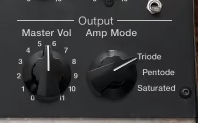
At the output stage, you get a choice between Triode, Pentode, and Saturated modes, with no clean option included. Getting a pristine, sterile signal out of this plugin simply isn’t possible, because it’s explicitly designed to impart character at every stage.
- Mid/Side Filter Processing:
The filter offers an adjustable mid/side spread that processes the mid and side signals independently, which is a level of stereo flexibility you basically never see on a monosynth plugin.
I love how committed the plugin is to its own identity. It’s not trying to be a transparent analog synth or a chameleon that does everything, it’s a tube-driven boutique monosynth, and every design decision reinforces that specific character.
“With all those tubes warming things up, the sound is smokey, characterful, and classy, like an aged single-malt whiskey.”
Get the Free Plugin Starter Kit
The genuinely useful free DAWs and plugins worth installing. No filler. Straight to your inbox.
Signal Flow (Oscillators to Output)
The signal flow in Knifonium follows a classic subtractive synthesis path, but with a few unique twists that give the plugin its distinctive character.
Starting at the source, you’ve got two tube-driven oscillators, each offering the standard waveform options (sine, triangle, saw, square, pulse with variable width) plus noise. Both oscillators can be tuned independently, and frequency modulation is available between them for creating more complex harmonic content or getting genuinely gnarly sounds when you push things hard.
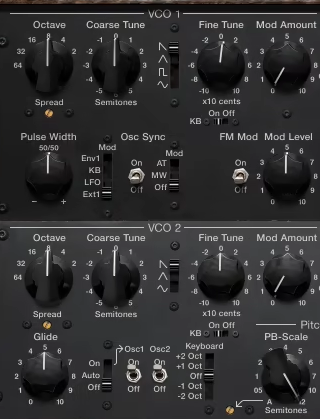
Everything funnels into a mixer stage where the oscillator levels get blended, which is where the first layer of tube saturation really kicks in. Pushing the oscillator gain at the mixer is one of the easiest ways to dial in more warmth and saturation before the signal even reaches the filter.
Next in line is a 4th order ladder filter with the specific character that Jonte Knif designed into his original hardware. You get the classic low-pass ladder sound you’d expect from vintage analog gear, but with its own personality and response curve that feels genuinely distinctive.
After filtering, the signal hits the amplifier stage, which is where the Amp Mode parameter lives. This is your choice between Triode, Pentode, and Saturated output character, each adding its own flavor of tube distortion and compression to the finished sound.
What I appreciate most about the signal flow is how every stage contributes to the character. You’re not just hearing saturation tacked on at the end, you’re hearing it woven into the entire sound from oscillator to output.
Feedback, Ring Mod, and Sample & Hold
Beyond the standard subtractive synthesis features, Knifonium packs some more unusual tools that open up significantly more creative territory.
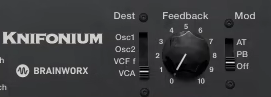
Take the feedback circuit, which is one of the most interesting features in the whole plugin. You can route feedback to either oscillator, the VCA, or the filter, with completely different results depending on where you send it. Feeding the signal back into the oscillator produces chaotic, self-modulating textures. Routing it to the filter creates howling resonances. Sending it to the VCA generates pumping, breathing effects that have a distinctly analog feel to them.
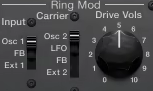
Now for the ring modulator, which turns out to be surprisingly flexible compared to the ring mod you’d find on most plugin synths. Separate drive and volume knobs sit alongside multiple options for both the input and carrier signals, including feedback. This lets you set up complex ring modulation scenarios where the modulator itself gets fed back through the circuit, producing metallic, bell-like tones or completely unpredictable harmonic textures.
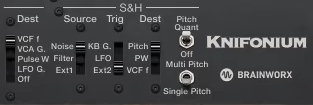
Then there’s the sample and hold circuit, which is the classic analog tool for creating random stepped modulation, and the implementation here feels appropriately vintage. Pairing S&H with the LFO speeds and envelope modulation destinations lets you build evolving, rhythmic patches that move and breathe in ways that static preset design simply can’t match.
For me, these secondary features are where sound designers will spend the most time once they’ve gotten comfortable with the basic signal flow. Combining feedback, ring mod, and S&H gives you access to corners of the sonic universe that cleaner, more polite analog synths simply can’t reach.
Arpeggiator
The built-in arpeggiator in Knifonium is another one of those features that adds real creative value beyond the core synth engine.
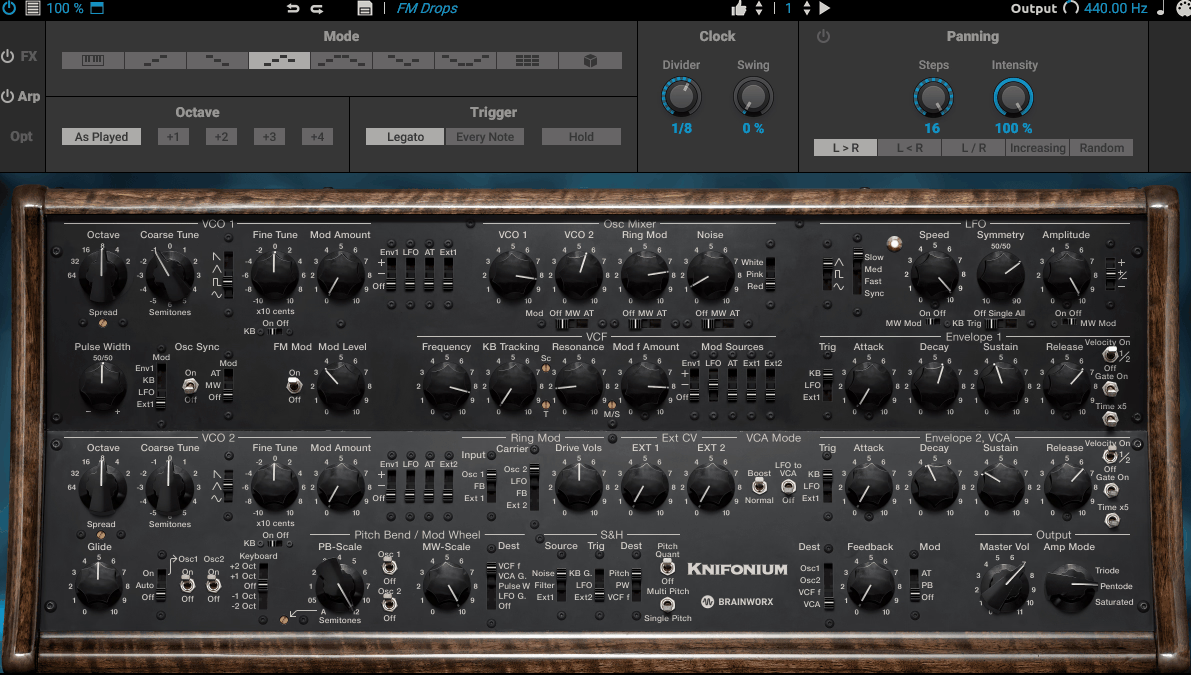
Unlike the simple up/down arpeggiators you find on most plugins, this one includes flexible panorama (panning) controls, which means each note in the arpeggiated sequence can be placed at a different position in the stereo field. I love how this adds immediate movement and dimension to arpeggiated patches, turning a static sequence into something that feels like it’s dancing across the stereo image.
You get the standard direction modes (up, down, up/down, random) along with tempo sync, rate controls, and gate length adjustment.
Combining the arpeggiator with the tube-driven character of the synth and the stereo spread options produces genuinely stunning results, especially for ambient, cinematic, and synthwave contexts where evolving arpeggiated patterns are a core element of the sound.
I’ve found the panning controls particularly useful for building arpeggiated patches that already feel finished the moment you load them. Rather than having to manually pan individual notes or apply external spatial effects, you just let the arpeggiator handle the movement, and the results usually sound more musical than what you’d get from post-processing.
Effects
Effects section in Knifonium is one of the features that really extends the plugin’s usefulness beyond just the raw synth engine.
Rather than generic built-in effects, Brainworx included a carefully curated selection of their acclaimed plugin algorithms, so the effects feel like studio-grade processors rather than afterthoughts. The selection covers pretty much every effect you’d want for finishing synth sounds inside the plugin, and it breaks down into three functional groups:
- Time-Based and Space Effects:
This group handles movement, ambience, and spatial processing through the Digital Delay, Reverb, Flanger, Phaser, and Blue Chorus. The Digital Delay gives you clean, precise echoes with tempo sync and feedback for rhythmic patterns. The Reverb adds solid space and dimension to patches that need ambience.
The Flanger and Phaser bring classic sweeping, swirling movement to pads and leads, while the Blue Chorus is a lush, vintage-style chorus that pairs beautifully with the tube character of the synth.
- Tonal Shaping and EQ:
Here you’ve got the Mäag Air Band and the SPL EQ Ranger, two legitimate EQ processors pulled straight from Brainworx’s catalog. The Mäag Air Band is modeled after the famous Mäag Audio EQ and adds silky high-frequency air to patches without getting harsh.
The SPL EQ Ranger offers surgical frequency-specific EQ modeled on SPL hardware, giving you precise tonal shaping for dialing in the exact character you want.
- Distortion and Harmonic Tools:
The aggressive side of the effects section lives here with the Metal666 Amp Simulation and the Wavefolder. Metal666 pushes your synth into heavy guitar amp territory when you want that kind of attitude, while the Wavefolder creates harmonic distortion by folding the waveform back on itself, producing complex overtones and aggressive textures that go beyond standard saturation.
What I appreciate about the effects section is how high-quality each individual processor is. These aren’t simplified plugin versions of effects, they’re legitimate processors from Brainworx’s catalog, which means you can finish patches inside Knifonium without feeling like you need to route out to external effects plugins.

Opt Section
The Opt (Options) section is where Knifonium handles some of the deeper configuration settings that really shape how the synth responds to your playing.
- Voice Handling
At the top of this section you’ll find the voice handling controls, which is where the plugin breaks away from the monophonic nature of the original hardware.
The Voices knob lets you choose between 1, 2, 4, or 8 voices, which is how you move from the original monophonic experience into full polyphonic territory. Running the plugin at 8 voices means you’re essentially stacking eight full tube synths together, which is where those massive 208-vacuum-tube pad sounds come from.
Next to the voice count, the TMT switch toggles Tolerance Modeling Technology on and off. With TMT engaged, each voice gets slightly different envelope parameters, pitch, and LFO speeds, which mirrors the natural component variations you’d find in real analog hardware. Leaving TMT off gives you a more uniform, precise sound, while turning it on adds that organic, slightly unpredictable quality that makes analog hardware feel alive.
The Unison switch stacks multiple voices together on each note for thicker, richer sounds. Paired with the stereo spread controls, unison mode is how you build those wide, lush textures that feel more like a vintage polysynth than a traditional monosynth.

- Velocity Mode
Below the voice handling, the Velocity Mode switch lets you choose between Single and Multi modes.
Single mode applies velocity response consistently across the entire patch, while Multi mode lets different voices respond to velocity independently. I’ve found Multi mode particularly useful for expressive playing where you want each note to have its own dynamic character rather than everything responding identically.
- Aftertouch Controls
The AT Amount knob sets how strongly aftertouch affects the assigned destinations, with a range from 0 to 10. Higher values produce more dramatic response to aftertouch pressure, while lower values keep things subtle and controlled.
The real flexibility comes from the Aftertouch Destination section, which includes six switches that let you route aftertouch to different parameters in the synth:
- Aftertouch Destinations
Six switches let you route aftertouch pressure to different parameters across the synth engine. Ring Carrier introduces metallic, bell-like harmonics through the ring modulator’s carrier signal. External In sends aftertouch to the external input level, which is useful when processing external audio through the synth.
When it comes to VCA Gain, it gives you expressive dynamic control through pressure rather than just velocity. Pulse Width modulates the oscillator pulse width for that classic PWM effect directly from your key pressure. VCF Res applies aftertouch to the filter resonance, which is one of my favorite destinations because it lets you push the filter toward self-oscillation dynamically as you press harder.
Next, Quantize routes aftertouch to the quantize parameter, adding stepped, glitchy modulation behavior that responds to pressure.
What I appreciate about the Opt section is how it turns Knifonium into a genuinely expressive instrument rather than just a static sound source. Combining MPE-style aftertouch control with the tube character and polyphonic capabilities opens up real performance possibilities, especially for players with controllers that support aftertouch properly.
Who It’s For
As for who should actually pick this one up, I’d say Knifonium is best suited for sound designers, ambient and experimental producers, film scoring composers, and anyone who cares more about character than transparent accuracy. Producers working in synthwave, ambient, industrial, cinematic, or experimental electronic music where sonic personality matters will get real mileage from this plugin.
Keep in mind that this synth isn’t the right tool for every context. Producers focused on clean, modern pop or hip-hop where pristine, focused synth sounds are the goal will probably get more practical use out of cleaner analog-modeling plugins like Diva, Repro, or TAL-U-NO-LX. If your workflow revolves around deep modulation, wavetable synthesis, or modern sound design features, Serum or Phase Plant will serve you better.
That said, for producers who genuinely care about character, tube warmth, and sounds that stand apart from the crowd, Knifonium is one of those plugins that earns a permanent spot in your rotation rather than sitting unused after the initial excitement wears off.
A fully-functional 14-day trial is available, which I’d recommend using before purchasing to make sure the plugin fits your workflow.
Check here: Knif Audio Knifonium (Trial Available)
Get the Free Plugin Starter Kit
The genuinely useful free DAWs and plugins worth installing. No filler. Straight to your inbox.

Hello, I’m Viliam, I started this audio plugin focused blog to keep you updated on the latest trends, news and everything plugin related. I’ll put the most emphasis on the topics covering best VST, AU and AAX plugins. If you find some great plugin suggestions for us to include on our site, feel free to let me know, so I can take a look!