
Roland’s Juno and Jupiter synthesizers defined the sound of the 1980s so thoroughly that their influence is still everywhere in modern music. You hear the Juno chorus on virtually every synthwave record released in the last decade. The Jupiter-8’s filter shaped the pads and brass stabs on records from Prince to Depeche Mode to Tame Impala.
Even producers who’ve never touched the original hardware are chasing those sounds, whether they realize it or not. The specific warmth, width, and character of these instruments has become woven into the DNA of electronic music.
What separates the Juno and Jupiter from each other, and from other vintage synths, comes down to a few key design choices. The Jupiter series uses VCOs (voltage controlled oscillators) with two oscillators per voice, cross modulation, and dual filters, producing a thicker, more complex sound.
The Juno series simplifies things with a single DCO (digitally controlled oscillator) per voice and relies heavily on the BBD chorus circuit to add the width and warmth that the simpler oscillator section can’t produce on its own.
Both families share Roland’s signature filter character, but they get there in distinctly different ways.
I’ve gathered eight plugins that cover the full Juno/Jupiter range: official Roland emulations, respected third party alternatives, and free options. Some of you will want the most accurate emulation possible. Others will prioritize price, workflow, or specific features. There’s something here for each approach.
From the Pluginerds Store
Before we get into the synths, two things that are easy to overlook when you are focused on the instrument itself. A stable stand and a sustain pedal are worth having sorted before your first real session — neither comes with any synth on this list.


1. Roland JUPITER-8 (Official Flagship)
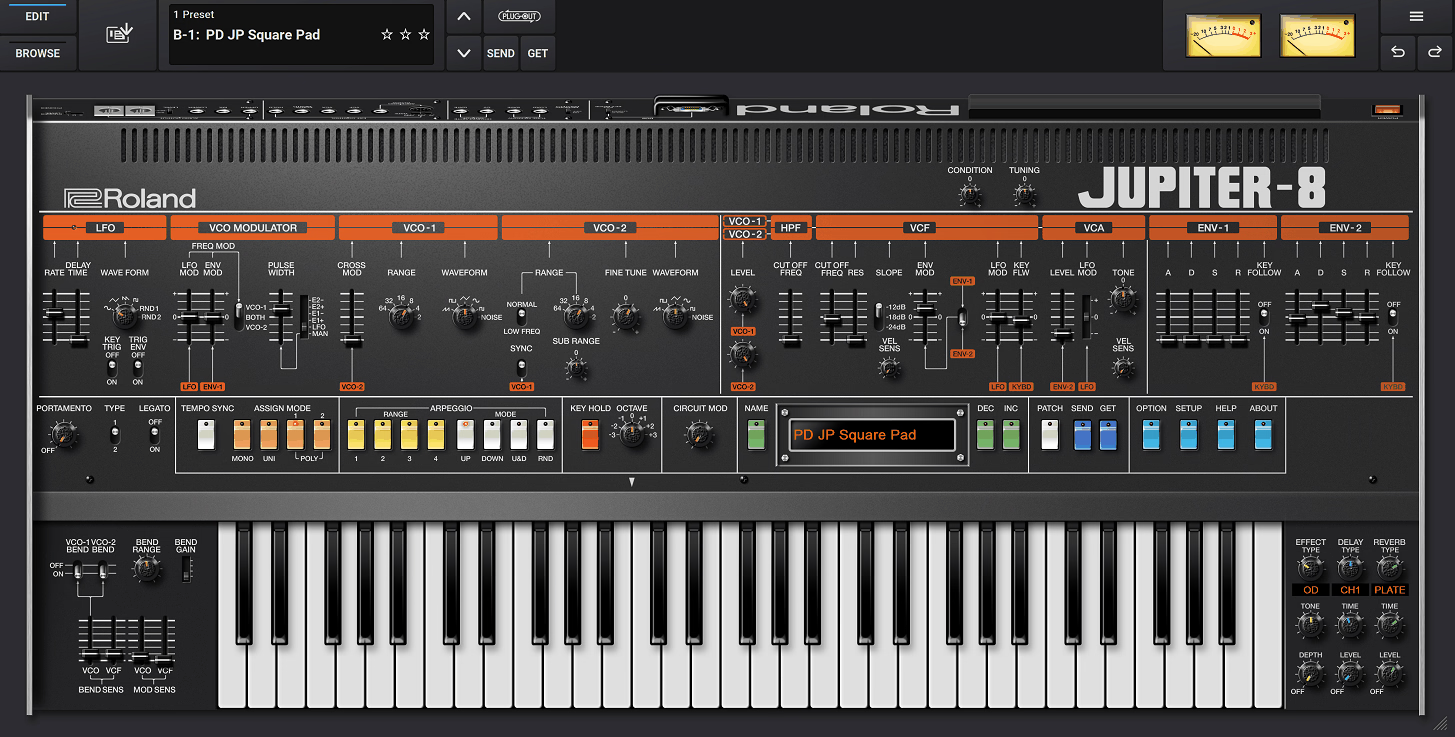
Sitting at the top of Roland’s polysynth hierarchy, the Jupiter-8 VST was the company’s most ambitious analog instrument, and their official plugin models it with ACB (Analog Circuit Behavior) technology that works from the original schematics rather than approximating the sound from recordings.
The eight voice polyphonic architecture with two VCOs per voice, dual filters, and extensive cross modulation gives it a harmonic richness that the simpler Juno series can’t replicate.
The difference between playing the Jupiter-8 plugin and a Juno plugin is immediately apparent. There’s more weight, more harmonic complexity, and more depth to the sound.
The two oscillator architecture means you can detune, sync, and cross modulate between oscillators within a single voice, which produces textures that are inherently more layered than what any single oscillator Juno patch can achieve. For cinematic pads, thick brass, animated leads, and the kind of evolving textures that dominated early 80s production, the Jupiter-8 is the instrument to reach for.
- Dual VCOs
Each of the eight voices features two voltage controlled oscillators with sawtooth, pulse, and square waveforms. The dual oscillator design lets you combine detuning, oscillator sync, and cross modulation within a single voice, which is the foundation of the Jupiter-8’s harmonic complexity that Juno’s single DCO architecture simply cannot match.
- Cross Modulation
Oscillator cross modulation routes one VCO’s output to modulate the frequency of the other, producing metallic, bell like, and harmonically dense timbres that standard detuning doesn’t create. This is the Jupiter-8’s most distinctive synthesis feature and the primary reason it sounds fundamentally different from Juno instruments.
- Filter Architecture
Separate high pass and low pass filters can operate in tandem to sculpt the frequency spectrum from both directions simultaneously. The dual filter design provides tonal shaping options that a single filter can’t replicate, and the interaction between the HPF and LPF is a significant part of the Jupiter-8’s identity.
- Voice Assign
Multiple voice assignment modes (Poly I, Poly II, Unison, Solo) change how the eight voices respond to your playing. Poly II reassigns voices in a round robin pattern that prevents the same voice from retriggering, which adds subtle variation to repeated notes. Unison stacks all eight voices on a single note for massive, detuned leads.
Available from Roland in VST, AU, and AAX formats.
Get the Free Plugin Starter Kit
The genuinely useful free DAWs and plugins worth installing. No filler. Straight to your inbox.
2. Roland JUNO-60 (Official Classic)
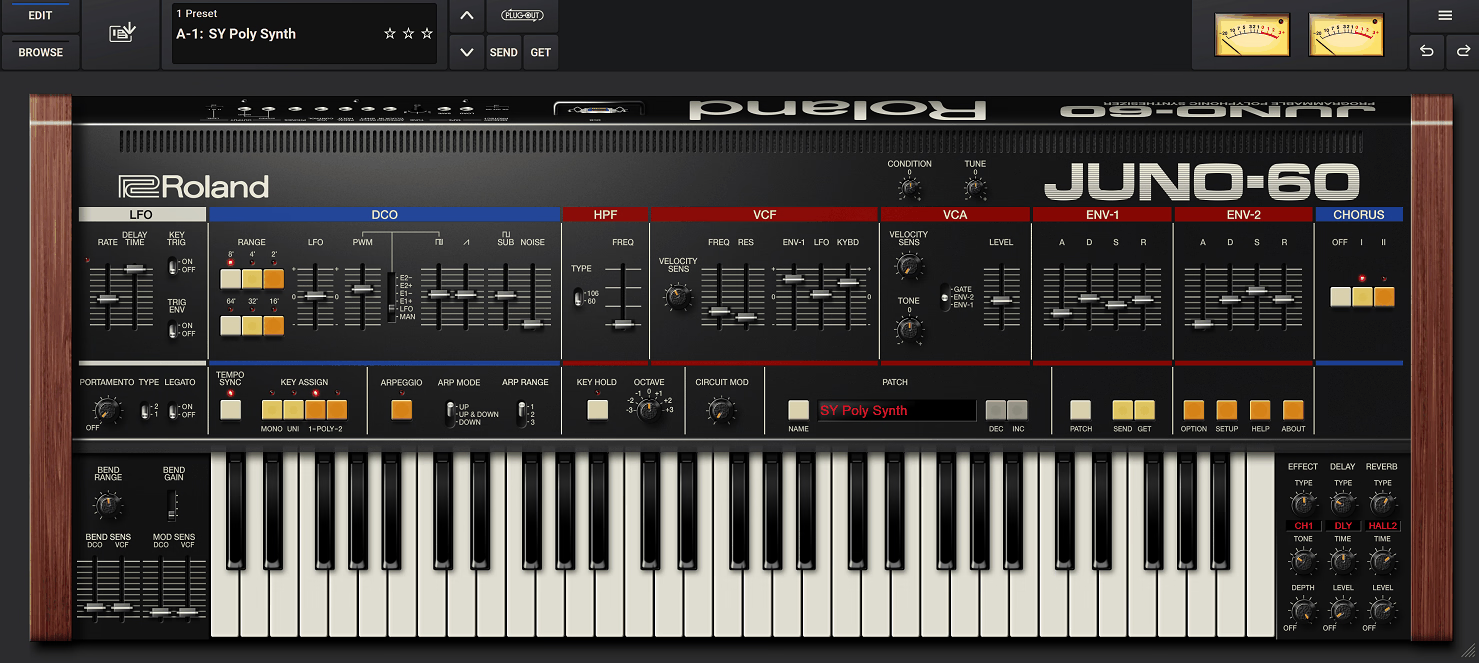
If I had to pick one synthesizer sound that defines the last forty years of electronic music, it would probably be a Juno-60 pad with the chorus on setting II.
That specific combination of the single DCO tone, the 24 dB Roland filter, and the BBD chorus creates a width and warmth that has become almost synonymous with the word “synth” in popular culture. Roland’s JUNO-60 plugin models this instrument with the same ACB approach used across their vintage synth lineup.
What makes the JUNO-60 so enduring isn’t complexity. It’s actually the opposite. The architecture is deliberately simple: one oscillator per voice, one filter, one LFO, one envelope. There aren’t many parameters to adjust, which means you arrive at usable sounds quickly.
The chorus does the heavy lifting, transforming those simple, clean tones into lush, wide, shimmering textures that fill a mix without competing for attention. For ambient, synthwave, house, and pop production, the Juno-60 sound is a foundational element you’ll keep coming back to.
- BBD Chorus
The modeled Bucket Brigade Device chorus is arguably the most important component of the entire instrument. The three settings (I, II, and I+II) each produce a different character of width and modulation. Setting II alone has appeared on so many recordings that it’s become the default reference point for what synth chorus should sound like.
The BBD modeling captures the specific analog warmth and subtle imperfections that digital chorus algorithms don’t replicate.
- DCO Character
The digitally controlled oscillator produces pitch stable waveforms (sawtooth, pulse with variable width, and a sub oscillator) that lack the drift of VCO based instruments. This stability is a feature: it gives the Juno-60 a clean, precise foundation that the chorus then adds width and movement to. The combination of a stable source with an analog modulation effect is what creates the Juno’s signature balance.
- Envelope Response
The ADSR envelope has a specific response curve that affects how sounds attack and decay. The envelope’s behavior is one of the more subtle aspects of the Juno sound, but it contributes to why patches feel responsive and musical rather than generic. Fast attacks have a particular snap, and longer decays taper naturally.
- High Pass Filter
A non resonant HPF shapes the low frequency content before it reaches the main LPF. Adjusting this filter changes the weight and body of every patch in a way that’s easy to underestimate until you hear the difference. Rolling off the lows before filtering from the top produces a thinner, more focused tone that sits differently in a mix.
- Arpeggiator
The built in arpeggiator provides rhythmic, animated sequences with up, down, and up/down patterns. The arpeggiator locks to your DAW’s tempo, and its specific triggering and timing behavior contribute to the rhythmic character of classic Juno productions.
- Patch Memory
The plugin reproduces the 64 memory patch system that the Juno-60 offered, which was a significant upgrade over the Juno-6 that preceded it. Recalling patches instantly makes the Juno-60 practical for live performance and session work where quick sound changes are essential.
Available from Roland in VST, AU, and AAX formats.
3. TAL-Pha (Alpha Juno II Emulation)
Most Juno/Jupiter discussions focus on the 60, 106, and Jupiter-8, but there’s another member of the Roland family that deserves more attention. The Roland Alpha Juno II (1986) is the synth responsible for the infamous “hoover” sound that powered 90s rave, hard house, and trance music.
TAL-Pha from Togu Audio Line models this specific instrument, filling a gap that no other major developer has seriously addressed.
The Alpha Juno sits in a transitional period between Roland’s fully analog Junos and their later digital instruments. It uses a DCO with a unique PWM implementation and Roland’s proprietary waveforms that produce sounds the standard Juno-60/106 architecture can’t replicate.
It captures this character and extends it with resonance boost for filter self oscillation (something the original couldn’t do), stereo unison mode, and MPE support. If you’re producing anything that draws on 90s rave or electronic music, this is a plugin worth investigating.
- Unique Waveforms
The Alpha Juno II’s DCO generates waveforms that differ from the standard Juno-60/106 offerings, including proprietary shapes that produce the raw, aggressive tones associated with rave and hard house music. The specific PWM implementation allows modulation and sync of the pulse component in ways that the earlier Junos didn’t support.
- Self Oscillation
TAL added a resonance boost that pushes the filter into self oscillation territory that the original Alpha Juno hardware couldn’t reach. This transforms the filter into a tone generator, expanding the sound design possibilities beyond what the original instrument offered.
- Hardware Editor
The plugin can read sysex data from the original Alpha Juno II/MKS-50 hardware and also function as a hardware controller, sending parameter changes back to the physical instrument. For owners of the original hardware, this dual function is genuinely useful.
Available from Togu Audio Line in VST, VST3, AU, AAX, and CLAP formats.
4. Roland JUPITER-4 (Vintage Four Voice)
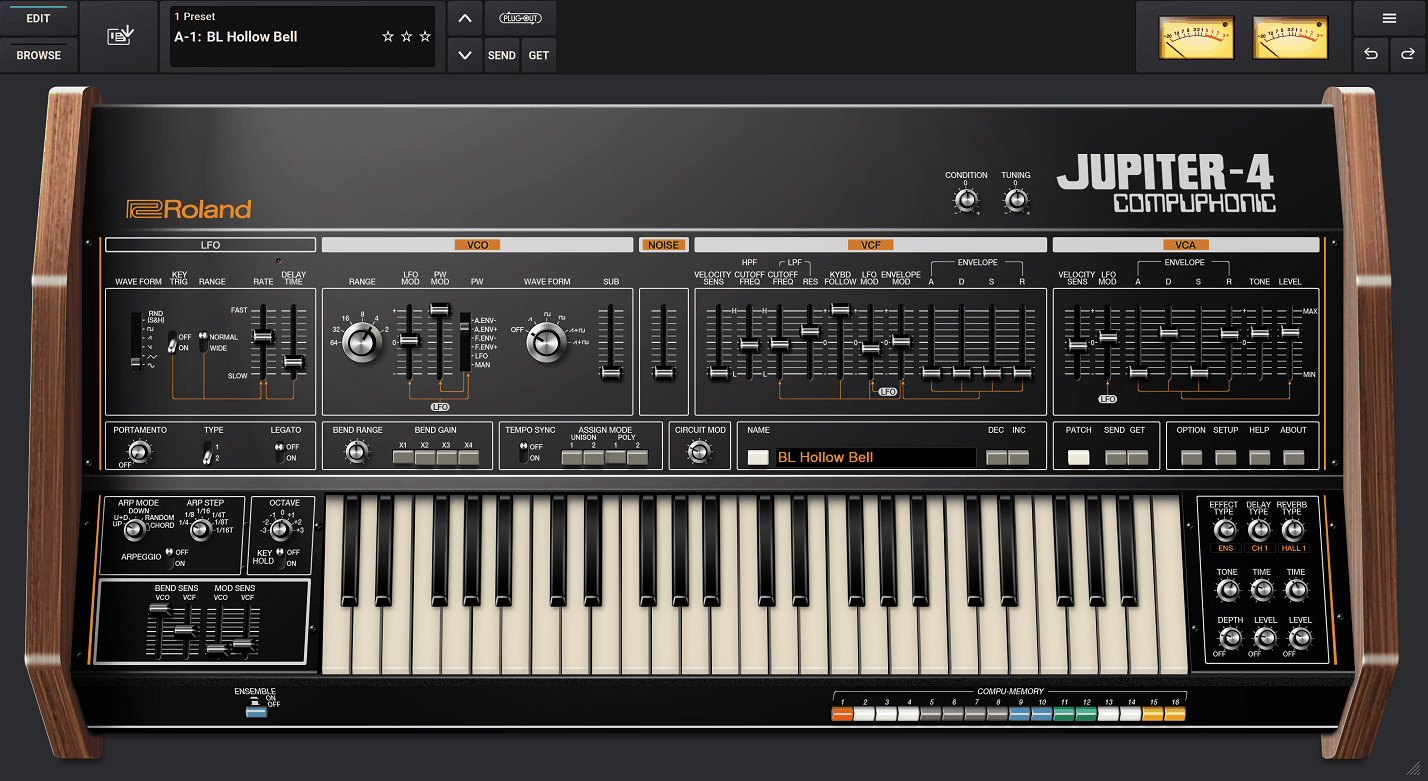
Before the Jupiter-8 existed, Roland released the Jupiter-4 in 1978 as their first polyphonic synthesizer.
It’s a four voice instrument with a simpler architecture than the Jupiter-8 but a distinctly different sonic personality. The JUPITER-4 plugin brings this instrument to Roland Cloud with ACB modeling, capturing a synthesizer that’s less commonly emulated but produced sounds you’ve heard on recordings from Jean-Michel Jarre, Tangerine Dream, and countless new wave records.
This synth has a rawer, grittier quality compared to the smoother Jupiter-8. Its single VCO per voice design and built in ensemble effect (an early form of chorus) give it a character that’s less polished but more characterful.
The ensemble effect sounds noticeably different from the Juno chorus, producing a wider, more diffuse stereo image with more obvious modulation artifacts. For producers who want vintage Roland texture with a rougher, more analog personality than the Juno or Jupiter-8 provide, the Jupiter-4 occupies its own territory.
- VCO Oscillators
The single voltage controlled oscillator per voice produces waveforms with the natural pitch drift and instability of true analog oscillators. This drift gives the Jupiter-4 an organic, moving quality that the DCO based Junos lack. The instability is part of the instrument’s character rather than a flaw.
- Ensemble Effect
The built in ensemble circuit provides stereo widening that predates and sounds distinctly different from the Juno’s BBD chorus. The ensemble has a more diffuse, atmospheric quality with more prominent modulation artifacts that give the Jupiter-4 its specific vintage character.
- Arpeggiator
The original arpeggiator reproduces the Jupiter-4’s distinctive arpeggio behavior, which has a different rhythmic feel from the arpeggiators in later Roland instruments. The timing and triggering characteristics contribute to the specific rhythmic personality of Jupiter-4 sequences.
- Preset System
The plugin reproduces the Jupiter-4’s ten factory preset memories alongside expanded user storage. The original factory presets include the specific sounds that appeared on iconic recordings, and having them immediately accessible provides authentic starting points.
Available from Roland in VST, AU, and AAX formats.
5. Roland JUNO-106 (Official 106)
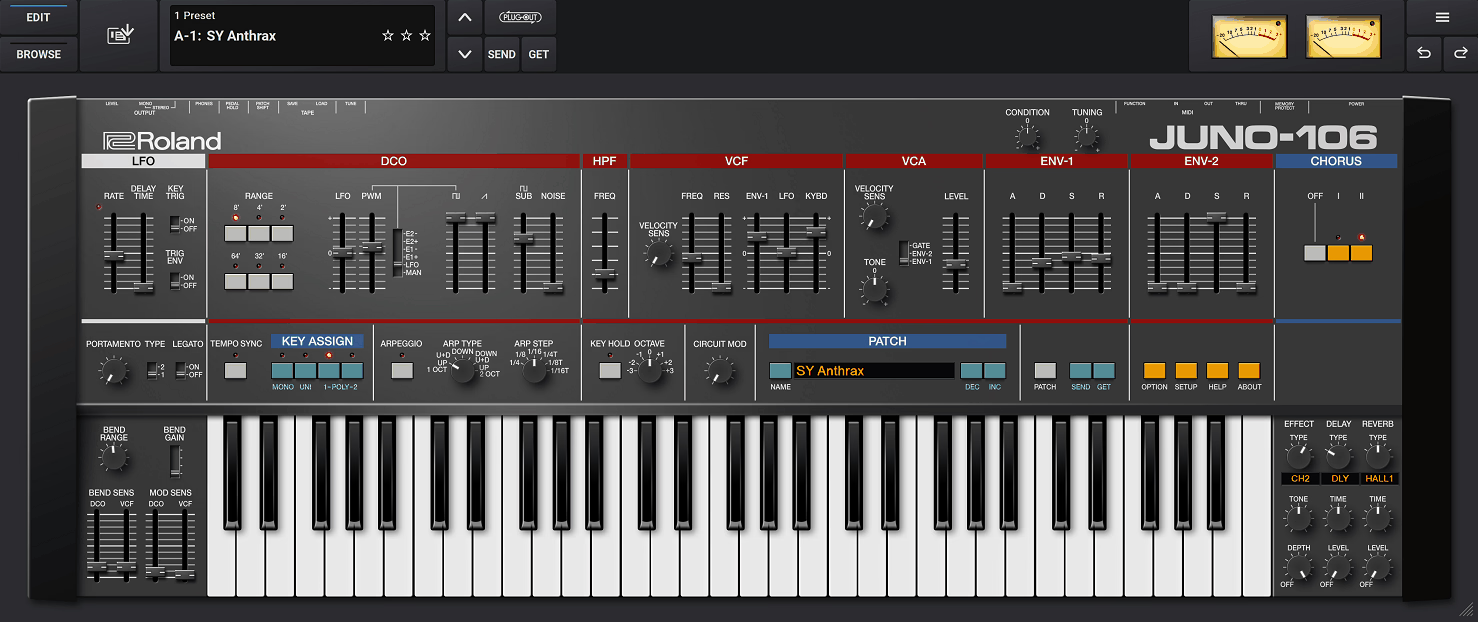
The JUNO-106 is the most recorded, sampled, and emulated synthesizer in history, and Roland’s official plugin models the specific version of the Juno architecture that became the template for synth production across every genre.
What made the 106 distinctive within the Juno family was its MIDI implementation (one of the first synths to include it), the 80017A hybrid filter/VCA chip, and a chorus that sounds subtly but meaningfully different from the Juno-60’s implementation.
You already know what the JUNO-106 sounds like, even if you don’t realize it. The soft, rounded bass. The pillowy, wide pads. The warm, shimmering string patches. These sounds appear in house, techno, synthwave, lo fi, pop, R&B, and hip hop so frequently that they’ve become part of the shared musical vocabulary.
The 106’s specific character comes partly from the 80017A chip, which colors the signal in a way that differs from the discrete components in the Juno-60. The Roland plugin captures this specific coloration.
- 80017A Chip
The custom hybrid module (combining filter and VCA in a single package) processes every voice with a specific tonal signature that distinguishes the 106 from other Junos. The chip’s particular frequency response and resonance character are what trained ears identify as “that’s a 106, not a 60.”
- MIDI Automation
Every front panel parameter responds to MIDI CC messages, making the 106 one of the most automatable vintage synth plugins available. You can record detailed parameter changes directly in your DAW’s automation lanes, creating evolving patches that change throughout a song.
- Chorus Difference
The 106’s chorus circuit sounds smoother and slightly more refined than the Juno-60’s version. The difference is subtle but audible in direct comparison. Producers who know both instruments well often prefer one or the other for specific applications.
Available from Roland in VST, AU, and AAX formats.
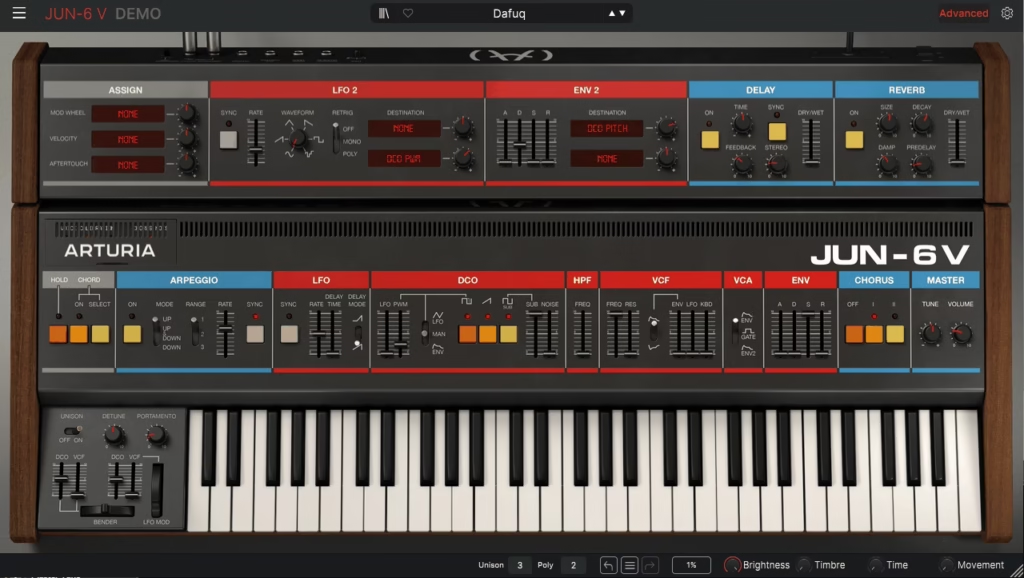
6. Arturia Jun-6 V (Juno-6 Emulation)
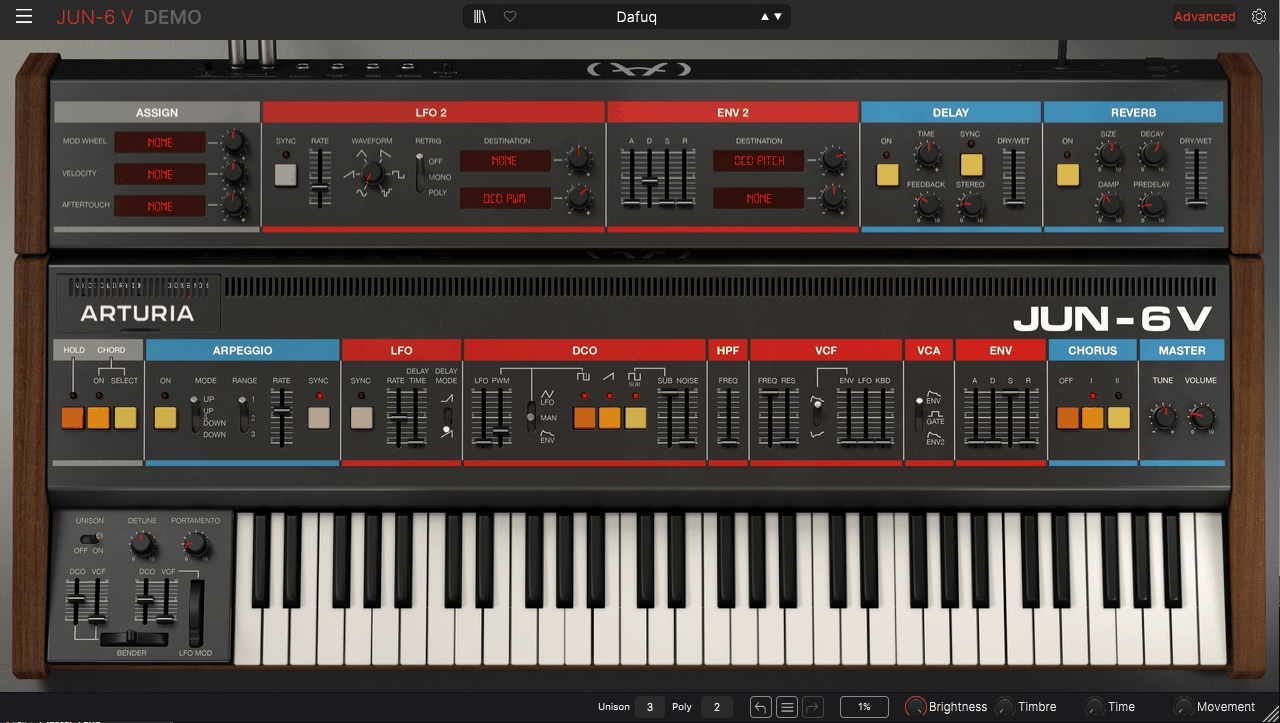
While Roland models their own instruments, Arturia Jun-6 V provides a third party take on the very first Juno. The Juno-6 (1982) preceded both the 60 and 106, and although the three share the same basic architecture, the Juno-6 has its own personality. Arturia’s TAE modeling captures the specific IR3109 filter chip and MN3009 BBD chorus of the Juno-6 and then extends the instrument with modulation routing, effects, and features the original never offered.
What draws me to the Jun-6 V as a complement to the Roland Juno plugins is the approach Arturia takes to expanding the original. The additional modulation matrix, effects suite, and advanced arpeggiator transform a simple vintage synth into a more versatile modern instrument while keeping the fundamental Juno-6 tone as the starting point.
If you want the Juno family character but need more creative flexibility than the original hardware architecture provides, Arturia’s expanded feature set gives you room to push the sound further.
- Component Modeling
Arturia’s TAE technology models the Juno-6’s individual circuit components, including the IR3109 filter chip and the MN3009 BBD chorus specifically as they appeared in the Juno-6 revision. These components have different tolerances and behaviors compared to the chips in later Junos, contributing to the Juno-6’s specific tonal identity.
- Modulation Matrix
An expanded modulation routing system adds LFOs, envelopes, and modulation destinations that the original Juno-6 never had. The matrix lets you create complex, evolving patches while maintaining the fundamental Juno-6 voice. You can modulate the chorus rate from an envelope, for example, or use an additional LFO to create rhythmic filter patterns.
- Effects Suite
A comprehensive post processing section adds delay, reverb, phaser, flanger, and other effects within the plugin. The Juno-6 hardware had no built in effects beyond the chorus, so owners relied on external gear. Arturia’s integrated effects eliminate that dependency while staying voiced to complement the analog character.
- Voice Detune
A per voice detuning control adds subtle pitch variation between voices, simulating the natural component drift of well worn analog instruments. At low settings, this adds organic movement. At higher settings, it creates the kind of slightly unstable, characterful sound that vintage synth collectors prize in instruments with aging components.
- Advanced Arpeggiator
The expanded arpeggiator goes beyond the original’s basic up/down patterns with additional modes, gate length control, and rhythmic variations. The arpeggiator gives you more creative options for sequenced patterns while maintaining the immediate, playable quality of the Juno workflow.
Available from Arturia in VST, VST3, AU, AAX, and standalone formats.
7. TAL-U-No-62 (Free Juno-60 Emulation)
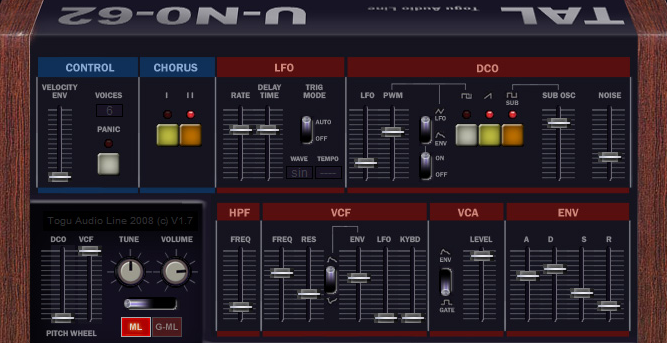
You don’t need to spend anything to get a convincing Juno sound. TAL-U-No-62 is the free predecessor to TAL’s paid U-NO-LX plugin, and despite its age (the plugin has been around for over fifteen years), it still produces warm, usable Juno-60 tones that work in modern productions. The oscillators and filters were modeled using an original Juno-60 as reference, and the chorus captures the essential character of the BBD circuit.
Let me be straightforward about what you’re getting: TAL-U-No-62 is a stripped down version of what became the U-NO-LX. The interface is simpler, the preset library is smaller (20 patches), and TAL no longer actively supports it.
You may encounter occasional minor bugs. But the core sound is remarkably close to the paid version, and for producers who are building their plugin collection on a budget, this provides legitimate Juno-60 character at no cost. Many producers started here and later upgraded to the full U-NO-LX when their budget allowed.
- Juno-60 Reference
The oscillators and filters were modeled using an original Juno-60 as the reference hardware, capturing the specific DCO waveshapes, the 24 dB low pass filter with self oscillation capability, and the non resonant high pass filter that shapes the Juno’s low end character.
- Chorus Settings
All three classic chorus positions (I, II, I+II) are included, providing the signature width and warmth that transforms the Juno’s clean oscillator tone into the lush, shimmering sound the instrument is famous for. The chorus modeling captures the essential BBD character convincingly.
- Free Access
Completely free with no registration or limitations on functionality. The plugin works in VST and AU formats and is compatible with modern operating systems including Apple Silicon through universal binary support. For zero investment, you get a legitimately useful Juno-60 emulation.
Available from Togu Audio Line in VST and AU formats. Free.
8. TAL-J-8 (Jupiter-8 Alternative)
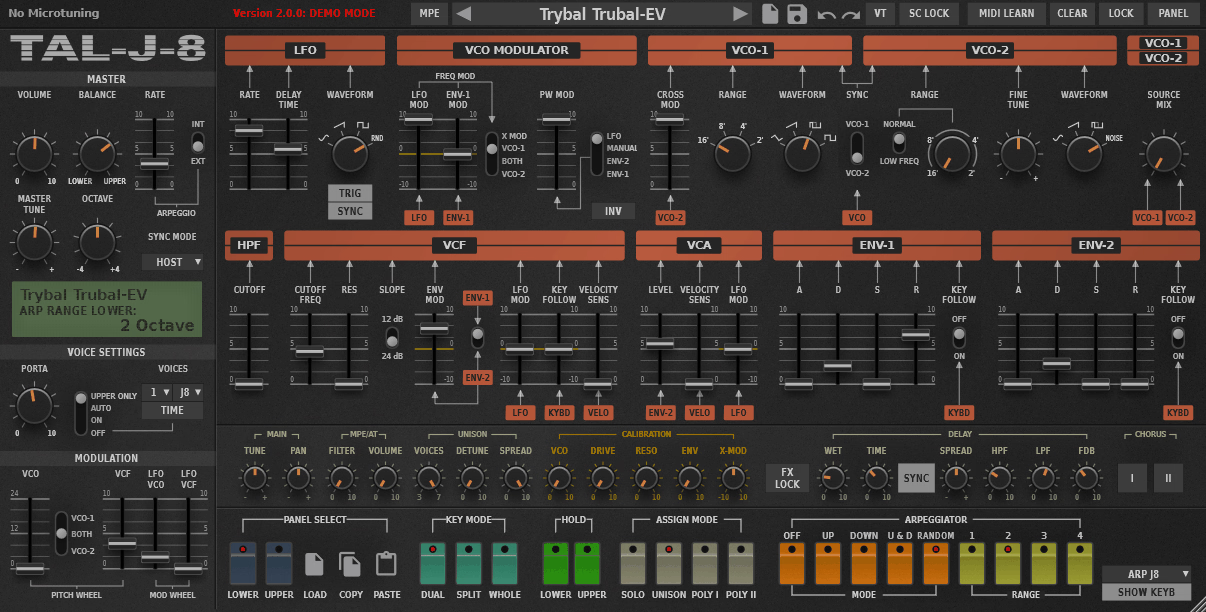
For producers who want the Jupiter-8 experience without subscribing to Roland Cloud, TAL-J-8 from Togu Audio Line offers a compelling alternative built by the same developer whose Juno emulations are widely respected in the production community.
TAL calibrated the J-8 against their own Jupiter-8 hardware unit, measuring the oscillator behavior, filter response, and cross modulation characteristics to achieve an accurate reproduction.
Where TAL-J-8 distinguishes itself from other Jupiter-8 options is in the calibration section that gives you access to parameters normally hidden behind the front panel. You can adjust the resonance boost, filter overdrive, and VCO behavior beyond the limits of the original hardware, pushing the Jupiter-8 sound into more extreme territory when the standard settings aren’t enough. The MPE support and microtuning capabilities also make it suitable for expressive performance setups that the original instrument was never designed to handle.
- Hardware Calibration
The plugin was modeled and calibrated using TAL’s own Jupiter-8 hardware, with direct measurement of oscillator waveforms, filter curves, and envelope behavior. The calibration section exposes internal parameters that let you push the resonance and filter overdrive into extreme settings beyond what the original front panel allows.
- VCO Behavior
The free running VCO modeling with adjustable drift replicates the organic movement of the Jupiter-8’s analog oscillators. TAL recently refined the VCO implementation to add subtle per voice detuning that prevents the static phase locking between oscillators, which contributes to the natural, breathing quality of the sound.
- Service Control
A Service Control panel gives you access to individual voice tuning and behavior parameters that were only accessible to technicians on the original hardware. You can detune specific voices, adjust individual VCO characteristics, and create controlled voice variation that simulates the natural differences between voices in well used analog instruments.
- MPE Support
Full MPE (MIDI Polyphonic Expression) compatibility lets you use controllers like the Roli Seaboard or Osmose to play the Jupiter-8 sound with per note pitch bend, pressure, and slide. This transforms the vintage instrument into an expressive performance tool that responds to your playing in ways the original hardware couldn’t.
Available from Togu Audio Line in VST, VST3, AU, AAX, and CLAP formats.
Get the Free Plugin Starter Kit
The genuinely useful free DAWs and plugins worth installing. No filler. Straight to your inbox.

Hello, I’m Viliam, I started this audio plugin focused blog to keep you updated on the latest trends, news and everything plugin related. I’ll put the most emphasis on the topics covering best VST, AU and AAX plugins. If you find some great plugin suggestions for us to include on our site, feel free to let me know, so I can take a look!