
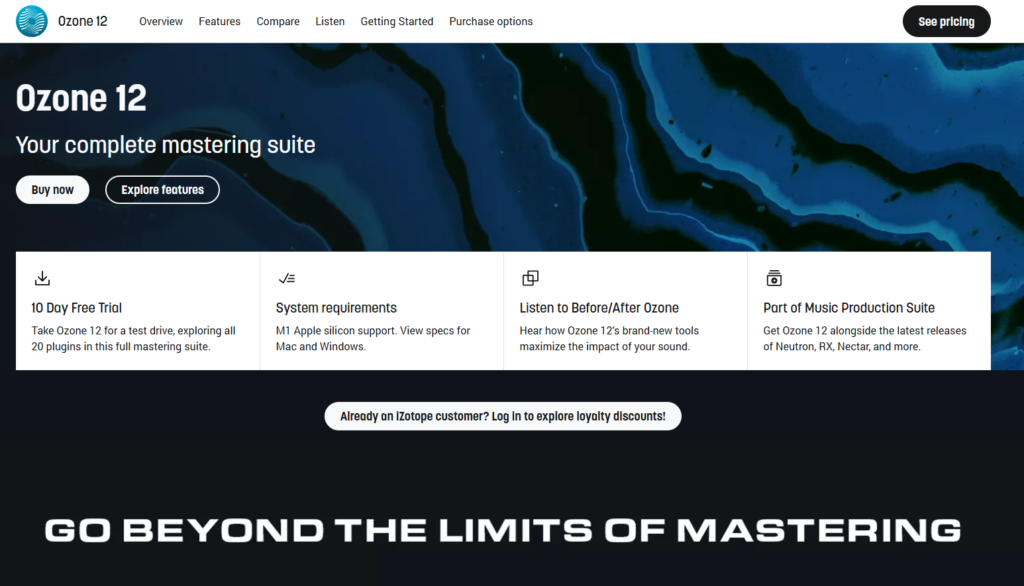
When producers and engineers talk mastering plugins, two names dominate the conversation: Waves and iZotope Ozone. Both have been shaping how music gets finished and distributed for decades, and they represent genuinely different philosophies about what a mastering toolkit should look like.
Waves is a massive plugin catalog of individual processors, many modeled after iconic analog hardware, that you assemble into a mastering chain however you want. iZotope Ozone, on the other hand, is an integrated all-in-one mastering suite with AI assistance baked into the workflow, designed to act as a complete mastering environment inside a single plugin.
The reason this comparison matters is that producers hit a specific crossroads at some point: do you want to master with individual plugins assembled by hand, or do you want a purpose-built AI-assisted suite that handles a lot of the architectural thinking for you? The honest answer depends on where you are in your learning curve, what genres you work in, and how much control you want over every stage of the process.
Quick Comparison
| Feature | Waves (Mastering Plugins) | iZotope Ozone 12 |
|---|---|---|
| Approach | Individual plugins assembled into custom chains | Integrated all-in-one suite with modular signal chain |
| AI / Assisted Mastering | No dedicated AI mastering assistant | Master Assistant: genre-aware, reference-based AI chain builder with LUFS targeting |
| Flagship Limiter | L4 Ultramaximizer | Maximizer with IRC 5 (Ozone 12); IRC I-IV modes also available |
| EQ Options | Linear Phase EQ, F6 Dynamic EQ, H-EQ, PuigTec EQs, API 550A/B/560 | Ozone EQ (dynamic, linear phase, analog modes); Stem EQ (Ozone 12 Advanced) |
| Multiband Compression | C6 Multiband, Linear Phase Multiband Compressor | Dynamic EQ, Multiband Dynamics, Spectral Shaper |
| Stereo Imaging | S1 Stereo Imager, Center, Vitamin, Abbey Road TG widening | Imager (multiband width per frequency band) |
| Harmonic / Saturation | Vitamin Sonic Enhancer, J37 Tape, Kramer Master Tape, Abbey Road TG Mastering Chain | Vintage Tape, Vintage Limiter, Exciter modules |
| Stem Mastering | No dedicated stem processing | Stem Focus, Stem EQ (Advanced), Master Rebalance |
| Loudness Metering | PAZ Analyzer, WLM Plus; LUFS in individual limiters | Integrated LUFS, Streaming Preview, Loudness Optimize |
| Reference Matching | None dedicated | Audiolens + Master Assistant reference upload |
| Analog Modeling | Deep: Abbey Road TG, SSL G-Bus, PuigTec | Moderate: Vintage Tape & Limiter modules |
| Dithering | IDR dithering in L4 | Integrated dithering in Maximizer output |
| Best For | Full manual control, analog character, hybrid workflows | AI-assisted workflow, integrated environment, stem tools, streaming-ready output |
| Entry Price | Individual plugins from $29 on sale | Elements ~$49, Standard ~$199, Advanced ~$499 |
| Free Trial | 7 days per plugin | 10 days (Elements), 30 days (Standard, Advanced) |
Get the Free Plugin Starter Kit
The genuinely useful free DAWs and plugins worth installing. No filler. Straight to your inbox.
About Waves Audio
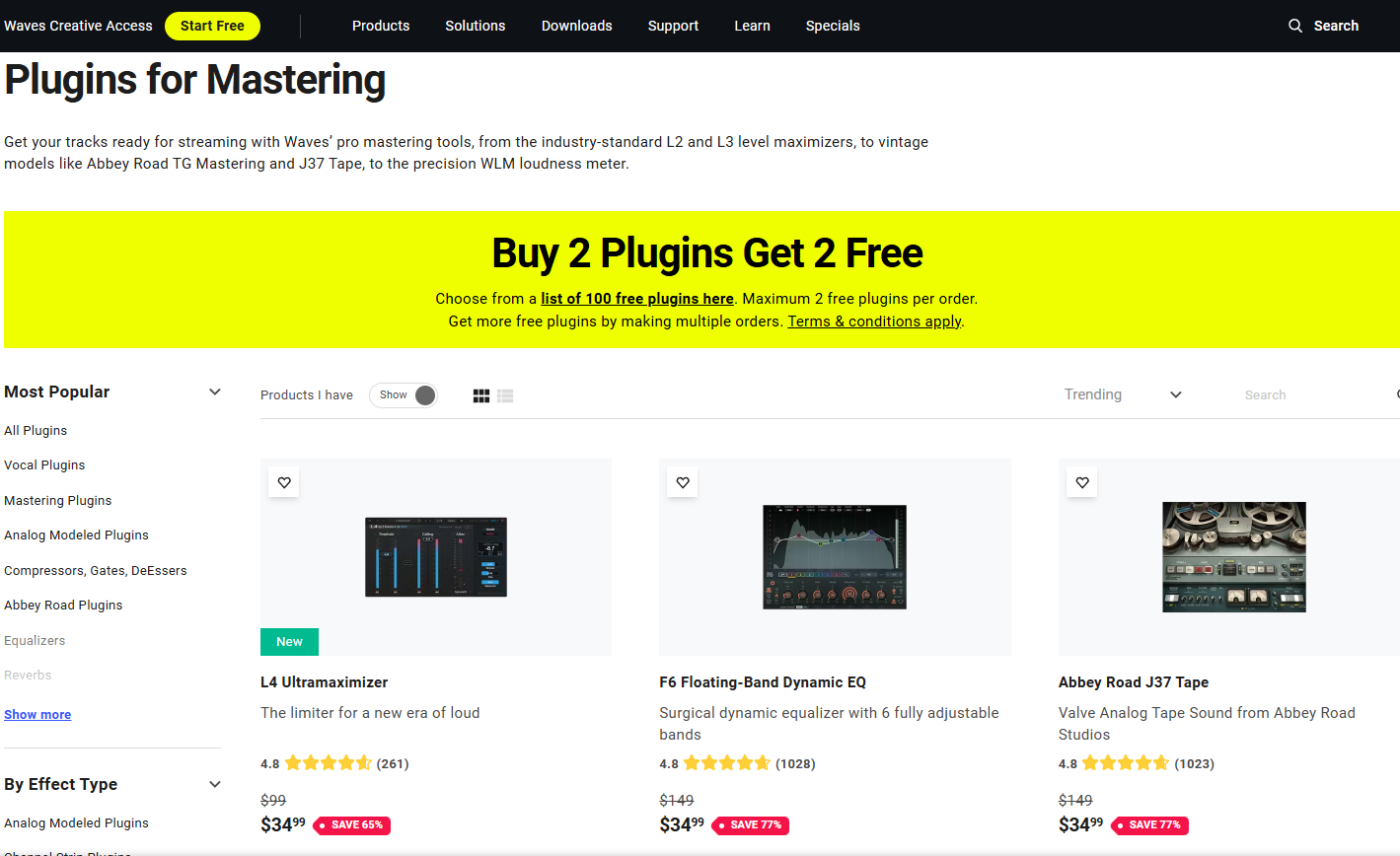
Waves was founded in Tel Aviv, Israel, in 1992, and grew into one of the largest and most influential plugin developers in the world. The catalog now spans over 200 plugins covering every aspect of mixing, mastering, live sound, and broadcast.
Waves built its reputation in the 90s and 2000s by being among the first plugin developers whose sound quality professional engineers actually trusted alongside their hardware. The L4 Ultramaximizer deserves specific credit here: it was one of the first software limiters that pro mastering engineers used on commercial releases, and it more or less established Waves as a serious mastering tool in the first place.
The mastering-relevant catalog covers limiter (L4), EQs (Linear Phase EQ, F6, H-EQ, PuigTec, API 550/560), dynamics (SSL G-Master Buss Compressor, API-2500, C6, Linear Phase Multiband), enhancement tools (Vitamin, Aphex Vintage Aural Exciter), stereo imaging (S1, Center, PAZ Analyzer), tape emulation (Abbey Road J37, Kramer Master Tape), and the integrated Abbey Road TG Mastering Chain, which is Waves’ closest equivalent to a purpose-built mastering console.
Pricing runs on a perpetual license model with aggressive and frequent sales. Most individual plugins sell for $29 to $49 on sale, though list prices go from $49 to $299.
There’s no single “Waves Mastering Bundle” per se, but larger bundles like the Horizon and Platinum bundles cover most of the major mastering tools alongside mixing plugins. Given how often Waves runs sales, building a Waves mastering toolkit over time costs way less than the catalog prices suggest.
About iZotope
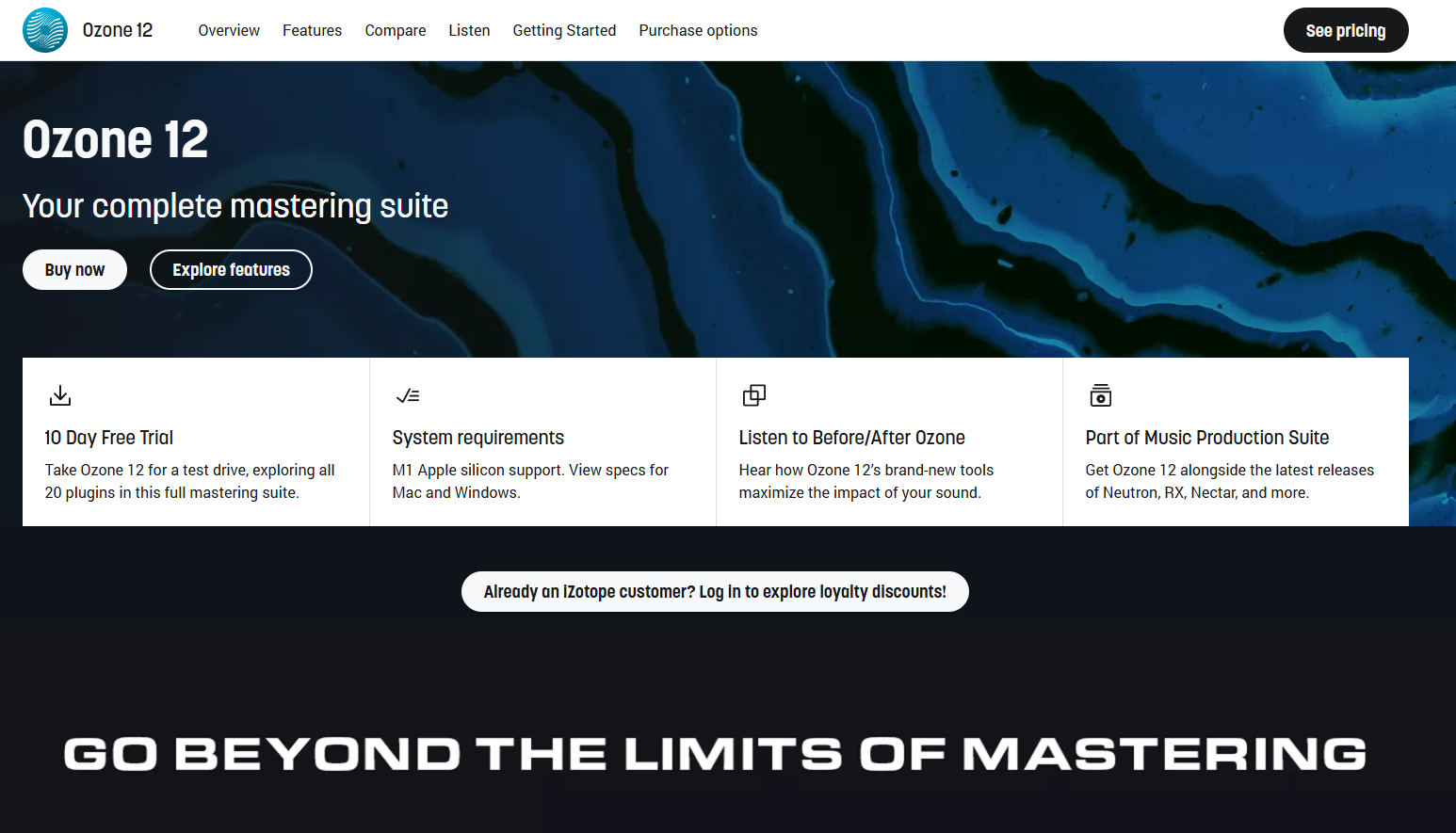
iZotope was founded in Cambridge, Massachusetts, in 2001, and built its identity around applying advanced signal processing algorithms, and later machine learning, to audio problems that traditional tools handled poorly.
Their early Ozone versions were among the first mastering plugins to integrate every mastering stage into a single unified interface with shared metering across modules, which was genuinely novel at the time.
Since 2023, iZotope has been part of the Native Instruments Group, following the merger of iZotope, Native Instruments, Brainworx, and Plugin Alliance. Ozone is now available inside NI bundles like Komplete and the Music Production Suite, but the development pace hasn’t slowed, Ozone 12 is the current version as of late 2025, bringing new modules including Stem EQ, Bass Control, Unlimiter, and the upgraded IRC 5 Maximizer algorithm.
iZotope’s broader catalog matters here too. Neutron (mixing assistant), RX (audio repair), and Audiolens (reference analysis) all integrate with Ozone through iZotope’s inter-plugin communication, making the iZotope ecosystem function as a coherent production environment rather than a collection of isolated plugins.
- Best Waves Mastering Plugins
Waves doesn’t have a single integrated mastering suite like Ozone does, so knowing the “best Waves mastering tools” really means knowing which individual plugins do which jobs at the highest level. Here are the ones that belong in a serious Waves mastering chain.
- L4 Ultramaximizer
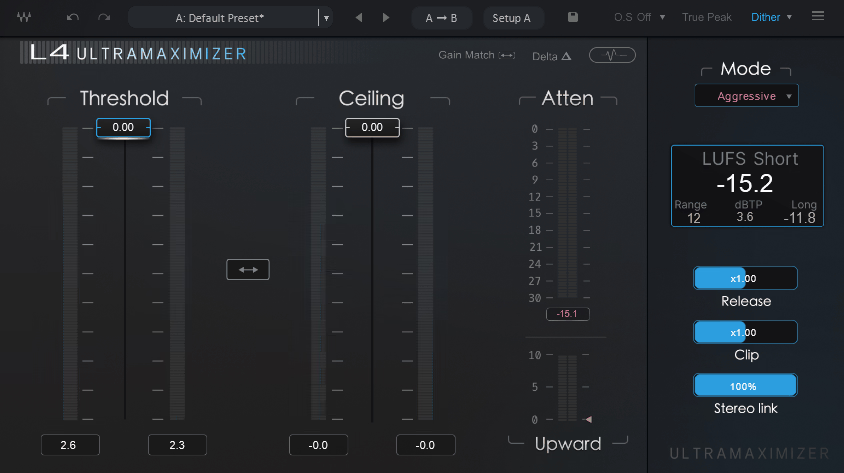
The L4 is the plugin that made Waves famous in the mastering world, and it’s still one of the most-used mastering limiters in the history of recorded music. It features lookahead brickwall peak limiting, automatic release control, and the IDR (Increased Digital Resolution) dithering system with multiple noise shaping options.
The L4 doesn’t try to be transparent, it imparts a specific character to whatever it touches, with a density and punch that fits genres where loudness and impact are priorities. It’s not the most transparent limiter available in 2025, but it’s a legitimate mastering tool that plenty of professional engineers still reach for when the L4’s specific character is what the master actually needs.
- L3-16 Multimaximizer
The L3-16 expands on the L4 concept with 16 independent frequency bands of dynamic control driving the limiting stage, which gives you significantly more tonal shaping during the limiting process than a single-band limiter can.
You can apply different amounts of limiting to different frequency regions, which lets the L3-16 push loudness while preserving the frequency balance of the source more accurately than a broadband limiter would.
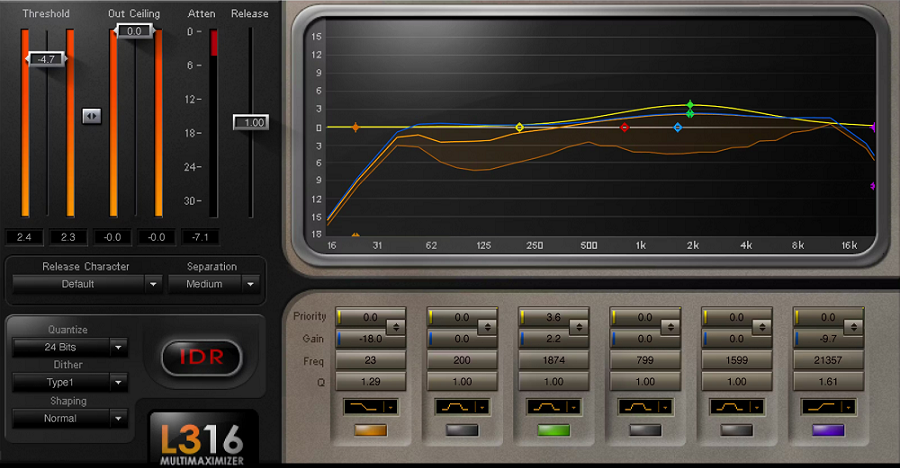
The L3-LL is the low-latency variant, designed for live and broadcast work where real-time processing without latency is required.
- Abbey Road TG Mastering Chain
This is Waves’ most complete mastering-specific single plugin, modeled after the EMI TG12410 Transfer Console that Abbey Road Studios has used in its mastering suites since the early 1970s. You can hear that console on records like Pink Floyd’s Dark Side of the Moon, Nirvana’s In Utero, and Radiohead’s OK Computer.
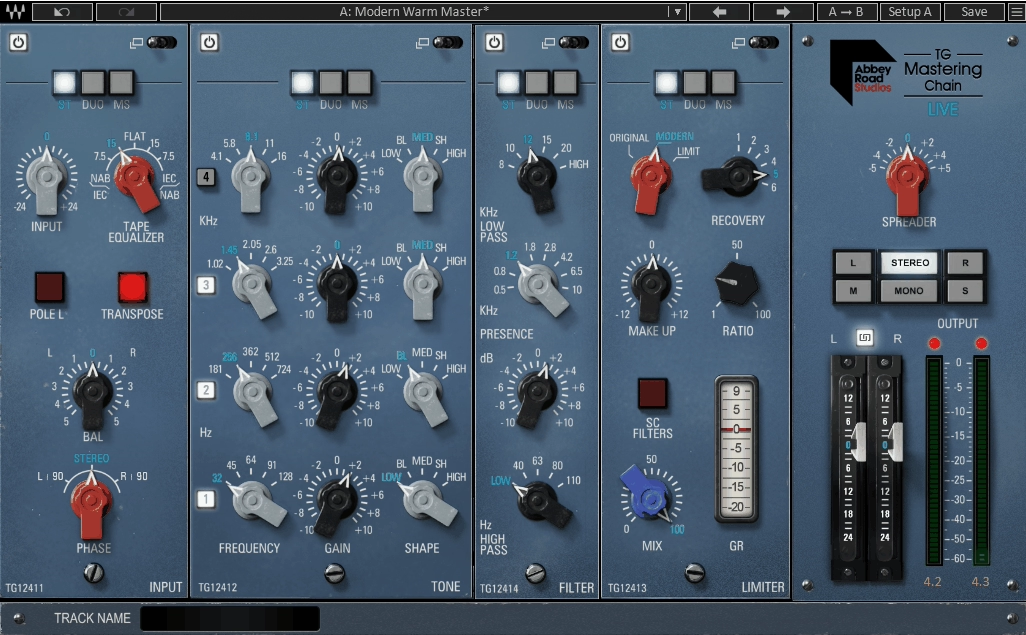
The plugin is modular with five interchangeable sections: Input (tape EQ coloration, polarity, and a Transpose function for stereo imaging analysis), Tone (four-band EQ with fully selectable frequencies), Compressor/Limiter (Original and Modern modes), Filter (high/low-pass), and V.A.I. (stereo widening and imaging). You can reorder all sections except Input, run mid-side or stereo processing, and switch any section on or off independently.
This is the Waves plugin that behaves most like a true mastering chain console, and it carries genuine Abbey Road provenance.
- SSL G-Master Buss Compressor
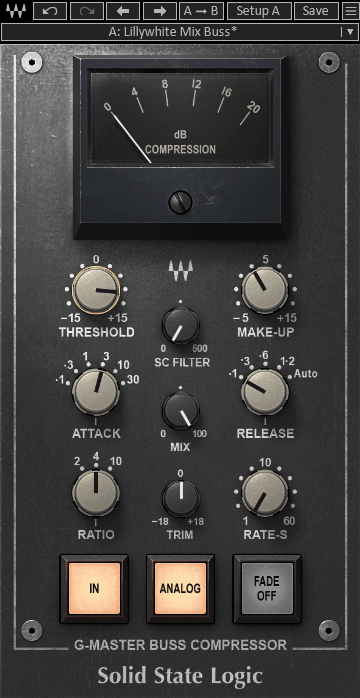
The SSL G-Master Bus is one of the most widely used bus compressors in production history, emulating the compressor section of the SSL G-Series console that lived in virtually every major commercial studio from the 80s onward. On a mastering chain it adds that specific “glue” quality that pulls a mix together with a cohesion that’s hard to get from other compressors.
Settings need care here, too much compression from the G-Bus pumps noticeably, but dialed in right, the ratio, attack, and release settings add a sense of weight and cohesion that’s one of the most recognizable sounds in pro records.
- Linear Phase EQ
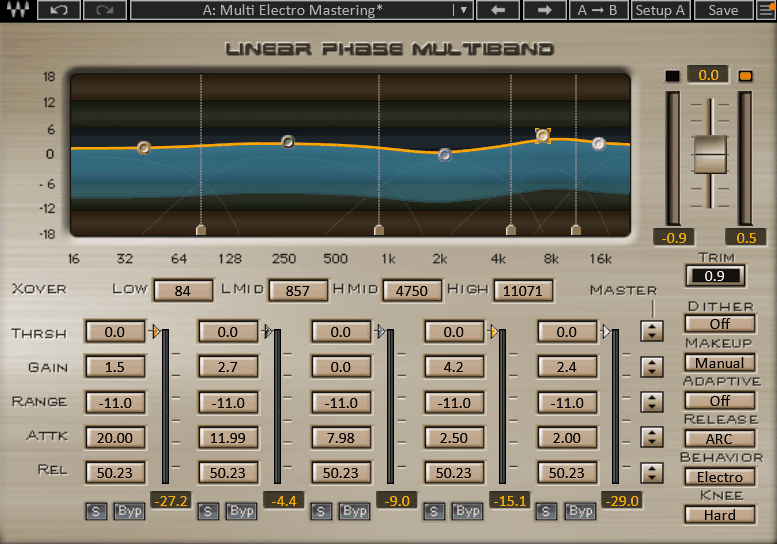
The Waves Linear Phase EQ is a broad-band EQ designed specifically for mastering contexts where phase accuracy matters. Unlike minimum-phase EQs, which introduce phase shift as a side effect of filtering, linear phase processing maintains perfect phase coherence across the frequency spectrum, which is the standard approach in professional mastering.
It offers six bands with selectable bell, shelf, and high/low-pass filter types, a real-time frequency response display, and mid-side processing capability.
- F6 Floating-Band Dynamic EQ
The F6 is a six-band dynamic EQ where each band has independent threshold, attack, release, and range controls, so it acts as an EQ and a multiband compressor at the same time. In mastering it’s most useful for frequency-specific dynamic control, you might set up a band to gently reduce harsh high-mids only when they get too loud, or to transparently add low-end presence only during quieter sections.
The floating-band design means bands can overlap freely without interaction artifacts, and the sidechain filtering per band allows frequency-selective detection.
- Vitamin Sonic Enhancer
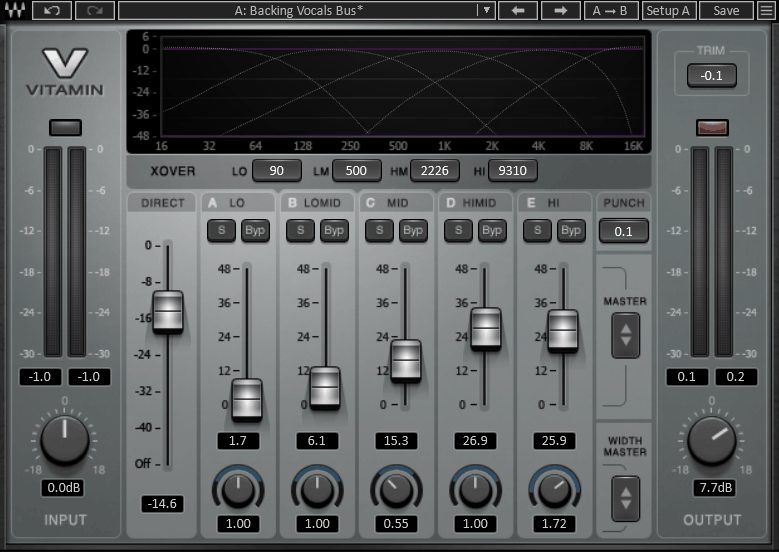
The Vitamin Sonic Enhancer is a five-band harmonic enhancement tool that adds warmth, presence, and air through harmonic generation rather than simple EQ boosting. Each band has independent harmonic content and stereo width controls, making Vitamin both an enhancer and a spatial processor at the same time.
In mastering, it’s useful for adding richness and presence to mixes that feel flat or dull without resorting to heavy EQ moves. The harmonic approach creates a sense of life and movement that EQ alone just doesn’t replicate.
- PAZ Analyzer and WLM Plus Loudness Meter
The PAZ Analyzer is a multi-display metering plugin covering spectrum analysis, phase correlation, and stereo positioning simultaneously, giving you the visual monitoring infrastructure that mastering work requires.
The WLM Plus (Waves Loudness Meter) provides full loudness metering to ITU-R BS.1770 standards, covering integrated LUFS, short-term loudness, momentary loudness, loudness range, and true peak, which are the measurements required for compliance with streaming platform loudness targets.
iZotope Ozone Mastering Modules
iZotope Ozone 12 (the current version as of late 2025) is a modular mastering suite where you build a signal chain from individual processing modules inside a single plugin interface.
The Advanced edition includes 20 modules as both a unified suite plugin and as individual standalone plugins, while Standard and Elements include a subset of modules within the unified suite only.

Here’s what the full Ozone Advanced module suite covers:
- Master Assistant:
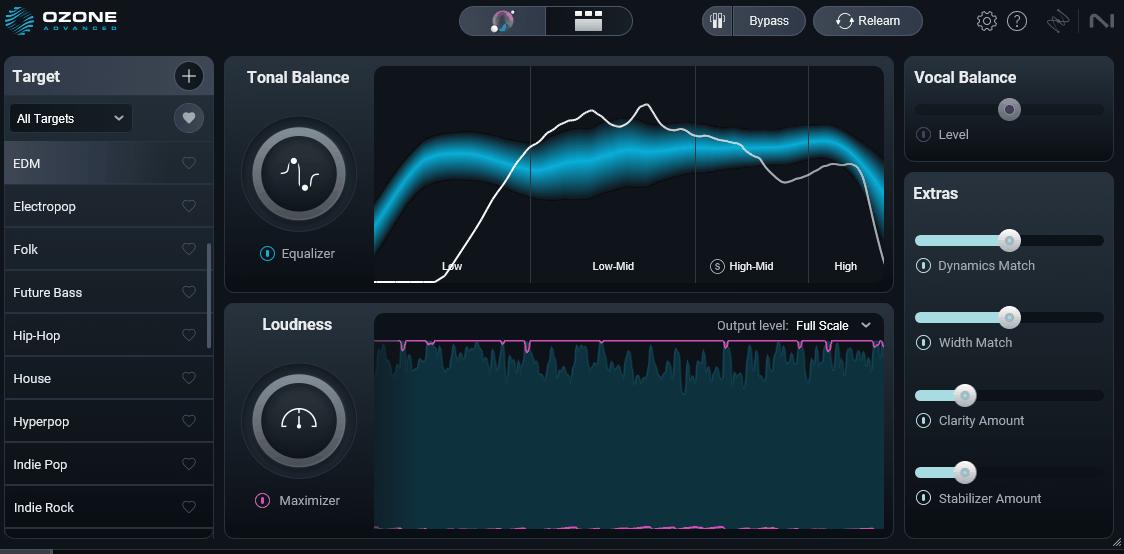
The AI-powered chain builder that analyzes your audio, identifies its tonal balance and dynamics, selects appropriate modules with suggested settings, targets a LUFS level of your choice, and configures the entire chain as a starting point.
In Ozone 12, the Master Assistant adds Custom Flow where you choose genre profiles and reference tracks to use, which modules to include, and how strongly the AI should process.
- Maximizer (IRC 5):
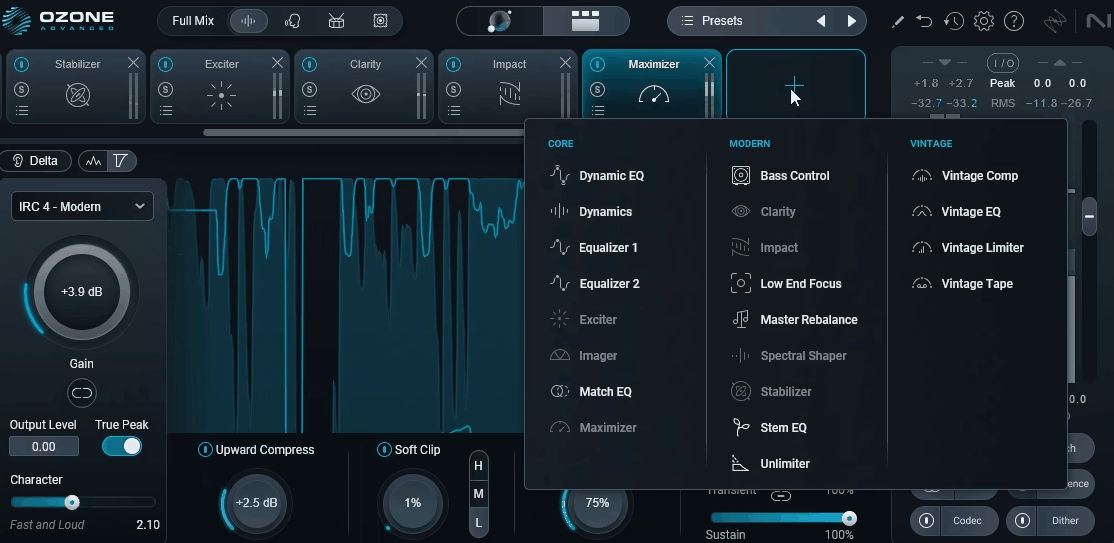
The Ozone limiter, now in version 12 running the IRC 5 algorithm, the most transparent and technically advanced of the IRC modes. IRC 5 maintains clarity even at very high LUFS targets, without the pumping or distortion artifacts that appear in less sophisticated limiting when pushed hard.
- Ozone EQ:
A mastering-grade EQ with four operating modes, Digital (linear phase), Analog (minimum phase with saturation coloring), Brickwall (steep filter slopes), and Dynamic (frequency-responsive EQ). Eight bands per side with fully independent mid-side processing.

- Dynamic EQ:
A dedicated dynamic EQ module separate from the static EQ, designed for frequency-specific compression and expansion at the mastering stage.
- Multiband Dynamics:
Traditional multiband compressor and expander covering up to four frequency bands, with per-band compression and expansion controls.
- Vintage EQ/Tape/Limiter/Comp:
Vintage Limiter modeled after classic hardware limiting behavior, adding tube-like coloration and a different kind of density than the transparent IRC limiting in the Maximizer.
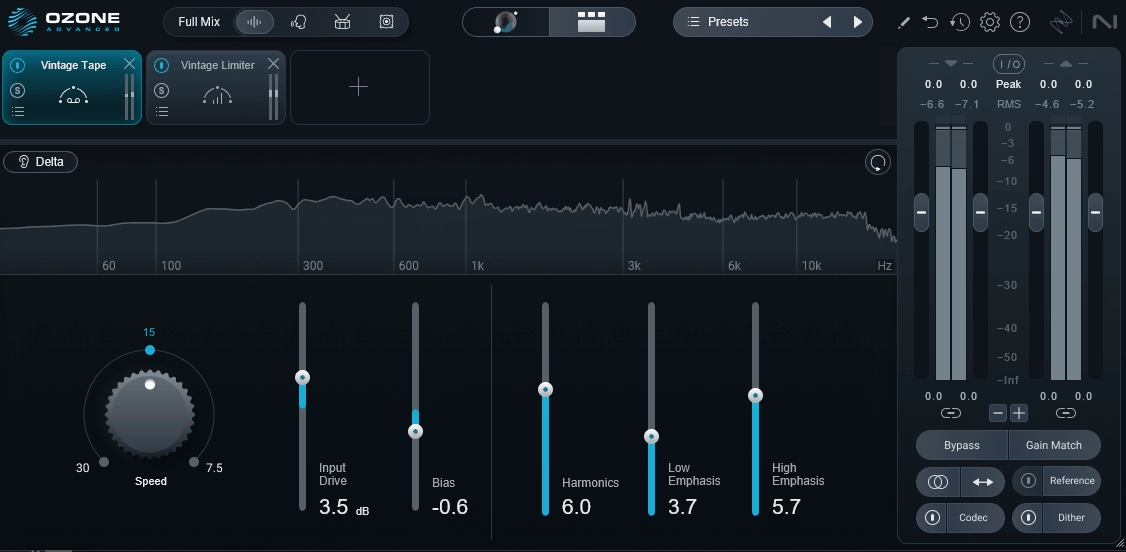
A tape emulation module providing the saturation, frequency shaping, and compression character of analog tape, with controls for tape speed, bias, and saturation level.
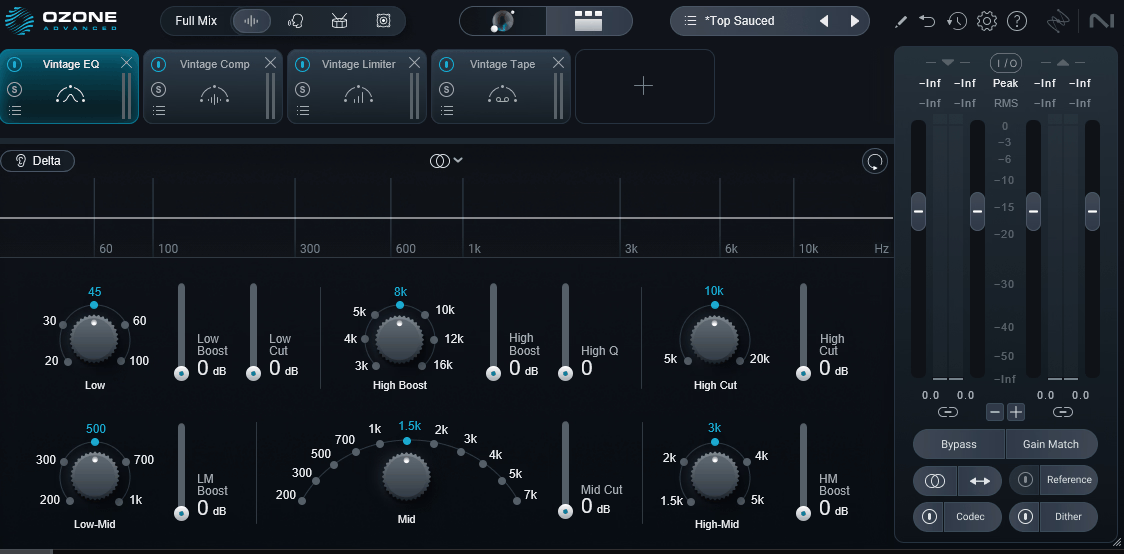
Vintage EQ is Ozone’s take on a classic analog EQ, inspired by the warm, musical curves of vintage tube equalizers. Adds subtle harmonic coloration along with the EQ moves, so tonal shaping feels more like analog gear and less like a surgical correction.
- Imager:
Multiband stereo width module letting you adjust stereo width independently across up to four frequency bands.
- Spectral Shaper:
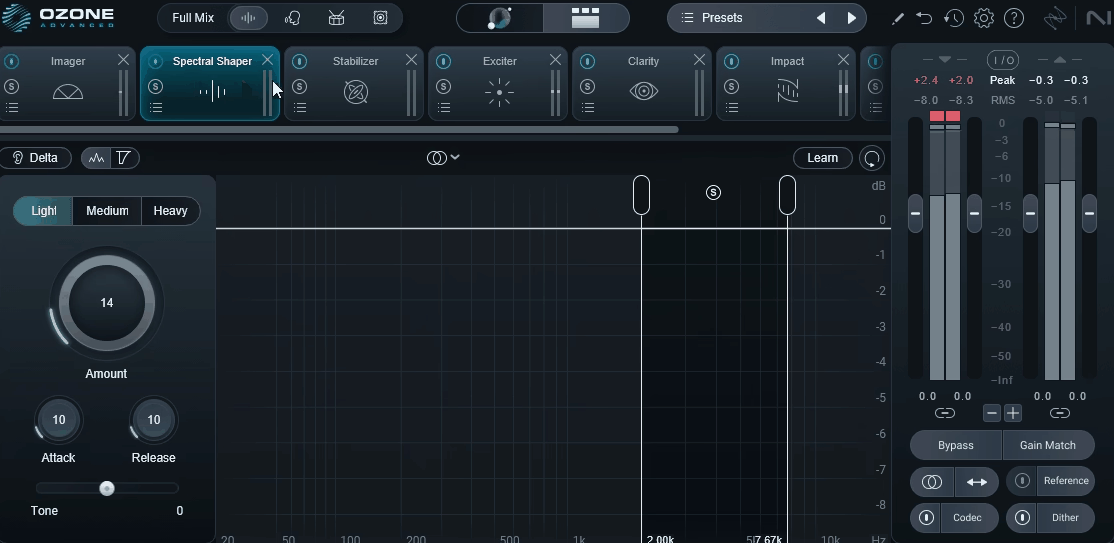
Applies dynamic processing based on the spectral content of the audio, targeting harshness and tonal imbalances that only show up when specific frequencies become too prominent.
- Low End Focus:
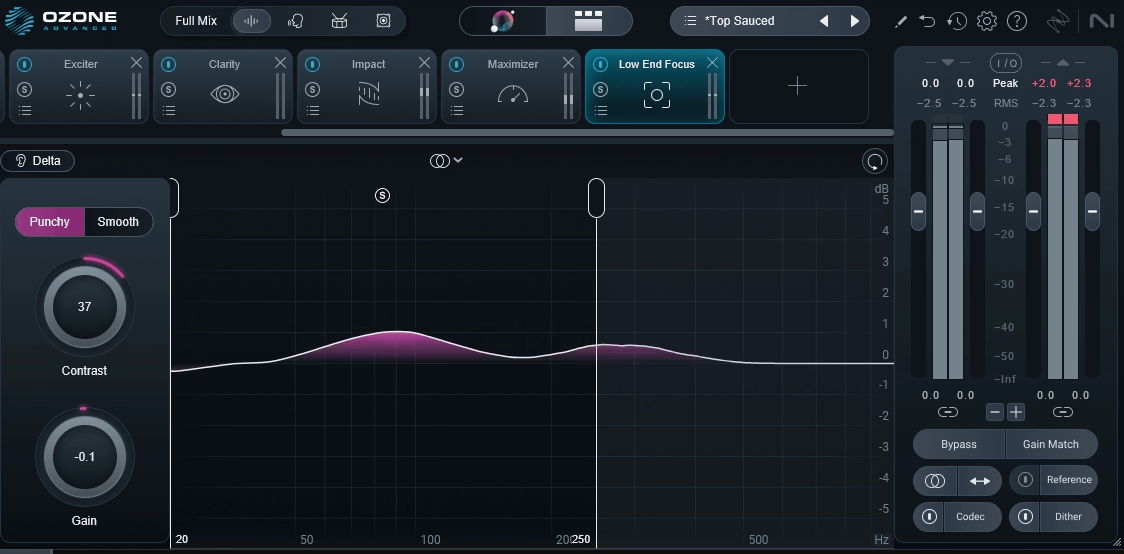
A module specifically for managing the low-frequency content of a master, controlling punch, drive, and weight of bass and sub independently.
- Exciter:
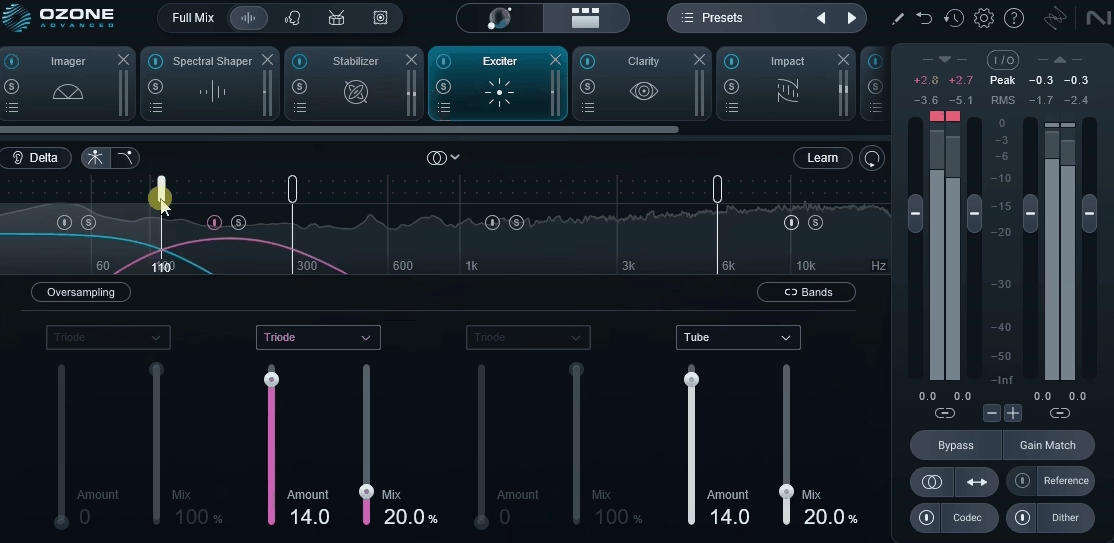
Harmonic enhancement module that adds upper harmonics, similar in concept to Waves Vitamin but with a different character.
- Stabilizer:
Applies gentle, music-aware equalization to bring the spectral balance of a master toward a target curve.
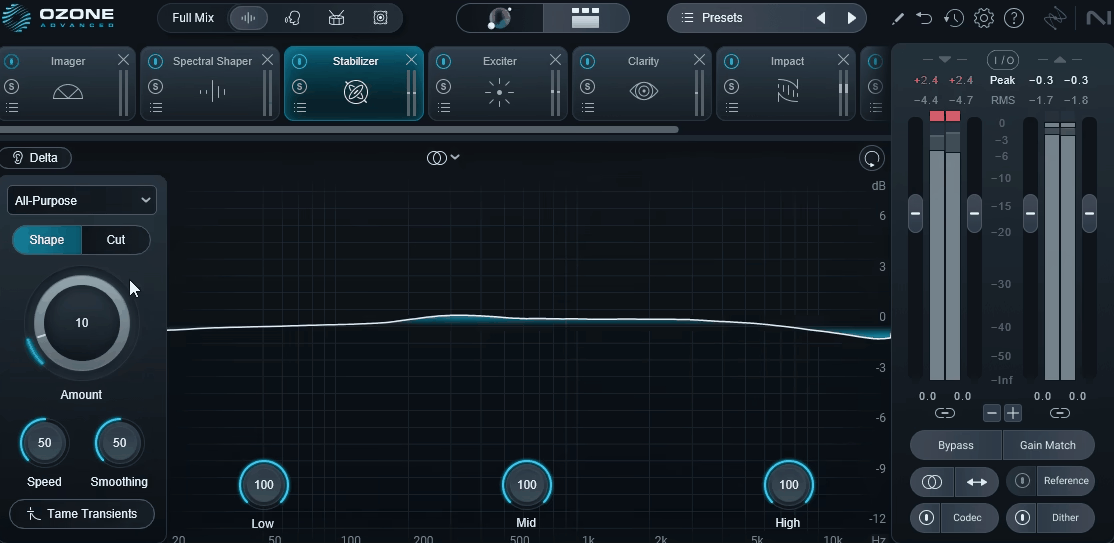
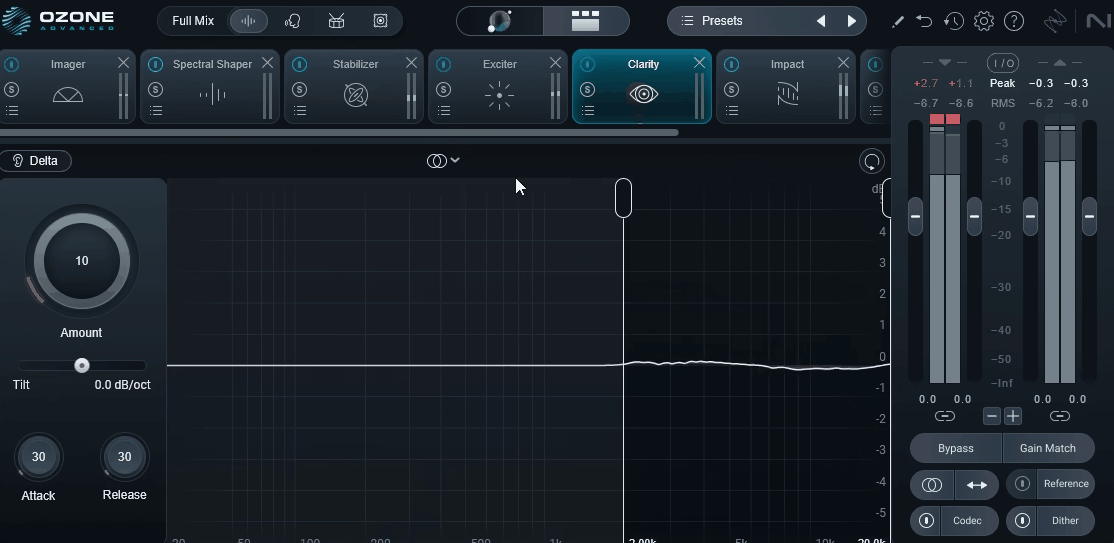
- Clarity
(Ozone 11 and later): Adaptively maximizes the spectral power and definition of a master without simply increasing loudness.
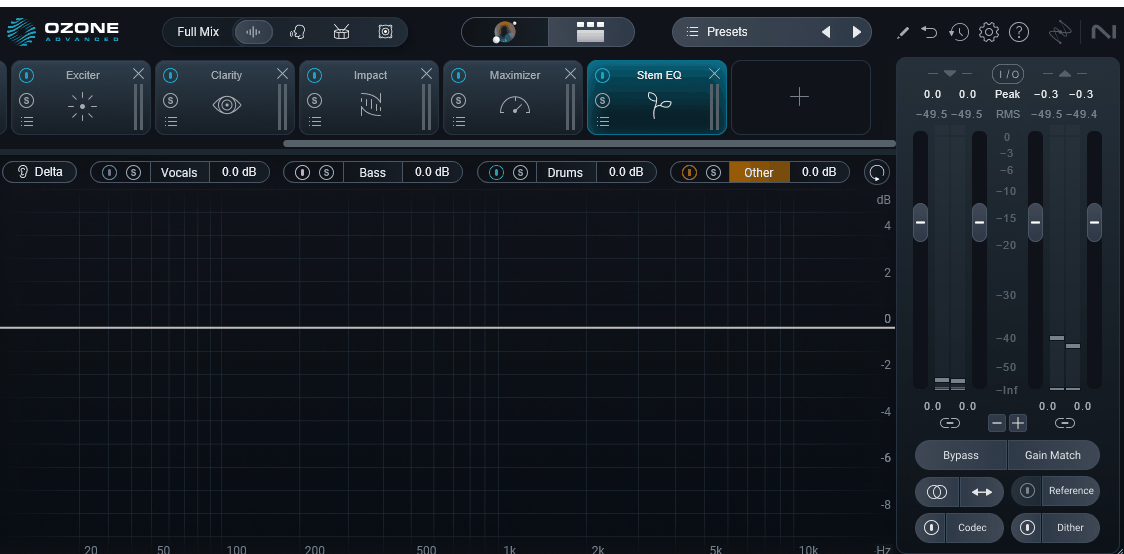
- Stem EQ (Advanced only):
Stem EQ (Ozone 12) provides per-stem EQ curves for all four stem types at once.
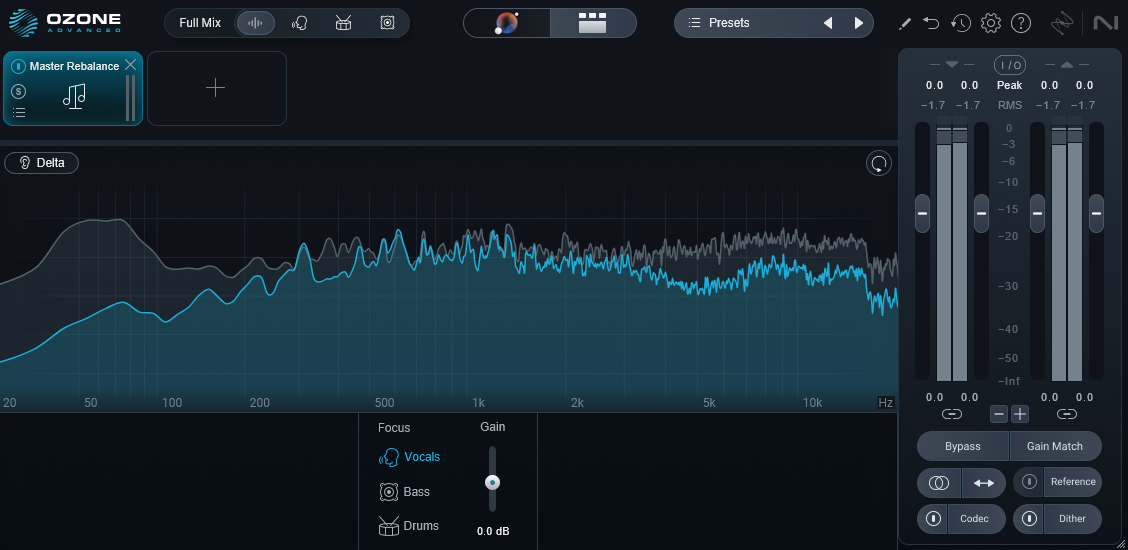
- Master Rebalance:
Adjusts the level of vocals, drums, or bass independently within a fully mixed stereo file, using stem separation.
- Unlimiter (Ozone 12 Advanced):
Attempts to restore dynamics to audio that’s been over-compressed or over-limited during mixing, recovering transients and dynamic range lost in heavy-handed mix limiting.
- Bass Control (Ozone 12):
Dedicated low-end management, giving you precise control over punch, drive, and balance of the bass beyond standard EQ or compression.
Sound Character
- Waves
Waves’ mastering tools carry a stronger and more specific analog character than Ozone’s modules for the most part, particularly in the plugins built around real hardware emulations.
The Abbey Road TG Mastering Chain has the specific tonal coloration of the EMI TG12410 console circuit, with harmonic content in the compression and subtle EQ character in the tone section that make processed audio sound like it actually went through a specific piece of analog gear.
The L4 Ultramaximizer has a density and punch that’s immediately recognizable, and a lot of engineers describe it as a specific limiting character rather than transparent peak control.
The SSL G-Master Buss Compressor has the specific dynamic behavior of the SSL G-Series bus compressor, which is one of the most imitated analog compressor sounds in recorded music.
This analog character is Waves’ most significant mastering advantage over Ozone in genres and contexts where you want the master to feel like it’s been through real hardware. The character of Waves tools in a mastering chain tends to be more immediately apparent and genre-specific than the more neutral and controlled character of Ozone’s modules.
- iZotope Ozone
Ozone’s sound character is more controlled and neutral by design, particularly in the EQ and Maximizer modules that form the core of most Ozone chains. The IRC limiting modes are specifically engineered to minimize the audible character of the limiting process, preserving the dynamics and tonality of the source as closely as possible while hitting the target loudness.
That’s the right approach for mastering engineers who want the music to sound like itself, just louder and better balanced, rather than like it went through a specific piece of hardware.
The Vintage Tape and Vintage Limiter modules give you the option to add hardware character within the Ozone chain, but these are optional additions to what’s fundamentally a clean and precise processing environment.
Ozone’s character is best described as intelligently transparent: it applies a lot of sophisticated processing but tends to stay invisible in the final result rather than stamping its own signature on the output.
AI and Assisted Mastering Features
This is where the comparison tilts most decisively in Ozone’s favor, because Waves has no equivalent to what Ozone’s AI mastering tools offer.
- iZotope Ozone: Master Assistant
The Master Assistant is a genuinely useful tool rather than a marketing feature, and understanding what it actually does matters for evaluating it honestly.
When you run Master Assistant, it analyzes your audio for a specified duration, identifies the tonal balance, stereo width, and loudness characteristics, and builds a complete Ozone signal chain with suggested modules and settings targeting the LUFS level and tonal character you specify.
In Ozone 12, the Master Assistant has been substantially expanded through the Custom Flow system.
You can now choose which genre profiles to reference (Ozone 12 has dozens based on analysis of commercially released music), upload your own reference tracks for analysis and matching, set a specific LUFS output target, specify which modules to include or exclude, and control the strength of the AI’s processing suggestions.
Audiolens is iZotope’s reference analysis tool that works alongside Master Assistant. You play the reference tracks you want to match in Audiolens, it analyzes their tonal balance and loudness characteristics, then passes that information to Master Assistant or Ozone’s EQ for reference-informed processing suggestions.
The correct way to think about Master Assistant is as an experienced assistant who handles the initial setup work so you can focus on the refinement.
It gets you 60 to 70% of the way to a finished master quickly, and the remaining work is your judgment applied to the suggestions it made. It’s not a one-click mastering button, and iZotope explicitly frames it as a starting point rather than a final decision-maker.
- Waves
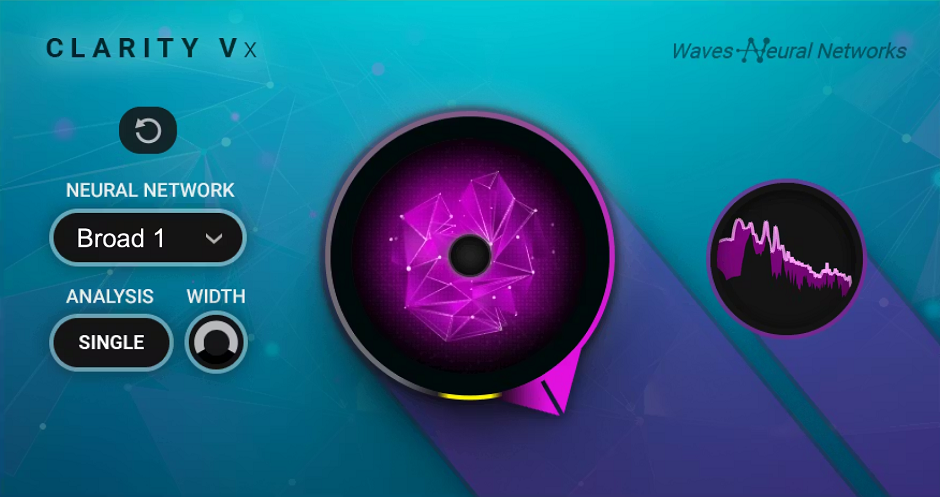
Waves has no dedicated AI mastering assistant comparable to Ozone’s Master Assistant. Waves’ AI development has focused on other categories, primarily Clarity VX for vocal noise reduction and various mixing assistant tools, but the mastering workflow with Waves plugins is a manual process of selecting and configuring each plugin based on your own judgment.
That gives you complete control over every decision, but it also means there’s no safety net for producers who aren’t sure what the master actually needs.
Loudness Metering and Standards Compliance
- iZotope Ozone
Ozone has the strongest integrated loudness metering and streaming compliance tools of any mastering plugin suite available. The integrated LUFS metering shows you real-time integrated LUFS alongside short-term and true peak readings as you work, and the Maximizer’s output can be configured to target a specific integrated LUFS level directly.
The Streaming Preview module (Ozone 11 and later) lets you hear how your master will actually sound after it’s been encoded and loudness-normalized by Spotify, Apple Music, YouTube, Amazon Music, and Tidal. That removes the guesswork from trying to predict how your -14 LUFS master will translate after platform encoding.
The Loudness Optimize tool goes further by helping you configure your processing to maximize perceived loudness of a master within the constraints of streaming platform normalization.
- Waves
Waves’ loudness metering is covered by the WLM Plus Loudness Meter, which provides full ITU-R BS.1770 compliant measurement, including integrated LUFS, short-term loudness, loudness range (LRA), and true peak.
WLM Plus is a capable standalone metering plugin that sits at the end of your chain, but it’s a separate tool rather than integrated into the mastering workflow.
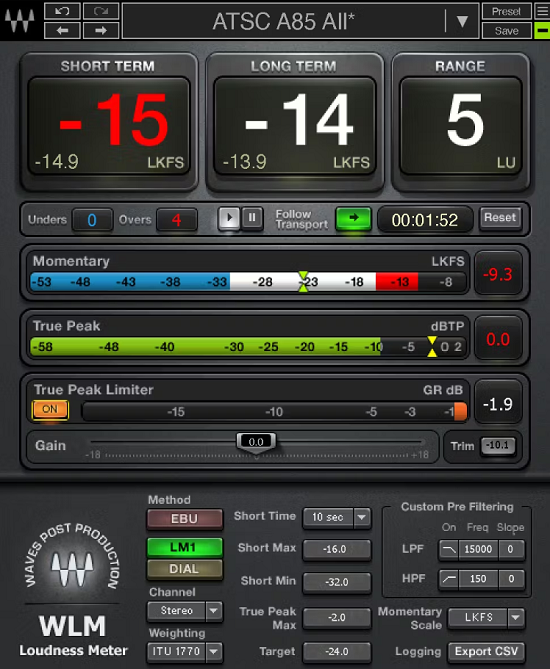
The L4 limiter also display output LUFS and true peak in their interfaces, giving you functional loudness monitoring within the limiter itself. There’s no Waves equivalent to Ozone’s Streaming Preview, so understanding how your master will translate through platform encoding requires either external tools or manual comparison.
Stem Mastering Capabilities
This is one of the most significant areas of advantage in Ozone’s current catalog, and it represents a fundamental change in what mastering engineers can do with a fully mixed file.
- iZotope Ozone: Stem EQ
Stem EQ (introduced in Ozone 12 Advanced) takes it further by giving you a separate eight-band EQ curve for each of the four stems (Vocal, Drums, Bass, Other) inside a single module. You can add presence to vocals, reduce harshness on cymbals, and fatten the bassline simultaneously within the same interface, all working on a fully mixed stereo file.
The Master Rebalance module handles the related problem of level balance between stems, letting you bring up the vocal or bring down the bass within a finished mix without touching the mix session itself.
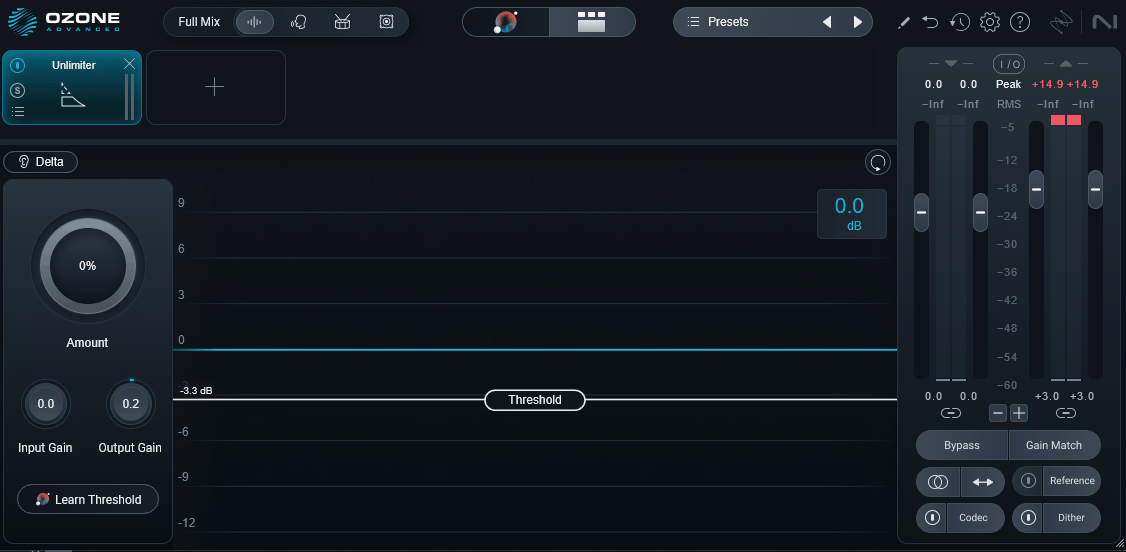
The Unlimiter in Ozone 12 addresses another common mastering problem: receiving a mix that’s been too heavily compressed during mixing or pre-mastering. By analyzing and attempting to restore transient information lost during heavy limiting, Unlimiter gives mastering engineers a fighting chance at salvaging a mix that would otherwise need a revision.
It doesn’t fully reconstruct the original dynamics, but it recovers enough transient information to make the master more manageable.
- Waves
Waves has no dedicated stem mastering capability. Mastering with Waves plugins applies processing to the full stereo mix, and if there are issues within specific stems (a vocal that’s slightly too loud, a bass that’s too heavy in a specific frequency range), the solution is either going back to the mix or accepting the limitation of full-mix processing.
That’s how mastering has traditionally worked, and for many applications it’s entirely sufficient. But for engineers who master other people’s music and regularly receive mixes that aren’t quite right, Ozone’s stem tools offer a genuinely different level of capability.
Bundle Options and Editions
- Waves
Waves doesn’t offer a dedicated mastering-specific bundle. The Horizon Bundle (~$399 on sale) includes most of the major mastering plugins alongside a large selection of mixing tools, and it’s the most cost-effective way to grab a comprehensive Waves mastering toolkit all at once.
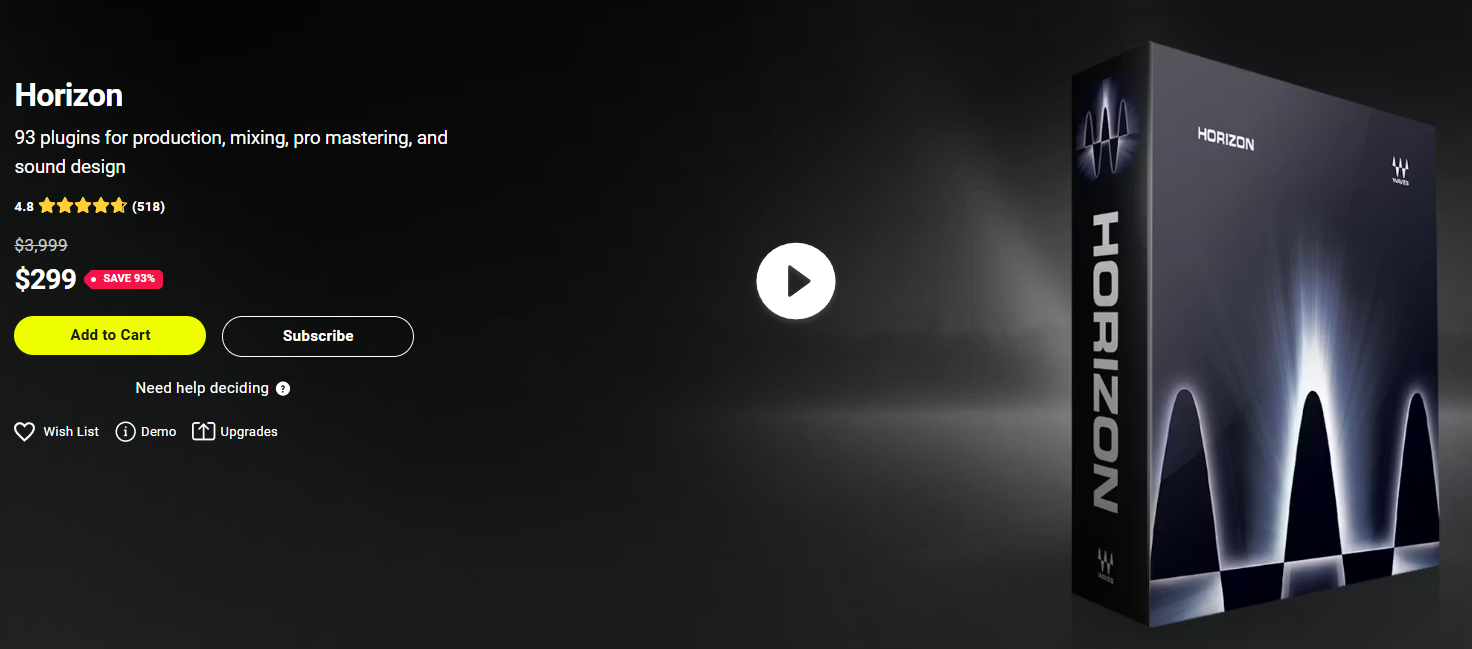
The Platinum Bundle and larger bundles go further in scope but at higher prices. Alternatively, buying individual Waves mastering plugins during sales at $29 to $49 each lets you build a focused toolkit for less than the bundle price if you’re selective about which plugins you need.
Waves plugins are purchased as perpetual licenses with no ongoing subscription required, though the Waves Update Plan (~$10-15/month) gives you access to new versions and updates as they release. You don’t need the Update Plan to use purchased plugins, it’s just a choice about whether you want to stay current with new releases.
- iZotope Ozone
Ozone 12 splits into three editions, and the differences between them aren’t subtle, both price and capability jump meaningfully at each tier.
- At the entry point, Ozone 12 Elements (~$49) covers the essentials: Master Assistant, EQ module, Maximizer, Imager, and basic metering. It’s enough to handle basic mastering tasks with AI assistance, and it’s easily the most affordable way to actually experience the Ozone workflow.Worth noting, Elements doesn’t come with the standalone RX Audio Editor or the full module suite.
- Step up to Ozone 12 Standard (~$199) and the toolkit opens up substantially. You’re getting Dynamic EQ, Multiband Dynamics, Low End Focus, Spectral Shaper, Exciter, Vintage Tape, Vintage Limiter, Master Rebalance, Loudness Optimize, Streaming Preview, Delta buttons for precise processing auditing, and the full standalone Ozone application. For producers and engineers who want the complete Ozone workflow without the advanced stem mastering tools, Standard is the right landing spot.
- Then there’s Ozone 12 Advanced (~$499), the professional tier. This one adds Stem Focus, Stem EQ, Unlimiter, Bass Control, Dialogue Contour, the highest quality Dialogue Isolate processing, and all 20 individual module plugins, meaning each module runs standalone as well as inside the suite.
Professional mastering engineers and post-production facilities tend to land here, particularly when the stem processing capability justifies the price jump from Standard.
Outside the standalone editions, Ozone also ships as part of the Music Production Suite and Mix & Master Bundle in the NI/iZotope ecosystem. The iZotope Elements subscription is another route, around $19.99/month for access to 46 iZotope plugins, Ozone included.
Genre Fit
- Waves for Mastering
Waves mastering plugins perform at their highest in genres where analog character and hardware emulation add to the finished sound rather than just getting out of the way. Rock and indie production benefits most from the Abbey Road TG Mastering Chain and the SSL G-Bus compression, where the characteristic punch and color of those emulations contribute to a master that sounds and feels live and physical.
Hip-hop and trap production historically gravitates toward the L4’s specific density and punch, which adds a characteristic weight to low-end dominant material that no more transparent limiter quite replicates the same way. Electronic music benefits from Vitamin‘s multiband harmonic enhancement, which adds presence and energy without over-compressing the dynamics.
The manual nature of a Waves mastering chain also rewards engineers who’ve developed a specific workflow and know exactly which plugins they want at each stage.
If you’ve spent years mastering with the L4 into the TG Mastering Chain into a linear phase EQ, you know exactly what each step contributes and exactly how to adjust each one for different source material, that consistency and predictability has its own value in a professional workflow.
- iZotope Ozone for Mastering
Ozone’s genre fit is broader and more even across styles, partly because the AI tools are trained on a wide range of commercial music and the genre targeting in Master Assistant helps you approach different sonic aesthetics without starting from scratch each time.
Pop and mainstream genres, where the master needs to hit a specific streaming-ready loudness target and tonal balance, benefit most from Ozone’s integrated LUFS targeting, Streaming Preview, and the Master Assistant’s genre profile system.
Electronic music and EDM benefit from the precise Maximizer IRC limiting, which handles the complex low-frequency content of electronic music at high LUFS without the distortion and pumping artifacts that simpler limiters produce.
The stem mastering tools make Ozone particularly valuable for engineers who professionally work on other people’s music, since Stem Focus and Stem EQ open up corrections that would previously have required a mix revision.
Any genre where the client relationship involves mastering tracks from producers whose mixes occasionally need minor stem-level adjustments is a situation where Ozone Advanced’s stem tools justify the price difference from Standard.
Learning Curve
- Waves
Waves mastering plugins have a variable learning curve depending on which plugins you’re working with.
Most of the core tools are relatively approachable, the L4 has a handful of controls and most engineers understand it within a session, the SSL G-Bus has the same controls as the hardware it emulates (which most engineers already know from mix work), and the Linear Phase EQ is a standard EQ interface with a visual frequency display.
The more complex tools like the F6 Dynamic EQ and the Abbey Road TG Mastering Chain require more time, because the dynamic EQ concept needs practice to use musically, and the TG Mastering Chain’s compressor behaves differently from modern compressors in ways that take experimentation to understand.
The deeper challenge with Waves mastering isn’t learning individual plugins, it’s learning how to build a mastering chain from individual components. Understanding signal order, gain staging between stages, how to avoid cumulative phase problems, what each stage contributes, and how to troubleshoot when something sounds wrong, this knowledge takes time to develop.
It’s the main reason many producers who own excellent Waves plugins still produce masters that don’t sound as polished as they’d like.
- iZotope Ozone
Ozone’s learning curve is shaped by its three-tier design. The Elements version is genuinely approachable for beginners through Master Assistant, Standard requires more familiarity with mastering concepts to use well but provides enough guidance through the AI tools that most producers can produce decent results, and Advanced has a significant learning investment that pays off with professional-level control.
The Master Assistant reduces the initial knowledge barrier substantially, you can get a reasonable starting point without understanding what every module does, and then learn what each contributes by comparing the before and after of each using the Delta buttons.
This learning-by-listening approach is more accessible than the blank-slate approach of building a Waves chain from scratch with no guidance.
Over time, producers who start with Ozone’s AI assistance often develop a strong understanding of mastering principles precisely because the tool shows them what a mastering chain looks like before they understand why.
Trials and Demo
- Waves
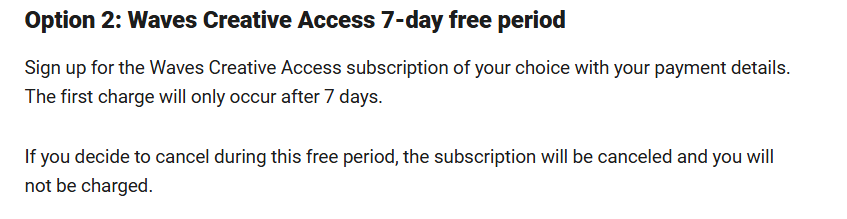
Waves offers a 7-day free trial for each individual plugin. For evaluating a mastering toolkit, that means you’d need to trial each relevant plugin separately, which adds up to a lot of trial management if you want to evaluate a complete mastering chain.
- iZotope Ozone
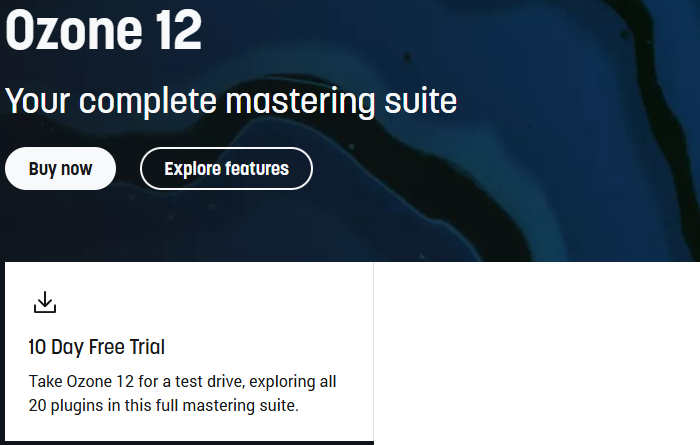
iZotope offers a 10-day trial for Ozone products. The trial includes Master Assistant, Stem Focus, and all other Advanced features without restrictions.
Which Is Better for Beginners?
iZotope Ozone is the clearer recommendation for beginners, and the reasons are practical rather than about feature count or AI novelty. The Master Assistant removes the most paralyzing aspect of mastering for producers who are still learning: the blank-page problem of not knowing where to start or what each processing stage is contributing.
Ozone gives you a working starting point that you can hear, evaluate, and adjust, which is a much more effective learning environment than dropping individual Waves plugins on a chain and trying to figure out from scratch what each one should be doing.
The integrated signal chain with shared metering across all modules means you’re always seeing the full picture of what your master looks like in terms of frequency balance, loudness, and dynamics, which helps you develop the monitoring skills mastering requires. The Delta buttons in Standard and Advanced let you instantly toggle any individual module’s contribution so you can hear exactly what each stage is adding or removing, which accelerates the learning process significantly compared to manually bypassing and re-engaging individual plugins.
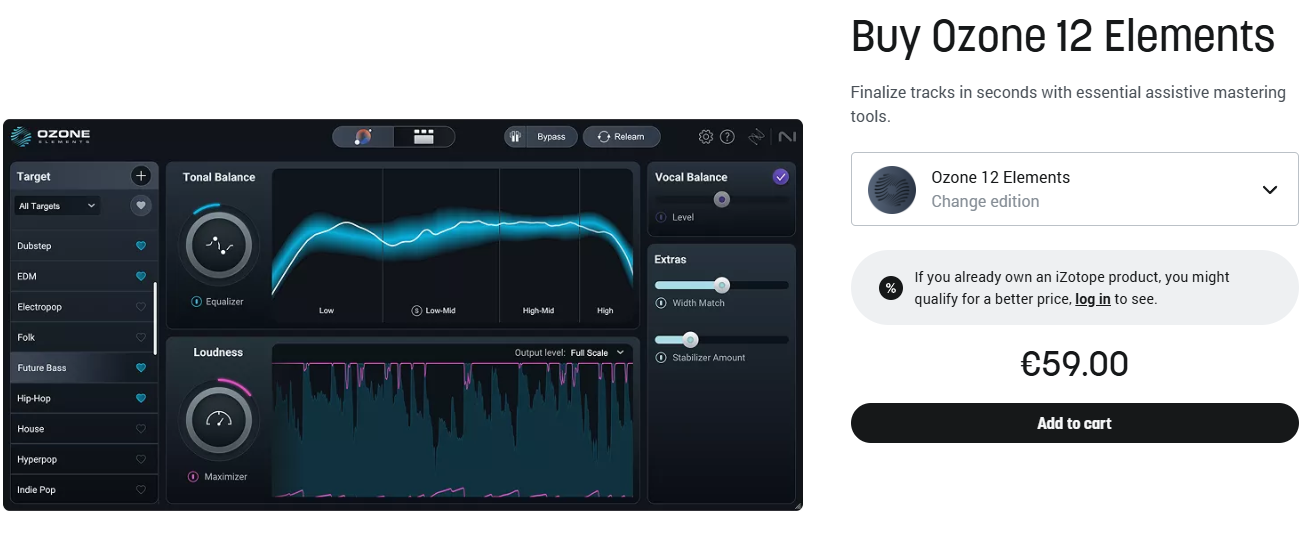
Ozone Elements at ~$49 is one of the most accessible entry points into professional mastering tools available anywhere, and the Master Assistant at that price tier gives you a genuine AI-assisted workflow for less than most individual Waves plugins cost at full price.
Which Is Better for Professional Mastering?
This is where the comparison gets more nuanced, because the answer depends on what “professional mastering” means in your specific context.
For engineers who master other people’s music and work on a wide range of material: Ozone 12 Advanced is the more capable tool because of the stem mastering features.
The ability to correct a mix’s internal balance without requiring a mix revision, apply EQ or compression selectively to a vocal or drum stem within a finished mix file, and recover dynamics from an over-compressed mix with Unlimiter, that represents a qualitative expansion of what a mastering engineer can do without going back to the mix.
These capabilities don’t exist in any Waves mastering plugin, and for professional mastering engineers who regularly face mix problems that would previously have meant sending the client back to the studio, Ozone Advanced’s stem tools are the difference between delivering or not delivering.
For engineers with a specific, established analog-character mastering workflow: Waves tools remain the right primary toolkit for the specific character they provide.
The Abbey Road TG Mastering Chain, the L4’s specific density, and the SSL G-Bus’s glue are sounds Ozone’s modules don’t replicate, and for engineers who know exactly what those tools contribute and build mastering chains around those specific characteristics, Waves provides a stability and predictability that’s genuinely valuable.
Plenty of professional mastering engineers use a hybrid approach: Ozone for metering, streaming compliance, and stem mastering capabilities, combined with Waves for the specific analog character that individual hardware emulations bring.
The Bottom Line
Waves and iZotope Ozone approach mastering from opposite directions, and the right choice between them depends more on where you are in your learning journey and what your workflow demands than on any straightforward quality comparison.
Go with Waves mastering plugins if you want maximum control over every stage of the mastering chain, you’re drawn to the specific analog character of hardware emulations like the Abbey Road TG Mastering Chain and SSL G-Bus, you’re experienced enough to know exactly which tools belong at which stage, or you prefer building your mastering toolkit plugin by plugin at Waves sale prices over time.
Waves tools reward experience and give you exactly what you ask for, which is the right approach when you actually know what you’re asking for.
Go with iZotope Ozone if you’re newer to mastering and want the AI assistance and integrated environment that accelerates your learning, if you work professionally on other people’s music and need the stem mastering capabilities that Ozone Advanced provides, if streaming compliance and loudness targeting are central to your workflow, or if you want a single integrated mastering environment rather than individual plugins assembled by hand.
Ozone 12 Elements at ~$49 is the best entry-level mastering investment available, and Ozone 12 Advanced is the most technically capable integrated mastering suite at any price when stem mastering is part of the equation.
For a lot of producers and engineers, the strongest long-term toolkit uses both: Ozone for the AI-assisted workflow, integrated metering, streaming preview, and stem mastering capability, alongside specific Waves plugins for the analog character moments where the TG Mastering Chain or L4 is exactly the sound a master needs.
Get the Free Plugin Starter Kit
The genuinely useful free DAWs and plugins worth installing. No filler. Straight to your inbox.

Hello, I’m Viliam, I started this audio plugin focused blog to keep you updated on the latest trends, news and everything plugin related. I’ll put the most emphasis on the topics covering best VST, AU and AAX plugins. If you find some great plugin suggestions for us to include on our site, feel free to let me know, so I can take a look!