
There are all sorts of plugin bundles out there, but Pulsar Audio’s Mastering Bundle stands out as one of the more thoughtfully assembled collections from a developer that’s been quietly doing serious work on hardware emulation for years.
Pulsar Audio is one of those developers that tends to fly under the radar compared to the bigger names in the plugin world, but anyone who’s actually spent time with their tools knows they punch well above their price point. The company focuses almost exclusively on hardware emulations, and they do it with a level of attention to circuit-level behavior that most developers either can’t achieve or don’t prioritize.
Their plugins feel responsive in ways that make you want to push them further rather than hover carefully around conservative settings.
This Mastering Bundle brings together four of their most relevant tools for the mastering context: MP-EQ, VM-COMP, 8200, and W495. That’s a passive EQ emulation, a compressor, a vintage program equalizer, and a Weiss DS1-MK3-style digital mastering processor, which together cover the main processing categories a dedicated mastering chain requires.
I think what’s genuinely interesting about this selection is that Pulsar didn’t just assemble four generic tools and call it a bundle; each plugin reflects a specific piece of hardware with a specific sonic character, and the combination gives you different flavors of processing that complement rather than duplicate each other.
For most mastering engineers and serious producers who want to work on their own masters, this bundle is worth considering because the hardware emulation quality is genuinely competitive with tools that cost significantly more individually. The individual plugins in this collection represent some of Pulsar’s most focused and well-regarded work.
MP-EQ
The MP-EQ is Pulsar’s emulation of the classic passive program equalizer style that Pultec-type circuits made famous, and I have to say that getting this one right matters a great deal because so much of the Pultec character is in the specific interaction between its overlapping boost and cut controls at the low end.
The simultaneous low-frequency boost and cut at the same frequency creates a gentle shelving lift with a specific dip below it, which is the behavior that makes this type of equalizer sound musical and non-surgical in ways that standard parametric equalizers don’t naturally replicate.
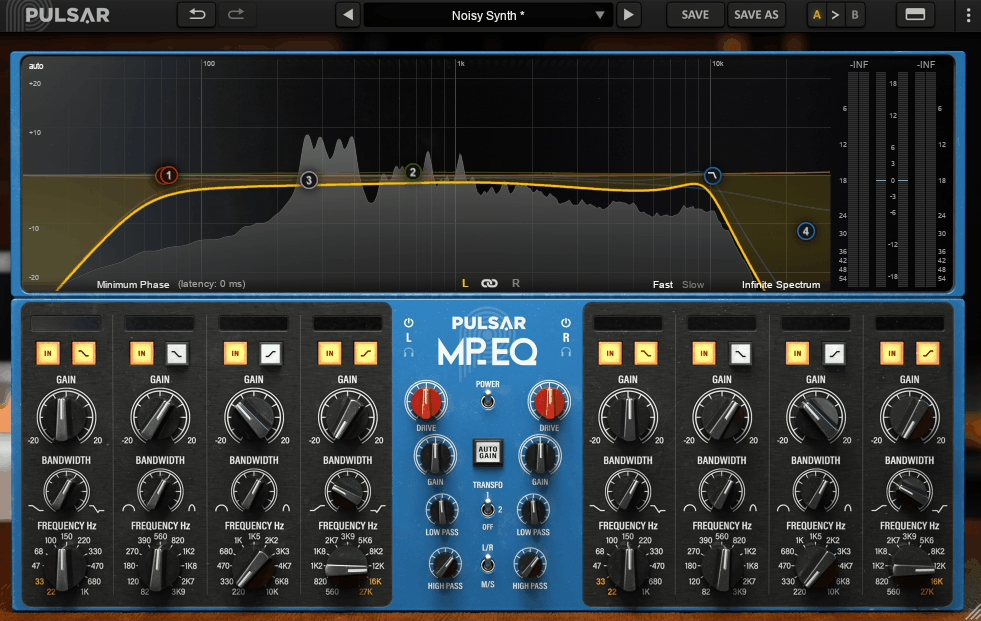
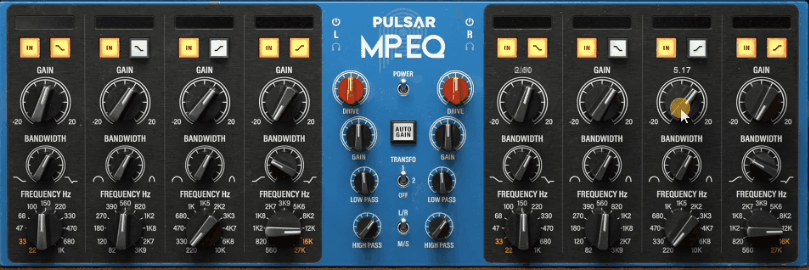
- Low-frequency boost and attenuation controls that operate at the same selectable frequencies simultaneously, allowing the classic Pultec technique of boosting and cutting at the same point to create that characteristic shelf and dip response
- High-frequency peak boost and bandwidth control with the ability to simultaneously attenuate the high end, giving you a presence boost with a natural rolloff character above it
- Passive circuit behavior that means the filter shapes change in subtle but musically relevant ways depending on the level passing through, rather than maintaining a perfectly linear response
I love how the MP-EQ handles low-end weight on full mixes specifically. Adding a few dB of boost at 60 or 100Hz while simultaneously pulling a small amount of attenuation at the same point does something to the shape of the low end that a standard parametric can’t easily replicate, and in a mastering context where every decision affects the entire mix, that kind of musical shaping is valuable.
Get the Free Plugin Starter Kit
The genuinely useful free DAWs and plugins worth installing. No filler. Straight to your inbox.
VM-COMP
The VM-COMP is Pulsar’s variable-mu compressor emulation, modeled on the style of tube-driven program compressors like the Fairchild 670 and the Manley Variable Mu. This is a class of compressor that has been used on mix buses and mastering chains for decades specifically because of how it handles the character of compression, which is program-dependent, slow to respond by design, and genuinely musical in a way that makes things feel finished and cohesive rather than simply reduced in dynamic range.
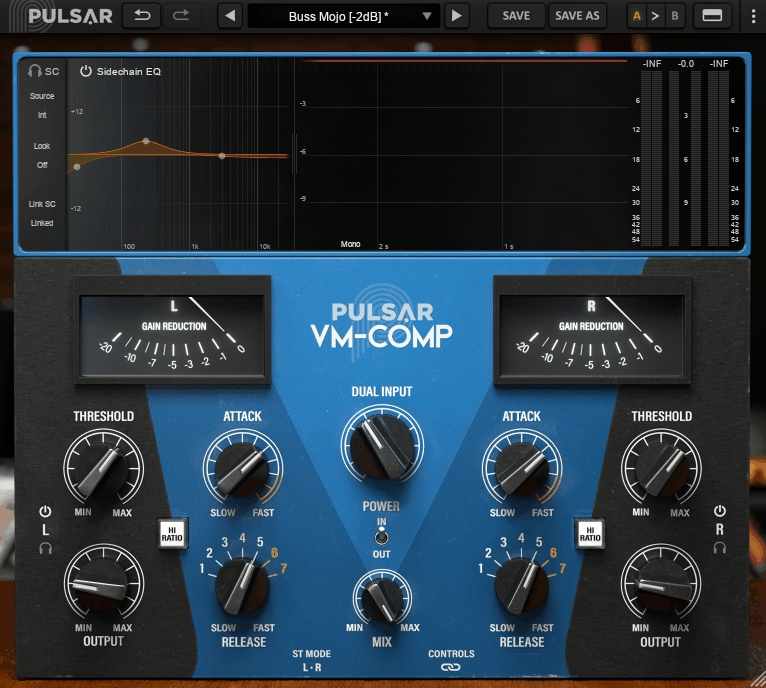
Variable-mu compression works by using the audio signal itself to vary the amplification factor of vacuum tubes, which means the compression ratio and timing are inherently dependent on the character of what’s passing through it, producing a response that feels organic rather than mechanical. I believe this is what separates variable-mu compression from VCA or FET compression at the mastering stage: it doesn’t feel like something was done to the mix, it feels like the mix was always supposed to be this way.
- Continuously variable threshold and ratio behavior that responds differently to different program material, with heavier compression on transient-rich content and gentler compression during quieter passages
- Side-chain high-pass filter to keep the low-frequency content of the mix from driving the compression behavior disproportionately, which is essential on full mixes where the kick and bass would otherwise dominate the gain reduction
- Stereo link and mid-side operation for flexible bus processing that can treat the center and sides of the mix independently
- Harmonic saturation from the tube circuit emulation that adds a subtle density and warmth to the output even at settings where the compression itself is barely audible
For me, the VM-COMP is the plugin in this bundle I return to most consistently for mix bus and mastering work, because there’s a specific quality of presence and cohesion it adds that’s difficult to achieve with cleaner, more transparent compressors.
Model 8200
This is Pulsar’s take on the Neve 8200-style recording console EQ, which is a different tool from the MP-EQ despite both being equalizers.
Where the MP-EQ brings Pultec-style passive circuit character, the 8200 brings the specific sound of a high-quality British console EQ: musical, responsive, and capable of both gentle shaping and more decisive tonal decisions without sounding harsh at either end of the control range.
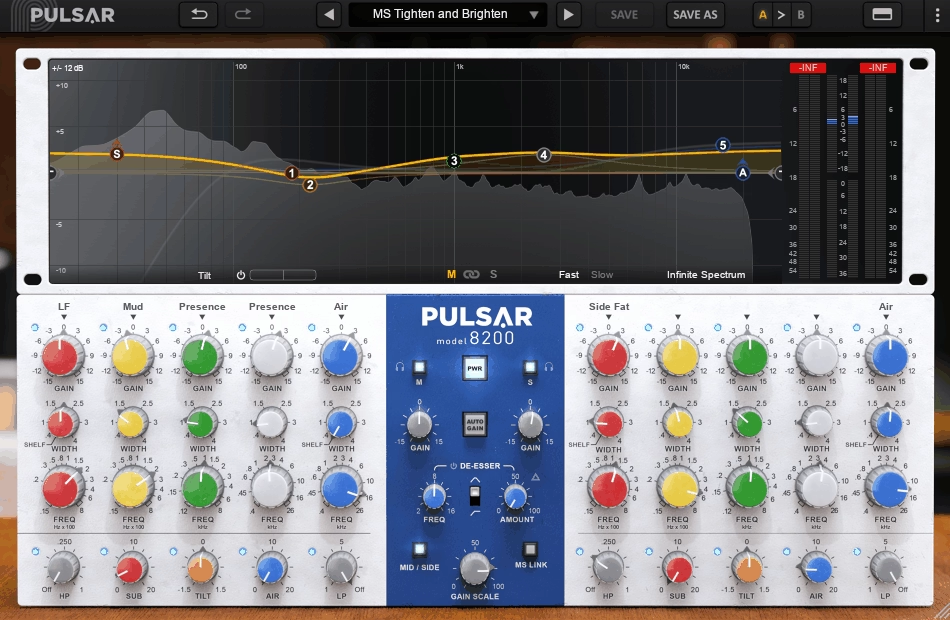
Console EQs in this style have a particular character in the high frequencies that makes boosts sound airy and pleasant rather than edgy, and in the low-mid range where the proportional-Q behavior means the bandwidth narrows as you increase the boost or cut amount, automatically becoming more focused as you push harder.
- Proportional-Q behavior on the mid-frequency bands where the filter bandwidth narrows automatically as you increase the gain amount, which means gentle boosts are broad and musical while aggressive boosts become more focused and surgical without requiring manual Q adjustment
- High-frequency shelf with the characteristic Neve character that adds air and openness without the harshness that digital EQs can produce at similar settings
- Low-frequency shelf that adds weight and body to the low end with a specific shape that works particularly well on full mixes where you want to adjust the overall tonal balance without creating problems
I found the 8200 particularly useful for the kind of broad tonal corrections that mastering often requires, where you’re adjusting the overall character of a mix rather than solving specific frequency problems. In my opinion, it’s the right tool for “this mix needs a bit more air” or “the low-mid is slightly congested” decisions, while the MP-EQ handles the more character-driven low-end shaping.
W495 Equalizer
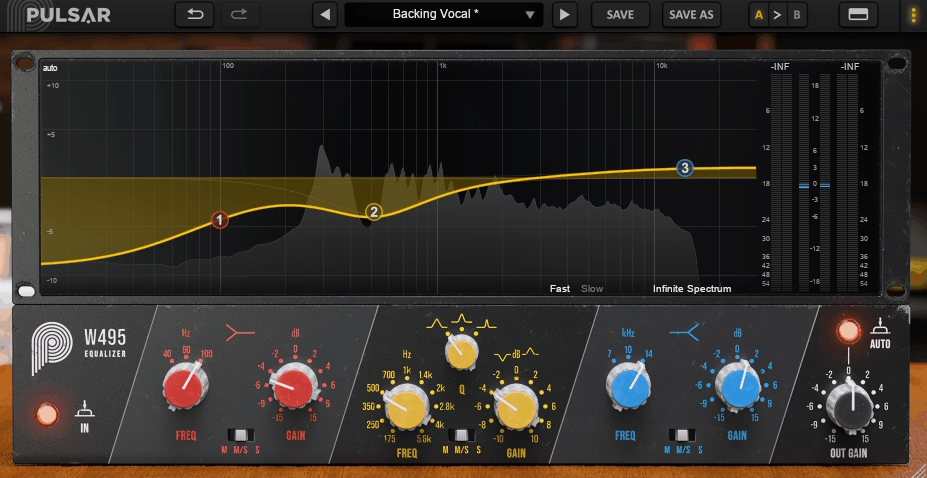
The W495 is the most distinctive plugin in the bundle and the one that I’d say requires the most understanding to use effectively, because it’s based on the Weiss DS1-MK3, which is a digital mastering processor that approaches equalization, limiting, and dynamic control from a completely different philosophical position than the analog emulations in the rest of the bundle.
The Weiss DS1-MK3 is a Swiss-made hardware mastering processor that has been used in professional mastering studios for decades, and its approach to dynamic equalization and limiting reflects the precision and transparency priorities of Swiss engineering rather than the coloration priorities of American and British analog hardware. I want to note that this is genuinely a different kind of tool from the MP-EQ and 8200: where those add character, the W495 adds control and precision.
- Dynamic equalization where each band only applies the EQ correction when the signal at that frequency exceeds or falls below a defined threshold, which means it corrects problems when they occur without affecting the signal when it’s behaving correctly
- M/S (mid-side) processing with independent control over the center and sides of the stereo image, allowing precise correction of stereo imbalances and width adjustments that standard stereo processing can’t achieve as cleanly
- Transparent limiting at the end of the signal chain with the specific character of high-quality digital limiting rather than analog-style saturation limiting, which suits masters where transparency is the priority
- Precise metering integrated into the interface that gives you accurate feedback on what the dynamic equalization is actually doing at each frequency band, making it easier to set thresholds and amounts with confidence
I suggest thinking of the W495 as the precision surgical tool in this bundle: it’s the one you reach for when there’s a specific, identifiable problem in a mix that needs to be addressed cleanly without adding coloration in the process.
How the Four Plugins Work Together
What I appreciate about this specific combination of tools is that the four plugins cover genuinely different sonic territories rather than duplicating each other’s capabilities. The MP-EQ provides program-dependent passive shaping with its characteristic Pultec character.
The 8200 provides the broader tonal adjustments a console EQ does best. The VM-COMP handles the glue and warmth that variable-mu tube compression adds to mix buses and masters. And the W495 handles precision dynamic correction and transparent limiting.
A mastering chain built from these four in sequence covers the main categories of processing a master typically needs: broad tonal shaping, specific frequency correction, dynamic control for cohesion, and limiting for loudness and peak management. I realized that having tools with distinct sonic identities in a mastering chain is actually more useful than having four transparent, neutral processors, because each plugin contributes something specific to the result rather than all four doing essentially the same thing with minor character differences.
Pricing
Pulsar Audio offers the Mastering Bundle at a meaningful discount compared to purchasing the four plugins individually, and the individual pricing reflects the level of circuit modeling detail in each tool. Check Pulsar Audio’s website or their retail partners for current bundle pricing, as they run promotional periods where the discount increases further.
Check here: Pulsar Audio Mastering Bundle
Get the Free Plugin Starter Kit
The genuinely useful free DAWs and plugins worth installing. No filler. Straight to your inbox.

Hello, I’m Viliam, I started this audio plugin focused blog to keep you updated on the latest trends, news and everything plugin related. I’ll put the most emphasis on the topics covering best VST, AU and AAX plugins. If you find some great plugin suggestions for us to include on our site, feel free to let me know, so I can take a look!