
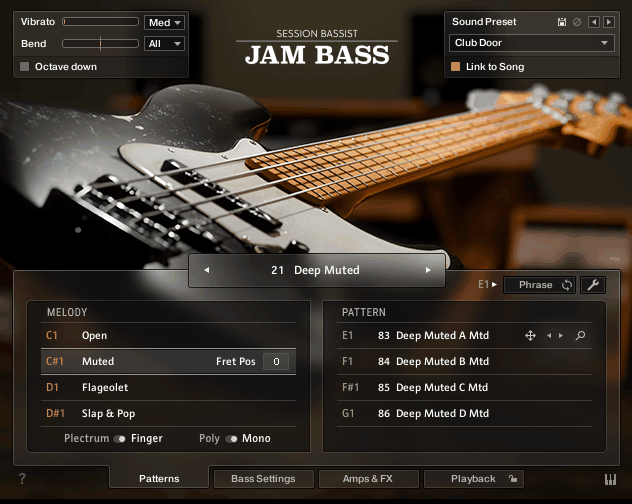
Bass is one of the hardest instruments to fake convincingly in a production context, and the libraries that actually succeed at it are the ones that go beyond simply recording a bass guitar and mapping it across a keyboard.
The Session Bassist series from Native Instruments has built a strong reputation for doing this right, with instruments that prioritize musical behavior and workflow integration over raw sample count. Jam Bass continues that tradition with a specific character and target application: a funk, soul, and groove-oriented electric bass that captures the feel of live session playing rather than clinical note-by-note reproduction.
It earns its place among the best Kontakt libraries for bass specifically because it was clearly designed by people who understand what makes a bass groove rather than just sit in the mix.
The library draws from a carefully recorded electric bass with a warm, punchy character suited to funk, R&B, soul, and contemporary pop production, covering the range from fingerstyle playing through to slap and pop technique in a unified instrument that responds to how you play rather than requiring you to manually trigger every nuance.
I think the distinction between a library that sounds like bass and one that actually grooves like bass is more significant than it might seem, and Jam Bass consistently lands on the right side of that line.
For producers who regularly work in funk, soul, R&B, and groove-oriented styles and need a bass instrument that feels like a real player rather than a sample playback engine, Session Bassist: Jam Bass is worth the investment. The combination of recorded technique coverage, the pattern engine, and the expressive response makes it one of the more complete bass instruments available in the Kontakt ecosystem.
From the Pluginerds Store
Before you move on: we also sell studio gear directly at Pluginerds Shop. If you'd rather buy from a site that spends its time reviewing this exact category than roll the dice on an unfamiliar marketplace listing, it's worth a look.
Visit Pluginerds ShopThe Bass Itself
The recorded source instrument in Jam Bass is an electric bass with a character that sits in warm, punchy territory: enough low-mid body to feel physical and grounded, a smooth high-end rolloff that keeps it from sounding harsh or glassy, and a natural dynamic response that changes meaningfully between soft and hard playing. The specific tone suits the styles the library is designed for: in a funk or soul context, you want a bass that has presence and character without dominating the mix or competing with the kick drum for the same frequency space.
- Recording Quality
The recording sessions captured the bass with enough microphone and signal chain quality to preserve the instrument’s natural resonance and string character without imposing a processed or artificially polished sound. I must say this matters more for a bass instrument than for many other library categories because bass sits in a frequency range where subtle coloration from compression, EQ, or limiting during recording can significantly affect how well the instrument integrates with different drum sounds and production styles.
The dynamic range across velocity layers is wide enough that the difference between a soft, laid-back groove note and a harder, more driving hit is clearly audible and feels like a performance choice rather than a volume adjustment. This is the quality that makes bass playing feel alive rather than mechanical, and Jam Bass captures it convincingly.
- Technique Coverage
Beyond standard fingerstyle playing, Jam Bass covers slap and pop techniques as separate articulation sets, which opens up the specific rhythmic and tonal character of funk bass playing that a standard fingerstyle recording can’t replicate. The slap tone has the characteristic percussive attack and mid-range presence of a thumb hitting the low strings, while the pop articulation captures the snappy, bright quality of pulling the higher strings away from the fretboard.
Muted notes, slides, hammer-ons, pull-offs, and dead notes are all covered as part of the articulation set, which gives the library the vocabulary needed to construct bass lines that feel played rather than programmed. Dead notes in particular are essential for funk bass grooves where the rhythm relies as much on muted string contact as on pitched notes, and their inclusion makes a meaningful difference to how authentic the output sounds in that specific style.
Get the Free Plugin Starter Kit
The genuinely useful free DAWs and plugins worth installing. No filler. Straight to your inbox.
The Pattern Engine
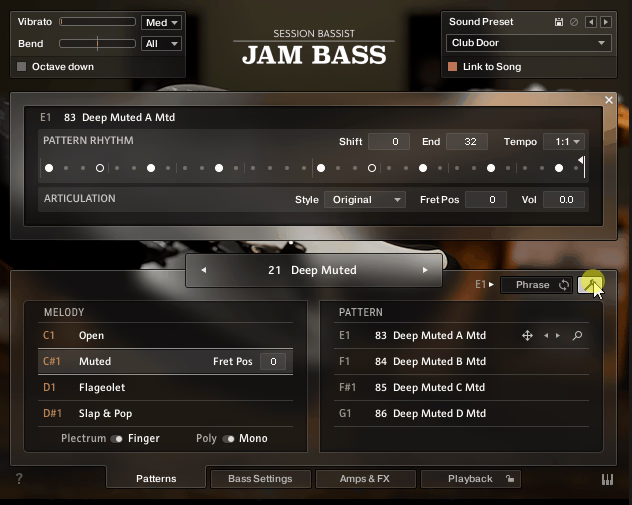
This is the component that most distinguishes Jam Bass from a standard bass sample library, and it’s where the most practically significant time savings in actual production use come from. The pattern engine contains a library of pre-recorded bass groove patterns organized by style, feel, and rhythmic character, each of which can be triggered from chord input to generate a realistic, naturally varying bass part that responds to the harmonic content you feed it.
- How Patterns Work
The pattern playback system works by analyzing the chord or note you play in the left hand of the keyboard and generating a bass line from the selected pattern that follows that harmonic information while maintaining the rhythmic character and articulation variation of the recorded pattern. This means you can play through a chord progression in real time and have Jam Bass generate a corresponding bass line that feels like a session player following your changes, rather than requiring you to program each note of the bass line manually.
I love how the patterns maintain natural variation between repetitions: they don’t simply loop the same recorded phrase over and over but introduce subtle timing variations, articulation changes, and dynamic fluctuations that keep the bass line from feeling mechanical under extended playback. This is the specific quality that makes the difference between a pattern-based bass library that sounds like a machine and one that sounds like a player.

- Pattern Variety and Organization
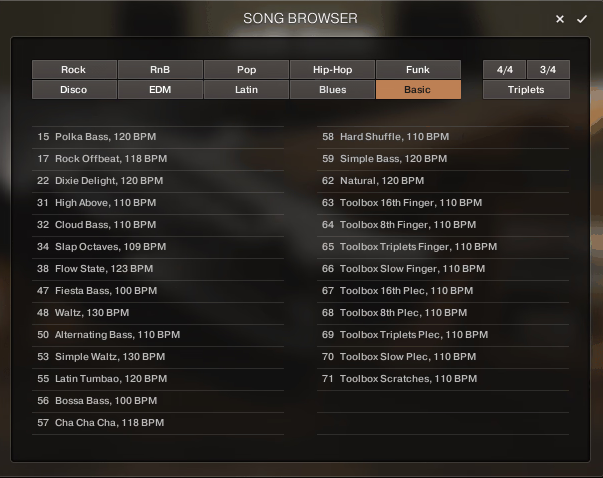
The pattern library covers a range of funk, soul, R&B, and groove feels organized well enough that finding the right pattern for a specific production context is relatively fast, even before you know the library in depth. Patterns range from straightforward root-note-driven grooves for laying down a foundational feel through to more complex syncopated lines that interact rhythmically with the kick and snare, and the style diversity means the library isn’t locked into a single specific groove character.
I suggest spending time with the pattern browser early in your workflow with this library before the session pressure is on, because knowing where specific feel and rhythmic characters live in the collection makes the creative decision faster when you’re working against a deadline.
Playability and Expression
Beyond the pattern engine, Jam Bass is genuinely playable as a direct instrument through the keyboard, which matters for producers who want to write specific bass lines note by note rather than working from patterns. The keyboard mapping provides access to individual notes across the bass’s range with the articulation set available through keyswitches, and the velocity response is calibrated to produce natural-feeling bass performance when played from a MIDI keyboard.
The legato mode handles note transitions with dedicated samples of the slides and position changes between notes, which produces the specific smooth movement between pitches that characterizes well-played bass lines rather than the abrupt, disconnected quality of simple sustain samples played consecutively. I realized that this legato behavior is one of the most practically important qualities for melodic bass writing: bass lines with smooth voice leading feel grounded and musical, while disconnected note changes feel choppy and synthetic regardless of how good the individual note samples are.
Humanize controls are available for adding subtle timing and velocity variation to programmed MIDI sequences, which reduces the quantized, machine-like quality that even well-recorded bass samples can produce when played back with perfectly rigid timing. A small amount of humanization applied to a bass line that sounds mechanical typically resolves the issue immediately and makes the performance feel recorded rather than programmed.
Mix Integration
One of the practical qualities that bass libraries often get wrong is how the instrument sits in a mix alongside real drums and other elements, and I’d say Jam Bass handles this better than most. The tonal character of the source recording occupies a specific frequency space that leaves room for the kick drum below and the low-mid content of guitars and keyboards above, which reduces the amount of EQ work needed to get the bass to sit correctly in a dense arrangement.
The on-board processing controls within the instrument give you basic tone shaping, compression, and output level adjustment without requiring you to immediately route the bass to a separate channel with external processing, which is useful during the sketch and arrangement stage when you want to focus on the musical content rather than the mix. For final production work, routing to external processing gives you full control, but the on-board options are sufficient to get a good working sound quickly.
I have to say that the low-end consistency across different playing intensities is one of the more practically useful qualities of the library in a mixing context: the fundamental frequency content stays controlled rather than ballooning at higher velocities, which means the bass sits predictably in the low end across different dynamics rather than requiring different EQ or compression settings at different performance intensities.
Is It Worth It?
For those who regularly work in funk, soul, R&B, and groove-oriented styles, Jam Bass is one of the more complete and well-executed bass instruments available in its specific style territory, and the pattern engine adds value that goes beyond what even a well-recorded set of individual bass notes provides by itself. The combination of recording quality, technique coverage, and pattern-based groove generation covers the full range of what you’d need from a bass instrument in these styles.
I believe the value is strongest for producers who don’t have easy access to a live bass player but need bass tracks that sound and feel like they were played by one, because the specific combination of recording quality, articulation coverage, and the pattern engine gets closer to that goal than most alternatives at this price point.
For producers who primarily play bass themselves or always track live, the use case is narrower, but the pattern engine still provides useful reference material and the individual note playability is high enough quality to complement live performance in hybrid recording contexts.
Check here: Native Instruments Session Bassist: Jam Bass
Get the Free Plugin Starter Kit
The genuinely useful free DAWs and plugins worth installing. No filler. Straight to your inbox.
From the Pluginerds Store
A quick mention: alongside the blog, we run Pluginerds Shop, our own store for studio hardware and accessories. Everything on it is there because someone on this team actually uses gear like it, not because it was the cheapest thing to list.
Visit Pluginerds Shop
Hello, I’m Viliam, I started this audio plugin focused blog to keep you updated on the latest trends, news and everything plugin related. I’ll put the most emphasis on the topics covering best VST, AU and AAX plugins. If you find some great plugin suggestions for us to include on our site, feel free to let me know, so I can take a look!