
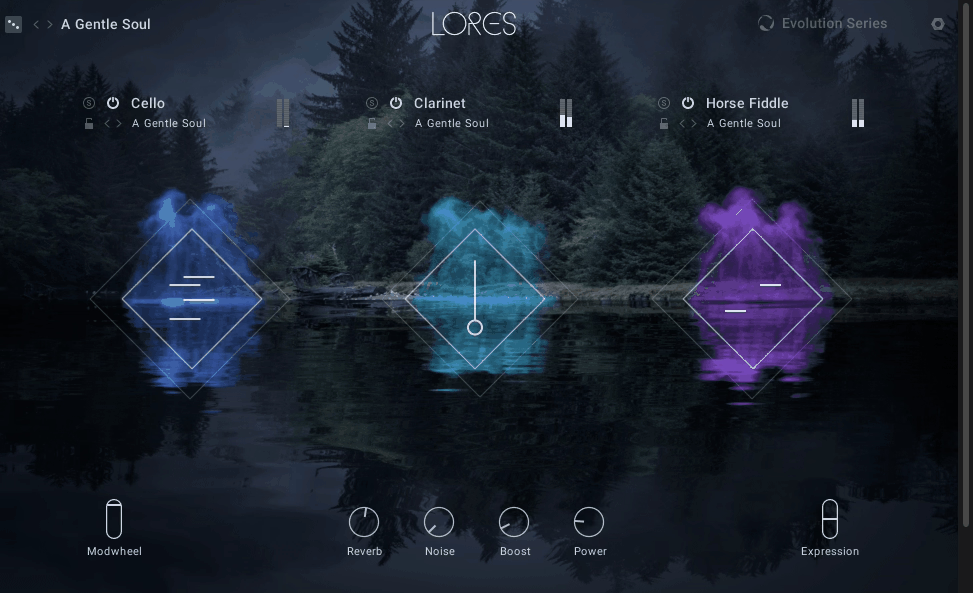
Native Instruments has a specific category of Kontakt instrument that keeps producing genuinely useful results for modern production: the lo-fi and degraded texture library that takes acoustic or electronic source material and applies deliberate sonic deterioration in ways that feel musical rather than damaged.
Lores sits firmly in that category, built around the specific aesthetic of low-fidelity electronic keyboard sounds that defined certain eras of consumer and professional music technology before digital clarity became the default assumption of every instrument.
The library draws from vintage home keyboards, toy instruments, cheap organs, and other consumer electronic sound sources that were never intended to be hi-fi and whose lo-fi character has become genuinely desirable in modern production rather than something to be corrected or apologized for.
I think what makes Lores specifically interesting rather than just another lo-fi keyboard library is the quality of curation: these aren’t generic degraded piano samples with some noise added, they’re captures of specific instruments with specific character that comes from the particular quirks of their circuits and speakers. NI has released various Kontakt libraries that cover this kind of intentionally imperfect territory, and Lores is among the most focused and musically useful of them.
From the Pluginerds Store
If this article has you thinking about what's missing from your setup, our own shop is worth a browse. We stock the practical side of a home studio — the accessories, stands, and interfaces that reviews rarely cover but every setup eventually needs.
Visit Pluginerds ShopInside the Engine
The Kontakt engine powering Lores handles the sample playback and processing with NI’s standard stability and DAW compatibility, but what’s more interesting for this specific library is how the degradation and lo-fi character is preserved and controllable within the instrument rather than being baked permanently into every sample at a fixed amount.
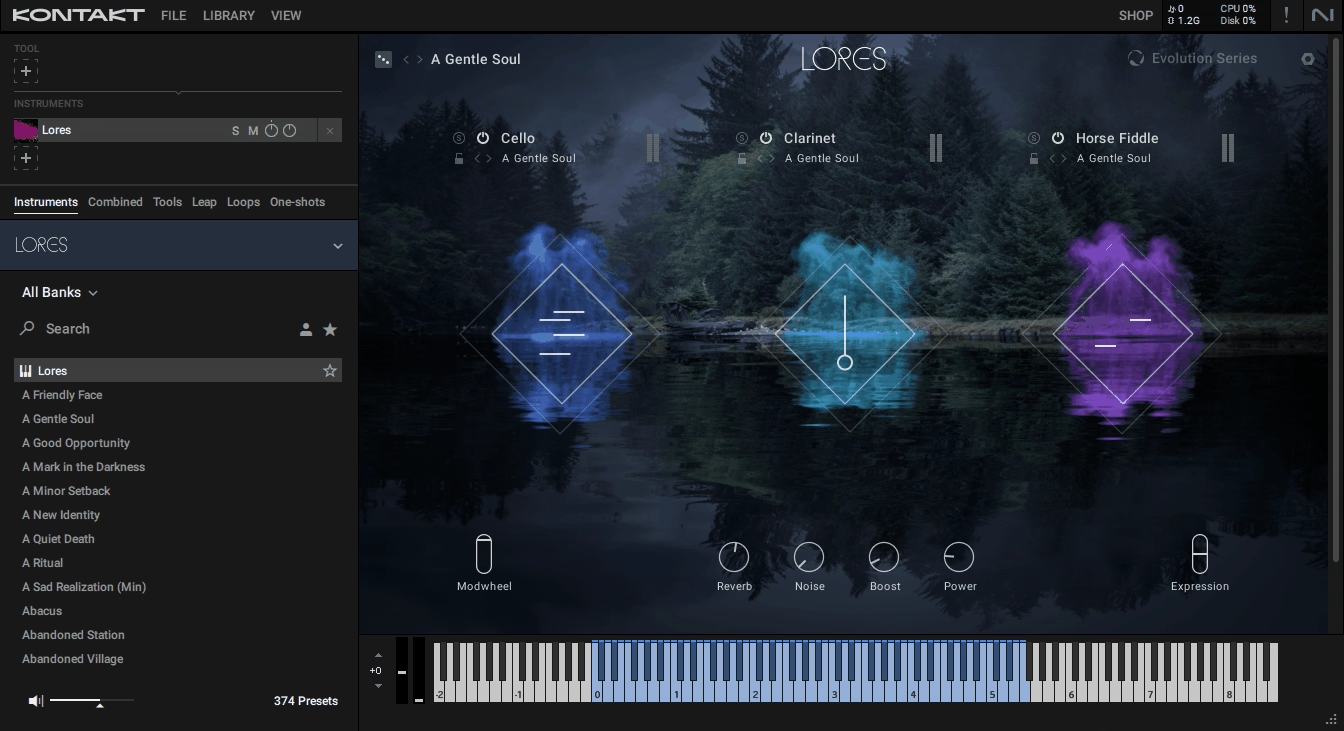
The instrument gives you control over the degree and character of the lo-fi processing applied on top of the source samples, which means you can dial in anything from barely perceptible vintage warmth through to heavily degraded, tape-worn, and speaker-filtered tones depending on what the production requires.
- Sample Sources
The underlying samples were captured from specific vintage keyboard and electronic instrument hardware rather than generated synthetically, which is the fundamental reason Lores sounds convincing rather than like a lo-fi simulation: the warmth, the frequency response limitations, the specific noise floor character, and the subtle tuning instabilities all come from the actual physical behavior of the hardware rather than from digital approximation of what those qualities sound like.
I noticed that individual notes within the same instrument carry subtle variations in character that reflect the real-world inconsistency of vintage analog and early digital circuits: no two keys on an old Casio or home organ were perfectly matched, and that inconsistency is part of what makes these instruments feel alive under your hands.
- Processing Controls
The processing available within the instrument covers the dimensions of lo-fi character that matter most: high-frequency rolloff that simulates the limited bandwidth of cheap speakers and consumer tape, noise floor control for adding the specific hiss and hum character of the original hardware, bit depth and sample rate reduction for the specific gritty, aliased quality of early digital instruments, and drive controls for pushing the signal into the saturation range of the original circuits.
Each of these can be adjusted independently, which gives you the ability to combine different aspects of lo-fi character in proportions that suit your specific production context rather than accepting a single fixed degradation preset.
Get the Free Plugin Starter Kit
The genuinely useful free DAWs and plugins worth installing. No filler. Straight to your inbox.
The Sounds Themselves
This is the section that matters most for a library like Lores, because the source material is the product in a way that’s more direct than for a library with a sophisticated synthesis engine: if the sounds aren’t interesting and useful, nothing else about the instrument compensates for that. The honest assessment is that they are, and the variety within the collection covers enough ground that the library serves multiple production contexts rather than a single narrow aesthetic.
The melodic keyboard sounds range from the specific thin, reedy quality of cheap home organ tones through to the warmer, slightly woozy character of vintage electric piano sounds that have sat in a case for thirty years.
There are pad-like textures that occupy the space between a keyboard instrument and an ambient sound source, sounds that have been degraded to the point where their keyboard origin is still recognizable but their timbral character has moved significantly away from it, and more straightforward instrument sounds where the lo-fi quality is present but subtle enough to be used in contexts where you want vintage character without obvious retro signaling.
I love how the lowest and highest register sounds carry different degradation characters rather than simply transposing the same mid-register quality up and down: real vintage keyboards behaved differently in extreme registers due to circuit limitations and speaker response, and that register-dependent character is preserved in the library in ways that make it sound played rather than sampled.
Where It Lives in a Mix
The specific frequency character of Lores sounds makes them sit in a mix in a way that’s different from cleaner keyboard libraries, and understanding this is important for using the library effectively rather than fighting it. Because the source material has limited high-frequency content and the processing controls allow further rolloff, these sounds naturally occupy a warm, mid-forward frequency space that leaves room for other elements above and below without requiring aggressive EQ to prevent frequency competition.
For me, this is most practical in lo-fi hip-hop and bedroom pop contexts where the keyboard sits in the middle of the arrangement surrounded by similarly warm, filtered drums and bass: the Lores sounds integrate into that kind of texture immediately without the EQ work a brighter, cleaner keyboard library would require.
In more varied production contexts, the processing controls give you enough high-frequency adjustment to brighten individual sounds when the arrangement needs more keyboard presence without losing the fundamental warmth of the source material.
I must say that the noise floor in the processed sounds is one of the more practically important qualities to understand: at default settings the noise is present but musical, contributing to the atmosphere of the sound rather than competing with the performance. Turning the noise control down completely removes most of the lo-fi ambiance character, while pushing it higher produces the kind of tape hiss presence that works well in intentionally degraded or nostalgic aesthetic contexts.
Playing and Expression
How Lores responds to playing matters significantly because the aesthetic these sounds serve is one where the performance feel contributes to the emotional character of the result. A lo-fi keyboard library that plays mechanically and uniformly undercuts its own aesthetic: the warmth of the source material and the processing character need to be matched by a performance feel that has a similar organic quality.
The velocity response across the library is calibrated to feel like you’re playing something with limited dynamic range, which is accurate to the hardware sources: vintage home keyboards and cheap organs didn’t have wide dynamic ranges, and the velocity sensitivity in Lores reflects that by producing relatively subtle volume differences across the velocity range while letting the tonal character change more substantially between soft and hard playing.
I’d say this calibration is exactly right for the aesthetic: you’re not playing a concert grand, you’re playing something that was built for a living room, and the dynamic response reflects that.
Round-robin variation handles repeated notes with enough variation that fast passages retain a natural feel, which matters for the kinds of melodic and rhythmic parts these sounds are typically used for in production contexts where the same notes repeat frequently within a phrase.
Is It Worth It?
The honest answer is yes for producers who regularly work in aesthetics where this kind of vintage consumer electronics character is part of the sound, and more conditional for producers who only occasionally need it. Lores delivers genuinely good source material at a quality level that you’d struggle to match by randomly sampling vintage hardware without significant time investment in finding and recording the right instruments, and the processing controls give it enough flexibility to serve multiple production contexts rather than a single fixed aesthetic.
I suggest approaching it as a core keyboard resource for warm, lo-fi production work rather than as a specialty item you pull out occasionally, because the sounds are practical and immediately usable enough to earn that kind of regular use.
For the specific production territory it covers, there’s very little in the Kontakt ecosystem that combines this source quality with this level of playability and processing flexibility, and that combination is what makes it a useful long-term addition to a working template rather than a novelty that gets used once and then forgotten.
Check here: Native Instruments Lores
Get the Free Plugin Starter Kit
The genuinely useful free DAWs and plugins worth installing. No filler. Straight to your inbox.
From the Pluginerds Store
If this article has you thinking about what's missing from your setup, our own shop is worth a browse. We stock the practical side of a home studio — the accessories, stands, and interfaces that reviews rarely cover but every setup eventually needs.
Visit Pluginerds Shop
Hello, I’m Viliam, I started this audio plugin focused blog to keep you updated on the latest trends, news and everything plugin related. I’ll put the most emphasis on the topics covering best VST, AU and AAX plugins. If you find some great plugin suggestions for us to include on our site, feel free to let me know, so I can take a look!