
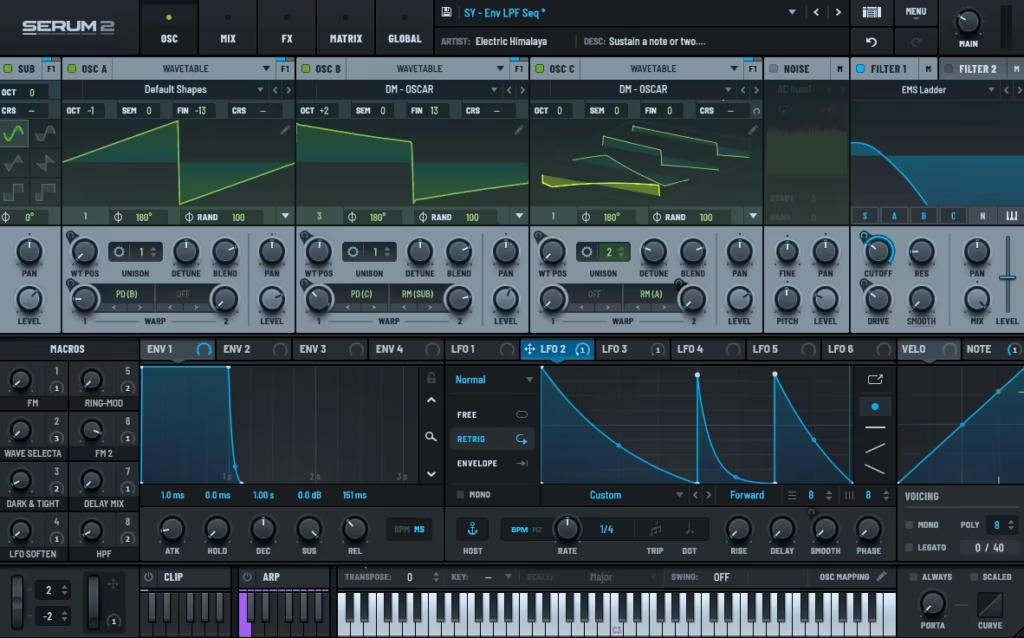
Eleven years is a long time to wait for a sequel, and very few plugins carry enough weight that an update after that kind of gap generates genuine anticipation rather than indifference. Serum by Xfer Records is one of them.
Since Steve Duda released the original in 2014, it became the most widely used wavetable synthesizer in electronic music production, appearing on recordings across virtually every genre and earning a reputation for being the rare instrument that’s deep enough for serious sound designers yet accessible enough that beginners can make something useful with it within an hour of opening it for the first time.
What arrived in March 2025 wasn’t just a feature update: it was a fundamental expansion of the synthesis architecture that turns what was already a best-in-class wavetable synthesizer into something that deserves the title of hybrid synthesizer.
The addition of granular, spectral, multisample, and sample oscillator types alongside the existing wavetable engine means you’re no longer working with a single synthesis approach and all its associated sonic characteristics but with a multi-engine instrument that can approach sound design from several fundamentally different directions.
For existing Serum users the question of value answers itself immediately: Xfer Records made Serum 2 a completely free upgrade, which in an industry where developers routinely charge significant upgrade fees for smaller improvements is a genuinely remarkable decision.
For new buyers, the introductory price of $189 (regular price $249) places it in the premium synth category, and whether it’s worth that investment depends on how seriously you take synthesis as a creative practice, which the rest of this review will address in depth.
The Oscillator Section
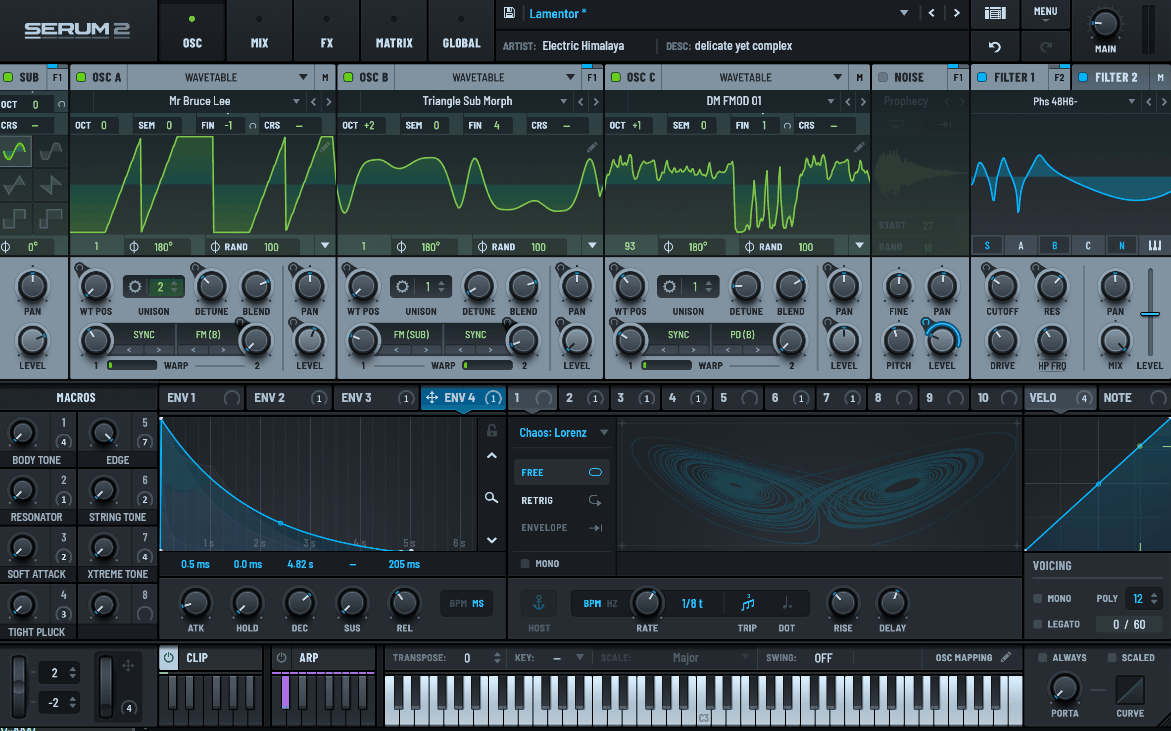
The most significant change in Serum 2 and the one that most clearly defines what it has become is the oscillator section, which now includes five distinct oscillator types rather than the original wavetable-focused architecture.
This is where the hybrid synthesizer claim earns its justification: each oscillator type represents a genuinely different approach to sound generation rather than superficial variations on the same synthesis method.
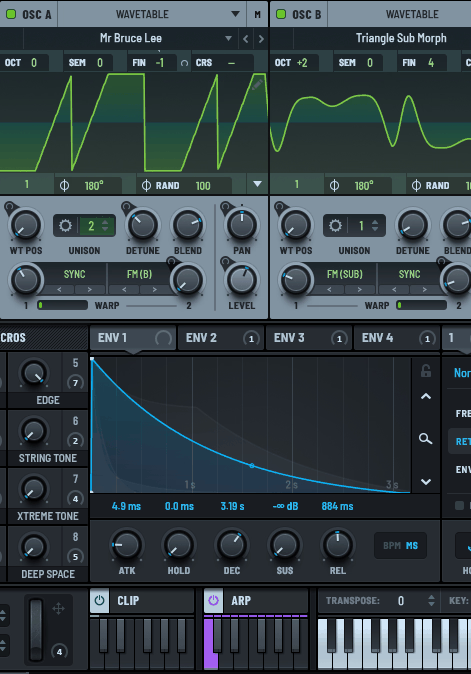
The Wavetable Oscillator retains everything that made Serum’s original engine respected: high-quality interpolation, an extensive factory wavetable library, and the visual waveform editor that lets you import, draw, or process wavetables with considerable precision.
What’s new is a Smooth Interpolation mode that allows near-infinite frame positions without needing a morph function, plus new warp modes that add additional transformation options on top of the existing filtering, FM, phase distortion, ring modulation, and distortion warps.
I believe the dual warp capability alone opens up harmonic territory that the original oscillator couldn’t access, and the combinations between different warp types produce results that feel genuinely new even to producers who have spent years inside the original Serum.
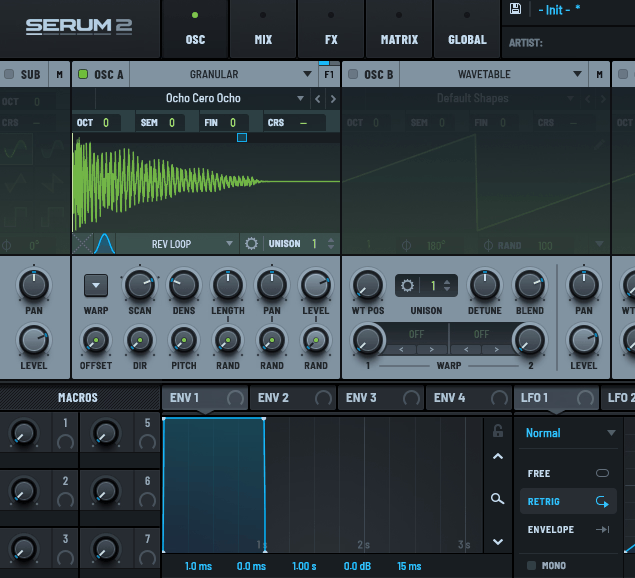
The Granular Oscillator brings granular synthesis into the instrument with independent control over grain size, density, position, pitch, and randomization, which allows the specific shimmering, evolving textural quality of granular synthesis to be generated from any sample source loaded into the oscillator.
I found this particularly useful for transforming conventional sample material into atmospheric pad content without requiring a separate dedicated granular plugin.
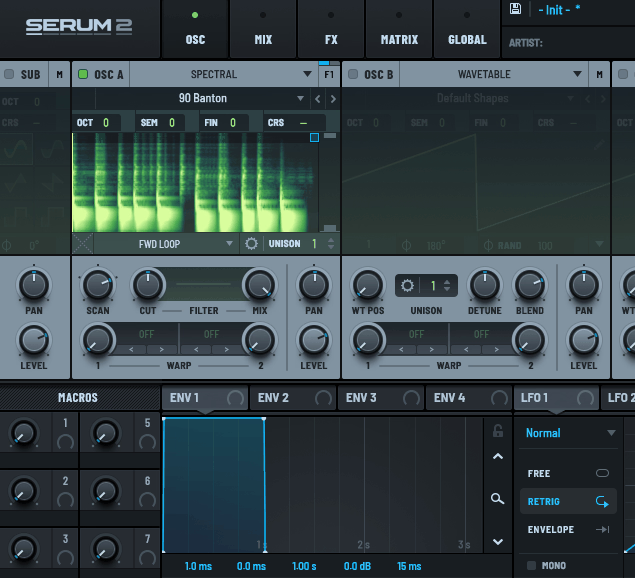
The Spectral Oscillator allows real-time resynthesis of samples at the harmonic level, with transient detection processing that gives you time and frequency manipulation capabilities similar to advanced timestretching algorithms.
What this produces in practice is the ability to manipulate sounds at the harmonic content level in ways that neither wavetable nor granular approaches naturally provide, opening up timbral territory that would require specialist spectral processing tools outside of the synthesizer context.
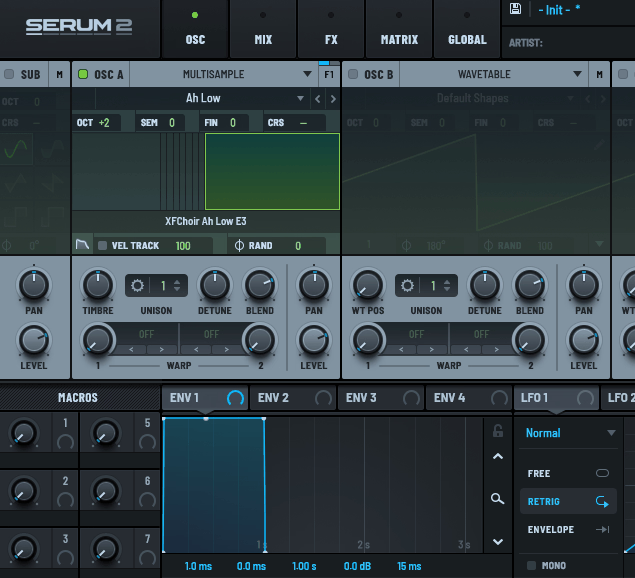
The Multisample Oscillator enables replication of real instruments through multisample playback, and Serum 2 ships with a library of recorded instruments including orchestra, choir, pianos, and guitars recorded specifically for this purpose. You can also import your own multisample recordings using the open SFZ format.
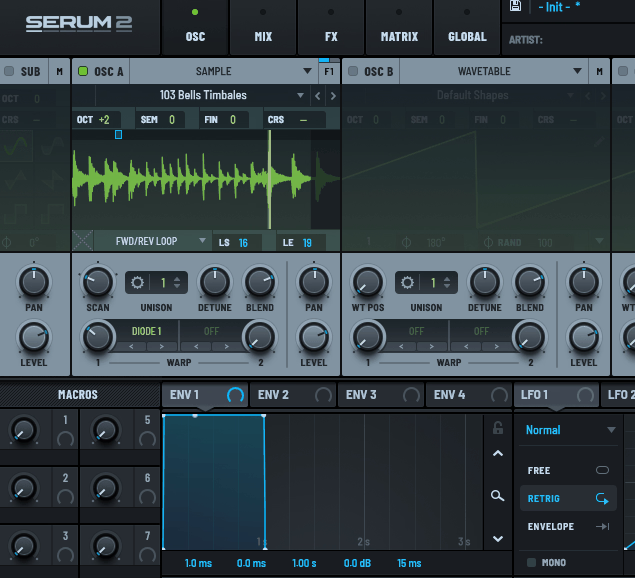
The Sample Oscillator handles conventional sample playback with looping, slicing, rate modulation for tape stop effects, and realtime pitch extraction, which gives the instrument additional flexibility for hybrid production approaches.
Get the Free Plugin Starter Kit
The genuinely useful free DAWs and plugins worth installing. No filler. Straight to your inbox.
Modulation System
The LFO section received significant expansion in Serum 2, and I think this is one of the less discussed but more practically important improvements.
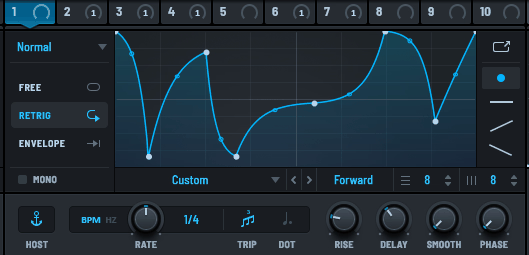
You now have access to up to 10 LFOs with enhanced editing options rather than the more limited arrangement in the original, which means complex, multi-dimensional modulation structures are more achievable without running out of available modulators mid-patch.
New LFO modes include Path, two Chaos modes (Lorenz and Rossler), and Sample and Hold, which substantially widens the range of modulation behavior available.
The Path mode is particularly interesting: it lets you draw a path on an XY pad which the modulator follows, allowing the creation of very complex modulation curves that would be impossible to achieve with standard waveform-based LFOs.
The Chaos modes produce the specific organic unpredictability of mathematical chaotic systems, which creates modulation that feels alive and non-mechanical in ways that traditional random LFOs don’t fully replicate.
The envelope system retains the same flexible architecture as the original while benefiting from the expanded modulation routing that the new LFO types provide.
I appreciate that Xfer kept what worked rather than redesigning the modulation system from scratch: the drag-to-assign modulation routing that made Serum’s workflow intuitive is still the primary way you build modulation relationships, and the new LFO types integrate into that system rather than requiring a separate interface paradigm.
Arpeggiator and Sequencer
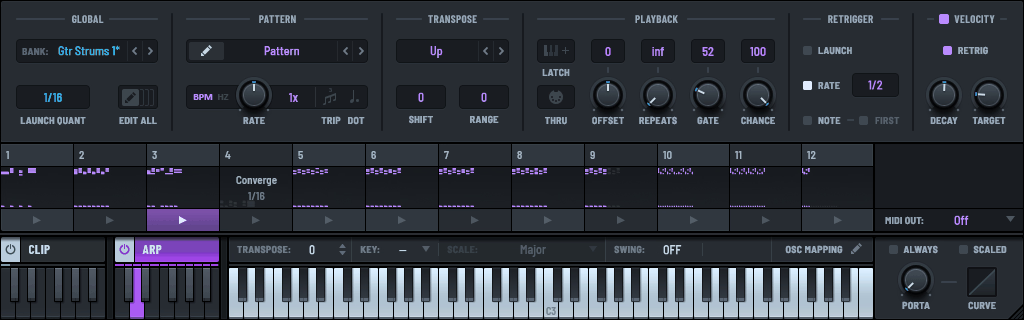
Two entirely new sections in Serum 2 address a limitation of the original that required producers to rely on external MIDI plugins or DAW arpeggiators: a full arpeggiator and a clip sequencer, both with 12 slots for storing patterns and configurations.
The arpeggiator covers the standard playback modes including up, down, up-down, random, and custom patterns, with adjustable gate times, swing, and velocity controls per step.
What makes it more powerful than a standard arpeggiator is the ability to create custom step patterns where each step can have different velocities, gate lengths, and pitch transpositions, which enables evolving basslines, plucked sequences, and rhythmic lead patterns with a compositional complexity that basic up-down arpeggiators can’t produce.
The clip sequencer allows you to create and trigger musical phrases of up to 12 patterns directly within the synthesizer, with the ability to draw steps in a traditional sequencer grid, import MIDI files, or record phrases directly.
Individual slots can be switched by pressing keyboard keys, which gives the instrument a live performance capability that the original completely lacked. I must say that having this built in rather than relying on a DAW’s MIDI clip management is genuinely workflow-improving for producers who sketch ideas directly in a synthesizer rather than building arrangements from scratch in a piano roll.
Effects and Routing
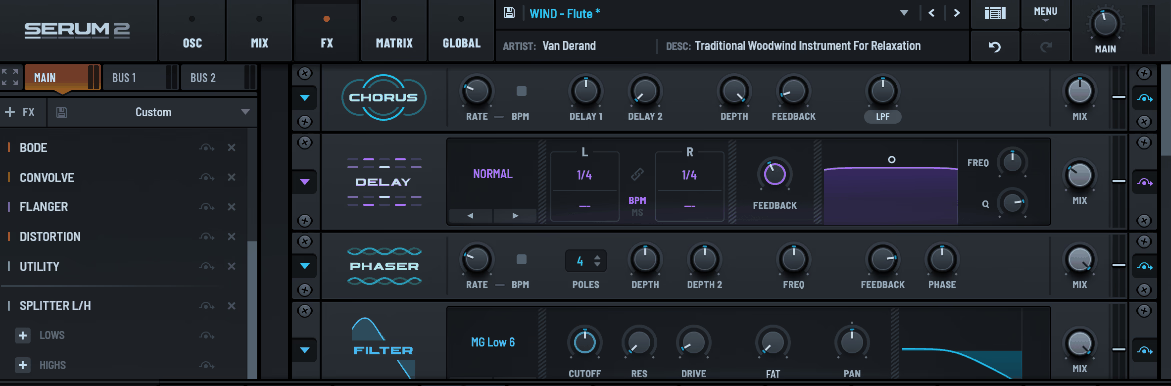
The effects section expanded to 15 effects with 3 splitter modules, and the routing architecture now allows effects to be applied not just on the main signal but also independently on Bus 1 and Bus 2 channels, giving you parallel processing capability within the synthesizer itself.
This is a meaningful improvement for producers who build complex patch architectures where different oscillators or signal paths need different effects processing rather than a single shared effects chain.
The effects quality remains at the level that made the original Serum’s effects section a genuine production tool rather than a basic utility: the reverb, delay, distortion, chorus, phaser, and other included effects are good enough to use in finished productions rather than as placeholder processing while you build the patch.
The addition of new virtual analog filters alongside the existing filter types with series or parallel routing expands the filter section’s tonal range and flexibility.
Presets and Sound Library
Serum 2 ships with 626 presets and 288 wavetables, which represents a substantial factory library across the instrument’s five oscillator types and all of the new modulation and effects capabilities. The presets cover the full range of synthesis applications: basses, leads, pads, plucks, arps, and the more experimental sound design territory where Serum has always excelled.
I noticed that the preset library reflects the expanded synthesis architecture well: the granular and spectral oscillator types in particular give the factory content a timbral range that the original Serum’s wavetable-focused library couldn’t achieve, and the multisample instrument presets add a category of content that gives Serum 2 overlap with sample-based Kontakt instruments in terms of what it can represent.
Beyond the factory library, the existing ecosystem of Serum preset packs from third-party sound designers remains fully compatible, which means years of available third-party content continues to work without modification. This backward compatibility with the original Serum’s preset and wavetable ecosystem is one of the more practically significant aspects of the update for producers with existing libraries.
Is It Worth the Money?
For existing Serum owners the answer requires no deliberation: the free upgrade gives you a substantially more capable instrument with five oscillator types, expanded modulation, a built-in arpeggiator and sequencer, and an improved effects section at no additional cost. There is no meaningful argument for not updating.
For new buyers considering the $249 regular price, the value calculation depends on what you’re comparing it to. Against other flagship wavetable synthesizers, Serum 2’s multi-engine architecture, the depth of its modulation system, the quality of its factory library, and the commitment to lifetime free updates place it in a strong position.
The lifetime free update policy is the specific quality that makes the price most defensible: you’re not buying access to the current version but to whatever Serum 2 becomes through continued development.
I’d say the honest answer to whether it’s worth the money is yes, with the clarification that its value is proportional to how seriously you engage with synthesis as a practice. If you use synthesizers primarily from presets with occasional macro adjustments, Serum 2 delivers excellent preset content and workflow, but the depth of what it offers in terms of sound design capability won’t be fully utilized.
For producers who genuinely engage with synthesis, the combination of five oscillator types, the expanded LFO system, and the sequencing capabilities gives you an instrument that rewards serious exploration in ways that will keep it in your workflow for years.
Check here: Xfer Records Serum 2
Get the Free Plugin Starter Kit
The genuinely useful free DAWs and plugins worth installing. No filler. Straight to your inbox.

Hello, I’m Viliam, I started this audio plugin focused blog to keep you updated on the latest trends, news and everything plugin related. I’ll put the most emphasis on the topics covering best VST, AU and AAX plugins. If you find some great plugin suggestions for us to include on our site, feel free to let me know, so I can take a look!