
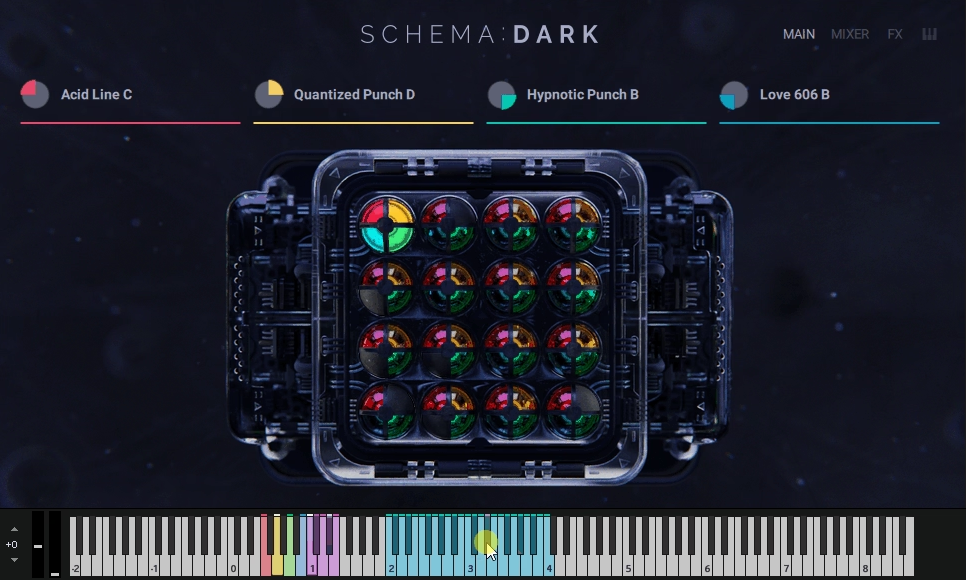
Native Instruments has a long history of building Kontakt instruments that go well beyond sample playback, and the releases that consistently earn their place in working composers’ templates are the ones that solve a specific creative problem rather than trying to be everything at once. Schema: DARK is exactly that kind of instrument: a Kontakt library built around evolving cinematic rhythms and dark textural content, designed for composers and producers who need rhythmic material that feels organic, unpredictable, and emotionally weighted rather than mechanically sequenced.
The instrument sits in a category that’s grown significantly over the past several years as cinematic and trailer music has become more rhythmically complex and sonically adventurous.
I think what distinguishes Schema: DARK from the general field of dark rhythm libraries is the depth of its sequencing architecture and the quality of its source material: it’s not a collection of loops with a few knobs on top, it’s a genuinely playable instrument where the rhythmic behavior responds to how you interact with it.
For composers working in trailer music, horror scoring, dark electronic production, and any context where rhythmic tension and evolving textural movement are compositional priorities, Schema: DARK is worth serious consideration. The combination of a sophisticated sequencing engine with carefully designed dark sound sources gives you rhythmic material that feels alive and purposeful rather than like a preset you loaded and left running.
What Is Schema: DARK?
At its foundation, Schema: DARK is a Kontakt instrument that generates evolving rhythmic patterns from a library of dark, processed sound sources, combining a pattern sequencer with layered sample playback in a way that blurs the line between a rhythm instrument and a textural synthesizer.
The “DARK” designation basically refers both to the tonal character of the sound sources and to the emotional territory the instrument is designed to occupy: tension, dread, foreboding, and the kind of rhythmic unease that underpins modern cinematic horror and thriller scoring.
I believe the most important thing to understand about what Schema: DARK actually is before purchasing it is that it’s not a drum machine and it’s not a sample loop player: it’s a generative rhythm instrument whose output changes and evolves based on how you configure and play it. That distinction matters because it determines how you integrate it into a production workflow, and producers who approach it expecting fixed loops will find something much more interesting and much more demanding of engagement.
Get the Free Plugin Starter Kit
The genuinely useful free DAWs and plugins worth installing. No filler. Straight to your inbox.
Inside the Engine
The Kontakt engine that powers Schema: DARK handles the relationship between sample playback and sequencing in a way that gives you significant control over how the rhythmic and textural elements combine. The underlying sound sources were recorded and designed specifically for this instrument rather than being repurposed from a general sample library, which means the timbral character of the content is consistent across the collection and suited specifically to the dark rhythmic territory the instrument is designed to cover.
- Source Material
The sounds that Schema: DARK draws from include processed percussive elements, designed textural impacts, metallic and industrial source recordings, and granularly processed material that sits ambiguously between rhythm and texture.
This ambiguity is musically deliberate: the most effective dark cinematic rhythm instruments tend to have sources that carry emotional weight on their own rather than functioning as neutral rhythmic vehicles, and the material here has that quality consistently.
I noticed that the low-frequency content in the percussive elements has particular presence and definition, which is where dark rhythm instruments most commonly underdeliver.
Building sub-frequency rhythmic weight that translates across monitoring systems requires either very careful source recording or sophisticated synthesis, and Schema: DARK addresses this with enough body and thump in the low end that the rhythmic content reads clearly even on smaller speakers.
- Layer Architecture
The layered architecture within the instrument allows multiple sound sources to play simultaneously at adjustable levels, which is where the textural complexity that distinguishes Schema: DARK from simpler rhythm tools comes from. You’re not working with a fixed kit of individual drums: you’re working with layered combinations of sources whose relative balance you can shift to move between rhythmically focused output and more textural, atmospheric results from the same pattern.

Rhythmic Sequencing
The sequencing system is the creative heart of Schema: DARK, and I’d say it’s where the instrument earns its position as something genuinely distinct from what a standard Kontakt drum instrument provides. The pattern sequencer drives the rhythmic output with a level of configurability that allows you to create patterns that feel composed and intentional rather than like preset loops, and the way the sequencer interacts with the layer architecture means that rhythmic and textural changes can happen simultaneously as the pattern progresses.
- Pattern Configuration
Patterns in Schema: DARK are built from step-based rhythmic data with configurable step length, density, and accent placement that determine both the timing and the dynamic character of the rhythmic output.
The ability to adjust step length independently of the tempo means you can create patterns with internal subdivisions that don’t follow standard grid relationships, producing the slightly unpredictable, organic rhythmic feel that makes dark cinematic material sound performed rather than programmed.
I love how the accent system within the sequencer affects not just the volume of individual steps but the timbral character of the sound sources at those steps, so accented hits have a different spectral quality from unaccented ones rather than simply being louder. This timbral accent behavior is one of the more sophisticated aspects of the sequencing implementation and it contributes significantly to the sense that Schema: DARK patterns feel like they were played by a musician rather than generated by an algorithm.
- Variation and Evolution
Static patterns have limited compositional value over extended cues, and Schema: DARK addresses this with pattern variation and evolution controls that allow the rhythmic content to develop over time without requiring constant manual intervention or automation. The variation depth controls determine how significantly the pattern shifts between iterations, covering the range from subtle rhythmic nuance through to more dramatic pattern transformations that keep longer cues from feeling repetitive.
Texture and Atmosphere
Beyond its rhythmic function, Schema: DARK generates continuous textural content alongside and beneath the rhythmic patterns in a way that makes it simultaneously a rhythm instrument and an atmosphere generator. This dual function is one of its most practically useful qualities for scoring work, because it means a single instance of the instrument can provide both the rhythmic energy and the ambient foundation of a cue rather than requiring separate instruments for each function.
- Tonal Character
The harmonic and spectral character of the instrument’s output leans toward the inharmonic and the unsettling in ways that are musically controlled rather than arbitrarily harsh. There’s a specific quality to the way Schema: DARK sits in a frequency spectrum: the mid-range content has an industrial, metallic quality, the low end has physical weight, and the upper frequencies have a sparse, fractured character that adds tension without introducing harshness that would interfere with melodic content sitting above it.
For me, this spectral balance is one of the most practically important qualities of the instrument in actual scoring use. A dark rhythm instrument that dominates the high-frequency range makes melodic and dialogue content harder to work with, while one that only occupies the low end lacks the presence to color the atmosphere of a cue effectively.
Schema: DARK sits in the middle of the spectrum in a way that leaves room for everything else while still having meaningful presence.
- Atmospheric Sustain
The sustained textural content between and beneath the rhythmic events creates a continuous atmospheric presence that connects the individual rhythmic hits into a unified sonic environment rather than leaving silence between beats. I must say this sustain behavior is one of the qualities that most clearly separates Schema: DARK from a standard drum instrument in scoring applications: it provides the connective tissue between rhythmic events that makes a cue feel inhabited and emotionally consistent rather than punctuated.
Sound Design Potential
Schema: DARK is not limited to its out-of-the-box preset behavior, and the sound design options within the instrument give you significant control over how the sources are processed and presented. The filtering, saturation, and modulation controls available within the Kontakt interface allow you to shape the character of the instrument beyond what the preset library provides, which means you can adapt the sound to specific project requirements rather than working around a fixed aesthetic.
- Processing Controls
The filter section within Schema: DARK covers both standard lowpass and highpass configurations and more creative filter modes that shape the tonal character of the output in ways that go beyond simple frequency management.
Driving the filter into resonance on the rhythmic content produces a specific pitched quality to the transients that can add musical harmonic interest to the rhythmic patterns, and the saturation controls add harmonic density to the source material in ways that make the output feel more physical and present without losing the dark character of the original sources.
I found the combination of filtering and saturation most useful for adapting Schema: DARK to specific project requirements where the default output character is close but not quite right: pulling the high-frequency content back with the filter while adding saturation to the mid-range preserves the rhythmic energy while making the instrument sit more comfortably alongside specific orchestral or electronic textures in the same session.
- Modulation Routing
The modulation options within the instrument allow LFO and envelope sources to be routed to key parameters including filter cutoff, layer balance, and pattern density, which opens up animated, evolving behavior that goes beyond what static parameter settings produce.
I appreciate that the modulation depth controls are calibrated for the specific ranges that matter most for this kind of instrument: subtle filter movement at low depth settings through to more dramatic timbral shifts at higher settings, without jumping immediately to extreme behavior that requires constant management.
Playability and Expression
One of the qualities that distinguishes a genuinely playable cinematic instrument from a sophisticated loop player is how it responds to the keyboard and to real-time performance input, and Schema: DARK is designed with real-time playability as a genuine design priority. The keyboard mapping allows different sections of the instrument to be triggered from different register ranges, which means you can use keyboard position to switch between rhythmic density levels, pattern variations, and textural modes in real time during performance or recording.
- Velocity Response
The velocity sensitivity across Schema: DARK is calibrated specifically for the way composers and producers typically interact with rhythm instruments in scoring contexts: moderate velocities produce the most usable output for standard cinematic applications, with softer velocities producing more textural, less rhythmically defined results and harder velocities producing more aggressive, impactful hits with greater transient presence.
This velocity range covers a lot of compositional ground from a single instrument.
I have to say that the velocity-to-texture relationship within the instrument is one of its more sophisticated aspects: playing softly doesn’t simply produce quieter versions of the same sound but genuinely different timbral and rhythmic characters that suit different emotional temperatures within the same genre. This expressive range means you can use dynamics as a compositional tool rather than just a volume control.
- Macro Controls
The assignable macro controls give you real-time access to the most important dimensions of the instrument’s behavior through hardware controller assignments, which makes Schema: DARK a practical live performance and real-time recording tool as well as a composition instrument.
Mapping pattern density, filter character, and layer balance to physical knobs means you can shape the instrument’s behavior expressively during a take rather than drawing everything in after the fact, which tends to produce more natural and musical results in the final recording.
Scoring and Production Applications
The primary use case that Schema: DARK was designed for is cinematic scoring where dark, evolving rhythmic content is part of the compositional language rather than a supporting element, and this is where it delivers most convincingly.
Trailer music, horror film underscore, thriller and action scoring, and the rhythmically complex dark ambient territory of prestige television drama are all contexts where the instrument’s specific combination of rhythmic sophistication and textural depth adds genuine value to a composer’s toolkit.
I suggest thinking about Schema: DARK specifically in terms of the gap it fills in a scoring template rather than as a general-purpose rhythm tool: it covers the specific territory between a conventional percussion section and a pure atmosphere instrument, providing rhythmically organized dark content that has both the drive of a rhythm instrument and the emotional weight of a designed texture. That specific territory is genuinely underserved by most available tools.
- Electronic Production
Beyond scoring applications, Schema: DARK also works effectively in dark electronic music production contexts: industrial techno, dark ambient, experimental electronic music, and any production genre where rhythmic tension and atmospheric density are aesthetic goals rather than incidental qualities.
The instrument’s timbral character is well-suited to electronic production aesthetics where organic and synthetic qualities are deliberately blended, and the pattern sequencer provides enough control to integrate its output into productions with specific rhythmic requirements rather than simply layering it as a texture.
Is It Worth It?
The honest assessment depends on how central dark rhythmic material is to your production practice and whether the specific territory Schema: DARK covers is a gap in your current toolkit.
If you regularly work in scoring or production contexts where evolving dark rhythms are compositional priorities, the instrument solves that specific problem at a level of sophistication that’s difficult to match with combinations of simpler tools, and the playability and expressive range mean you’ll find it genuinely useful across a wide range of applications within its genre territory.
I believe the value proposition is strongest for composers who are currently building dark rhythmic content from combinations of drum machines, loop libraries, and atmosphere instruments that don’t integrate as naturally as a unified instrument designed specifically for that purpose.
Schema: DARK replaces that combination with something more coherent, more expressive, and more sonically consistent, and the time savings and quality improvement that come from having the right tool for a specific job are significant in practice even if they’re hard to quantify in advance.
Check here: Native Instruments Schema: DARK
Get the Free Plugin Starter Kit
The genuinely useful free DAWs and plugins worth installing. No filler. Straight to your inbox.

Hello, I’m Viliam, I started this audio plugin focused blog to keep you updated on the latest trends, news and everything plugin related. I’ll put the most emphasis on the topics covering best VST, AU and AAX plugins. If you find some great plugin suggestions for us to include on our site, feel free to let me know, so I can take a look!