
These two brands don’t overlap as much as you’d expect from a side-by-side comparison, and that’s actually what makes this an interesting one to dig into. iZotope is a comprehensive mixing, mastering, and audio repair company that has been building AI-powered studio tools for decades.
Antares is the company that invented Auto-Tune and has spent over 25 years building an entire product line around one central idea: making vocals sound exactly how you want them to.
So in some ways this is less of a direct competition and more of a question about what role you need your tools to play. If you’re producing music that involves any kind of vocal work, chances are you’ve already looked at both. And I think being honest about where each brand genuinely shines, where they fall short, and where they overlap is a lot more useful than picking a winner.
I’ve worked with both catalogs across music production and mixing sessions, and here’s the full picture.
Plugin Comparison by Category
| Category | iZotope | Antares |
|---|---|---|
| Pitch Correction | Not available | Auto-Tune Pro 11, Auto-Tune 2026, EFX+ |
| Vocal Production Suite | Nectar 4 (full vocal chain) | Auto-Tune Unlimited (full vocal chain) |
| Harmony / Doubling | Nectar 4 (Backer, Voices modules) | Harmony Engine, Auto-Tune Pro 11 |
| Vocal De-esser | Nectar 4, Velvet (2025) | Auto-Tune Vocal De-Esser |
| Vocal EQ | Nectar 4 (EQ module) | Auto-Tune Vocal EQ |
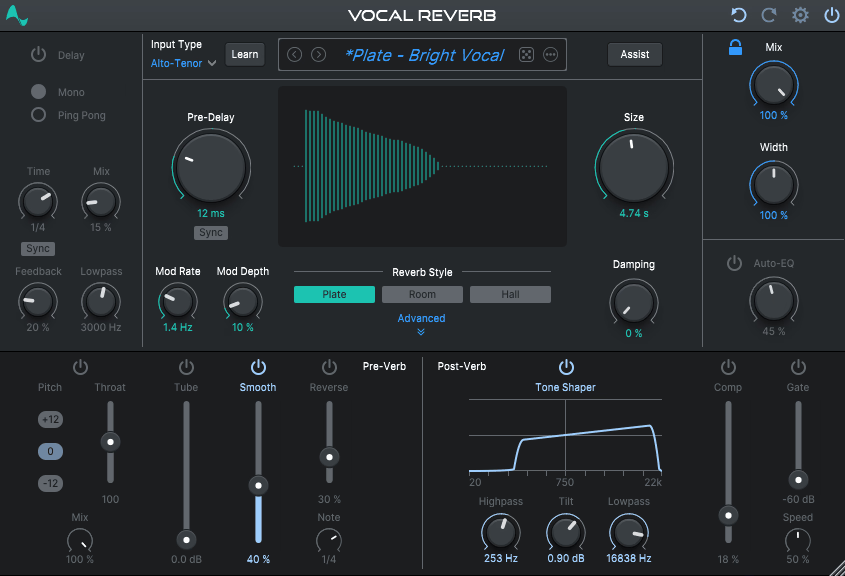
| Vocal Reverb | Neoverb, Equinox, Aurora | Auto-Tune Vocal Reverb |
| Vocal Compressor | Nectar 4 (dynamics module) | Auto-Tune Vocal Compressor |
| AI Voice Modeling | Not available | Metamorph (2025) |
| Vocoder | VocalSynth 2 | Auto-Tune Vocodist |
| Mic Modeling | Not available | Mic Mod |
| Mastering Suite | Ozone 12 (20+ modules) | Not available |
| Mix Channel Strip | Neutron 5 | Not available |
| Audio Repair | RX 11 (industry standard) | Not available |
| Distortion / Creative FX | Trash, FXEQ (2025) | Articulator, Auto-Tune Slice |
| Subscription Option | Music Production Suite Pro (monthly) | Auto-Tune Unlimited ($24.99/month) |
| Free Entry Point | Vinyl (free), Ozone EQ free tier | 14-day free trial |
Sound Character
These two brands don’t really share a sonic aesthetic, and the difference is worth understanding before you start comparing individual plugins.
- iZotope: Transparent and Analytical
iZotope’s design philosophy across its core tools is built around precision and transparency. Neutron 5, Ozone 12, and Nectar 4 are all engineered to process audio cleanly, with AI assistance that helps you make decisions faster rather than adding color for its own sake.
The tools are designed to get out of the way and let the original recording speak, correcting problems and balancing the mix without introducing unnecessary character.
That said, iZotope does have a creative and colorful side through tools like Trash and VocalSynth 2, and the newer Catalyst Series adds saturation, delay, and reverb with more personality. But the core identity is clean, precise, and analytical, which is exactly what you want in mastering and repair tools.

- Antares: Character-First Vocal Sound
Antares builds everything around a specific sonic identity that has become one of the most recognizable sounds in modern music. Auto-Tune’s pitch correction algorithm has its own character, particularly in Classic Mode which emulates the Auto-Tune sound that defined an era of hip-hop and pop production.
The Antares vocal chain tools are designed with character in mind, not just correction. The Harmony Engine adds harmonies with formant modeling that keeps them sounding like the original voice. Mic Mod adds the tonal fingerprint of specific vintage and boutique microphones to any recording. The overall sound is warm, present, and voice-forward in a way that reflects decades of focused development on one instrument above all others.
Flagship Plugin Instruments
Each brand has tools that define what they do at the highest level, and understanding those tools is the fastest way to understand the brands.
- iZotope Ozone 12
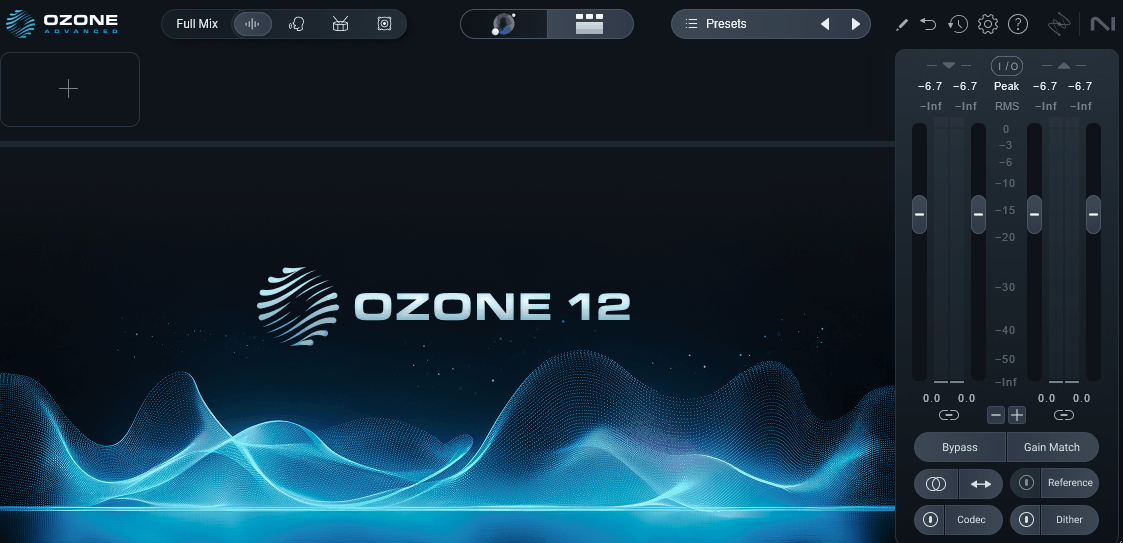
Ozone 12 is iZotope’s flagship mastering suite and one of the most fully featured mastering environments available anywhere. It covers 20 processing modules as component plugins in the Advanced tier: EQ, multiband dynamics, a Maximizer with the new IRC 5 limiting mode, Imager for stereo width, Exciter, Match EQ, Vintage Tape, and the newly added Stem EQ, Bass Control, and Unlimiter.
The Master Assistant analyzes your track and builds a starting mastering chain automatically based on your target loudness and genre, which is a genuinely useful starting point even for experienced engineers who adjust everything afterward. Stem EQ is the most interesting new addition: it applies your mastering EQ to individual stems within the mixed file, letting you fix tonal imbalances in the vocal or low end without needing the original session.

- iZotope Neutron 5
Neutron 5 is iZotope’s AI-assisted mixing channel strip and it’s ambitious in scope. It includes an EQ with dynamic band modes, a compressor, transient shaper, gate, de-esser, exciter, and a Sculptor module for adaptive tonal shaping. The Mix Assistant analyzes inter-track relationships and suggests gain staging and panning adjustments, while the Visual Mixer shows frequency conflicts between tracks in real time.
I realized working with Neutron 5 that the Sculptor module is genuinely different from a standard EQ. It applies ongoing dynamic tonal correction that adapts to the signal over time rather than applying a fixed curve, which means it can handle vocals with inconsistent tonal character much more gracefully than a static EQ setting would.
- iZotope RX 11
RX 11 is the most important tool iZotope makes for anyone working with recorded audio, and it has absolutely no equivalent in the Antares catalog. It covers Dialogue Isolation for separating speech from background noise, De-noise for broadband noise reduction, De-click and De-crackle for recording artifacts, Music Rebalance for adjusting stem levels within a mixed file, and dozens of specialist repair modules.
If you work with recorded vocals in any capacity, whether in music production, podcast editing, or post-production, RX 11 is the tool you reach for when the recording itself has a problem. Antares simply doesn’t address this territory at all.
- Antares Auto-Tune Pro 11
Auto-Tune Pro is the most complete version of Auto-Tune currently available. It offers both Auto Mode for real-time correction and Graph Mode for detailed manual pitch and time editing of individual note events. The major new addition in version 11 is the four-part Harmony Player, which lets you create, mix, and MIDI-trigger four harmony voices directly within Auto-Tune Pro, each with independent formant, pan, and level controls.
ARA2 support in Logic, Cubase, Nuendo, and Studio One means you can edit pitch directly in the timeline with full DAW integration rather than working in a floating plugin window. Classic Mode reproduces the Auto-Tune 5 algorithm specifically, which is the version responsible for the signature processed vocal effect that has defined entire genres of music. Auto-Tune Pro 11 is priced at $499 perpetual, with the Unlimited subscription available at $24.99 per month.

- Antares Harmony Engine
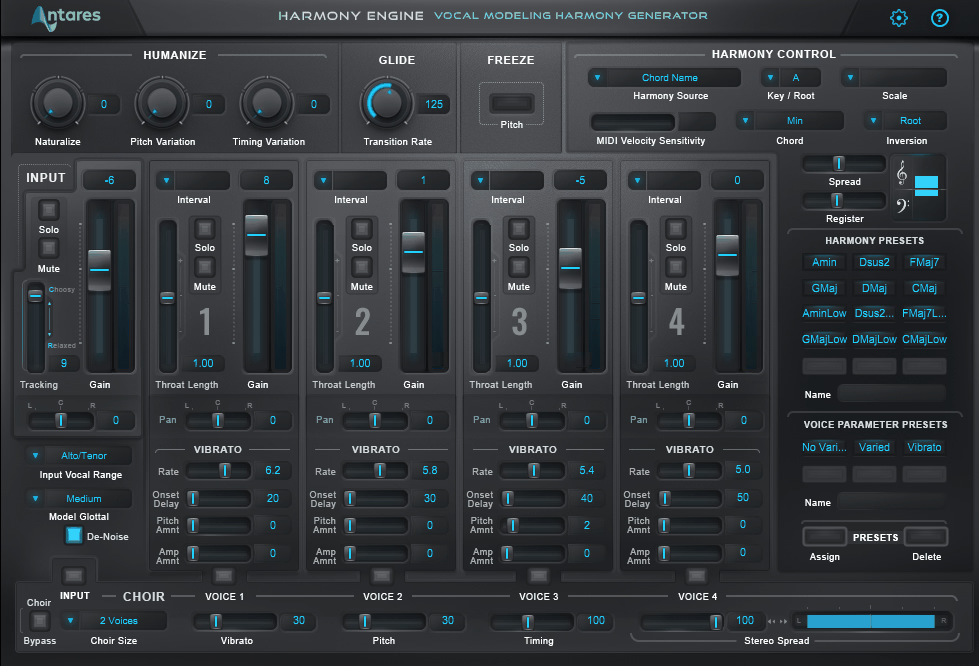
Harmony Engine is a dedicated harmony generation plugin that stands separately from Auto-Tune and focuses entirely on creating realistic vocal harmonies. It generates up to four harmony voices from a single lead vocal using formant-corrected pitch shifting that keeps the harmonies sounding like the original singer rather than a pitch-shifted artifact.
The control set covers interval selection, scale locking, chord triggering via MIDI, and individual voice controls for formant, vibrato, humanize, and level. For producers who want realistic-sounding backing harmonies without recording multiple takes, it’s a practical and well-developed tool that goes deeper into the harmony territory than Nectar 4’s Backer and Voices modules do.
Effects Lineup
The overlap in effects is limited, but both brands have tools worth knowing about in this category.
- iZotope Effects
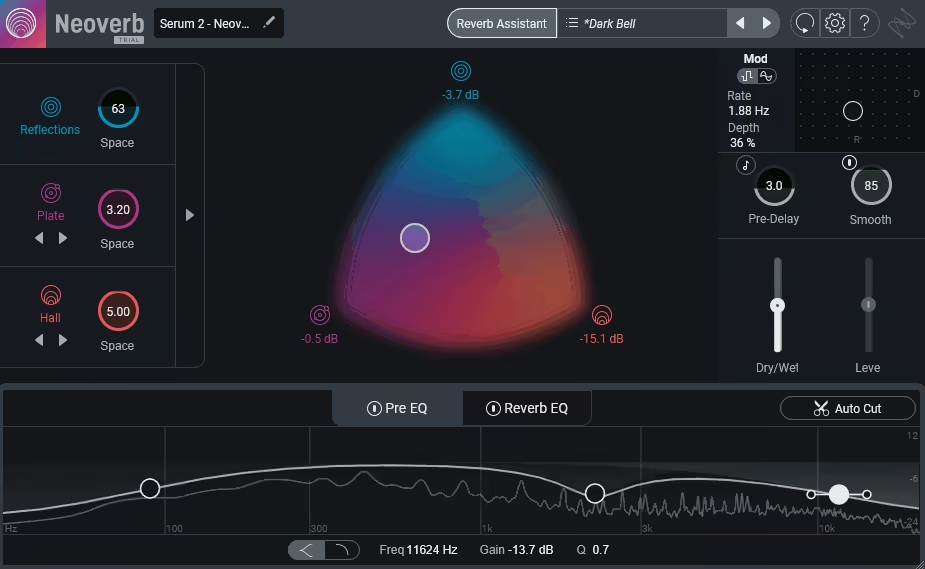
iZotope’s effects range beyond the core mixing and mastering tools includes Neoverb, an AI-powered reverb that blends up to three reverb engines simultaneously and uses source-aware processing to avoid masking other elements in the mix. Equinox is the newest reverb, released in April 2025, combining the Stratus and Symphony reverb engines from the former Exponential Audio catalog into a single plugin with adaptive unmasking and surround and Dolby Atmos support up to 9.1.6.
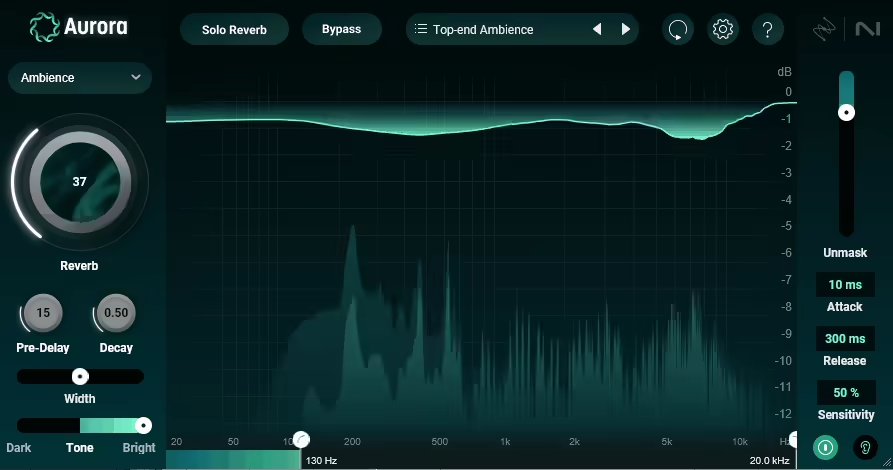
Aurora is a creative reverb with iZotope’s adaptive unmasking built in, released in late 2024.
Trash covers distortion and saturation with a wide palette, and FXEQ is the newest creative tool: it applies drive, dimension, and texture through an EQ-style workflow without the complex routing that a standard effects chain requires.
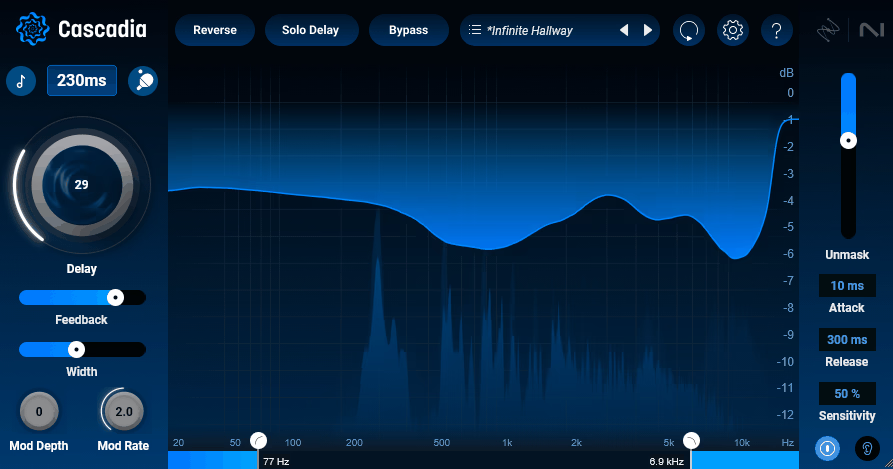
Cascadia is an intelligent delay that adapts to the audio to stay clear in the mix, also from the new Catalyst Series released in 2024 and 2025.
- Antares Effects
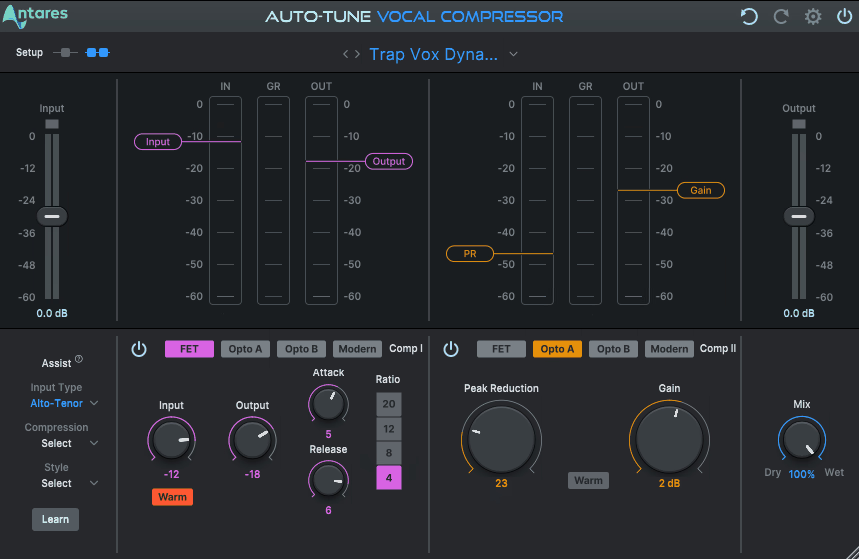
Antares’ effects catalog is entirely vocal-specific. The Auto-Tune Vocal Chain includes dedicated Vocal EQ, Vocal Compressor, Vocal De-Esser, Vocal Reverb, and Vocal Prep plugins, each designed specifically for voice processing rather than general-purpose use. The Articulator is a talkbox-style effect that uses an input signal to filter and modulate an audio source.
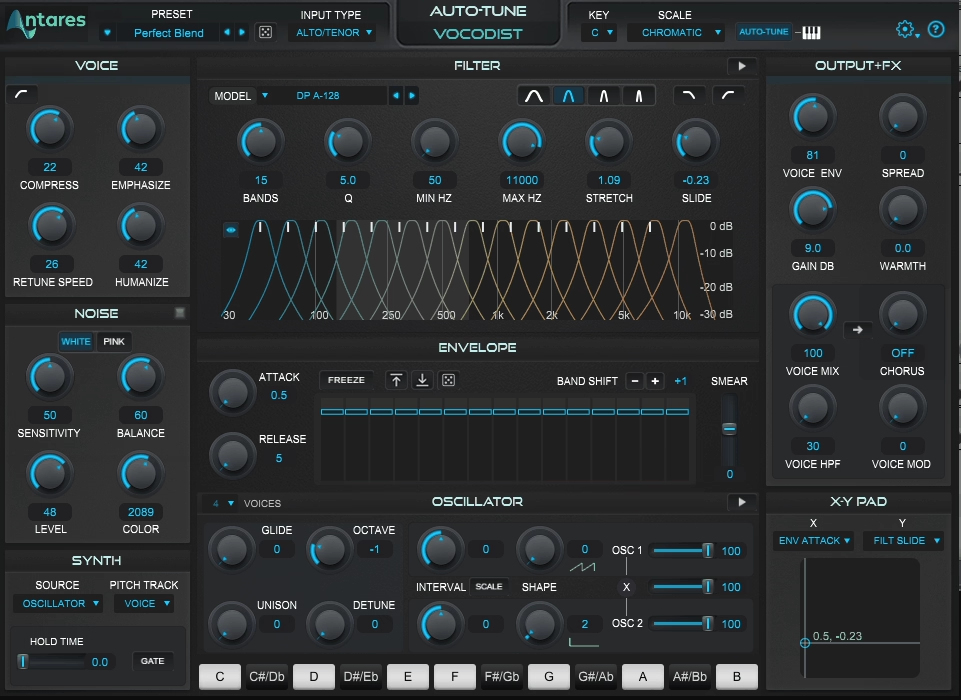
Auto-Tune Vocodist combines a vocoder with Auto-Tune pitch correction in a single plugin, covering territory that previously required multiple tools.
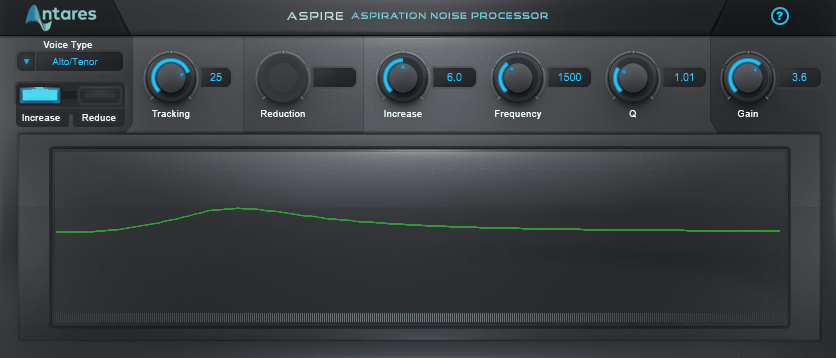
Aspire is a breath enhancement tool that independently controls the breathiness of a vocal, separating the breathy component from the tonal component of the voice so you can add or reduce it without affecting pitch or tone. For pop vocal production where breath character is a significant creative element, it’s a unique and practically useful tool.
Sound Design
Neither brand is primarily a sound design company, but there are tools in each catalog that push into more creative and experimental territory.
- iZotope Sound Design Tools
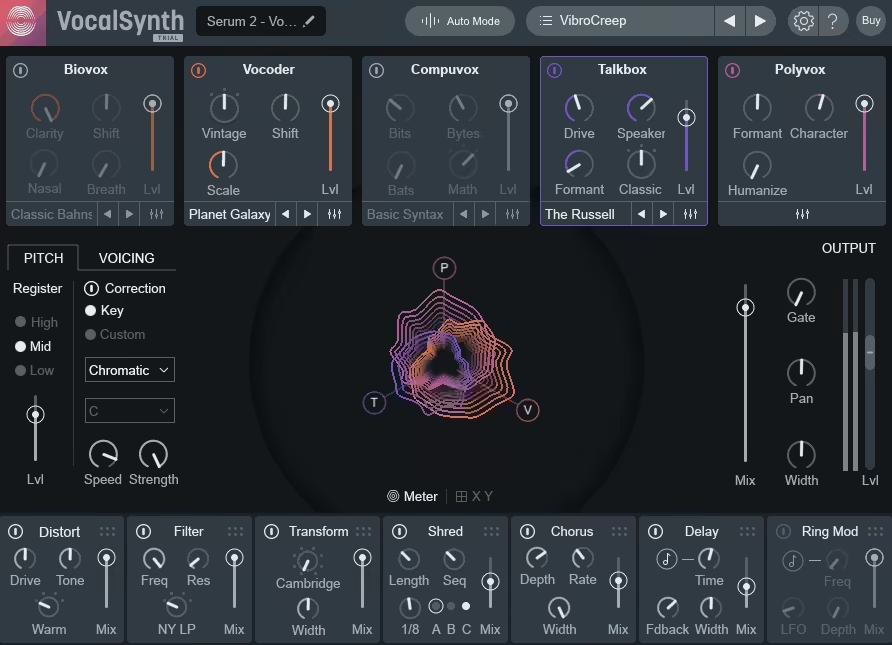
VocalSynth 2 is iZotope’s most creative vocal tool, with five distinct synthesis and processing modes: Vocoder, Compuvox, Polyvox for choir effects, Biovox for voice modeling, and Talkbox. Each mode can be blended and the output processed through stompbox-style effects units, making it more of a vocal synthesis environment than a standard processing plugin.
Trash has significant sound design value beyond mixing use. The waveshaping engine supports custom curves, the multiband processing applies different distortion types to different frequency ranges simultaneously, and the convolution section can load impulse responses for unusual tonal coloring. I’d suggest it on synths and drums specifically where subtle saturation isn’t enough and you want something that genuinely changes the character of the sound.
- Antares Sound Design Tools
Metamorph, released in November 2025, is an AI voice transformation plugin with 12 ethically sourced voice models plus six additional models from the Voice-Swap platform. It transforms the timbre of a vocal to match a different voice model without cloud processing, working entirely offline inside your DAW.
I noticed that the results work better when the source vocal is clean and well-recorded. On pitched or heavily effected input, some artifacts are audible and require manual adjustment. At its best though, it’s a genuinely useful tool for creating character-matched harmonies or exploring how a song feels with a different vocal character.
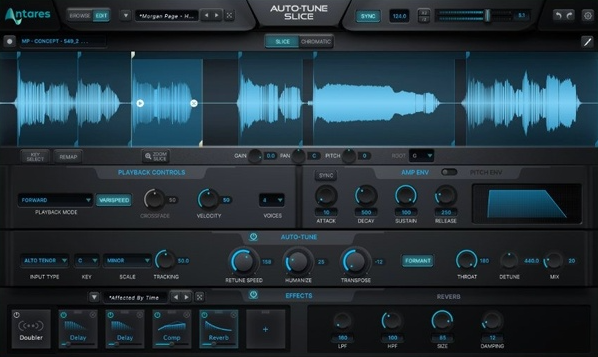
Auto-Tune Slice is Antares’ most creatively unusual offering. It’s a hybrid vocal sampler and synthesizer that takes any vocal recording and turns it into a playable instrument. You can slice the vocal into segments, map them across MIDI keys, apply pitch correction, and layer synthesis on top, effectively turning a four-second vocal sample into an entirely new melodic instrument.
Bundle Options
The subscription and bundle structures are meaningfully different between these two brands, and the right choice depends a lot on how often you update your tools.
- iZotope Bundles
iZotope offers tiered options at several price points. The Elements Suite covers RX 11 Elements, Ozone 12 Elements, Nectar 4 Elements, and Neutron 5 Elements in lightweight versions at around $99, which is a genuinely practical entry point for producers who want the core tools without the full feature sets. The Music Production Suite is the mid-tier bundle covering advanced versions of Ozone, Neutron, Nectar, RX, and the full Catalyst Series. The Everything Bundle covers the complete iZotope catalog at the highest tier.
A Music Production Suite Pro subscription through Native Instruments gives you access to the full current plugin set including updates for a monthly fee, which is worth considering if you want to stay current without paying for individual major version upgrades.
- Antares Bundles
Antares’ most practical entry point is the Auto-Tune Unlimited subscription at $24.99 per month or $224.99 per year, which includes every current edition of Auto-Tune, the Vocodist, all 11 vocal effects in the AVOX suite, unlimited upgrades for included plugins, and access to new plugins including Metamorph and Auto-Tune Slice as they’re added. For producers who use Auto-Tune regularly and want to stay on the latest version, the subscription is significantly more cost-effective than buying perpetual licenses individually.
Perpetual licenses are also available for each plugin independently, ranging from $80 for Aspire to $500 for Auto-Tune Pro 11. The Auto-Tune Vocal Chain can be assembled by buying Vocal EQ, Vocal Compressor, Vocal De-Esser, and Vocal Reverb as individual perpetual purchases, which works well for producers who want specific tools without committing to the subscription model.
Genre Fit
These two brands serve different genres in genuinely different ways, and the overlap is primarily in vocal production.
- Where iZotope Fits Best
iZotope is the stronger choice for music production that involves mastering and mix finishing, for audio repair and post-production, and for any workflow that needs precise analytical tools rather than creative vocal character. Ozone 12 handles mastering across genres from hip-hop to classical, and RX 11 is the tool for recorded audio cleanup regardless of genre or format.
For podcast production, dialogue editing, and content creator workflows, iZotope’s combination of RX 11 for cleanup, Nectar 4 for vocal processing, and the intelligent de-essing from Velvet creates a complete pipeline that Antares doesn’t fully address. The newer Catalyst Series tools are also well suited to pop and electronic production where fast, intelligent processing that doesn’t require deep parameter knowledge is a workflow advantage.
- Where Antares Fits Best
Antares is the clear choice for any genre where pitch correction is part of the production aesthetic, from pop to hip-hop to R&B to country to modern electronic music. Auto-Tune is the original and the reference standard for this processing, and the Classic Mode specifically is the only way to get that particular pitch correction character. No iZotope tool touches this category.
For vocal-heavy pop and R&B production where the vocal chain is the centerpiece of the mix, the Antares vocal chain tools provide dedicated, voice-specific processing at every stage: tuning with Auto-Tune Pro 11, harmonies with the Harmony Player or dedicated Harmony Engine, de-essing with the Vocal De-Esser, vocal compression, and reverb, all purpose-built for voice. The Metamorph voice transformation tool opens creative territory that is essentially unique to Antares right now.
Brand Ecosystem
The ecosystems behind these two brands are quite different in scope and structure.
- iZotope Ecosystem
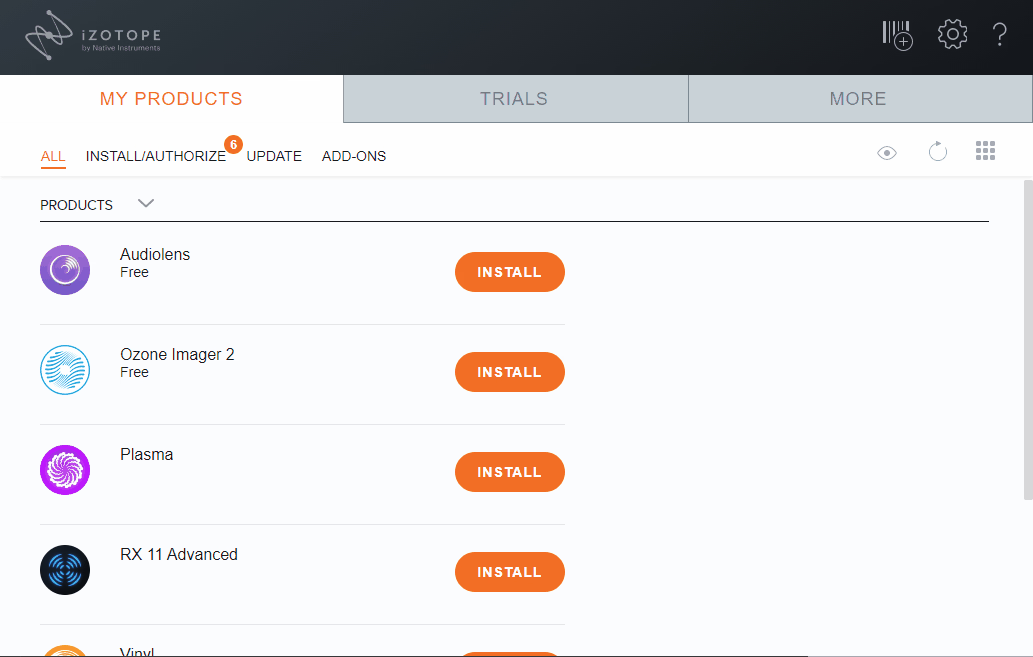
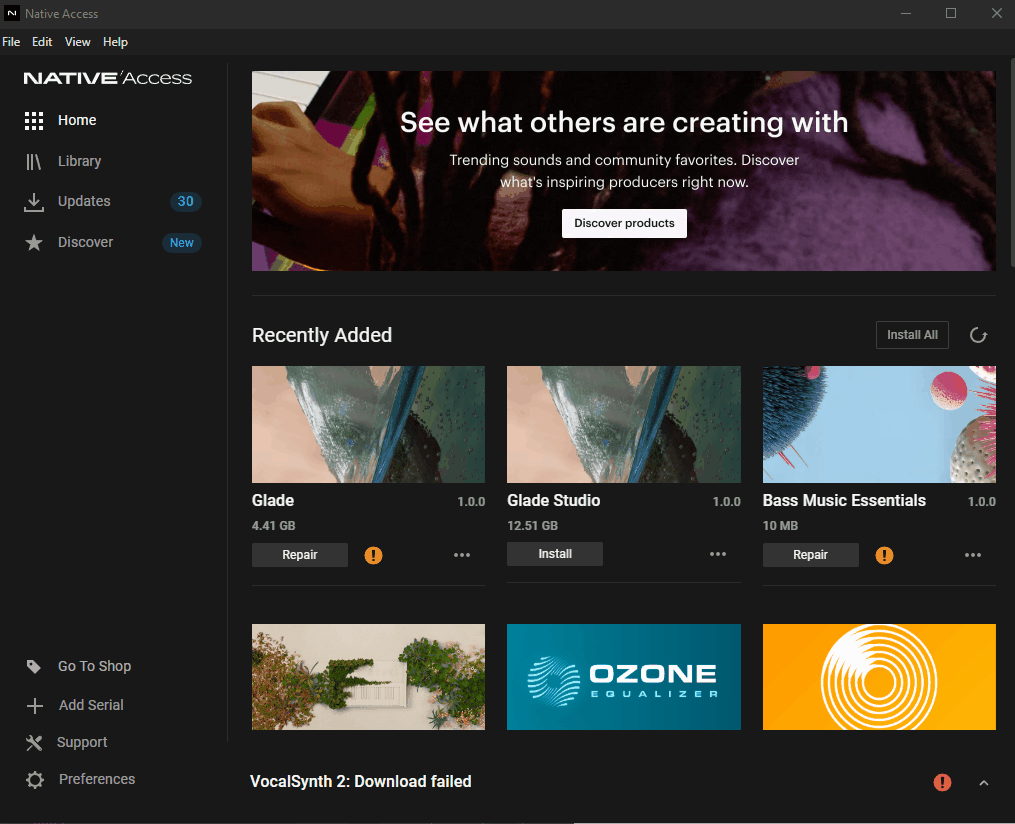
iZotope is part of the Native Instruments group, and all products are managed through the iZotope Product Portal or Native Access for download, activation, and updates. The Tonal Balance Control 3 enables real-time inter-plugin communication between Ozone and Neutron instances, so you can view the combined spectral balance of the full mix and make adjustments to individual track EQs without switching windows.
The Relay plugin acts as a lightweight communication node for feeding track data into the Visual Mixer and Tonal Balance Control without requiring a full Neutron instance on every channel.
The NI ecosystem integration means iZotope tools work with Kontrol keyboards and Maschine through NKS, though the practical benefit of this for mixing and mastering work is limited compared to the hardware integration benefits for instrument plugins.
- Antares Ecosystem
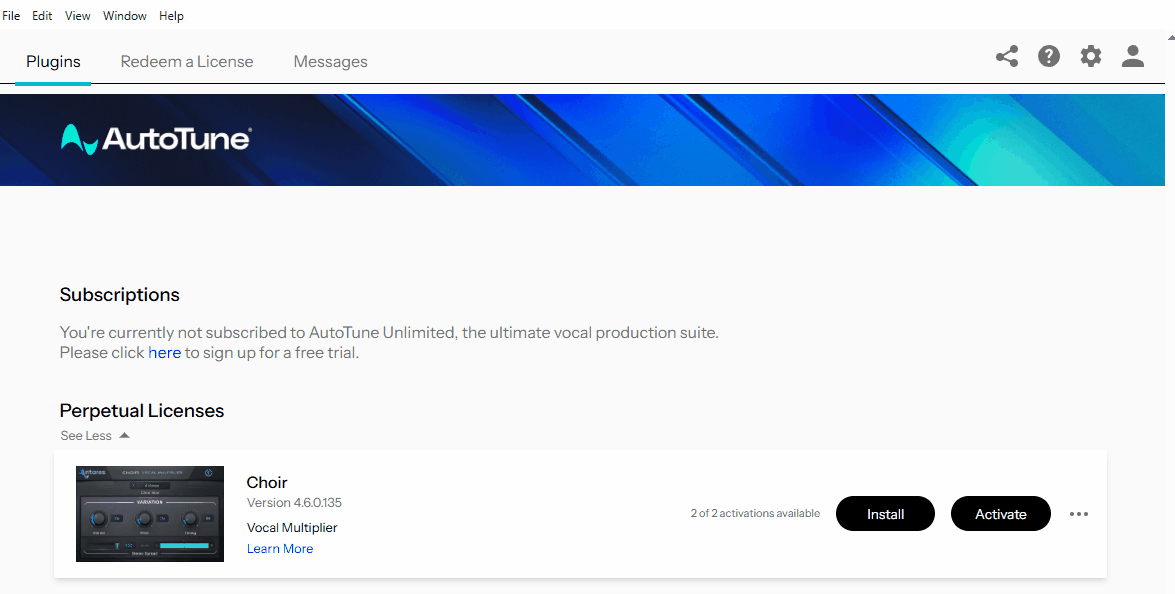
Antares manages all products through AutoTune Central, their own licensing and management application, with iLok as the alternative authorization option. The Auto-Key 2 plugin detects the key and tempo of any audio and sends that information automatically to every Auto-Tune instance in the session, which means you can change the key of an entire project without manually updating each instance.
That single workflow feature is a significant time-saver on projects with multiple Auto-Tune instances across vocal tracks.
The Auto-Tune Unlimited subscription functions as the primary ecosystem hub, providing access to the full current catalog and new releases as they arrive. For producers who use multiple Antares tools regularly, the subscription essentially consolidates all licensing management into a single ongoing relationship rather than a collection of individual perpetual purchases to track.
Learning Curve
Both brands vary considerably in how approachable their tools are at the entry level.
- iZotope’s AI-Assisted Approach
iZotope’s best feature from a learning perspective is the AI assistance built into the key tools. Master Assistant in Ozone and Mix Assistant in Neutron both analyze your audio and suggest starting settings, which means you can get a functional result quickly without deep parameter knowledge. For beginners working on their first mix sessions, having an intelligent starting point makes a real difference.
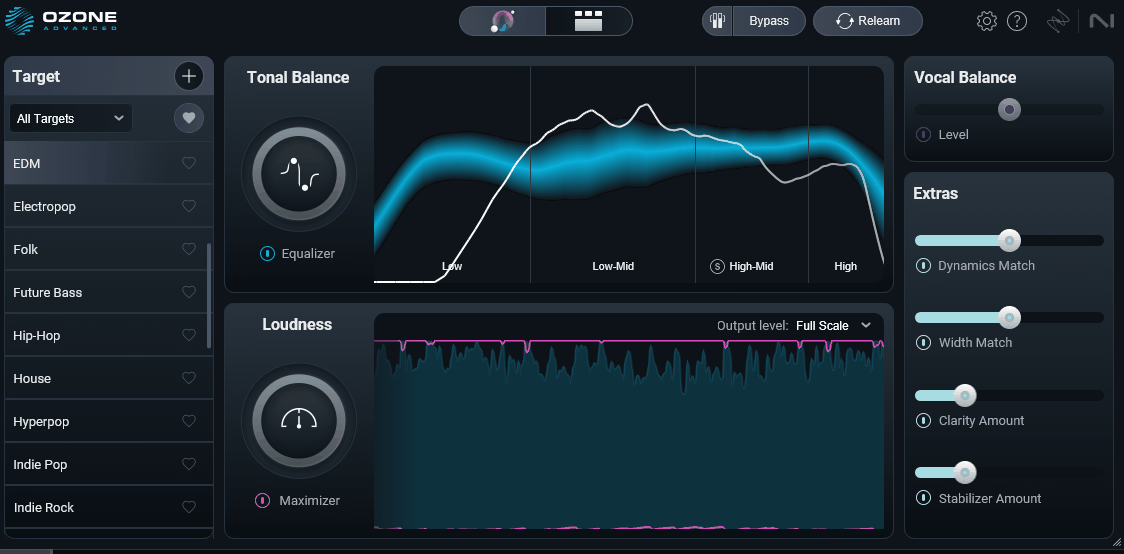
Where iZotope gets complex is in the full feature sets of Ozone Advanced and RX 11. Both are deep tools with significant learning curves, and getting the most out of RX 11 specifically requires understanding which module addresses which type of problem. I’d say iZotope rewards time investment more than most brands, because the deeper your understanding of what each tool is doing, the more targeted and effective your use of the AI suggestions becomes.
- Antares’ Focused Simplicity
Antares benefits from being focused on one thing. Auto-Tune’s Auto Mode is genuinely one of the most immediately usable audio tools ever made: set your key and scale, enable the plugin, and it works. Graph Mode adds depth and precision for detailed editing but the barrier to useful results in Auto Mode is extremely low.
The vocal chain plugins are similarly focused. Each one does a specific thing and the controls reflect that single purpose rather than offering an overwhelming parameter set. For producers newer to vocal production, the narrower scope of each Antares tool is actually an advantage because there’s less to understand before you get useful results.
The learn: series equivalents from other brands have tried to formalize this kind of guided approach, but Antares’ tools achieve it naturally through focus rather than explicit teaching features.
Update Policy
The two brands handle updates in noticeably different ways, and it affects the long-term value of what you’re buying.
- iZotope Updates
iZotope follows a paid major version model: moving from Ozone 11 to Ozone 12 or Neutron 4 to Neutron 5 requires an upgrade purchase, with pricing for existing owners that is less than the full price. Point updates within a version are free. The subscription option through Native Instruments includes updates to the current version for as long as the subscription is active.
I want to note that iZotope’s upgrade path has historically been somewhat inconsistent in its communication, particularly around which owned products qualify for which upgrade discounts. Checking the loyalty offers page for your specific account before a new release is worth the effort.
- Antares Updates
Antares offers free updates for life to perpetual license owners within the same major product line, which is a genuinely good policy. The Auto-Tune Unlimited subscription includes unlimited upgrades for all included plugins as well as free access to new plugins as they’re added to the subscription, which means Metamorph was immediately available to existing subscribers at no extra cost when it launched.
The main friction with Antares historically has been around licensing and activation, with some users reporting issues with AutoTune Central and iLok activation across system changes. It’s worth being aware of this if you frequently change hardware or reinstall your DAW.
The Bottom Line
I feel like framing this as a competition misses the practical point of what each brand is actually for.
iZotope is a complete music production and audio repair toolkit. Ozone 12 is one of the best mastering environments available, RX 11 is the industry standard for audio repair, and Neutron 5 is a genuinely useful AI-assisted mixing channel strip.
The Catalyst Series adds focused, intelligent creative tools that cover reverb, delay, saturation, and de-essing in a streamlined modern workflow. If you need tools that span the full production chain from rough mix to polished master, iZotope covers that ground comprehensively.
Antares is a vocal specialist and that’s it Auto-Tune Pro 11 is the industry standard for pitch correction and no other tool replicates its specific character, particularly in Classic Mode.
The vocal chain tools are purpose-built for voice at every stage, the Harmony Engine is among the best harmony generators available, and Metamorph opens AI voice transformation territory that nobody else is currently doing as well. If your work centers on vocal production, Antares has tools you simply cannot replicate elsewhere.
The honest recommendation is to think about what gap you’re trying to fill. If you produce music, record vocals, and need to take a track from session to release, you probably need both. iZotope covers the mix and master while Antares owns the pitch and the performance. They genuinely don’t step on each other in any meaningful way.
Check iZotope Plugins
Visit Antares

Hello, I’m Viliam, I started this audio plugin focused blog to keep you updated on the latest trends, news and everything plugin related. I’ll put the most emphasis on the topics covering best VST, AU and AAX plugins. If you find some great plugin suggestions for us to include on our site, feel free to let me know, so I can take a look!