
If you’ve spent any time around bass gear, you already know the name. The Ampeg SVT has been the backbone of bass tone since 1969, showing up on more hit records and stadium tours than probably any other bass amp ever made. Bootsy Collins ran one. Darryl Jones still does. The list goes on. So when Brainworx set out to digitally recreate the original 300-watt all-tube SVT-VR along with its iconic 8×10 cabinet, the stakes were pretty high, and I think they cleared the bar.
The plugin is fully endorsed by Ampeg and built entirely from the ground up by the Brainworx team, not adapted from something existing. I mean, that matters a lot when you’re talking about emulating an amp this legendary. The goal was to recreate the original hardware’s preamp section, power section, rocker switches, and cabinet in a way that gives you the same signal path and vibe as sitting in front of the real thing.
And honestly, for most bassists it’s absolutely worth it. Whether you’re tracking DI at home and want real amp character without waking up the neighbors, or you’re an engineer who needs reliable, world-class bass tone across sessions, this plugin delivers. The combination of authentic tube emulation and the 23 Neve-recorded chains means you’re not just getting a generic bass amp plugin, you’re getting a studio-grade tool that can sit in a mix immediately.
The Two-Channel Setup
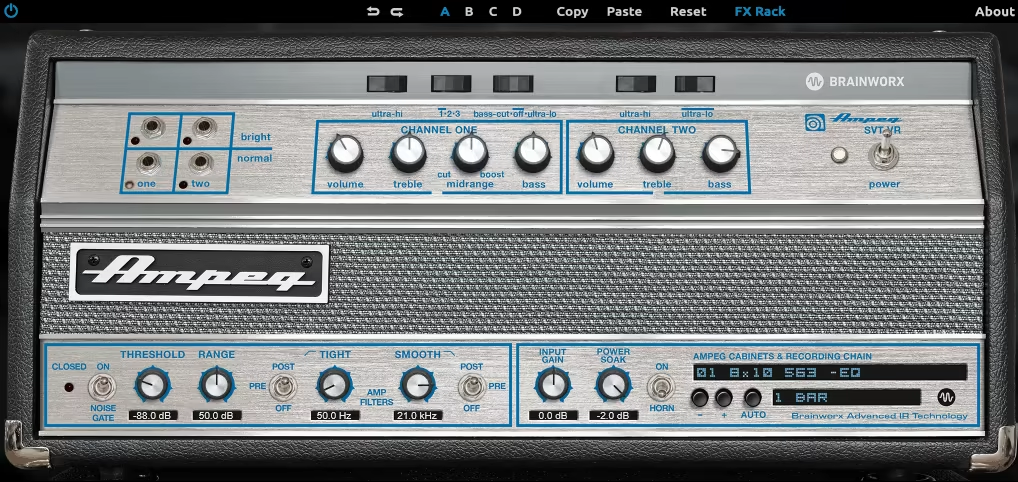
One of the things I appreciate most about the way this plugin is laid out is that it doesn’t try to be everything at once. You get two channels spread across four inputs, and they each serve a different purpose. Channel One is where the real tone shaping happens, with a full three-band EQ and a midrange frequency select switch that lets you dial in your mid center at 220Hz, 800Hz, or 3kHz. There’s also a Bass Cut switch and Ultra Lo and Ultra Hi modes, so you have a lot of room to push the tone in different directions depending on what your bass and playing style need.
Channel Two keeps things simpler with a two-band EQ, which I find is actually great for when you’ve already got a tone that’s close and you just need to clean it up slightly. Both channels carry the Ultra Lo and Ultra Hi options, which are borrowed directly from the original hardware and do a really nice job of adding that familiar scooped or boosted character that SVT players tend to love. For me, Channel One is where I spend most of my time because the midrange selector alone gives you so much control over how the bass sits in a mix.
Get the Free Plugin Starter Kit
The genuinely useful free DAWs and plugins worth installing. No filler. Straight to your inbox.
The FX Rack
This is where Brainworx really added their own stamp on top of the hardware emulation. The built-in FX rack includes a noise gate, Tight and Smooth filters, a Power Soak knob, and a Horn switch for the cabinet. I noticed that the Power Soak in particular is genuinely useful, since it lets you push the amp into saturation and harmonic content without just cranking the input gain to an unusable level. It’s subtle when you want it to be, and it adds a real sense of the amp breathing when you dig in harder.
But the real secret weapon here is the 23 custom recording chains captured through a Neve VXS72 console (which, for context, is one of only nine ever made). Each chain combines a different combination of vintage microphones, speaker cabinets, and outboard gear, all captured at the Brainworx studio. I found that auditioning these is made incredibly easy thanks to the Auto Mode, where you can set a one, two, or four-bar loop, play your bass, and the plugin will automatically cycle through each chain while you listen. The only click you need to make is when you hear the one that fits.
Here’s a quick look at what the FX rack gives you:
- Noise gate for cleaning up the signal when you’re not playing
- Tight filter for controlling low-end bloom and keeping the bass focused
- Smooth filter for rolling off harsh highs without losing presence
- Power Soak for adding tube saturation and harmonic warmth
- Horn switch to toggle the cabinet’s tweeter on or off
Presets
I want to note that the plugin ships with a solid collection of presets on top of the 23 recording chains, so if you’re just starting out or you’re in the middle of a session and need something fast, you’re not starting from scratch. I’d say the presets are genuinely useful starting points rather than the kind of over-processed demo sounds you sometimes get with amp sims. Most of them land somewhere between clean and pushed, which reflects how the real SVT actually gets used in the studio.
I also realized that the workflow of combining a preset with one of the recording chains gives you a surprisingly wide range of tones for a plugin that’s focused specifically on one amp. You can go from a warm, round Motown-style low end all the way to a gritty, punchy rock tone just by switching chains and adjusting the mid selector on Channel One. I’d recommend spending time with the chains before you start tweaking EQ heavily, because honestly the right chain can do a lot of the work for you.
Before you buy
I believe this plugin sits at the top of the category for what it does, but I want to be clear that it’s a focused tool rather than an all-in-one bass solution. It’s built around one amp and one cabinet combination, which means you’re not getting a multi-amp suite or a collection of different bass rigs. For players or engineers who want the SVT sound specifically, that focus is a strength. For someone looking for a broader amp sim that covers multiple bass amp characters in one package, you’d probably want to look elsewhere or supplement it with something additional.
The version 1.6.0 update released in January 2026 brought improved performance and a scalable UI feature, which is a welcome addition since working on high-resolution screens is now much more comfortable. It runs as VST2, VST3, AU, and AAX on both Mac and Windows, and native Apple Silicon support has been in place since version 1.5.0, so M-series Mac users are fully covered.
I must say, for what it costs and what it delivers, the Brainworx SVT-VR is one of those plugins that tends to stay on a bass channel indefinitely once you put it there. The tone is authoritative, the recording chains are genuinely studio quality, and the workflow is fast enough that you’re never fighting the tool to get where you need to go.
Check here: Brainworx Ampeg SVT-VR
Get the Free Plugin Starter Kit
The genuinely useful free DAWs and plugins worth installing. No filler. Straight to your inbox.

Hello, I’m Viliam, I started this audio plugin focused blog to keep you updated on the latest trends, news and everything plugin related. I’ll put the most emphasis on the topics covering best VST, AU and AAX plugins. If you find some great plugin suggestions for us to include on our site, feel free to let me know, so I can take a look!