
There’s a particular kind of producer who, at some point in their development, realizes that having one very good wavetable synthesizer isn’t quite enough: they want a second one that works differently, approaches sound design from a different angle, and opens up creative territory that the first one doesn’t cover.
Phase Plant from Kilohearts and Serum 2 from Xfer Records are two instruments that frequently sit on either side of that realization, and the comparison between them is worth making carefully because they have a genuinely different relationship to synthesis architecture.
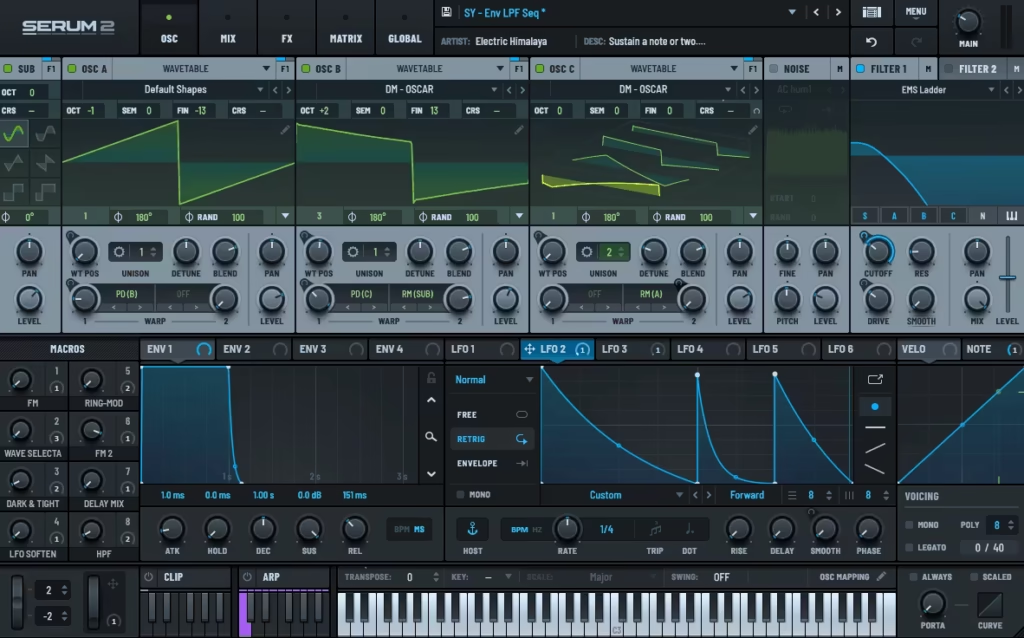
Serum 2 is a focused, highly optimized wavetable synthesizer that does what it does extraordinarily well: the best wavetable editor in any commercial synthesizer, a decade’s worth of community presets and wavetable libraries, a clean and efficient signal flow, and new features including per-voice dual filters, Chaos modulation generators, and expanded oscillator processing that meaningfully expand what was already the reference instrument for electronic music wavetable production.
When it comes to Phase Plant, it’s something more unusual: a modular synthesizer that lets you build your own signal flow from scratch using Kilohearts’ component generator, filter, and effect modules, each of which is also available as a standalone plugin.
Quick Comparison
| Feature | Kilohearts Phase Plant | Xfer Serum 2 |
|---|---|---|
| Architecture | Fully modular: build your own signal flow from generators, shapers, filters, and modulation sources | Fixed signal flow: wavetable oscillators through filters through effects; deep within each section |
| Synthesis Types | Wavetable, analog (virtual), sample, granular, Blit oscillator, noise, plus Snapin effects used as generators; virtually unlimited engine combinations | Wavetable (OSC A + B), Sub, Noise; new oscillator processing modes in S2 |
| Filter Architecture | Add as many filters as you want, anywhere in the signal path; full routing control | 2 per voice (new in S2) with serial, parallel, and split routing options |
| Modulation | Unlimited LFOs, envelopes, MIDI sources, curve generators, random; modulate anything including modulation sources themselves | Multiple LFOs, envelopes, macros, MIDI, Chaos generators; drag-to-assign workflow |
| Wavetable Editor | Good visual editor; capable import; not quite at Serum’s level of depth for custom wavetable design | Industry-leading visual editor; the most detailed and precise wavetable editor in any commercial synth |
| Effects | All Kilohearts Snapin effects usable within Phase Plant; enormous effect library covering 30+ types | 10-slot chain with improved algorithms in S2; reverb, chorus, delay, distortion, EQ, filter, phaser, flanger, compressor, hyper |
| Preset Ecosystem | Growing; Phase Plant-specific preset market expanding; compatible with community-shared patches | Largest third-party preset library in software synthesis; inherits full Serum 1 decade-long library |
| CPU Performance | Varies significantly by patch complexity; simple patches efficient; complex modular patches can be demanding | Good; slightly more demanding than Serum 1; still highly efficient for quality level |
| Licensing | ~$149-$199 standalone; also included in Kilohearts Toolbox; Snapin effects add-ons available separately | ~$189 full; upgrade from Serum 1 available; Splice rent-to-own ~$9.99/mo |
| Free Trial | Yes, fully functional time-limited trial; Phase Plant also available in Kilohearts subscription | Demo with output noise; Splice rent-to-own as alternative entry |
Get the Free Plugin Starter Kit
The genuinely useful free DAWs and plugins worth installing. No filler. Straight to your inbox.
Synthesis Architecture Compared
This is the most important section in the entire comparison, and if you understand the architectural difference between Phase Plant and Serum 2, the rest of the comparison falls into place naturally.
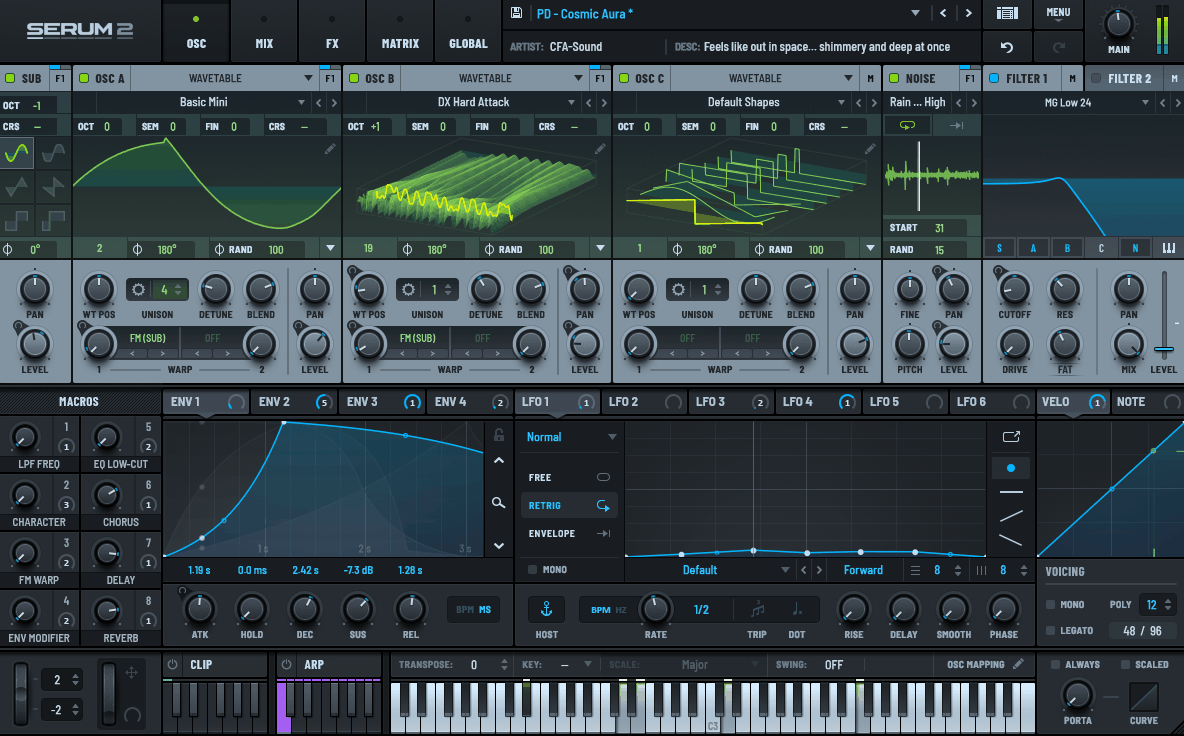
Serum 2 operates with a fixed signal flow: you have two wavetable oscillators (OSC A and OSC B), a sub oscillator, and a noise oscillator. Those oscillators feed through two filters per voice in your chosen routing configuration (serial, parallel, or split). The filtered signal goes through the effects chain.
That’s the flow. It’s not configurable in terms of where modules appear relative to each other, though you do have significant options within each stage. The fixed flow is a design choice, not a limitation without reason: it makes the instrument immediately legible and efficient, and the depth within each section is substantial enough that most producers never feel constrained by it.

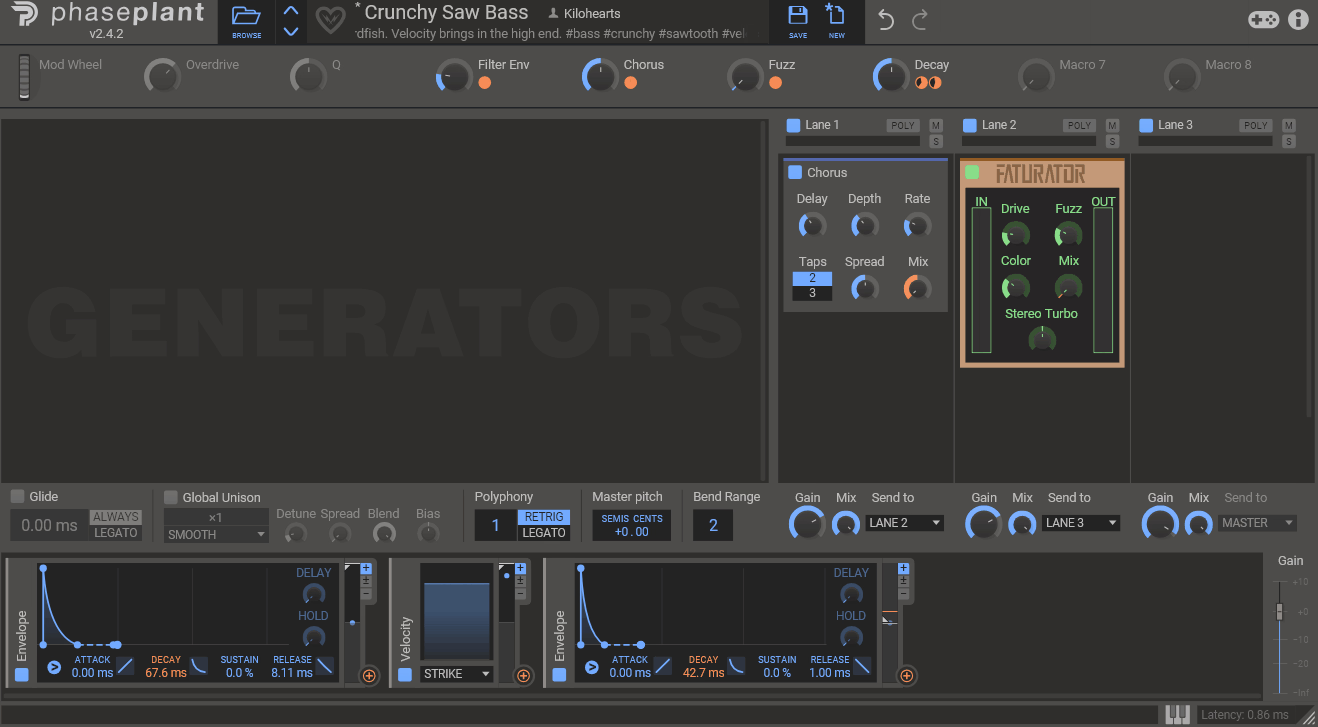
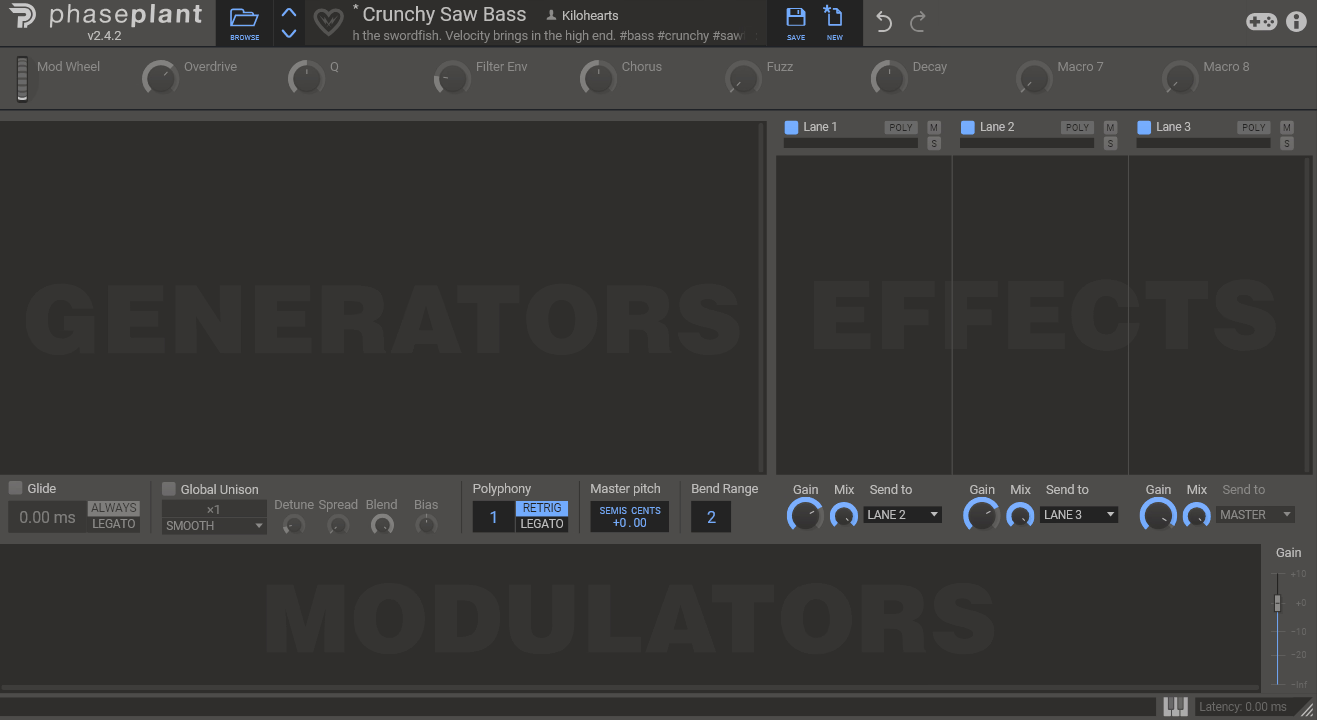
Phase Plant operates with a modular signal flow that you build yourself. When you open a new Phase Plant patch, you start with a blank canvas and a library of generators, shapers, filters, and modulation modules that you add and connect. A generator produces audio (oscillators, noise, samples).
A shaper processes it (waveshaper, saturator, filter, EQ). You can add as many generators as you want, route them through as many shapers as you want, in any order you want, with any number of filters placed anywhere in the chain.
This difference produces a different relationship to the instrument from the start. In Serum 2, you open a preset or a blank patch and the basic voice structure is already there waiting for you to shape. In Phase Plant, you build the voice structure itself before shaping it, which means the ceiling of what’s achievable is significantly higher but the entry point requires more deliberate decisions about architecture.
The practical implication is that Phase Plant can do things Serum 2 categorically cannot: running a granular generator and a wavetable generator through different signal paths that converge at a shared filter, then splitting the output of that filter to two separate saturation stages before mixing to output, is a patch architecture that Phase Plant supports and Serum 2 doesn’t allow because Serum’s fixed flow doesn’t permit that kind of routing.
Whether you need that routing capability depends entirely on the sounds you’re trying to build.

Sound Character
- Serum 2
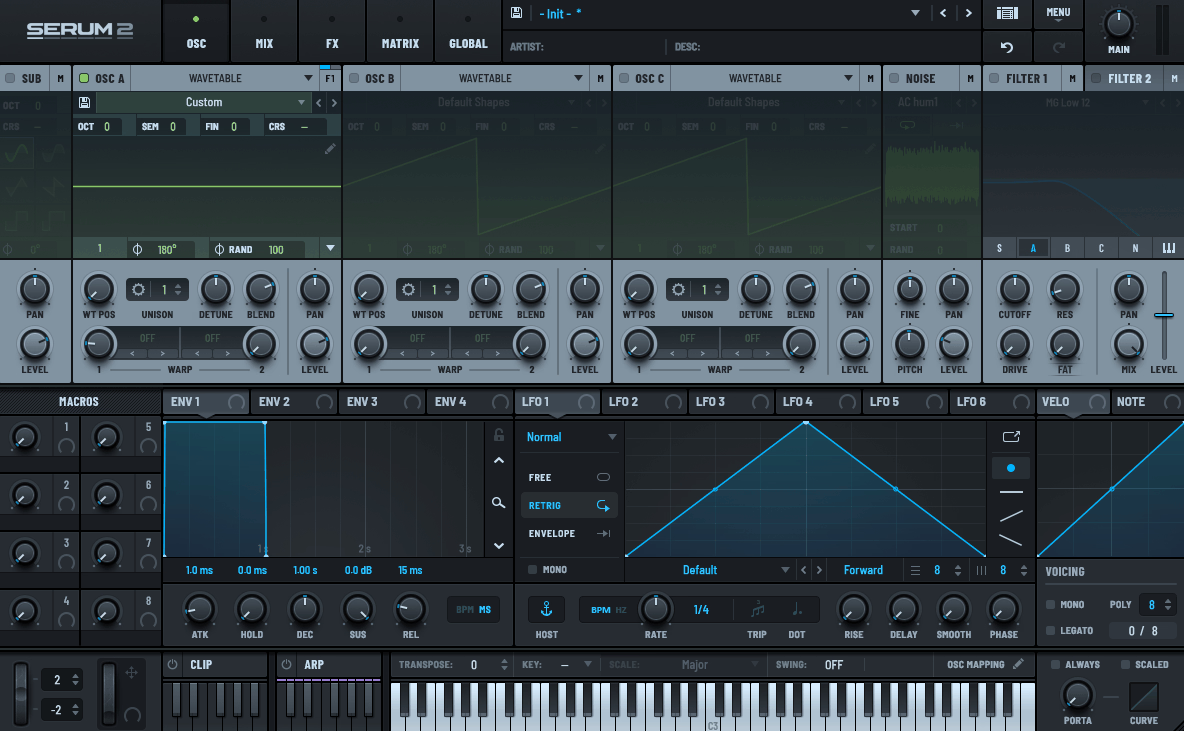
Serum’s sonic character is clean, precise, and bright, with an anti-aliasing and oversampling quality that keeps the high frequencies smooth even during heavy wavetable modulation.
This precision is one of Serum’s defining characteristics and part of what makes Serum sounds cut through dense mixes so cleanly: there’s a clarity that doesn’t require extensive post-processing to achieve.
The new oscillator processing modes in Serum 2 (wavefolding, additional FM modes, ring modulation at the oscillator stage) add harmonic complexity and character above what Serum 1 could generate directly, giving the instrument more tonal range without changing the fundamental character of the engine.
- Phase Plant
Phase Plant’s sonic character is harder to describe as a single identity because the architecture shapes the sound differently depending on what you’ve built. A Phase Plant patch using the wavetable generator through a clean filter with standard modulation sounds different from one using the granular generator through a multiband saturation stage.
The character comes from the modules you choose and how you chain them, and Kilohearts’ individual Snapin modules each have their own sound quality and character that contributes to the patch.
The Blit oscillator (band-limited impulse train, a virtual analog oscillator that generates precise harmonic series without aliasing) in Phase Plant gives it a specific warm, slightly analog-tinged virtual analog sound that Serum 2’s wavetable-focused approach doesn’t exactly replicate.
Patches built from Blit oscillators through classic filter types can produce a vintage synthesizer warmth that feels distinctly different from Serum’s wavetable character.
Wavetable Engine Head-to-Head
This is one of the few categories where Serum 2 has a clear advantage over Phase Plant, and being direct about it is more useful than trying to balance a comparison that leans one way.
- Serum 2
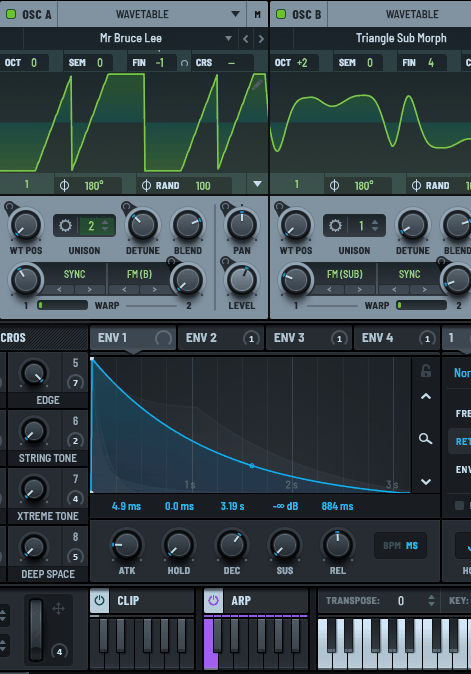
The wavetable editor in Serum 2 remains the most detailed and precise visual interface for wavetable design of any commercial synthesizer. Frame-by-frame waveform display with harmonic spectrum analysis, multiple import algorithms for different source material types, the new warp modes integrated into the editor’s preview system, and the extensive warp mode library for processing tables in real time all combine into the most capable single-interface wavetable design environment available.
Sound designers who build custom wavetable content professionally treat Serum’s editor as the reference standard, and the Serum 2 upgrade extends this with new warp types and import analysis options.
The Serum wavetable community is also deeply invested in Serum’s specific format: custom wavetable packs, conversion tools, and shared wavetable content all center on Serum’s native format, which means the third-party content available specifically for Serum’s wavetable engine is unmatched.
- Phase Plant
Phase Plant’s wavetable module is a capable wavetable oscillator with good visual display and solid import capability, but it doesn’t match the depth of Serum’s editor for custom wavetable creation and doesn’t have the same level of community wavetable content built for its specific format.
For producers who use wavetables from existing libraries or who do basic custom wavetable work, the practical difference is manageable. For serious custom wavetable designers who want the most precise and feature-complete editor, Serum 2 is the better tool.
Where Phase Plant’s wavetable module offers something Serum’s doesn’t is in the architectural context: you can use Phase Plant’s wavetable oscillator alongside its granular generator and Blit oscillator in the same patch, routing each through different shapers before mixing, which gives you hybrid patch designs that Serum 2’s fixed architecture doesn’t support.
Modulation and Routing Depth
- Serum 2
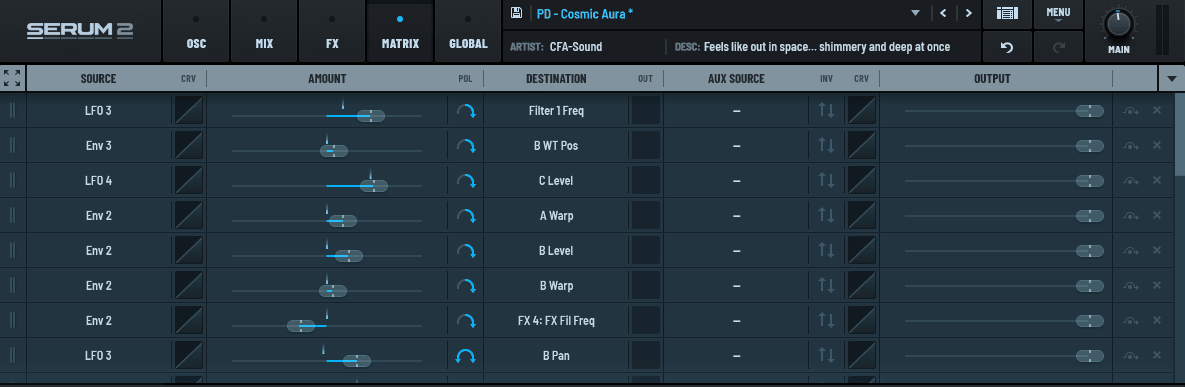
Serum 2’s modulation system is well-designed and the new Chaos generators are a meaningful addition: nonlinear modulation sources that produce complex, evolving output that standard LFOs can’t replicate.
The drag-to-assign workflow is one of the fastest and most intuitive modulation assignment systems available, and the four macro knobs handle performance control efficiently. The overall modulation depth is excellent for a fixed-architecture synthesizer, though it doesn’t match Phase Plant’s unlimited source count or modular routing between sources.
The practical difference matters most in complex, evolving patch design where you want many independent modulation processes running simultaneously. For typical sound design within conventional patch architectures, Serum 2’s modulation system is entirely sufficient.
- Phase Plant
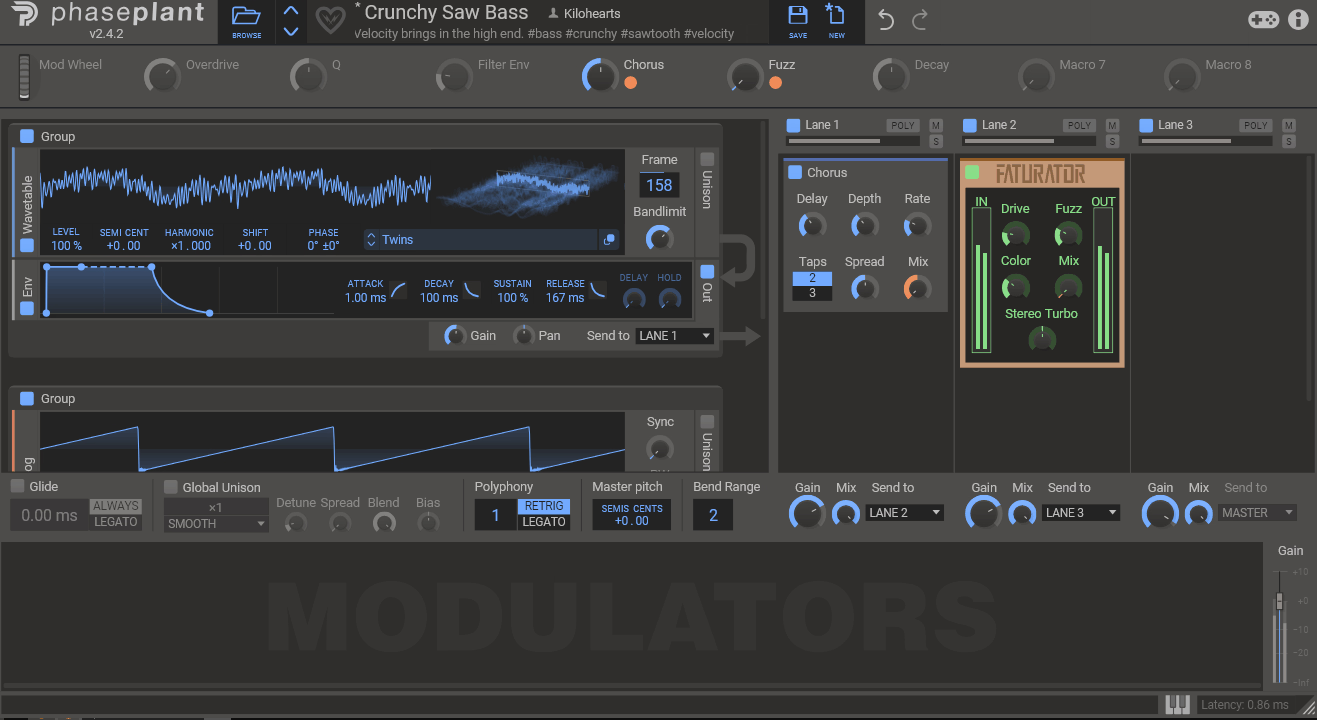
Phase Plant’s modulation system is the most architecturally deep of the two instruments and one of the deepest of any commercial synthesizer. The approach is genuinely modular: you add modulation sources from a library (LFOs, envelopes, curve generators, random sources, MIDI input sources, macros) and connect them to any parameter, including parameters of other modulation sources.
An LFO modulating the rate of another LFO, an envelope modulating the depth of a random source, a curve generator whose shape is being modulated by a MIDI pressure input: all of these are standard Phase Plant configurations.
The unlimited modulation source count is practically significant for complex patches: you’re not constrained to a fixed number of LFOs or envelopes. If you need 12 LFOs running simultaneously to drive 12 different parameters independently, Phase Plant supports that without compromising performance more than the added modulation genuinely requires.
The curve generator is a Phase Plant modulation source type that has no direct equivalent in Serum 2: it’s a free-form function editor that lets you draw any curve shape and use it as a once-triggered or looping modulation source, which gives you envelope shapes and LFO waveforms that go far beyond what standard segment-based envelopes can produce.
Sound and Modular Design: Phase Plant Advantage
This section addresses what Phase Plant specifically enables that Serum 2 doesn’t, and it’s worth being concrete about these capabilities because they define the producers for whom Phase Plant is the more valuable instrument.
- Custom signal flow architecture:
You can place filters before oscillator output mixes, route oscillators through shapers in different combinations, add saturation at specific points in the chain, and create signal paths that don’t follow any conventional synthesizer topology. This freedom is the core of what makes Phase Plant genuinely modular rather than just feature-rich.
- Arbitrary generator combinations:
Running a granular generator and a wavetable generator simultaneously, routing them through different shaper chains before mixing at a shared filter stage, is a Phase Plant-native patch architecture that Serum 2 doesn’t support. The same applies to any combination of Phase Plant’s available generator types.
- Snapin effects as modular synthesis elements:
Kilohearts’ Snapin effects system means that any of the 30+ Kilohearts effects (chorus, phaser, distortion, EQ, compressor, etc.) can be used as shaper modules within the Phase Plant signal path, not just as post-synthesis effects. This lets you use a multiband compressor as a mid-chain processing element, route a signal through a phaser before the filter, or use an EQ as a frequency-selective saturation driver in ways that Serum’s effects-at-the-end architecture can’t replicate.
- Multiple output voices with independent signal paths:
Phase Plant’s architecture supports multiple output lanes with independent processing chains, which enables unison configurations where individual voices can have genuinely different signal paths rather than just pitch and stereo offsets.
- FM between any generators:
You can route any Phase Plant generator’s output as a frequency modulation source for any other generator, creating FM synthesis configurations that go beyond the typical two-operator or four-operator FM setups available in most synthesizers.
Built-in Effect Plugins and Processing
- Phase Plant
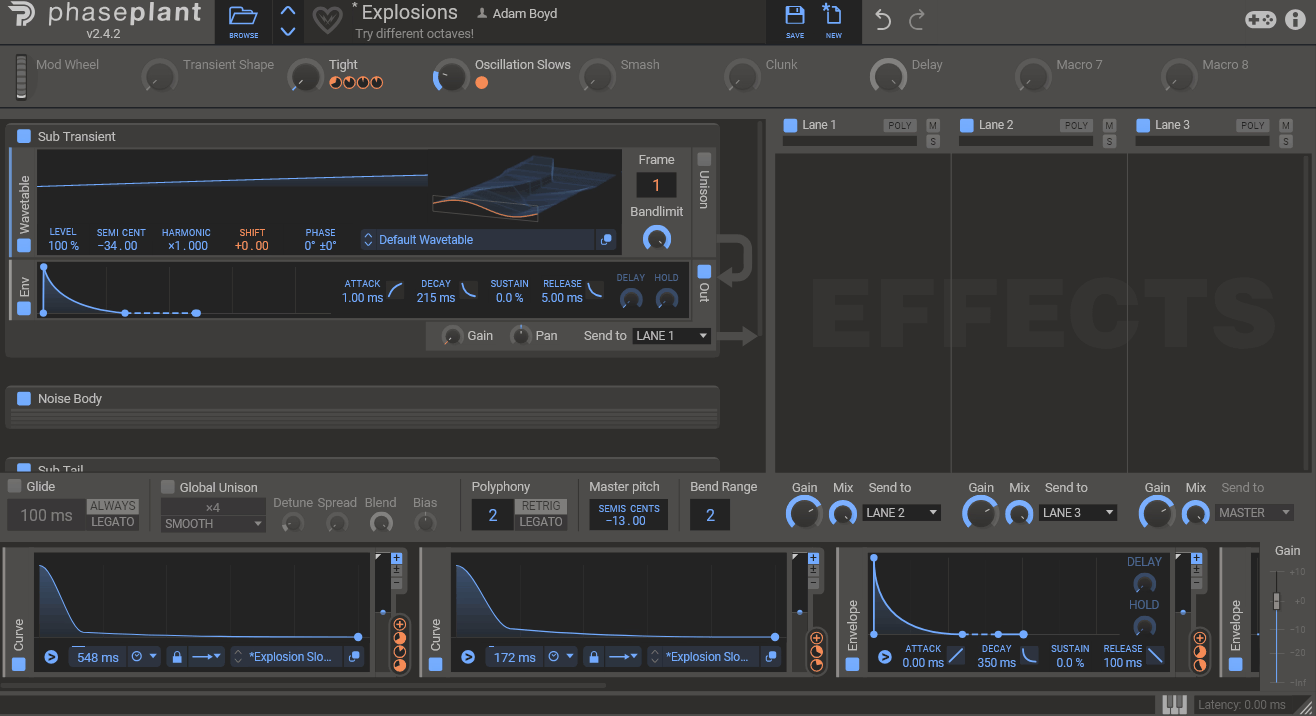
Phase Plant’s effects capability is its most obviously expansive dimension: because all Kilohearts Snapin effects work within Phase Plant as both modular shaper modules and end-chain effects, the total number of effect types available is over 30, covering territory from standard reverb and delay through more unusual options like slice EQ, haas widening, multiband compression, tape distortion, and the Kilohearts-specific Snap Heap modular effects rack.
If you own the Kilohearts Toolbox (which includes Phase Plant alongside many other effects), you have access to the complete Snapin library within Phase Plant as well as standalone.
The architectural advantage here is that these effects aren’t limited to a post-synthesis effects chain: they can be inserted at any point in the signal flow, between generators and filters, before or after specific oscillators, or as modulation processing on control signals.
This level of effects placement flexibility is unique to Phase Plant’s modular approach.
- Serum 2
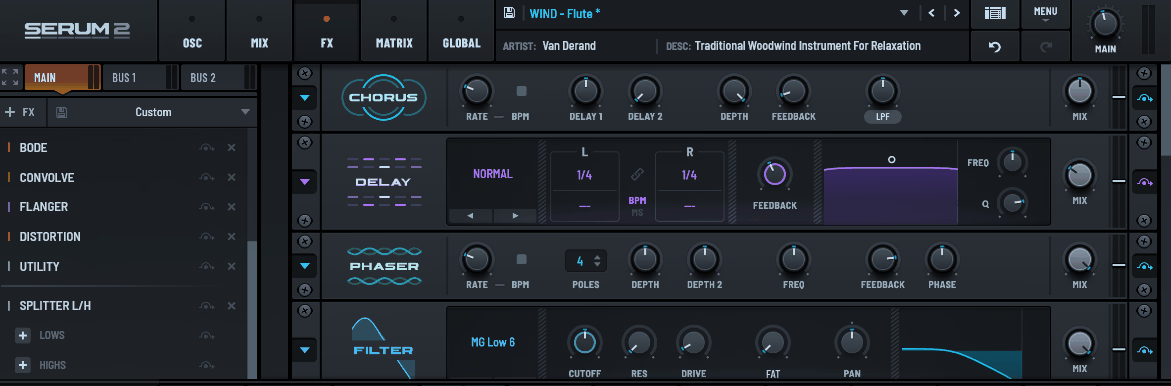
Serum 2’s effects section covers the standard professional synth effects territory well: the improved reverb algorithm is smooth and dense, the distortion modes are more varied than Serum 1’s, the chorus and ensemble effects handle width effectively, and the delay provides solid tempo-synced rhythm capability.
All effects parameters accept modulation from the main modulation system, which makes the effects chain feel integrated with the synthesis engine rather than separate from it.
For most sound design contexts, Serum 2’s effects section is sufficient for producing finished sounds without additional external processing. The limitation compared to Phase Plant is that the effects are at the end of the chain and can’t be inserted earlier in the signal flow.
Preset Ecosystem
- Serum 2
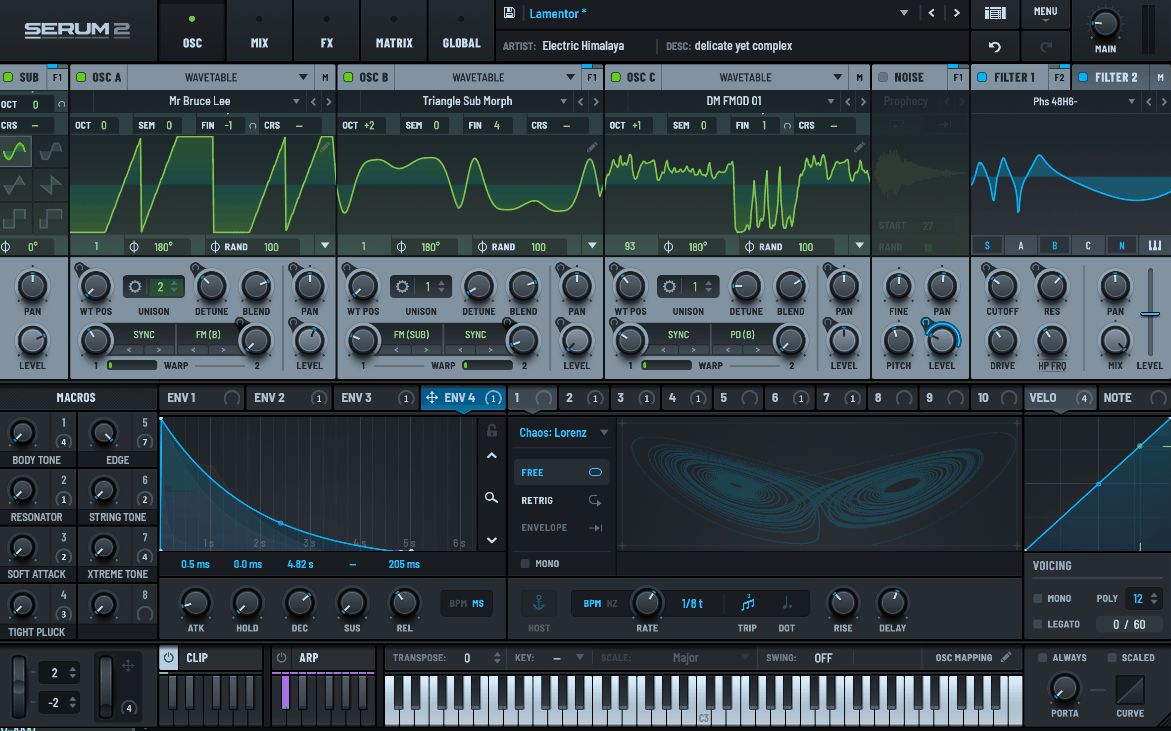
The Serum preset ecosystem is the largest in software synthesis for electronic music, and Serum 2 inherits all of it. Ten years of commercial preset bank production, free community content, and shared wavetables mean that whatever genre or sound category you’re working in, Serum-specific content exists for it at every quality level from free downloads to professional commercial banks.
This is a practical advantage that doesn’t appear in any feature comparison but matters enormously in day-to-day production: when you need a specific type of sound quickly, the probability of finding it as a Serum preset is higher than for any other synthesizer.
- Phase Plant
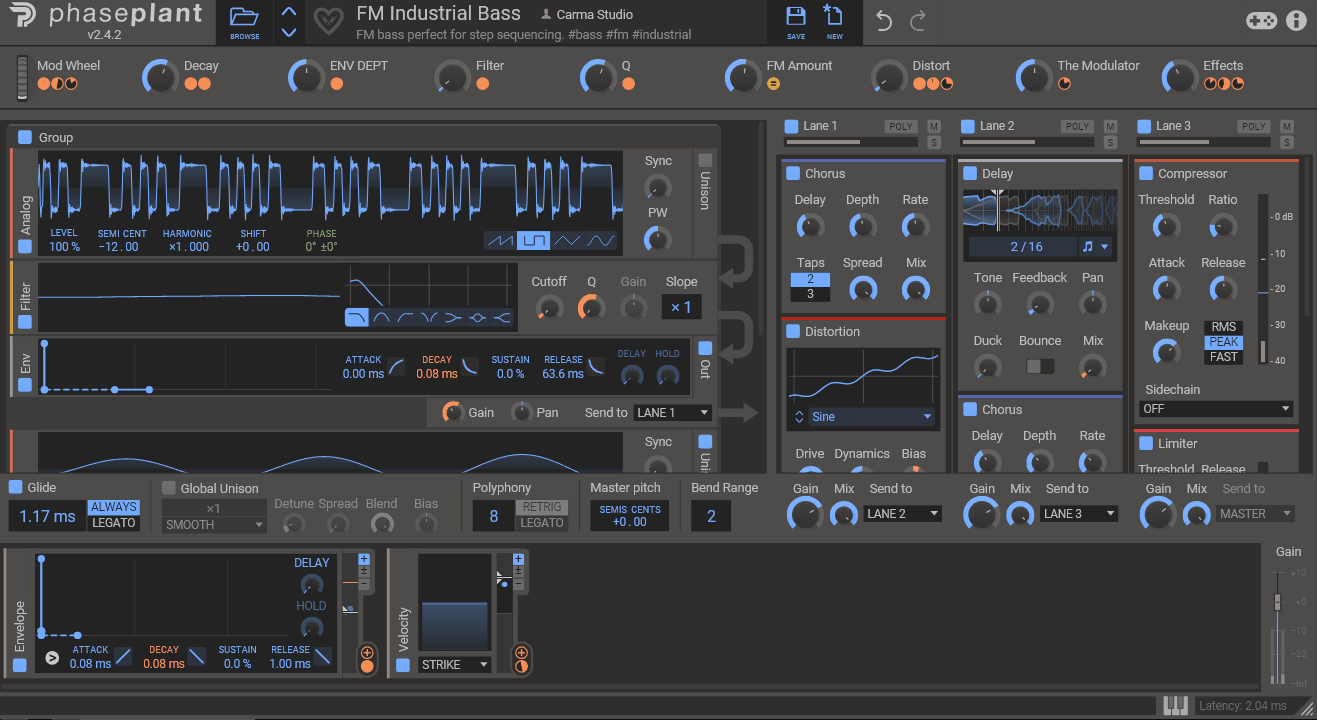
Phase Plant’s preset ecosystem is growing but significantly smaller than Serum’s. Phase Plant has been commercially available for several years and has an active community of users and sound designers, but the depth of available commercial preset banks and the breadth of genre-specific content doesn’t approach what Serum offers.
For sound designers who build their own patches primarily from scratch, this gap matters less than it does for producers who work primarily from commercial preset starting points.
The modular architecture also means that Phase Plant presets are architecturally more varied and harder to create in large quantities: a Serum preset always has the same basic signal flow structure, just with different parameter values, while a Phase Plant preset might have a fundamentally different module configuration that requires more design time to produce.
This architectural variation makes Phase Plant presets more interesting to explore individually but harder to produce in the volume that a large commercial preset bank requires.
CPU Performance
- Phase Plant
CPU performance in Phase Plant is highly variable and depends entirely on how complex the patch you’ve built is. A simple Phase Plant patch using one wavetable generator through one filter with basic modulation runs very efficiently, potentially more efficiently than an equivalent Serum 2 patch because you’ve only added the modules you need.
A complex Phase Plant patch using multiple generators, several shaper stages, multiple modulation sources, and a full effects chain can be substantially more CPU-demanding than anything Serum 2 produces.
The variability is part of the modular architecture’s nature: you’re building the processing requirement of each patch by the modules you add, which means you have direct control over efficiency versus complexity trade-offs. This is genuinely useful for producers who understand the trade-off, but it means you can’t predict Phase Plant’s CPU usage based on a general category the way you can with fixed-architecture synthesizers.

- Serum 2
Serum 2 is slightly more demanding than Serum 1 due to the new per-voice dual filter and expanded oscillator processing, but it maintains the reputation for efficiency that Steve Duda established with the original Serum.
Complex patches with high unison voice counts and active Chaos modulation will be more demanding than simple patches, but the variance is narrower than Phase Plant’s because the architecture is fixed.
You can reliably predict Serum 2’s approximate CPU cost for a given patch type in a way that Phase Plant’s open architecture doesn’t allow.
For live performance with demanding polyphony requirements, Serum 2’s more predictable performance profile is a practical advantage. For studio production where specific patches are frozen to audio when not being edited, Phase Plant’s architectural freedom is worth whatever additional CPU cost a specific complex patch requires.

Genre Fit
- Serum 2
Serum’s genre associations are the most specific and documented of any software synthesizer in electronic music, because the original Serum’s adoption across electronic genres created a clear mapping between the instrument and the sounds of an entire era of production.
Future bass, dubstep, trap, EDM, and commercial pop production all have deep Serum associations through specific preset aesthetics, producer workflows, and sound design approaches that have become genre-defining over the past decade. If you’re working in any of those styles, Serum 2 is the instrument with the most direct community, preset ecosystem, and genre-specific knowledge base to support you.
Cinematic and trailer music uses Serum for hybrid electronic textures. Hip-hop and R&B uses Serum’s melodic synth elements extensively. The breadth of genre coverage follows from the breadth of the preset ecosystem: when enough different producers use an instrument in enough different genres, the instrument’s genre associations become essentially universal.

- Phase Plant
Phase Plant’s genre fit follows from its architectural freedom: it suits any genre where unusual synthesis combinations, complex modular signal paths, or highly customized voice architectures are part of the production aesthetic.
Experimental and avant-garde electronic music benefits most directly from Phase Plant’s modular freedom. Cinematic and sound design work uses Phase Plant for unusual hybrid textures that conventional fixed-architecture synths can’t produce.
Techno and industrial production uses Phase Plant for complex, evolving rhythmic textures built from unusual generator combinations. Ambient and generative music benefits from Phase Plant’s unlimited modulation source count and curve generator, which enable slowly evolving, complex patches that change their behavior over very long time scales.
For mainstream commercial EDM, trap, and future bass production, Phase Plant is capable of producing all the same sounds Serum 2 produces, but the preset ecosystem difference means Serum 2 is the more immediately practical tool for those genres.
Learning Curve
- Phase Plant
I can only say that the Phase Plant has a significantly steeper learning curve than Serum 2 for new users. The modular architecture means you need to understand what each generator type does, how shapers process signals, how to route modules in the order that produces the result you want, and how modulation connects to the modules you’ve added rather than to a fixed set of synthesis parameters.
None of this is inaccessible, but it requires a more deliberate investment in learning the instrument’s concepts before you can produce complex sounds efficiently.
The payoff for that investment is substantial: once you understand Phase Plant’s module vocabulary and routing logic, the ceiling of what you can design is higher than any fixed-architecture synthesizer. Many experienced producers describe Phase Plant as the instrument they went to after learning other synthesizers deeply, when they were ready for a more flexible environment.
For producers who are newer to synthesis in general, learning Serum 2 first and using it to develop fundamental synthesis skills is genuinely the better sequence: the fixed architecture, clear signal flow, and enormous tutorial resource base make Serum 2 easier to learn deeply, and the knowledge transfers directly to Phase Plant when you’re ready for that level of flexibility.

- Serum 2
Serum 2’s learning curve is one of the lowest of any professional synthesizer, maintained from the original Serum’s design priorities. The signal flow is logical and immediately visible, the wavetable display shows you exactly what the oscillator is doing, the modulation assignment is fast and intuitive, and the effects chain is straightforward to configure.
The enormous resource library around Serum means that whatever you’re trying to learn, the tutorial probably already exists and has been watched by hundreds of thousands of other producers.
For existing Serum 1 users, Serum 2 requires minimal relearning: the new features (dual filters, Chaos generators, new warp modes) follow the same workflow conventions and interface approach as the existing features.

Trial Offered?
- Phase Plant
Kilohearts offers a fully functional time-limited trial of Phase Plant, giving you access to the complete feature set for a defined period to evaluate whether the instrument fits your needs. This is among the more generous trial approaches available, because you can build and evaluate complex patches during the trial rather than being limited to a crippled demo.
Phase Plant is also part of the Kilohearts Toolbox subscription, which gives you access to Phase Plant alongside the full Kilohearts Snapin effects library for a monthly or annual fee.
This subscription approach can be a practical way to evaluate Phase Plant alongside the broader Kilohearts ecosystem before committing to perpetual purchase.

- Serum 2
Xfer offers a demo version of Serum 2 with periodic output noise rather than a time limit, letting you use the full feature set across as many sessions as you want with the limitation that you can’t export clean audio without purchasing.
This approach gives you genuine evaluation time: you can build patches, explore the wavetable editor, and work through the modulation system in real production sessions before deciding.
The Splice rent-to-own option at approximately $9.99/month is available as an alternative entry point, giving you immediate full access with the license transferring when the full purchase price is paid.

Which Is More Flexible?
Phase Plant is more flexible by a significant margin, and this is the clearest answer in the comparison. The modular architecture, unlimited generator combinations, unlimited modulation source count, arbitrary signal routing, and full Snapin effect integration give Phase Plant a ceiling of synthesis and sound design complexity that Serum 2’s fixed architecture cannot match.
But flexibility is only as valuable as the context you’re applying it in. If your production is centered in established electronic music genres where Serum’s ecosystem gives you immediate access to genre-appropriate sounds and community knowledge, Phase Plant’s additional flexibility doesn’t necessarily translate into better results for your specific work.
The producer making trap or future bass production often doesn’t need Phase Plant’s modular freedom; they need Serum’s specific sound character and its enormous library of genre-specific content.
The flexibility answer depends on what you’re building: Phase Plant is more flexible for complex, unusual, or experimental sound design. Serum 2 is more efficient and immediately productive for established electronic music production contexts where the preset ecosystem and genre-specific knowledge base are primary working tools.
The Bottom Line
Serum 2 is the better instrument for the largest number of producers: its focused wavetable architecture, the industry-leading wavetable editor, the enormous preset ecosystem, the clean and efficient workflow, the Chaos generators and dual filter additions in version 2, and the decade of community knowledge built around the instrument all combine into a primary synthesizer that handles the majority of electronic music production needs with exceptional efficiency.
Phase Plant is the better instrument for a specific type of producer: one who needs synthesis architecture freedom that fixed-flow synths can’t provide, who builds complex modular patches from scratch rather than working from presets.
For those who wants to combine synthesis types in unusual configurations, or who is working in experimental, cinematic, or sound design contexts where conventional synthesis architectures create limitations that Phase Plant’s open design removes.
For the producer asking which one to buy first: start with Serum 2. Learn synthesis fundamentals through an instrument with the clearest signal flow, the best learning resources, and the most immediately applicable preset ecosystem.
Once you’ve developed your sound design skills and start feeling genuinely constrained by the fixed architecture, Phase Plant becomes the natural next investment. And if you never feel that constraint because Serum 2 fully serves your production needs, that’s a completely valid outcome too.
For the producer who already owns Serum 2 and is evaluating Phase Plant as an addition: the answer depends on whether you’re hitting specific limitations in Serum’s architecture that your production work actually requires.
If you’re designing complex hybrid synthesis patches, need unusual generator combinations, or want the full Kilohearts Snapin effects library integrated into your synthesis environment, Phase Plant fills a genuinely different role.
If you’re happy with Serum 2’s capabilities and primarily want another synthesizer with different sounds, you might get more value from a synthesizer with a different sonic identity (like Arturia Pigments or a good virtual analog) than from another architecturally different wavetable synthesizer.
With all of that being said, both instruments are excellent. The choice is genuinely about which architecture serves where you are as a producer right now.
Check here Phase Plant (Support Plugin Nerds)
Check here: Phase Plant (Trial Available)
Check here: Xfer Serum 2
Get the Free Plugin Starter Kit
The genuinely useful free DAWs and plugins worth installing. No filler. Straight to your inbox.

Hello, I’m Viliam, I started this audio plugin focused blog to keep you updated on the latest trends, news and everything plugin related. I’ll put the most emphasis on the topics covering best VST, AU and AAX plugins. If you find some great plugin suggestions for us to include on our site, feel free to let me know, so I can take a look!