
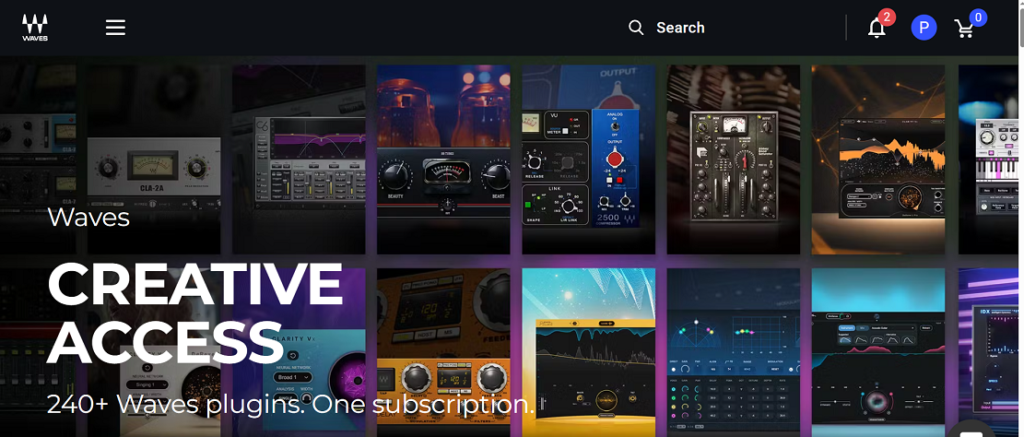
When it comes to Waves, it’s one of the most installed plugin collections in the history of digital audio. The catalog is enormous, the prices are accessible, and some of the tools are genuinely outstanding. But it’s also a brand carrying plugins that were designed over two decades ago alongside tools that represent the current state of the art.
On the flip side, Brainworx is more focused developer that built a smaller, more specialized catalog with a specific technical approach that sets it apart from almost anything else in the market. Understanding where each brand genuinely delivers is what this comparison is about.
Quick Comparison
| Feature | Brainworx | Waves |
|---|---|---|
| Founded | 2006 (Germany) | 1993 (USA) |
| Catalog Size | ~58 plugins (bx_bundle) | 230+ plugins |
| Licensing Model | Perpetual licenses + bx_bundle subscription | Subscription only (Creative Access, since 2023) |
| Subscription Price | $12.99/month (all 58 bx_ plugins) | ~$14.99/mo (Essential, 110+ plugins) or ~$24.99/mo (Ultimate, 230+) |
| Perpetual Option | Yes (flash sales from $9.99) | No (new purchases are subscription only) |
| Analog Modeling Tech | TMT (Tolerance Modeling Technology, US Patent 10,725,727) | NLS (Non-Linear Summer), licensed hardware emulation |
| Console Emulations | SSL 4000 E/G/9000 J, Neve VXS, AMEK 9099/200, Focusrite | SSL E-Channel, SSL EV2, CLA MixHub, Neve Scheps 73/1073 |
| M/S Processing | Built into nearly every plugin | Select plugins (Center, S1, limited elsewhere) |
| CPU Load (approx.) | Moderate (~4% per instance of bx_console on i7) | Very low (~1% per instance of SSL E-Channel) |
| Catalog Age | Modern (2006 onwards, actively updated) | Mixed (oldest plugins from late 1990s, new additions since) |
| Free Trial | 14-day per plugin; 20 permanently free plugins (PA Free) | 7-day subscription trial; full demo mode available |
| Genre Coverage | Mixing, mastering, rock, metal, pop, M/S-focused work | Everything, including vocal production, film, broadcast, live |
Get the Free Plugin Starter Kit
The genuinely useful free DAWs and plugins worth installing. No filler. Straight to your inbox.
About Brainworx
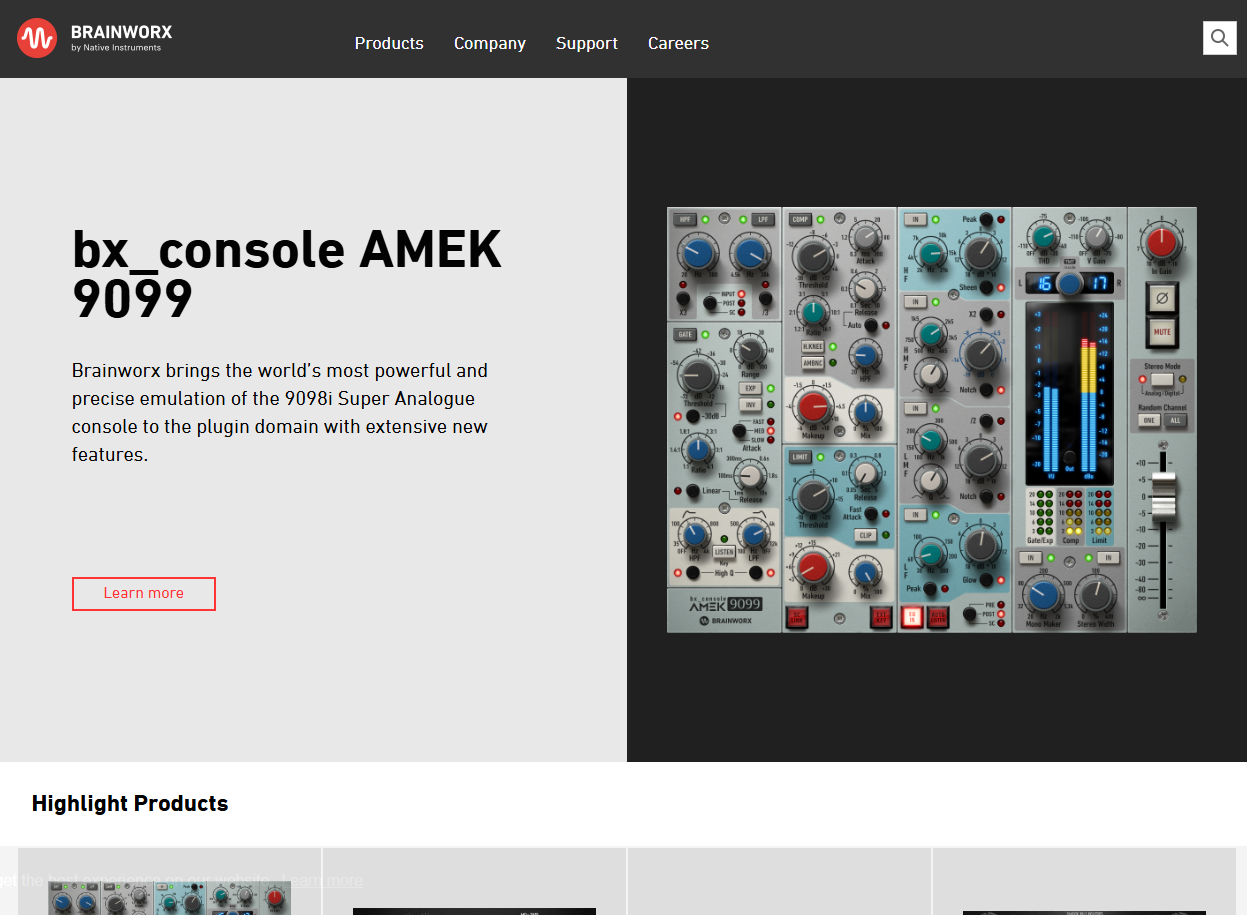
Brainworx was founded in 2006 by German engineer Dirk Ulrich with a mission that was specific and deliberate from the start: build the most authentic in-the-box representations of classic studio hardware, and then go beyond what the hardware itself could offer. The company didn’t try to cover every kind of processing.
Instead it developed deep expertise in console emulation, precision EQ, musical compression, and what would become its signature contribution to the plugin world: Tolerance Modeling Technology (TMT).
Operating through Plugin Alliance, which it co-founded as a publishing and distribution platform, Brainworx has built a catalog that is more focused than Waves but has a level of internal consistency and technical depth that most catalogs don’t match.
The plugins share a common design language, a consistent M/S processing philosophy, and the TMT approach to analog variation that makes the console emulations in particular genuinely different from what any other developer offers.
Brainworx is also the largest third-party developer for the UAD platform and the number-one AAX DSP developer for Pro Tools HDX, which speaks to the brand’s standing in the professional engineering community.
The tools are used by mixing engineers at the top of the industry on a daily basis, and that professional endorsement reflects something real about the quality and reliability of what they make.
About Waves Audio
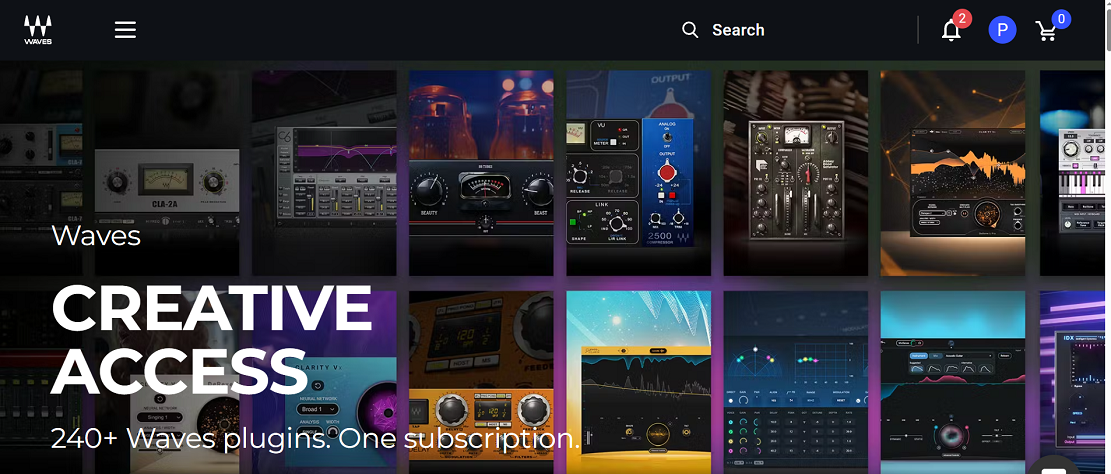
Waves was founded in 1993 in Israel and sold its first plugin that same year, making it one of the oldest dedicated plugin companies still operating at scale.
Over three decades, Waves built a catalog that now spans more than 230 plugins covering virtually every processing category: EQ, dynamics, reverb, delay, saturation, vocal production, noise reduction, spatial processing, creative effects, samplers, AI-powered tools and even synths and keys.
For most of its history, Waves was the dominant name in professional plugins, the brand that appeared in virtually every working studio’s toolkit simply because the tools were everywhere and many of them were genuinely excellent.
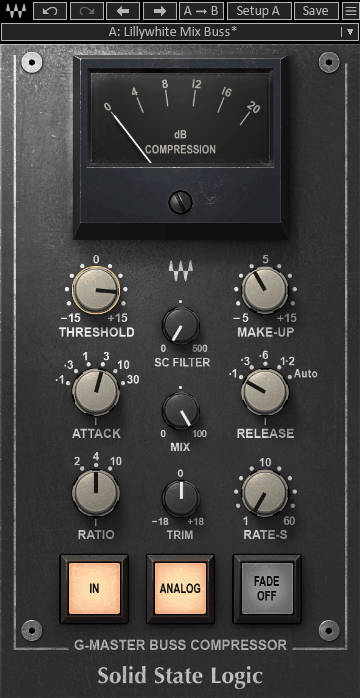
The SSL G-Master Bus Compressor, the Renaissance Compressor, the L4 Ultramaximizer, the H-Delay, the Abbey Road collections, the CLA Compressors, and many others became industry standard tools that engineers reached for as defaults on thousands of records.
In 2023, Waves moved entirely to a subscription-only model called Creative Access, eliminating perpetual licensing for new purchases. This was a significant and divisive decision: engineers who had built substantial perpetual libraries kept those older versions, but any new Waves user must subscribe.
The Essential subscription at approximately $14.99 per month covers 110+ plugins, and the Ultimate subscription at approximately $24.99 per month covers the full 230+ catalog. All updates and new plugins are included automatically within each tier.
The honest context for the Waves catalog in 2025 is that it’s a mix of genuinely excellent tools and plugins that were considered advanced in 2005 but haven’t kept pace with how modeling technology has developed since.
That doesn’t make the older plugins bad, many are still completely functional and musically useful, but it does mean that comparing Waves and Brainworx across similar categories doesn’t always yield the same result.
Sound Character
- Brainworx
Brainworx has a sonic character that I’d describe as clean-warm: there’s genuine harmonic density and weight when you drive the console emulations, but it’s never veiled or indistinct.
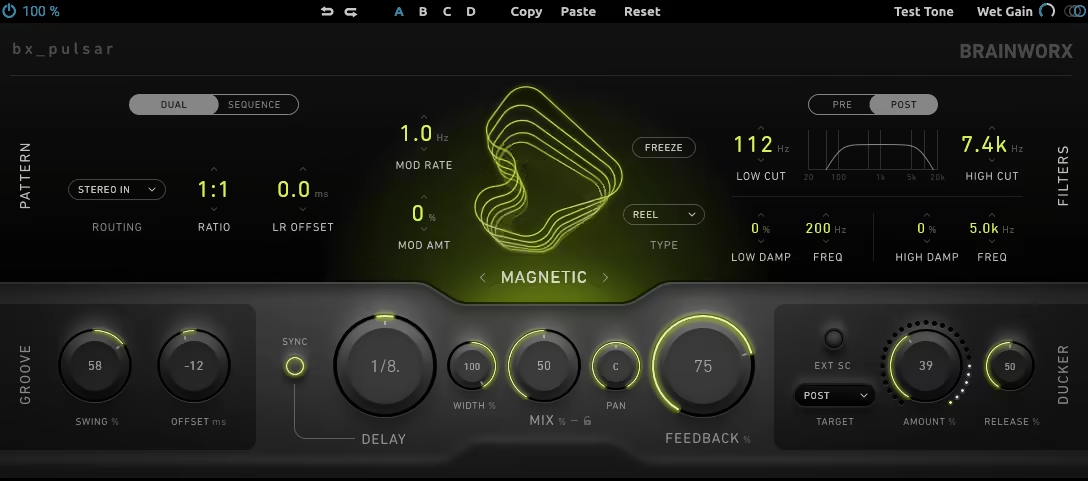
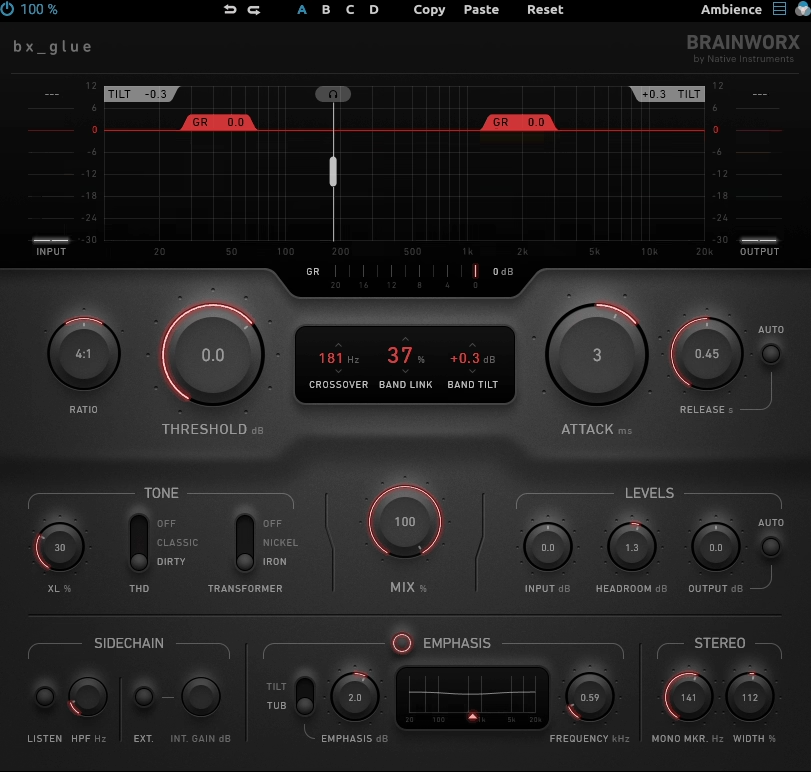
The top end stays open and clear even under heavy EQ moves, something you especially notice on the SPL PQ Mastering Equalizer and bx_pulsar, while the low end tightens rather than blurring, and the transient response is well-preserved across the compressor range, whether you’re reaching for the bx_townhouse Buss Compressor, Shadow Hills Class A, or bx_glue on the mix bus.
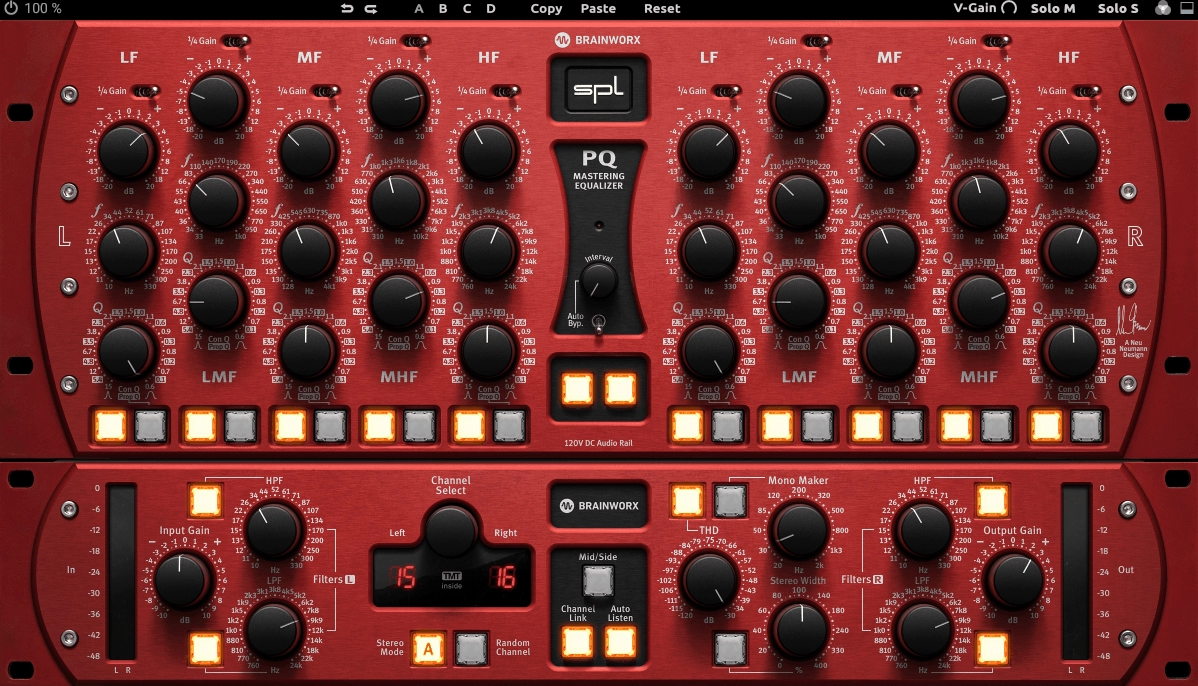
Engineers who’ve used real SSL or Neve consoles often describe the Brainworx versions as the most convincing they’ve found in software, specifically because the sound behaves like the hardware rather than just matching its measurement curves.
Load up the bx_console N (Neve VXS) or the bx_console AMEK 9099 and the response to input gain, the way the compressor interacts with the preamp stage, and the harmonic bloom at higher drive levels all feel analog in a way that isn’t purely about frequency matching.
The M/S processing baked into almost every Brainworx plugin gives the catalog a particular character in use: mixes built on bx_console N channel strips with support from tools like bx_aura, bx_Enhancer, and the bx_XL V3 limiter on the master tend to have width, depth, and a sense of acoustic openness that accumulates across the full session.
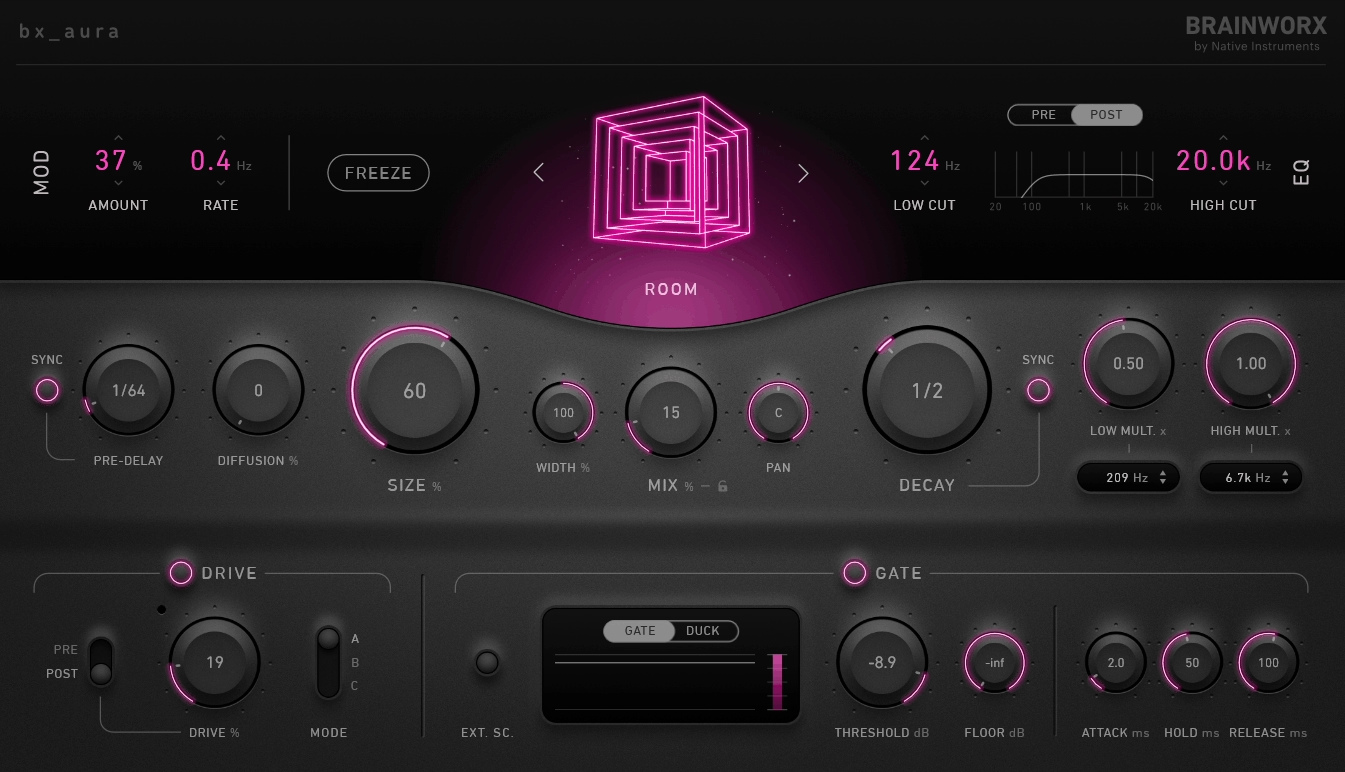
It’s not something you specifically dial in. It’s a quality that emerges from the tool itself when it’s used as intended, across all tracks simultaneously, with each plugin in the chain contributing its own subtle slice of that clean-warm Brainworx signature.
- Waves
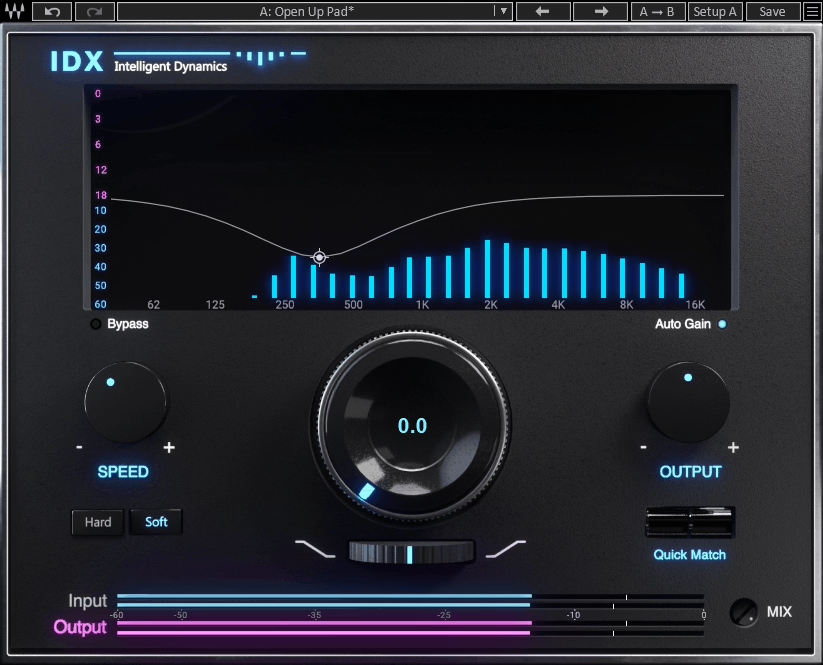
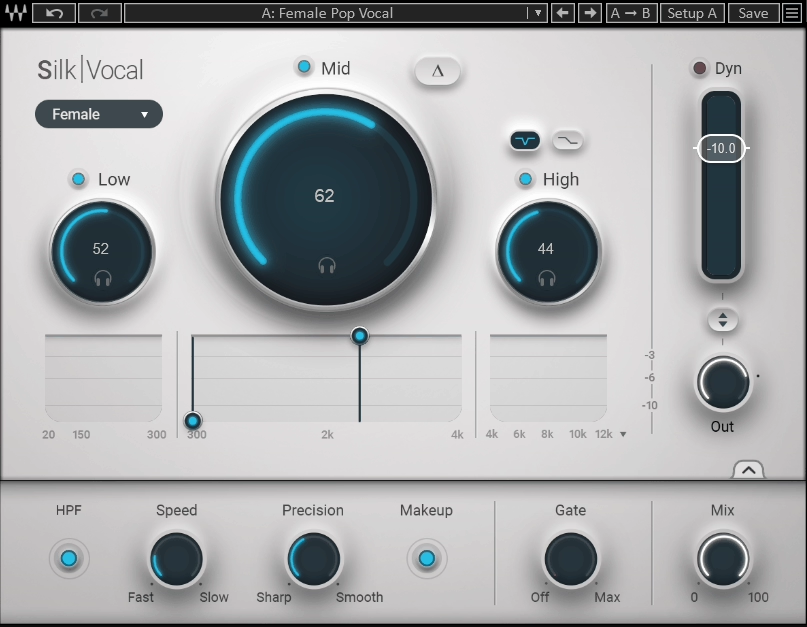
Waves’ sonic character is harder to describe as a single thing because the catalog spans so many different tools from so many different eras. The newer Waves plugins, including the Silk Vocal, the IDX Intelligent Dynamics, and the recent AI-powered tools, have a clean, precise, workflow-first character.
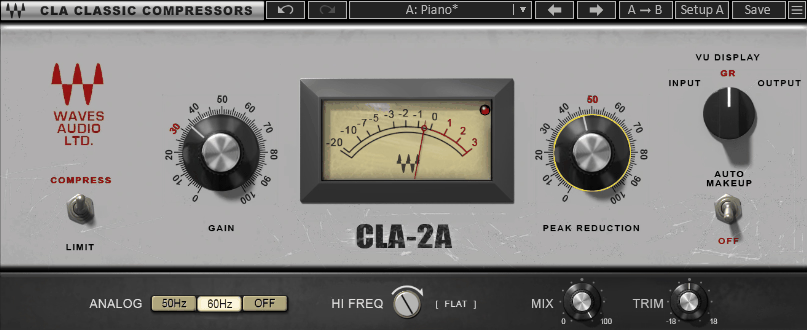
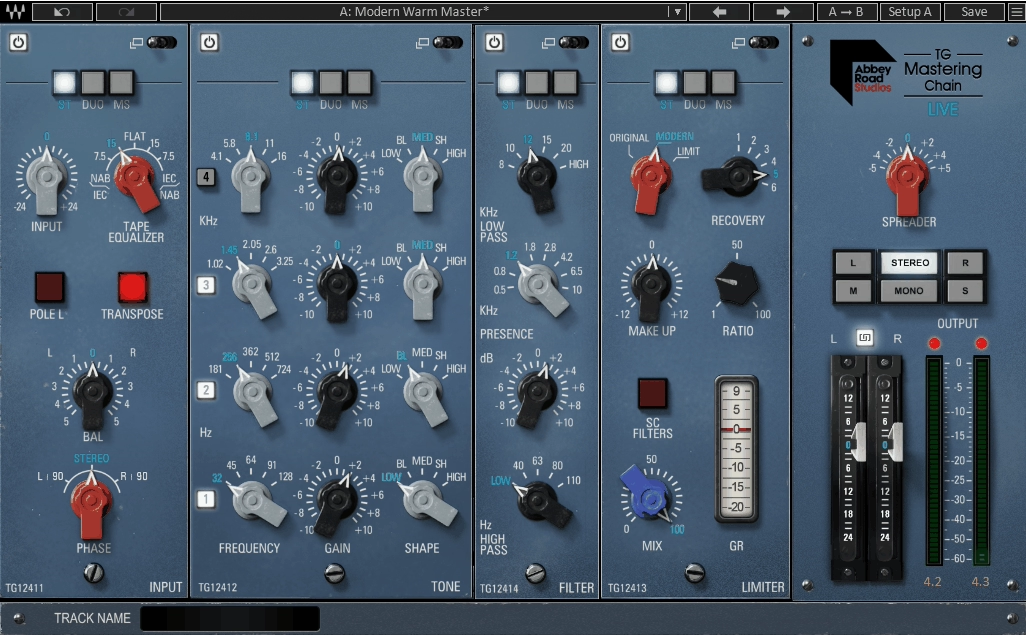
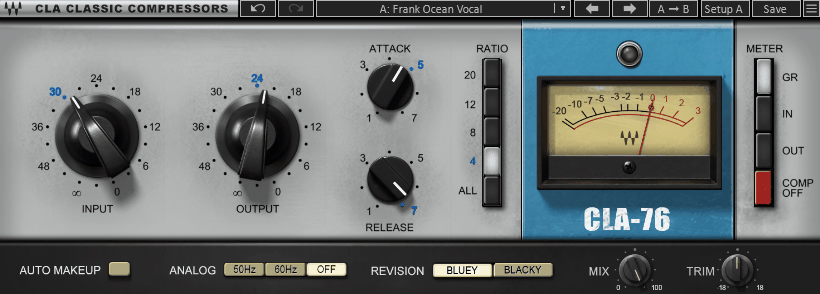
The vintage hardware emulations, particularly the CLA-76, the CLA-2A, the Abbey Road TG Mastering Chain, and the J37 tape machine, carry a genuine warmth and analog character that holds up well.
The older plugins in the core Waves collection, including the original Renaissance series and some of the first-generation SSL emulations, have a sound that many engineers describe as “vintage plugin sound,” meaning they reflect the state of modeling technology when they were built in the late 1990s and early 2000s rather than what’s achievable now.
This matters for a direct comparison with Brainworx because the two brands aren’t competing equally across every category. Where Waves has invested in modern development, it’s competitive. Where it hasn’t, Brainworx tools built in the same category will usually sound more accurate and behave more musically.
Effect Plugins Overview
- Brainworx Effect Plugins
The center of the Brainworx catalog is the bx_console series: SSL 4000 E, SSL 4000 G, SSL 9000 J, Neve VXS (bx_console N), AMEK 9099, AMEK 200, and Focusrite Studio Console emulations, each with 72 TMT channels, compressor, expander/gate, four-band parametric EQ, filters, and additional features like Mono Maker, Stereo Width, THD control, and V-gain noise injection.
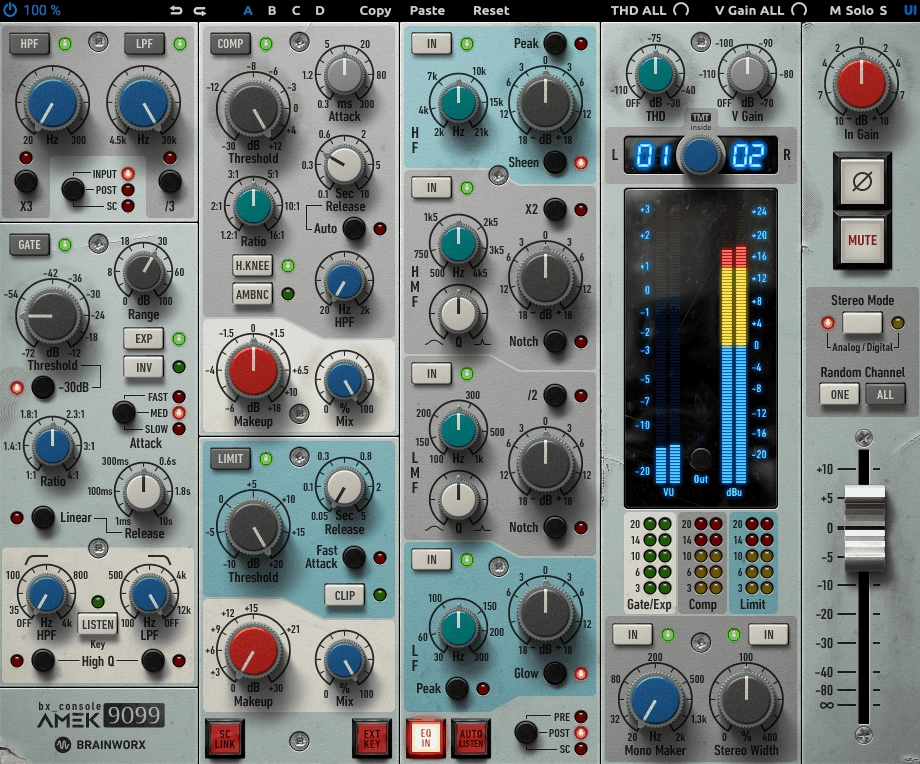
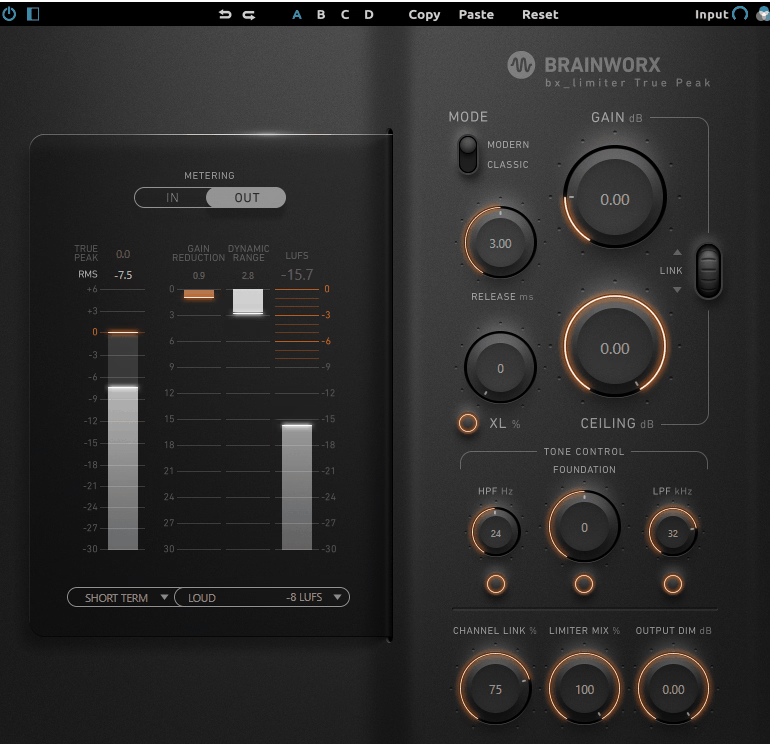
Beyond the consoles, the standalone processing includes the bx_console AMEK 200 (successor to the AMEK 9099, delivering the Rupert Neve-designed AMEK 9098i Master Console), the bx_masterdesk PRO all-in-one mastering chain with expanded 3-band parametric EQ, filters, de-esser, and XL saturation section, the bx_glue definitive VCA bus compressor for vintage mix glue, the bx_aura tonal enhancer, the bx_pulsar EQ with TMT and M/S, the Purple Audio MC77 1176-style FET compressor, the bx_XL V3 M/S mastering limiter, and the bx_limiter True Peak for intersample-peak-free loudness targeting with customizable metering.
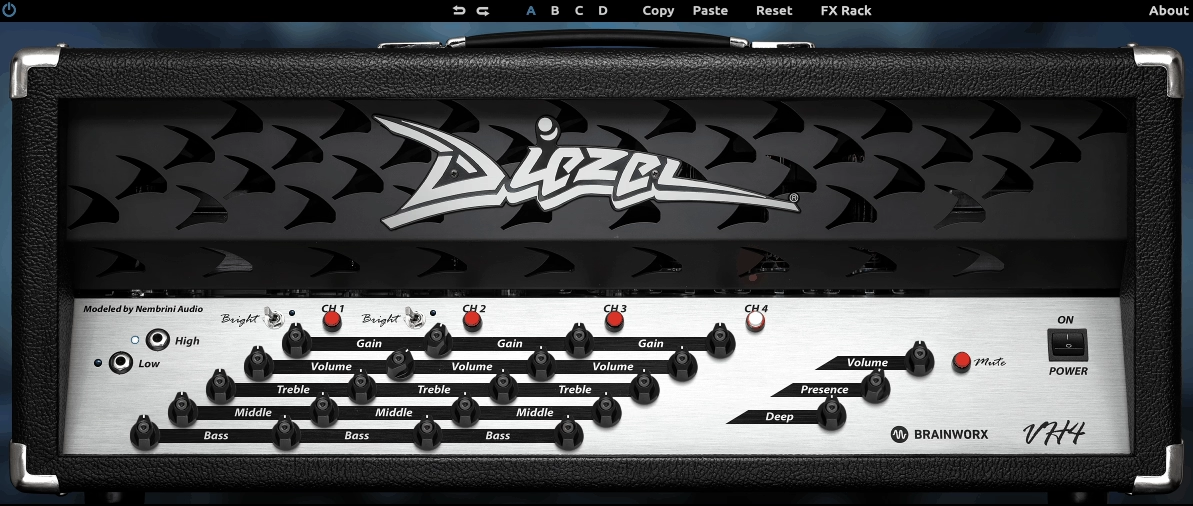
Guitar amp coverage through ENGL, Diezel, and the bx Metal 666 rounds out a focused catalog that covers the full mixing and mastering signal chain with genuine depth in each category.
- Waves Effect Plugins
Waves covers significantly more ground than Brainworx across more categories, and within those categories the quality range is wide. On the strong end: the Abbey Road collection (TG Mastering Chain, REDD EQs, Plates, Chambers, Saturator, J37 tape machine) is genuinely excellent and captures specific hardware and room acoustics with care and historical accuracy.
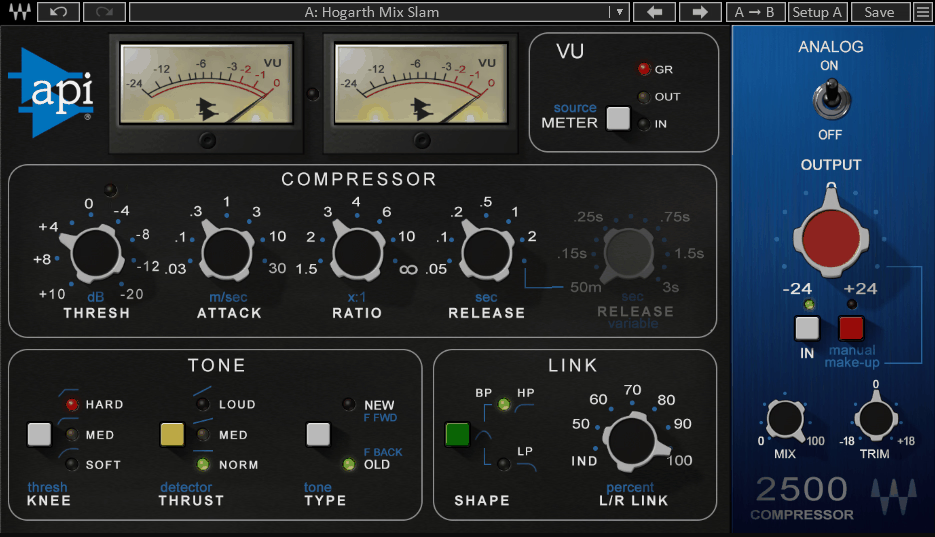
The CLA-76 and CLA-2A compressors are widely used and widely praised while H-Delay is a consistently reliable creative delay. Also, API 2500 bus compressor is considered competitive with many premium alternatives.
The NLS Non-Linear Summer channel adds console-style harmonic coloration and channel variation across a mix in a way that’s somewhat analogous in concept to TMT, though more limited in scope.
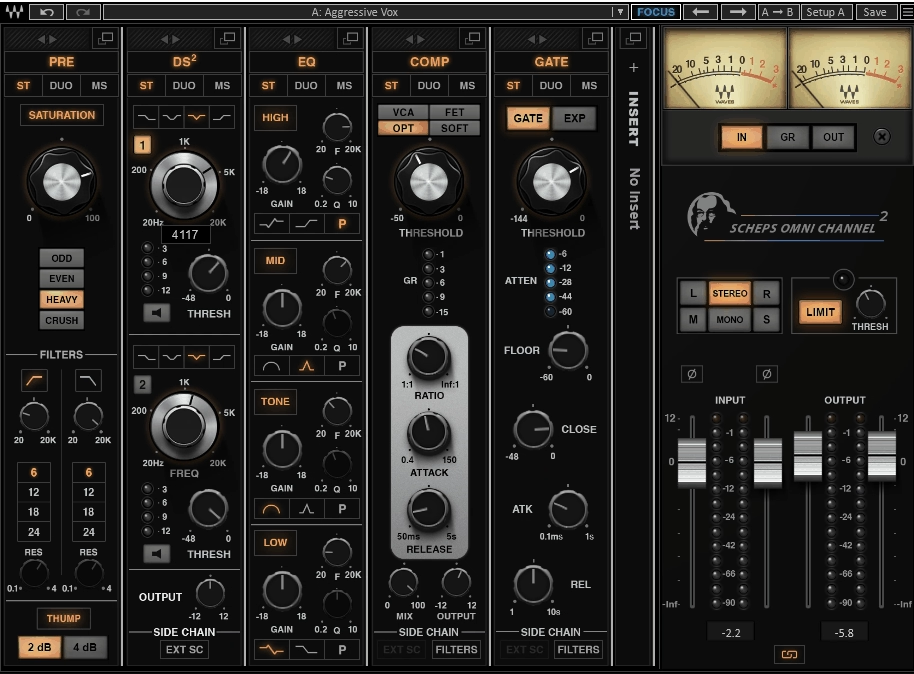
In addition, Scheps Omni Channel 2 and CLA MixHub are more modern developments that reflect significantly better modeling than the older Waves emulations.
On the more dated end: the original SSL 4000 E-Channel and G-Channel, while historically significant and still functional, are older emulations that engineers working through careful head-to-head comparisons consistently place below the Brainworx bx_console equivalents in terms of high-end accuracy, compressor behavior, and overall smoothness.
The Renaissance series tools function reliably but were built with modeling technology from over two decades ago and don’t reflect what’s achievable now in analog emulation.
EQ and Dynamics Head-to-Head
This is where the comparison becomes most specific and most useful, because EQ and dynamics are the primary tools in any mixing toolkit and where the technical differences between the two brands are most audible.
- EQ
On the SSL front, the bx_console SSL 4000 E gives you both brown and black knob EQ variants, the ability to switch between E and G series compressor characteristics within the same plugin, and 72 TMT channels that provide different tonal character across instances.
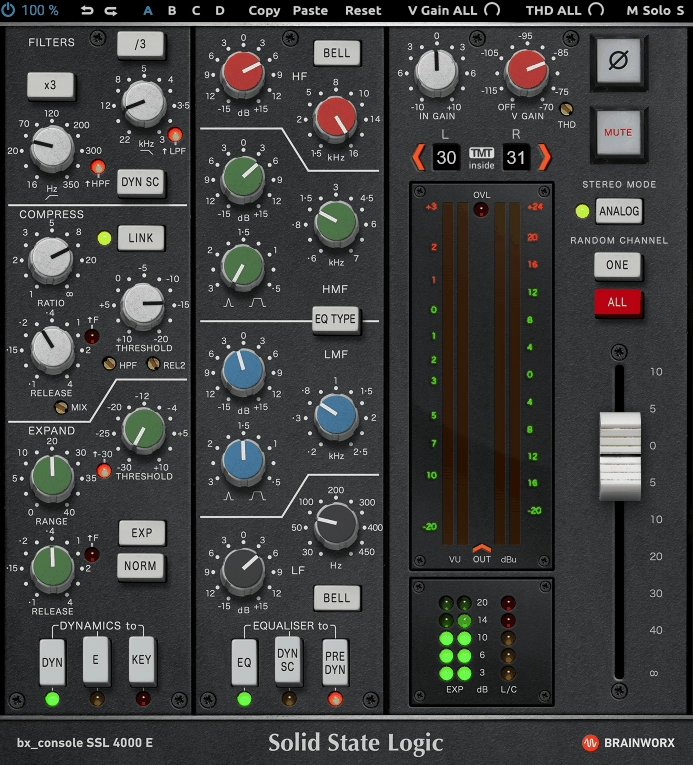
The Waves SSL E-Channel models only the black knob EQ and carries significantly older underlying modeling technology. In direct comparisons, the bx_console version handles high-frequency boosts more smoothly, handles large boosts without the harshness that older plugins can introduce, and behaves more musically in the way the EQ interacts with dynamics on the same signal.
The Waves Scheps 73 (Neve 1073 emulation) is a genuinely good modern Waves EQ. It captures the musical, transformer-colored character of the 1073 convincingly and is worth owning. The bx_2098 EQ (Amek 9098 emulation) covers different sonic territory with its Rupert Neve-designed parametric curves and TMT processing.

These aren’t direct competitors since they’re based on different hardware, but both represent the respective brands doing quality EQ emulation work.
- Dynamics
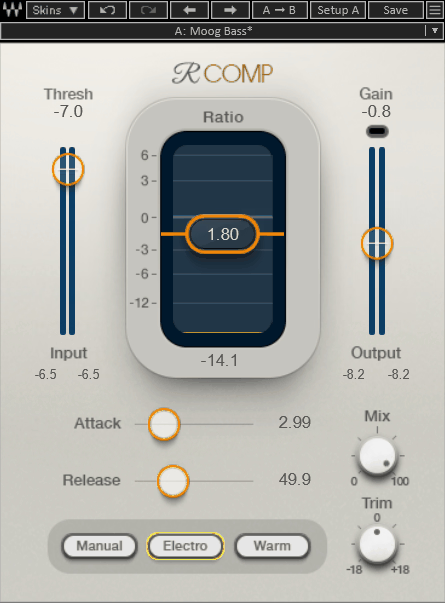
The bx_opto optical compressor and Purple Audio MC77 FET compressor are Brainworx’s most directly comparable tools to Waves’ CLA-76 and CLA-2A. In practical use, the Purple MC77 is consistently described by engineers who’ve compared it head-to-head as having a slightly more three-dimensional quality in the low-midrange compared to the Waves CLA-76, with a faster response that suits snare and vocal applications particularly well.
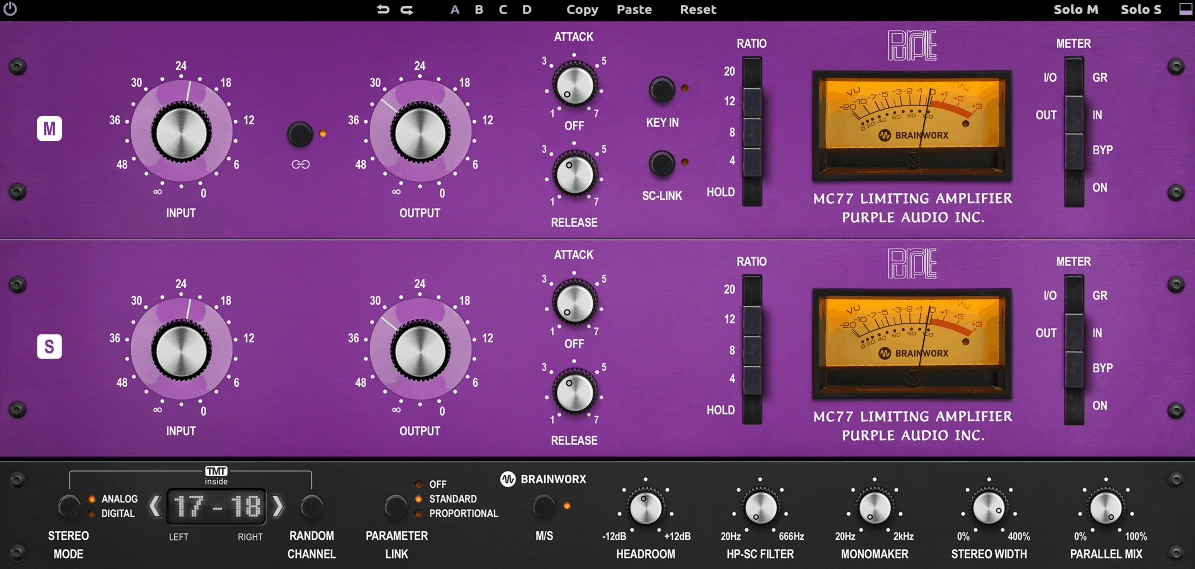
The CLA-76 is not a bad compressor. It’s been on thousands of records and engineers who know how to drive it get excellent results from it. But it is an older emulation and the technology that underlies it has been surpassed.
For bus compression specifically, the bx_townhouse Bus Compressor (modeled on the Townhouse studio’s custom SSL-derived bus compressor from 1978) competes directly with the Waves SSL G-Master Bus Compressor. Both are widely used for mix bus glue.
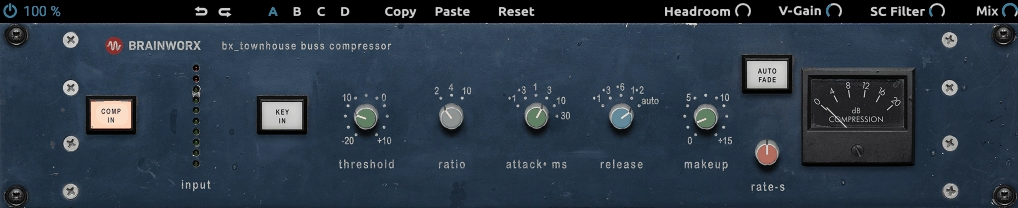
The bx_townhouse captures an earlier, grittier version of the SSL bus compression character. The Waves SSL G-Bus is the more commonly used and recognizable sound. I’d say the Waves version is the better starting point for most people simply because it’s the more universally applicable SSL bus compression sound, but the Townhouse has a character of its own that’s worth knowing.
Analog Modeling Quality
This is the most technically important section of this comparison, and I want to be direct about what the difference actually means in practice.
- Brainworx’s TMT Advantage
Brainworx’s Tolerance Modeling Technology (TMT) is not a marketing concept. It’s a patented technical approach (US Patent No. 10,725,727) that models the component-level variations that exist between channels on a real analog console, and you’ll find it implemented across flagship plugins like the bx_console AMEK 200, bx_pulsar, and the bx_console N.
In a physical console, resistors, capacitors, and transformers are manufactured with tolerances that mean no two channels are acoustically identical. Console designers work to minimize these variations but can never eliminate them, and those subtle differences across channels contribute to the dimensional, three-dimensional sound that large-format consoles produce.
TMT provides 72 numbered unique channel variants per plugin instance, each with its own slightly different frequency response, dynamic behavior, and harmonic character.
When you assign different TMT channels to different tracks across a 30-track session, you’re creating the cumulative analog effect of running through a real console rather than through a single, digitally perfect processing unit applied uniformly to every channel.
The practical difference in a mix is real and consistent: sessions built on bx_console AMEK 200 channel strips across all tracks have a particular width and acoustic depth that emerges from the processing itself, rather than from deliberate stereo processing decisions. Add a bx_glue on the mix bus and a bx_XL V3 on the master, and the cumulative analog feel carries cleanly from individual tracks through to the final limiter stage.
It’s the kind of quality that’s hard to describe in isolation but that you hear clearly when you compare a mix built on TMT console emulation to the same mix processed with non-TMT emulation.
- Waves’ Approach to Analog Modeling
Waves’ most direct equivalent to TMT is the NLS (Non-Linear Summer) channel plugin, which adds console-style analog saturation and channel variation across a mix by modeling three different consoles: the SSL, the Neve, and a custom third console.
The NLS is a useful tool and the concept of adding summing variation across channels is related to what TMT achieves, but the implementation is different: it’s a dedicated plugin added to the signal chain for color rather than the emulation being built into each channel’s processing at a component level.
For individual hardware emulations like the CLA-76, CLA-2A, and older SSL channel strips, Waves uses circuit-level modeling that was accurate and impressive when those plugins were designed, and some of them remain competitive today.
The more recently developed Waves emulations, particularly those in the Abbey Road collection and the newer artist signature tools, reflect substantially better modeling than the older catalog and should be evaluated on their own merits rather than judged alongside tools that are now 20+ years old.
Bundle Options and Pricing
- Brainworx
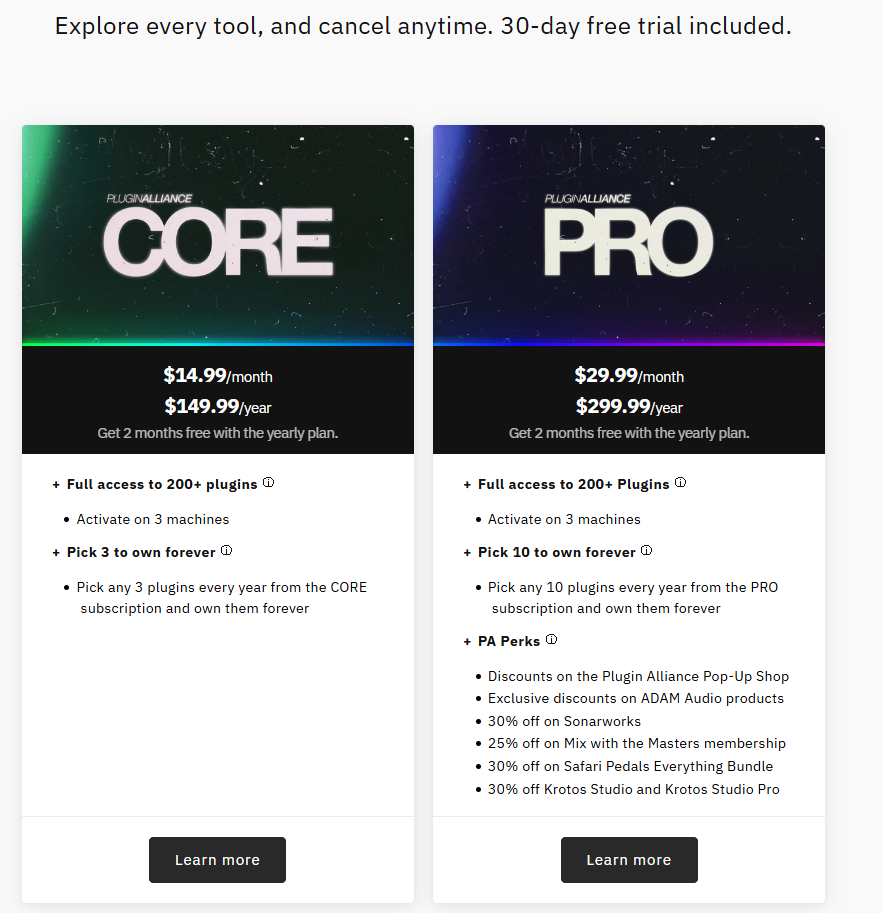
The Plugin Alliance CORE subscription at $14.99/month (or $149.99/year with two months free) gives you full access to the entire 200+ plugin catalog, including every Brainworx title alongside SSL, Shadow Hills, AMEK, and 40+ other brands. You can activate on 3 machines, and each year you get to pick 3 plugins to keep forever even if you later cancel.
The PRO tier at $29.99/month (or $299.99/year) expands that to 10 plugins per year to own forever, and adds PA Perks: 30% off Sonarworks, 25% off Mix with the Masters memberships, 30% off Safari Pedals, 30% off Krotos Studio, plus Pop-Up Shop discounts and exclusive ADAM Audio deals.
Both plans include a 30-day free trial, which is generous enough to evaluate the tools across real sessions rather than controlled demos. Individual perpetual licenses are also available through Plugin Alliance, with list prices from $149 to $349 for flagship console tools.
Flash sale prices and PICK2/PICK3/PICK4 custom bundle vouchers routinely bring those same plugins to $15-$25 each during seasonal promotions, and Plugin Alliance runs these sales frequently enough that buying a targeted set of Brainworx tools during a sale is a realistic strategy for building a permanent toolkit at a fraction of standard pricing.
Every individual plugin also includes a fully functional 14-day trial, so evaluation before purchase is always an option on any specific tool rather than requiring a blanket subscription.
- Waves
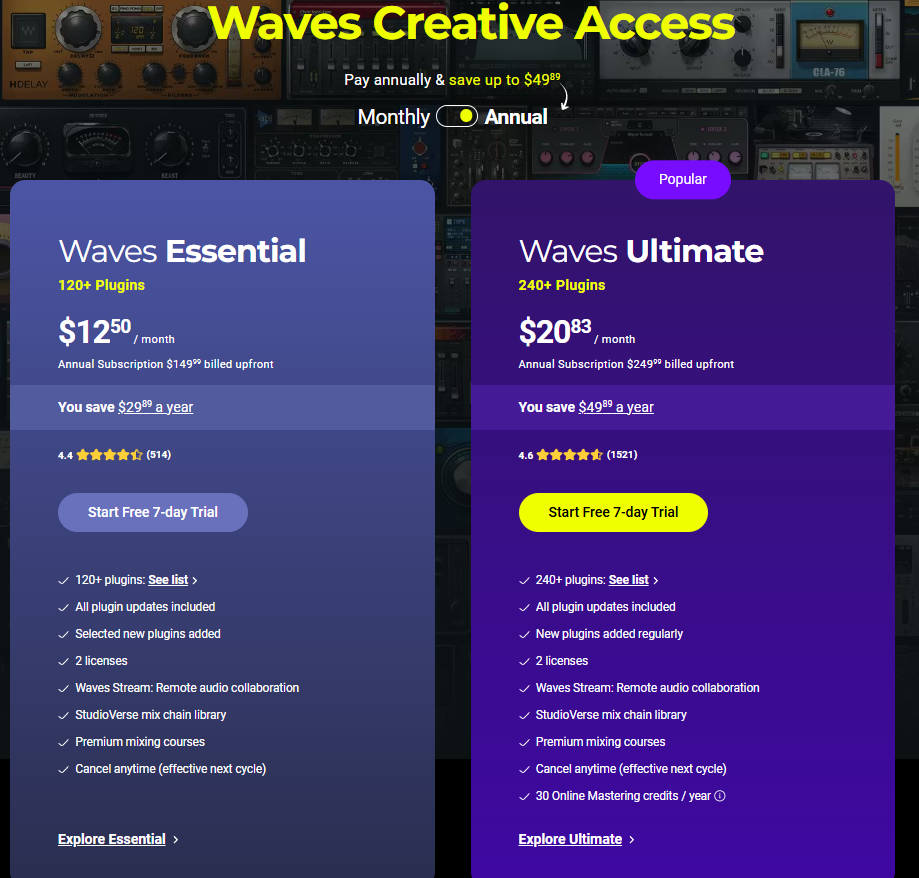
Waves’ subscription model is Waves Essential at $12.50/month (or $149.99/year billed upfront) for 120+ plugins, or Waves Ultimate at $20.83/month (or $249.99/year) for the full 240+ plugin catalog. All updates and new plugins are included automatically within each subscription tier, and both plans include a 7-day free trial.
Ultimate subscribers also get 30 online mastering credits per year (or 2 per month for monthly billing), plus Waves Stream for remote collaboration and access to StudioVerse, a library of preset chains from Grammy-winning engineers.
Ownership of new Waves plugins is still possible, Waves sells perpetual licenses on most plugins at list prices around $49-$149, with regular sales bringing them down to $29.99-$39.99. However, the subscription path is what Waves actively promotes, and if you stop subscribing, your access to the bundled catalog ends.
For the Ultimate subscription, the value case is strong: $20.83/month for 240+ plugins across every processing category is broadly competitive, and the breadth is genuinely substantial, especially with online mastering credits and the Grammy-produced preset chains included.
For engineers who value perpetual ownership in the analog-modeling space, Brainworx through the Plugin Alliance Pop-Up Shop or the Made by Brainworx Bundle is the better structural fit.
For engineers who prefer subscription access without a hardware requirement and want the broadest general-purpose toolkit, Waves Ultimate covers more categories at a lower monthly cost than Plugin Alliance CORE, while Brainworx offers more focused analog-console and M/S-mastering quality in the specific areas it covers.
Sales
- Brainworx
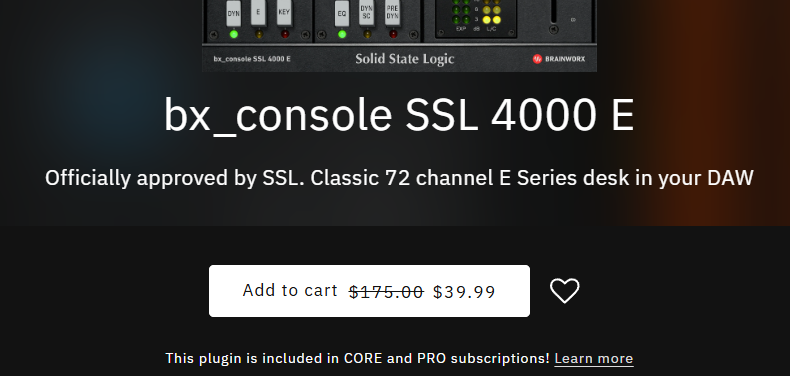
Plugin Alliance and Brainworx run consistent and aggressive flash sales throughout the year. Individual plugins priced at $149 to $349 at standard pricing appear at $9.99 to $19.99 during major promotions including Black Friday, Easter, Halloween, and other seasonal events.
This is a well-established part of how most engineers build their Plugin Alliance collections: buy almost nothing at full price and wait for the sales that come around with reliable frequency.
The perpetual model means that a plugin purchased during a flash sale remains yours permanently, which makes the real effective price for building a Brainworx toolkit significantly lower than the standard pricing suggests.
- Waves
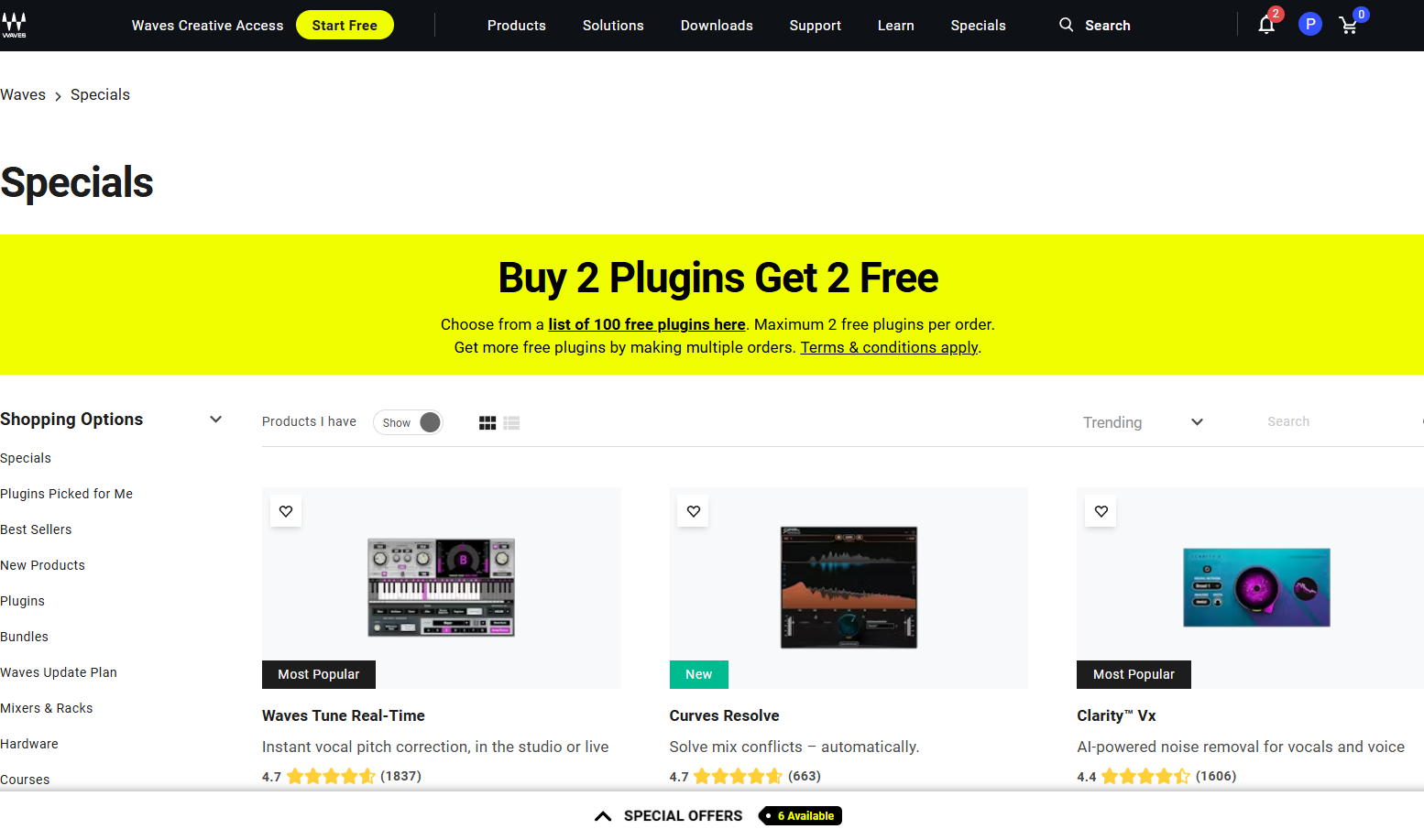
Waves historically ran some of the most aggressive sale pricing in the plugin industry, with individual plugins dropping to $29 or less and bundles deeply discounted during major promotions. That era of Waves flash pricing is now less relevant given the move to subscription-only for new users.
The subscription pricing itself is relatively stable, with occasional promotional rates for new subscribers at the entry level.
For engineers who owned perpetual Waves licenses before 2023, the Waves Update Plan (WUP) was an annual fee to maintain access to software updates and customer support for those perpetual licenses.
Genre Fit
- Brainworx
Brainworx’s console emulation approach makes it particularly effective in any genre where a large-format console workflow is central to the sound: rock, pop, country, hip-hop, R&B, and any production where the cumulative effect of an analog console across the full signal chain shapes the character of the final recording.
The M/S-first design also makes Brainworx especially strong for mastering, where the ability to process mid and side signals independently at every stage of the mastering chain is a genuine practical advantage over brands that offer M/S as a secondary feature on select tools.
For metal specifically, the bx_console SSL 4000 E is consistently recommended as a primary mixing tool, with its forward, aggressive E compressor and black-knob EQ character suiting high-gain guitar and drum production. The ENGL and Diezel amp emulations in the catalog cover the guitar production side of rock and metal directly.
- Waves
Waves covers more genre territory than Brainworx because the catalog is simply more diverse.
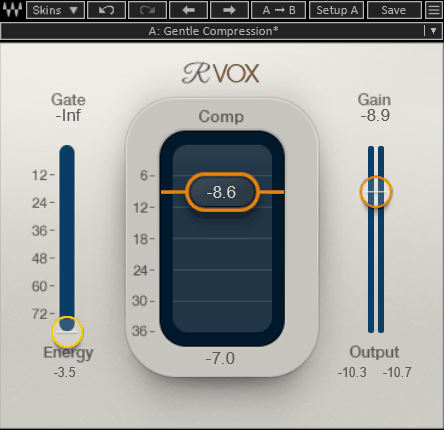
Vocal production is a particular Waves strength: the CLA Vocals chain, Tune Real-Time pitch correction, Silk Vocal intelligent processor, Vocal Rider, R-Vox, and Doubler combine into a vocal toolkit that no other single brand matches in breadth. Film, TV, and broadcast mixing are served by the X-Noise restoration tools, the spatial audio tools, and the Nx headphone mixing system.
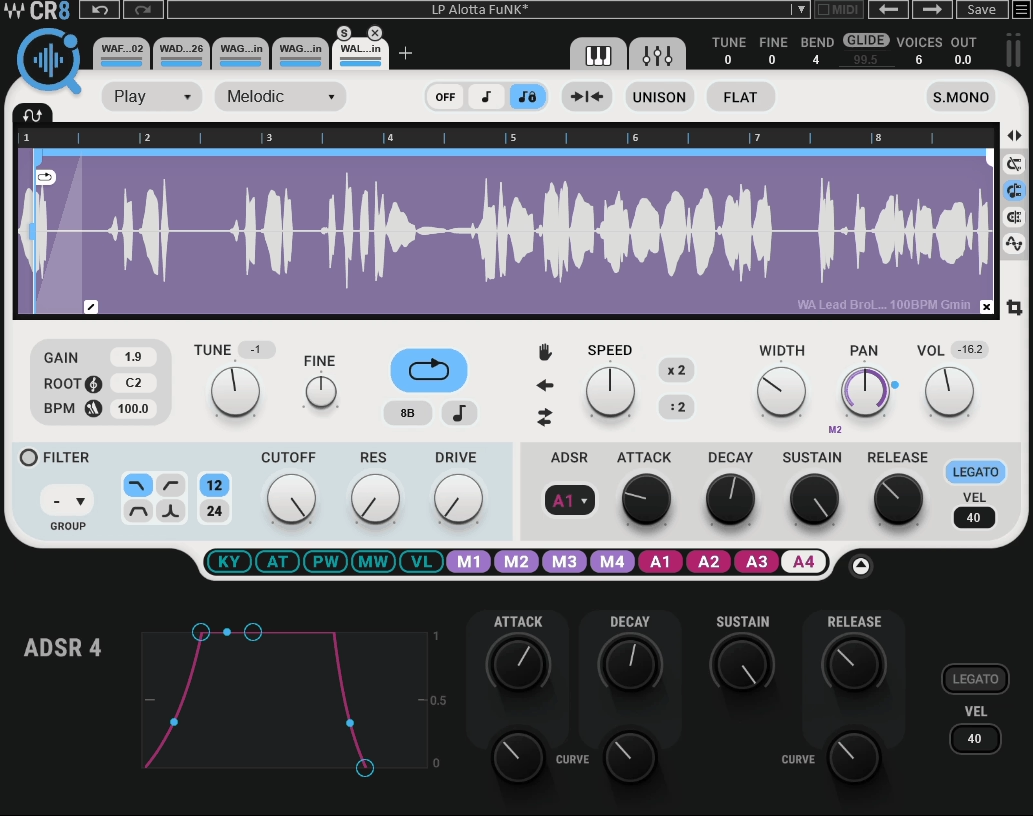
Electronic music production has the Infected Mushroom Pusher, the CR8 Creative Sampler, and the IDX Intelligent Dynamics AI processor.
For engineers who work across multiple genres in a single toolkit, Waves’ breadth is a genuine practical advantage. For engineers who specialize in mixing and mastering, particularly in guitar-centric or acoustic genres, Brainworx’s depth in the specific categories it covers is the more compelling argument.
Trials and Demo
- Brainworx Trials
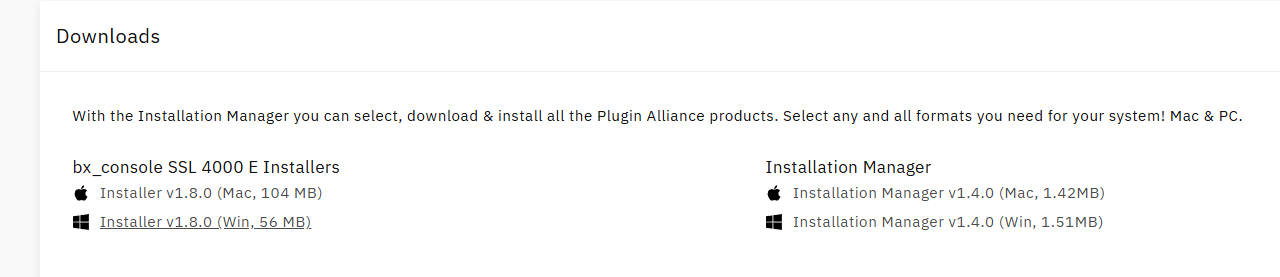
Every Brainworx plugin available through Plugin Alliance includes a 14-day fully functional trial that you can run in real sessions. This means you can install the specific bx_console variant you’re considering, run it across a complete session, and make your purchase decision based on actual use rather than marketing.
The PA Free collection also includes 20 permanently free plugins from across the Plugin Alliance ecosystem, several of which are Brainworx tools, giving you unlimited time with entry-level versions of the brand’s interface and approach.
- Waves Trials
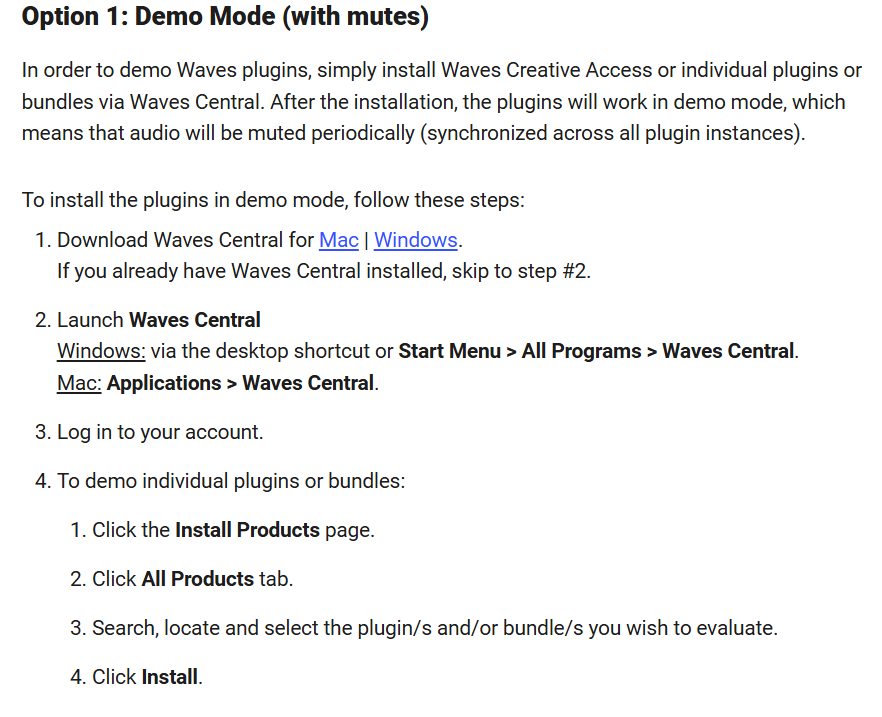
Waves offers a 7-day free trial of the Creative Access subscription with full access to the complete plugin catalog. The shorter trial window is the main limitation here, but the breadth of access during those 7 days is genuinely wide.
Waves also maintains a demo mode for all plugins, so you can install and audition any Waves plugin without a subscription, with the processing active but with occasional muting to indicate it’s unlicensed.
This demo system is useful for evaluating whether a specific Waves tool works for a specific application before committing to subscription access.
Which Is the Better Long-Term Investment?
This question shifts depending on what you mean by long-term investment, and I want to be specific about the two scenarios where the answer genuinely differs.
- If perpetual ownership matters to you
Brainworx wins this decisively. You can build a substantial Brainworx toolkit through flash sales at real prices, own those licenses permanently, and use them indefinitely without any ongoing payment obligation. The tools you buy for $19.99 during a sale are the same tools professional engineers use on major-label records, and they remain yours whether or not Plugin Alliance exists in ten years.
Waves eliminated perpetual licensing for new buyers in 2023. If you want Waves, you subscribe. If you stop subscribing, your access ends. For engineers who prefer to own their toolkit rather than rent access to it, this is a fundamental problem with Waves that doesn’t affect Brainworx.
- If breadth and variety matter more than perpetual ownership
Waves has more tools in more categories, and for engineers who need a complete production toolkit rather than a specialized mixing and mastering toolkit, Waves Ultimate at approximately $24.99 per month covers significantly more ground than the bx_bundle at $12.99 per month.
Vocal production, AI noise reduction, spatial audio, film mixing, and broadcast tools are all Waves territory that Brainworx doesn’t attempt to cover.
I’d also suggest that the comparison isn’t necessarily exclusive. Some of the most well-equipped working studios use both: Brainworx for the console channel strips and M/S mastering work where the TMT modeling and deep analog authenticity matters most, and Waves for the specific tools where the brand genuinely leads, particularly the vocal processing chain and the Abbey Road collections. That combination covers most of what a professional mixing and mastering toolkit needs.
The Bottom Line
Brainworx and Waves are both legitimate professional plugin collections, but they’re not equivalent substitutes, and the decision between them should be made on something more specific than brand reputation.
Choose Brainworx if console-workflow mixing with TMT-based channel emulation across all tracks is how you work, if you want the most analytically accurate and musically convincing console emulations available natively, if perpetual ownership is important to your toolkit strategy, if M/S processing integrated into every stage of your mixing and mastering chain is part of your approach, or if you specialize in rock, metal, or mastering where the Brainworx tools are particularly strong.
The flash sale pricing makes the catalog genuinely accessible, and the 14-day full trial on every plugin means you can verify fit before spending anything.
Choose Waves if you need the broadest possible toolkit across every production category under a single subscription, if vocal production tools are a significant part of your work, if you need film or broadcast-specific tools that Brainworx doesn’t cover, or if you prefer a subscription model that includes everything at a relatively low monthly cost without hardware requirements.
The catalog’s age range means you should focus on the newer and recently developed Waves tools rather than defaulting to older emulations when current alternatives from Brainworx or other developers offer better modeling.
For most mixing and mastering engineers building a primary toolkit, Brainworx’s focused depth in the categories that matter most will outperform Waves on a quality-per-dollar basis. For production engineers who need everything from a single subscription without worrying about perpetual ownership, Waves Ultimate is hard to beat on raw breadth.
Get the Free Plugin Starter Kit
The genuinely useful free DAWs and plugins worth installing. No filler. Straight to your inbox.

Hello, I’m Viliam, I started this audio plugin focused blog to keep you updated on the latest trends, news and everything plugin related. I’ll put the most emphasis on the topics covering best VST, AU and AAX plugins. If you find some great plugin suggestions for us to include on our site, feel free to let me know, so I can take a look!