
If you’ve been looking to upgrade your mixing and mastering toolkit lately, these two names have probably come across your radar. iZotope and Sonible are both betting heavily on AI-assisted audio processing, and both have built genuinely impressive plugin catalogs around that idea. The surface-level pitch from each brand sounds similar: smart, faster, more intelligent tools that do the analytical heavy lifting while leaving you in control.
But spend time with both and the differences become pretty clear. iZotope is a much larger operation with a wider catalog covering mastering, mixing, audio repair, and vocal production. Sonible is a smaller Austrian developer with a tighter, more focused set of plugins built entirely around a specific kind of spectral intelligence.
I think that distinction is worth exploring in real depth, because which brand actually suits you depends a lot on what you’re trying to do and how far into the weeds you want to go.
Plugin Comparison by Category
| Category | iZotope | Sonible |
|---|---|---|
| EQ | Neutron 5 / Ozone (EQ module) | smart:EQ 4 |
| Compressor | Neutron 5 / Ozone (compressor module) | smart:comp 3 |
| Limiter/Clipper | Ozone 12 Maximizer / Neutron Clipper | smart:limit |
| Reverb | Neoverb, Exponential Audio Reverbs | smart:reverb 2 |
| De-esser | Neutron 5 (de-esser module), Nectar 4 | smart:deess |
| Gate | Neutron 5 (gate module) | smart:gate |
| Mastering Suite | Ozone 12 (full suite, 20+ modules) | smart:limit + true:level + true:balance |
| Vocal Processing | Nectar 4 (dedicated vocal suite) | Not available |
| Audio Repair | RX 11 (industry standard) | Not available |
| Spectral Mixing | Neutron 5 (Visual Mixer, Tonal Balance) | smart:EQ 4 (Group Mode, cross-channel) |
| Distortion / Creative FX | Trash, VocalSynth 2 | Not available |
| Analysis / Metering | Insight 2, Tonal Balance Control 3 | true:balance, true:level |
| Dereverberation | RX 11 (Dialogue Isolation) | proximityEQ+ |
| Entry Bundle Price | ~$99 (Elements Suite) | ~$279 (smart:bundle) |
| Free Tier | Vinyl (free), Ozone Elements trial | 30-day trials on all plugins |
Sound Character
These are both digital AI-powered tools and neither one is chasing analog warmth or vintage hardware character. But they still sound meaningfully different from each other, and I think that’s worth addressing before anything else.
- iZotope’s Transparent Processing
iZotope’s house sound across tools like Neutron 5, Ozone 12, and Nectar 4 is clean, transparent, and modern. The processing is designed to be surgical and accurate rather than colored or characterful, which is by design for mastering and repair work.
That said, Trash and VocalSynth 2 exist specifically to add color and creative character, so iZotope isn’t purely clinical. I’d say the overall identity leans toward precision and clarity, especially in the mixing and mastering tools that most people reach for first.

- Sonible’s Spectral Clarity
Sonible also leans toward transparency but in a very specific way. Their processing philosophy is built around spectral intelligence, meaning the tools don’t just process the full signal uniformly but analyze it in fine detail and act only where needed.
smart:comp 3 works across 2,000-plus frequency bands rather than applying broadband gain reduction, and smart:EQ 4’s smart:filter makes targeted micro-adjustments that a standard EQ curve wouldn’t replicate.
The result tends to sound very open and clear without the heaviness that poorly applied compression or EQ can introduce. For me this is Sonible’s defining quality and it’s audible in real mixes.
Flagship Plugin Instruments
Both brands have individual plugins that represent the peak of what they do, and spending time with these gives you the clearest sense of each brand’s philosophy.
iZotope
- iZotope Ozone 12
Ozone 12 is iZotope’s mastering suite flagship and one of the most comprehensive mastering tools in existence.
It covers over 20 processing modules including an EQ, multiband dynamics, a Maximizer with multiple IRC (Intelligent Release Control) modes, an Imager for stereo width control, an Exciter for harmonic enhancement, a Match EQ for reference-based tonal matching, a Vintage Tape module, and Stem EQ added in version 12 for mastering individual stems without leaving the mastering session.
The Master Assistant analyzes your track and builds a starting mastering chain automatically, which is useful even if you adjust everything manually afterward because it at least gives you an informed starting point.
Ozone 12 Advanced includes the full module set plus features like Stem EQ, Bass Control, and Unlimiter, which can reduce limiting artifacts in already-mastered audio. Pricing sits at $249 for Standard and $349 for Advanced, with upgrades and bundle pricing available.

- iZotope Neutron 5
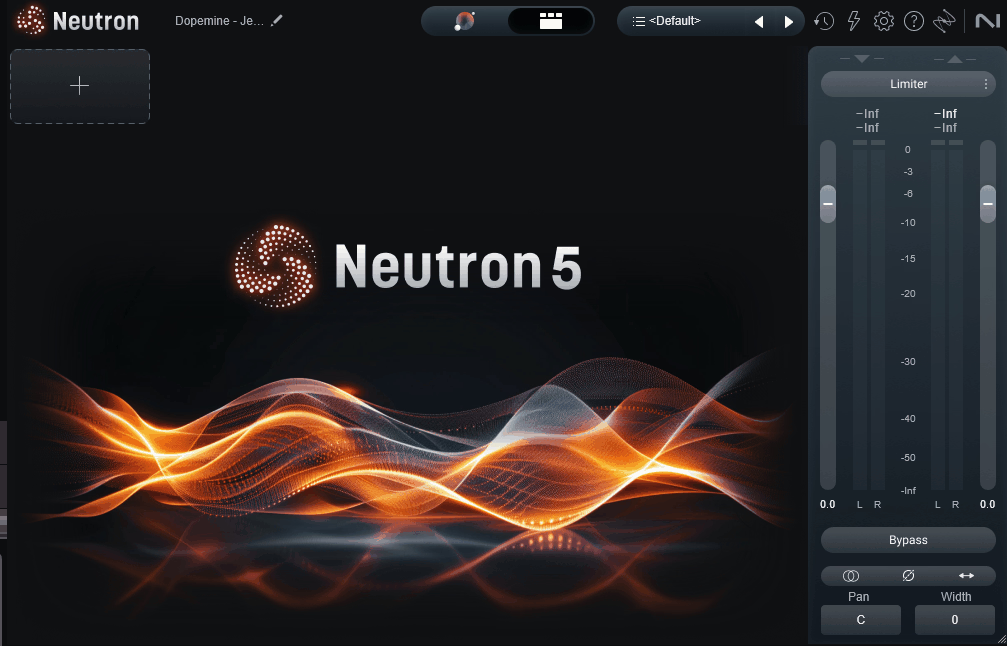
Neutron 5 is iZotope’s mixing channel strip and it’s arguably more ambitious than Ozone in terms of how it works across a session. It includes an EQ with dynamic band modes, a compressor, a transient shaper, a gate, a de-esser, an exciter, and a sculptor module for longer-term tonal shaping.
The Mix Assistant analyzes the relationships between tracks and suggests gain staging and panning adjustments before you start mixing, which is a genuinely useful starting point on complex sessions.
The Visual Mixer shows frequency conflicts between tracks in real time so you can identify masking problems without bouncing and A/B listening repeatedly. I found the Sculptor module particularly interesting, because it applies gentle ongoing tonal correction that is more like an adaptive profile than a static EQ curve.
- iZotope RX 11
RX 11 is in a category of its own and honestly has no equivalent in the Sonible catalog. It’s the industry standard for audio repair and restoration, covering Dialogue Isolation for separating speech from background noise, De-noise for broadband noise reduction, De-click and De-crackle for vinyl and recording artifacts, Music Rebalance for adjusting levels of stems within a mixed file, and dozens of other specialist modules.
If you record in imperfect environments, do any kind of dialogue or podcast work, or handle client material that needs cleanup, RX 11 is effectively non-negotiable. Sonible doesn’t touch this category at all.
Sonible
- smart:EQ 4
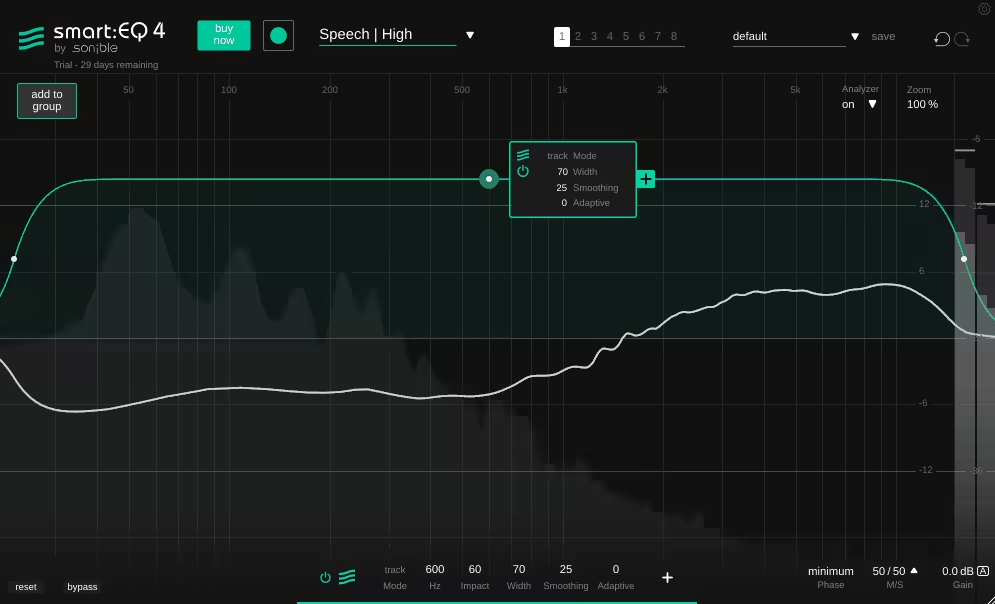
smart:EQ 4 is Sonible’s flagship and genuinely one of the most interesting EQs available right now. It operates with 24 flexible bands supporting global or per-band mid/side processing and switchable minimal and linear phase operation.
Each band can be put in Dynamic Mode with full threshold, ratio, attack, release, and range controls, making it also function as a capable dynamic EQ.
The core differentiator is the smart:filter, which analyzes the audio and builds a custom EQ curve based on genre-specific profiles, source type profiles, or imported reference tracks. The Group Mode lets you link up to ten instances across tracks so you can manage cross-channel spectral relationships from a single window.
I realized fairly quickly that the Group Mode is what makes smart:EQ 4 genuinely different from a standard parametric EQ with AI suggestions tacked on.
The ability to set a hierarchy of instruments and let the plugin automatically duck competing frequencies to let the front elements breathe is a meaningfully different workflow from manually carving notches on individual tracks.
- smart:comp 3
smart:comp 3 is Sonible’s spectro-dynamic compressor and one of the strongest individual plugins they make. Beyond standard compression, it applies spectral compression across 2,000-plus frequency bands so that only frequencies exceeding the threshold receive gain reduction rather than the full signal being compressed uniformly.
The result on dense material like drum buses or full mixes is noticeably more transparent than a conventional broadband compressor at the same amount of gain reduction.
Version 3 added a Compression Matrix that displays a range of compressor settings as a visual grid and lets you smoothly transition between different compression characters.
Group Mode links multiple instances across tracks for batch threshold, ratio, attack, and release adjustments from a single interface, and Zero-latency Mode disables look-ahead for live use and recording sessions.
- smart:limit
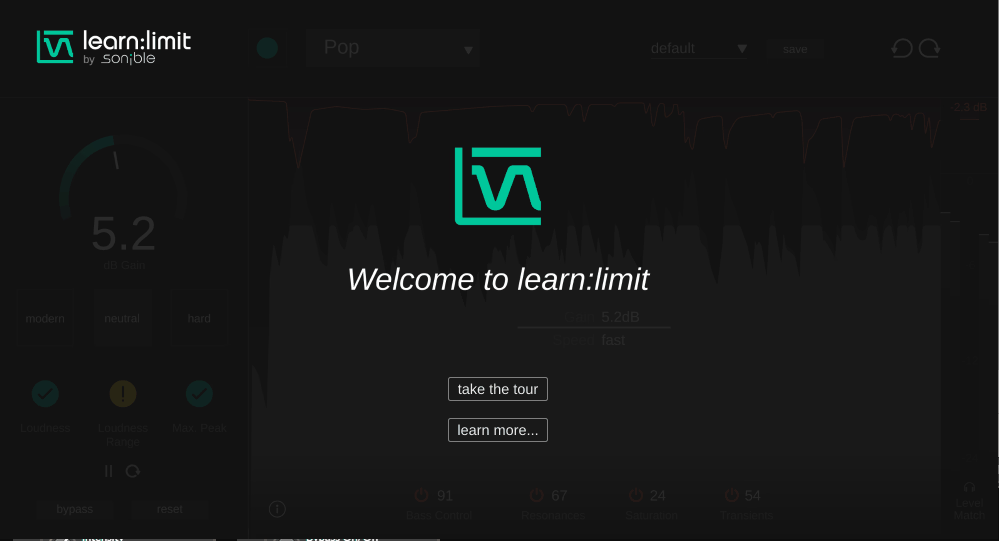
smart:limit is the Sonible limiter and frequently cited as the strongest single plugin they make. It includes a Style control that adjusts between hard and soft limiting behaviors, a Saturation dial for adding density, and a comprehensive Loudness Monitoring section with targets for major streaming platforms, broadcast standards, and more.
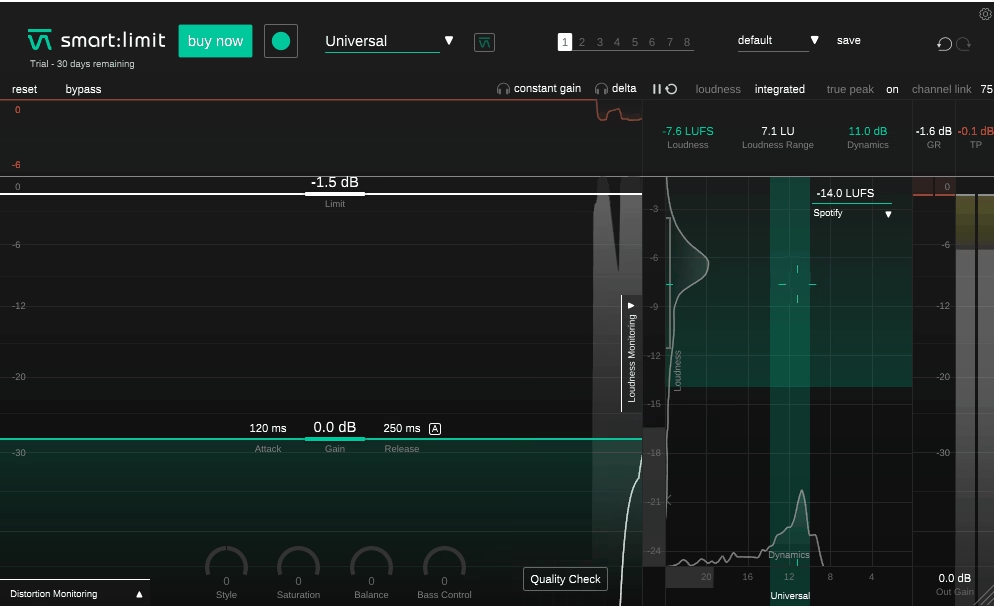
Eight States let you store and compare different settings simultaneously, and a Delta monitoring mode outputs only the signal being removed so you can hear exactly what the limiter is doing.
For me it’s genuinely one of the most transparent and informative limiters available at any price, and the streaming loudness guidance built into the interface makes it practical for producers who don’t want to use a separate metering plugin.
Effects Lineup
Both brands have effects, but the categories they cover are very different and there’s essentially no meaningful overlap beyond the core processing tools.
- iZotope Effects Range
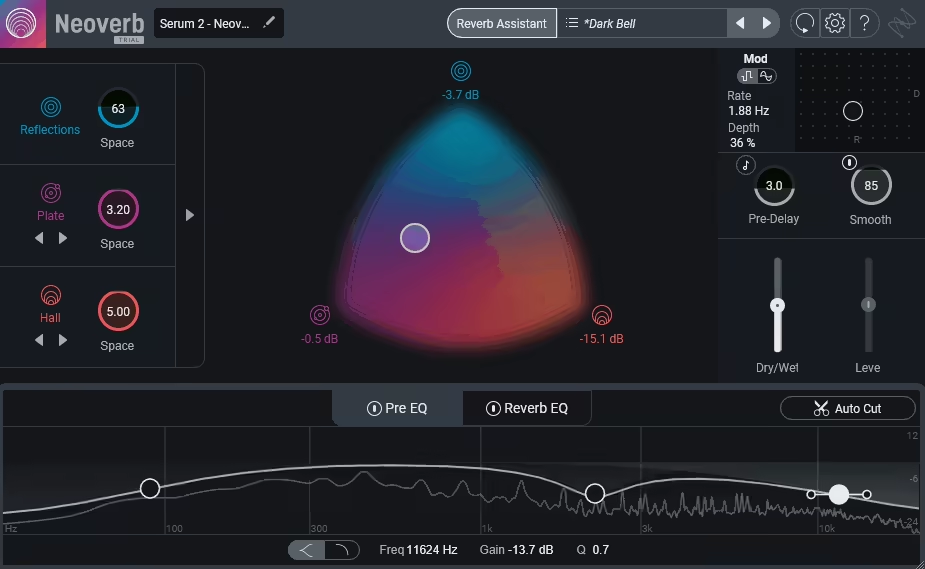
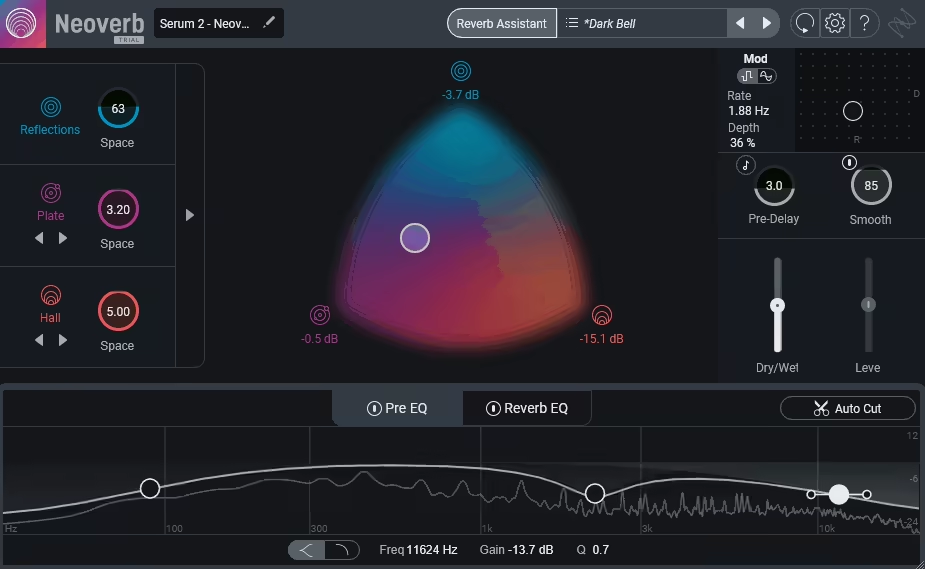
iZotope’s effects range beyond the mixing and mastering tools includes Neoverb, an AI-powered reverb that uses source-aware processing to model spaces without muddying the mix. Trash is a distortion and mangling tool with a wide palette from subtle saturation to extreme audio destruction.
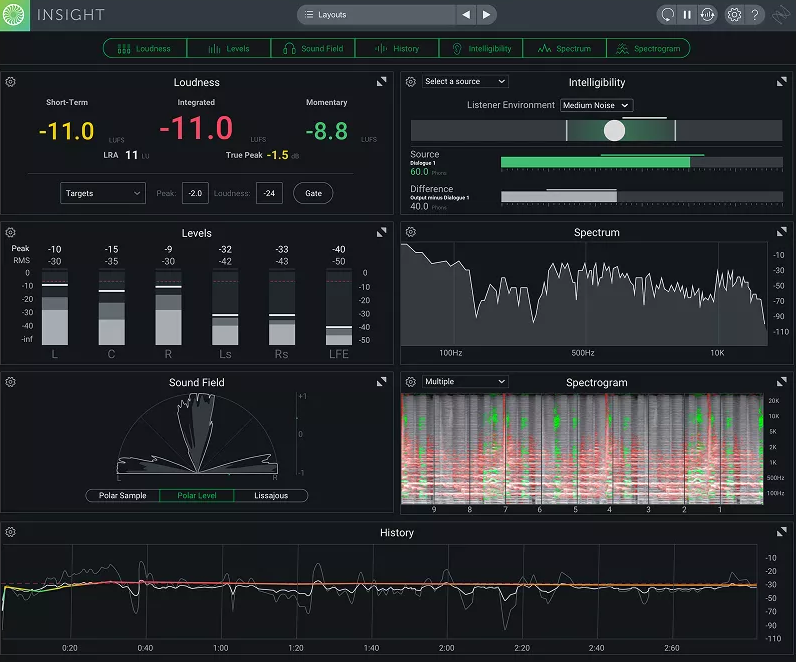
VocalSynth 2 covers vocal synthesis and processing with talkbox, vocoder, choir, and pitch shift modes. Insight 2 is a comprehensive metering and analysis tool covering loudness, spectrum, phase, and spatial monitoring for any format including Dolby Atmos.
Tonal Balance Control 3 enables inter-plugin communication between Ozone and Neutron instances so you can adjust EQ settings on individual tracks while viewing the combined spectral balance of the full mix.
- Sonible Effects Range
Sonible’s effects outside the smart:bundle include proximityEQ+, which uses frequency-selective dereverberation to move audio sources closer in the mix or reduce the room character of recorded material. entropyEQ+ is a frequency-selective transient manipulator that lets you edit the attack and sustain characteristics of specific frequency ranges in isolation.
true:balance and true:level are monitoring and analysis tools for checking mix spectral balance and loudness against reference targets.

These are genuinely useful specialist tools but they’re narrow in scope. Sonible doesn’t cover creative distortion, vocal processing, synthesis, or audio repair in any meaningful way.
Sound Design
Neither brand is primarily a sound design company, but iZotope has meaningfully more to offer in creative territory and it’s worth being specific about that.
- iZotope’s Creative Tools
VocalSynth 2 is the most distinctly creative thing iZotope makes. It covers five synthesis and processing modes: Vocoder, Compuvox, Polyvox for choir effects, Biovox for voice modeling, and Talkbox. Each can be blended and the output processed through stompbox-style effects.
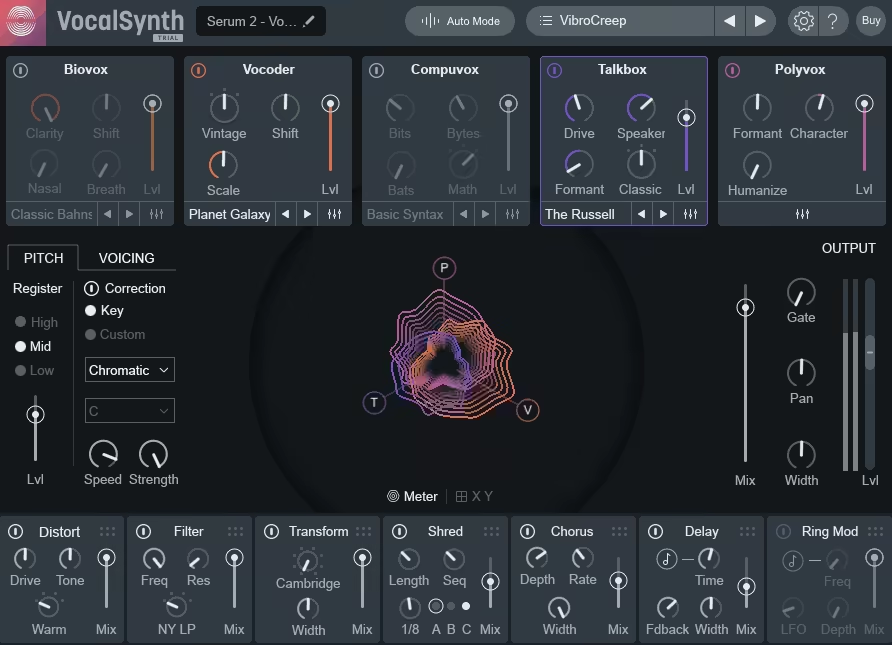
For vocals with a lot of production character or experimental vocal design, it goes well beyond what any standard pitch or harmony plugin does.
Trash is also genuinely useful as a creative tool beyond its use as a mixing saturator. The waveshaper engine supports custom waveshaping curves, the multiband processing lets you apply different distortion types to different frequency ranges simultaneously, and the convolution section can load impulse responses for unusual space characters. I found it useful on synths and drums specifically where standard saturation felt too subtle.
- Sonible’s Focused Approach
Sonible doesn’t do creative sound design. Their catalog is entirely devoted to intelligent mixing, mastering, and analysis tools, and they’ve made a deliberate choice not to expand outside that territory. I appreciate the focus because it means the tools they do make get real attention and development effort.
But if you’re looking for creative processing, synthesis, or anything beyond mixing and mastering assistance, you’ll need to look elsewhere entirely.
Bundle Options
The pricing and packaging structures are fairly different between these two brands, and it affects how you’d realistically buy into either ecosystem.
- iZotope Bundle Tiers
iZotope offers several entry points at different price levels. The Elements Suite is the most accessible, covering RX 11 Elements, Ozone 12 Elements, Nectar 4 Elements, and Neutron 5 Elements in lightweight versions at around $99.
These are real working tools rather than stripped-out demos, and the Elements tier is a practical starting point for producers who don’t need the full feature sets. Music Production Suite is the main mid-tier bundle covering advanced versions of Ozone, Neutron, Nectar, RX, and additional creative tools.
The Everything Bundle covers the complete iZotope catalog including every version at the highest tier. iZotope also offers a subscription option through the Native Instruments platform at a monthly rate, which includes regular updates across the full catalog.
Pricing varies significantly between sale periods, and iZotope runs frequent discounts that can bring the entry cost down considerably. I’d suggest checking before paying full price.
- Sonible Bundle Tiers
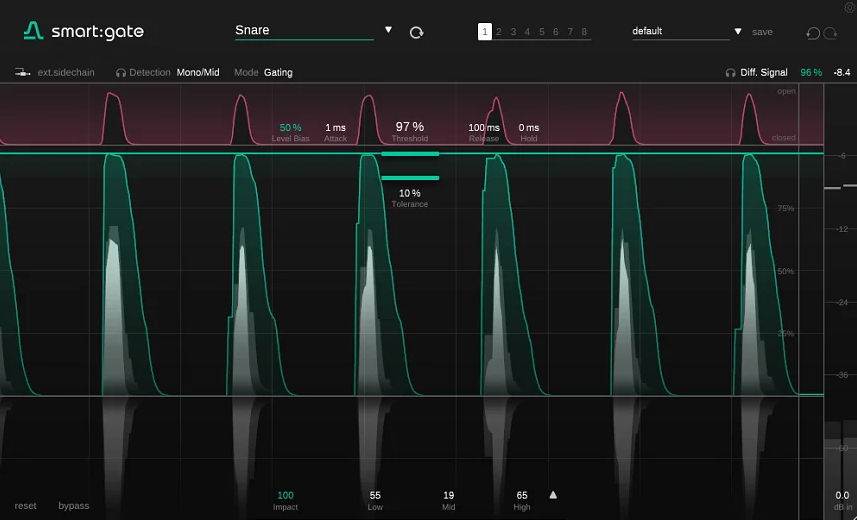
Sonible’s pricing is simpler but higher per-plugin than most competitors. The smart:bundle covers all six smart series plugins: smart:EQ 4, smart:comp 3, smart:limit, smart:reverb 2, smart:deess, and smart:gate at around $279, which represents a significant discount over individual pricing.
The smart:essentials bundle covers the three most-used tools: smart:EQ 4, smart:comp 3, and smart:limit at a lower price. The Studio Bundle covers the full Sonible catalog including the pure and learn series tools and the specialist plugins like proximityEQ+ and entropyEQ+.
Sonible also offers three distinct product tiers: the smart: series for experienced engineers who want AI assistance with full control, the pure: series for content creators and podcasters who want fast results with minimal setup, and the learn: series specifically designed to teach mixing principles through guided AI processing.
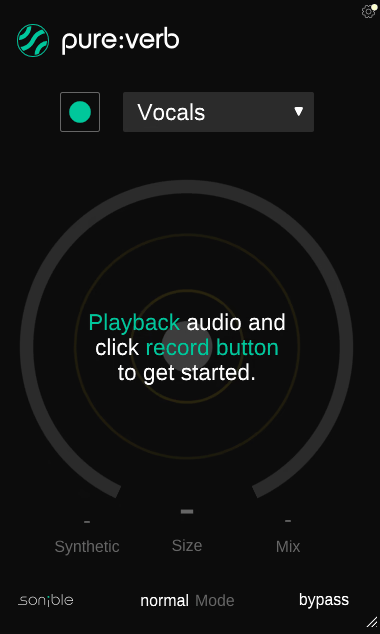
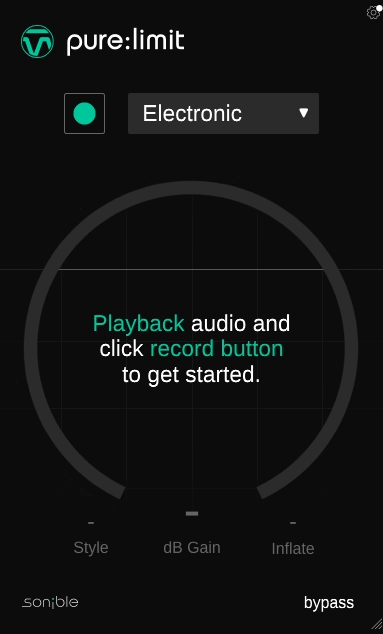
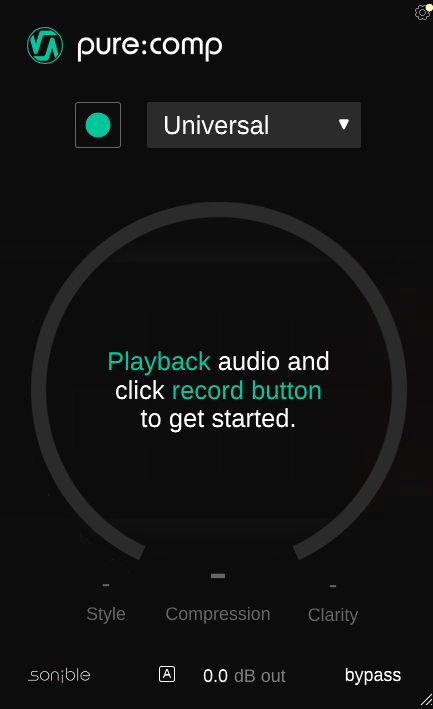
I found the three-tier approach genuinely smart because it acknowledges that different users want fundamentally different things from intelligent audio tools.
Hardware Offerings
This is a short section: neither brand makes hardware. Both are purely software companies. iZotope integrates with NI’s hardware ecosystem through the NI parent company ownership, meaning the plugins work with Kontrol keyboards and Maschine through NKS, but there’s no iZotope-branded hardware and no Sonible hardware of any kind.
Update Policy
The update policies between these two brands are meaningfully different and worth considering before committing.
- iZotope Updates
iZotope’s update policy follows a paid major version model. Moving from Ozone 11 to Ozone 12 or Neutron 4 to Neutron 5 requires an upgrade purchase, with pricing for existing owners. Point updates and bug fixes within a version are free.
The subscription option through Native Instruments includes updates to the current version during the subscription period. I want to note that some users have found the upgrade path confusing when coming from individual plugin purchases versus bundle purchases, so it’s worth checking the upgrade pricing from your specific owned version before a new release comes out.
- Sonible Updates
Sonible’s update policy is more generous within a product cycle. Updates to the same major version of each smart: plugin are typically free, and the jump from smart:comp 2 to smart:comp 3 was a paid upgrade but priced reasonably at around €49.
Sonible offers 30-day free trials on every plugin they make without requiring a credit card, which is a genuinely good policy because you can test any plugin through a full mix session before committing. The trial is fully functional with no watermarking or time-limited session constraints.
Genre Fit
Both brands span multiple genres but each one is more naturally suited to certain workflows than others.
- Where iZotope Fits Best
iZotope is the stronger choice for music production that includes vocal work, for audio repair and post-production, and for mastering with a comprehensive toolset. If you record vocals regularly, Nectar 4 is genuinely one of the most complete dedicated vocal processing plugins available anywhere.
If you work in post-production, dialogue editing, podcast production, or any workflow that involves recorded speech in imperfect environments, RX 11 is the tool and there’s nothing comparable in the Sonible catalog. For mastering, Ozone 12’s range of modules and the Master Assistant workflow covers more ground than Sonible’s mastering-adjacent tools do.
For film and TV composers or game audio producers who need a complete all-in-one toolkit for mixing, mastering, and repair, iZotope’s Music Production Suite gives you more comprehensive coverage than any Sonible bundle.
- Where Sonible Fits Best
Sonible is the stronger choice for mixing engineers and producers who want faster spectral decisions without learning a complex multi-module system. The smart:EQ 4 Group Mode is particularly powerful for producers working with dense electronic arrangements where frequency masking is a constant problem, because the automatic hierarchical processing handles a lot of the carving work that would otherwise take significant manual time.
smart:limit is among the best limiters available for streaming-focused mastering, and the loudness monitoring tools built into it make it practical for independent producers who are mastering their own music for release.
I’d also say Sonible’s tools work especially well in fast-turnaround workflows like podcast production, content creation, and quick demo finishing, because the learn-based analysis generates usable starting points in seconds rather than requiring manual setup.
Brand Ecosystem
The ecosystems behind these two brands are very different in scale, and that affects how they integrate into a full studio setup.
- iZotope Ecosystem
iZotope is now part of the Native Instruments group, which means the plugin lineup integrates into the broader NI ecosystem. The iZotope Account ties into Native ID for unified account management, and all products are installed and managed through the iZotope Product Portal or through Native Instruments’ Native Access.
The Tonal Balance Control 3 is the most interesting ecosystem feature: it enables real-time inter-plugin communication between Ozone and Neutron instances across a session, so you can view the cumulative spectral balance of the full mix and make EQ adjustments to individual tracks without switching windows.
The Relay plugin acts as a lightweight metering and communication node that can be placed on any track to feed data into Neutron’s Visual Mixer and Tonal Balance Control without requiring a full Neutron instance on every channel.
For complex sessions with many tracks, this inter-plugin communication system meaningfully reduces the time spent manually cross-referencing frequency conflicts between channels.
- Sonible Ecosystem
Sonible’s ecosystem is smaller and more self-contained. All products are managed through Sonible’s own authorization system or optionally through iLok.
The key ecosystem feature is the Group Mode that links multiple instances of smart:EQ 4, smart:comp 3, and smart:reverb 2 across tracks. Within a group, instances share data, can be remote-controlled from any single instance, and work together to achieve coherent spectral balance across the full arrangement.
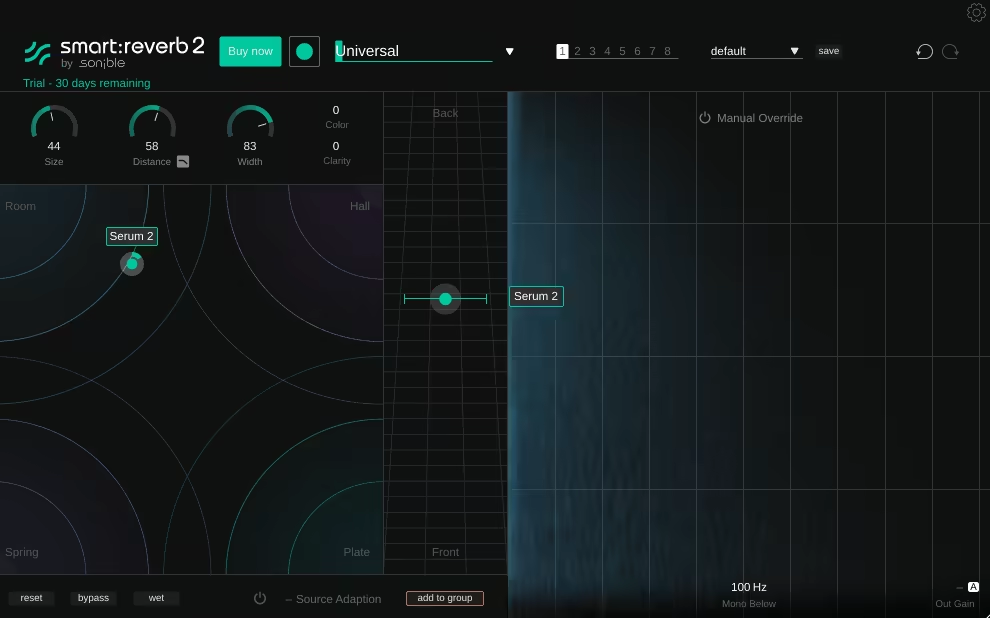
This cross-channel processing capability is the closest thing Sonible has to iZotope’s inter-plugin communication system, and in some ways it’s more intuitive because it lives entirely within each plugin rather than requiring a separate monitoring or control instance. The 30-day fully functional trial on every Sonible plugin also functions as a de facto free tier that lets you evaluate the full product in real sessions before buying.
Learning Curve
How quickly you can get meaningful results from either brand’s tools is genuinely important, and the two brands handle this very differently.
- iZotope’s AI-Assisted Depth
iZotope’s tools are generally well-designed for quick starting points through features like Master Assistant in Ozone and Mix Assistant in Neutron.
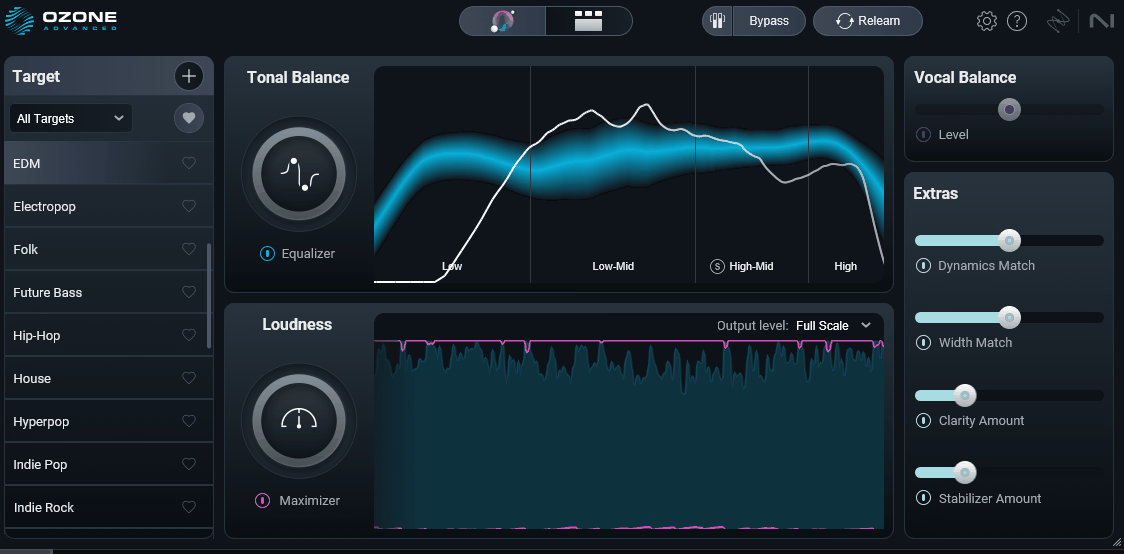
Both analyze your audio and suggest starting settings, which means you can get a functional result without deep parameter knowledge. Where iZotope gets complex is when you move into the full module sets of Ozone or RX. Ozone 12 Advanced has enough modules and settings to keep an experienced mastering engineer busy for hours, and RX 11’s range of specialized repair tools has its own significant learning curve before you understand which tool addresses which problem.
I’d say iZotope is approachable at the entry level but deeply rewards time investment. The more you understand what each module is doing, the more useful the AI suggestions become because you know when to trust them and when to override them.
- Sonible’s Guided Workflow
Sonible’s tools are among the most immediately usable AI plugins available. The learn-based workflow across the smart: series means you select a profile, hit Learn, wait a few seconds for analysis, and get a result that is usually at least a competent starting point. The interface design is clean and the visual feedback is genuinely helpful for understanding what the processing is doing to the signal.
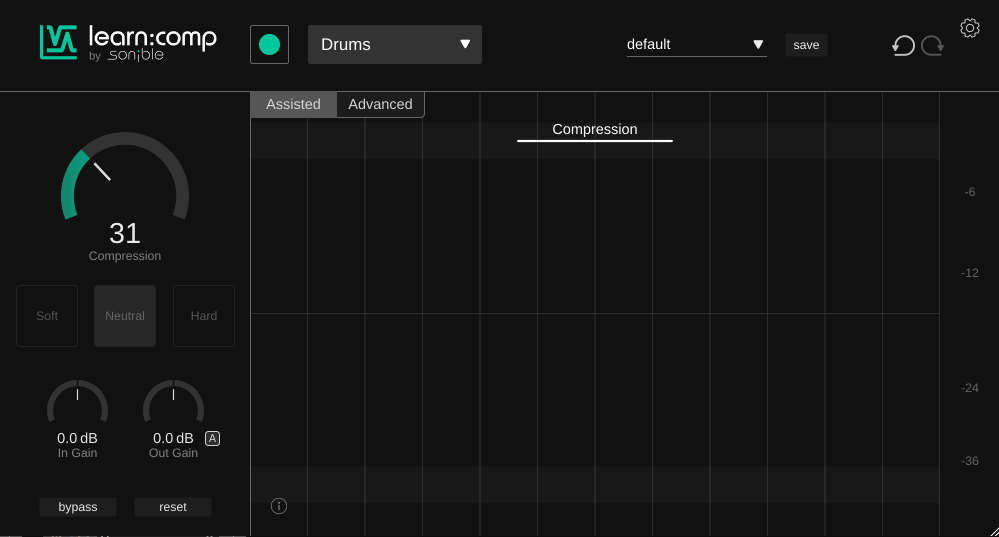
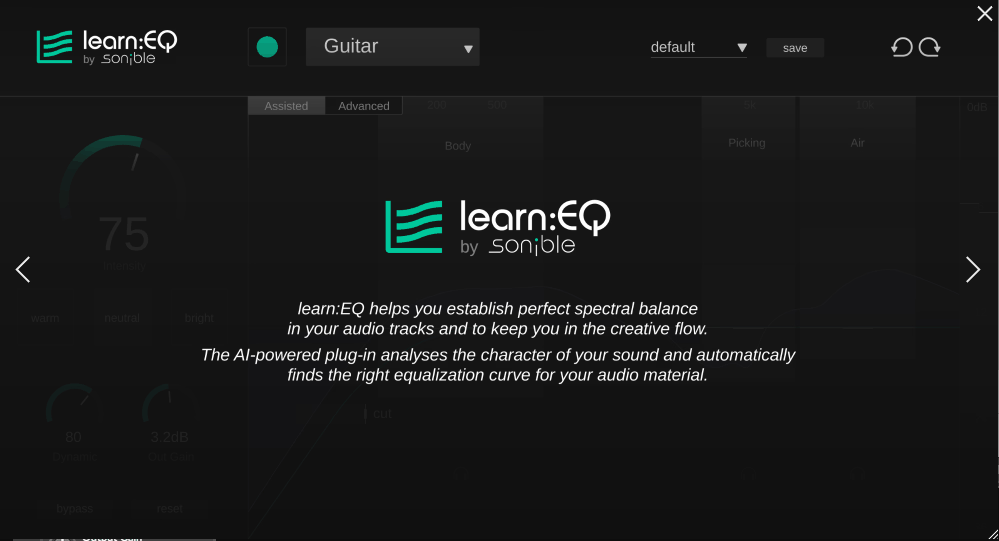
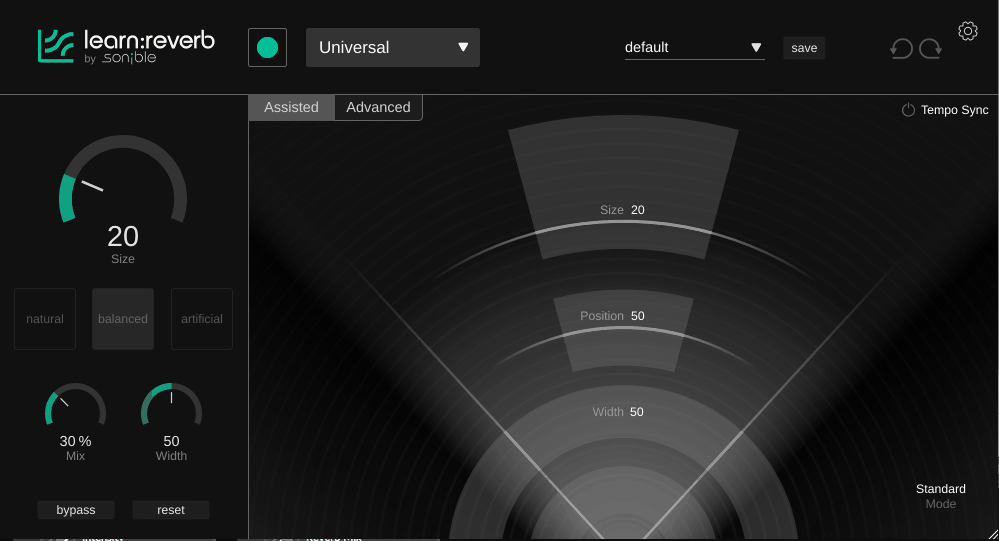
The learn: series takes this even further by being explicitly designed to teach you mixing principles alongside producing results. Each processing decision is explained in plain language so you understand why the plugin is doing what it’s doing.
For producers who are still developing their mixing skills, this educational angle is something iZotope doesn’t offer in the same direct way. I found the three-tier system of pure:, learn:, and smart: quite thoughtful because it acknowledges that different users are at genuinely different places in their mixing journey.
The Bottom Line
I feel like both of these brands get bundled together in conversations about AI mixing tools when they’re actually addressing quite different needs, and I think being clear about that is more useful than calling one the winner.
iZotope is the more complete studio toolkit. RX 11 is irreplaceable for audio repair and post-production, Ozone 12 is one of the most comprehensive mastering environments available, and Nectar 4 covers vocal processing at a level Sonible simply doesn’t touch.
If you need a single brand to handle mixing, mastering, repair, and creative processing across multiple project types, iZotope covers that ground more comprehensively.
Sonible is the more refined specialist for mixing-phase intelligent processing. smart:EQ 4’s Group Mode is genuinely one of the most practical cross-channel EQ tools available for dense arrangements. smart:comp 3‘s spectral compression approach produces more transparent results than broadband compression on complex material.
And smart:limit is a legitimately excellent mastering limiter with outstanding loudness monitoring built in.
If you mix and master your own music as an independent producer and want a focused, high-quality toolkit that gets out of the way quickly, Sonible is the sharper choice for that specific use case. If you handle diverse project types including recorded audio, vocal production, and audio repair, iZotope covers ground that Sonible simply doesn’t reach.
For the best results, I believe the two brands actually complement each other better than they compete. Sonible’s mixing-phase spectral tools combined with iZotope’s mastering and repair capabilities gives you a very strong complete workflow without the overlap being wasteful.

Hello, I’m Viliam, I started this audio plugin focused blog to keep you updated on the latest trends, news and everything plugin related. I’ll put the most emphasis on the topics covering best VST, AU and AAX plugins. If you find some great plugin suggestions for us to include on our site, feel free to let me know, so I can take a look!