
The modern plugin world has finally caught up to what guitarists, bassists, and producers have always known: pedal effects are among the most distinctive, character-defining tools in any signal chain. Whether you’re after the creamy BBD chorus sound of the late 1970s, a tube-driven harmonic overdrive, a Swedish death metal chainsaw distortion, or something more experimental altogether, there’s a plugin out there that nails it without requiring a pedalboard, patch cables, or power supplies.
This list covers twelve of the best pedal effect plugins across chorus, overdrive, fuzz, distortion, harmonizer, preamp, flanger, reverb, and everything in between, from heavy-hitters by Universal Audio all the way down to free gems you can download right now.
1. UAD Brigade Chorus
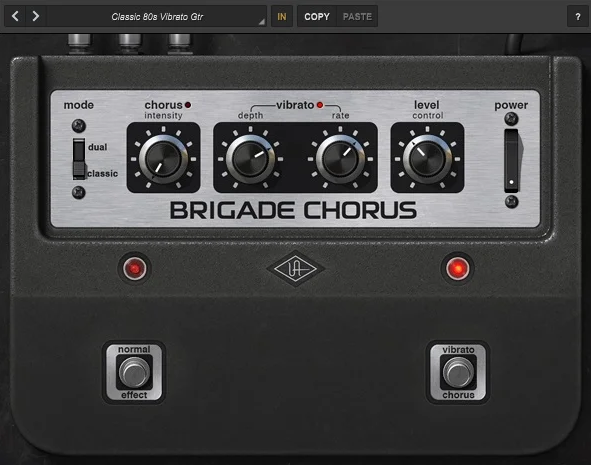
The BOSS CE-1 Chorus Ensemble, introduced in 1976, was the world’s first commercially produced analog chorus pedal, and it made its way onto records by Rush, The Police, The Doobie Brothers, Herbie Hancock, and countless others through the 1970s and 1980s. Brigade Chorus from UAD is UAD’s own emulation of every inch of that circuit, originally developed internally and refined over years before being released natively.
The BBD (bucket-brigade device) chip-based architecture of the original CE-1 produces a chorus with a distinctly thick, chewy, liquid quality that later digital chorus designs never quite replicated, and that character carries through the plugin.
Universal Audio modeled every stage of the BOSS CE-1 circuit path, including the front-end preamp that gave the original pedal its subtle but characteristic harmonic color when driven even slightly. This preamp emulation is switchable, so you can include it for the full vintage character or bypass it for a cleaner chorus signal.
- Classic Mode and Dual Mode:
Classic Mode replicates the original CE-1’s wet-dry configuration, with the dry signal on the left channel and the affected signal on the right, exactly as the hardware operated.
Dual Mode is a plugin-only feature that runs chorus on both left and right channels simultaneously for an enveloping, fully stereo spread that the original hardware couldn’t achieve.
- Vibrato Circuit:
Beyond the chorus, Brigade includes the CE-1’s separate vibrato circuit with its own Depth and Rate controls, producing a genuine pitch-modulation effect with no dry signal mixed in, just pure warble. At slow settings it’s the classic guitar vibrato sound; at fast, deep settings it becomes something genuinely hypnotic.
- Width on Anything:
I want to highlight that Brigade sounds exceptional on sources other than guitar. Adding it to drum overheads at low intensity gives a shimmer without introducing obvious pitch movement. On Fender Rhodes patches it replicates the Herbie Hancock lush electric piano texture.
Vocals get a gentle width that sits better in a mix than most chorus plugins. The analog preamp character means it integrates naturally rather than sitting on top of the signal.
2. Kuassa Efektor Harmonitron
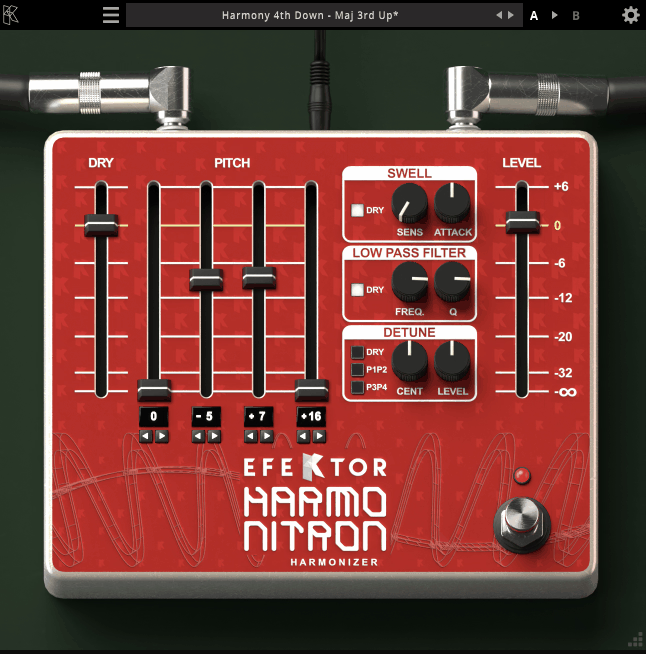
Pitch-shifting harmonizers, the kind that add extra voices tuned to a specific interval above or below the input, have been used by everyone from
The Beatles and Tom Morello to Jack White and death metal vocalists creating those utterly inhuman low sub-octave growls. Efektor Harmonitron from Kuassa takes the concept into quad territory with four independent pitch-shifting engines, each adjustable anywhere from -2 octaves to +2 octaves plus global detune.
- Quad Pitch-Shifting Engines:
Each of the four sliders transposes independently across a range from -24 to +24 semitones (-2 octaves to +2 octaves) with independent volume and pan controls for the dry signal and each pitch voice.
The combination of four simultaneous voices means you can construct full chord harmonies, dense octave stacks, or complex intervals that a single-voice harmonizer would require multiple instances to replicate. The range matches what you’d find in hardware units like the Electro-Harmonix POG2.
- Swell, Detune, and LPF per Voice:
A Swell (slow attack) function builds the harmonized voices gradually rather than triggering them instantly, creating an organ or synth-like quality on guitar notes, the kind of sound that makes a guitar seem to breathe.
Each voice also has a global detune control for plus or minus 50 cents and an adjustable low-pass filter for rolling off high-frequency harshness from the pitch-shifted voices.
- Near-Zero Latency:
Kuassa specifically emphasizes the low-latency, real-time tracking performance of Harmonitron, and professional guitarist Mecko Kaunang, who participated in a Kuassa demo session, confirmed it follows intricate playing “without latency or tracking issues.”
For live use through a DAW, this matters considerably. Most pitch-shifting plugins introduce some delay, and Harmonitron’s tracking speed is one of the reasons guitarists reach for it in actual sessions rather than just for sound design.
- Individual Pan and Volume per Voice:
Each of the four pitch voices has its own level and pan control, as does the dry signal, giving you complete spatial placement of each harmonic layer within the stereo field. This is what allows convincing stereo chord stacking from a mono guitar input.
You can position the lower harmony left, the octave up right, and the dry signal center, which is how studio engineers typically set up harmonizer recordings on hardware.
- Amplifikation 360 Integration:
Harmonitron works as a module within Kuassa’s Amplifikation 360 ecosystem, Kuassa’s modular guitar signal chain playground.
Users who own multiple Kuassa plugins can load Harmonitron directly into A360 chains alongside their amp simulations, other Efektor pedals, and cab simulations without routing through multiple DAW tracks. It’s available in VST, VST3, AU, AAX, and A360 Module formats, and also as a Reason Rack Extension.
- Price:
At $39 regular price, Harmonitron sits in a remarkably accessible tier for what it offers. Gearspace reviewers specifically mentioned it’s priced such that buying it is a no-brainer for anyone interested in harmonizing.
3. Audio Tech Hub Proton VST
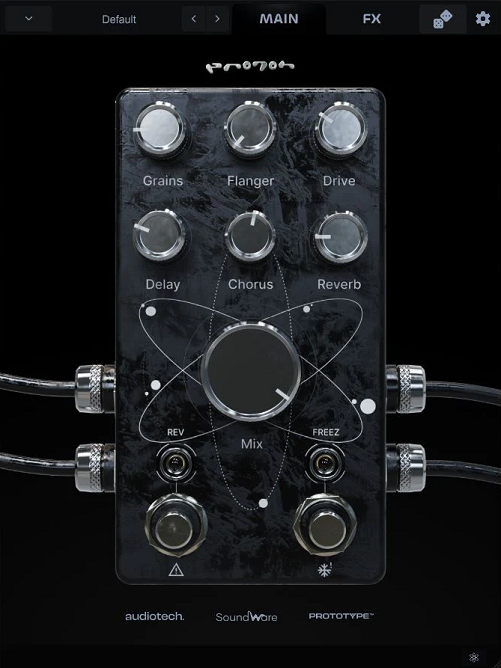
Image Credit: Audio Tech Hub
Proton from Audio Tech Hub is a multi-FX guitar pedal plugin that takes a broad, experimental approach rather than emulating one specific stompbox. The inspiration points are modern ambient and granular effect units, think Meris Microcosm, Mood MKII, and Fable, and Proton attempts to bring those textures to a VST environment at a fraction of the hardware cost.
With 75+ hand-crafted presets and a one-click randomization button, it’s designed as much for happy accidents as for precision sound design.
- Nine Effect Modules:
Proton packs Granular, Flanger, Drive, Delay, Chorus, Reverb, Reverse, Freeze, and Modulated Filter into a single interface.
The combination of standard effects (chorus, delay, reverb) with experimental ones (granular, reverse, freeze) in one DSP plugin means you can create sound design textures that would normally require chaining multiple plugins, all without extra CPU overhead.
- One-Click Randomization:
The single-click randomization system generates entirely new effect combinations across all active modules simultaneously, making Proton one of the more genuinely playful plugins on this list.
- Microcosm and Mood MKII-Inspired Sound:
Proton’s DSP is designed to emulate the lush granular reverbs, warm analog filters, frozen reversed atmospheres, and chaotic distortions associated with boutique ambient pedals. The result isn’t a strict clone of any hardware but rather an approximation of that class of sound. At the price point Proton occupies, getting close to a Microcosm texture without the hardware cost is genuinely useful.
4. Kuassa Efektor Bass Driver Preamp
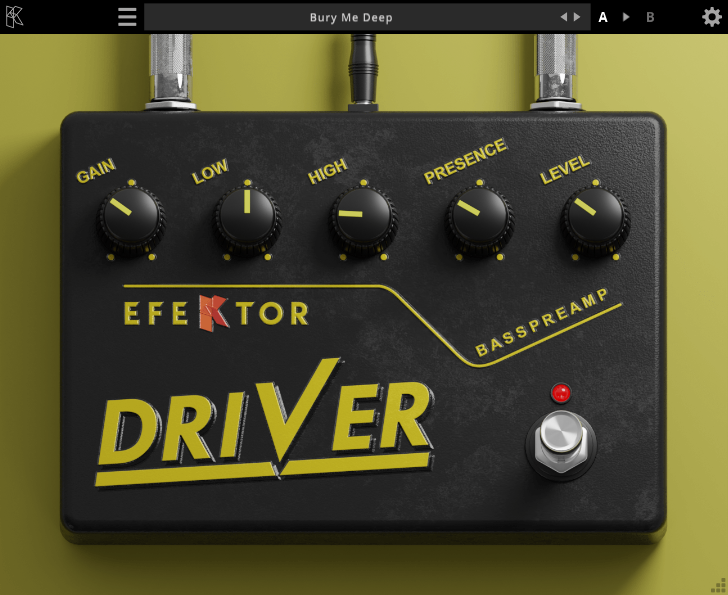
Getting bass guitar to sit well in a mix while still having character is a problem that producers have been solving with hardware DI preamp units for decades.
The Tech 21 Sansamp Bass Driver DI is probably the most referenced unit in that conversation, and Efektor Bass Driver Preamp from Kuassa is their take on that extended-range tonal shaping preamp concept, part of the second-generation Efektor bass series alongside the Bass Cruncher and Bass Smasher. The Gearspace announcement thread from launch noted that these pedals “retain the original character of the bass while adding upper harmonic content,” which is precisely the difficult engineering challenge that makes or breaks a bass preamp.
- Extended Tonal Shaping Range:
Kuassa describes the Bass Driver as offering an “extended range of tonal shaping capabilities” derived from modeling a renowned bass DI unit (widely understood to reference a Sansamp Bass Driver). This means controls that span from genuine tube-like warmth and vintage roundness through to aggressive grit, without losing the fundamental low-frequency mass that makes a bass track work in a mix. I found the slap-bass enhancement particularly musical.
- Third-Generation Tube FX Engine:
The plugin runs Kuassa’s third-generation tube modeling technology, which the company describes as the same engine used in their premium Amplifikation guitar amp simulations. The tube model is what separates the Bass Driver’s character from a simple EQ and saturation plugin. It responds to input levels and playing dynamics in a way that adds perceived richness without the static feeling of digitally added harmonics.
- Up to 8x Oversampling and Dry/Wet:
The Bass Driver includes up to 8x oversampling to reduce aliasing when the drive is pushed hard, along with a Dry/Wet mix knob for parallel blending. On bass, parallel processing is often more musical than full wet, since you preserve the clean low end and fundamental while layering the character of the driven preamp on top. Pluginfox specifically highlighted the resizable window and 8x oversampling as modern conveniences that set it above older bass preamp plugins.
- Amplifikation 360 Module:
Like all Kuassa Efektor plugins, the Bass Driver is available as an A360 Module for integration into the Amplifikation 360 chain environment. You can stack it before or after a bass amp simulation, between EQ pedals, and alongside other bass Efektor units in a visual signal chain without any additional DAW routing.
5. Audiority Heavy Pedal
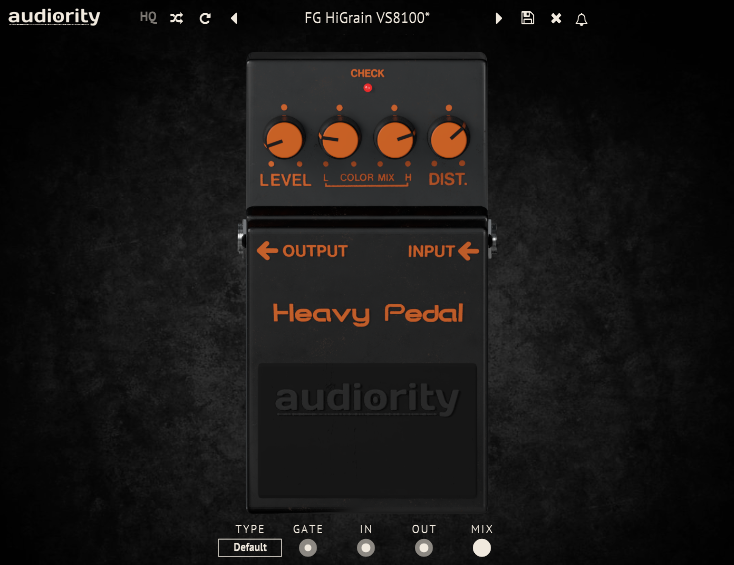
The BOSS HM-2 Heavy Metal pedal, manufactured in Japan from the mid-1980s, achieved its most notorious cult status through Scandinavian death metal.
Swedish death metal bands specifically, Entombed, Dismember, Grave, used the HM-2 with both tone controls cranked to maximum, running into overdriven amplifiers, to produce the specific buzzsaw distortion quality that became the defining sound of the Stockholm scene.
Audiority’s Heavy Pedal (currently mkII) is an analog-modeled simulation of a pristine 1984 Japanese unit that Audiority sourced specifically for the project, and it’s the most widely recommended HM-2 plugin emulation in forum discussions.
- Nine Circuit Models:
Heavy Pedal goes well beyond replicating a single version of the HM-2. It includes nine different circuit configurations: the Default original circuit, 808 Mod (brighter with less distortion), MIJ Japan (with hardware-matched impulse response at noon EQ), Swede! (EQ locked at maximum for the classic death metal chainsaw with impulse response), Wampler Mod (from Brian Wampler’s modification book), ZED (warmer and scooped), and three MKII variations. Each has genuinely different tonal characteristics that span from the light boost end of the Drive control all the way to extreme fuzz-adjacent saturation.
- Independent Low and High Tone Controls:
The original HM-2 had separate Low and High band active EQ controls in the post-distortion stage, which is the key to its particular harmonic character. Heavy Pedal faithfully replicates both independent tone controls as post-distortion shelving stages, plus a Level control for output volume. At their extreme settings these are what produce the famous Swedish chainsaw. Other distortion plugins with simpler one-knob tone sections can’t replicate this behavior.
- HQ Oversampling and Noise Gate:
An HQ button enables oversampling to reduce aliasing when the signal saturates heavily, which matters considerably at high Drive settings where the waveform is severely clipped. A built-in noise gate with adjustable threshold cleans up the inherent noise floor that comes with high-gain distortion, keeping the silence between notes quiet rather than hissing. Pre and post gain controls along with a dry/wet mix complete the toolkit.
- Boost Mode:
At minimum Drive settings, Heavy Pedal functions as a clean boost. The Level control sends a level-boosted, lightly colored signal into whatever comes after it in the chain. This is a common real-world technique with the HM-2 hardware, using it before another distortion pedal or amp input stage for additional gain staging without the characteristic heavy distortion.
- Resizable Interface:
The interface is fully resizable in the standard Audiority fashion, which matters practically in modern large-display DAW layouts. A Randomize button and Reset function are included for experimental sound design use, and full automation support means the Drive, Tone, and circuit type can all be automated for dynamic changes within arrangements.
6. Kuassa Efektor Gainia TD
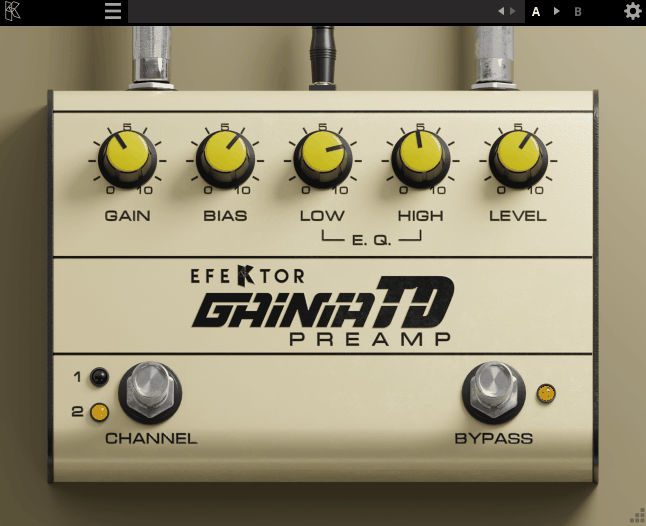
Prog rock guitarists of the 1980s had a specific piece of gear that defined their clean-to-overdrive transition: a tube driver pedal that used an actual 12AX7 vacuum tube to produce a warm, dynamic, harmonically rich overdrive.
Efektor Gainia TD from Kuassa is modeled after that exact class of 1980s tube driver hardware using Kuassa’s third-generation tube modeling technology.
The Gainia TD features two channels, a clean channel and a drive channel, plus the Bias control for adjusting the bias voltage of the virtual tube. Bias voltage affects where the tube’s operating point sits, and changing it alters the asymmetry and harmonic content of the saturation in ways that no simple drive or tone control can replicate.
Lower bias produces a more open, cleaner response; higher bias pushes the tube into more compressed, harmonically dense territory.
- Drive, Low, and High EQ:
The plugin replicates the Drive, Low, and High tone controls of the original hardware’s interface, plus an output Volume. The Low and High controls function as active tone stages that shape the harmonic content of the overdriven signal rather than simply cutting frequencies from the output, which is why the Gainia TD sounds three-dimensional even at heavy drive settings rather than harsh and flat.
- Third-Gen Tube Engine with 8x Oversampling:
Kuassa’s third-generation tube modeling is the same engine found in their full Amplifikation guitar amp simulations, which routinely win comparisons against much more expensive amp sim suites. Combined with up to 8x oversampling and the dry/wet blend knob shared by all second-generation Efektor pedals, the Gainia TD can be pushed hard without introducing the digitally harsh aliasing artifacts that betray inferior tube emulations.
- Free Pillar Power Amp:
Every purchase of any Gainia series pedal comes with a free Pillar Power Amp, a power amplifier simulator with a cabinet simulation toggle. Pillar can be run after the Gainia TD to complete a full amp-and-cab chain without additional plugins, or its cabinet sim can be disabled for use with your own IR loader. It’s a meaningful addition that makes the Gainia TD a complete guitar tone solution rather than just a pedal plugin.
7. HoneyComb Bass Overdrive

HoneyComb Bass OD from Canvas Audio arrived in 2025 as that company’s launch freebie. The developer, Sam Guaiana, explained on KVR that the plugin started as a replacement for the TSE BOD but evolved after extensive experimentation with multiple hardware Sansamp units including the original Sansamp Bass Overdrive DI, the programmable version, and the Tech 21 Landmark 300.
The result is not a clone of any single unit but rather an original design that consolidates the best qualities of those units while adding modern quality-of-life features. Production Expert described it as giving “immediate low-end weight and character” while working equally well on DI bass, synth bass, and layered low-frequency elements.
- Dynamic, Responsive Overdrive:
The core overdrive engine produces thick, buzzy distortion that responds to playing dynamics, softening for gentle picking and hardening when you hit the strings harder. One guy said that “can go from soft warmth to growly saturation,” which is exactly the behavior you want from a bass overdrive. You’re not locked into one character; you’re playing the plugin like an instrument, and that’s what distinguishes a good bass overdrive from a distortion unit simply stuck on a bass track.
- One-Knob Compression and Cab Sim Toggle:
A single-knob compression circuit lets you control unwanted transient dynamics without needing a separate compressor in the chain. An on/off toggle for a cab simulation EQ instantly reshapes the frequency response to a more DI-through-speaker-cabinet character. These two features together replace what would typically be two additional plugins in a bass processing chain, keeping the workflow clean and the CPU light.
- Four-Band EQ with Blend:
The four-band EQ section covers Low, Mid, High, and Presence, giving you shelf-style control over the deep lows and highs alongside two midrange bands for carving character or cleaning up muddiness.
The Blend control enables parallel mixing so you can preserve the clean low-end fundamental while adding only as much overdrive character as the track needs, a genuinely essential feature for bass, since full-wet overdrive almost always destroys the low-end anchor in a mix.
- 4x Oversampling and Input/Output Gain:
4x oversampling reduces aliasing at high drive settings, and separate Input and Output gain controls give you precise gain staging flexibility.
- Sansamp DI Heritage:
The plugin’s design lineage traces directly back to the original Sansamp Bass Overdrive DI in terms of character and intent. Where the Sansamp uses analog circuitry to approximate the sound of a speaker cabinet and tube amplifier, Honeycomb uses digital modeling to approximate that same sonic result with added modern flexibility.
- Free for Newsletter Subscribers:
HoneyComb Bass OD is free for Canvas Audio newsletter subscribers, regularly priced at $49. This means the best free bass pedal plugin you can get right now is also one of the most technically complete. It’s not free because it’s basic; it’s free because Canvas used it as a launch statement.
8. Kuassa Efektor OD3603

Back before boutique overdrive pedals became an industry unto themselves, the original concept was simple: push the amplifier input harder than it was designed for, let the preamp tubes clip naturally, and the result was a crunchy, sustaining, musically reactive saturation that responded to playing dynamics in exactly the right way.
Efektor OD3603 from Kuassa offers five different models of that concept in one plugin, each modeled from a different approach to overdrive, from British amp simulation to custom boutique circuits to the classic screamer-style topology. Kuassa’s history of extensive pedal research (they originally modeled 30 different overdrive, distortion, and fuzz units before distilling them into the Efektor series) gives these models credibility beyond simple approximation.
- Five Overdrive Models:
The five models cover substantially different sonic ground. Blues Overdrive imitates the overdriven British amplifier sound: open, warm, and harmonically rich. Boutique Overdrive provides a custom, fat, and dynamic character. Mad Overdrive is thick and intense while still retaining playing dynamics. Modern Overdrive pushes into dense distortion territory for more aggressive applications. Pro Overdrive is the warm, tight, classic screamer, the Ibanez TS-style topology with that characteristic mid-forward push. Each has genuinely different feel and placement in a mix.
- Independent Gain, Tone, and Output:
All five modes share the same three-knob control layout: independent Gain, Tone, and Output Volume controls. The simplicity is deliberate. Kuassa streamlined the complex parameter sets of the original hardware units into these three variables, which means you spend less time setting up and more time playing. This interface philosophy is characteristic of the entire first-generation Efektor series.
- Up to 8x Oversampling and Dry/Wet:
Up to 8x oversampling reduces aliasing artifacts at high Gain settings, and a Dry/Wet mix control enables parallel blending of the overdriven signal with the clean input, useful for adding just a layer of overdrive character without fully committing to the distorted tone. This is particularly effective on synth bass, electric piano, and any keyboard source where you want warmth without grit dominating the fundamental.
- A/B Comparison:
The A/B button stores and instantly switches between two preset settings, making it practical to compare different overdrive model settings or Gain levels mid-session without clicking through menus. It’s a small workflow feature that matters significantly in live and recording contexts where decision-making speed is a priority.
9. Producer Sources SHINE (Free)
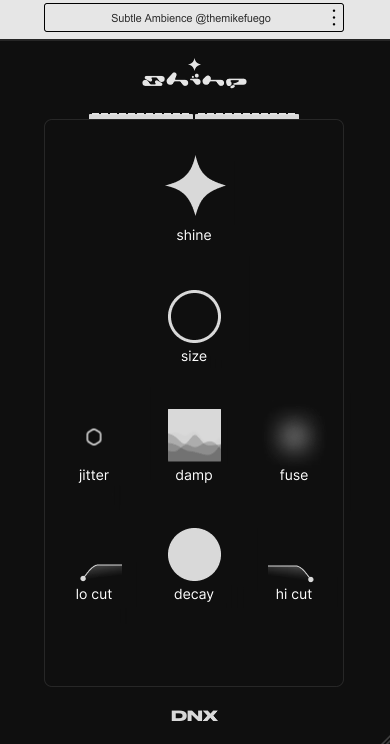
SHINE from DNX (released on Producer Sources) is a free reverb pedal plugin that sits in genuinely creative territory. It’s not a go-to mix reverb for making instruments sit in a room, but rather a sound design reverb that excels at generating unique textures from sparse inputs.
Beyond the standard reverb parameters (Size, Damp, Decay), SHINE includes the more unusual Shine, Jitter, and Fuse controls that set it apart from conventional reverbs. Shine controls the brightness of the reverb tail, Jitter introduces pitch movement and texture into the reflections, and Fuse affects the density and character of the reverb saturation. Gearnews specifically highlighted these less-common controls as what makes the plugin distinctive.
- Five Professionally Made Presets:
The plugin ships with five expertly crafted presets covering a range of reverb characters from subtle to dramatic, giving you immediate starting points without needing to understand what each control does before getting a useful result.
- Pedal-Form-Factor Design:
SHINE is designed and presented in the visual aesthetic of a guitar pedal plugin, placing it conceptually alongside other stompbox-style effects in a DAW signal chain. For producers building guitar-to-DAW chains or any producer who prefers the pedal interface metaphor for creative effects processing, it integrates naturally into that workflow aesthetic.
- VST and AU, Free:
The plugin is available in VST2, VST3, and AU formats for macOS and Windows, completely free via the Producer Sources platform. There’s no registration gimmick or email-capture requirement that delivers a degraded experience. It’s simply a free, functional reverb plugin with a genuinely distinctive tonal character.
- DNX Background:
DNX (Do Not Cross) is the same developer who made Proton, the paid multi-FX guitar pedal plugin on this list. Knowing that their paid plugin is well-regarded gives SHINE additional credibility as a quality release rather than a throwaway promotional freebie.
10. Kuassa Efektor Vibracula
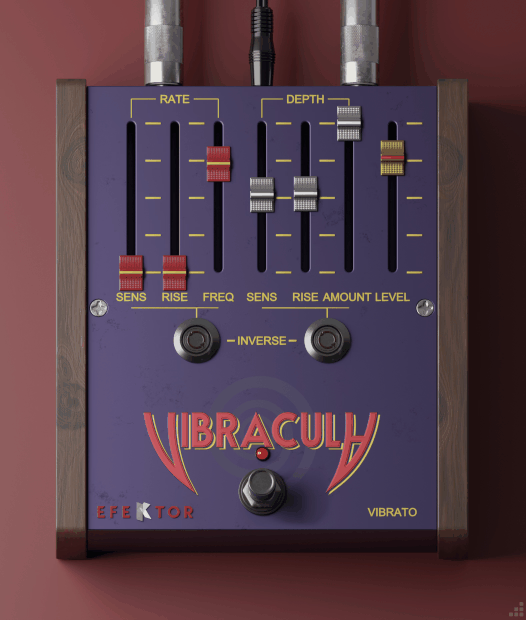
Pure vibrato, pitch modulation with no dry signal blend, works the way a guitar’s vibrato arm works rather than a tremolo pedal, and it is rarer in plugin form than you might expect, largely because most modulation plugins blur the line between vibrato and chorus. Efektor Vibracula from Kuassa isolates the pure pitch vibrato character with controls for Depth, Speed, a Waveform Shape transformation, and an adjustable Center Ringing Frequency that sets where the pitch oscillation centers.
- Gentle to Insane Vibrato Range:
Depth and Rate controls span from subtle, barely perceptible pitch movement to extreme, seasick pitch oscillation, covering everything from the gentle classical guitarist’s finger vibrato aesthetic to the wide, dramatic vibrato of slide guitar players. This range makes Vibracula equally useful on lead guitar, synth pads, vocal processing, and any instrument where pitch movement adds expression.
- Auto Vibrato Mode:
The Auto Vibrato simulates the behavior of a guitar’s physical vibrato arm, meaning the pitch movement has a specific shape, response curve, and character that differs from a simple LFO-driven pitch mod. For guitarists who want the vibrato arm sound without the hardware modification or technique requirements, this mode captures it convincingly.
- Stereo Link and Waveform Shape:
Stereo mode with an L/R channel link option lets you apply a unified vibrato across both channels or decouple them for independent modulation per side.
A Waveform Shape Transformation control adjusts how the LFO waveform behaves, moving from smooth sinusoidal pitch movement toward more angular, asymmetric shapes for different vibrational characters. Bound Plugins specifically listed waveform shape transformation as a key distinguishing feature.
- Center Ringing Frequency:
An adjustable Center Ringing Frequency sets the tonal center around which the pitch oscillation occurs, which is a relatively unusual control that gives you the ability to emphasize or de-emphasize certain pitch intervals within the vibrato modulation. This is the kind of detail that separates a purpose-built vibrato plugin from a simple pitch LFO.
11. MMS The Fuzz
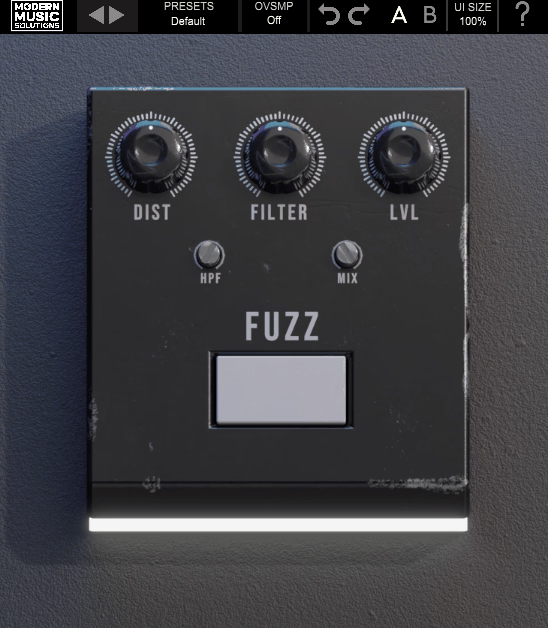
Modern Metal Songwriter (MMS) is a small developer focused on tools for heavy music production, and The Fuzz is their free fuzz pedal plugin, available as a VST3, AU, and AAX plugin for macOS and Windows including native Apple Silicon.
The High-Pass Filter knob cleans out low-frequency mud from the distorted signal, which is a feature that’s rarer in fuzz plugins than it should be. At low tunings, fuzz pedals accumulate a woolly, undefined low-end mass that obscures definition.
- Presets for Multiple Use Cases:
MMS ships The Fuzz with presets covering vocal exciters, bass distortion, and blown-out fuzz guitar sounds, acknowledging from the start that the plugin isn’t limited to one instrument. The developer’s own blog explains it can be used in genres from blues and psychedelic rock through to modern metal, and the preset range reflects that versatility.
12. Kuassa Efektor FL3606 Flanger

Flanger originated as a physical manipulation of tape machines: two copies of the same recording, one slowed by touching the tape reel’s flange, creating the characteristic swooshing, jet-engine sound. Efektor FL3606 from Kuassa captures that history in three distinct models, the vintage Royal Flanger character, the extreme Jet Flanger supersonic howl, and the darker Electro Flanger that crosses into chorus territory.
- Three Flanger Models:
Royal Flanger delivers the classic vintage tape-manipulation character, smooth and musical, the kind of thing you’d hear on late-1970s records. Jet Flanger produces the extreme, aggressive, industrial howl that’s more dramatic and spatially wide. Electro Flanger is darker and more chorus-adjacent, with a swirling, trippy quality that sits between a flanger and a chorus in character. Each model covers genuinely different ground and I use all three for different material.
- Rate, Depth, Delay, and Feedback Controls:
All three modes give you independent control over Rate, Depth, Delay, and Feedback, allowing you to dial the speed of the modulation sweep, the intensity of the flange effect, the timing offset between the modulated and dry signals, and the amount of regeneration in the feedback path.

Hello, I’m Viliam, I started this audio plugin focused blog to keep you updated on the latest trends, news and everything plugin related. I’ll put the most emphasis on the topics covering best VST, AU and AAX plugins. If you find some great plugin suggestions for us to include on our site, feel free to let me know, so I can take a look!