
There’s a specific kind of rabbit hole that opens up the moment you start taking guitar amp plugins seriously. You tell yourself you just need one solid amp sim to cover recording sessions, and six months later you’ve got four of them installed and you’re still watching comparison videos at 2am trying to decide if the difference you’re hearing is real or just psychological. I get it.
The category has genuinely exploded in quality over the past few years, to the point where the gap between a great amp sim and a mic’d cabinet is smaller than a lot of players want to admit publicly.
Whether you’re a guitarist looking for a complete in-the-box rig, a producer who needs convincing guitar tones without booking a studio, or just someone chasing the sound of specific hardware you’ll never actually own, this list covers the full range. Here are 11 that are worth your attention.
1. IK Multimedia AmpliTube 5
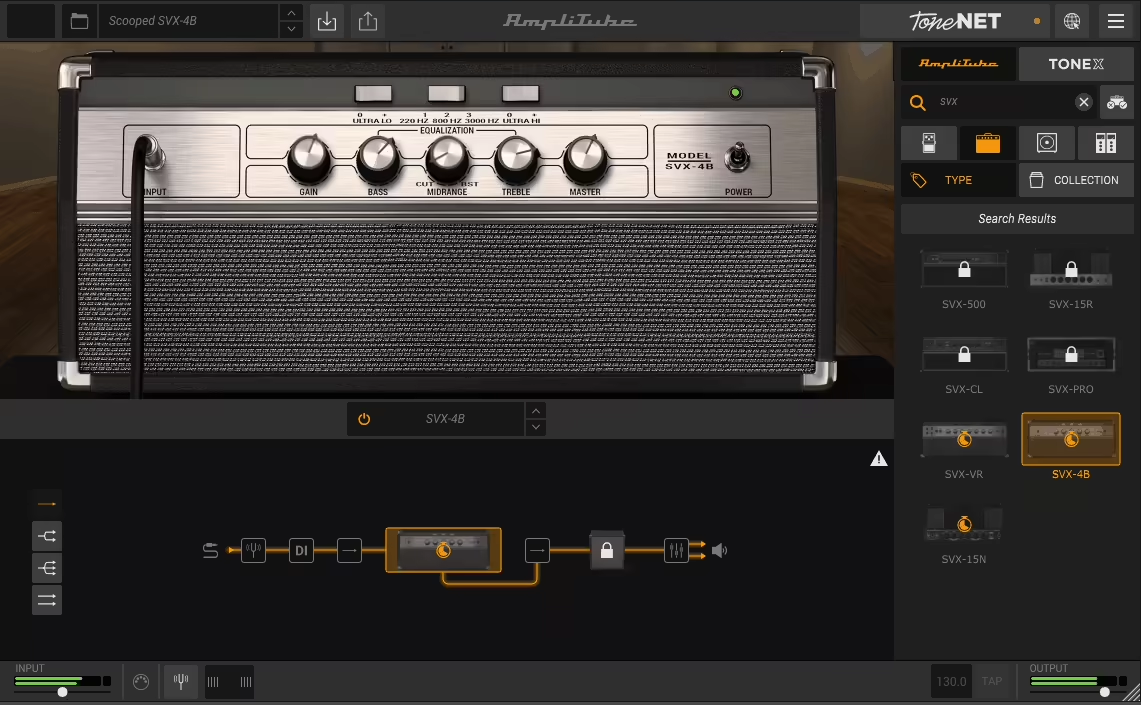
AmpliTube 5 has been around long enough to have earned its reputation the old-fashioned way, by sounding genuinely good across a wider range of source material than almost anything else in the category. I think what sets it apart from most amp sims is the sheer breadth of what it covers.
The MAX version gives you over 400 modeled pieces of gear, including officially licensed collections from Fender, MESA/Boogie, Orange, and several artist collections, making it the closest thing to an actual amp museum you can run in a DAW.
- Dynamic Interaction Modeling (DIM)
The core technology behind version 5’s significant sonic upgrade is Dynamic Interaction Modeling, which accounts for how components within an amp interact with each other rather than modeling each stage in isolation.
I found this makes the amps feel more reactive to your playing dynamics, with the input stage, signal path interconnections, and power amp all contributing to a response that tracks your attack and velocity in a way that earlier versions didn’t quite achieve.
- VIR Technology
The cabinet section received what I believe is the most significant upgrade in version 5. Volumetric Impulse Response technology uses 600 IRs per speaker, and you can position a mic in 3D space and have it accurately pick up the interactions between neighboring speakers, the cabinet walls, and the floor. IK reportedly recorded 143,000 IRs for 100 cabinets, and the results are a genuinely different listening experience from conventional static IR loading.
- Drag-and-Drop Signal Chain
The interface redesign in version 5 switched to a split-screen drag-and-drop layout with the gear above and the routing chain below, which makes building complex signal paths significantly more intuitive than previous versions. You can route signals in parallel, create wet/dry blends, and build setups that would be nearly impossible to recreate in real life.
- Eight-Track DAW and Custom Shop:
The standalone version includes an eight-track DAW component for quick capture and layering without opening a full session, and the Custom Shop system means you can start with the free CS version and unlock exactly the gear you want rather than paying for a full package. I’d say this flexibility in entry point makes AmpliTube 5 one of the most accessible guitar sim ecosystems available.
Get the Free Plugin Starter Kit
The genuinely useful free DAWs and plugins worth installing. No filler. Straight to your inbox.
2. Archetype: John Mayer X
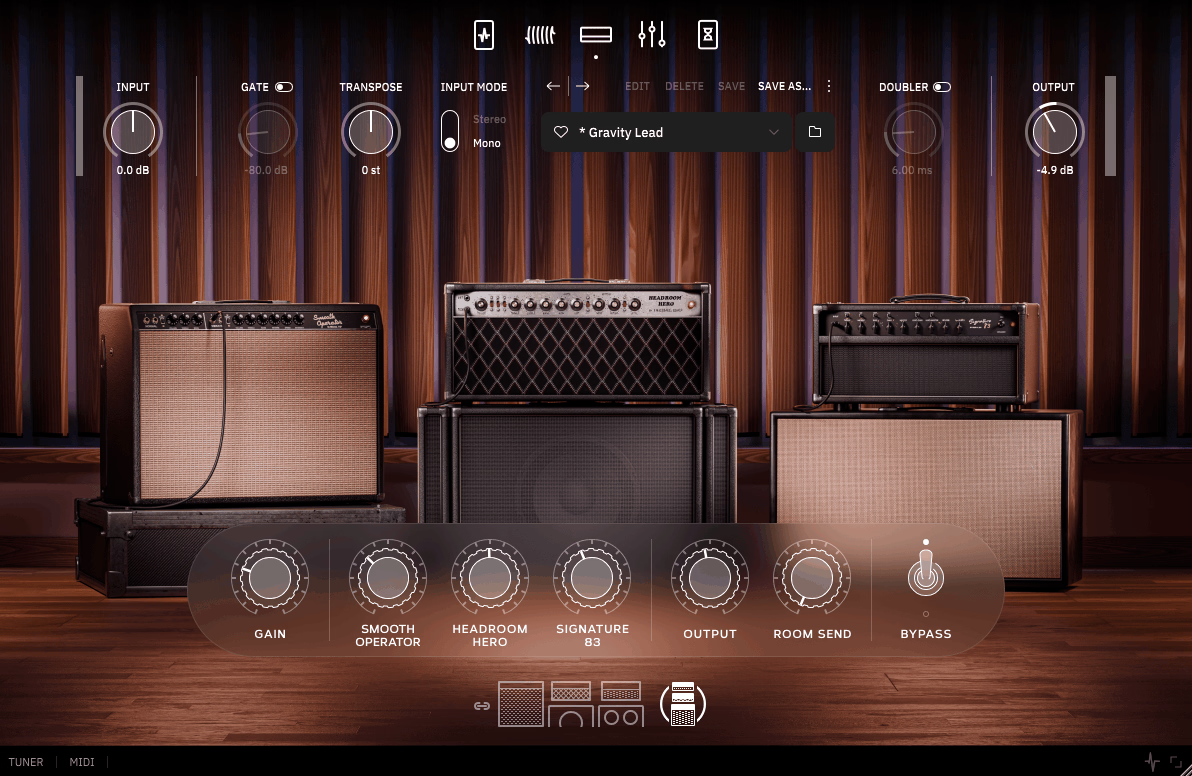
Neural DSP releasing an Archetype plugin built in collaboration with John Mayer was one of those moments that felt genuinely significant for guitar modeling.
Mayer has spent decades building one of the most carefully considered and expensive analog guitar rigs in existence, and the fact that he was willing to put his name on a plugin at all was a statement about where the technology has arrived.
For the plugin, Neural had full access to John’s actual amps in his Los Angeles studio, and the results are about as authentic as this kind of collaboration gets.
- Three Modeled Amps
The plugin models three of Mayer’s actual instruments: his 1964 Fender Vibroverb, his Dumble Steel String Singer serial number 002, and his Two-Rock Signature Prototype. You can use each independently or blend all three simultaneously in Three-In-One mode, which captures how his live and studio rig actually sounds when those sources are combined. I found the Headroom Hero in particular to be one of the most touch-sensitive clean amp simulations I’ve used.
- Gravity Tank
This is the most distinctively Mayer-specific feature in the plugin. The Gravity Tank combines a vintage two-spring reverb tank with the harmonic tremolo circuit from his Victoria Reverberato, recreating the swirling, atmospheric movement that defines a lot of his most recognizable tones in a single unified control. I must say it’s the kind of effect that sounds immediately right on single-coil clean tones in a way that standard reverb/tremolo combos don’t quite achieve.
- Distressor-Inspired Compressor
The post-effects section includes a Distressor-inspired compressor modeled using Mayer’s actual attack, release, and sidechain settings, which delivers the smooth, controlled dynamics that define his polished recorded sound rather than a generic compressor approximation. For producers trying to get that level of tonal control, this is a meaningful detail.
- 18 Presets from John Mayer and 300+ Artist Presets:
Beyond John’s own preset contributions, the plugin includes presets from over 40 artists including Cory Wong, Blues Saraceno, and James Valentine, which demonstrates the range of clean and low-mid-gain territory the amp collection actually covers. I found several of these presets genuinely useful as starting points well outside specifically Mayer-style territory.
3. Amped Roots 2
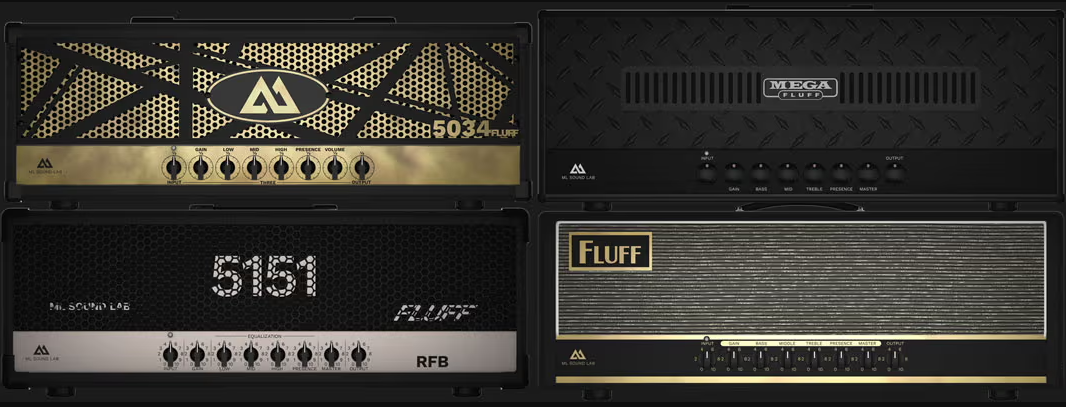
Image Credit: ML-Sound Lab
Amped Roots 2 comes from ML Sound Lab and was built in collaboration with Ryan “Fluff” Bruce, and I believe it occupies a unique position on this list: it’s the only plugin here where one amp is genuinely free.
The free tier gives you the 5034 Fluff amp and an introduction to ML Sound Lab’s Vorna Amp Modeling engine, which the company describes as indistinguishable from real tube amplifiers, and I’ve found that claim to be closer to accurate than most marketing language in this category.
- Vorna Amp Modeling Engine:
ML Sound Lab’s proprietary modeling approach, used across all four amps in the full version, captures the dynamic response and component-level behavior of the original hardware rather than relying on static impulse responses or profile-based capture.
I noticed the amps feel genuinely responsive to pick attack and guitar volume in a way that makes you want to stay in the plugin rather than reaching for a direct comparison.
- Four Amps
The full license gives you 5034 Fluff, 5151 Fluff, Freeman Fluff, and Mega Fluff, each representing a different amp from Ryan Bruce’s personal collection and covering the spectrum from modern metal to crunchy British-influenced tones.
Buying the full license also gets you Fluff’s personal guitar cabinet as a loadable ML IR, which is a nice touch for anyone specifically working in the genres he’s known for.
- 3D Cabinet Section with Four Mic Types:
The cab section lets you choose from four mic models and move them from the middle to the edge of the speaker, front or back, and angle them, with the ability to also load your own IRs into the section. I found the spatial control over mic position translates into meaningfully different high-frequency character and room presence, rather than just a tonal trim adjustment.
- MIDI-Controllable:
Amped Roots 2 includes a MIDI-controllable standalone version that’s stage-ready, which makes it a practical option for live use without requiring a full DAW to be running. The built-in tuner rounds out what is a genuinely complete small package, especially considering the free entry point.
4. Brainworx bx_rockergain100
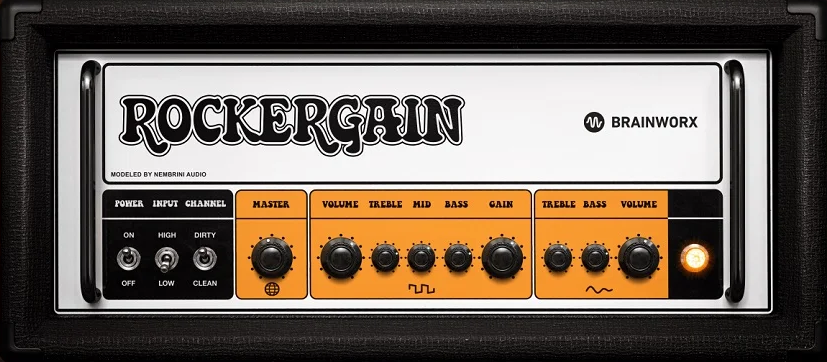
Brainworx has a specific approach to amp modeling that I appreciate: component-level accuracy without the marketing theater of official licensing, which means they focus on making the plugin sound right rather than putting a brand logo on it.
The bx_rockergain100 is modeled on the Orange Rockerverb 100 MK3, and it’s been consistently praised as one of the most faithful British hi-gain amp emulations available as a plugin. If you’ve ever wanted that distinctive Orange character, the wide bottom end and aggressive upper-mid presence, this is a very direct path to it.
- Two-Channel Architecture
The plugin faithfully recreates the two-channel Rockerverb structure, with a chimey Clean channel offering bass and treble controls, and the Dirty channel adding a mid control alongside deeper gain structure.
The power section models four EL34 tubes with four 12AX7 tubes in the preamp, and I found the interaction between preamp and power amp saturation to be one of the more nuanced aspects of the modeling.
- 120 Neve-Recorded IR Chains:
Rather than a generic IR loader, Brainworx provides 120 different recording chains captured using boutique cabinets, high-end microphones, and their Neve VXS console, all ready to load without additional setup.
I think this is genuinely one of the better included IR collections in any amp plugin, because having the chain recorded on a single high-end signal path gives the results a consistency that mixed-source IR libraries don’t always have.
- FX Rack
The built-in FX rack includes a host-syncable lo-fi delay, noise gate, tight and smooth filters, power soak, and independent bypass for the pre and power amp sections. The power soak in particular is useful for controlling the amount of power amp saturation independently of output volume, which gives you tonal options that the hardware itself makes difficult to achieve at manageable volume levels.
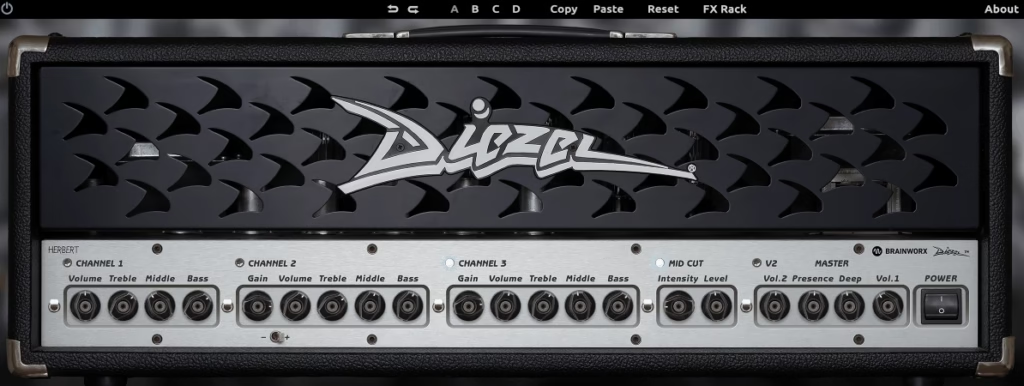
5. Plugin Alliance Diezel Herbert
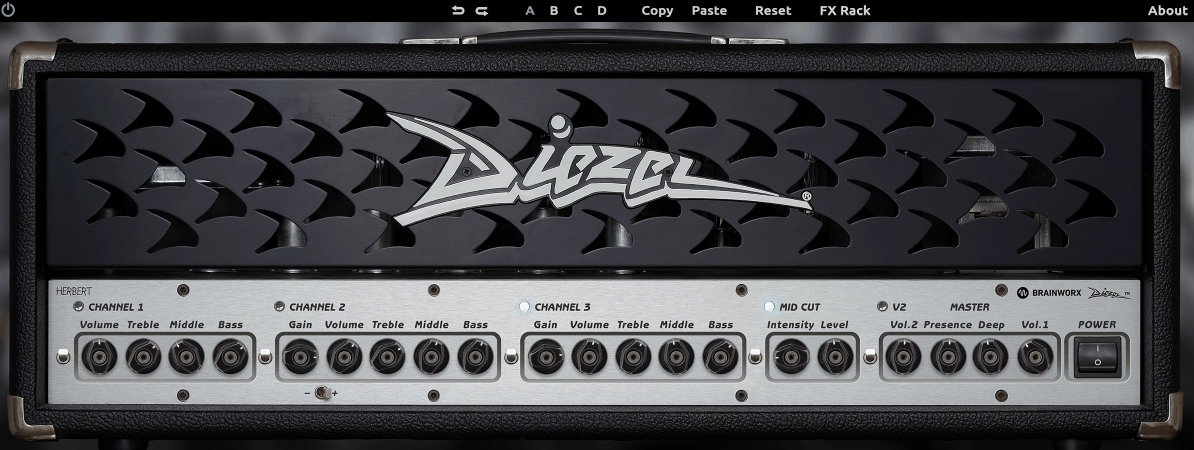
The Diezel Herbert is one of those amps that carries a specific cultural weight in modern heavy guitar production.
This is a 180-watt all-tube monster approved by Peter Diezel and Peter Stapfer themselves, and the Brainworx/Plugin Alliance modeling of it is one of the most faithful recreations of a genuinely demanding piece of hardware. If you need three channels that can go from elegant clean to complete sonic destruction, this is where to start.
- Three Channels Covering the Full Gain Spectrum:
Channel 1 delivers classic clean territory, Channel 2 provides what I believe is the plugin’s real centerpiece, the Diezel signature crunch with dynamic, punchy attack that sits perfectly for modern heavy rhythm work, and Channel 3 enters high-gain territory with outstanding picking sensitivity and detailed note control. Each channel has a dedicated 3-band EQ, which gives you individual tonal shaping across the entire range.
- Powered by 12AX7 and KT77 Tubes:
The modeling is built around the Herbert’s actual tube complement, 12AX7s in the preamp and KT77s in the power section, which gives the virtual amp the specific tonal character of those tube types rather than a generic high-gain approximation.
I realized this distinction shows up most clearly in the clean channel’s headroom and the way the power amp responds at higher master volume settings.
- FX Rack
Like the bx_rockergain100, the Herbert comes with a full FX rack including a noise gate, switchable high and low pass filters, and a power soak circuit, along with the 120 Brainworx recording chains produced on their Neve console. The power soak here is particularly relevant given the Herbert’s reputation as an amp that sounds best at volumes that would clear a venue.
6. MeldaProduction MTurboAmp
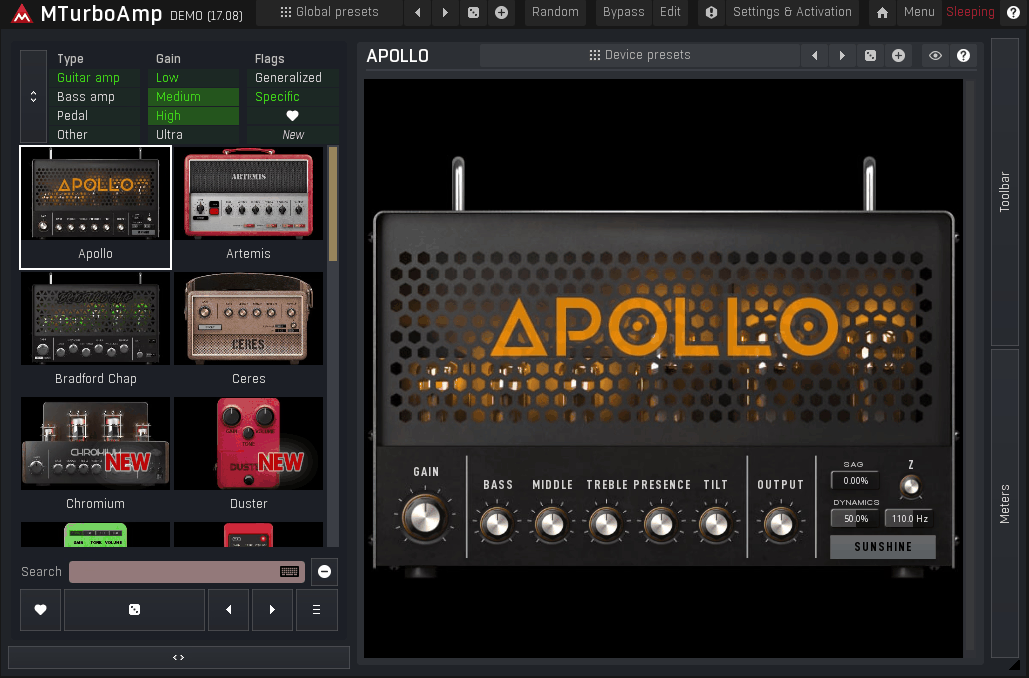
MTurboAmp is the most comprehensive and technically deep amp simulator on this list, and I think it’s significantly underrated outside of the Melda user community.
Rather than modeling specific hardware units, it gives you a full modular signal chain built from individual components you configure yourself, from preamp tubes to transformer types to speaker characteristics, which means you can design amplifier behavior rather than just selecting from a menu of branded presets.
- Component-Level Amp Design:
MTurboAmp works by combining individually configurable preamp stages, EQ sections, power amp stages, and cabinet elements, giving you control over tube types, circuit topology, and signal flow that no hardware-emulation plugin can match.
I found this approach genuinely rewarding for anyone who wants to understand what each stage of an amp is contributing rather than just turning knobs until something sounds good.
- Extensive Cabinet
The cabinet simulation section includes a multi-microphone setup with configurable mic positions, cabinet types, and room ambience, and you can blend multiple mic signals with independent level and phase control.
I appreciate that the section goes beyond the typical single-mic-and-IR approach that most amp sims use.
- Full Modulation and Effects Integration:
MTurboAmp integrates Melda’s standard modulation system, which lets you automate virtually any parameter using LFOs, envelope followers, or MIDI, turning the amp sim into a dynamic, animated instrument rather than a static tone tool.
For sound design applications beyond conventional guitar recording, this makes it one of the most flexible tools in the category.
- GPU-Accelerated Resizable Interface:
Following Melda’s standard platform, the interface is fully resizable and GPU-accelerated, and the plugin supports their A/B/H comparison system for testing up to eight different configurations simultaneously. I’d say the complexity of the interface is the main barrier to entry, but the depth it unlocks is unlike anything else at this price point.
7. UAD Paradise Guitar Studio
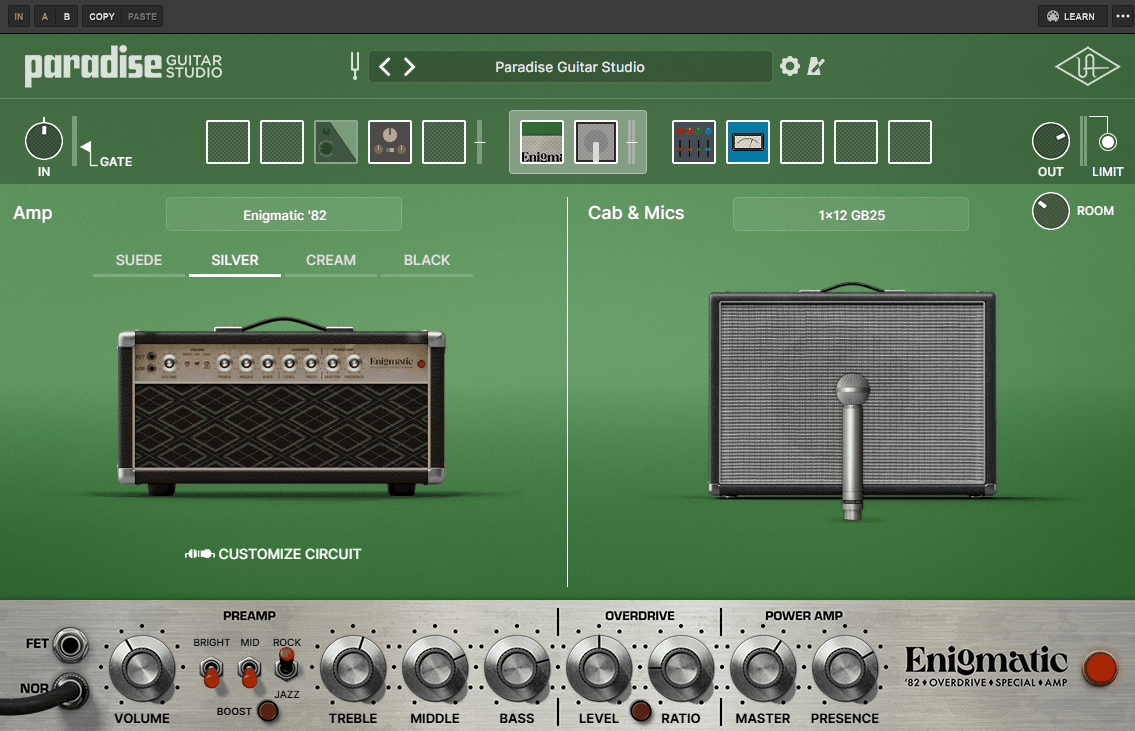
Paradise Guitar Studio is Universal Audio’s first end-to-end guitar recording environment in a single native plugin, and it represents a genuinely different philosophy from the rest of the tools on this list.
Rather than offering hundreds of amps and effects to scroll through, UA describes their selection as a “golden unit” collection, meaning they hand-picked eleven vintage and modified tube amps that they believe represent the best of each era rather than trying to cover everything. I found this curatorial approach actually works in practice, because every amp in the collection sounds exceptional.
- 11 Vintage and Modified Tube Amps
The amps span the 1950s through early 1980s, with UA’s Dynamic Speaker Modeling technology derived from their OX Amp Top Box simulating the physical mechanics of speaker cones including cone cry, impedance interactions, and the relationship between speaker behavior and the output transformer.
I noticed this produces a sense of low-end movement and compression that static cab IRs consistently fail to replicate.
- Cabinets
Rather than a variable mic placement system, UA provides 35 expertly curated cabinet and microphone combinations using classics like the SM57, Royer R-121, and Neumann U67, phase-aligned and tested by professional engineers.
A Room fader adds modeled acoustic reflections from the recording space rather than digital reverb applied after the fact, which adds three-dimensionality that direct-recorded guitar tones typically lack.
- Studio Effects
The post-processing section includes UA’s 1176-inspired compression, tape delay, spring and plate reverbs, and EQ drawn from their existing plugin catalog, which means the studio effects quality is in line with what UA is known for in the mixing world rather than simplified guitar-focused versions. I think this is where Paradise genuinely separates from most amp sims.
- Tons of Presets and Streamlined Drag-and-Drop Workflow:
The interface is clean and intentionally focused, with drag-and-drop effects placement and five pre-amp slots plus five post-amp slots. For guitarists who want record-ready tones quickly without deep menu-diving, I’d say the workflow is among the most immediate of anything on this list.
8. Bogren Digital Ampknob MLC S_Zero 100
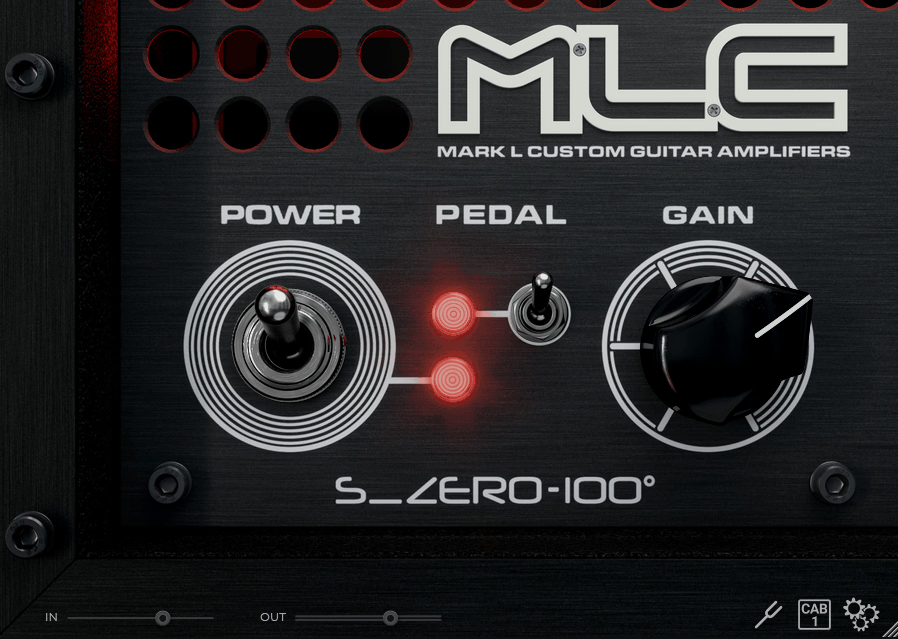
Jens Bogren has spent decades recording some of the most detailed and well-produced heavy guitar records in the world at Fascination Street Studios, and the Ampknob MLC S_Zero 100 is his translation of that experience into a plugin designed around a specific philosophy: get a great tone immediately, with a single knob, and spend your time playing instead of tweaking.
The Ampknob format reduces the entire three-channel MLC S_Zero 100 amp to one control, and the results are genuinely impressive given how much sonic range that one knob covers.
- Single-Knob Three-Channel Coverage:
The Ampknob format maps the three channels of the original MLC S_Zero 100, clean, plexi-style crunch, and high gain, across a single knob’s range, with Low Gain accessing Channel 1, Mid Gain Channel 2, and High Gain Channel 3.
I found this surprisingly non-limiting in practice because Jens Bogren has essentially pre-dialed each position to sit correctly in a mix rather than leaving you with defaults that need extensive adjustment.
- IRDX Technology
This is Bogren Digital’s most significant technical contribution to the amp sim category. IRDX uses machine learning to reconstruct the dynamic behavior of real guitar speakers, adding the non-linear compression, movement, and breakup characteristics that static impulse responses capture tonally but lose dynamically. I believe this is the closest any IR-based cab section has come to feeling like air is actually moving.
- Built-In Boost Pedal:
A single Pedal switch engages a boost that tightens the low end and drives the input harder, adding the equivalent of a transparent overdrive pedal before the amp without requiring additional routing. The behavior changes slightly per channel, giving the clean channel extra fatness and pushing the drive channels toward a more modern, articulate high-gain response.
- Standalone Riff Recorder and Metronome:
The standalone version includes a built-in riff recorder that lets you capture ideas without opening a DAW, plus a metronome with adjustable meter and automatic speed increments for practice. I appreciate this as a practical tool for guitarists who use the standalone primarily for playing and practicing rather than production.
9. Antelope Audio V-AMP
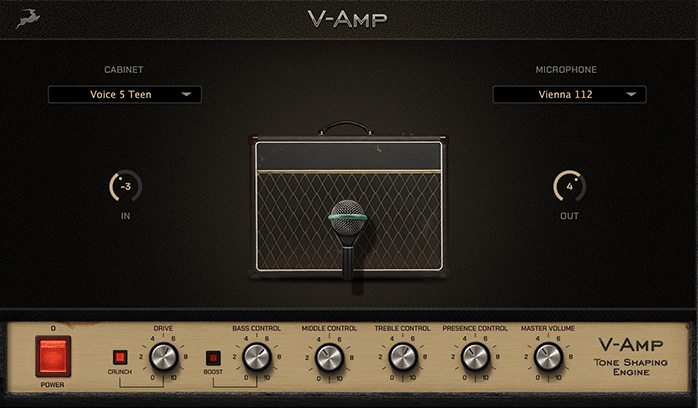
V-AMP is Antelope’s first standalone native guitar plugin, launching in January 2026, and it takes a noticeably different approach from the hardware-emulation majority of this list.
Rather than modeling a specific amp brand, it models a common-cathode tube preamp stage with precision-engineered circuit behavior, aiming for a high-fidelity tube character that covers the gain range from light saturation to overdrive without being tied to a particular amp’s tonal signature.
- Common-Cathode Tube Stage Modeling
The signal path includes precision filtering, oversampling, non-linear processing, and anti-aliasing stages, plus a dedicated DC-removal filter that maintains clarity at higher gain settings. This level of engineering detail is what Antelope is known for from their hardware interface work, and I found it produces a cleanliness at high gain that softer-modeled amp sims sometimes struggle with.
- Five Cabinet Models
The cabinet section uses circular convolution with five cabinet models measured with multiple microphone configurations, including a 4×12 Sherrif 800, a 1×12 Vienna, and several others covering the range from rock to jazz.
The multiple mic model options, including the Illinois 57, Sydney condenser models, and the S906 dynamic, let you shape the high-frequency character and transient response without reaching for external EQ.
- Three-Band Tone Stack
Control parameters include Drive, Crunch, a three-band tone stack, Presence, Bass Boost, and independent input and output gain stages, which gives you a practical range of control over both preamp saturation and overall tonal balance in a single plugin.
The Bass Boost switch in particular adds up to 6dB of additional low-frequency content for situations where you want more weight and mass in the bottom end.
10. Softube Marshall Plexi Super Lead 1959
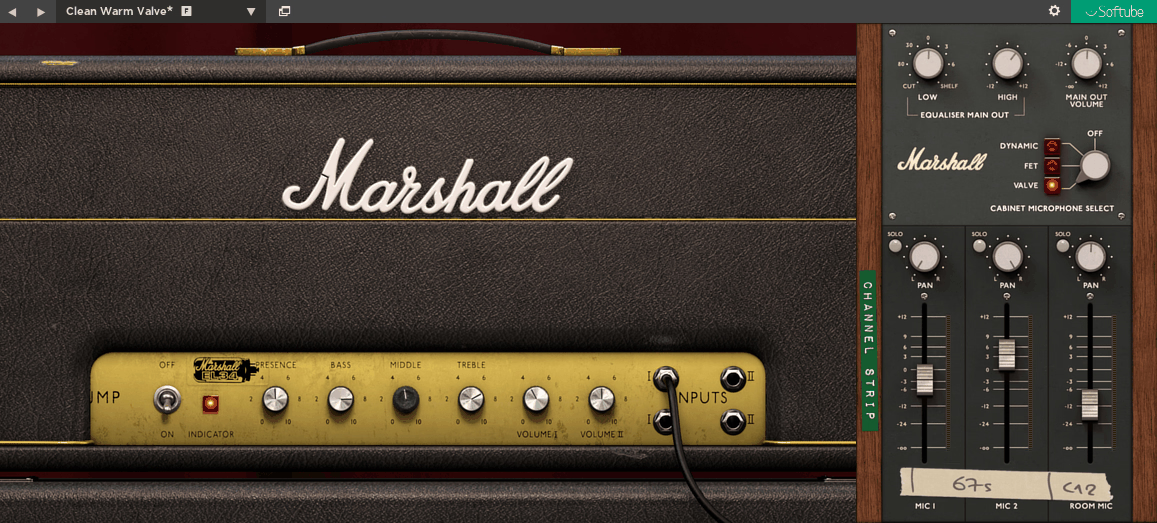
The Softube Marshall Plexi Super Lead 1959 is produced in partnership with Marshall and modeled from an original reference unit, making it the officially sanctioned digital version of arguably the most historically significant amplifier ever built.
The 1959 Super Lead is the amp behind the defining guitar tones of the 1960s and 70s: Jimi Hendrix, Pete Townshend, Eric Clapton, Jimmy Page, and Eddie Van Halen all ran their sound through versions of this circuit, and the plugin sets out to capture why so many players across such different styles converged on the same piece of hardware.
Unlike many amp emulations that model a generic “plexi-style” circuit, this is a licensed collaboration with Marshall built from the actual reference unit, which means the specific component values, transformer characteristics, and circuit behavior that made the original distinctive are part of the model rather than approximations of the general concept.
- Component-Level Modeling of the Original Circuit:
The 1959’s preamp circuit uses four ECC83 (12AX7) triode stages feeding into a quartet of KT66 or EL34 power tubes depending on the production year, and the interaction between those stages is where the amp’s character lives. Softube models this chain at the component level, which captures the specific way the preamp clips into the power section and how the power amp’s own saturation blends with the preamp gain. Running the input volume high with the amp’s relatively simple treble, middle, and bass controls set for the room produces the warm, responsive breakup that defines the classic plexi tone.
- The Super Lead’s Two-Channel Architecture:
The 1959 has two channels (Normal and Brilliant) with four inputs, and the classic trick of jumper-linking the channels together to blend their different frequency responses and gain characters is part of what made the amp so versatile in practice. The plugin preserves this architecture, letting you use each channel independently or blend them the way players did with a short patch cable, which opens up tonal variations that a single-channel model wouldn’t provide.
- Cabinet and Microphone Options:
The plugin includes a captured Marshall 4×12 cabinet with Celestion speakers and multiple microphone positions, allowing you to blend and position microphones the way a recording engineer would in front of the real cabinet. The microphone selection covers the standard combinations used on actual Plexi sessions, from close dynamic placement for presence and punch through to room character options for a more recorded-in-a-space quality.
- Amp Room Integration:
Like the JMP 2203, the Plexi Super Lead 1959 works both as a standalone plugin and as a module within Softube’s Amp Room platform, giving you access to the broader ecosystem of effects and studio processing if you’re already working in that environment. Softube’s exclusive licensing partnership with Marshall means this remains the only way to get an officially sanctioned digital version of the circuit outside of Marshall’s own hardware.
11. Guitar Rig 7 Pro
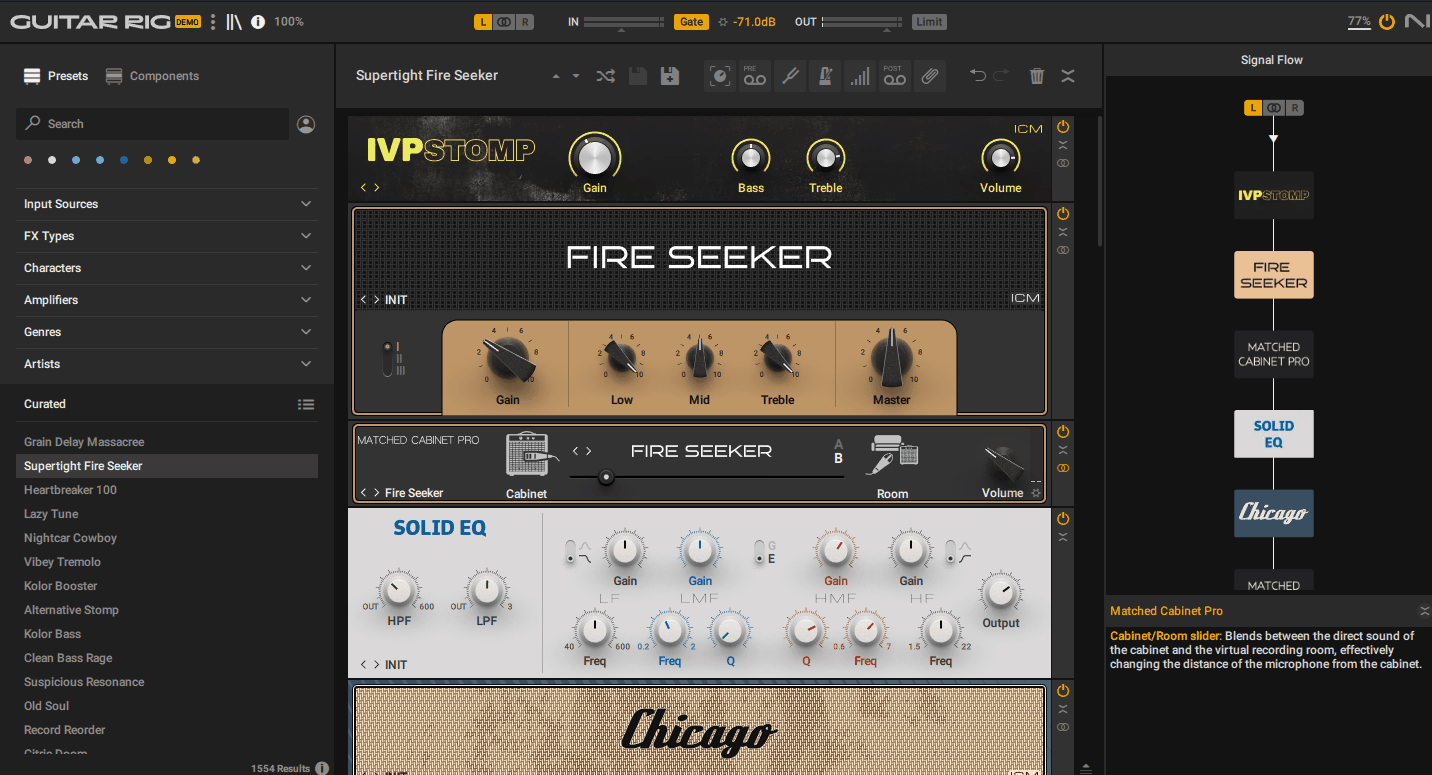
Guitar Rig has been around for nearly 20 years, and in that time it’s evolved from a focused amp sim into something that I think is better described as a comprehensive guitar and audio effects platform than a traditional amp plugin.
The installed user base, the depth of the modular signal chain, the quality of the presets, and the genuinely broad range of applications beyond guitar make it the most versatile tool on this list even if it’s not necessarily the most authentically hardware-specific.
- ICM Technology Amps:
Version 7 brought four new ICM-powered amp models, Superfast 100 (Soldano-inspired), Reverb Delight (Fender black-panel era), AC Box XV (Vox AC30 heritage), and Bass Rage (Ampeg-inspired), alongside five new ICM pedals. I noticed that the ICM amps feel significantly more dynamic and responsive than the older models that were in previous versions, which is a meaningful distinction when you’re playing rather than just switching presets.
- Cabinet IR Loader
Version 7 added a dedicated Cabinet Impulse Response Loader that blends up to four IRs simultaneously with independent level and pan control, and ships with IRs from Bogren Digital, 3 Sigma Audio, Lancaster Audio, and others. The ability to blend four different cab captures in parallel opens up tonal combinations that no physical cabinet setup could replicate.
- Lo-Fi Components
Guitar Rig has always been unusually strong for non-guitar applications, and version 7 doubles down on this with four new lo-fi components, Tape Wobble, Noise Machine, Vintage Vibrato, and Kolor, all designed to add analog degradation, mechanical texture, and harmonic character to any audio source.
I believe this is where Guitar Rig genuinely separates from the competition, because the combination of amp modeling and these effects makes it one of the best sound design environments for vocals, synths, and drums as well as guitars.
- Loop Machine Pro
The updated Loop Machine Pro looper returned after being absent from version 6 and now supports hardware MIDI control for live use, export of individual loop layers, and independent signal chain selection per layer. The new signal chain view in the sidebar makes complex parallel routing setups immediately readable, which was the main workflow friction point in previous versions that has now been addressed.
From the boutique one-knob simplicity of the Ampknob to the endless configurability of MTurboAmp, the right guitar amp plugin for you depends entirely on how you actually work. Some of these tools reward patience and deep exploration, while others are built to get you playing within seconds of loading them.
Pick the one that fits your workflow, because the best amp sim is always the one you’ll actually reach for.
Get the Free Plugin Starter Kit
The genuinely useful free DAWs and plugins worth installing. No filler. Straight to your inbox.

Hello, I’m Viliam, I started this audio plugin focused blog to keep you updated on the latest trends, news and everything plugin related. I’ll put the most emphasis on the topics covering best VST, AU and AAX plugins. If you find some great plugin suggestions for us to include on our site, feel free to let me know, so I can take a look!