
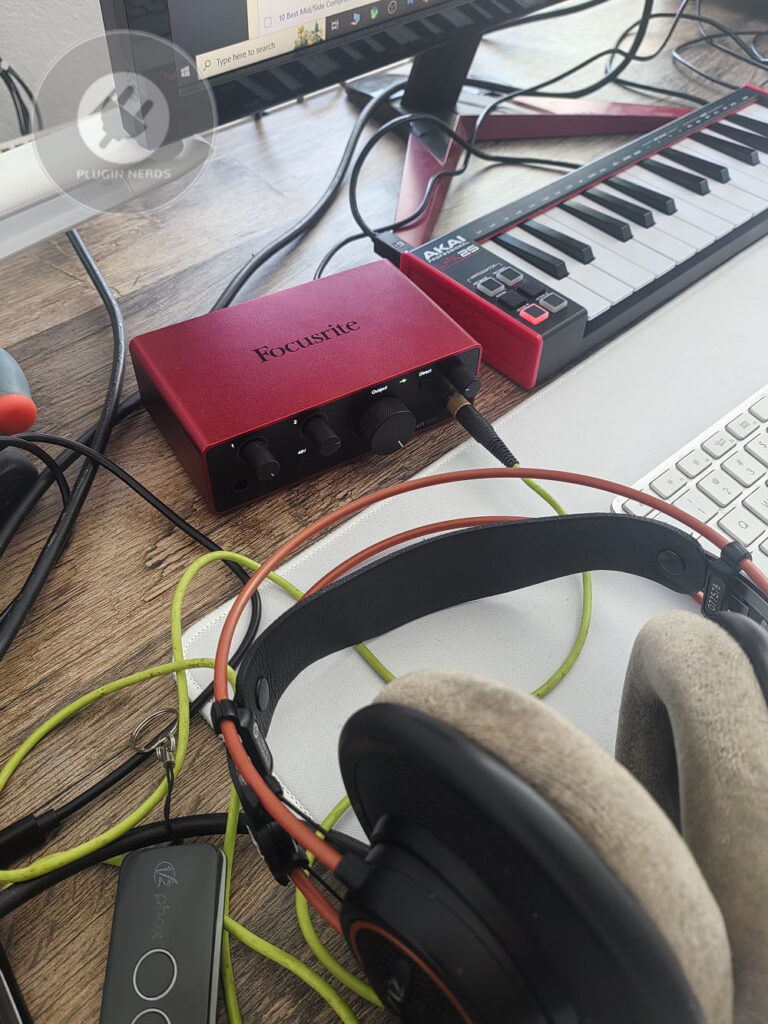
I get asked this question more than almost any other gear question, and the answer is less straightforward than most articles make it seem. The short version is that open-back headphones are generally better for mixing and closed-back headphones are generally better for recording, but the reality of how most of us work means you’ll probably end up using both at different stages of production.
The longer version involves understanding exactly what each design does to the sound you hear, why that matters for mixing decisions, and which scenarios genuinely call for one over the other.
I’ve mixed on both types extensively over the years. I currently reach for open-backs when I’m doing focused mix work in my studio, and I grab closed-backs when I’m tracking vocals, recording in noisy environments, or mixing in situations where sound leakage would be a problem.
Neither type is objectively “better.” They’re different tools optimized for different jobs, and understanding the trade-offs lets you make the right choice for your specific situation.
How Open-Back Headphones Work
Open-back headphones have perforated or grilled ear cups that allow air and sound to pass through the housing in both directions. The driver sits inside the cup, but instead of firing into a sealed chamber (like closed-backs), it fires into a space that’s open to the room around you.
This fundamental design difference changes several things about how you perceive the audio.
The most noticeable effect is on the soundstage. Because the sound waves aren’t bouncing around inside a sealed enclosure, the audio feels wider, more spacious, and more natural.
Instruments seem to exist in a space around your head rather than being projected directly into your ears. This spatial quality is why open-backs have become the preferred choice for critical listening and mixing, as the presentation more closely resembles what you’d hear from studio monitors in a treated room.
The other major effect is on frequency response accuracy, particularly in the bass. Sealed enclosures create pressure buildups that can artificially boost low frequencies, which is why many closed-back headphones sound bassier than they actually are. Open-backs don’t have this pressure effect, so the bass you hear is closer to what’s actually in the recording. For mixing, hearing accurate bass is obviously important because you’re making decisions about low-end balance that need to translate to speakers.
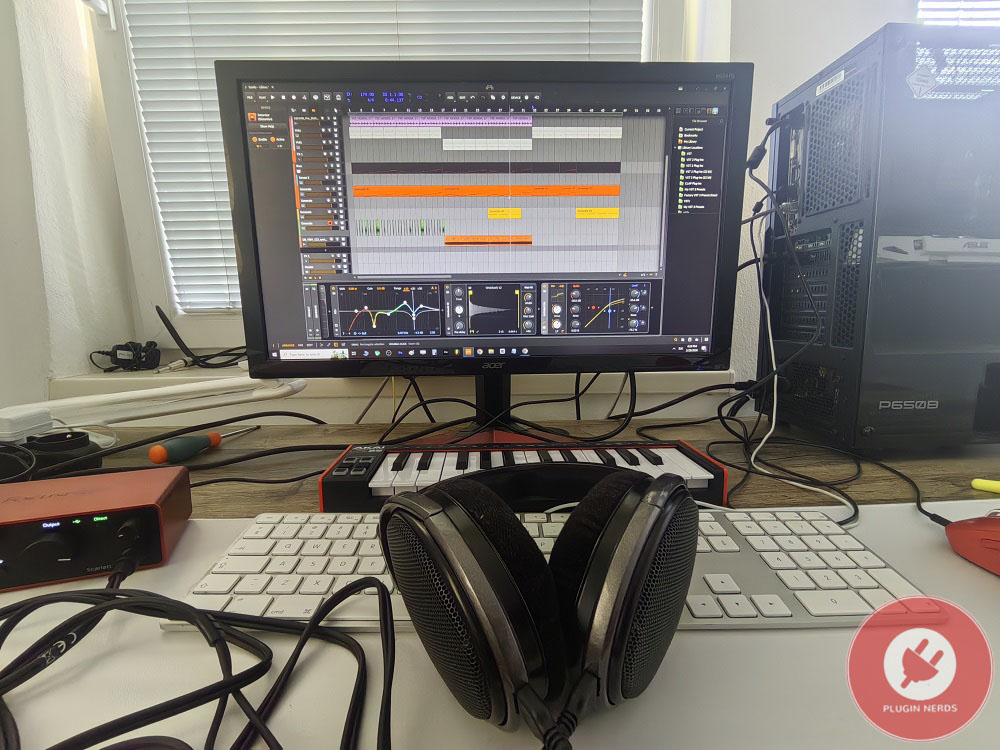
Sennheiser HD-650 open back studio headphones
How Closed-Back Headphones Work
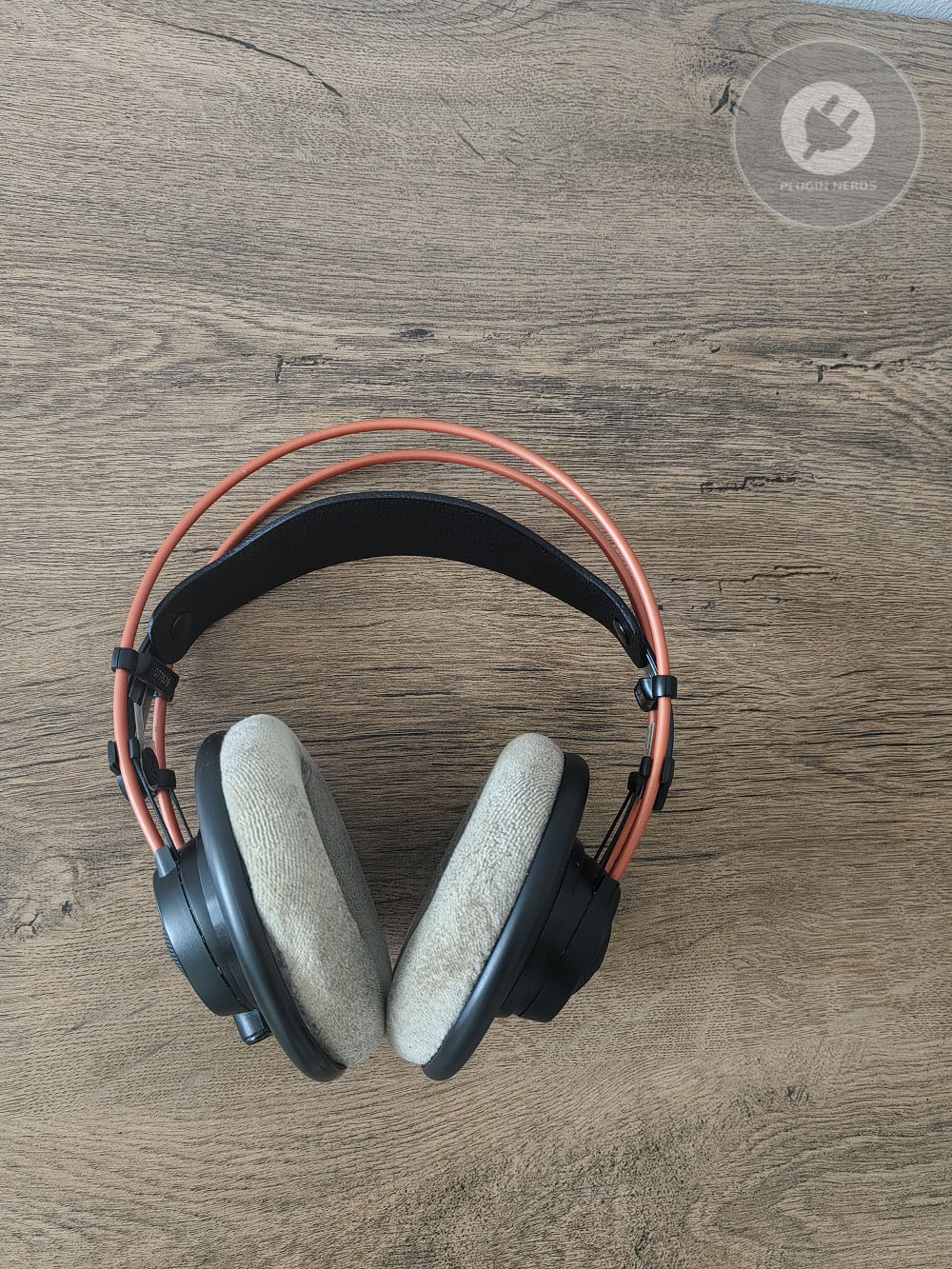
Closed-back headphones seal the ear cup completely, creating an isolated listening chamber between the driver and your ear. No sound gets in from the outside, and very little sound leaks out. This isolation is the defining characteristic and the primary reason closed-backs exist in professional studios.
The sealed design means external noise is attenuated, which lets you focus on the audio without environmental distractions. More importantly for recording, the sealed cups prevent the audio you’re monitoring from leaking into microphones. If you’re tracking a vocalist and using open-back headphones, the click track and backing music escaping from the cups will bleed into the vocal mic.
Closed-backs prevent this, which is why every recording studio has a drawer full of them.
The acoustic trade-off is that sealed enclosures create internal reflections and pressure buildups that color the sound. The bass often feels more present (sometimes artificially so), the soundstage feels narrower, and the overall presentation can feel more “inside your head” compared to the open, airy quality of open-backs. These characteristics aren’t necessarily bad for all purposes, but they do make critical mixing decisions harder because what you hear is less representative of how the audio will sound on speakers.
Why Open-Backs Are Preferred For Mixing
The reason most professional mix engineers prefer open-back headphones comes down to three things that directly affect the quality of your mixing decisions:
- The wider soundstage helps you evaluate stereo placement accurately. When you’re deciding where instruments sit in the left-right field, how wide a reverb should be, or whether a delay is panned correctly, you need a presentation that separates sounds spatially. Open-backs spread the audio across a wider perceived field, which makes these spatial decisions more intuitive and more likely to translate correctly to speakers.
- The more natural frequency response means your EQ decisions translate better. The absence of sealed-chamber bass buildup gives you a flatter, more honest low-end picture. When you cut 3dB at 200Hz on open-backs because it sounds right, there’s a better chance it’ll sound right on monitors too. If you make the same decision on closed-backs that are artificially boosting that range, you might be cutting too much because the headphones were lying to you about how much was there.
- The reduced ear fatigue matters over long sessions. Open-backs allow airflow around your ears, which reduces heat buildup and the pressure feeling that closed-backs create. After four hours of mixing, physical comfort directly affects your decision-making. If your ears are hot, pressurized, and fatigued, you start making worse choices about EQ, compression, and balance. The open design keeps you fresher longer.
When Closed-Backs Make More Sense
Despite the mixing advantages of open-backs, there are legitimate scenarios where closed-back headphones are the better choice:
- Recording and tracking sessions where you need to monitor audio without it bleeding into microphones. This is non-negotiable for vocal recording and essential for recording any acoustic instrument in the same room as your monitors. Every studio needs closed-backs for this purpose regardless of what they use for mixing.
- Noisy environments where external sound would interfere with your ability to hear your mix accurately. If you’re mixing in an untreated room with traffic noise, HVAC rumble, or other people talking, closed-backs isolate you from those distractions. Some producers mix on laptops in coffee shops, airports, or shared spaces where open-backs would be completely impractical.
- Late-night sessions where sound leakage from open-backs would disturb other people in your household. If your studio is in a bedroom and your partner is sleeping ten feet away, open-backs at mixing volume will keep them awake. Closed-backs let you work without affecting anyone around you.
- Bass-critical mixing in some specific scenarios. Certain closed-back headphones reproduce deep sub-bass with more authority than equivalently priced open-backs because the sealed chamber helps maintain low-frequency energy. If you’re working on bass-heavy music and your open-backs roll off below 40Hz, a good pair of closed-backs might give you better insight into what’s happening at the very bottom of the frequency range.
- Budget constraints where you can only afford one pair of headphones. If you need to both record and mix with the same pair, closed-backs are the more versatile choice because they handle both tasks adequately, whereas open-backs can only handle mixing. A good pair of closed-backs used for everything is better than open-backs you can’t use for half of your workflow.
The Frequency Response Difference In Practice
This is where the conversation gets practical. The difference between open and closed-back frequency response isn’t just theoretical. It shows up in specific mixing decisions you make every session.
Low-end decisions are the most affected. Closed-back headphones typically have a bass bump caused by the sealed chamber, which can range from a subtle 2-3dB boost to a pronounced 6dB or more depending on the model.
When you mix bass-heavy material on closed-backs, you tend to set the bass lower than you should because the headphones are adding energy that isn’t in the recording. You finish the mix, play it on monitors, and the low end sounds thin. Open-backs don’t have this problem to the same degree, so your bass decisions are more likely to be correct.
Reverb and spatial effects are harder to judge on closed-backs because the narrow soundstage compresses the spatial information. A reverb that sounds perfectly wide and dimensional on open-backs might sound cluttered or overwhelming on closed-backs, leading you to pull the reverb level down too far.
The open-back presentation gives you a more accurate picture of how reverb and delay effects occupy space in the stereo field.
High-frequency detail varies between designs but not consistently in one direction. Some closed-backs have pronounced treble peaks (the Sony MDR-7506 is famous for its 10kHz spike), while some open-backs roll off the treble gently (the Sennheiser HD 650 is known for this). The key is knowing your specific headphones rather than assuming one design type is more accurate than the other in the highs.
Soundstage and Stereo Imaging
This is the single biggest practical difference between the two designs for mixing purposes, and it deserves its own section because it affects so many decisions.
Open-back headphones create what’s often described as a “speaker-like” presentation where sounds appear to exist outside your head in a three-dimensional space. The width varies between models, but even a modest open-back produces a wider, more natural stereo image than most closed-backs. This matters for mixing because:
- Panning decisions are easier to evaluate when instruments occupy distinct positions in a wide field rather than clustering near the center. You can hear the difference between a guitar panned 30% left and 50% left more clearly on open-backs.
- Depth perception from reverb, delay, and spatial processing is more realistic. You can judge how “far back” a reverbed snare sounds relative to a dry vocal, which helps you create front-to-back depth in your mix.
- Masking issues between instruments occupying similar frequency ranges are easier to identify because the spatial separation reveals conflicts that a narrow presentation would obscure.
Closed-back headphones present audio in a more intimate, “inside your head” manner. The soundstage is narrower and the instruments tend to cluster closer to the center. This isn’t useless for mixing, but it does mean you’re working harder to evaluate spatial decisions, and the narrower presentation can fool you into adding more stereo width or reverb than the mix actually needs.
My Recommendation
If you’re setting up a studio and can afford two pairs of headphones, get both. Use open-backs for mixing and closed-backs for recording. This is the standard professional approach and it exists because it works.
If you can only afford one pair, the decision depends on what you do more of. Producers who primarily mix and master should lean toward open-backs and accept that they’ll need to be careful about leakage during recording. Producers who do a lot of vocal tracking and recording should lean toward closed-backs and accept that their mixing will require more careful referencing on other playback systems to compensate for the narrower soundstage.
Whichever type you choose, the most important thing is to learn your headphones thoroughly. A producer who knows every quirk of their closed-back Sony MDR-7506 will make better mixes than someone who just bought expensive open-backs and hasn’t learned them yet.
The best mixing headphone is the one you understand intimately, because once you know how your headphones color the sound, you compensate instinctively and your decisions translate to other systems.
Spend time with reference tracks you know well. Compare how those tracks sound on your headphones versus how they sound on monitors, in the car, and on earbuds. Build a mental map of where your headphones lie to you (every pair does, to some degree), and use that knowledge to make better mixing decisions. The open vs closed debate matters, but it matters less than simply knowing your tools.
Check our full Review of AKG K712 Pro here.

Hello, I’m Viliam, I started this audio plugin focused blog to keep you updated on the latest trends, news and everything plugin related. I’ll put the most emphasis on the topics covering best VST, AU and AAX plugins. If you find some great plugin suggestions for us to include on our site, feel free to let me know, so I can take a look!