

Using dynamic mics as drum overheads goes against conventional wisdom, and I want to acknowledge that upfront. Most engineers reach for small-diaphragm condensers, and for good reason: condensers capture the full shimmer of cymbals, the transient crack of a snare, and the spatial width of a kit with more high-frequency detail than dynamics provide.
But there are legitimate situations where dynamics on overheads produce better results. Loud, untreated rooms where condensers pick up harsh reflections. Punk, metal, and garage recordings where you want the overheads dark and aggressive rather than bright and polished. Budget setups where your condensers are cheap enough to sound harsh on cymbals anyway.
When you put dynamics overhead, you get a thicker, warmer picture of the kit with naturally tamed cymbal brightness and a midrange-forward character that can sit beautifully in rock, metal, lo-fi, and vintage-style productions.
You lose the sparkly top end and airy detail that condensers provide, which is the trade-off you’re making deliberately.
I’ve used dynamics as overheads in sessions where the drummer’s cymbals were harsh and bright, and the natural high-frequency rolloff of a dynamic mic tamed that harshness better than any EQ I could have applied to a condenser recording. Here are ten dynamic microphones that work effectively in an overhead position, each bringing its own character to the task.
1. Beyerdynamic M 88 (2023)
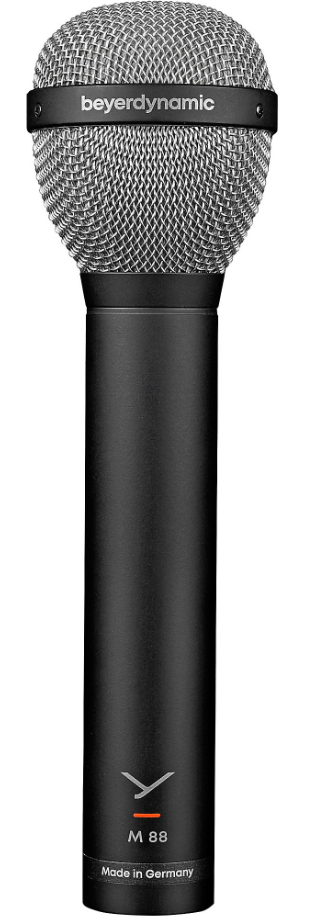
Handmade in Germany since 1963 and recently updated with a restored three-layer silver grille, this is the dynamic mic that engineers describe as “almost condenser-like” in its detail and frequency extension.
Beyerdynamic M 88 features a hypercardioid polar pattern with near-perfect directionality, a remarkably wide 30Hz to 20kHz frequency response for a dynamic, a Hostaphan diaphragm with fast transient response, and an integrated hum compensation coil for electromagnetic interference rejection.
For overhead use, the M 88 stands out because its 20kHz frequency extension preserves more cymbal detail and high-frequency air than most dynamics, narrowing the gap between dynamic and condenser performance that makes using dynamics overhead a compromise in the first place.
Phil Collins famously used this mic, and its ability to capture both the weight of toms and the shimmer of cymbals from a single position makes it genuinely suited to overhead duty.
- Extended Response
A 30Hz to 20kHz frequency response is exceptionally wide for a dynamic microphone, capturing high-frequency cymbal detail and low-frequency kick and tom resonance that most dynamics roll off well before reaching.
In an overhead position where the mic needs to capture the full kit, this extended response means you hear more of the cymbals’ shimmer and sustain without the dramatic high-end loss that narrower-response dynamics produce. Your overhead recordings sound closer to what condensers provide while retaining the dynamic mic’s thicker midrange character.
- Hostaphan Speed
A Hostaphan diaphragm with extremely low mass responds to transients faster than standard dynamic diaphragms, capturing the crack of snare hits and the initial attack of cymbal strikes with sharper definition.
In an overhead position where transient clarity determines how crisp and defined the kit sounds, the Hostaphan material’s speed gives you more attack definition than heavier diaphragm materials achieve. Stick attacks on cymbals and the snap of rimshots come through with a clarity that makes the overhead recording usable with minimal processing.
- Hypercardioid Focus
A hypercardioid polar pattern with near-theoretically-perfect directionality provides excellent channel separation between a stereo pair. When you position two M 88s as a spaced pair or XY overhead configuration, the tight pickup pattern means each mic captures a more focused section of the kit with less bleed from the opposite side.
Better channel separation translates to a wider, more defined stereo image of your drum kit.
- Hum Compensation
An integrated hum compensation coil rejects electromagnetic interference from stage lighting, amplifiers, computer monitors, and other equipment near the drum kit. In studios where the overhead position places the mics near ceiling lights or in rooms with poor electromagnetic shielding, the hum coil keeps your recordings free of the buzz and hum that standard dynamics would pick up.
2. Sennheiser MD 445
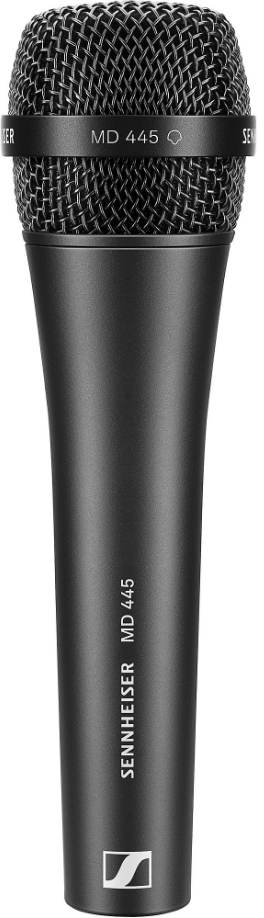
Premium supercardioid dynamic from Sennheiser with a smooth, natural frequency response that captures a drum kit from overhead with warmth and balance rather than harshness and aggression. Sennheiser MD 445 delivers a tight supercardioid pattern with excellent side rejection, precision German manufacturing with consistent unit-to-unit performance, a smooth frequency response free of aggressive peaks, a neodymium magnet for high sensitivity, low handling and mechanical noise, and a tonal character that engineers describe as musical and refined.
On overheads, the MD 445 gives you a picture of the drum kit that’s warm, detailed, and slightly dark compared to condensers, but without the boxy midrange honk that some dynamics introduce. If you want your overheads to capture the kit’s weight and body with a smooth, non-fatiguing top end, the MD 445’s character suits that aesthetic.
- Smooth Capture
A frequency response without aggressive presence peaks captures drum kit cymbals with a smooth, musical quality rather than the harsh brightness that some dynamics add.
Many dynamic mics boost the upper midrange for vocal projection, which translates to harsh, metallic cymbal sound when used overhead. Sennheiser’s smoother approach means your cymbals sound natural and controlled in the overhead recording, which reduces the EQ work needed to make them sit properly in a mix.
- Tight Pattern
A supercardioid pickup pattern provides focused frontal capture with strong side rejection, which helps each overhead mic isolate its section of the kit. In a spaced pair overhead configuration, the tighter pattern means the left overhead captures more of the left side of the kit with less bleed from the right, producing a more defined stereo spread. For engineers who want clear stereo separation from their overheads, the pattern precision matters.
- Neodymium Sensitivity
A neodymium magnet produces higher output than ferrite magnets, which means you need less preamp gain to get a usable signal level from the overhead position. Less gain means lower preamp noise, which is practically useful when your overheads are positioned further from the source than close-mic’d drums. In an overhead role where the mic sits two to three feet above the kit, every dB of additional sensitivity helps.
- German Precision
Tight manufacturing tolerances from Sennheiser’s German production facility ensure consistent frequency response and pattern behavior from unit to unit. For stereo overhead pairs where matched performance between the left and right mic directly affects stereo imaging accuracy, the manufacturing consistency means two MD 445s will sound closely matched without requiring specific serial-number pairing.
- Mechanical Quiet
Low self-noise and excellent mechanical vibration rejection keep your overhead recordings free of the mic-stand vibrations and structural resonances that tall overhead boom arms transmit.
Drums produce physical vibrations that travel through stands and floors, and a mic that rejects this mechanical energy produces cleaner overhead recordings with less low-frequency rumble contaminating the capture.
- Musical Weight
Rather than the thin, bright character that you’d expect from a condenser overhead, the MD 445 captures the kit with a warmth and midrange weight that gives drums a thick, full sound in the overhead channel.
For rock, indie, and vintage-style productions where you want overheads that add body to the kit rather than sparkle, the MD 445’s warm character serves that aesthetic better than condensers would.
3. Shure Beta 57A
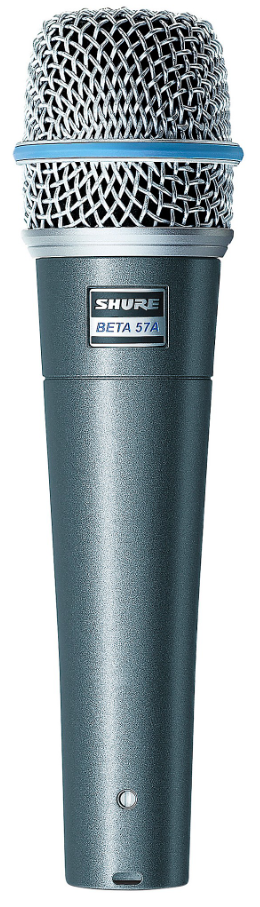
Studio workhorse supercardioid that engineers have relied on for instrument recording across decades, with a broad presence peak and tight pattern that work effectively in an overhead position when you want a focused, punchy picture of the kit. Shure Beta 57A provides a supercardioid pattern, a neodymium magnet for hot output, and a frequency response with a broad presence rise that adds clarity to midrange-heavy sources.
Overhead, the Beta 57A gives you a punchy, mid-forward drum sound with defined snare crack and tom attack, trading the airy cymbal shimmer of condensers for a thicker, more aggressive kit capture. If your production style favors drums that punch through a mix rather than float above it, the Beta 57A’s character works in your favor.
- Broad Presence
A wide presence boost spanning the upper midrange adds clarity and definition to snare crack, tom attack, and cymbal body without the narrow, peaky harshness that some vocal-focused dynamics introduce. In an overhead position, this broader lift means the entire kit sounds more present and defined rather than just one frequency range being pushed forward.
- Tight Rejection
A supercardioid pattern captures a more focused slice of the kit than cardioid alternatives, which improves stereo imaging when used as a pair. For overhead placement where you want each mic to clearly represent its side of the kit, the tighter pattern reduces the cross-contamination that wider patterns allow.
- Hot Output
A neodymium magnet drives higher output than standard dynamics, reducing the gain requirement from your preamps. From an overhead distance where the signal is quieter than close-mic’d drums, the additional sensitivity keeps your overhead tracks above the noise floor with cleaner preamp operation.
4. Austrian Audio OD505
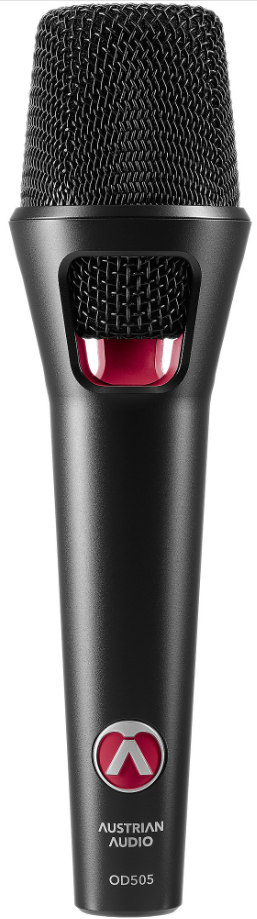
Austrian Audio OD505 requires 48V phantom power and delivers 4.4 mV/Pa sensitivity, features a dual-capsule design for noise cancellation, Open Acoustics Technology, and a switchable 120Hz high-pass filter that’s particularly useful for overhead applications.
For overhead use, the OD505’s active sensitivity is the main advantage. Overheads sit further from the drums than close mics, so higher sensitivity means you capture more detail from that distance without cranking your preamps. The high-pass filter cleans up the low-frequency rumble that overhead positions pick up from kick drums and floor vibrations.
- Active Output
With phantom power, the OD505 outputs at 4.4 mV/Pa, dramatically more sensitive than passive dynamics. From an overhead position two to three feet above the kit, this sensitivity captures cymbal detail, ghost notes, and the spatial character of the room that passive dynamics would miss at the same distance. You need less preamp gain, meaning quieter, more detailed overhead recordings.
- High-Pass Utility
A switchable 120Hz high-pass filter removes low-frequency content from the overhead recording, cleaning up kick drum bleed and floor-transmitted rumble that can muddy overhead tracks. Most engineers high-pass their overheads during mixing anyway, and having the filter available at the source means you capture a cleaner signal from the start. For overhead duty, this is one of the OD505’s most practically useful features.
- Dual Cancellation
A passive rear capsule cancels mechanical vibration that travels through the mic stand, which is valuable when your overhead boom arms pick up floor vibrations from a hard-hitting drummer. Cleaner overhead tracks with less mechanical noise mean less filtering and processing needed during mixing.
- Open Sound
Open Acoustics Technology with reduced housing contact points produces a more natural, resonance-free sound that captures the complex cymbal wash and kit ambience with less coloration. In an overhead role where you want a faithful representation of how the kit sounds in the room, reduced housing resonance means the mic contributes less of its own character to the capture.
5. Audix OM7
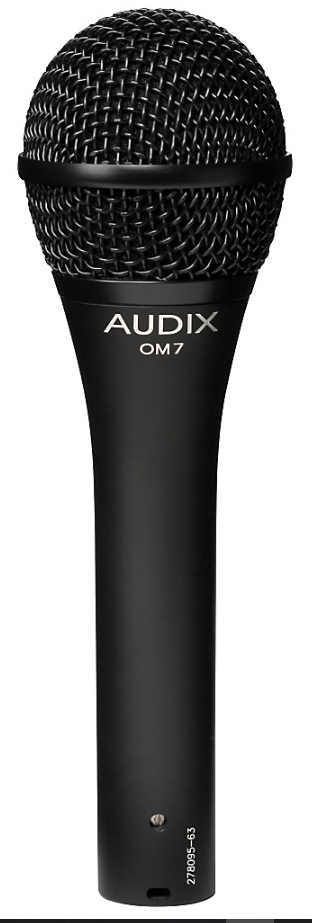
Hypercardioid dynamic with the tightest pickup pattern on this list, designed for maximum isolation. Audix OM7 delivers extreme off-axis rejection, a VLM (Very Low Mass) diaphragm for fast transients, and 144 dB SPL handling in a design that captures what’s directly in front of it and virtually nothing else.
Overhead, the OM7 gives you the most focused, isolated capture available from a dynamic mic. Each overhead mic in a stereo pair records a very defined section of the kit, producing sharp stereo separation. Be aware that the low sensitivity requires preamps with plenty of clean gain.
- Maximum Isolation
A hypercardioid pattern provides the tightest pickup and strongest side rejection of any mic in this roundup. As overheads, a pair of OM7s produces stereo separation that’s unusually defined for dynamics because each mic captures a narrow slice of the kit with minimal bleed from the opposite side. If your production demands precise stereo imaging from overheads, the OM7’s pattern delivers the sharpest left-right definition.
- Transient Speed
Audix’s VLM diaphragm captures stick attacks on cymbals and snare with faster, sharper transient definition than heavier standard dynamic diaphragms. In an overhead position where transient clarity determines how crisp and punchy the kit sounds, the VLM material preserves attack detail that gives drums their rhythmic precision in the recording.
- Gain Reality
Being honest with you: the OM7’s deliberately low sensitivity means overhead recordings require substantial preamp gain. Budget interfaces with noisy preamps above 50dB will add audible hiss to your overhead tracks. Pair the OM7 with quality preamps like those in Audient, RME, or similar units, and the isolation and clarity are remarkable. Know your signal chain before committing.
6. Telefunken M80
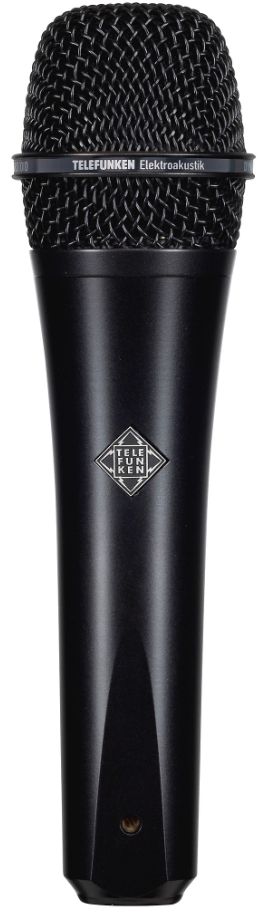
Handcrafted supercardioid from Connecticut that produces vocal-quality presence and articulation, which translates to overhead recordings with defined transients and forward midrange.
Telefunken M80 features a tightly controlled supercardioid pattern, low handling noise, a frequency response tuned for presence and clarity, handcrafted US construction, and a reputation among engineers for producing recordings that need minimal post-processing.
Overhead, the M80 captures the drum kit with a present, articulate character that makes individual elements clearly defined within the stereo image. Snare cracks have definition, cymbals have body without harshness, and the overall kit picture has a polished quality that’s unusual for dynamic overheads.
- Articulate Capture
M80’s capsule tuning produces overhead recordings where snare attacks, tom fills, and cymbal strikes are individually defined rather than blurring into a homogeneous wash.
Each element of the kit maintains its identity within the overhead image, which gives you more usable information for balancing the kit during mixing. Producers who use overheads as the primary drum sound rather than supplementary cymbals benefit from this separation.
- Pattern Consistency
A supercardioid pattern that maintains its rejection characteristics across the frequency range prevents the bass-frequency widening that some supercardioid designs exhibit. Consistent directionality means kick drum bleed doesn’t sneak in from the sides at low frequencies while cymbal detail is captured from the front. For overhead recording where different frequency content arrives from different angles, pattern consistency produces a more coherent capture.
- Minimal Processing
Engineers consistently report that M80 recordings require less post-processing than other dynamics, which is valuable for overhead tracks where heavy EQ and compression can destroy the natural kit sound. Starting with a source that’s closer to mix-ready means your overhead treatment can be gentle rather than corrective.
- Craft Quality
Each unit handcrafted in the USA and individually tested means matched pairs have tighter performance consistency than mass-produced alternatives. For stereo overhead use where matched mic performance directly affects imaging accuracy, the handcrafted quality means your left and right overheads are more closely aligned in response characteristics.
- Handling Silence
Advanced internal shock mounting produces remarkably low mechanical noise transmission. When your overhead stands pick up floor vibrations from bass drum hits, the M80’s isolation keeps that energy out of the recording. Less mechanical contamination means cleaner overhead tracks that preserve the kit’s acoustic character.
7. EV ND86
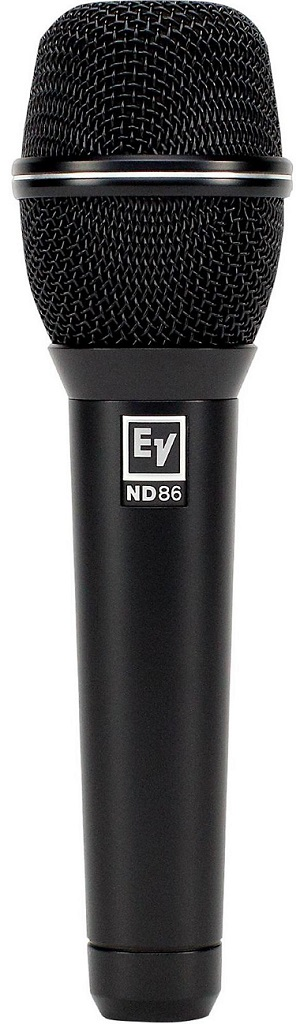
Electro-Voice supercardioid dynamic designed for live vocal use but surprisingly effective in an overhead position thanks to its controlled proximity response and strong off-axis rejection. EV ND86 provides a supercardioid pattern, a dual-impedance voice coil for consistent output, and a frequency response with presence and clarity that works well capturing a full drum kit from overhead distance.
I first tried the ND86 as an overhead out of curiosity, and what struck me was how balanced the kit sounded through it compared to some vocal dynamics that overemphasize one frequency range. Cymbals had body without being brittle, and the snare maintained its crack without getting lost.
- Dual Impedance
EV’s dual-impedance voice coil design produces consistent output regardless of the input impedance of your preamp or interface. In an overhead application where you might use different preamps across sessions, the consistent output means your overhead tone doesn’t change when you switch equipment. Some dynamics sound noticeably different depending on the load impedance, and the ND86 avoids that variability.
- Balanced Response
A frequency response that distributes presence evenly across the midrange rather than concentrating it in a narrow peak captures the drum kit with a more balanced, natural overhead sound. Each element of the kit receives similar tonal treatment rather than one frequency range dominating. For overheads where you want the mic to represent the whole kit honestly, the balanced response is genuinely practical.
- Side Rejection
Strong supercardioid off-axis rejection keeps each overhead mic focused on its section of the kit, producing stereo separation that helps define the width and positioning of individual drums and cymbals across the stereo field. Better rejection means a wider, more defined overhead image.
8. sE Electronics V7
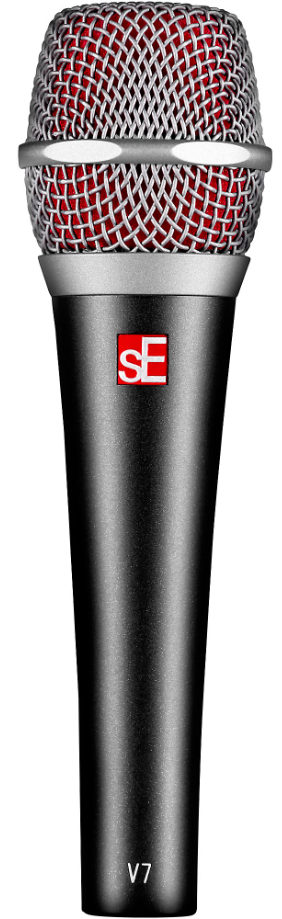
Dynamic with a custom aluminum voice coil that captures more high-frequency detail than most dynamics, which is specifically valuable in an overhead position where cymbal shimmer and stick detail define the character of the recording.
sE Electronics V7 features a custom aluminum voice coil for extended high-frequency response, an integrated grille and capsule assembly for reduced resonance, and a supercardioid pattern that adds focus to overhead positioning.
For overhead use, the V7’s extended treble response narrows the gap between dynamic and condenser performance more than most dynamics on this list. You still lose the airiest top-end octave, but you retain more cymbal shimmer and stick detail than heavier-coil dynamics provide.
- Aluminum Speed
A lightweight aluminum voice coil responds to high-frequency transients faster than standard copper coils, capturing cymbal attacks and hi-hat definition with more clarity. In an overhead position where cymbal performance dominates what you hear, the faster response means your recordings retain more of the high-frequency detail that makes cymbals sound like cymbals rather than white noise.
- Clean Resonance
An integrated grille and capsule assembly reduces the internal resonances that standard separate-grille designs create. From overhead position, the complex wash of cymbals, snare buzz, and room ambience passes through the mic with less coloration from housing resonances. Cleaner capture means more honest overhead recordings.
- Supercardioid Width
A supercardioid pattern provides tighter pickup than cardioid for better stereo separation in a matched overhead pair. Each mic captures a more defined section of the kit, producing a wider perceived stereo image. For drum productions where you want clear left-right separation in your overheads, the V7’s focused pickup helps.
- Detail Preservation
sE’s capsule tuning preserves midrange and high-frequency detail that gives the overhead recording enough information to serve as a meaningful representation of the full kit. Ghost notes on the snare, subtle hi-hat variations, and the decay of cymbal sustain are captured with enough definition to be useful during mixing.
9. AKG D5
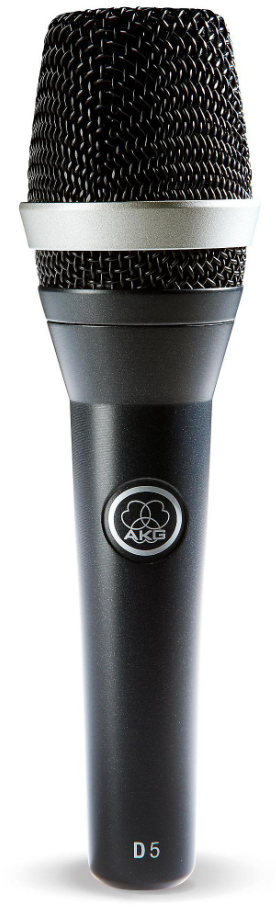
Professional supercardioid dynamic with a pronounced presence boost and extended treble response from AKG’s laminated varimotion diaphragm. AKG D5 provides a supercardioid pattern, a varimotion diaphragm with extended high-frequency response, a strong presence boost, an integrated shock mount, and a build quality that survives the realities of regular studio use.
Overhead, the D5 adds a bright, forward character to the drum kit capture that works well in productions where you want the overheads to cut through a dense mix. Cymbals have an aggressive presence, snare attacks pop forward, and the overall kit picture has an energy and immediacy that suits harder genres.
If your drums need to punch through heavy guitars and bass, the D5’s presence emphasis helps.
- Varimotion Treble
AKG’s laminated varimotion diaphragm extends the high-frequency response beyond what standard dynamic diaphragms achieve, capturing more cymbal detail and stick articulation from an overhead position. In an overhead role where treble content defines the character of the recording, extended response means you hear more of the cymbals’ metallic shimmer and the high-frequency components of snare attacks.
- Forward Presence
A pronounced presence boost in the upper midrange adds energy and aggression to the overhead capture, making the kit sound forward and immediate in a mix.
For rock, metal, punk, and any genre where drums need to be aggressive and prominent, the D5’s built-in presence emphasis does that work without EQ. If your overheads need to sound polished and gentle, the D5’s emphasis might be too much, but for aggressive productions, it’s a feature.
- Supercardioid Pair
A supercardioid pattern provides tighter frontal pickup than cardioid alternatives, giving a stereo overhead pair better channel separation. Each D5 captures a more focused section of the kit, producing defined stereo imaging that places individual drums and cymbals at specific positions across the width.
- Shock System
An integrated dual-layer shock mount isolates the capsule from mechanical vibrations transmitted through overhead stands. Hard-hitting drummers produce floor vibrations that travel up stands and contaminate overhead recordings with low-frequency rumble. The shock system keeps that mechanical energy out of your overhead tracks.
- Durable Service
AKG’s metal construction with a reinforced grille survives the regular handling, positioning, and occasional drops that studio microphones endure during drum sessions. Setting up overheads means adjusting boom arms, repositioning between takes, and occasionally bumping mics during setup. Durable construction means the D5 continues performing consistently regardless of how many sessions it sees.
10. Audix OM5
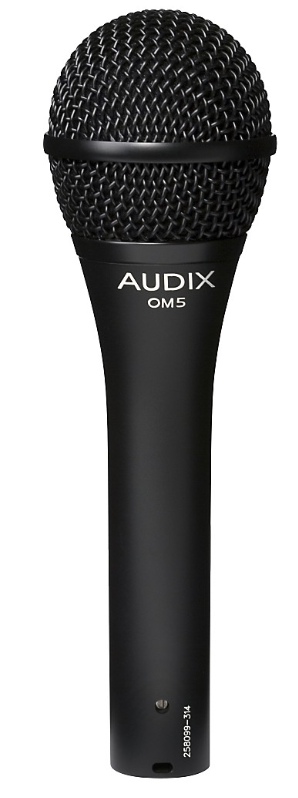
A more accessible alternative to the OM7 with a hypercardioid pattern that still provides excellent isolation without demanding as much preamp gain. Audix OM5 delivers a hypercardioid pickup pattern, VLM diaphragm technology, a frequency response tuned for vocal clarity, and higher sensitivity than the OM7, making it more practical with a wider range of preamps and interfaces.
For overhead use, the OM5 gives you much of the OM7’s isolation and transient speed with a more forgiving gain requirement. If you like the idea of hypercardioid overheads but don’t have the premium preamps that the OM7 demands, the OM5 is the practical alternative that still delivers excellent channel separation.
- Practical Hyper
A hypercardioid pattern with strong off-axis rejection provides excellent stereo separation in an overhead pair without the extreme sensitivity penalty that the OM7 imposes. Each overhead mic captures a tightly focused section of the kit, producing defined stereo imaging while remaining practical with mid-range preamps. For engineers who want hypercardioid isolation without the OM7’s demanding gain requirements, the OM5 is a more accessible starting point.
- VLM Transients
Audix’s Very Low Mass diaphragm captures stick attacks with faster, sharper transient definition than heavier standard diaphragms. In overhead position, the VLM speed preserves the rhythmic precision of cymbal work and snare ghost notes that slower diaphragms would soften. Transient clarity from overheads defines how crisp and defined the kit sounds in your mix.
- Manageable Gain
Higher sensitivity than the OM7 means the OM5 produces a stronger signal from overhead distance without requiring the extreme preamp gain that the OM7 demands. Mid-range interfaces and preamps handle the OM5 comfortably, which makes hypercardioid overhead recording accessible to studios that don’t own premium gain sources.
- Audix Quality
Consistent Audix manufacturing means two OM5s purchased for a stereo overhead pair will perform closely matched without requiring serial-number pairing. For stereo overhead recording where matched performance between left and right mics directly affects imaging accuracy, manufacturing consistency matters. You buy two OM5s, position them, and trust that they’re delivering the same frequency response and pattern behavior.

Hello, I’m Viliam, I started this audio plugin focused blog to keep you updated on the latest trends, news and everything plugin related. I’ll put the most emphasis on the topics covering best VST, AU and AAX plugins. If you find some great plugin suggestions for us to include on our site, feel free to let me know, so I can take a look!