

Your first condenser microphone is one of those purchases where spending a little time choosing well saves you from replacing it six months later. Plenty of beginners buy the cheapest condenser they can find, discover it picks up every room reflection, computer fan, and creaky chair in their untreated bedroom, and conclude that condenser mics don’t work for them.
Others buy an expensive studio condenser that sounds amazing through great preamps in a treated room but mediocre through their budget interface in a reflective bedroom. Neither experience is the microphone’s fault. It’s a matching problem.
What you want as a beginner is a condenser that sounds noticeably better than a dynamic mic on vocals and acoustic instruments, handles the imperfect conditions of a home recording space reasonably well, doesn’t require an expensive preamp to sound good, and is forgiving enough that you learn from it rather than fight with it.
I’ve picked seven handheld condenser microphones that serve beginners well, each balancing condenser sensitivity and detail against the practical realities of recording in rooms that aren’t professionally treated. Most of these mics also pull double duty as performance microphones, which means you get a studio recording tool and a live mic in the same purchase.
1. the t.bone MB 78 Beta
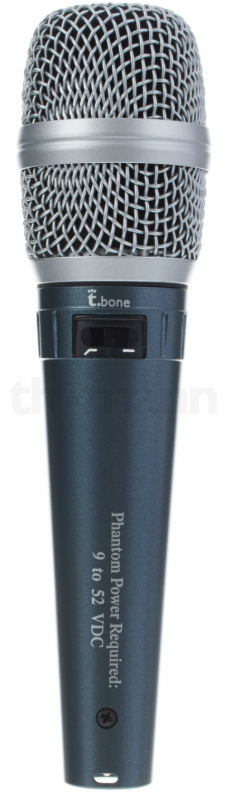
Possibly the most affordable condenser mic you can buy that still delivers genuine condenser quality, making it the zero-risk way to discover whether condenser recording suits your voice and your room.
the t.bone MB 78 Beta gives you a small-diaphragm condenser capsule in a pencil format, a supercardioid polar pattern for focused pickup, a switchable low-cut filter, and stainless steel construction that feels substantially more expensive than it costs.
For beginners, I think the MB 78 Beta removes the financial barrier that keeps people from trying condenser recording.
If you’ve been using a dynamic mic and wondering whether a condenser would make a difference to your recordings, spending this little to find out means the experiment costs less than a decent dinner out. Your recordings will immediately have more high-frequency detail, more sensitivity to dynamics, and more of the “air” that gives condenser recordings their character.
- Entry Cost
At its remarkably low cost, the MB 78 Beta puts condenser recording within reach of anyone with a functioning audio interface and phantom power. You stop debating whether to try condenser recording and just try it, because the financial risk is negligible. For students, hobbyists, and beginners who aren’t sure condenser mics suit their needs, the MB 78 Beta is the lowest-cost way to answer that question with actual experience rather than online forum opinions.
- Supercardioid Help
A supercardioid polar pattern provides tighter pickup than standard cardioid, which is genuinely helpful for beginners recording in untreated rooms. Tighter pickup means less room reflection captured, less background noise, and a more focused recording that requires less corrective processing. For your first condenser experience, having the pattern work in your favor rather than against you means better results from imperfect environments.
- Low-Cut Utility
A switchable low-cut filter reduces the rumble, proximity bass, and low-frequency room noise that beginners often struggle with in condenser recordings. If your mic is picking up traffic, HVAC rumble, or the bass buildup from recording close to the capsule, engaging the filter at the source is simpler and more effective than trying to fix the problem with EQ in your DAW afterward. For beginners who don’t yet know how to handle low-frequency problems in post-production, the hardware filter provides an immediate solution.
- Pencil Format
A slim pencil-style body is easier to position on a stand or boom arm than larger handheld condensers, which matters for beginners who are still learning about mic placement. You can aim the MB 78 precisely at a sound source, adjust the angle by small increments, and the compact profile means you see exactly where the mic is pointing. For learning mic technique on vocals, acoustic guitar, and other sources, the visual clarity of a pencil mic helps you understand what you’re recording.
2. Rode M2
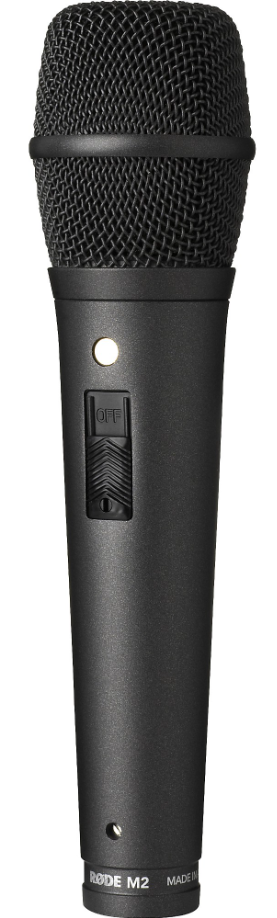
Australian-made condenser from the company that’s become one of the most trusted names in home studio and content creation microphones.
Rode M2 features a condenser capsule with high output and low self-noise, a supercardioid pattern for focused capture, a hardened nickel body with internal shock mounting, a built-in pop filter integrated into the grille, phantom power operation, and the Rode warranty that covers you for an exceptionally long period.
I like the Rode M2 for beginners because it bridges the gap between stage and studio in a way that gives you a versatile tool rather than a specialized one. You can record vocals and acoustic instruments with condenser clarity, then take the same mic to a rehearsal or open mic night and use it on a PA system.
For beginners who perform and record, having one mic that handles both saves you from buying two.
- Rode Quality
Rode’s manufacturing standards produce a consistently performing condenser that sounds the way the specs say it should, unit after unit. For beginners buying their first condenser without the experience to evaluate whether their specific mic is performing correctly, Rode’s quality control provides assurance that what you receive matches what was reviewed and recommended.
- Stage-Studio Dual
Designed for both live performance and studio recording, the M2 gives beginners a single mic that covers the two most common scenarios they encounter. You record vocals at home through your interface, then bring the same mic to a gig and plug it into a PA. For beginners who are building their first mic collection and can’t afford separate studio and live mics, the dual-purpose design doubles the value of your purchase.
- Internal Shock
An internal shock mount isolates the capsule from handling vibration and stand-transmitted noise, which beginners encounter constantly from desk-mounted boom arms, floor vibrations, and accidental bumps. Most beginners don’t own a separate external shock mount, so having isolation built into the mic means cleaner recordings without additional equipment purchases.
- Pop Protection
A built-in pop filter in the grille handles plosive consonants without requiring a separate external pop screen. For beginners who might not own or know how to position a pop filter, the integrated protection means your vocal recordings are cleaner from the start. One less piece of equipment to buy, set up, and position correctly reduces the complexity of your first recording sessions.
- Output Strength
High output for a condenser means you need less preamp gain to achieve a usable recording level. Lower gain means lower preamp noise, which is practically important for beginners using budget interfaces where the preamp’s noise floor becomes audible at higher gain settings. Getting a clean signal with less gain gives you more headroom and less hiss.
- Warranty Length
Rode’s extended warranty coverage protects your investment for a period that significantly exceeds the industry standard. For a first condenser purchase where you’re committing money to a technology you’re still learning about, knowing the manufacturer stands behind the product for years provides genuine peace of mind.
3. Sennheiser e 865
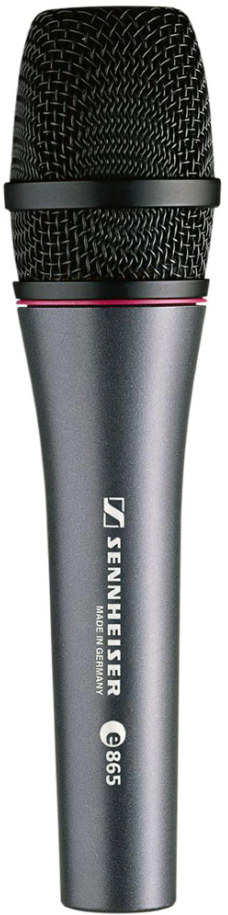
German engineering in a handheld condenser that’s built for demanding professional use, providing beginners with a mic they’ll never outgrow as their skills develop. Sennheiser e 865 features a supercardioid condenser capsule, a smooth, detailed frequency response without aggressive peaks, and Sennheiser’s renowned build quality that survives years of daily use.
For beginners who want to buy one condenser mic and never need to replace it as they improve, the e 865 is the investment choice. It performs at a professional level from day one, which means your recordings improve as your skills improve rather than being limited by the microphone. Your first recordings will be clean and detailed, and your hundredth recording will reveal how much better you’ve gotten rather than how much the mic was holding you back.
- Grow-With Quality
Sennheiser’s professional-grade capsule and construction mean the e 865 performs at a level that won’t limit your recordings as your skills develop over years. Beginners who buy budget mics often replace them within a year as their ear develops and they hear limitations they couldn’t perceive initially. Investing in the e 865 means you skip that replacement cycle entirely, because the mic’s quality ceiling is higher than most home recordists will ever reach.
- Smooth Detail
A frequency response without harsh presence peaks captures your voice with detail and clarity that doesn’t require de-essing or corrective EQ to sound professional. Many vocal condensers push the sibilance range hard, which sounds impressive in isolation but creates problems in a mix. For beginners who don’t yet have the mixing skills to correct harshness, a mic that doesn’t create harshness in the first place is practically more useful.
- Sennheiser Build
German manufacturing with metal construction and precision engineering produces a mic that survives the learning process without degradation. Beginners drop mics, store them improperly, and handle them roughly while learning technique. Sennheiser’s build quality means the e 865 continues performing correctly despite the treatment it receives during the learning period.
4. Audio-Technica AT2010
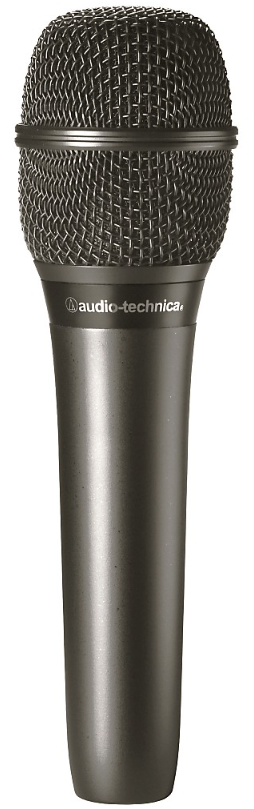
Audio-Technica’s handheld condenser designed for vocal performance, bringing the Japanese company’s studio microphone engineering to a practical, affordable format that works equally well in a bedroom studio. Audio-Technica AT2010 features a cardioid condenser capsule with low noise, a frequency response tailored for vocal clarity, an internal shock mount for reduced handling noise, and the build quality that Audio-Technica’s professional reputation requires.
What I find practical about the AT2010 for beginners is Audio-Technica’s approach to vocal frequency tuning.
It captures vocals with enough presence to sound clear and detailed without the aggressive brightness that makes some condensers difficult to work with for inexperienced mixers. If you plug in the AT2010 and record a vocal, the result sounds balanced and usable without requiring you to understand EQ to make it work.
- Vocal Balance
A frequency response tuned for balanced vocal reproduction gives you recordings that sound professional without the aggressive high-frequency emphasis that creates problems for beginners who don’t know how to tame harshness in post.
Your vocals come through with clarity and detail in proper proportion, which means you can focus on learning performance and recording technique rather than fighting the microphone’s frequency character during mixing.
- Low Noise
Low self-noise keeps the microphone’s contribution to the noise floor minimal, which matters for beginners recording in quiet home environments where any microphone hiss is audible. Clean quiet passages, breathy vocals, and delicate performances are captured without the background hiss that noisier condensers introduce. For recording styles that include dynamic range from whisper to full voice, the low noise floor preserves the quiet moments.
- Cardioid Focus
A cardioid polar pattern provides a good balance between focused pickup and forgiveness for imprecise mic technique. Supercardioid patterns reject more room noise but are less forgiving if you move off-axis, while cardioid gives you a wider sweet spot that accommodates the natural movement beginners make while performing.
If you haven’t yet developed the discipline of staying precisely on-axis while singing, the cardioid pattern’s wider acceptance angle works in your favor.
- AT Heritage
Audio-Technica’s decades of professional microphone manufacturing produce a consistently performing product that meets its published specifications reliably.
For beginners choosing a first condenser based on reviews and specifications, knowing the manufacturer’s quality control ensures your specific unit performs as described. Audio-Technica doesn’t cut corners at any level of their range, which means even their accessible models deliver genuine quality.
5. Behringer SB 78A
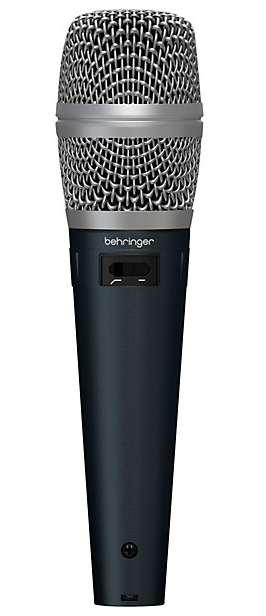
An accessible condenser from the company known for making professional audio equipment available at the most competitive costs in the industry. Behringer SB 78A features a condenser capsule with a cardioid pickup pattern, a frequency response designed for vocal and speech applications, and a rugged construction at a cost that makes condenser recording accessible to virtually any budget.
I’ll be straightforward: the SB 78A doesn’t match the refinement or detail of the Rode, Sennheiser, or Audio-Technica on this list. But it works, it captures audio with genuine condenser characteristics at a cost that’s hard to argue with, and for beginners who need to stay within a very tight budget, it provides the condenser experience without the condenser price tag.
- Accessible Budget
At its cost, the SB 78A makes condenser recording available to beginners who assumed condensers were beyond their budget.
You get a functioning condenser capsule, a usable frequency response, and the phantom-powered operation that defines the condenser experience, all at an investment level that removes financial anxiety from the purchase decision. For students and hobbyists who need to keep costs minimal, the SB 78A is a practical starting point.
- Vocal Application
A frequency response focused on vocal clarity gives you recordings that sound noticeably better than USB mics and budget dynamics on speech and singing.
The condenser capsule’s sensitivity to vocal detail, breath sounds, and dynamic variation produces recordings that have the character and presence that condenser mics are known for. Your first condenser vocal recordings through the SB 78A will demonstrate why producers prefer condensers for voice.
- Simple Operation
Straightforward plug-and-play operation with phantom power means you connect the SB 78A to any interface with 48V, and it works. No complicated setup, no software dependencies, no additional purchases required beyond an XLR cable. For beginners who want to start recording with minimum complexity, the simplicity is genuinely valuable.
6. Audio-Technica ATM 710
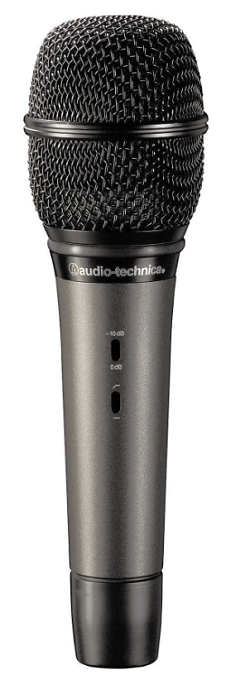
Audio-Technica’s step-up condenser in a form factor that sits between their affordable AT2010 and their premium AE5400, providing more refined performance for beginners ready to invest a bit more. Audio-Technica ATM 710 features a cardioid condenser capsule with extended frequency response, a smooth presence rise for vocal clarity, a double-wall grille for mechanical isolation, an internal shock mount with rubber suspension, and high SPL handling that accommodates everything from whispered passages to powerful belting.
For beginners who have a slightly higher budget and want to skip the “starter mic you’ll replace in a year” phase, the ATM 710 provides a meaningful upgrade in detail and refinement without jumping to premium pricing. You get a mic that rewards your improving technique with increasingly better results as you learn.
- Refined Detail
A condenser capsule with extended frequency response captures vocal and instrument detail with more clarity and nuance than budget condensers provide. You hear more of the subtle qualities in your voice, the texture of your singing, and the dynamics of your performance.
For beginners who are developing their ear and learning to hear the differences that recording quality makes, the ATM 710 provides enough detail to be a genuine learning tool.
- Presence Tuning
A smooth presence rise adds vocal clarity without the sharp peaks that create sibilance problems for beginners who don’t know how to de-ess. Audio-Technica’s approach to presence enhancement is musical and gradual rather than aggressive, which means your vocals sound clear and forward without the harsh consequences that require corrective processing.
- Double Grille
A double-wall grille construction adds mechanical isolation between the outside world and the capsule, reducing handling noise and providing additional pop protection. For beginners who might not have a separate pop filter or who occasionally bump the mic during recording, the double-wall grille provides a buffer that protects the capsule and the recording.
- SPL Range
High SPL handling means the ATM 710 captures loud vocalists, close-mic’d instruments, and dynamic performances without capsule distortion. Beginners who play acoustic guitar while singing, or who record friends with powerful voices, don’t need to worry about overdriving the capsule. For a mic that handles whatever you put in front of it, the SPL headroom provides a safety margin.
- Rubber Suspension
A fully rubber-mounted internal shock system provides the capsule isolation that studio-only condensers achieve through external shock mounts.
For beginners who don’t own a separate shock mount and record with the mic on a standard clip or basic boom arm, the internal suspension keeps stand vibrations, floor rumbles, and accidental bumps out of the recording. Less mechanical noise means cleaner recordings with less post-processing required.
7. Lewitt MTP 350 CM
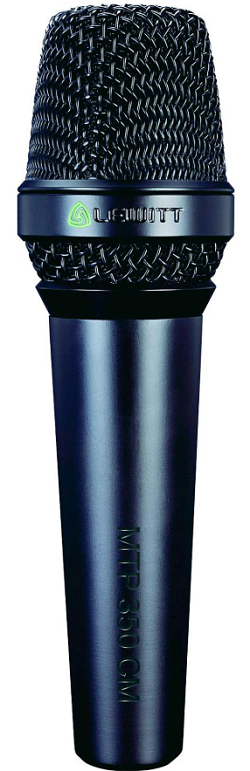
Vienna-engineered handheld condenser that reviewers consistently describe as having “the handling noise of a dynamic but the clarity of a condenser,” which is exactly the combination beginners need. Lewitt MTP 350 CM features a lightweight diaphragm condenser capsule, a rubber-mounted internal shock system for remarkably low handling noise, a built-in wind and pop filter, and zinc die-cast construction that survives touring-level use.
For beginners, the MTP 350 CM solves the biggest practical problem with handheld condensers: they tend to pick up every hand movement, grip shift, and cable bump as handling noise in your recording. Lewitt’s internal suspension reduces this so effectively that reviewers compare the handling noise to dynamic mics, while the capsule itself delivers unmistakable condenser clarity and detail.
- Handling Control
Lewitt’s rubber-mounted capsule suspension reduces handling noise to levels that reviewers describe as comparable to dynamic microphones. For beginners who don’t have perfect mic technique and whose grip, hand position, and cable management are still developing, the exceptionally low handling noise means your recordings stay clean despite the handling imperfections that come with learning.
Condensers that amplify every finger movement punish beginners for technique they haven’t learned yet. The MTP 350 CM forgives those mistakes.
- Condenser Clarity
Despite the dynamic-level handling noise, the lightweight condenser capsule delivers the sensitivity, detail, and high-frequency extension that defines condenser recording. You get the best of both worlds: a mic that captures your voice with condenser fidelity while rejecting the mechanical noise that makes most handheld condensers frustrating for beginners to use. Your recordings sound like they came through a condenser because they did, but without the handling artifacts that most condensers add.
- Touring Durability
Zinc die-cast construction with a hardened spring steel grille provides the ruggedness that protects your investment through the learning process and beyond. Beginners handle microphones roughly, store them casually, and subject them to conditions that fragile equipment doesn’t survive. Lewitt built the MTP 350 CM for professional touring abuse, which means it handles beginner-level handling without concern.

Hello, I’m Viliam, I started this audio plugin focused blog to keep you updated on the latest trends, news and everything plugin related. I’ll put the most emphasis on the topics covering best VST, AU and AAX plugins. If you find some great plugin suggestions for us to include on our site, feel free to let me know, so I can take a look!