

Not everyone has a studio big enough for a wall of full-size keyboards. Plenty of us are making music in bedrooms, apartments, home offices, and shared spaces where every inch of desk real estate matters.
The good news is that small hardware synths have gotten so capable in the past few years that downsizing doesn’t mean downgrading. Some of the most impressive synthesis engines on the market now come in formats that fit on a bookshelf, sit beside a laptop, or slip into a backpack.
What I appreciate about the current crop of compact synths is that the manufacturers aren’t just shrinking the box and calling it a day. You’re getting proper synthesis depth, quality keybeds (or creative alternatives to keybeds), built-in sequencers, effects engines, and modulation systems that rival full-size instruments.
The trade-offs are real: smaller keyboards mean less playing range, desktop modules mean you need an external controller, and some compact formats sacrifice a few features for portability. But if you know what you’re giving up and what you’re gaining, the right small synth can be the centerpiece of a powerful, space-efficient setup.
I’ve gathered seventeen compact synths that deliver serious capability without demanding serious desk space.
1. Arturia AstroLab 37
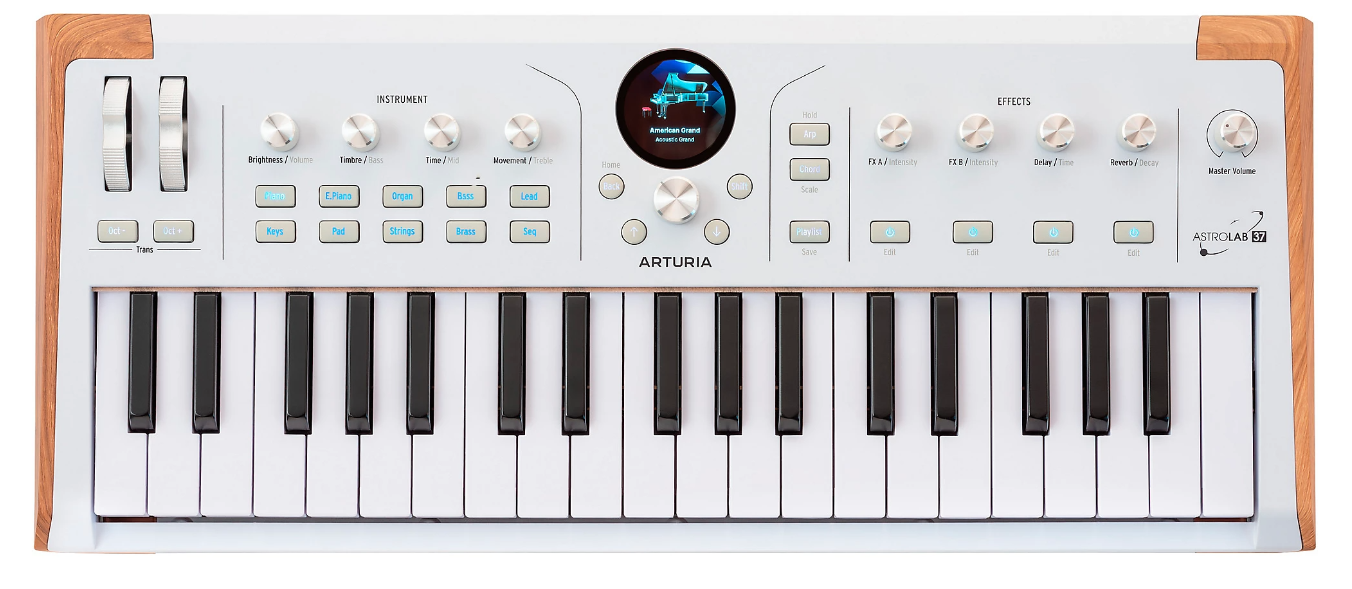
The most synthesis variety you can fit into a compact 37-key format, period. Arturia AstroLab 37 runs 11 different synthesis engines and over 1,800 presets from the entire Arturia V Collection natively on the hardware, covering virtual analog, FM, wavetable, granular, physical modeling, phase distortion, vector, and more in a package that weighs under two kilograms.
For space-conscious producers, the AstroLab 37 replaces an entire rack of different synths with a single instrument that fits comfortably on a desk beside your laptop and audio interface.
- Eleven Engines
11 synthesis engines running natively means you’re not limited to one type of sound generation. The engines span sampling, virtual analog, FM, physical modeling, phase distortion, vocoder, vector synthesis, harmonic, granular, wavetable, and Karplus-Strong, each pulled from Arturia’s respected V Collection instruments. Having this range in a single compact unit eliminates the need for multiple synths covering different synthesis types, which is the whole point when you’re saving space.
- Standalone Power
The hardware operates independently without a computer, running the same CPU as the full-size AstroLab models. For small setups where you don’t want a laptop in the signal chain, the standalone operation means you add a single compact keyboard to your desk and get access to the entire Arturia sound library. No screens, no DAW boot-up, no plugin loading.
- Compact Footprint
At 515 x 214mm and under 2kg, the AstroLab 37 is one of the smallest full-featured stage keyboards available. The dimensions mean it fits on a keyboard stand alongside a laptop, sits on a desk without dominating the workspace, or travels in a backpack to sessions and gigs. The small physical size relative to the synthesis power inside is the AstroLab 37’s primary selling point.
- Dual Layers
Dual-layer capability lets you combine two instruments simultaneously for split or layered sounds from a single compact unit. Layering a piano from Piano V with a pad from Pigments creates complex textures that would otherwise require two separate instruments taking up twice the space.
Get the Free Plugin Starter Kit
The genuinely useful free DAWs and plugins worth installing. No filler. Straight to your inbox.
2. Korg Minilogue XD
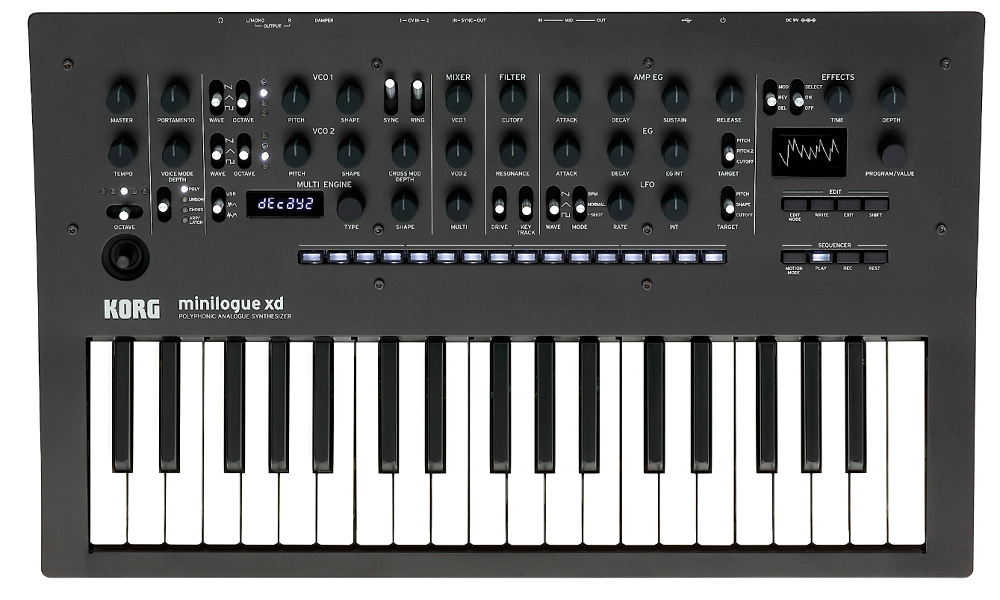
One of the most popular entry-level polysynths ever made, and its compact size is a big reason why. Minilogue XD gives you four voices of true analog/digital hybrid polyphony with a digital Multi-Engine, built-in effects, and a motion sequencer in a format that takes up about as much desk space as a large book.
The Minilogue XD proves you don’t need a full-size keyboard to access genuine analog polyphony. Four voices of real analog oscillators and filters in this footprint is an achievement.
- Hybrid Engine
Two analog VCOs and a digital Multi-Engine per voice give you the warmth of analog combined with the timbral variety of digital.
The Multi-Engine adds VPM (Variable Phase Modulation), user-loadable oscillators, and digital noise that extend the Minilogue XD well beyond what a pure analog synth at this size could offer. The hybrid architecture means one compact synth covers ground that would require separate analog and digital instruments.
- 37 Slim Keys
The 37 slim-key keyboard with velocity sensitivity provides three octaves of playing range in a footprint significantly smaller than a standard 37-key synth. The slim keys reduce the overall width, which matters when desk space is tight. Three octaves handles most synth playing scenarios and you can octave-shift for the rest.
- Motion Sequencing
The motion sequencer records knob movements and plays them back as per-step parameter automation.
The motion capability turns the compact Minilogue XD into a self-contained composition tool where evolving, automated textures play back without requiring a DAW.
- OLED Display
A built-in OLED oscilloscope shows the waveform in real time, which is educational and practical in equal measure.
The display helps you understand what your parameter changes are doing to the sound, which is particularly useful for producers learning synthesis on what’s often their first hardware instrument.
- CV Connectivity
Two CV inputs let you connect the Minilogue XD to modular synth systems, expanding its role from standalone synth to part of a larger modular setup. The CV connectivity adds integration options that most synths at this size and price don’t offer.
- User Content
The user-loadable Multi-Engine oscillators and effects can be expanded with community-created content. You can download third-party oscillator types and effect algorithms that add new synthesis capabilities beyond what Korg shipped, which extends the instrument’s life and versatility significantly.
3. Behringer MS-5
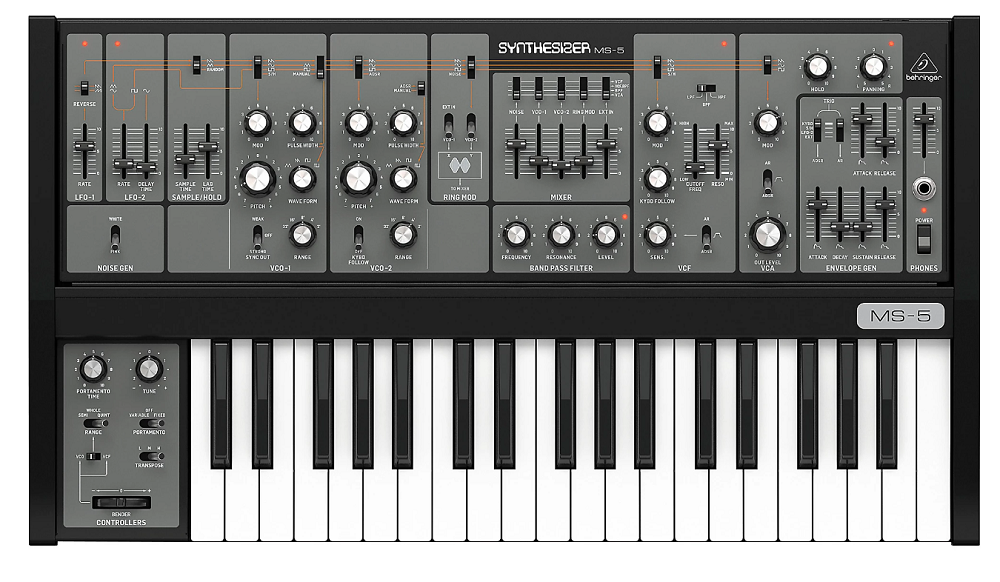
A compact recreation of the Roland SH-5 monosynth with the dual-filter architecture and ring modulator that made the original a sound design favorite.
Behringer MS-5 packs a surprisingly capable analog signal path into a desktop module format that sits neatly beside your other gear without demanding keyboard space.
The desktop format means you play it from whatever MIDI controller you already own, which is the most space-efficient approach if you’ve already got a keyboard on your desk.
- Dual Filters
Two analog filters (a high-pass and a low-pass) that can be used independently or in combination give you more tonal shaping options than most compact monosynths. The dual filter architecture creates the specific frequency-sculpted, aggressive tones that the SH-5 was known for, and the filter interaction produces results that single-filter designs can’t replicate.
- Ring Modulator
A built-in ring modulator generates metallic, inharmonic tones by multiplying the oscillator signals. The ring mod adds sound design capability that goes well beyond standard subtractive synthesis, producing textures suited to electronic music, sound effects, and experimental work.
- Desktop Module
The compact desktop format means the MS-5 takes up minimal desk space while delivering a full analog monosynth signal path. You don’t need to find room for a keyboard because the module connects to whatever MIDI controller you already have.
4. Novation MiniNova
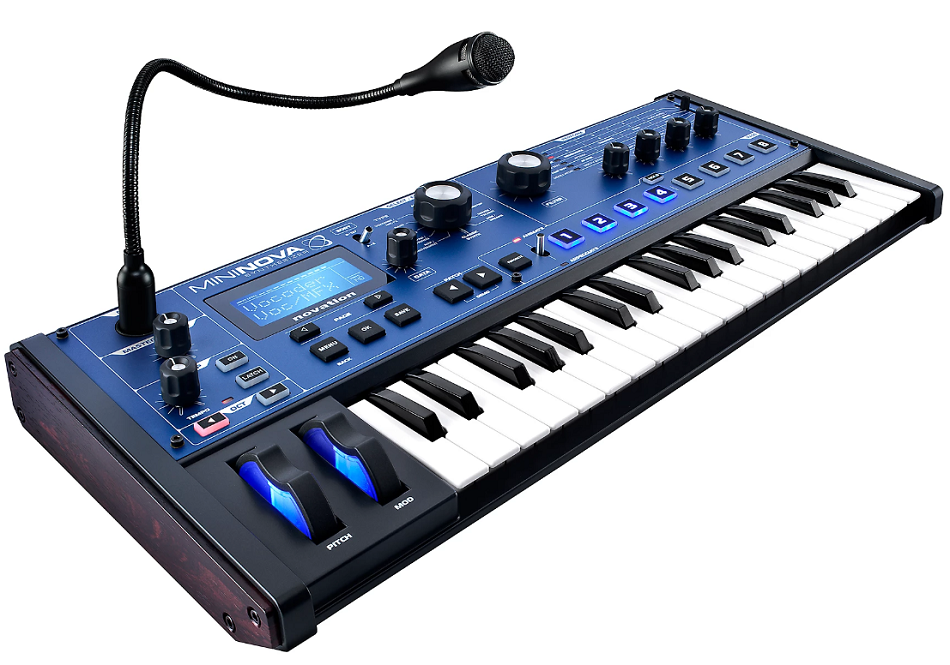
A compact synthesizer with a surprisingly powerful virtual analog engine, vocoder, and extensive effects in a format built specifically for portability and small setups. Novation MiniNova gives you 256 patches, 14 voice types, and a 37-note mini keyboard with an animate function that lets you morph between sound states using the dedicated buttons.
The MiniNova packs a lot of synthesis into a small, lightweight package that’s been a staple of compact setups for years.
- VocalTune
A built-in vocoder and VocalTune effect with a dedicated microphone input processes your voice in real time through the synth engine. The vocoder capability adds a dimension that most compact synths don’t include, letting you create vocoded pads, talk-box effects, and pitch-corrected vocal textures from a single small unit.
- Animate Buttons
The Animate function with dedicated buttons lets you morph between sound states in real time by pressing and holding the buttons during performance. Each button triggers a different set of parameter changes, creating the kind of dramatic timbral shifts that normally require multiple knob movements. The Animate feature makes the MiniNova more performable than its compact size suggests.
- Effects Engine
A comprehensive effects section with reverb, delay, chorus, distortion, compression, EQ, and more processes sounds within the synth. The effects quality is good enough for finished production, meaning the compact MiniNova delivers processed, mix-ready sounds without external effect chains.
- Lightweight
At under 3kg, the MiniNova is light enough to carry in one hand and fits in a standard laptop bag. The lightweight construction makes it genuinely portable for sessions, gigs, and travel without adding significant weight to your setup.
5. Arturia MicroFreak
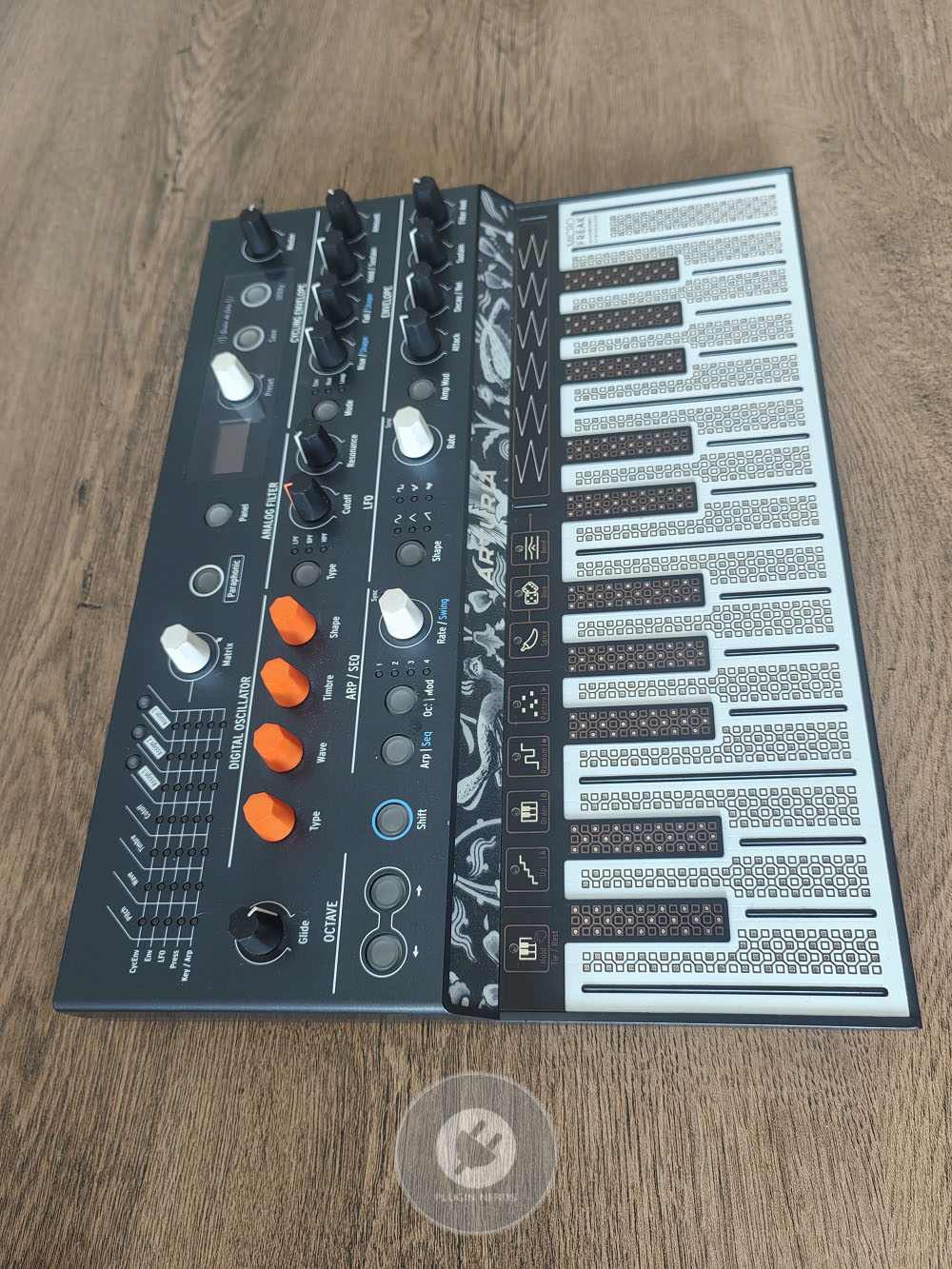
The 25-key capacitive touch format makes this one of the most compact fully-featured synths available, and the hybrid digital/analog architecture with over a dozen oscillator engines delivers more timbral variety per square centimeter than anything else on this list. Arturia MicroFreak is the Swiss Army knife of small synths.
I keep coming back to the MicroFreak on these lists because it genuinely does more things in less space than any competing instrument at its price point.
- Touch Keyboard
The capacitive touch keyboard eliminates the mechanical key mechanism entirely, which is partly why the MicroFreak is so compact. The touch strips respond to pressure and position, providing expressive control in a format that’s thinner and lighter than any mechanical keyboard. The flat profile means you can stack the MicroFreak on top of other gear or slide it into a narrow shelf space.
- Engine Variety
Over a dozen synthesis engines covering virtual analog, wavetable, FM, granular, Karplus-Strong, modal, and more in a single compact unit. The engine variety eliminates the need for multiple synths to cover different synthesis types, which is the most effective space-saving strategy there is: one instrument that does the work of several.
- USB Power
USB power means no wall adapter cluttering your setup. You can power the MicroFreak from your laptop’s USB port, a USB battery pack, or a powered hub. The USB power reduces cable clutter and eliminates the need for a dedicated power outlet, which matters in tight spaces where every socket counts.
6. Korg Modwave MKII
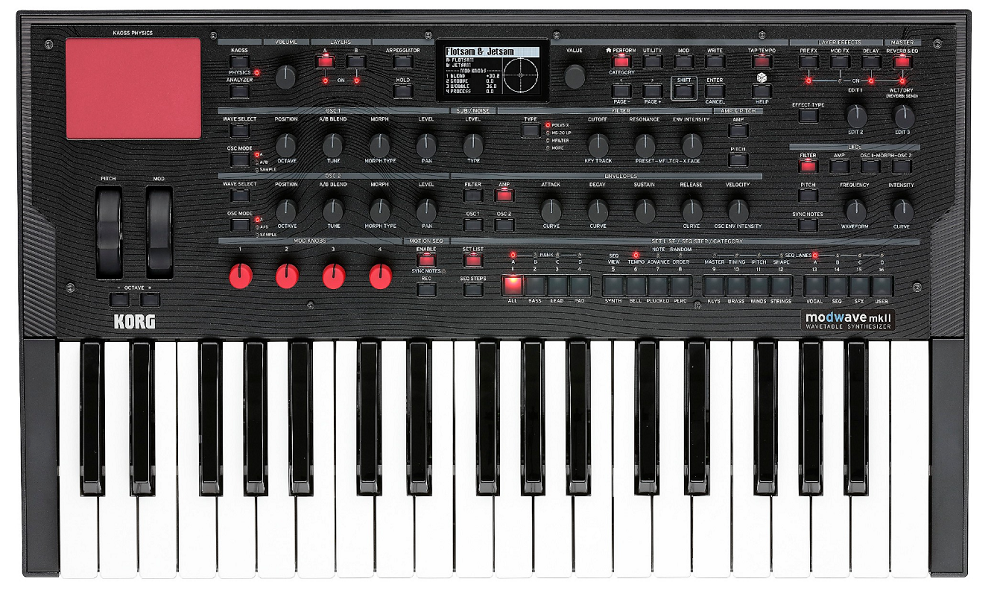
A 37-key wavetable powerhouse that brings serious sound design capability into a compact keyboard format with the Kaoss Physics XY pad and motion sequencing. Korg Modwave MKII gives you deep wavetable synthesis with sample import, physics-based modulation, and extensive effects in a footprint comparable to the Minilogue XD.
For producers who need wavetable depth in a small package, the Modwave MKII competes with desktop units costing significantly more while including a keyboard and performance controls.
- Kaoss Physics
The Kaoss Physics XY pad generates modulation from simulated physical behavior (a ball bouncing and rolling across a surface).
The physics-based modulation produces curves that standard LFOs and envelopes can’t create, and the XY pad doubles as a performance control for real-time sound manipulation. Having this on a compact synth adds creative modulation that normally requires more expensive or larger instruments.
- Sample Import
You can load your own audio samples into the wavetable engine via SD card, meaning any recording you make can become the basis for wavetable synthesis. Field recordings, vocal samples, drum hits, anything you import gets sliced into wavetable frames for morphing and modulation. The sample import extends the compact Modwave well beyond factory content.
- Wavetable Engine
Two wavetable oscillators with access to 200+ wavetable sets and audio-rate scanning provide deep tonal variety. The wavetable depth gives you everything from conventional synth tones to abstract digital textures depending on how you scan and modulate the tables. The engine complexity rivals desktop wavetable synths in a keyboard format.
- Motion Sequence
Motion sequencing records knob movements as per-step automation, creating evolving textures that loop and develop without DAW involvement.
The self-contained motion recording makes the compact Modwave a complete composition tool for producers who want to work away from a computer.
- Effects Section
An extensive effects engine with reverb, delay, modulation, and distortion processes sounds within the synth at quality levels that suit finished production. The built-in effects mean the Modwave produces complete, spatially processed sounds from its compact format without requiring external processing.
7. Korg Volca Bass
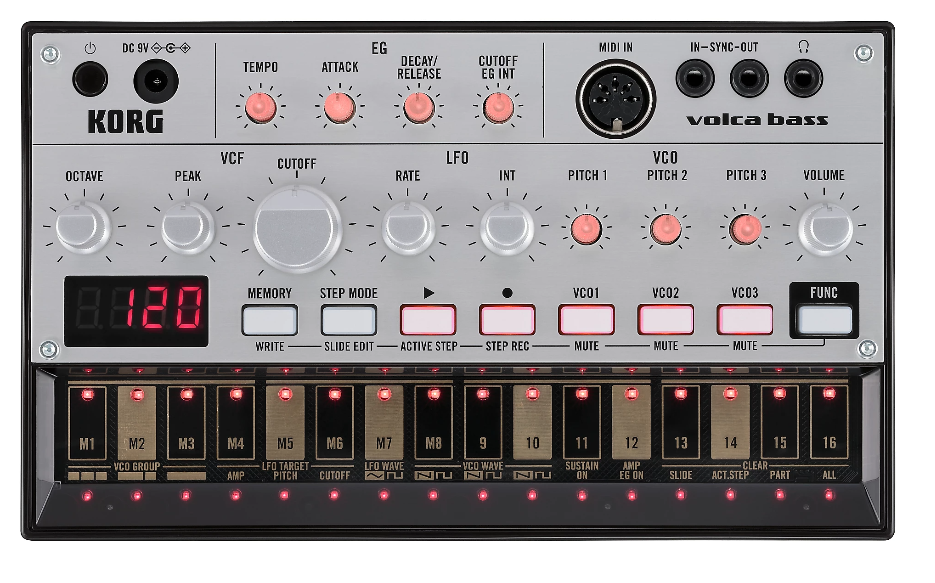
One of the smallest and most affordable real analog synths you can buy. Korg Volca Bass fits in the palm of your hand and gives you three analog oscillators with individual tuning, a resonant analog filter, and a step sequencer for less than the cost of most single Eurorack modules.
The Volca format is the ultimate space-saver because the entire instrument is roughly the size of a large smartphone.
- Three Oscillators
Three analog VCOs with individual pitch and waveform control give you significantly more harmonic complexity than other ultra-compact synths offer. You can stack all three for massive unison bass, spread them across octaves, or detune for thick, chorused textures. Three oscillators at this size is genuinely unusual.
- Palm Size
The entire instrument fits in your hand and runs on batteries, meaning it can go literally anywhere. The extreme compactness makes the Volca Bass the most space-efficient analog synth in existence, taking up less desk space than a coffee mug.
- Sync Chain
3.5mm sync connects to other Volcas for multi-instrument setups that take up collectively less space than a single full-size synth. A Volca Bass, Volca FM2, and Volca Drum side by side occupy roughly the footprint of a single 37-key keyboard.
8. Behringer Pro-VS Mini
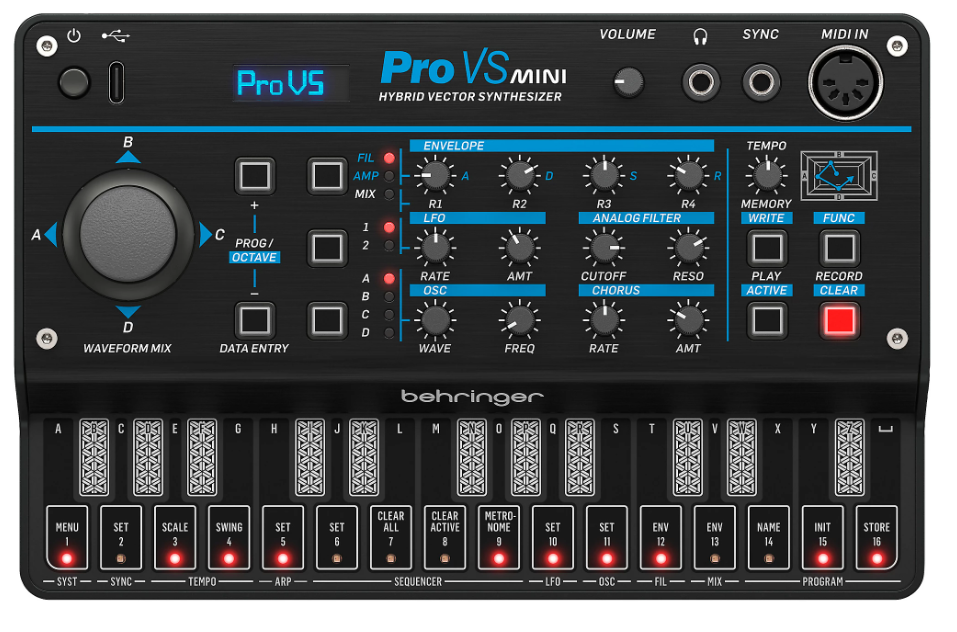
A compact desktop recreation of the Sequential Prophet VS, the vintage vector synthesizer that pioneered joystick-controlled waveform mixing. Pro-VS Mini gives you the vector synthesis concept in a small desktop module format that sits neatly beside your other compact gear.
Vector synthesis uses a joystick to blend between four waveforms simultaneously, which creates timbral movement and evolution from a simple physical gesture.
- Vector Joystick
The vector joystick blends between four oscillator waveforms in real time, creating smooth timbral morphing from a single physical control. The joystick interaction produces evolving sounds that feel performative and organic, because the timbral movement follows your hand rather than a programmed automation curve.
- Desktop Format
The compact desktop module saves significant space compared to keyboard synths while providing the full vector synthesis signal path. You control it from your existing MIDI keyboard, meaning the Pro-VS Mini adds synthesis capability without adding keyboard footprint.
- Waveform Set
Access to the Prophet VS waveform set gives you the specific digital waveforms that defined the vector synthesis sound. The waveforms have a character distinct from standard analog or wavetable waveforms, with a digital clarity and harmonic structure that suits pads, evolving textures, and atmospheric sounds.
- Analog Filters
Real analog Curtis filters process the digital oscillator output, adding warmth and resonance character to the vector synthesis. The analog filtering on digital waveforms is what gave the original Prophet VS its distinctive quality, and the Pro-VS Mini maintains that hybrid character.
9. Novation Bass Station II
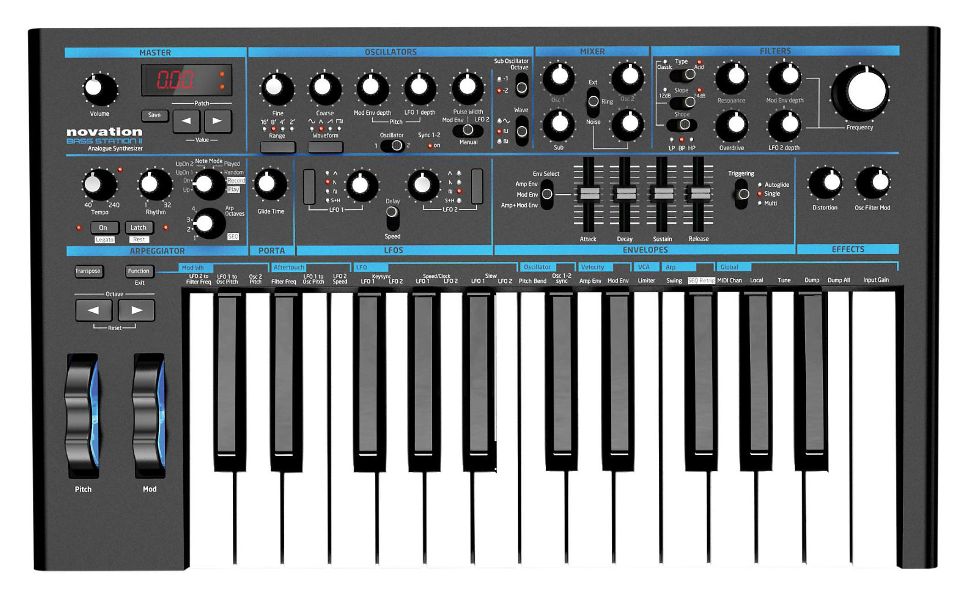
At roughly the size of a laptop when closed, the Bass Station II packs a complete analog monosynth with two filters, a sub-oscillator, arpeggiator, and patch memory into one of the most compact keyboard synth formats available. It’s remarkably full-featured for something this portable.
The Bass Station II travels easily to sessions, gigs, and collaborations, and its lightweight construction means it doesn’t add significant weight to a bag that already contains a laptop and interface.
- Dual Filters
Two selectable filter types (classic and acid) provide fundamentally different tonal shaping from the same oscillator section. Having two filter characters in a compact format means you get the versatility of two different synth personalities without the space requirement of two separate instruments.
- Sub Oscillator
A dedicated sub-oscillator adds low-end weight without consuming one of the main oscillator slots. The sub provides the fundamental bass content that sits underneath the filtered main oscillators, giving you full, weighted bass sounds from a synth small enough to fit on a music stand.
- Patch Memory
128 patch locations let you save and recall sounds instantly. The patch memory means your compact synth carries a full library of sounds with it, ready to recall at gigs and sessions without reprogramming.
- Aftertouch
Velocity-sensitive keys with aftertouch provide expressive performance control that many compact synths sacrifice. Having aftertouch in a keyboard this small means you can play expressively without needing a larger, heavier instrument.
- Compact Weight
At around 4kg, the Bass Station II is light enough to carry in one hand alongside a laptop bag. The lightweight construction and compact keyboard make it one of the most portable full-featured analog monosynths available.
10. Korg microKORG 2
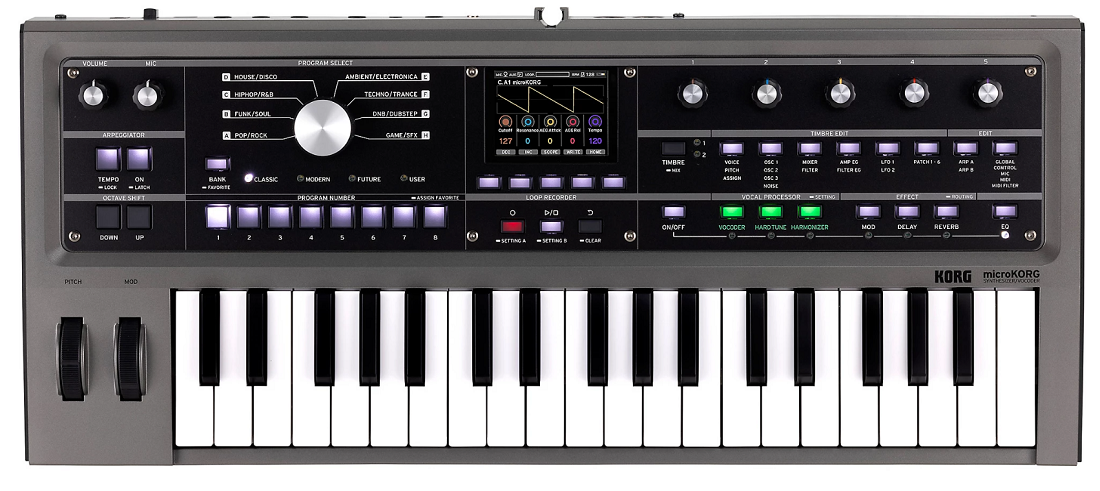
The microKORG has been the default compact synth recommendation for over two decades, and the microKORG 2 updates the formula with a better engine, more voices, and improved effects while keeping the same iconic compact format. It’s one of the most recognizable small synths in the world, and the mk2 version gives it the sonic upgrade it needed.
If you’ve seen a small synth on a table at a gig, there’s a very good chance it was a microKORG. The mk2 continues that legacy with modern improvements.
- Updated Engine
The upgraded synthesis engine provides better sound quality and more voice polyphony than the original microKORG, bringing the sonic capabilities up to modern standards. The engine update means the mk2 competes sonically with newer compact synths while maintaining the microKORG’s beloved form factor and workflow.
- Vocoder
The built-in vocoder with microphone turns the microKORG 2 into a compact vocal processing tool alongside its synthesis duties. The vocoder has been a defining feature of the microKORG since the original, and having it in a package this small means you get a performance tool that covers both synth sounds and processed vocals.
- Iconic Format
The compact keyboard with mini keys and the familiar two-knob-plus-matrix editing system keeps the microKORG’s signature workflow intact. The format is proven and practical, with the edit matrix providing access to deep parameters without a screen while the knobs handle real-time tweaking.
- Battery Power
Battery operation makes the microKORG 2 functional anywhere without a power outlet. The battery capability adds genuine portability beyond just being small, because you can actually use it in situations where electricity isn’t available.
11. Behringer MS-1 MKII
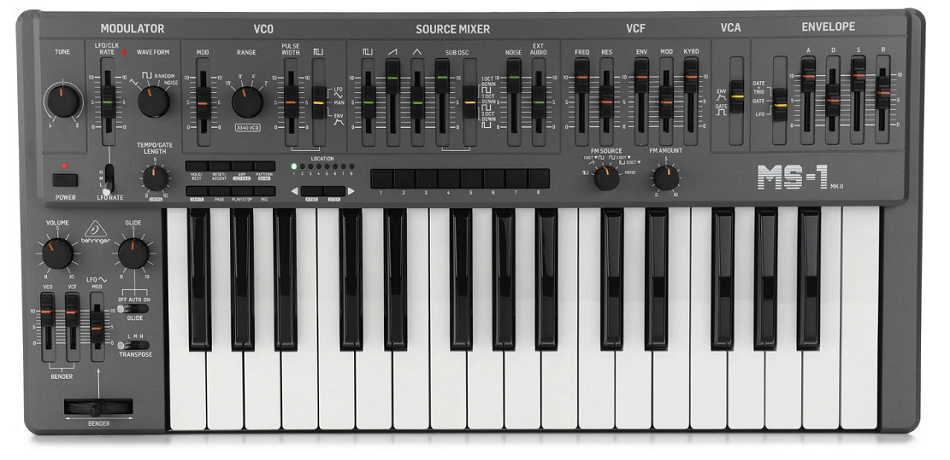
Behringer’s recreation of the Roland SH-101 in a compact format that captures the specific acid bass and lead character that made the original a dance music essential. The MS-1 MKII gives you an analog monosynth with the classic SH-101 circuit character at a fraction of the original’s vintage price.
The SH-101 form factor was always relatively compact, and the MS-1 maintains that practical size while adding MIDI and USB connectivity the original never had.
- SH-101 Sound
The analog circuit follows the original SH-101 design, reproducing the specific oscillator character, filter resonance, and sub-oscillator weight that the SH-101 is famous for. The sound has appeared on countless house, techno, and electronic records, and having it in a compact, affordable format gives you that specific tonal character without hunting for expensive vintage units.
- Step Sequencer
The built-in step sequencer follows the SH-101’s programming approach, where you enter notes and the sequence plays back with the synth’s real-time filter and envelope settings applied. The sequencer interaction with the synth engine is part of what makes SH-101 style sequences sound characteristically musical.
- Sub Oscillator
A dedicated sub-oscillator adds the low-end weight that gives SH-101 bass lines their particular thick, solid character. The sub is what separates the MS-1 bass sound from thinner single-oscillator monosynths.
- Grip Option
The optional modulation grip lets you hold the synth like a keytar and control modulation with a lever. The grip transforms the compact MS-1 from a tabletop synth into a portable performance instrument.
- MIDI/USB
MIDI and USB connectivity that the original SH-101 never had integrates the MS-1 into modern DAW-based workflows. The connectivity means you can sequence the MS-1 from your DAW, record MIDI, and sync it with other gear, none of which was possible with the original.
- Compact Build
The overall dimensions keep the SH-101’s characteristically compact footprint, making the MS-1 one of the smaller keyboard synths available. The size makes it practical as a dedicated bass or lead synth that sits beside your main keyboard without competing for desk space.
12. Arturia MiniFreak
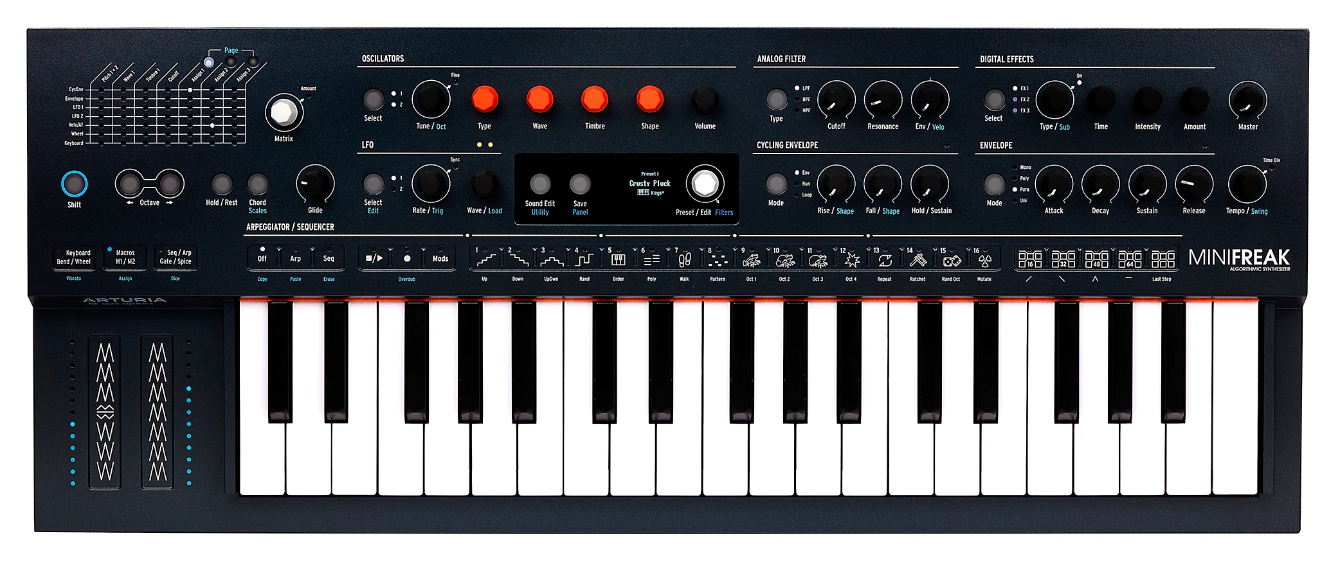
Six voices of hybrid digital/analog polyphony in a 37-key slim-key format that provides genuine polyphonic capability without the bulk of a full-size polysynth. Arturia MiniFreak gives you multiple digital oscillator engines through a real analog filter with built-in effects, patch memory, and the same engine variety as the MicroFreak but with proper polyphony for pads and chords.
For small setups that need polyphonic pad capability alongside leads and bass, the MiniFreak is the most compact option that delivers all three convincingly.
- Slim Keys
The 37 slim-key keyboard with velocity and aftertouch provides three octaves of polyphonic playing in a format narrower than standard 37-key synths. The slim profile saves width on your desk while maintaining enough playing range for most synth parts.
- Six Voices
Six-voice polyphony (twelve in paraphonic mode) gives you enough voices for sustained chords and pads without voice stealing. Six voices in a compact synth of this size means you can play polyphonically without needing a larger, heavier polysynth taking up more space.
- Effects Built-In
Three simultaneous effect slots process sounds within the synth, meaning the compact MiniFreak produces finished, spatially processed sounds without external effects pedals or plugins adding to your setup footprint.
13. ESI XSynth
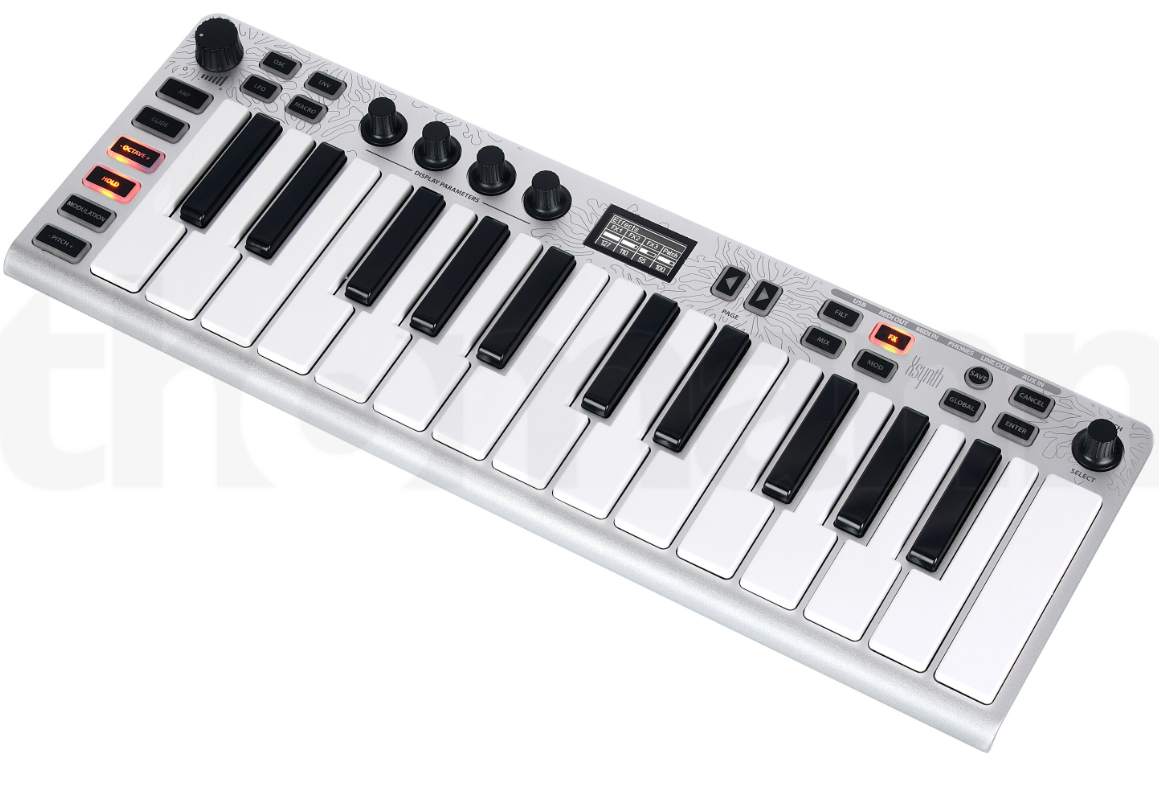
A desktop analog synthesizer that squeezes genuine analog synthesis into one of the most compact formats in the market. ESI XSynth is a small, affordable analog monosynth module that provides basic but genuine analog oscillators, a filter, and envelope for producers who want real analog in the smallest possible package.
The XSynth targets the intersection of affordable and tiny, providing a no-frills analog voice for producers building compact desktop setups.
- Ultra Compact
The desktop module format is smaller than most effects pedals, making the XSynth one of the most space-efficient ways to add real analog synthesis to a setup. The tiny footprint means it fits literally anywhere, from a corner of your desk to a shelf beside your audio interface.
- Analog Signal
A real analog oscillator and filter provide genuine analog tone in the compact format. The analog signal path means you’re getting actual voltage-controlled synthesis rather than digital modeling, which matters if you want the specific character of real analog circuits.
- MIDI Control
MIDI input lets you play and sequence the XSynth from your DAW or any MIDI controller. The MIDI connectivity means the compact module integrates into existing setups without requiring its own dedicated keyboard.
- Budget Entry
The affordable pricing makes the XSynth one of the cheapest ways to add genuine analog synthesis to a setup. For producers who are curious about hardware analog but don’t want to commit significant money or desk space, the XSynth is the lowest-risk entry point.
14. Korg Wavestate MKII
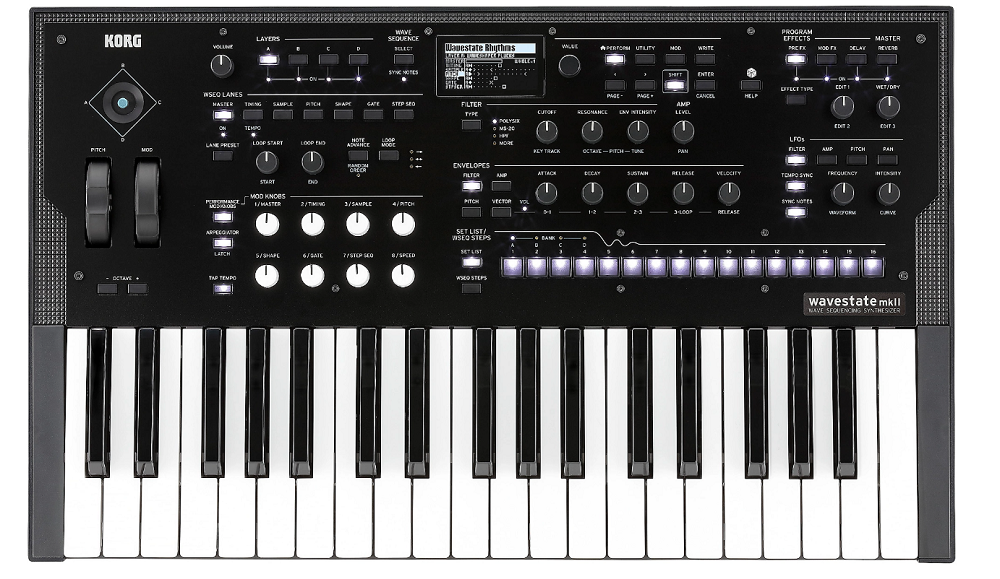
Deep wavetable and wave sequencing synthesis in a 37-key compact format with 96-voice polyphony and the kind of sound design depth you’d expect from a full-size workstation. Wavestate MKII proves that a small synth can be genuinely deep, with wave sequencing technology that generates evolving, complex textures from the interaction of multiple independent sequencing lanes.
The Wavestate’s compact size belies the synthesis depth inside, which is closer to a workstation than a typical compact synth.
- Wave Sequencing
The wave sequencing 2.0 engine with independent lanes for waveform, pitch, timing, and shape creates evolving textures where each parameter follows its own sequence length and pattern. The independent lanes produce polyrhythmic, constantly shifting timbres that never exactly repeat, which is a level of textural complexity that most synths, regardless of size, don’t offer.
- 96 Voices
96-voice polyphony means sustained notes and layered wave sequences never run out of voices, even in the most complex patches. The massive voice count in a compact format ensures that wave sequencing patches with long release times and multiple layers play without voice stealing.
- Performance Controls
The front panel provides dedicated knobs for real-time manipulation of wave sequence parameters alongside standard filter and amplitude controls. The performance controls make the Wavestate playable and tweakable without menu diving for the most common sound shaping tasks.
- Randomization
Built-in randomization tools generate new wave sequence configurations that serve as creative starting points. The randomization is particularly useful with the wave sequencing engine because the interaction of randomized parameters across multiple lanes produces results that deliberate programming rarely achieves.
- Compact Depth
The overall 37-key compact form factor houses all of this wave sequencing power in a package no larger than the other 37-key synths on this list. The size-to-capability ratio is genuinely impressive and makes the Wavestate one of the deepest compact synths available.
15. ASM Hydrasynth Explorer
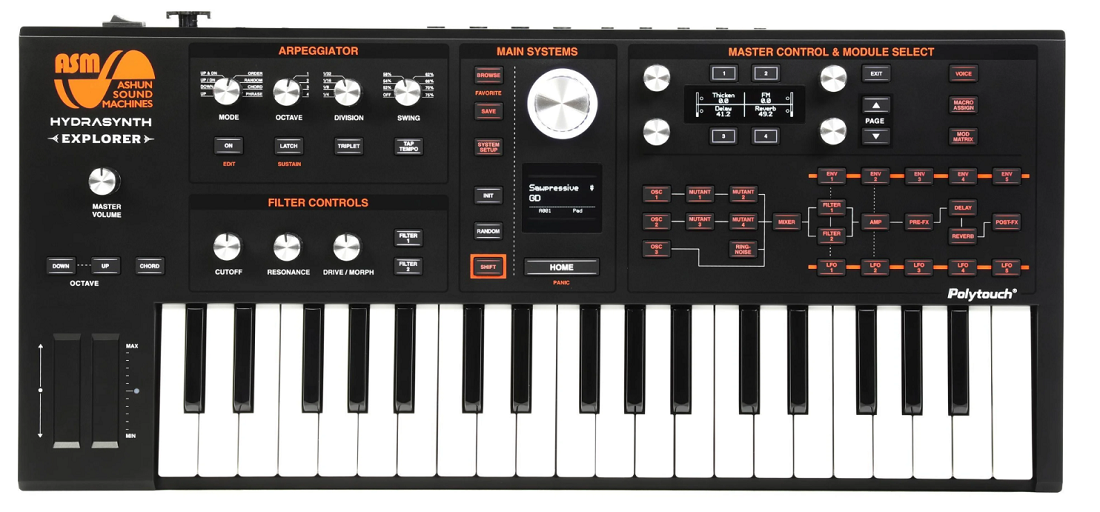
The compact version of the Hydrasynth with eight voices, a 49-note keyboard with polyphonic aftertouch, and the same deep wave morphing synthesis and modulation system as the full-size models. ASM Hydrasynth Explorer is one of the most capable compact polysynths available, with synthesis depth that rivals synths twice its size.
The Explorer maintains the Hydrasynth’s reputation for modulation depth and sound design capability in a format designed for smaller setups.
- Poly Aftertouch
Polyphonic aftertouch on the compact keyboard means each note responds independently to your finger pressure. The per-note expression is rare on compact synths and adds an entire dimension of performance control that most small keyboards sacrifice.
- Wave Morphing
The wave morphing engine with three oscillators per voice, mutant modes, and extensive wavetable access provides the same synthesis depth as the full-size Hydrasynth. The compact format doesn’t sacrifice any synthesis capability, which means you’re getting a genuinely deep sound design instrument in a smaller package.
- Mod Matrix
32-slot modulation matrix connects any source to any destination with precision routing. The modulation depth in a compact synth of this size is essentially unmatched, providing the kind of self-evolving, deeply modulated patches that typically require much larger instruments.
16. Moog Messenger
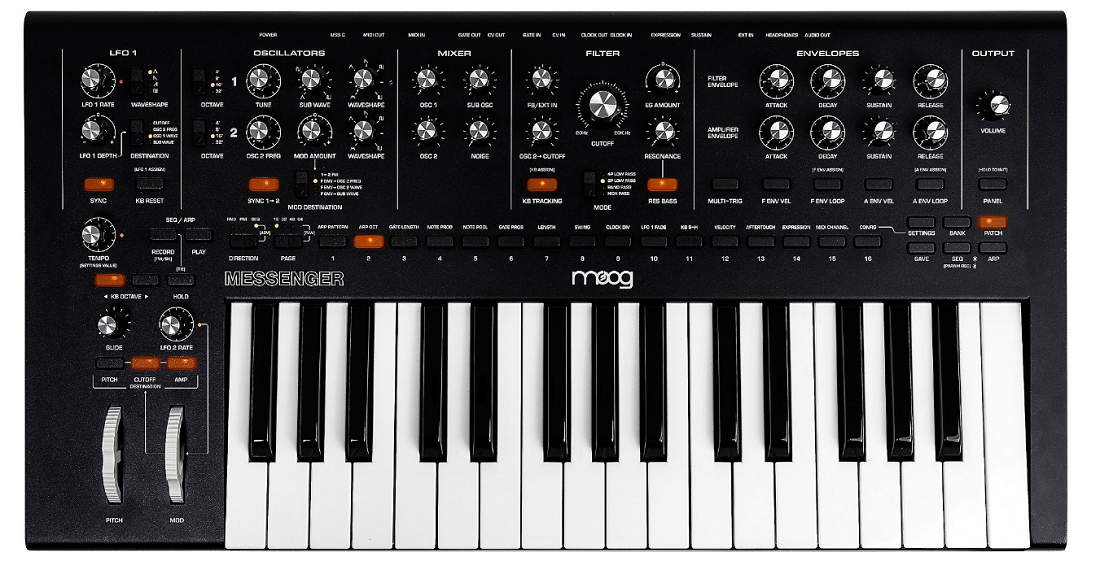
The most affordable Moog keyboard synth ever made, and a compact 32-key monophonic analog instrument that delivers genuine Moog sound with modern features. Moog Messenger gives you two VCOs with wavefolding, a redesigned ladder filter with multimode capability, 256 presets, and a 64-step sequencer in a format that weighs under five kilograms.
For producers who want real Moog analog synthesis in a compact, portable format, the Messenger is the first Moog that makes this practical without a premium price.
- Ladder Filter
The redesigned Moog ladder filter with high-pass, band-pass, and 2/4-pole low-pass modes expands the classic Moog filter into multimode territory. The RES BASS switch preserves low-end weight at high resonance settings, which is a meaningful improvement over classic Moog filters that traditionally thin out the bass as resonance increases. The filter redesign makes the Messenger more versatile than previous Moog monosynths for the same type of sounds.
- Wavefolding
Wavefolding on both oscillators adds harmonic complexity by folding the waveform back on itself, creating overtones that standard waveforms don’t produce. The wavefolders give the Messenger access to timbral territory that previous Moog monosynths couldn’t reach, adding bright, complex, harmonically rich textures to the traditional warm Moog palette.
- 256 Presets
256 preset locations preloaded with professionally designed patches give you instant access to a wide range of sounds. The preset memory is practical for live performance and studio work, and having 256 locations means you can build an extensive personal library.
- Sequencer
A 64-step sequencer with probability-based generative features and parameter recording creates evolving patterns. The generative sequencing means the Messenger can produce content that develops and changes on its own, which extends the compact monosynth beyond simple note playback.
17. Yamaha Reface CS
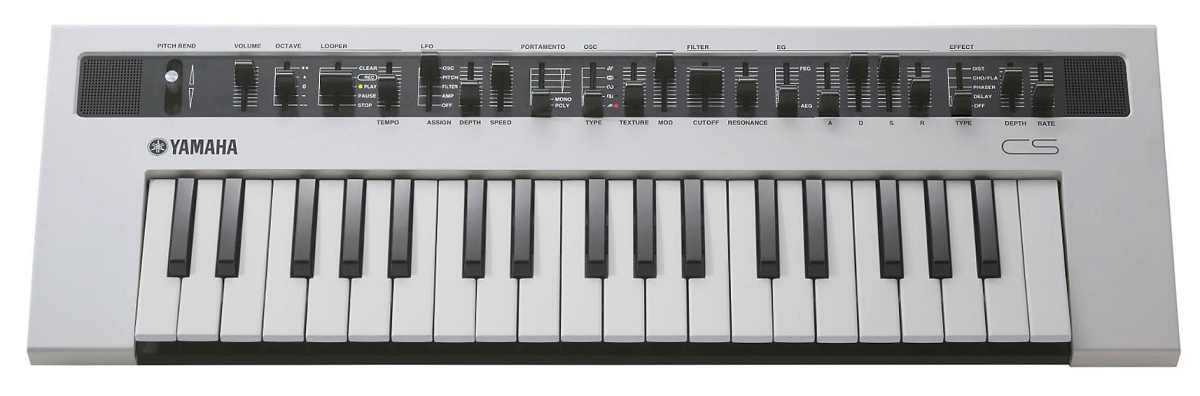
Closing the list with one of the most elegant compact synths ever designed. Yamaha Reface CS is a virtual analog synthesizer in a tiny, battery-powered format that weighs almost nothing and sounds remarkably warm and full for its size.
The Reface CS models the classic Yamaha CS-series analog synths with eight-note polyphony and a hands-on interface where every parameter has a dedicated slider.
The Reface CS has been around for years, but it remains one of the best small synths because the combination of eight-voice polyphony, slider-per-function interface, battery power, and built-in speakers in this form factor hasn’t been replicated by anyone else.
- Eight Voices
Eight-note polyphony in a synth this small means you can play full chords, pads, and sustained textures without voice stealing. Eight voices from a battery-powered mini synth is generous and makes the Reface CS genuinely usable for polyphonic parts rather than just leads and bass.
- Slider Interface
Dedicated sliders for every parameter provide the most immediate, hands-on compact synth experience available. Every aspect of the sound is controlled by a physical slider visible on the top panel, with zero menus and zero screen navigation. The slider layout makes the Reface CS one of the most intuitive synths at any size.
- Looper
A built-in phrase looper records and overdubs in real time, letting you layer textures from a single compact synth. The looper transforms the Reface from a single-patch player into a performance tool where you build layered compositions from multiple passes.
- Battery & Speaker
Battery power and built-in speakers make the Reface CS fully self-contained. You don’t need headphones, an amp, a power outlet, or any other equipment to make music. The complete self-sufficiency in a format this small makes the Reface CS the most grab-and-go synth on this list.
- CS Legacy
The Yamaha CS-series modeling captures the warm, rich character of Yamaha’s classic analog polysynths. The CS sound carries a specific warmth and fullness that complements rather than competes with the brighter Roland and harsher Moog tonal palettes, giving you a different flavor of analog in a compact format.
Get the Free Plugin Starter Kit
The genuinely useful free DAWs and plugins worth installing. No filler. Straight to your inbox.

Hello, I’m Viliam, I started this audio plugin focused blog to keep you updated on the latest trends, news and everything plugin related. I’ll put the most emphasis on the topics covering best VST, AU and AAX plugins. If you find some great plugin suggestions for us to include on our site, feel free to let me know, so I can take a look!