
The Fairchild 670 is one of those pieces of gear that has taken on an almost mythological status in audio production. Fewer than 1,000 units were ever manufactured, working examples now sell for $30,000 to $50,000 when they appear at all, and every unit sounds slightly different due to aging components and decades of varied maintenance.
What makes the Fairchild special is its vari mu compression design, where the vacuum tubes themselves handle the gain reduction rather than routing the signal through a separate compression circuit. The result is a smooth, warm, musical compression that adds weight and harmonic richness to everything you run through it.
For those of us who will never own the real thing, Fairchild plugins offer a way to get into the neighborhood of that sound. I want to be realistic here: no plugin perfectly replicates the full experience of a tube based vari mu compressor with transformers and 20 vacuum tubes generating actual heat.
What the good ones capture is the general compression character, the time constant behavior, and the harmonic coloration that made the original so valued. Some do this better than others, and each takes a slightly different approach to the modeling.
Here are nine Fairchild plugins that cover the range from premium emulations to free options, each with its own strengths and compromises.
From the Pluginerds Store
One more thing before you finish reading: we also stock studio hardware and accessories directly through Pluginerds Shop. Microphones, interfaces, controllers, cables, and the small stuff that never comes included with anything.
Visit Pluginerds Shop1. IK Multimedia Model 670

For years, the vari mu compressor in IK Multimedia’s T-RackS suite has been quietly doing solid work in studios without getting the attention that flashier Fairchild emulations receive. The Model 670 models the stereo Fairchild 670 with the full complement of controls including the six time constants, input gain, threshold, and the lateral/vertical mode switching that the original hardware provided for stereo operation.
What I appreciate about this particular emulation is that it doesn’t overdo the coloration. Some Fairchild plugins lay on the tube saturation so thick that everything sounds like it’s being run through a space heater. The Model 670 is more measured in its approach, adding warmth without overwhelming the source material. It works well on the mix bus where you want glue and weight but don’t want the compressor to become the dominant flavor of your mix.
- Lateral/Vertical Mode
The original Fairchild 670 could operate in lateral/vertical stereo mode for vinyl cutting applications, and the Model 670 faithfully includes this option alongside standard stereo linked and dual mono modes. While the lateral/vertical mode is rarely needed in modern production, it can produce interesting stereo compression behavior that the more common linked mode doesn’t offer.
- T-RackS Integration
The plugin loads both standalone and as a module within the T-RackS processing chain, where you can combine it with other IK compressors, EQs, and limiters in a single mastering strip. Having the Fairchild compression available alongside other processors in one interface speeds up mastering workflows considerably.
- Metering Options
The built in VU metering shows input, output, and gain reduction simultaneously, giving you clear visual feedback on how hard the compressor is working. The metering responds with appropriate ballistic behavior, making it useful for judging the musical character of the compression rather than just the numbers.
- Moderate CPU Load
The processing is efficient enough to run multiple instances without significant CPU impact, which matters if you want to use Fairchild compression on individual tracks and buses rather than just the master. Some competing Fairchild plugins are heavy enough that you’re limited to one or two instances in a session.
Available from IK Multimedia in VST, VST3, AU, and AAX formats.
Get the Free Plugin Starter Kit
The genuinely useful free DAWs and plugins worth installing. No filler. Straight to your inbox.
2. Overloud COMP670 (Fairchild)
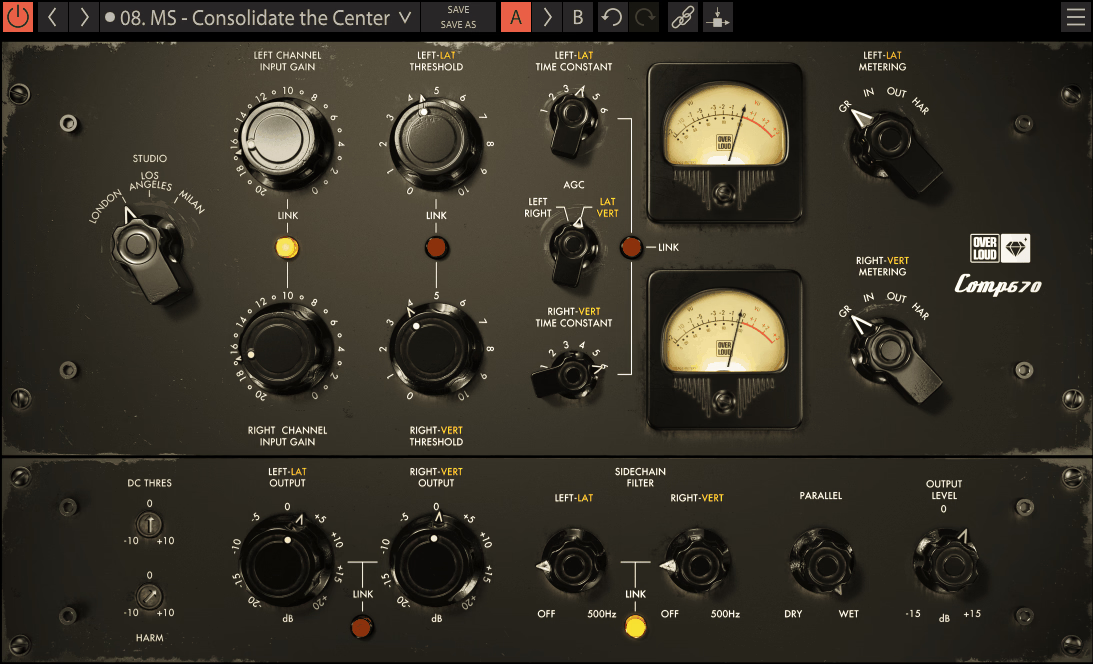
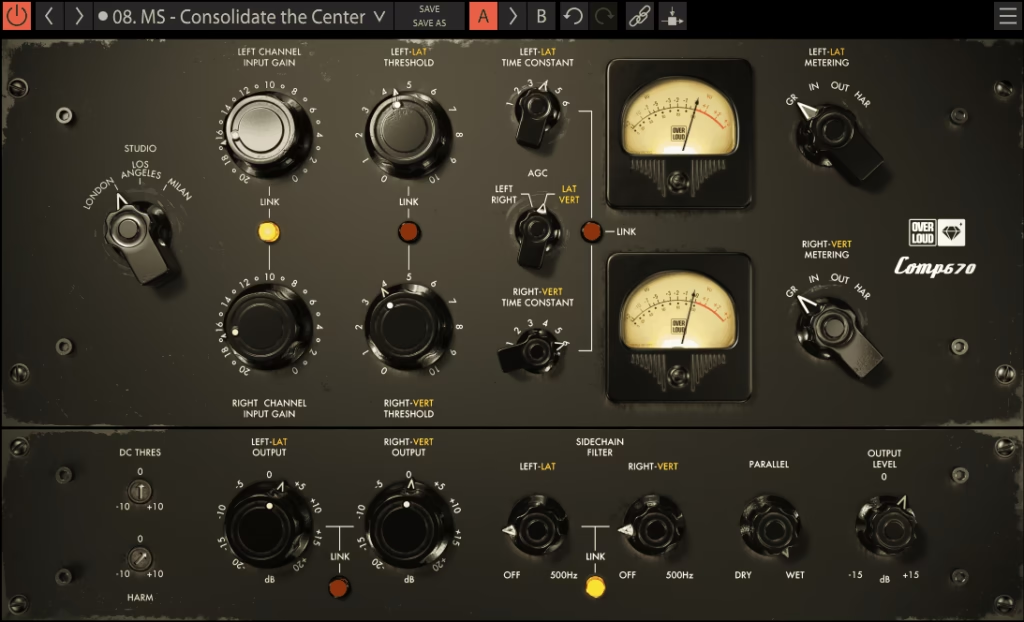
Where most Fairchild plugins model a single unit, Overloud COMP670 gives you three different Fairchild 670s sampled from studios in London, Los Angeles, and Milan. This matters because real Fairchilds vary significantly from one unit to another. Component aging, tube condition, maintenance history, and the specific transformers installed all affect the sound. Having three distinct units in one plugin lets you pick the character that fits your material best.
I was skeptical about whether three modeled units would actually sound different enough to justify the feature, but they do. The London unit has a darker, thicker quality. The LA unit is brighter and more forward. The Milan unit sits somewhere in between. On a drum bus, switching between the three produces noticeably different results, and I’ve developed preferences for specific units on specific material.
- Three Studio Models
The London, Los Angeles, and Milan models each capture a physically different Fairchild 670, with distinct harmonic profiles, saturation characteristics, and compression behavior. The differences are subtle but audible, and each model sits differently in a mix. Having three options means you’re less likely to reach for a different compressor because the single model doesn’t suit the material.
- Harmonic Control
A Harmonic knob lets you dial the tube saturation from full vintage coloration down to a nearly clean compression response. This is a feature the original hardware doesn’t have, and it’s surprisingly useful. Sometimes you want the Fairchild’s compression behavior without the heavy tube character, and the Harmonic control lets you find that balance precisely.
- Sidechain Filter
A built in sidechain high pass and low pass filter prevents low frequency content from triggering excessive compression, which is essential when using the COMP670 on full mix material or bass heavy sources. The original hardware had no sidechain filtering, which was fine for 1950s broadcast work but causes problems with modern bass heavy music. This addition is one of those practical improvements that makes the plugin more usable than the original.
- DC Threshold
The DC Threshold control brings an internal trimmer from the original hardware to the front panel, letting you adjust the compression knee from soft to hard. On the real Fairchild, this was a set and forget adjustment hidden inside the chassis. Having it accessible lets you shape how the compressor transitions into compression, which affects the feel of the dynamics significantly.
- Parallel Mix
A Wet/Dry mix control enables parallel compression directly within the plugin. Blending heavy Fairchild compression with the dry signal gives you the weight and density of aggressive compression while preserving the transient detail and dynamics of the original. This is particularly effective on drums, where I use the COMP670 in parallel more often than in series.
- Low CPU Usage
Overloud’s coding is notably efficient, and the COMP670 runs at very low CPU cost compared to other Fairchild emulations of similar quality. This is a practical advantage if you want to use Fairchild compression across multiple tracks and buses rather than reserving it for the master chain only.
Available from Overloud in VST, VST3, AU, and AAX formats.
3. Antelope Audio Tubechild 670
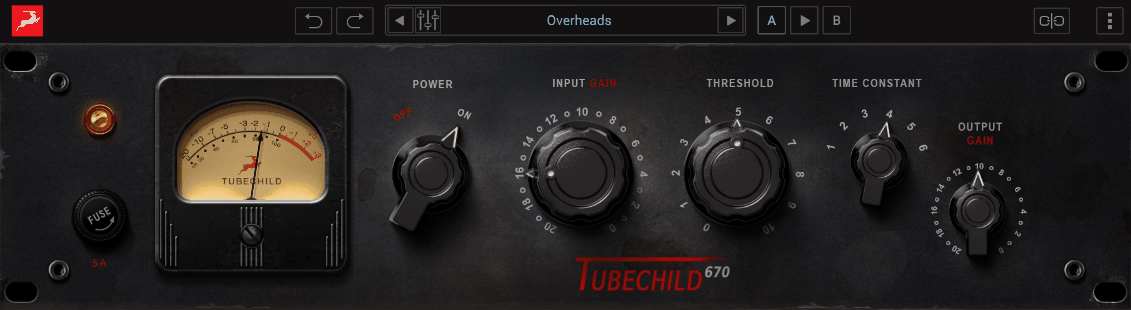
If you’re already in the Antelope Audio ecosystem, the Tubechild 670 provides a capable Fairchild emulation that integrates smoothly with their hardware interfaces and software environment. Originally developed for FPGA processing on Antelope interfaces, it’s now available as a native plugin through their Synergy Core Native subscription or individual purchase.
The Tubechild 670 handles the standard Fairchild duties competently: smooth vari mu compression, six time constants, tube harmonic coloration. It’s not the most detailed or characterful emulation on this list, but it works well within the Antelope workflow and the pricing is reasonable, especially through the subscription model where you get access to their entire plugin library.
- Synergy Core Integration
When used with Antelope Audio interfaces, the Tubechild 670 can run on the hardware’s FPGA/DSP processors with near zero latency, freeing your CPU entirely. This is useful for tracking with Fairchild compression active in real time without the monitoring delay that native plugins introduce.
- Six Time Constants
The original six time constant settings are faithfully reproduced, covering the range from fast, aggressive limiting (positions 1 and 2) to the slow, program dependent release behavior (positions 5 and 6) that makes the Fairchild valuable for bus and mastering work. Each position combines specific attack and release characteristics that can’t be replicated with a standard attack/release compressor.
- Stereo Link
Full stereo linking and unlinking of all controls lets you run the plugin as a stereo compressor, dual mono, or with independent settings per channel. The independent mode is useful for correcting balance issues between channels while compressing, which is a technique that goes back to how engineers originally used the hardware.
Available from Antelope Audio in VST3, AU, and AAX formats.
4. Waves PuigChild 660 & 670
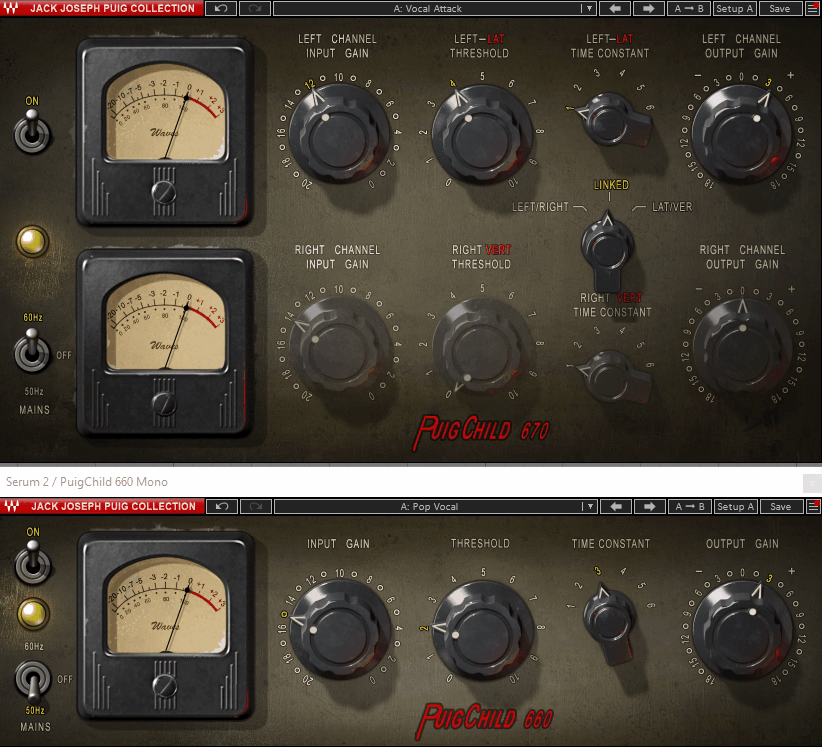
The Waves PuigChild bundle gives you both the mono 660 and stereo 670 Fairchild emulations, modeled from the personal hardware units owned by Grammy winning mixer Jack Joseph Puig. Modeling from a specific engineer’s well maintained units rather than a generic Fairchild gives the plugin a defined character that reflects how those particular machines sound after decades of professional use.
I should be upfront that the PuigChild plugins reflect Waves’ earlier modeling technology and don’t capture the same level of harmonic nuance as some newer competitors on this list. They’re still usable and they sound decent on vocals and buses, but if you A/B them against the Overloud or the UAD versions, the difference in saturation detail and compression feel is noticeable. The advantage is pricing: Waves sells these at very accessible price points during their frequent promotions.
- 660 and 670 Pair
You get both the mono 660 and stereo 670 as separate plugins, covering both individual track compression and stereo bus duties. The 660 is often overlooked but it’s the more useful of the two for vocal and instrument work where you’re processing a single channel. Having both in the bundle gives you the right tool for each context.
- Puig’s Hardware
The modeling is based on Jack Joseph Puig’s specific units, which carry the particular aging and component characteristics of machines that have been maintained and used in a professional environment for years. This specificity means the PuigChild has a defined character rather than representing a theoretical “average” Fairchild.
- Headroom Control
An additional headroom adjustment not found on the original hardware lets you manage how hard you’re driving the input stage, which affects the amount of tube saturation independently of the compression settings. This gives you a measure of control over coloration that the original’s fixed gain structure doesn’t provide.
- Affordable Pricing
Waves’ frequent sales and bundle pricing often make the PuigChild available for well under $50, sometimes under $30. For producers on a budget who want a functional Fairchild emulation from an established developer without a significant investment, the pricing is hard to argue with.
Available from Waves in VST, VST3, AU, and AAX formats.
5. Lindell Audio MU-66
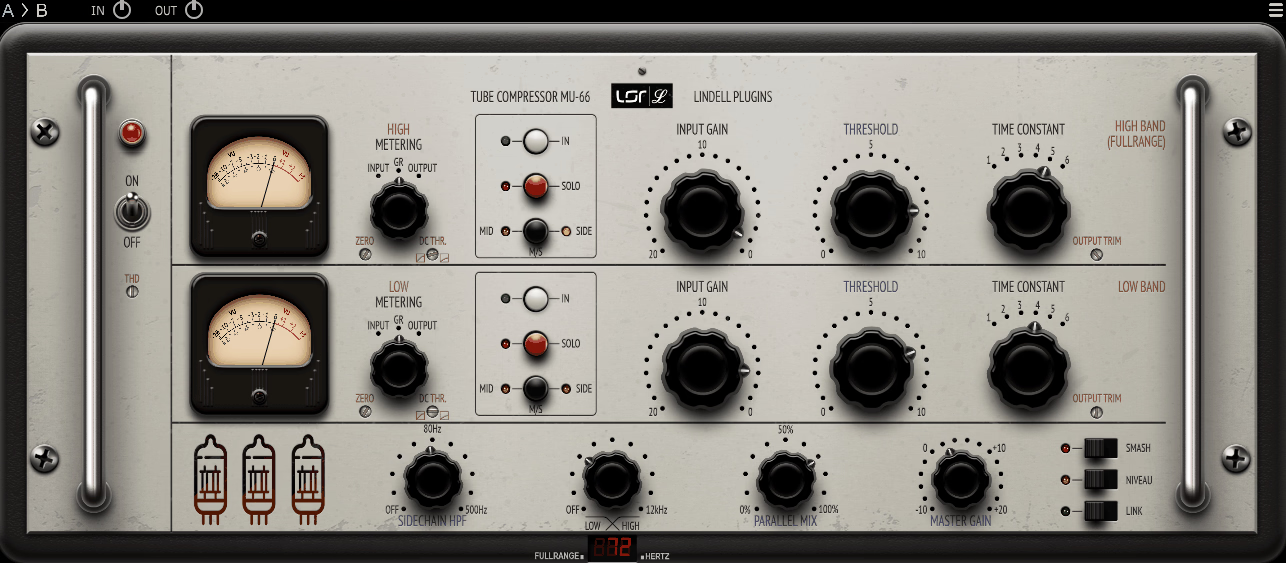
What I notice about the MU-66 compared to more faithful Fairchild recreations is that it has a tighter, slightly more controlled feel. It doesn’t have quite the same loose, pillowy compression behavior as the more authentic emulations, but that tighter response actually makes it more versatile on modern material where you want the vari mu glue without the vintage softness. It sits in a useful middle ground between faithful emulation and practical modern tool.
- Lindell Circuit Character
The modeling reflects Lindell’s own vari mu hardware design rather than a direct copy of the original Fairchild topology. This gives the MU-66 a character that’s in the Fairchild family but not identical, with a slightly tighter, more controlled compression response that works well on fast, transient heavy material where a softer Fairchild emulation might feel too slow.
- Sidechain Filter
A high pass sidechain filter prevents low frequency content from driving the compression, keeping the low end solid on bass heavy material. Without this filter, kick drums and bass notes cause the Fairchild style compression to pump audibly, which is fine for some applications but problematic on full mixes.
- Plugin Alliance Ecosystem
Available through Plugin Alliance’s subscription and individual purchase model, the MU-66 integrates with the broader Plugin Alliance library. If you already subscribe, it’s included at no additional cost.
Available through Plugin Alliance in VST, VST3, AU, and AAX formats.
6. Tone Empire FireChild

Tone Empire FireChild uses dynamic convolution rather than pure circuit modeling to capture the Fairchild’s character. The developer sampled three different physical Fairchild units at multiple gain and compression settings, then used those captures to drive the compression behavior. This hybrid approach means the harmonic character comes directly from recorded hardware, while the compression dynamics are handled algorithmically.
The convolution approach has real advantages in capturing the specific tube saturation of individual units, and it shows. The three tube models in the FireChild each have a distinct tonal personality that you can hear immediately when switching between them. The tradeoff is CPU usage. Dynamic convolution is computationally expensive, and the FireChild is noticeably heavier on resources than pure algorithmic emulations, particularly with oversampling engaged.
- Four Compression Models
Three tube based models (A, B, C) each capture a different physical Fairchild unit with distinct tube saturation characteristics and aging profiles. A fourth “Off” mode disables the convolution entirely, providing clean vari mu compression without any tube coloration. This clean mode is genuinely useful when you want the Fairchild’s dynamics but not the harmonic weight.
- Bias Control
The Bias knob adjusts the tube saturation independently of the compression settings, letting you drive the tube character harder without increasing the amount of gain reduction. Combined with the model selection, this gives you a wide range of saturation flavors from subtle warmth to aggressive tube grit.
- Sidechain Section
A full sidechain filter section with both high pass and low pass filters at 24 dB/oct slopes, plus a dedicated sidechain gain control, provides more precise control over what triggers the compression than most Fairchild emulations offer. The steep filter slopes are effective at isolating the sidechain to specific frequency ranges.
- Knee Control
An adjustable compression knee lets you control how gradually the compressor transitions from no compression to full compression. The original Fairchild had a fixed knee characteristic (technically adjustable via an internal trimmer, but not easily accessible). Having the knee on the front panel lets you tailor the compression feel from gentle and transparent to firm and assertive.
- Parallel Mix
A Wet/Dry mix knob handles parallel compression within the plugin, which is useful for getting the density and warmth of heavy vari mu compression while retaining the natural dynamics of the dry signal. I use this constantly on drum buses where heavy Fairchild compression blended at about 40% wet adds tremendous weight.
Available from Tone Empire in VST3, AU, and AAX formats.
7. Analog Obsession VariMoon (Free)

VariMoon is a free vari mu compressor from a developer known for releasing surprisingly capable free plugins at a rapid pace. It’s inspired by the Fairchild topology rather than being a precise emulation, so you should approach it as a “Fairchild flavored” compressor rather than a faithful recreation. That said, for a free plugin, it captures the general feel of vari mu compression well enough to be useful.
I use VariMoon on sessions where I want vari mu character on multiple channels without the CPU overhead or cost of running premium Fairchild emulations everywhere. The controls are simplified compared to a full Fairchild emulation, and you won’t find the six time constant options here. But for adding warmth and gentle dynamic control to individual tracks, it does the job respectably.
- Free Download
VariMoon is completely free with no registration, no subscription, and no trial limitations. Analog Obsession releases all their plugins as free downloads supported by Patreon donations. For producers building a plugin collection on a budget, this provides Fairchild inspired compression at zero cost.
- Simplified Controls
The interface provides the essential vari mu compression controls, input gain, threshold, attack, release, and output, without the complexity of the original Fairchild’s time constants and stereo linking options. This simplification makes it more approachable than full Fairchild emulations, though it also means less control over the specific compression character.
- Tube Saturation
The plugin adds tube style harmonic coloration to the signal that thickens and warms the material as you push the input harder. The saturation character is pleasant and usable, though less refined and detailed than what you get from the paid options on this list.
Available as a free download in VST, VST3, AU, and AAX formats.
8. Density mkII (Free, Fairchild Inspired)
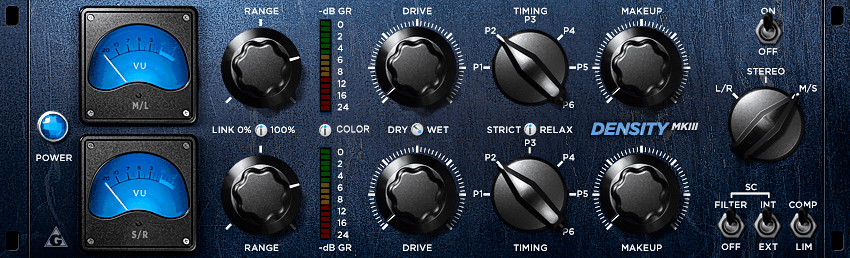
The word I’d use to describe Density mkII is “gentle.” It doesn’t do the aggressive, fast attack Fairchild thing particularly well, but for slow, transparent leveling on a mix bus, piano, or vocal, it adds a pleasing weight and cohesion. The interface is minimal and slightly dated looking, but the sound quality holds up well enough for a free plugin. I find it most useful on material that needs subtle dynamic control with a bit of added warmth rather than obvious compression.
- Dual Mode
Density mkII offers two compression modes that provide different compression characteristics: one more aggressive and one smoother. Switching between modes changes the compression behavior substantially, effectively giving you two different compressors in one plugin. The smoother mode is where the Fairchild character is most apparent.
- Saturation Circuit
A built in saturation section adds harmonic content independently of the compression amount, letting you use the plugin purely as a tube style saturator if you want the harmonic warmth without any dynamic control. The saturation is subtle and musical at moderate settings.
- Mix Bus Focus
The compression character is optimized for bus and mix applications rather than individual tracks, with a smooth response that glues elements together without emphasizing individual transients. The gentle, transparent behavior makes it well suited for 2 bus duties where you want cohesion rather than obvious effect.
- Zero Cost
Density mkII is completely free from Variety of Sound, with no registration or account required. It’s been available for years and remains one of the better free bus compressors, Fairchild inspired or otherwise.
Available as a free download in VST format (Windows only).
9. UAD Fairchild Tube Limiter Collection
There’s a reason the UAD Fairchild Tube Limiter Collection has been considered the benchmark Fairchild emulation for over a decade. Universal Audio has access to their own meticulously maintained vintage Fairchild units, and the modeling reflects the time and resources they invested in capturing every detail of the original circuits. The collection includes both the mono 660 and stereo 670 as separate plugins.
I’ll be straightforward about the cost: the UAD Fairchild collection is one of the more expensive options on this list, and it requires either a UAD hardware platform or the UADx native processing license. But if you want the most detailed, nuanced Fairchild emulation available in plugin form, this is where most engineers will point you. The compression behavior, the time constant response, the harmonic saturation at different drive levels. It all feels closer to the real hardware than any other plugin I’ve compared it against.
- 660 and 670 Plugins
Separate mono 660 and stereo 670 plugins model different physical units, each with its own harmonic profile and compression character. The 660 provides a slightly different feel than the 670 due to the different circuit topology and component values of the mono version, and having both gives you options that a single 670 only emulation doesn’t.
- Headroom and Drive
The modeling captures the full range of input drive behavior, from clean and transparent at moderate levels to increasingly saturated and colored as you push the input harder. The way the saturation builds with input level closely mirrors how the original tubes respond to increasing signal, which is one of the most difficult aspects of tube emulation to get right.
- Time Constant Accuracy
The six time constant positions are modeled with particular attention to how the attack and release interact at each setting, including the program dependent behavior of positions 5 and 6 where the release time varies based on the signal content. This program dependency is central to why the Fairchild sounds musical rather than mechanical, and UAD captures it convincingly.
- UADx Native Support
The collection now runs natively on your computer’s CPU through the UADx platform, without requiring dedicated UAD hardware. This opened the plugins to a wider audience, though the perpetual license cost is still higher than most alternatives. The native processing quality matches the DSP hardware version.
- Component Level Detail
UAD modeled the individual transformers, tubes, and passive components with enough fidelity that the plugin responds to gain staging and input level changes the way the original hardware does. This means the sweet spot for each time constant setting and threshold combination behaves authentically, rewarding engineers who understand how to work with the original hardware’s gain structure.
Available from Universal Audio in VST, VST3, AU, and AAX formats through the UADx native platform.
Get the Free Plugin Starter Kit
The genuinely useful free DAWs and plugins worth installing. No filler. Straight to your inbox.

Hello, I’m Viliam, I started this audio plugin focused blog to keep you updated on the latest trends, news and everything plugin related. I’ll put the most emphasis on the topics covering best VST, AU and AAX plugins. If you find some great plugin suggestions for us to include on our site, feel free to let me know, so I can take a look!