
Recording a real classical guitar requires a quality instrument, a skilled player, a treated room, and good microphones. For many producers, that combination isn’t available for every project that needs nylon string parts. Virtual classical guitar plugins fill this gap by providing playable, realistic nylon guitar sounds that you can perform from a MIDI keyboard, program note by note, or trigger through built in pattern systems.
The quality of classical guitar virtual instruments has improved dramatically in recent years. The best options now include legato transitions, fret noise, body resonance, multiple articulations, and strumming engines that produce results convincing enough for professional productions. Not every plugin on this list aims for pure realism, though. Some prioritize playability and convenience over sample accuracy, and one provides a completely free lo fi option that serves a different creative purpose entirely.
1. Spitfire Audio MG Soft Nylon Guitar
Spitfire’s approach to sampling has always emphasized musical character over technical completeness, and their nylon guitar library follows that philosophy. Soft Nylon Guitar captures a warm, intimate classical guitar tone that sits beautifully in film scores, ambient productions, and delicate acoustic arrangements.
This library works best when you need a gentle, expressive nylon tone rather than aggressive flamenco or technically demanding classical passages. It’s not trying to replace a real guitarist for complex performances.
- Intimate Tone
The recording approach captures a close, warm, and personal nylon guitar sound that sits naturally in intimate arrangements and cinematic underscore. The mic placement and room selection emphasize the woody, resonant character of the instrument rather than a bright, projection oriented concert tone, which makes it particularly suited to quiet moments in film scoring, ambient production, and singer songwriter accompaniment where the guitar needs to feel close and personal rather than large and commanding.
- Spitfire Engine
The library runs in Spitfire’s dedicated plugin rather than requiring Kontakt, which means you don’t need to own any third party sampler to use it. The Spitfire plugin provides a clean, focused interface with controls tailored to the specific library rather than the generic controls of a universal sampler. The dedicated engine also means Spitfire can optimize the playback behavior specifically for this instrument.
- Expression Controls
Dynamic and tonal expression controls let you shape the guitar’s response to your MIDI input, adjusting how the instrument reacts to velocity, modulation, and sustained notes. The expression mapping gives you control over the emotional character of the performance, from delicate whispered passages to more assertive melodic lines, without needing to switch between separate articulation patches.
- Mix Integration
The recorded tone is designed to sit in a mix without extensive processing, with a balanced frequency response that doesn’t require heavy EQ to find its place alongside other instruments. The production ready character means you can load a preset, play your part, and have a result that works in context without spending time fighting resonances or harsh frequencies that poorly recorded samples often introduce.
2. ujam Virtual Guitarist SILK 2
Taking a completely different approach from sample library realism, ujam’s SILK 2 is a performance oriented nylon guitar instrument that prioritizes playability and instant usability over deep sampled articulation libraries. The plugin provides chord recognition, strumming patterns, and fingerpicking phrases that respond to your playing in real time.
If you need convincing nylon guitar parts quickly without programming individual notes or learning complex keyswitching systems, SILK 2 gets you there faster than any other option on this list.
- Smart Patterns
The pattern engine provides dozens of pre-programmed fingerpicking and strumming patterns that respond to the chords you play on your keyboard. You hold a chord shape and the engine performs realistic guitar patterns with proper voicing, timing variation, and dynamic feel that would take significant MIDI programming to replicate manually. The patterns cover a wide range of styles from gentle classical arpeggios to rhythmic Latin and pop acoustic patterns.
- Chord Recognition
An intelligent chord detection system interprets the notes you play on your keyboard and translates them into proper guitar chord voicings automatically. You don’t need to know how a guitarist would voice a particular chord on the fretboard, because the engine maps your keyboard input to realistic guitar voicings that respect the physical limitations and common fingering patterns of the instrument. The chord recognition handles everything from basic triads to complex jazz voicings.
- Style Presets
Genre specific presets configure the entire instrument, including pattern selection, tone, and performance behavior, for specific musical contexts like Latin, classical, pop, and folk. The presets give you an immediately usable nylon guitar tone and performance style that matches your production context without needing to configure individual parameters.
- Tone Controls
Adjustable tonal parameters let you shape the guitar sound from bright and present to dark and mellow, matching the character to your mix requirements. The tone shaping goes beyond simple EQ, affecting the overall character of the picked and strummed sounds in ways that change the perceived size, age, and recording context of the instrument.
- Phrase Variation
The engine introduces subtle timing and velocity variation into the performed patterns, preventing the mechanical repetition that makes programmed guitar parts sound obviously fake. The humanization is automatic and musical, adding the kind of imperfect timing that real guitarists introduce naturally and that static MIDI patterns lack entirely.
- Finisher Effects
Built in effects processing including reverb, chorus, and EQ lets you shape the final sound within the plugin without requiring external processing. The effects are tuned for nylon guitar specifically, providing spatial and tonal options that enhance the instrument’s character without introducing artifacts that generic effects might create.
3. Ample Guitar L
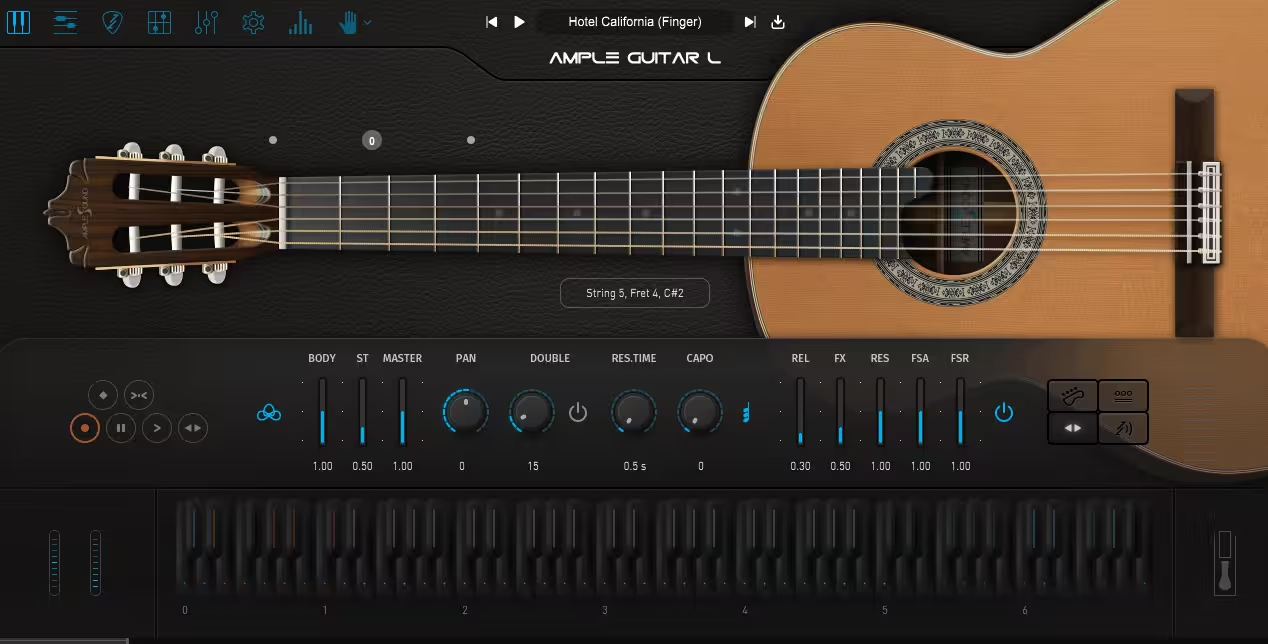
For producers who need the most detailed and technically complete classical guitar sampling available, this library from Ample Sound provides an extremely deep set of articulations, playing techniques, and performance features. Ample Guitar L (the L stands for classical/nylon) is based on sampling an Alhambra Luthier classical guitar.
The depth of articulations and the scripted performance behavior make this one of the most realistic nylon guitar virtual instruments you can buy.
- Articulation Depth
A comprehensive set of sampled articulations covering sustain, legato, slides, hammer ons, pull offs, harmonics, palm mutes, rasgueado, tremolo, and numerous other techniques gives you the vocabulary to create convincingly realistic classical guitar performances. The articulation count goes well beyond what most guitar libraries offer, including techniques specific to classical and flamenco playing that generic nylon guitar plugins don’t include.
- Strummer Engine
A built in strumming engine generates realistic strum patterns with proper string by string timing, velocity variation, and chord voicing that mimics how a real guitarist strikes the strings. The strummer handles both simple chord strumming and complex rhythmic patterns with enough realism that the output doesn’t immediately sound programmed.
- Tab Player
An integrated tablature player lets you import guitar tablature files and have the instrument perform them with realistic technique, articulation, and timing. The tab import means you can write guitar parts in notation or tablature software and hear them performed by the virtual instrument with proper guitar technique applied automatically.
4. Orange Tree Samples Evolution Honey Nylon
Released in 2025, this library captures a Spanish made classical guitar recorded entirely with fingerstyle technique to preserve the natural, organic character of traditional nylon guitar playing. OTS Evolution Honey Nylon focuses exclusively on fingerstyle performance rather than covering both picked and fingerstyle approaches.
The fingerstyle focus gives this library a specific character that hybrid picked/fingerstyle libraries don’t achieve, with the warmth and intimacy that comes from finger to string contact.
- Fingerstyle Focus
The entire library was recorded using fingerstyle technique exclusively, which preserves the specific tonal quality and performance nuances that distinguish fingerstyle nylon playing from picked approaches. The samples capture the sound of fingertips brushing against the string before plucking, a subtle detail that adds authenticity to the performed results. Generous sample preroll lets you reintroduce these nuances for performances that feel genuinely organic rather than mechanically triggered.
- Evolution Engine
The library runs on Orange Tree Samples’ Evolution engine, which provides a customizable articulation mapping system, built in strumming patterns with a chord voicing system, and a collection of effects. The engine handles the translation of MIDI input into realistic guitar behavior, including automatic selection of appropriate articulations based on your playing velocity, timing, and note overlap, which makes the performance feel responsive and musical.
- Physical Modeling
An adjustable pick position uses proprietary physical modeling technology to change the tonal character of the guitar based on where on the string the virtual finger plucks. Moving the position toward the bridge produces a brighter, more nasal tone, while playing over the soundhole creates a warmer, rounder quality. The position control gives you tonal variation that goes beyond what EQ provides because it’s modeling the actual acoustic behavior of the instrument.
- Articulation Range
The library covers sustains, palm mutes, muted notes, natural harmonics, legato slides, hammer ons, pull offs, plus performance effects like string slaps, body hits, and fret noises. The articulations have 3 dynamics and up to 4x round robin variation, which prevents the repetitive quality that limited sample sets create. The over 12,600 samples totaling 9.45 GB of content ensure you have enough variation for extended passages without hearing obvious repetition.
5. NI Session Guitarist Picked Nylon
Part of Native Instruments’ Session Guitarist series, this library takes the pattern based approach where you trigger pre-performed guitar phrases, rhythms, and picking patterns rather than playing individual notes. Picked Nylon provides a large collection of professionally performed nylon guitar patterns that respond to your chord input.
The pattern approach trades individual note control for speed and realism, giving you convincing guitar parts faster than any note by note programming approach.
- Performed Patterns
The library contains hundreds of pre-performed guitar patterns recorded by a professional nylon guitarist, capturing the timing, dynamics, and technique of real performances. The patterns cover fingerpicking arpeggios, strummed chords, melodic phrases, and rhythmic accompaniment in styles ranging from classical to Latin to pop. Because the patterns are performed rather than programmed, they carry the natural timing variation and dynamic expression of real guitar playing.
- Chord Following
The patterns follow your chord input in real time, adapting the pre performed phrases to whatever harmonic content you provide from your MIDI controller. You play chords and the engine transposes and revoices the patterns to match, which means you get the realism of a performed guitar part with the flexibility to change the harmonic content freely.
- Kontakt Player
The library runs in the free Kontakt Player without requiring the full Kontakt purchase, making it accessible to anyone regardless of whether they own NI’s flagship sampler. The Kontakt Player compatibility also provides NKS integration for NI hardware controllers, with tagged browsing and automatic parameter mapping.
6. Sketch Samples Sketch Nylon
A focused nylon guitar library that aims to deliver a warm, usable classical guitar tone with a streamlined interface that doesn’t overwhelm you with options. Sketch Nylon provides a curated set of articulations and a clean playback engine designed for producers who want a good nylon sound without spending hours learning a complex instrument.
The streamlined approach makes it practical for producers who use classical guitar occasionally rather than as a primary instrument in every production.
- Curated Sound
The library provides a carefully recorded and processed nylon guitar tone that’s designed to sound good immediately without extensive tweaking. The tone is warm and balanced, sitting in a mix naturally without requiring the EQ sculpting and resonance taming that some deeply sampled but unprocessed libraries demand. The curated approach means fewer options but a higher probability that each option sounds usable in context.
- Clean Interface
A simple, focused interface presents the essential controls without burying you in sub menus and articulation switching complexity. The interface design prioritizes speed, letting you load the instrument, find a suitable tone, and start recording your part without a learning curve that delays your creative workflow.
- Essential Articulations
The articulation set covers the core techniques (sustain, legato, muted, harmonics) that handle the majority of classical guitar programming needs without the extensive articulation lists that more comprehensive libraries provide. The focused articulation set means less keyswitching complexity and faster performance programming for standard nylon guitar parts.
- Kontakt Based
The library runs in Kontakt, integrating into the standard workflow that producers with Kontakt based template setups already use. The Kontakt platform means the library benefits from the sampler’s existing features including its mixer, effects, and scripting capabilities.
- Mix Ready
The recordings are processed for immediate use in productions rather than requiring extensive post processing to sound polished. The mix ready approach reduces the time between loading the library and having a usable nylon guitar tone in your session.
7. Echo Sound Works Vinyl Guitar 2 (Free)

Completely different from every other entry on this list, this free plugin provides a lo fi, vinyl processed nylon guitar sound designed for lo fi hip hop, ambient, and atmospheric productions rather than realistic classical guitar performance. Vinyl Guitar 2 gives you a warm, degraded, nostalgic nylon tone at zero cost.
The lo fi aesthetic isn’t trying to fool anyone into thinking it’s a real classical guitar performance. It’s providing a specific sonic character for genres that want that vibe.
- Lo Fi Character
The guitar sound is processed through vinyl emulation that adds warmth, noise, frequency rolloff, and the imperfect character of vinyl playback to the nylon guitar tone. The processing gives you the specific lo fi nylon sound that’s become ubiquitous in lo fi hip hop and bedroom pop without needing to process a clean guitar library through separate lo fi effects to achieve the same result.
- Free Access
The plugin is completely free with no trial limitations, feature restrictions, or account requirements beyond downloading from the Echo Sound Works website. The zero cost makes it accessible to every producer regardless of budget, and the quality is genuine enough that you’d use it even if you owned expensive nylon guitar libraries.
- Instant Usability
The processed, character driven tone is immediately usable without any tweaking, EQ, or effects processing. You load it, play your chords or melody, and the lo fi nylon character is there from the first note. The instant usability makes it practical for producers who need a specific sound quickly without configuring a complex instrument.
8. Orange Tree Samples Evolution Modern Nylon
Where the Honey Nylon focuses on fingerstyle, this companion library from Orange Tree Samples provides a hybrid picked and fingerstyle nylon guitar sound designed for a more contemporary, produced tone. Evolution Modern Nylon uses a technique where the low strings are picked for greater clarity while the high strings are played with fingers for their delicate quality.
The hybrid playing style gives this library a different character from purely fingerstyle libraries, with more attack definition on the bass strings and softer warmth on the trebles.
- Hybrid Technique
The picked low strings and fingerstyle high strings approach produces a tone that balances the attack clarity of picked playing with the warmth of fingerstyle, resulting in a contemporary nylon sound that works in pop, rock, and modern scoring contexts alongside traditional classical applications. The hybrid technique is what some real guitarists use to get the best tonal qualities from both approaches, and having it sampled means you get that specific character without needing a guitarist who plays this way.
- Quadruple Tracking
A multitracking feature that supports up to four simultaneous layers lets you create the wide, doubled guitar sound that records often feature. The quadruple tracking generates slightly varied performances for each layer, producing a natural width and thickness that simple stereo widening on a single track can’t replicate.
- Pick Position
The adjustable pick position using Orange Tree’s proprietary physical modeling changes the tonal character based on where on the string the virtual pick strikes. Moving between the bridge and soundhole positions gives you a range of tonal colors from bright and cutting to warm and full, all modeled from the acoustic behavior of the physical instrument rather than applied through EQ.
- Pattern Editor
A built in strum pattern editor with chord voicing system generates realistic strumming and picking patterns that respond to your chord input. The pattern editor handles the rhythmic and voicing aspects of guitar performance, letting you create convincing accompaniment parts from simple MIDI chord input without programming individual string strikes.

Hello, I’m Viliam, I started this audio plugin focused blog to keep you updated on the latest trends, news and everything plugin related. I’ll put the most emphasis on the topics covering best VST, AU and AAX plugins. If you find some great plugin suggestions for us to include on our site, feel free to let me know, so I can take a look!