
Woodwinds are among the hardest orchestral instruments to sample convincingly. The expressive range of a solo clarinet, the breath dynamics of a flute, the reed buzz of an oboe all contain nuances that are difficult to capture in a way that responds naturally to MIDI performance.
A badly sampled woodwind library sounds obviously fake in ways that string or brass libraries can sometimes avoid, because the human ear is particularly sensitive to the breath and articulation patterns that define woodwind playing.
The libraries on this list represent the current best options for virtual woodwind instruments, ranging from traditional orchestral sampling to hybrid cinematic approaches.
Some focus on pure realism with deep articulation sets recorded in world class scoring stages. Others take the raw material of woodwind recordings and process them into cinematic textures and rhythmic patterns for trailer and film scoring work.
I’ve selected ten libraries that cover the range from intimate solo instruments to full woodwind sections, giving you options regardless of whether you need a solo oboe for a chamber piece or a massive processed woodwind ensemble for a blockbuster cue.
1. Arturia Augmented WOODWINDS
Rather than pursuing pure orchestral realism, Arturia takes the recorded woodwind content and layers it with synthesis, effects, and granular processing to create something that sits between acoustic sampling and electronic sound design. Augmented WOODWINDS pairs real woodwind recordings with Arturia’s synthesis engine.
This hybrid approach gives you sounds that no purely sampled library or purely synthetic instrument can produce on its own, which makes it useful for contemporary scoring and production work.
- Hybrid Engine
The instrument combines real woodwind recordings with synthesized layers that can be blended, morphed, and modulated together. You get the organic tonal character of acoustic woodwinds fused with the evolving textures and tonal range of synthesis, producing sounds that feel grounded in reality but extend beyond what acoustic woodwinds can produce.
The hybrid approach creates content that’s immediately useful for modern film scoring, electronic production, and any context where you want woodwind character without purely traditional orchestral sound.
- Layer Control
Independent control over the acoustic and synthetic layers lets you balance the blend from mostly organic to mostly synthesized, with any ratio in between. You can push the sound toward pure woodwind realism by favoring the sampled layer, or move it into abstract electronic territory by emphasizing the synthesis.
The ratio control means a single instrument covers a wide tonal range that would otherwise require separate acoustic and electronic plugins.
- Modulation Depth
A comprehensive modulation system with LFOs, envelopes, and sequencers animates both the acoustic and synthetic layers simultaneously. The modulation creates evolving, breathing textures that move and develop over time, which is the primary creative advantage over static sampled woodwind sustains.
Modulating both layers together produces organic movement that sounds more natural than modulating either layer independently.
- Effects Engine
Built in effects processing including reverb, delay, chorus, and distortion shapes the hybrid output within the instrument. The effects are integrated into the sound design workflow, meaning they respond to the modulation system and contribute to the evolving character of each preset rather than being applied as static post processing.
2. VSL Synchron Woodwinds
Where VSL’s Studio Woodwinds are recorded dry for maximum flexibility, the Synchron Woodwinds capture the same quality of playing in the Synchron Stage Vienna, a purpose built scoring stage that provides a naturally cinematic acoustic environment. VSL Synchron Woodwinds gives you the comprehensive sampling depth that VSL is known for with the room sound already embedded.
For composers who want orchestral woodwinds that sound finished and positioned in a concert hall or scoring stage out of the box, the Synchron recordings deliver that without external reverb processing.
- Synchron Stage
The purpose built Synchron Stage provides a warm, detailed acoustic environment that’s captured in the recordings through multiple microphone positions. The room sound gives you an immediately cinematic and orchestral quality without needing to apply convolution reverb or algorithmic processing to create the impression of a real performance space. The stage was designed specifically for recording, which means the acoustics serve the instruments rather than imposing an overpowering or colored room signature.
- Microphone Trees
Multiple microphone positions from close to distant provide independent control over the spatial depth and tonal perspective of the woodwinds. You can blend close mics for detail and presence with room mics for depth and ambience, creating exactly the spatial position you need for each instrument in your orchestral template. The mic positions interact naturally because they were all recorded simultaneously in the same session.
- Synchron Player
The instruments run in VSL’s Synchron Player, which provides an updated interface, preset management system, and mixer with built in effects compared to the older Vienna Instruments player. The Synchron Player handles the articulation switching, expression mapping, and performance logic in a modern interface that’s faster to navigate than VSL’s legacy software.
3. Spitfire Studio Woodwinds
Recorded at Spitfire’s own studio rather than a large scoring stage, Studio Woodwinds provides a closer, drier woodwind sound than Spitfire’s orchestral hall recordings, giving you more intimate woodwind tones that work in contexts where a huge room sound would be inappropriate.
The studio environment produces woodwinds that sit well in pop, folk, and smaller scale productions alongside the orchestral scoring applications that Spitfire is known for.
- Studio Intimacy
The close studio recording environment produces a dry, present woodwind sound that sits forward in a mix without the distance and reverb wash of large scoring stage recordings.
The intimate character makes these woodwinds appropriate for pop arrangements, singer songwriter accompaniment, and chamber music contexts where a massive orchestral room sound would overpower the production. You get the natural tonal quality of each instrument without the acoustic signature of a large hall.
- Spitfire Engine
The library runs in Spitfire’s dedicated plugin with an interface designed specifically for their sampling approach. The engine provides expression controls, microphone selection, and articulation management in a clean layout that’s consistent across all Spitfire libraries, which means if you use any other Spitfire products, the workflow is immediately familiar.
- Microphone Options
Multiple microphone positions let you blend close, mid, and ambient perspectives to create the spatial placement and tonal character that suits your mix. The mic blending gives you control over how present or distant the woodwinds sound, from right in front of you to slightly recessed, without needing to add artificial reverb to create depth.
4. Orchestral Tools Berlin Woodwinds
Recorded at Teldex Scoring Stage in Berlin, one of the most celebrated orchestral recording spaces in the world, this library captures woodwinds in an acoustic environment that has hosted countless film and classical recording sessions. Berlin Woodwinds from Orchestral Tools provides a rich, warm woodwind sound with the natural room character of Teldex built into the recordings.
The Teldex room sound gives you an immediately cinematic quality that dry recordings require extensive reverb processing to approach.
- Teldex Sound
The Teldex Scoring Stage acoustic environment provides a natural warmth, depth, and spatial character that’s baked into every sample.
The room sound is what makes Berlin Woodwinds immediately sound cinematic and orchestral without adding external reverb, because the acoustic signature of one of the world’s best scoring stages is already present in the recordings. This room character is what many composers are specifically looking for when they choose a woodwind library.
- Section Players
The library includes both solo instruments and ensemble sections recorded with the proper number of players for each section (pairs, threes, depending on the instrument). The ensemble recordings capture the natural blend and slight pitch/timing variation between real players sitting together, which produces a more convincing section sound than layering multiple solo instruments and hoping they blend correctly.
- Expression Mapping
A detailed expression and dynamics mapping system responds to velocity, modulation wheel, and breath controller input to produce performances that feel responsive and musical.
The mapping is designed to make the MIDI performance feel connected to the sampled content, with smooth dynamic transitions and natural response curves that make the instruments feel like they’re responding to your musical intent.
- Legato Quality
The recorded legato transitions capture the smooth pitch connections between notes that define lyrical woodwind playing. The legato programming handles both slow, expressive connections and faster, more agile movement between notes, adapting the transition speed and character to the pace of your playing.
5. NI Symphony Series Woodwind
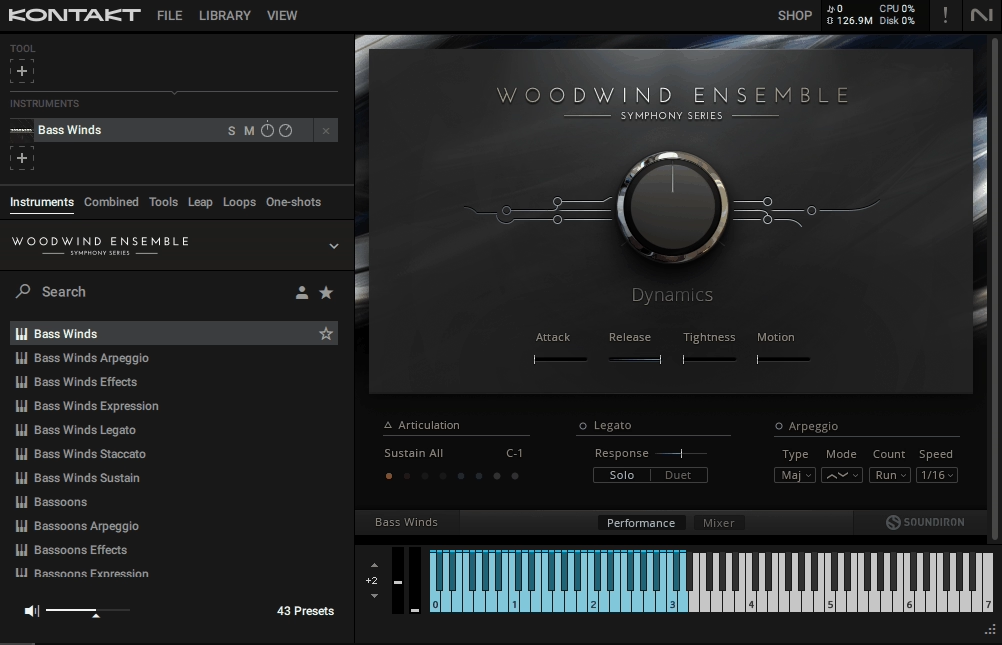
Part of Native Instruments’ Cinematic series, this library provides orchestral woodwind sections and solos designed specifically for film, television, and game scoring applications. The Symphony Series Woodwind collection focuses on producing immediately usable cinematic woodwind content.
The NI ecosystem integration means the library works seamlessly with Komplete Kontrol hardware and the NKS browsing system that NI users already work with.
- Cinematic Focus
The sounds and articulations are selected and recorded for scoring applications, emphasizing the dynamic range, expression, and tonal qualities that film and game composers need most.
The cinematic orientation means the library prioritizes the techniques and tonal characters that appear most frequently in professional scoring rather than attempting to cover every possible classical technique comprehensively.
- Section & Solo
Both ensemble sections and individual solo instruments are included, giving you the flexibility to write exposed solo passages and full section parts from the same library.
The ensemble and solo recordings complement each other tonally, which means combining them in a cue produces a cohesive woodwind sound without mismatched room tones or recording character between the solo and section parts.
- NKS Integration
Full NKS compatibility provides automatic parameter mapping for NI hardware, tagged browsing in Komplete Kontrol, and light guide display on NI keyboards.
The integration means you can browse the entire library from your keyboard’s display, audition sounds without touching your mouse, and control expression parameters from hardware knobs that are pre mapped to the most useful controls.
6. Heavyocity VENTO Woodwinds
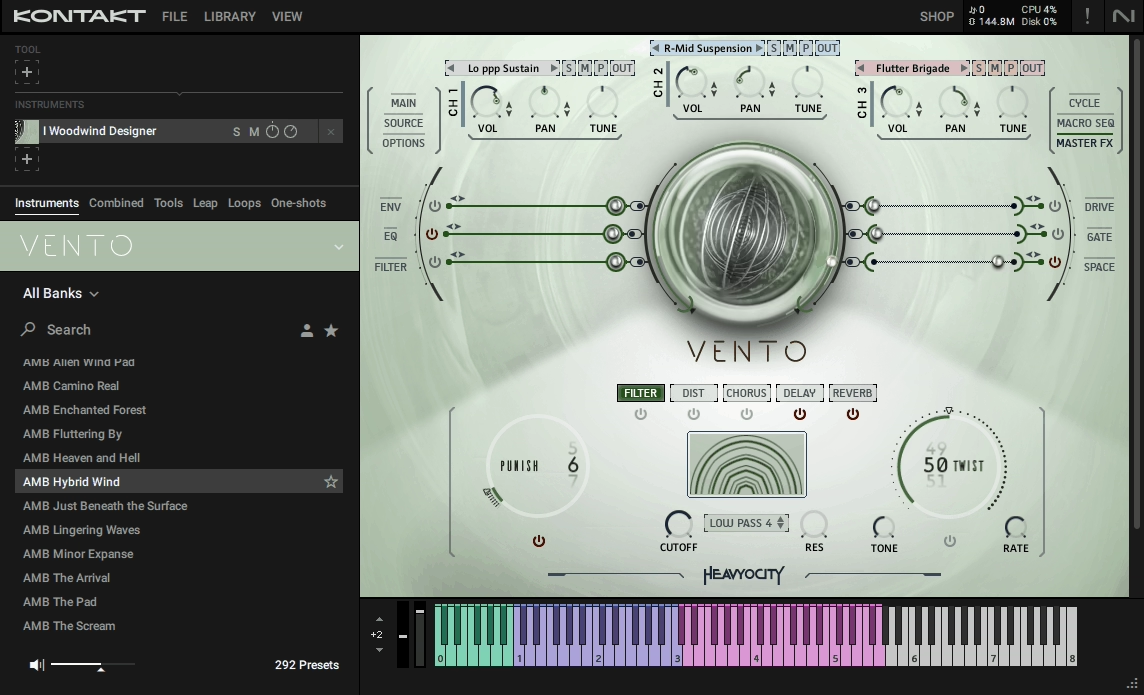
If you need woodwinds that have been processed, mangled, and transformed into cinematic scoring tools rather than realistic orchestral reproductions, Heavyocity’s VENTO takes real woodwind recordings and pushes them through the company’s signature processing to create rhythmic pulses, textural atmospheres, and aggressive cinematic content.
The Heavyocity approach is deliberately non traditional, producing sounds you’d never hear from a real woodwind section but that carry the tonal DNA of the source instruments.
- Processed Content
The woodwind recordings have been run through extensive processing including granular manipulation, rhythmic chopping, reverb mangling, and distortion to create content that sounds cinematic and modern rather than classically orchestral.
The processing transforms familiar woodwind tones into aggressive pulses, atmospheric textures, and evolving soundscapes that serve trailer scoring, action cues, and contemporary dramatic underscore. You get the organic origin of real woodwinds combined with the intensity and impact of heavily designed cinematic audio.
- Rhythm Engine
A pattern based rhythm engine turns woodwind textures into tempo synced rhythmic elements that pulse and drive in time with your project. The rhythmic content gives you woodwind based percussion and ostinato patterns that function as scoring building blocks, providing momentum and energy that sustained woodwind samples alone can’t deliver. The patterns cover everything from subtle pulsing backgrounds to aggressive, driving rhythmic figures.
- Atmosphere Presets
Atmospheric and ambient presets provide evolving, textural woodwind content that works as background scoring material. The atmospheres fill space in a cue with organic, breath based textures that synthesized pads can’t replicate because they retain the tonal fingerprint of real woodwind instruments despite the processing.
- Twist & Punish
Heavyocity’s signature Twist and Punish processing modules provide real time sound mangling and distortion that you can apply to any preset. Twist adds modulated processing that warps the sound, while Punish adds compression, distortion, and saturation that pushes the woodwind content into aggressive territory. The real time control means you can automate the processing intensity for builds and transitions.
- Loop Designer
A loop creation tool lets you build custom rhythmic patterns from the processed woodwind content, designing tempo synced loops that combine different slices and effects. The designer gives you creative control over the rhythmic content rather than limiting you to pre built patterns, which means your rhythmic woodwind elements can be unique to your specific cue rather than recognizable from other productions using the same library.
7. Spitfire Audio Abbey Road One Sparkling Woodwinds
Recorded at the legendary Abbey Road Studios in London, this library captures woodwinds in one of the most famous recording rooms in music history. Abbey Road One: Sparkling Woodwinds is part of Spitfire’s modular Abbey Road One orchestral series, providing the specific room sound and recording character of Studio One at Abbey Road.
The Abbey Road acoustic signature gives these woodwinds a warm, dimensional character that’s distinct from recordings made at other scoring stages.
- Abbey Road Sound
The Studio One at Abbey Road provides an acoustic signature that has defined the sound of countless film scores, classical recordings, and popular music. The room character is warm, detailed, and musically flattering to woodwind instruments, adding a natural depth and dimension that dry recordings simply don’t have. When you load these woodwinds, you’re hearing them in one of the most celebrated acoustic spaces ever built for music recording.
- Modular Integration
The library integrates with other Abbey Road One modules (strings, brass, percussion) that were recorded in the same room during the same sessions. The shared recording environment means all Abbey Road One instruments blend naturally together without the room tone mismatches that occur when combining libraries recorded in different spaces. Building a full orchestral template from Abbey Road One modules produces a cohesive, unified orchestral sound.
- Sparkle Character
The “Sparkling” designation indicates a tonal character that emphasizes the bright, crystalline qualities of the woodwind instruments. The recording and mic selection highlight the upper harmonics and air frequencies that give woodwinds their presence and shimmer in an orchestral context, making them sit forward in a mix and cut through dense arrangements.
- Expression Range
The sampling covers a broad dynamic range from delicate pianissimo to full fortissimo with smooth transitions between dynamics. The expression range lets you program parts that move through the full dynamic spectrum of each instrument, from barely audible breathy passages to powerful, projecting melodic lines, with natural transitions that don’t exhibit obvious sample switching.
8. Cinematic Studio Series: Studio Woodwinds
Part of the Cinematic Studio Series (CSS, CSB, CSW) that has earned a devoted following among film and game composers, this library provides detailed woodwind sampling with a focus on legato performance and musical expression. Cinematic Studio Woodwinds is designed to integrate seamlessly with the matching strings and brass libraries from the same series.
The cross library consistency is one of the strongest reasons to choose CSW, because it produces a unified orchestral sound when combined with Cinematic Studio Strings and Brass.
- Legato Performance
The legato transitions are among the most natural sounding in any woodwind library, capturing the smooth pitch connections and breath continuity that define expressive woodwind playing. The legato programming handles varying speeds of melodic movement, producing faster transitions for agile passages and slower, more expressive connections for lyrical lines.
The quality of the legato is what Cinematic Studio Series is most recognized for, and the woodwinds maintain the standard set by the acclaimed string and brass libraries.
- Series Consistency
All Cinematic Studio libraries were recorded in the same room with consistent microphone setups, which means the woodwinds, strings, and brass share the same acoustic signature and tonal character.
Building a full orchestral template from the CSS/CSB/CSW series produces a blended, unified sound that libraries from different developers and recording environments can’t achieve. The consistency eliminates the room tone matching and EQ adjustments that mixing libraries from different sources typically requires.
- Dynamic Layers
Multiple dynamic layers with smooth crossfading between them produce natural crescendos and diminuendos that don’t exhibit obvious sample switching. The dynamic response feels continuous rather than stepped, which is essential for expressive woodwind writing where gradual dynamic changes carry much of the musical emotion.
- Kontakt Platform
The library runs in Kontakt with a custom scripted interface that handles articulation selection, expression mapping, and performance behavior. The Kontakt platform means the library integrates into existing orchestral templates that most composers have already built around Kontakt based instruments.
- Articulation Set
A well selected articulation set covers sustain, legato, staccato, staccatissimo, sforzando, marcato, trills, and other essential techniques. The articulation coverage handles the vast majority of orchestral woodwind writing needs without the overwhelming number of rarely used articulations that some libraries include. The focused set means less time managing keyswitches and more time writing music.
9. Native Instruments Action Woodwinds
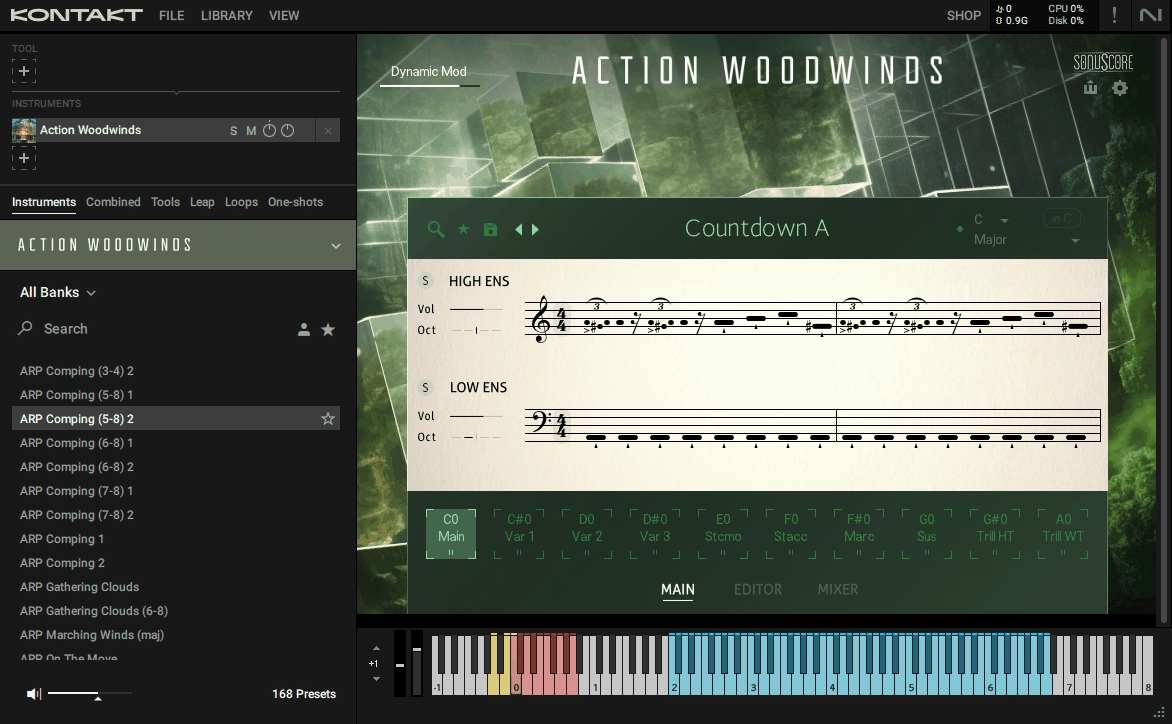
Closing the list with a library designed for rhythmic, energetic woodwind content rather than traditional sustained orchestral playing. NI Action Woodwinds provides tempo synced patterns, rhythmic ostinatos, and short articulation phrases performed by a woodwind ensemble, oriented toward action scoring, adventure cues, and dramatic underscore.
The pattern based approach gives you orchestral woodwind energy and movement that’s extremely time consuming to program from sustained note libraries.
- Rhythmic Patterns
Tempo synced woodwind patterns and ostinatos provide driving, energetic content that locks to your project tempo and adds rhythmic momentum to scoring cues. The patterns capture the kind of rapid, coordinated woodwind passages that appear in action and adventure scoring, where the woodwind section plays rhythmic figures that propel the music forward.
Programming these kinds of rapid ensemble passages from individual note libraries is extremely tedious, so having them pre performed and tempo synced saves enormous amounts of time.
- Ensemble Performance
The patterns are performed by a real woodwind ensemble rather than generated from individual samples, which means they capture the natural blend, timing variation, and collective energy of musicians playing together. The ensemble character is what makes the rhythmic content sound orchestral rather than mechanical, because real players introduce subtle timing and dynamic variations that programmed notes from solo samples can’t replicate convincingly.
- Key Following
The patterns adapt to the notes you play, transposing the rhythmic content to follow your harmonic input while maintaining the performance character of the original recording. The key following means you can use the rhythmic patterns across changing harmonies without the patterns becoming fixed to a single tonal center.
- Action Scoring
The content is specifically designed for high energy scoring contexts including action sequences, chase scenes, adventure themes, and dramatic underscore.
The library doesn’t attempt to cover gentle, lyrical woodwind playing because that territory is served by the other libraries on this list. Instead, it focuses entirely on the energetic, rhythmic woodwind content that’s most difficult and time consuming to achieve through conventional programming.

Hello, I’m Viliam, I started this audio plugin focused blog to keep you updated on the latest trends, news and everything plugin related. I’ll put the most emphasis on the topics covering best VST, AU and AAX plugins. If you find some great plugin suggestions for us to include on our site, feel free to let me know, so I can take a look!