
Kontakt has earned its place as the platform of choice for instrument developers who want serious depth, and the synth and bass libraries built on it tend to be among the most expressive and tonally specific tools available outside of dedicated hardware or standalone synthesizers. The range here is genuinely wide: from dark atmospheric synthesis and bass-focused modular emulation through to lo-fi character keyboards, uplifting trance pads, and techno-oriented sound design, there’s a specific creative purpose behind each of these rather than a generic “synth sounds” premise.
What makes this category interesting is that these Kontakt libraries don’t just give you sounds: they give you a specific sonic identity and a workflow built around expressing it.
I think the libraries that earn long-term template spots are the ones where the interface and the sound design philosophy feel coherent, where the controls available to you are the ones that actually shape the character rather than being there to justify a feature list.
For producers working across electronic music genres who want Kontakt instruments with genuine tonal personality and expressive depth, this collection covers territory from dark industrial atmospheres through to euphoric trance and everything in between.
The variety is the point: different genres demand different synthesis character, and these ten libraries represent genuine best-in-class choices for their specific territories.
Ashlight
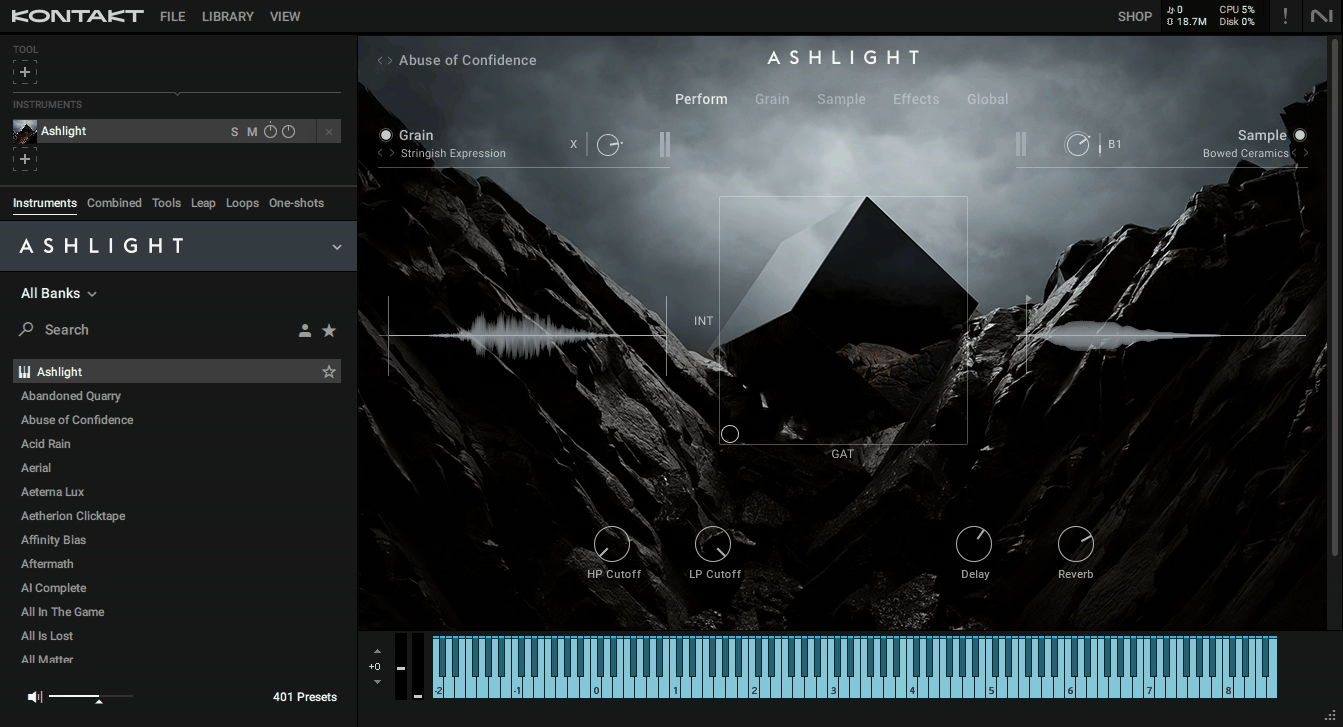
Dark granular atmospheres are what Ashlight was built for, and it delivers that territory more convincingly than most alternatives because the source material reflects genuine creative intent rather than generic dark presets applied to standard synthesis. Over 500 samples recorded from unusual sources including bowed carbon, metal containers, waterphones, and feedback cycles pass through a granular engine that gives you real-time control over how those textures evolve and shift.
I realized working through this library that the specific combination of unconventional source recordings and granular manipulation produces a darkness that feels physical and organic rather than artificially imposed. The granular engine handles real-time grain size, density, pitch, and randomness adjustment, which means the textures breathe and evolve as you play rather than sitting statically.
- Granular Engine
The core processes each source through real-time granular manipulation with independent grain size, density, pitch, and randomization controls, giving you the ability to move from subtle textural shimmer through to dramatic granular fragmentation from the same source material depending on how you engage with the parameters.
- Unusual Source Recordings
Rather than conventional synthesis waveforms, the underlying material comes from bowed carbon, metal containers, waterphones, feedback cycles, cymbals, and field recordings, which gives the output a physical, organic darkness that purely synthesized sources don’t naturally produce.
- Sample Import
You can import your own samples into the granular engine, which treats them identically to the built-in content, allowing you to transform field recordings, existing synth lines, or any other audio into dark cinematic texture within the same instrument.
- Built-In Arpeggiator and FX
A built-in arpeggiator adds rhythmic or melodic movement without external MIDI programming, and the FX section covers modulation, reverb, and diffusion for adding depth without leaving Kontakt or building external effect chains.
Low End Modular

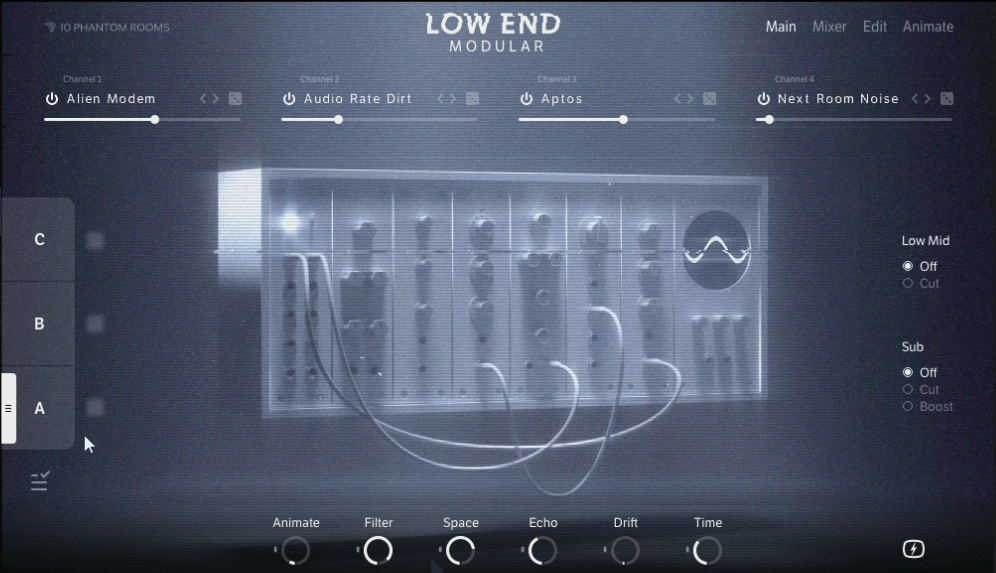
Bass synthesis with modular character is the specific territory that Low End Modular occupies, and what distinguishes it from a standard bass library is the modular-inspired signal flow that allows filter routing, modulation patching, and signal shaping in ways that reflect how dedicated modular systems approach bass sound design rather than how conventional bass instruments are sampled.
For me, the most compelling quality here is the weight and physical presence of the low-end output: the filters and saturation stages are calibrated for sub-bass and low-mid frequency content specifically, which means pushing the instrument hard produces bass density rather than harsh distortion. I believe this is the right tool when you need bass that feels like it was designed on hardware rather than sampled from it.
- Modular-Inspired Signal Flow
The routing architecture reflects modular synthesis logic rather than conventional sampler layout, giving you filter placement, modulation source assignment, and signal path configuration that produces bass character specific to hardware modular approaches.
- Sub-Bass Optimization
Filters and saturation are specifically calibrated for sub and low-mid frequency content, meaning aggressive processing produces density and weight rather than the harshness that occurs when mixing processors designed for full-spectrum signals are pushed hard on bass material.
- Modulation Depth
Envelope, LFO, and step sequencer modulation sources can be routed to filter cutoff, resonance, pitch, and amplitude independently, allowing the kind of rhythmically animated bass movement associated with hardware modular sequencing.
- Saturation Stages
Multiple saturation and waveshaping stages within the signal chain allow harmonic content to be added at different points in the processing flow, producing the layered harmonic density of hardware analog saturation rather than single-stage digital clipping.
Playbox

There’s a playfulness to Playbox that’s apparent the moment you start browsing presets: this is a library built around modern pop and electronic production aesthetics where the synthesis character is warm, present, and immediately musical rather than requiring deep configuration to get something useful. The wavetable and sample-based engine underneath produces a specific brightness and clarity that suits lead synths, pads, and textural elements in contemporary production.
I like how the interface prioritizes fast preset navigation and macro control over deep synthesis editing, which reflects an honest understanding of how this kind of library actually gets used in production: you find a sound that’s close, adjust a couple of macros, and move on. I noticed the preset collection is extensive and well-organized enough that finding the right character for a specific moment in a track rarely takes more than a minute.
- Modern Pop Synthesis Character
The underlying engine produces a warm, present, commercially polished synthesis character that integrates into modern pop and electronic production without requiring significant EQ adjustment to sit correctly in a mix.
- Macro-First Interface
The interface is designed around macro controls that shape the most musically relevant dimensions of each preset rather than presenting the full synthesis parameter set, which keeps the workflow fast and creative rather than technical.
- Extensive Preset Library
A large and well-organized preset collection covers leads, pads, basses, and textural elements across contemporary electronic and pop styles, organized to make finding the right character for a specific production moment fast.
- Wavetable and Sample Engine
The hybrid wavetable and sample-based engine produces the specific harmonic clarity and presence that makes modern pop synthesis cut through a mix without sounding harsh or artificially brightened.
Pharlight
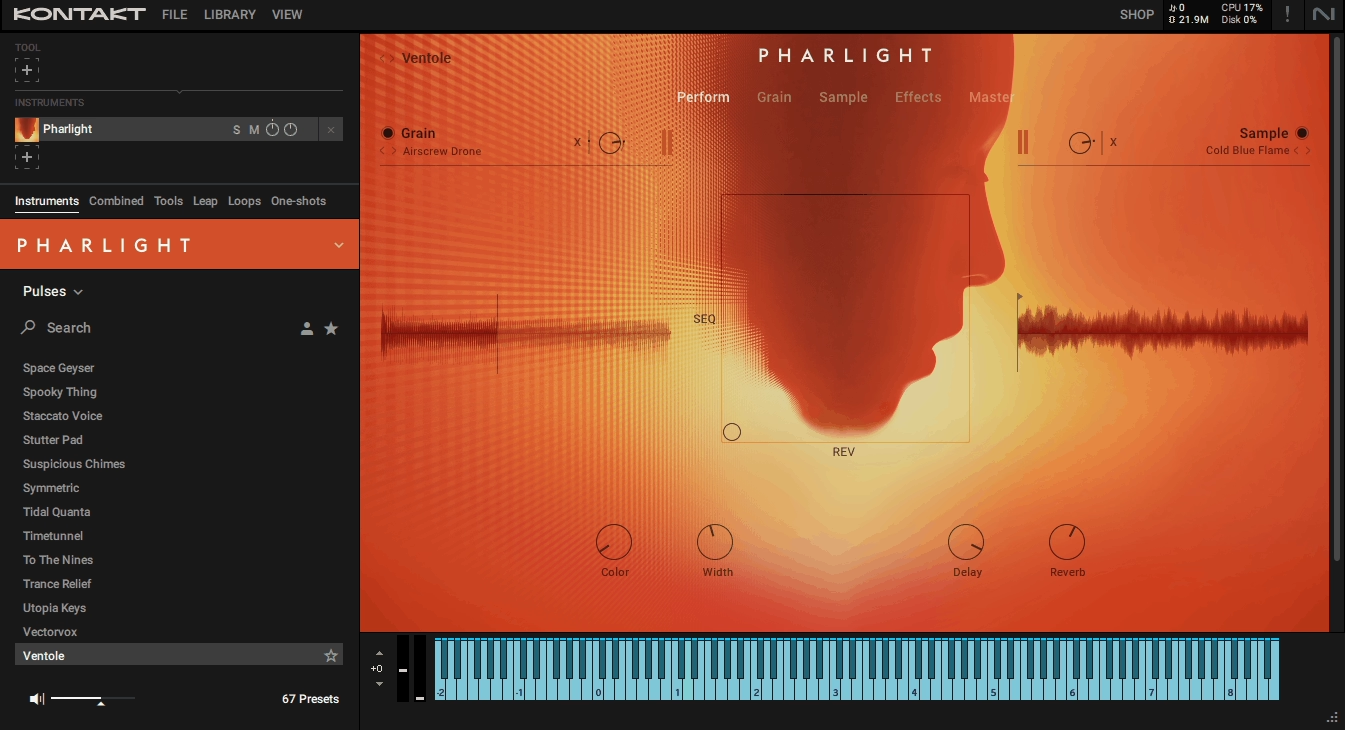
The vocal source material in Pharlight is what makes it genuinely different from other Kontakt synth instruments, and I’d say it’s the most emotionally direct synthesis-adjacent tool on this list. Processed choir and vocal recordings pass through a granular engine that allows you to move between recognizably human textures and more abstract granular clouds depending on how heavily you push the manipulation parameters.
The result is pad and textural content that carries the harmonic complexity and emotional resonance of the human voice even when the granular processing has transformed it well past obvious recognition. I must say the modulation system responds to performance input in a way that makes the library feel genuinely expressive: velocity and expression control shape the character of the granular processing rather than simply adjusting volume, which means dynamics carry real emotional weight.
- Vocal Granular Engine
Processed choir and solo vocal recordings form the source material for granular manipulation, producing output that carries the emotional resonance of the human voice even when the processing has moved it far from recognizable choir sound.
- Expressive Dynamics
Velocity and expression input changes the granular character meaningfully rather than simply adjusting volume, which gives the instrument genuine expressive range that makes performances feel emotional rather than mechanical.
- Vocal to Abstract Spectrum
The granular controls move the output across a range from clearly recognizable human voice through to completely abstract granular texture, giving you the full spectrum of vocal-sourced synthesis character from a single instrument.
- 300+ Presets
Around 300 presets cover intimate solo vocal textures through to massive processed choral atmospheres, organized across emotional categories that make navigation musically intuitive.
- Performance Modulation
Real-time modulation responds to aftertouch, pitch bend, and MIDI expression for adding movement and dynamics to sustained textures during live performance or recording.
Nacht

Techno is a genre that demands specific synthesis character, and the approach behind Nacht reflects a genuine understanding of what that character actually is: dark, industrial, harmonically dense synthesis with the specific mid-range aggression and sub-bass weight that defines the aesthetic rather than a generic “dark electronic” approximation. The library was built specifically for techno production contexts where the synthesis tools need to feel like they came from the same design philosophy as the genre itself.
I have to say the filter and distortion character is the quality that most clearly reflects this: the resonant filter behavior has the specific aggressive, slightly unstable quality of overdriven analog circuits rather than the clean precision of digital filter modeling, which is exactly what techno synthesis requires. For producers making techno, industrial, and dark electronic music, this is the Kontakt synth library that was built for them rather than adapted from a more general-purpose tool.
- Techno-Specific Synthesis Character
The synthesis architecture, filter behavior, and distortion stages are specifically calibrated for dark industrial techno aesthetics rather than general-purpose electronic production, which means the output fits immediately without the processing work required to push more neutral synthesis tools into this territory.
- Analog Filter Behavior
The filter modeling reflects the specific aggressive, slightly unstable character of overdriven analog circuits rather than clean digital filter precision, producing the resonance behavior that characterizes hardware techno synthesis.
- Industrial Distortion
Saturation and distortion stages are tuned for mid-range aggression and harmonic density rather than warmth, which suits techno production where the synthesis needs edge and weight rather than polish.
- Sub-Bass Integration
The low-end output is calibrated for sub-bass frequency content that complements kick drums and basslines in techno mix contexts rather than competing with them, reflecting an understanding of how synthesis sits in the genre’s specific frequency hierarchy.
- Preset Collection
The preset library is organized around techno production contexts including industrial textures, percussive synthesis, bass elements, and atmospheric layers that cover the range of synthesis roles the genre requires.
Melted Vibes

Hip-hop synthesis has a specific aesthetic that requires warm, slightly degraded, harmonically rich character, and what makes Melted Vibes genuinely useful for this production context is that the synthesis character reflects that aesthetic at a source level rather than applying lo-fi processing as an afterthought. The underlying material has the warmth, subtle detuning, and harmonic character of vintage analog and early digital synthesis that defines hip-hop sound design.
I believe the most important quality here is how the instrument responds to slow, expressive playing: the dynamics and modulation behavior are calibrated for the kind of deliberate, soulful performance that hip-hop keyboard parts typically require rather than for fast, precise playing. I found it particularly effective for the pad and lead roles in boom bap and contemporary hip-hop production where the synthesis needs to feel lived-in and emotional.
- Warm Vintage Character
The underlying synthesis produces the warm, slightly detuned, harmonically rich character of vintage analog and early digital instruments rather than clean modern synthesis, which suits hip-hop production aesthetics without requiring extensive processing.
- Deliberate Performance Response
Dynamics and modulation are calibrated for slow, expressive playing rather than fast technical performance, reflecting how hip-hop keyboard parts are typically played and recorded.
- Harmonic Richness
Harmonic complexity and subtle detuning are present in the synthesis character at a source level rather than being added as effects, which produces the kind of organic warmth that distinguishes vintage-influenced hip-hop production from cleaner contemporary synthesis.
Lo-Fi Glow

There’s a very specific warmth to Lo-Fi Glow that comes from the source material rather than from processing applied after the fact, and I think this is what makes it more useful than a generic synth library with a lo-fi filter added on top. Vintage keyboard and electronic instrument sources are at the foundation, capturing the specific frequency response limitations, circuit noise, and harmonic character of the hardware rather than approximating those qualities through digital degradation.
The result is synthesis character that feels genuinely recorded rather than artificially aged. I appreciate that the degradation and lo-fi processing controls are adjustable rather than fixed, so you can dial in anything from barely perceptible vintage warmth through to heavily worn, tape-saturated character depending on how much of the aesthetic you want in a given production context.
- Vintage Source Material
The foundation comes from vintage keyboard and electronic instrument recordings that capture the actual frequency response limitations, circuit noise, and harmonic character of the hardware rather than using clean sources with lo-fi effects applied.
- Adjustable Degradation
Degradation, noise, bandwidth limiting, and saturation controls are independently adjustable rather than being a single fixed lo-fi treatment, allowing precise calibration of how much vintage character appears in the output.
- Authentic Circuit Character
The circuit noise, subtle tuning instabilities, and frequency response limitations of the source hardware are preserved in the recordings, producing the specific analog imperfection that digital approximations of lo-fi aesthetics rarely fully capture.
Straylight
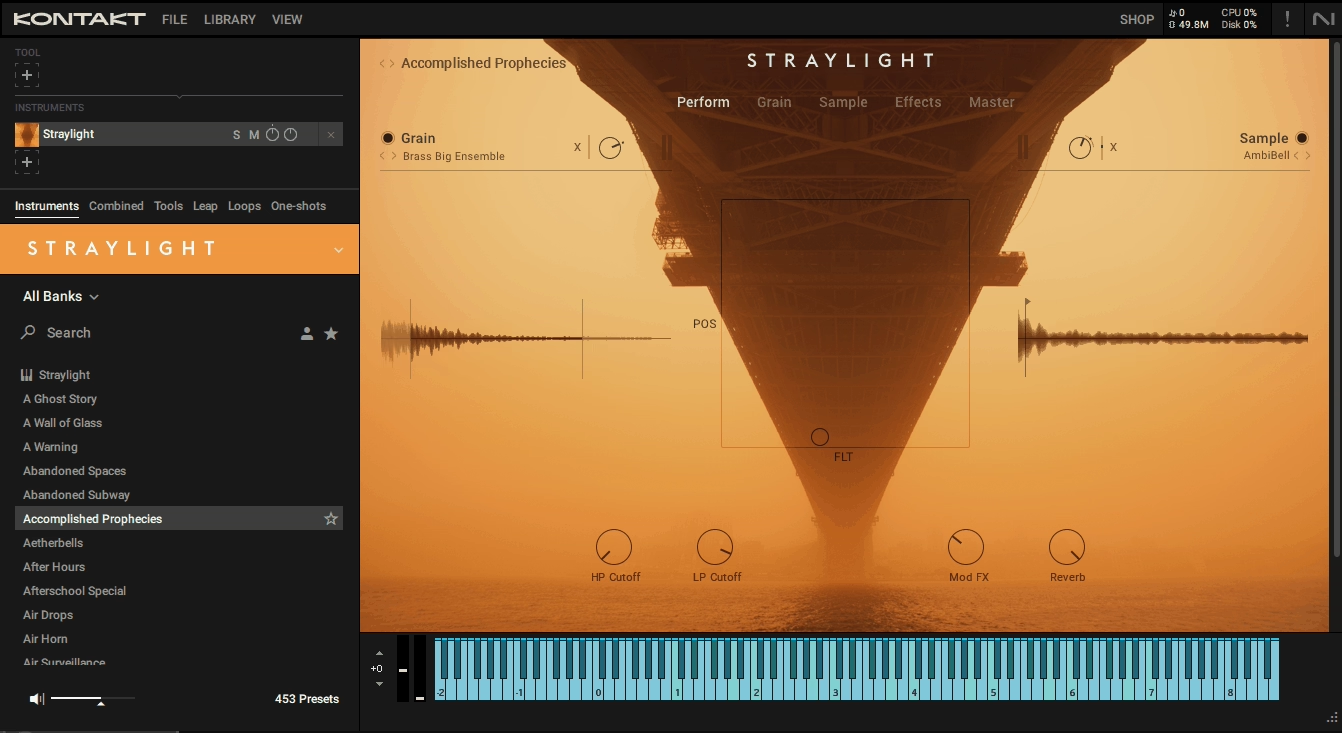
Sound design is the explicit purpose behind Straylight, and the library’s architecture reflects that: rather than a preset-forward instrument for quick production use, this is a deep synthesis and sound design environment built around spectral, granular, and wavetable processing that rewards extended exploration and custom patch building. The engine is sophisticated enough to produce genuinely unusual results that don’t resemble standard Kontakt library output.
I love how the modulation routing depth goes well beyond what most Kontakt instruments offer: you can construct complex modulation relationships between parameters that produce evolving, self-generating synthesis behavior rather than the simple LFO-to-cutoff assignments that characterize most sample-based instruments. I’d say Straylight is the right tool for producers who think of synthesis as a creative practice rather than a preset-selection activity.
- Deep Synthesis Architecture
The engine combines spectral, granular, and wavetable processing in a unified instrument designed for serious sound design rather than quick preset browsing, rewarding producers who invest time in understanding its parameter relationships.
- Advanced Modulation Routing
Complex modulation routing allows construction of self-modulating, evolving synthesis behaviors that go well beyond standard LFO-to-parameter assignments, producing genuinely generative synthesis character.
- Spectral Processing
A dedicated spectral manipulation layer handles frequency-domain processing independently from the granular and wavetable stages, giving sound design flexibility that time-domain processing alone doesn’t provide.
- Custom Patch Building
The instrument is explicitly designed for building custom patches from scratch rather than relying on presets, with an interface that makes complex synthesis configuration accessible without sacrificing depth.
- Unusual Output Character
The combination of processing stages produces synthesis results that don’t resemble standard Kontakt library output, making it valuable for producers who need sounds that don’t sound like they came from a sample library.
- Wavetable Engine
The wavetable component allows custom waveform loading and wavetable position modulation, extending the harmonic palette well beyond what granular and spectral processing alone can produce.
Modular Icons
The idea behind Modular Icons is straightforward: bring the synthesis character of iconic hardware modular systems into Kontakt with the routing flexibility and tonal accuracy that makes modular synthesis specifically valuable rather than just providing a collection of modular-sounding presets. The instrument covers multiple synthesizer architectures and voice configurations rather than being locked to a single modular system’s character.
For me, the most compelling aspect is how the signal path flexibility reflects actual modular routing logic rather than a simplified approximation of it: filter placement, feedback routing, and modulation patching behave according to the same rules that govern hardware modular systems, which produces synthesis results that feel genuinely modular rather than merely modular-adjacent. I noticed the preset collection covers a wide range of modular synthesis styles from West Coast to East Coast architectures.
- Multiple Modular Architectures
The instrument covers multiple iconic hardware modular synthesis architectures rather than a single system, giving access to different synthesis philosophies from West Coast waveshaping approaches through to East Coast subtractive configurations.
- Authentic Signal Flow
Filter placement, feedback routing, and modulation patching follow actual modular synthesis logic rather than simplified approximations, producing synthesis behavior that reflects how hardware modular systems actually work.
- Cross-Architecture Patching
Elements from different modular architectures can be combined within the instrument in ways that wouldn’t be possible without expensive hardware, allowing synthesis configurations that exist outside the limitations of any single physical system.
- Hardware-Accurate Filters
Filter models reflect the specific resonance behavior and saturation character of hardware modular circuits rather than generic digital filter modeling, capturing the sonic personality of the original systems.
Utopia

Uplifting trance synthesis has very specific requirements: euphoric, harmonically bright, soaring pad and lead character with the sustain behavior and pitch expression that the genre’s emotional vocabulary demands, and Utopia was built around those requirements rather than as a general-purpose synthesis tool that happens to include trance presets. The synthesis character reflects the specific harmonic brightness and emotional openness of uplifting trance production.
I suggest approaching this library with its genre context in mind because the synthesis character is optimized for that specific emotional territory: the sustain behavior, attack transients, and harmonic content are calibrated for the euphoric, emotionally expansive quality that defines uplifting trance rather than for versatility across different electronic music styles. The preset collection is substantial and reflects genuine expertise in the genre.
- Uplifting Trance Synthesis Character
The synthesis architecture is specifically calibrated for the harmonically bright, emotionally expansive character of uplifting trance production rather than being adapted from more general electronic synthesis tools.
- Euphoric Pad and Lead Design
Pad and lead sounds carry the specific sustain behavior, harmonic brightness, and emotional openness that the genre’s sound design vocabulary requires, reflecting careful attention to what makes trance synthesis feel euphoric rather than generic.
- Pitch Expression
Pitch bend range and behavior are calibrated for the kind of soaring, expressive lead synthesis that characterizes uplifting trance melodic writing, with response characteristics that suit the genre’s performance conventions.
- Genre-Specific Preset Collection
The preset library reflects genuine expertise in uplifting trance production rather than general electronic music synthesis, covering pads, leads, plucks, and textural elements in proportions that match how the genre actually uses synthesis.
- Harmonic Brightness Control
High-frequency content and harmonic brightness are adjustable within each preset to allow the synthesis character to sit appropriately in different mix densities without losing the genre’s characteristic openness.

Hello, I’m Viliam, I started this audio plugin focused blog to keep you updated on the latest trends, news and everything plugin related. I’ll put the most emphasis on the topics covering best VST, AU and AAX plugins. If you find some great plugin suggestions for us to include on our site, feel free to let me know, so I can take a look!