
Finding Kontakt libraries that genuinely serve ambient, pad, and drone production rather than simply adding reverb to acoustic instruments is harder than it sounds. The libraries that actually work for this kind of music are the ones built around evolving, breathing, harmonically rich content that responds to how you play rather than sitting statically in the background.
They tend to share a common quality: they were designed by people who understand that in ambient and atmospheric production, the texture itself is the composition rather than a backdrop to one. I think the most practically important quality for this specific use case is how well a library handles movement and evolution over time.
Static pads have limited compositional value, and the tools that generate genuinely evolving textures are the ones that keep appearing in the templates of working ambient producers. For producers building ambient, experimental electronic, cinematic, and hybrid productions where pads and textural content are central to the sound, this collection covers the range of approaches and tonal characters that the genre demands.
1. Native Instruments Cloud Supply

Approaching ambient pad design from a synthesis-forward perspective, Cloud Supply combines granular processing with spectral manipulation to create evolving textures that feel more like generative synthesis than sample playback. The core engine processes layered audio sources through granular manipulation parameters including grain size, density, position, and randomization, producing the specific drifting, cloud-like quality that suits long-form atmospheric work.
What makes it practically useful is the combination of real-time granular control with built-in modulation that animates textures over time without requiring manual automation. You can load a preset and have it evolve continuously over minutes rather than seconds, which is the timescale that ambient and drone production actually operates on.
I love how the modulation depth controls are calibrated for long-form movement: the slowest settings produce genuine minute-scale evolution that suits cinematic cues and ambient compositions where the texture needs to shift gradually rather than obviously. It’s one of those libraries you set in motion and let breathe rather than actively perform.
- Granular Engine
The core processes layered audio sources with independent control over grain size, density, position, and pitch randomization, giving you the full range from smooth cloud-like textures through to fragmented, glitchy granular material depending on how aggressively you push the parameters.
- Long-Form Modulation
Rather than fast LFO rates, the modulation architecture here is built for minute-scale parameter evolution that suits ambient and drone work where you want texture to shift so slowly the listener feels it rather than hears it change.
- Spectral Processing
A dedicated spectral layer sits above the granular engine and handles harmonic content shaping independently from the granular behavior, which allows you to add tonal color and harmonic brightness without affecting the grain character of the texture.
- Integrated Spatial Processing
Reverb, stereo width, and spatial positioning are all built into the instrument rather than requiring external processing, keeping the workflow compact during composition and allowing spatial decisions to be made as part of the sound design.
2. Heavyocity Mosaic Pads
The source material is where this library earns its reputation: Heavyocity Mosaic Pads was built from specifically recorded orchestral textures, hybrid electronic content, vocal elements, and designed sound sources that were captured with cinematic atmosphere as the explicit goal. Over 350 curated presets are organized by mood and intensity, giving you immediate access to material that’s production-ready without requiring significant configuration.
The envelope and filter controls are among the more musically useful I’ve encountered in this category. I must say the attack shaping in particular covers the range from immediate, present pad tones through to the very slow bloom that creates the specific sense of a texture materializing out of silence.
- Orchestral and Hybrid Source Material
The library draws from professional orchestral recording sessions alongside hybrid electronic and designed sources, giving the pad content a depth and harmonic complexity that purely synthesized alternatives don’t naturally produce.
- Slow Attack Bloom
The attack envelope extends into extremely long fade-in territory that allows textures to emerge gradually from silence over many seconds, which is the specific quality that makes pad content feel like it materializes rather than starts.
- Built-In Arpeggiator
A dedicated arpeggiator adds rhythmic movement to pad content without requiring external MIDI programming, covering the territory between pure drone and rhythmically active pad material that most pad libraries don’t address.
- 350+ Curated Presets
The preset library is organized by mood, intensity, and cinematic application, meaning you can navigate to the right emotional character quickly rather than auditioning everything sequentially.
- Dynamics and Filter Animation
Built-in modulation handles filter cutoff and dynamics animation over time, keeping the pad content alive and evolving without requiring automation lanes or external modulation sources.
- Cinematic Application Focus
The design priorities throughout reflect trailer, scoring, and cinematic production contexts rather than general-purpose pad design, which means the sounds work immediately in those applications without adjustment.
3. NI Arkhis
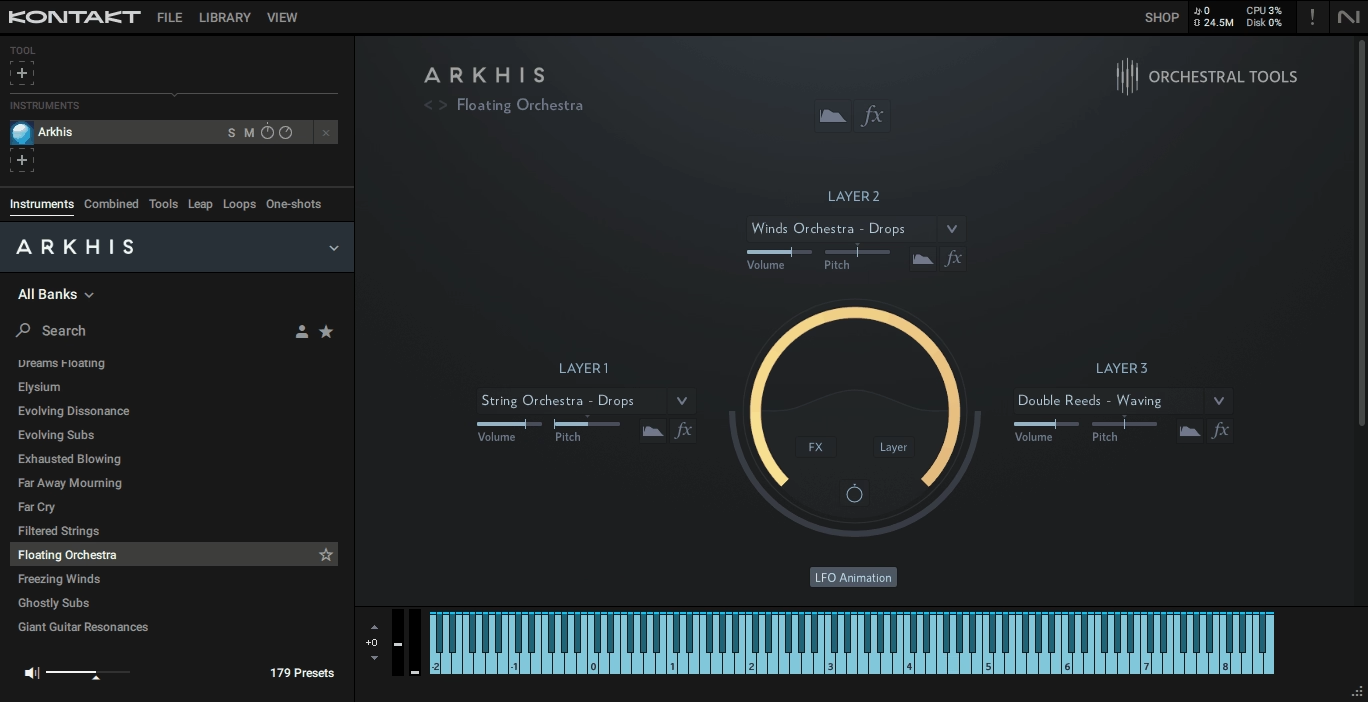
There’s a specific problem that Arkhis solves that other pad libraries tend to sidestep: how do you get the emotional warmth of orchestral writing into a pad instrument without the result sounding like a string section? The answer here is processing string and orchestral source material through granular and spectral manipulation that removes the identifiable qualities of the instruments while preserving their harmonic character.
This produces textures that feel orchestrally warm without sounding like underscore. For me, this is the library to reach for in cinematic contexts where you need pad content that has genuine emotional weight without a specific instrumental identity that pulls listener attention away from the picture.
- Processed Orchestral Sources
String, brass, and orchestral material passes through granular and spectral processing that strips away instrumental identity while preserving the harmonic warmth of the original recordings, producing content that feels acoustic without being identifiably instrumental.
- Four-Layer Architecture
You can stack up to four different processed sources at independent levels, covering the range from subtle harmonic reinforcement through to dense, multi-layered textural content within a single preset.
- Mood-Based Preset Organization
Around 250 presets are organized across dark, light, tension, and release categories, making it straightforward to navigate to the right emotional temperature for a specific cue without extensive auditioning.
4. Pharlight
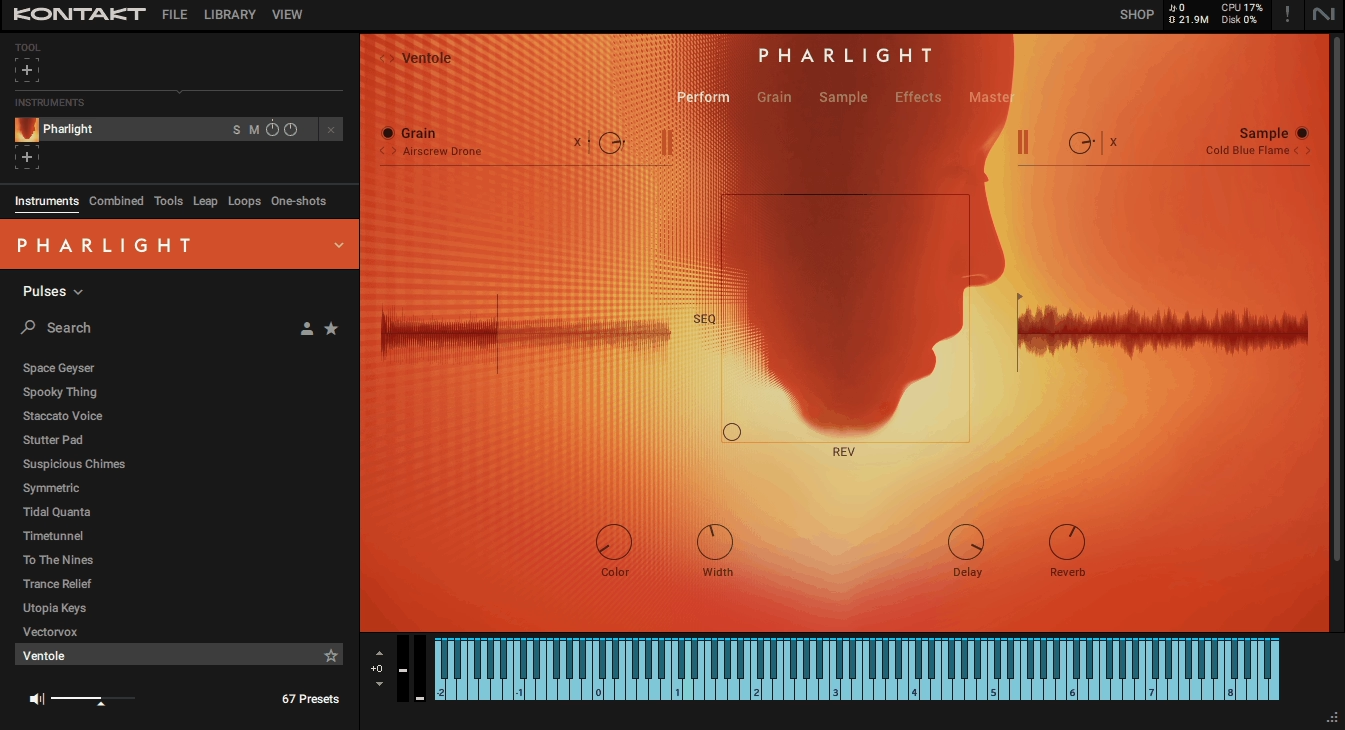
Vocal source material is what makes Pharlight different from every other library on this list, and I’d say it’s also what makes it the most emotionally direct of the seven. The human voice carries a harmonic complexity and expressiveness that processed vocal pad content inherits even when the source has been granularly manipulated well past the point of obvious recognition.
The granular processing controls allow you to move between recognizably vocal textures and more abstract granular clouds depending on how heavily you push the manipulation parameters. I found it most compelling when the vocal character sits at the edge of recognizability: just present enough to carry emotional resonance, just transformed enough to feel like atmospheric texture rather than a choir sample.
- Vocal and Choir Source Material
The underlying recordings draw from solo vocal and ensemble choir sessions that were captured specifically for granular processing, giving the source material a timbral richness that field recordings or general-purpose samples don’t provide.
- Granular Vocal Transformation
The granular engine moves the vocal material across a range from recognizable human voice through to abstract granular cloud, with full control over where on that spectrum the output sits at any given moment.
- Emotional Warmth
The human voice carries a harmonic complexity and expressiveness that processed vocal pad content inherits even when the source is granularly manipulated to the point where the vocal origin is only subtly recognizable, and Pharlight captures and expands that quality into a full pad design environment.
- 300+ Presets
Around 300 presets cover intimate solo vocal textures through to massive processed choral atmospheres, organized to give you access to both ends of the scale and everything in between.
- Performance-Responsive Evolution
The instrument responds to velocity and expression input by adjusting the character of the granular processing, which means the texture changes meaningfully with how you play rather than remaining uniform regardless of dynamics.
5. Glaze 2

What separates this instrument from other pad synthesizers is the hybrid synthesis engine that combines wavetable, granular, and spectral processing in a unified design built specifically for evolving, shimmering pad and drone work, and Glaze 2 handles the specific challenge that most pad synthesizers miss: producing content that evolves continuously without ever sounding like it’s looping or repeating.
The modulation architecture allows extremely slow parameter changes that create movement measured in minutes rather than seconds. I have to say this is the most synthesis-oriented library on the list, which makes it the most flexible for producers who want to build their own pad characters from the ground up rather than working from preset atmospheres.
- Hybrid Synthesis Engine
Wavetable, granular, and spectral processing operate simultaneously within a unified signal flow rather than as separate selectable modes, which produces harmonic complexity that individual synthesis approaches can’t replicate.
- Continuous Non-Repeating Evolution
The modulation system is specifically designed to prevent the looping, repeating quality that makes synthesized pads feel mechanical, using randomized and cross-modulated parameter changes to keep the output perpetually evolving.
- Minute-Scale Modulation
Rate controls extend far below standard LFO minimums, allowing parameter changes that unfold over one, two, or five minutes rather than seconds, which is the timescale ambient and drone composition actually requires.
- 400+ Presets
Over 400 presets provide starting points across shimmering, dark, textural, and tonal categories, with enough variety that you can find something close to the right character for most applications without building from scratch.
- Drone and Shimmer Specialization
The synthesis architecture was explicitly designed for the shimmering, sustained, harmonically rich character that distinguishes quality drone and pad content from basic synthesized tones.
6. Ethereal Earth

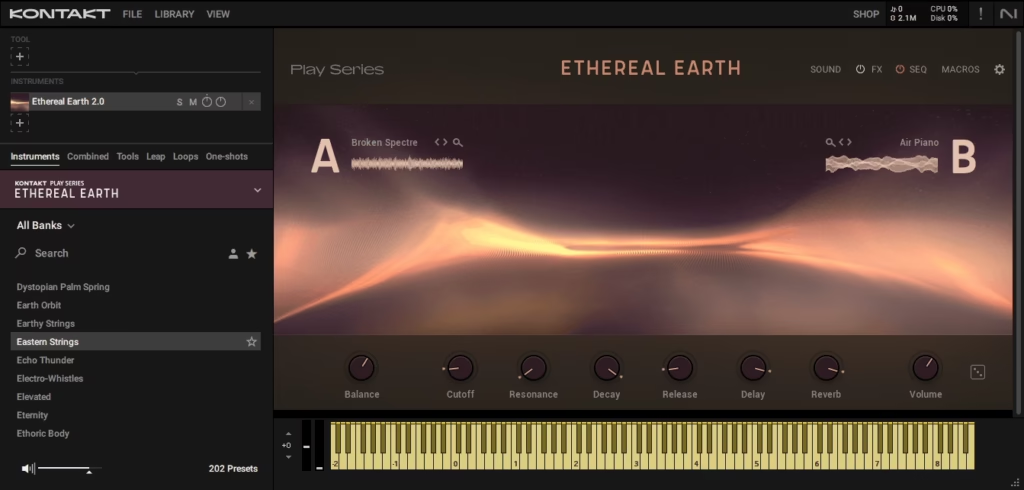
Free is the first thing worth saying about this one, because NI Ethereal Earth is available at no cost and its quality significantly exceeds what that price point would lead you to expect. Processed organic and natural source recordings including earth textures, field recordings, and acoustic material have been transformed into playable pad and drone content through granular and spectral processing.
The result has a grounded, physical dimension that purely electronic pad libraries can’t naturally produce. I suggest thinking of it as a foundational texture layer beneath more harmonically defined pad content from paid libraries: the organic earthy quality of its sources adds presence and weight to atmospheric mixes.
- Free Professional Quality
The library is available at no cost while delivering output quality that competes with paid options in its specific use case of organic textural pad content.
- Organic Source Recordings
Earth textures, field recordings, and processed acoustic material form the underlying samples, giving the library a physical, grounded character that electronic sources don’t naturally produce.
- Foundational Layer Application
The tonal character works particularly well as an underneath layer supporting more harmonically defined pad content, adding physicality and organic weight to mixes that would otherwise feel entirely synthetic.
7. Vocal Colors
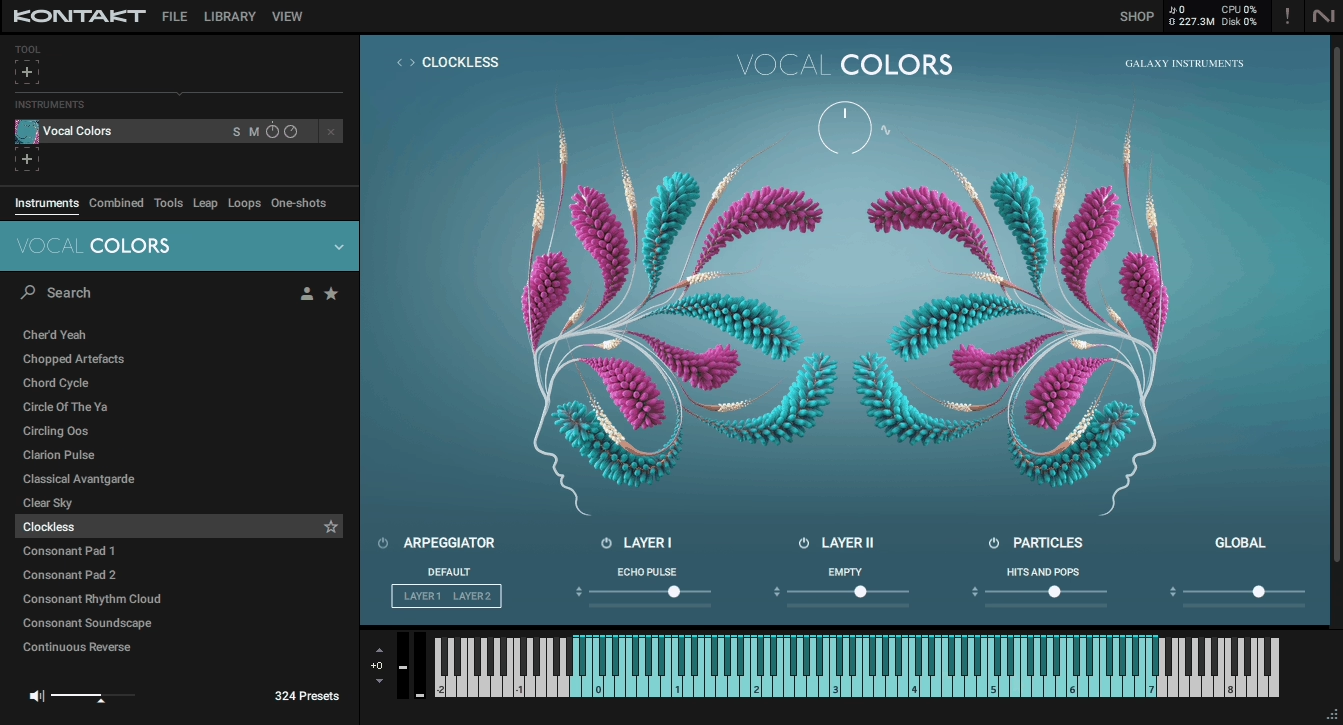
Rather than processing voices into unrecognizable granular territory, the approach behind Vocal Colors preserves more of the recognizable vocal character while building pad and atmospheric content from it, creating textures that clearly suggest human voices as a timbral reference. I appreciate the specific warmth and emotional directness that lightly processed vocal pad content carries.
There’s something in a pad that still sounds like people that purely synthetic alternatives can approach but rarely replicate convincingly. In my opinion, Vocal Colors occupies a specific and genuinely useful position between obviously sampled choir and unrecognizable granular processing that suits contemporary ambient, pop, and cinematic production equally well.
- Preserved Vocal Character
Unlike heavily processed vocal libraries, the human voice remains recognizable as a timbral reference throughout the pad content, which gives the output an emotional directness that more abstract vocal processing doesn’t carry.
- Emotional Directness
The connection between the output and its human voice source material produces an emotional quality that other pad instruments approximate but rarely match, because the voice carries resonances and associations that no synthesized equivalent fully replicates.
- Performable Dynamics
Velocity and expression input changes the character of the vocal textures meaningfully, making the instrument feel played rather than triggered and allowing dynamics to carry emotional weight rather than simply volume variation.
- 200+ Presets
Approximately 200 presets cover the range from intimate single-voice textures through to full ensemble-scale atmospheric content, organized to give you access to both ends of the emotional scale.
- Gradual Texture Evolution
Modulation controls handle slow evolution of the vocal character over time, keeping the pad content alive during long held sections without requiring manual automation or external modulation sources.
- Cross-Genre Application
The specific tonal character works across contemporary ambient, pop, and cinematic production without requiring significant EQ adjustment to fit different production contexts.

Hello, I’m Viliam, I started this audio plugin focused blog to keep you updated on the latest trends, news and everything plugin related. I’ll put the most emphasis on the topics covering best VST, AU and AAX plugins. If you find some great plugin suggestions for us to include on our site, feel free to let me know, so I can take a look!