11 Best Neural DSP Plugins (Amps & Effects)

Archetype Gojira X
When you purchase through links on my site, I may earn a small commission at no extra cost to you. Here is how it works.

For many plugins on this site, you can find a free trial on the developer’s website. However, when you purchase through PluginBoutique or other authorized vendors, you’re directly supporting Pluginerds.com. Thank you for your support.

Whether you’re tracking modern metal, prog rock, or experimental ambient textures, Neural DSP plugins go beyond basic amp simulation. In this breakdown, I’m covering plugins like Mantra, Archetype: Rabea X, Soldano SLO-100 X, Archetype: Tim Henson X, and Darkglass Ultra, along with several others that solve specific production problems rather than just adding another vintage amp model to your collection.

The goal here isn’t to hype up every plugin they make, but to show you what each one actually does differently so you can figure out which workflows and sounds match how you work. Some of these are focused on signature artist tones, others are built around specific effects like pitch shifting or multiband distortion, and a few are designed specifically for bass players who need clarity and punch in heavy mixes.

Here I made a detailed table showing features of each plugin, you can scroll to the each plugin by clicking on its name:

Comparison of Neural DSP guitar and bass plugins focused on amp modeling, creative effects, routing flexibility, and modern production workflows.
Plugin Name Best For Engine Type Key Strength My Verdict Pros Cons
1. Mantra Ambient textures Polyphonic pitch FX Multi-voice harmonies Creative sound design tool 4 voices, clean tracking No amp simulation
2. Archetype: Rabea X Versatile guitar tones Amp + FX modeling Wide tonal range All-round guitar rig 3 amps, full pedalboard Not metal-focused
3. Soldano SLO-100 X Classic high-gain Amp modeling Authentic saturation Legendary lead tone Natural compression Limited clean variety
4. Archetype: Petrucci X Prog & shred Multi-amp modeling Tight high-gain clarity Precision-focused rig 5 amps, signature pedals Dense interface
5. Archetype: Tim Henson X Modern guitar sounds Amp + poly FX Hi-fi articulation Experimental tone machine Pitch FX, shimmer reverb Not vintage-styled
6. Archetype: Nolly X Modern metal Amp + studio FX Tight low end Mix-ready metal tones Gate, transient shaper Aggressive voicing
7. Fortin Nameless Suite X Extreme metal Multi-amp modeling Brutal gain control Pure high-gain focus 3 amps, Fortin pedals No clean emphasis
8. Archetype: Tom Morello Creative FX guitar Amp + experimental FX Signature pitch effects Effects-driven rig Whammy, talk box Style-specific
9. Archetype: Gojira X Extreme metal riffs Amp + pitch FX Massive low end Crushing modern tone Octaver, tight gate Heavy genre bias
10. Darkglass Ultra Aggressive Bass Tones Emulation of Vintage & B7K Vintage/B7K Algorithms Modern bass weapon Microtubes algos No guitar support
11. Parallax X Prog metal bass Multiband amp engine Mix-ready bass Studio bass solution Compression, routing Learning curve

1. Mantra – Best sound design tool

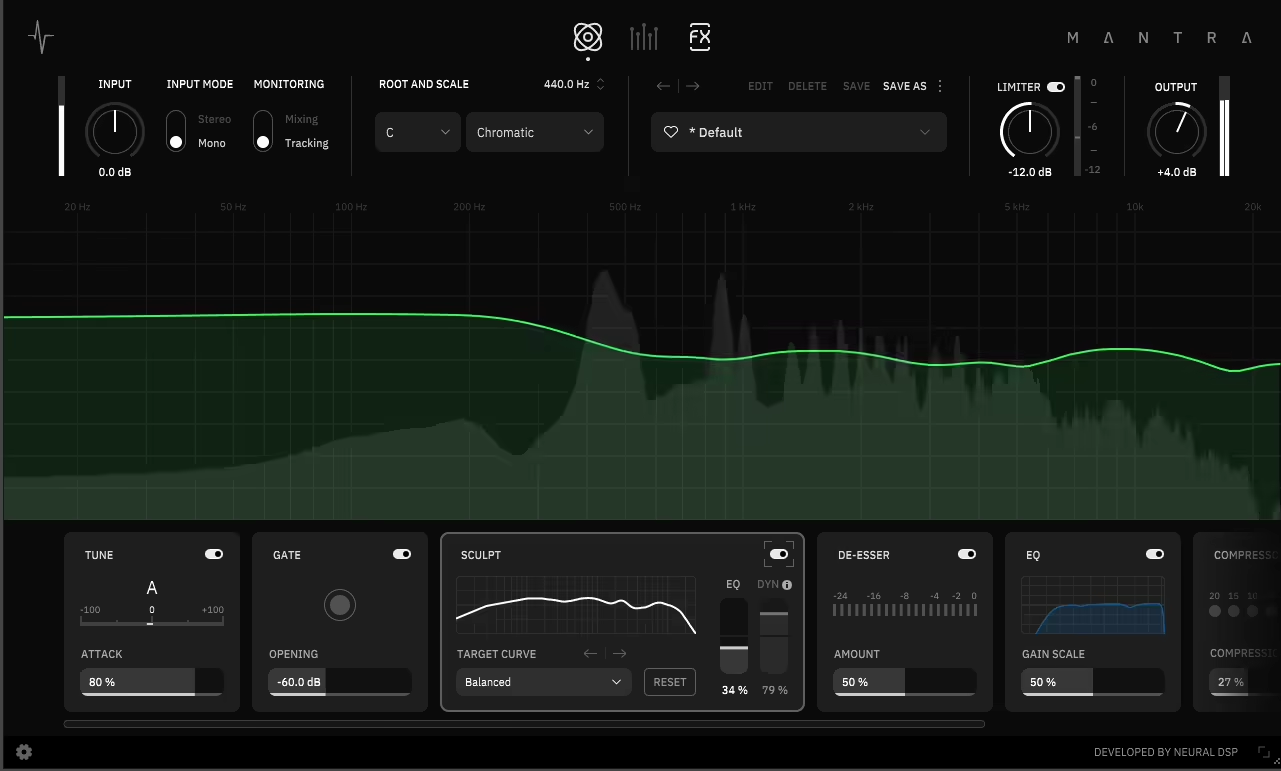
Neural DSP Mantra

This FX isn’t trying to be another amp sim, and I think that’s exactly why it stands out in Neural DSP’s lineup. Mantra by Neural DSP is a multi-voice harmonizer and effects processor designed specifically for guitar and bass, and I found it opens up creative possibilities that you just can’t get from traditional amp modeling or overdrive pedals.

What makes Mantra Neural DSP Plugin different is its polyphonic pitch shifting engine that can create up to four independent voices from a single input signal, and each voice can be pitched, delayed, and processed separately.I can recommend it it to build massive, layered textures from simple guitar parts, and the quality of the pitch shifting is genuinely impressive without the warbling or artifacts you often get from lower-quality algorithms.

The plugin also includes modulation, delay, and reverb built into the signal chain, so you can create complete soundscapes without needing to load a bunch of separate effects.

I realized pretty quickly that Mantra works best when you’re looking to expand your sonic palette beyond standard guitar tones, and it’s become my go-to tool for creating ambient pads, octave-stacked leads, and experimental textures that still feel musical and controlled.

  • Polyphonic Pitch Shifting 

When it comes to polyphonic pitch engine, it can generate up to four separate voices from your input signal, and each voice can be pitched independently in semitones and cents. I’d say this is the core feature that makes the plugin so powerful because you’re not limited to simple octave doubling or fixed intervals.

You can create complex harmonic structures by stacking thirds, fifths, octaves, or completely unconventional intervals that wouldn’t be possible with traditional harmony pedals.

I found that the pitch tracking is accurate and responsive even with complex chords, which is something cheaper pitch shifters struggle with. Each voice has its own level, pan, and delay controls, so you can position them in the stereo field and create space between the different layers.

In addition, the pitch shifting stays clean and artifact-free even when you’re shifting by large intervals, and that quality makes Mantra suitable for professional recording rather than just experimentation.

  • Modulation Effects

The plugin includes chorus, flanger, and phaser that can be applied to individual voices or the entire mix, and to me, this adds another layer of movement and depth to the processed signal. The modulation effects are high-quality and musical, not just tacked-on extras.

  • Integrated Delay and Reverb

Mantra has delay and reverb built into the signal chain, and I must say this makes the plugin way more complete for creating atmospheric textures. The delay can be synced to tempo or set freely, and it works on individual voices or the full mix depending on your routing.

The reverb is spacious and smooth, perfect for creating ambient washes and sustain that extend your guitar beyond its natural decay. I realized that having these effects integrated means you can build complete soundscapes inside Mantra without needing to chain multiple plugins together. The delay and reverb both have pre-delay, size, and damping controls that give you enough flexibility to shape the space around your sound.

I found this particularly useful when creating pad-like textures from single notes or chords because the reverb and delay work together to fill out the sound and make it feel huge.

  • Flexible Routing & Voice Control

Lastly, each voice in Mantra can be routed through the effects chain differently, and I appreciate how this gives you control over which voices get modulation, delay, or reverb. You can keep one voice dry and direct while sending the others through heavy processing, which creates contrast and dimension.

2. Archetype: Rabea X – All-round guitar rig
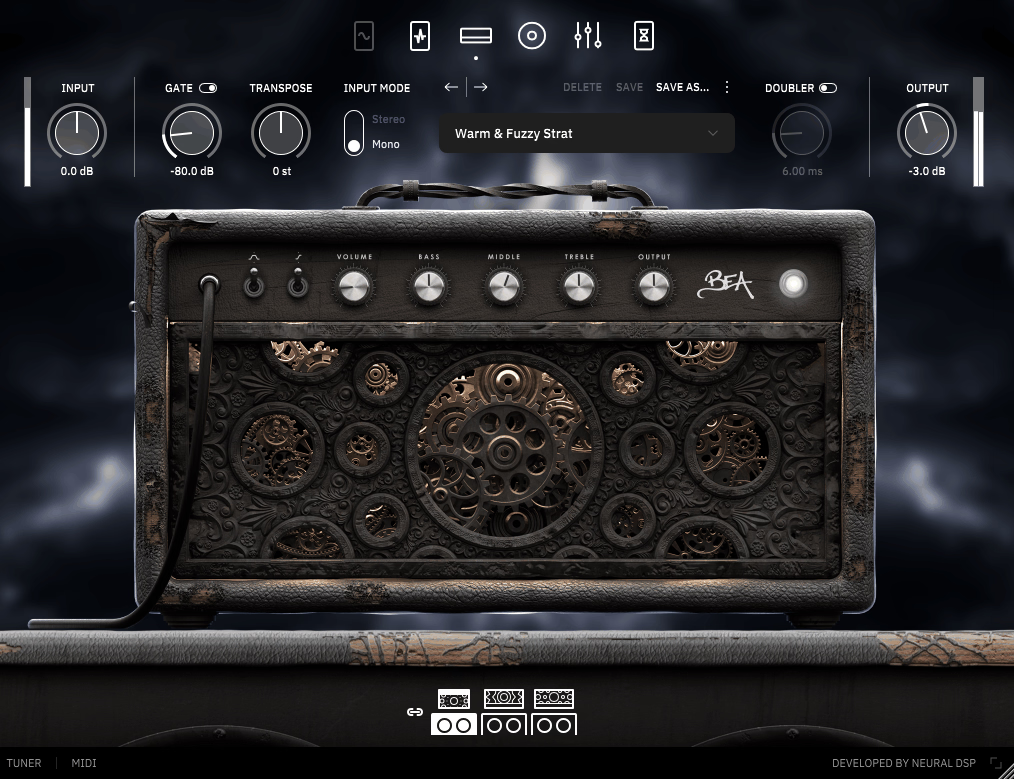
Archetype: Rabea X

I’ve tested a lot of high-gain amp sims, and most of them focus exclusively on metal tones without much versatility for other styles. With that said, Neural DSP VST plugin Archetype: Rabea X giving you three distinct amp models that cover everything from clean and edge-of-breakup tones to modern high-gain saturation, and I found this range makes it way more practical for sessions where you need multiple sounds without switching plugins.

Developed with guitarist Rabea Massaad, this plugin delivers British-inspired rock tones alongside aggressive modern distortion, and the signal chain includes a full pedalboard and effects rack that lets you build complete guitar sounds from scratch. I’d recommend it for recording clean rhythm parts, crunchy leads, and heavy riffs, and the tonal flexibility means you can cover an entire song without feeling like you’re forcing the plugin to do something it wasn’t designed for.

  • Three Versatile Amp Models

Archetype: Rabea includes three amp channels labeled Clean, Crunch, and Lead, and each one has a distinct character that serves different musical contexts. The Clean channel delivers sparkle and clarity with enough headroom for chord work and ambient playing, while the Crunch channel sits in that sweet spot between clean and full distortion for classic rock and blues tones.

Lastly, Lead channel is where you get modern high-gain saturation with tight low end and aggressive midrange that cuts through dense mixes. I found that each amp responds naturally to playing dynamics, so you can clean up your tone by rolling back your guitar’s volume knob just like you would with a real amplifier. The tone stack controls on each channel give you independent EQ shaping with bass, mid, and treble knobs that interact in musical ways.

I would say having three genuinely different amp voices in one plugin saves you from loading multiple instances or bouncing between different products depending on the part I’m tracking.

  • Comprehensive Pedalboard Section

The plugin has a built-in pedalboard with overdrive, boost, and gate pedals that you can position before the amp in the signal chain.For me personally, the Horizon Drive pedal is particularly useful because it adds focused midrange push without getting muddy, which helps lead tones cut through without cranking the amp gain to extreme levels.

On the flip side, the boost pedal provides clean level increase for pushing the front end of the amp harder, and I noticed this creates different saturation characteristics than just turning up the amp’s gain knob.

Next, the noise gate is essential when using high-gain settings, and it’s responsive enough to clamp down on noise between notes without cutting off your sustain awkwardly. Each pedal has straightforward controls that mirror real hardware, so there’s no learning curve if you’ve used physical pedals before.

  • Post-Amp Effects Rack

After the amp, you get a full effects rack with delay, reverb, chorus, and phaser, and I must say this makes Archetype: Rabea feel like a complete guitar rig rather than just an amp sim. The delay has tempo sync and can do everything from subtle slapback to ambient repeats, while the reverb ranges from tight room sounds to massive hall environments.

The modulation effects add movement and width without making your tone sound overly processed or artificial. I found that the chorus is particularly good for thickening clean tones and lead lines, and the phaser creates that swirling movement that works great on rhythm parts. All the effects can be bypassed individually, so you only use what you need for each specific sound.

  • Advanced Cab Simulation and IR Loading

In the end, the cabinet section includes Neural DSP’s high-quality impulse responses with multiple mic positions and cabinet types, and they feel so much more realistic compared to older cab sims that could feel boxy or artificial. You can blend two microphones simultaneously and adjust their positioning to create custom tones that suit your mix.

The plugin also supports loading your own impulse responses, which gives you unlimited tonal options if you have a collection of third-party IRs or want to use captures from specific cabinets. I realized that the cab sim is a huge part of why Archetype: Rabea sounds professional right out of the box, and the ability to fine-tune mic placement helps you dial in tones that sit perfectly in your production.

  • Free Trial

As with other plugins from Neural DSP, you can test it out for 14 days.

3. Soldano SLO-100 X – Best Classic high-gain
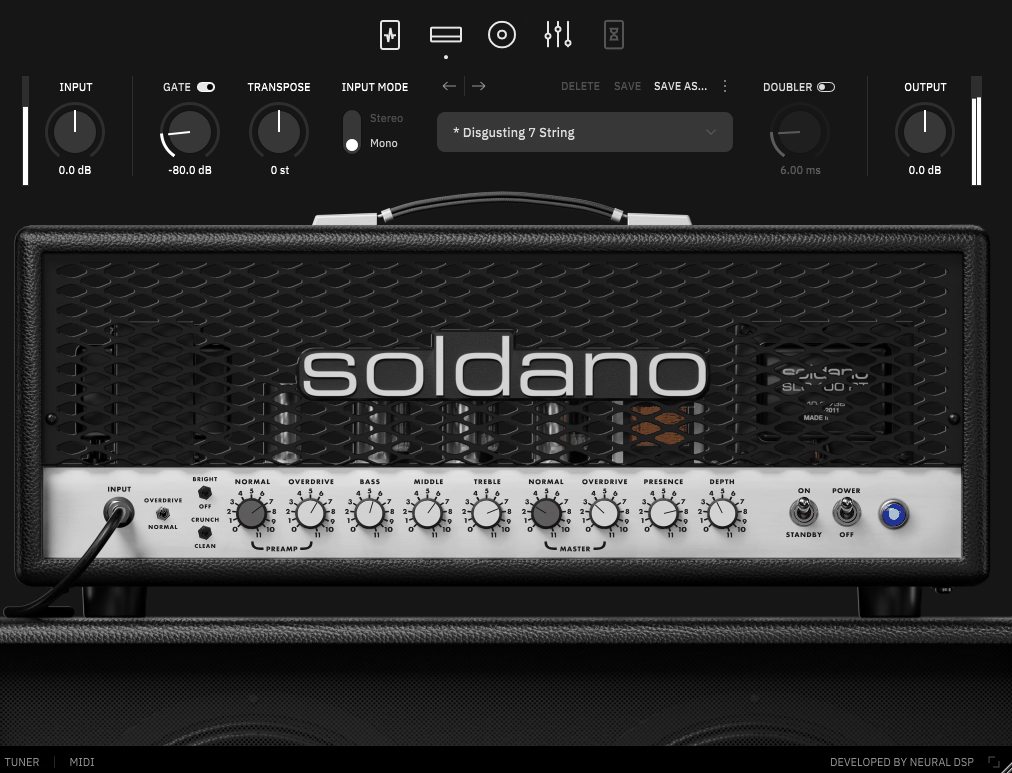
Soldano SLO-100 X

The Soldano SLO-100 is one of those legendary amps that defined high-gain rock and metal tones throughout the late ’80s and ’90s, and getting your hands on the real hardware means spending serious money on the used market. I’ve always wanted access to those thick, saturated lead tones and tight rhythm sounds, but the original amps are hard to find and even harder to maintain.

Now, the Soldano SLO-100 X from Neural DSP captures the complete signal path of the original amplifier with what I found to be impressive accuracy, and the X version adds modern features like MIDI switching, additional effects, and enhanced routing that make it way more practical for studio work than the hardware ever was.

I’ve tried it for recording heavy rhythm guitars and singing lead lines, and the natural compression and harmonic richness it delivers feels authentic to the amp’s reputation without any of the compromises you’d expect from digital modeling.

  • Authentic SLO-100 Channel Models

The plugin gives you both the Normal and Overdrive channels from the original Soldano SLO-100, and I’d say these are the core tones that made the amp famous in the first place. The Normal channel provides clean to mid-gain tones with clarity and punch that work well for rhythm parts and edge-of-breakup playing.

The Overdrive channel is where the SLO-100 really shines with thick, sustaining saturation that has enough gain for modern metal but stays articulate enough for complex chord voicings. I found that the amp responds naturally to pick attack and guitar volume changes, so you can clean up the distortion just by playing lighter or rolling back your guitar’s volume knob.

Also, the three-band EQ with presence and depth controls gives you precise tonal shaping, and the controls interact musically just like the hardware version. I noticed that the midrange character is particularly well captured because it has that focused, vocal quality that made the SLO-100 a favorite for lead work.

  • Expanded Effects Section

The X version includes a comprehensive effects rack with boost, gate, EQ, delay, and reverb, and I think this is where the plugin goes beyond just replicating the original amp. The pre-amp boost helps you push the front end harder for tighter palm mutes and more aggressive saturation without muddying the low end.

The noise gate is essential when using high-gain settings, and it’s tuned well enough to eliminate hiss between notes without cutting off your sustain awkwardly. The post-amp delay and reverb let you build complete tones without loading separate plugins, and both effects are high-quality enough for professional recordings. I found that having everything in one signal chain keeps the workflow efficient and helps you dial in finished tones faster.

  • Advanced Cabinet Simulation

The plugin uses Neural DSP’s impulse response technology with multiple cabinet and microphone combinations, and I must say the cab sim is a huge part of why this sounds convincing. You can choose between different Soldano cabinet models and position multiple microphones to blend different tonal characteristics.

The mic positioning controls let you move the virtual microphone closer to the cone or toward the edge of the speaker, which dramatically changes the tone from bright and aggressive to warm and smooth.

I realized that having this level of control over the cab section means you can tailor the high-frequency response and overall character to fit your mix without needing external IR loaders. The plugin also supports loading third-party impulse responses if you want to use your own cabinet captures.

4. Archetype: Petrucci X – Best Precision-focused
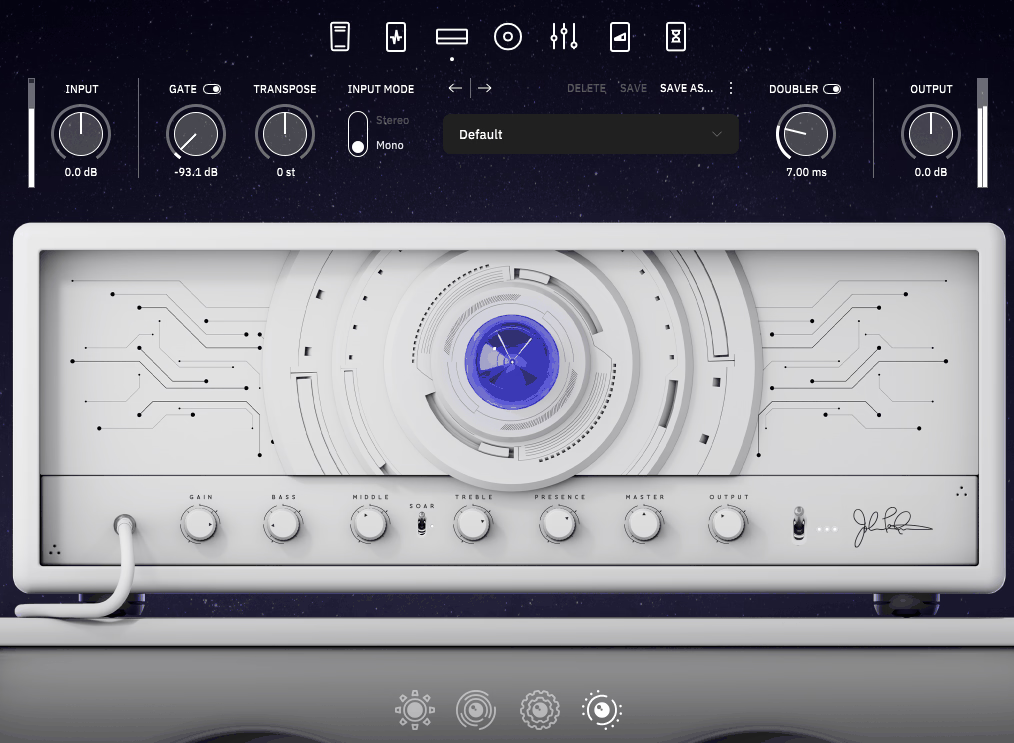
Archetype: Petrucci X

John Petrucci’s tone has always been synonymous with precision, clarity, and massive low-end tightness that works for both complex prog metal riffs and soaring lead lines. Neural DSP Plugin Archetype: Petrucci X captures Petrucci’s complete rig including his signature amp tones, effects chain, and pedalboard setup, and I found it delivers the articulate high-gain saturation that Dream Theater fans will immediately recognize.

The X version adds enhanced routing options, additional effects, and improved MIDI control compared to the original release, and I’ve used it for tracking everything from intricate seven-string rhythm work to legato lead passages that need sustain without getting muddy.

What stands out to me is how the plugin maintains definition and clarity even with extreme gain settings and dense chord voicings, which is essential when you’re playing technical material that needs every note to come through clearly.

  • Five Distinct Amp Channels

Archetype: Petrucci X includes five amp channels that cover Petrucci’s full tonal range from clean to crushing high-gain, and I’d say this variety is what makes the plugin so versatile for different playing styles. The Clean channel delivers pristine clarity with plenty of headroom for chord work and ambient parts, while the Crunch channel sits in that mid-gain territory perfect for classic rock and blues-influenced playing.

The three high-gain channels labeled Gain 1, Gain 2, and Gain 3 each have distinct saturation characteristics, and I found that Gain 1 provides tight, focused distortion for rhythm work, Gain 2 adds more sustain and compression for lead playing, and Gain 3 delivers maximum saturation for the heaviest riffs. Each channel has independent three-band EQ controls with presence and depth adjustments that let you shape the tone precisely.

I noticed that the gain structure stays tight and controlled across all channels, so you get aggressive saturation without the flubby low end that plagues some high-gain amp sims.

  • Comprehensive Post-Amp Effects

When it comes to effects, the rack includes delay, reverb, chorus, flanger, and phaser, and I must say the quality here is exceptional for effects built into an amp sim. The delay has tempo sync and tap tempo functionality that makes it easy to lock repeats to your project’s timing, and it ranges from subtle slapback to ambient washes depending on your settings.

The reverb offers multiple algorithms including room, hall, and plate that cover everything from tight tracking environments to massive spaces. I realized that the modulation effects are particularly well-implemented because they add width and movement without making your tone sound overly processed or cheesy. The chorus works great for thickening clean tones and adding dimension to lead lines, while the flanger and phaser create that swirling movement perfect for specific song sections.

All effects can be engaged or bypassed independently, and the routing lets you place them in the optimal position within the signal chain.

  • Signature Overdrive and Boost Pedals

The plugin also includes Petrucci’s actual overdrive and boost pedals in the pre-amp section, and these are crucial for achieving his signature tone because they shape the signal before it hits the amp. The overdrive pedal adds focused midrange punch that helps lead tones cut through without sounding harsh or brittle.

The boost pedal provides clean gain increase that pushes the amp’s front end harder for tighter palm mutes and more aggressive attack on rhythm parts. I found that using both pedals together creates the stacked gain sound that Petrucci uses for his most intense rhythm tones, and the interaction between the pedals and amp feels natural rather than artificial. Each pedal has straightforward controls that mirror the real hardware, so you can dial them in quickly without overthinking parameters.

  • Advanced Cabinet Section with IR Loading

The cabinet simulation uses high-quality impulse responses with multiple mic positions and cabinet configurations, and I love how realistic and three-dimensional the cabs sound. You can blend up to two microphones simultaneously and adjust their positioning relative to the speaker cone, which gives you control over the brightness and proximity of the final tone.

5. Archetype: Tim Henson X – Best Experimental
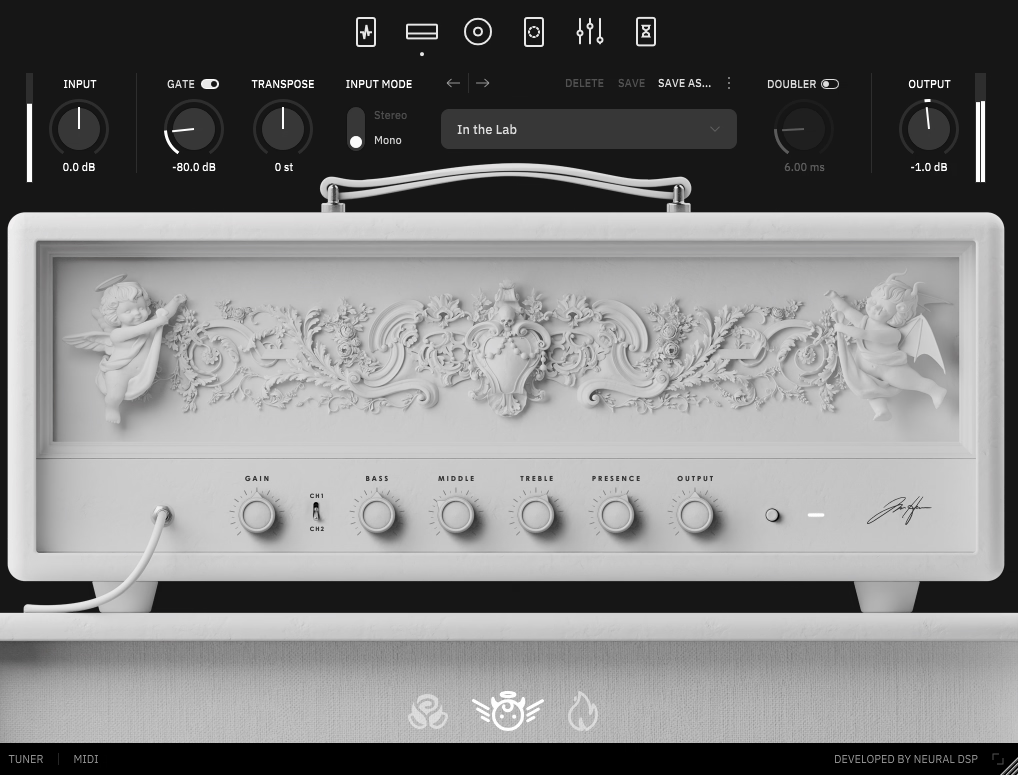
Archetype: Tim Henson X

I’ve always been interested in Henson’s unique sonic palette because it opens up creative possibilities beyond standard amp modeling, and getting those sounds usually requires stacking multiple plugins and effects in complex chains.

Archetype: Tim Henson X delivers Henson’s complete signal chain including his signature processed tones, pitch shifting, modulation, and ambient effects, and I found it excels at creating modern, polished guitar sounds that work perfectly for progressive music, R&B-influenced playing, and experimental production.

The X version adds enhanced routing flexibility, additional effects modules, and improved MIDI control compared to the original, and I’ve used it for everything from clean, glassy chord work to heavily layered soundscapes that blur the line between guitar and synthesizer.

  • Three Distinct Amp Voices

Now, the plugin includes three amp channels labeled Clean, Crunch, and Lead, and I’d say these are tailored specifically for Henson’s style rather than trying to replicate vintage amp tones. The Clean channel delivers pristine, hi-fi clarity with tight low end and sparkling highs that work perfectly for intricate fingerstyle playing and tapped passages.

When it comes to Crunch channel , it provides light to medium gain that stays articulate even with fast playing and complex chord voicings, and I found it sits in that sweet spot between clean and fully saturated.

The Lead channel offers smooth, compressed saturation that sustains beautifully without getting harsh or brittle, which is essential for Henson’s legato lines and melodic phrases. Each channel has independent EQ controls that let you shape the frequency response to fit your playing style and mix context.

I noticed that all three channels maintain clarity and definition even when processing complex harmonic content, which is crucial for the intervallic jumps and chord extensions that define Henson’s playing.

  • Polyphonic Pitch Shifting and Harmonizer

Archetype: Tim Henson X includes a polyphonic pitch shifter that can generate multiple harmonized voices from your input signal, and I think this is one of the most powerful features for creating Henson’s signature layered textures. You can set pitch intervals in semitones and create everything from subtle octave doubling to complex harmonic structures.

The pitch tracking is accurate and responsive even with fast passages and chord work, which I found impressive because cheaper pitch shifters often glitch or warble with polyphonic material.

  • Comprehensive Modulation Section

The plugin features chorus, flanger, and phaser effects that add movement and width to your tone, and I must say these are particularly well-tuned for modern, polished production. The chorus creates lush, shimmering textures that work great on clean tones and ambient passages, while the flanger delivers everything from subtle jet-plane sweeps to intense metallic resonance.

The phaser adds that swirling, psychedelic character that Henson uses on specific song sections, and all three effects have rate, depth, and feedback controls that give you precise adjustment over the modulation intensity.

  • Ambient Effects with Delay and Reverb

To sum it up, the effects rack includes high-quality delay and reverb that are essential for creating Henson’s spacious, atmospheric tones. The delay has tempo sync and can do everything from tight slapback to long, ambient repeats that wash over your playing, and I appreciate how clean and artifact-free the repeats sound even with high feedback settings.

The reverb offers multiple algorithms including plate, hall, and shimmer reverb that adds octave overtones for ethereal textures. I realized that the shimmer reverb is particularly useful for creating pad-like sustain from simple chord stabs, which is a technique Henson uses frequently. Both effects have pre-delay, damping, and mix controls that let you shape how they interact with your dry signal, and you can use them subtly for polish or push them hard for experimental soundscapes.

6. Archetype: Nolly X – Best for Modern metal
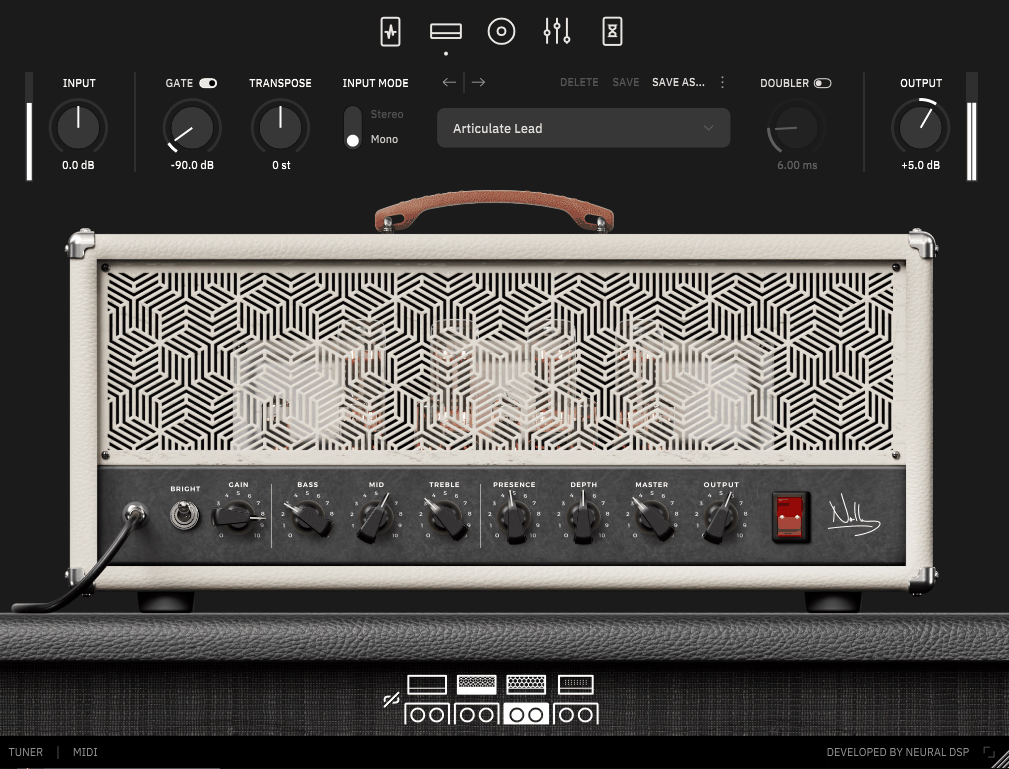
Archetype: Nolly X

Nolly X captures Getgood’s complete studio signal chain with amp models, effects, and processing tools designed specifically for modern metal and progressive music, and I found it excels at maintaining articulation and tightness even with seven or eight-string guitars tuned down to extreme registers.

The X version includes expanded routing capabilities, additional effects modules, and comprehensive MIDI control that weren’t in the original release, and I’ve used it for tracking everything from djent-style palm-muted riffs to clean, ambient passages that need pristine clarity without any muddiness or low-end bloom.

  • Two High-Gain Amp Channels

It features two distinct high-gain amp channels plus a clean channel, and I’d say the gain channels are where this plugin really delivers on its promise of modern metal tones.

Channel 1 provides tight, focused saturation with controlled low end that stays defined even with drop-tuned guitars and fast palm-muting, while Channel 2 offers slightly looser, more aggressive distortion that works well for lead playing and sections that need more sustain.

  • Precision Gate and Transient Shaper

The plugin includes a highly responsive noise gate that’s essential when tracking modern metal with high gain settings, and I think the gate implementation here is among the best I’ve used in any amp sim. The gate clamps down on noise between notes without cutting off your sustain awkwardly or creating unnatural chopping artifacts, and the threshold and release controls give you enough adjustment to match different playing styles.

The Transient Shaper is a unique addition that lets you emphasize or reduce the attack portion of your notes, and I realized this is incredibly useful for making rhythm guitars cut through dense mixes without just turning up the volume.

  • Studio-Grade Effects Rack

Archetype: Nolly X includes delay, reverb, and modulation effects that match the quality of dedicated studio plugins rather than feeling like afterthoughts. The delay has tempo sync and dotted/triplet note divisions that make it easy to create rhythmically locked repeats, and the repeats stay clean without degrading into mush even with high feedback settings.

The reverb offers multiple algorithms including room, plate, and hall that range from tight ambience for tracking to massive spaces for lead work. I appreciate how the reverb maintains clarity and doesn’t smear your transients even when using longer decay times. The modulation section includes chorus and flanger that add width and movement without making your tone sound overly processed, and both effects can be subtle enough for professional mixing or pushed harder for creative sound design.

  • Comprehensive Bass Processing

Nolly’s background includes extensive bass production work, and Archetype: Nolly X reflects that with dedicated bass amp models and processing that work exceptionally well for modern metal bass tones.

The bass amps deliver tight low end with clear midrange definition that helps bass cut through without fighting the guitars for frequency space.

  • MIDI Control and Session Integration

The X version features full MIDI implementation for switching channels, engaging effects, and recalling presets, which makes the plugin practical for live use and complex studio templates. You can map MIDI controllers to virtually any parameter, so foot switches and expression pedals integrate seamlessly without complicated setup procedures.

The preset browser includes factory presets organized by instrument and style, and I found that the presets are actually usable starting points rather than just extreme demos. You can save your own presets with custom organization and tags, which speeds up workflow when you’re working across multiple projects that need different guitar and bass tones.

The plugin works in both standalone and DAW modes, and I’ve found the standalone version useful for practice and pre-production without loading my full recording environment.

7. Fortin Nameless Suite X – Pure high-gain focus
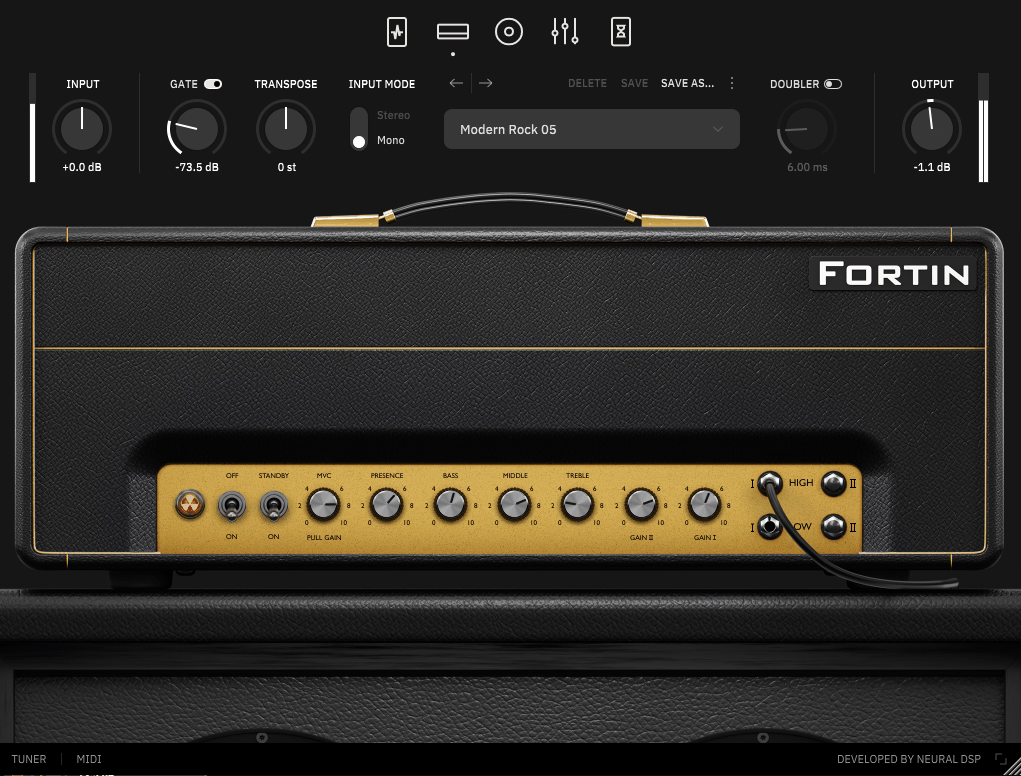
Fortin Nameless Suite X

High-gain metal tones often walk a fine line between aggressive saturation and complete sonic chaos, and finding that balance usually requires expensive hardware or years of dialing in settings.

Another Neural DSP PluginFortin Nameless Suite X delivers three signature Fortin amplifiers in one package with the Nameless, NTS, and Cali models, and I found this gives you way more tonal variety than most single-amp plugins while maintaining the brutal, tight distortion that Fortin amps are known for.

What I appreciate most is how each amp has its own distinct voice, so you’re not just getting slight variations of the same high-gain sound but rather three genuinely different tools that cover a wide range of heavy music styles.

The NTS offers slightly looser, more organic saturation with a rawer character that I found works well for death metal and thrash where you want aggression without overly polished precision.

The Cali leans toward classic high-gain American tones with scooped mids and prominent high end that suits metalcore and melodic death metal styles. Each amp has independent gain, three-band EQ, and presence controls that give you detailed tonal shaping, and I noticed that the amps respond dynamically to playing technique rather than feeling static and compressed.

  • Comprehensive Pedalboard Section

The plugin includes a full pedalboard with boost, overdrive, and gate pedals that you can position before the amps in the signal chain. The Fortin Grind boost pedal adds focused midrange push without muddying the low end, and I think this is essential for making lead tones cut through dense mixes without just cranking the amp gain.

The 33 Drive overdrive provides additional saturation and compression that works great for tightening rhythm tones or adding sustain to lead playing.

I found that stacking the boost and overdrive together creates aggressive gain structures that still maintain definition and clarity. The precision noise gate is responsive and musical, clamping down on noise between notes without awkward chopping or cutting off your sustain prematurely.

Each pedal has straightforward controls that mirror real hardware, so you can dial them in quickly without overthinking parameters or reading manuals.

  • Post-Amp Effects Rack

The effects section includes delay, reverb, and modulation that are high-quality enough for professional production work. The delay has tempo sync functionality that makes it easy to lock repeats to your project timing, and it ranges from subtle slapback to ambient washes depending on your settings and feedback levels.

The reverb offers multiple algorithms including room, hall, and plate that cover everything from tight tracking spaces to massive ambient environments. I love how the reverb adds space without washing out the tone or making transients feel sluggish.

The chorus and flanger provide width and movement, and I found they work particularly well on clean passages or lead sections where you want dimension without heavy processing.

All effects can be engaged or bypassed individually, and the routing flexibility in the X version lets you place them at optimal positions within the signal chain.

  • Flexible Routing and Signal Flow

Lastly, The X version gives you expanded routing options that let you change the order of effects and processing modules, and I think this flexibility is what separates it from simpler amp sims that lock you into fixed signal paths.

You can position the gate before or after the boost pedals, run modulation before or after the delay, and experiment with unconventional chains that wouldn’t be possible with traditional hardware rigs.

8. Archetype: Tom Morello – Best for Creative FX Guitar
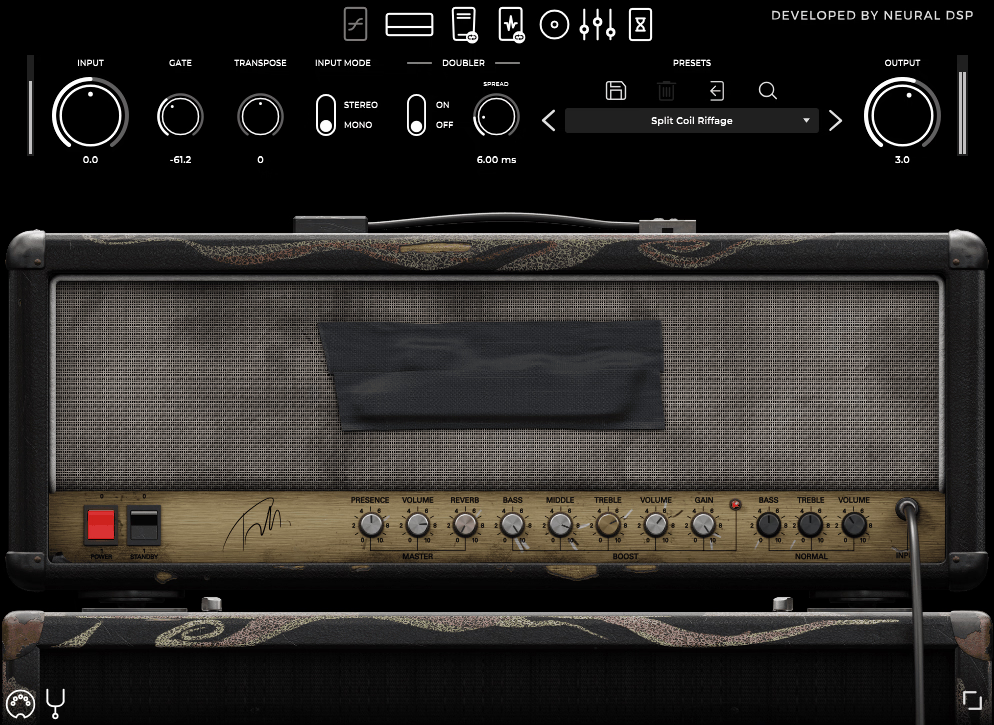
Archetype Tom Morello

Tom Morello’s guitar work with Rage Against the Machine redefined what rock guitar could sound like by treating the instrument more like a DJ’s turntable than a traditional six-string.

Archetype: Tom Morello captures Morello’s complete effects arsenal and signal chain including his signature whammy effects, delays, and the unconventional processing techniques that made songs like “Killing in the Name” and “Bulls on Parade” instantly recognizable.

I found this plugin delivers way more than just standard amp modeling because it’s built around creative effects and sound manipulation rather than focusing solely on distortion and gain stages.

The combination of pitch shifting, modulation, and rhythmic effects lets you create those iconic scratch solos, harmonic squeals, and feedback-driven textures that defined ’90s alternative rock, and I’ve used it for everything from aggressive rhythm tones to experimental lead work that pushes beyond conventional guitar sounds.

  • Signature Whammy and Pitch Effects

The plugin includes Morello’s iconic whammy pedal that can shift pitch up or down by multiple octaves, and I’d say this is the centerpiece effect that makes so many of his signature sounds possible.

In addition, whammy tracking is accurate and responsive even with fast playing and wide interval jumps, which I found essential for recreating those dive-bomb effects and harmonic squeals. You get multiple pitch shift intervals including octaves, fifths, and more extreme settings that let you create everything from subtle doubling to dramatic pitch sweeps.

  • Three Distinct Amp Channels

It also features Clean, Crunch, and Lead channels that cover Morello’s tonal range from pristine cleans to heavy distortion. The Clean channel delivers bright, clear tone with tight low end that works perfectly for funky rhythm playing and the clean passages that contrast with heavier sections in RATM songs.

The Crunch channel provides mid-gain saturation that stays articulate even with complex chord voicings and syncopated rhythms. The Lead channel offers aggressive high-gain distortion with enough sustain for feedback manipulation and controlled chaos. I found that all three channels maintain definition and clarity, which is crucial when you’re using heavy effects processing on top of the amp tones.

Each channel has independent EQ controls with bass, mid, treble, and presence that let you shape the frequency response to fit different playing contexts, and I appreciate how the EQ section responds musically without harsh digital coloration.

  • Delay and Echo Effects

When it comes to FX, it includes multiple delay algorithms that are essential for Morello’s rhythmic and ambient playing styles. The delay has tempo sync that locks to your DAW’s timing, and you can set dotted and triplet note divisions for creating syncopated patterns that interlock with your rhythm playing.

  • Talk Box and Vocal Effects

One of the unique features is the talk box emulation that lets you create vowel-like filtering effects similar to Morello’s vocal-sounding guitar tones. This effect processes your guitar signal through formant filters that mimic human speech patterns, and I think this is what gives the plugin its experimental edge.

  • Modulation and Filtering

The effects rack includes phaser, flanger, and wah that are crucial for Morello’s textural playing. The phaser creates sweeping, psychedelic movement that works great on clean and distorted tones alike, while the flanger delivers everything from subtle jet-plane swooshes to intense metallic resonance.

  • Noise Gate and Dynamic Control

The plugin includes a precision noise gate that’s essential when using high-gain settings and heavy effects processing. The gate clamps down on noise between notes without cutting off your sustain awkwardly, and the threshold and release controls give you enough adjustment to match different playing dynamics.

I found the gate particularly important when working with feedback-driven techniques because it lets you control when the noise starts and stops without manual volume automation. The gate can be positioned at different points in the signal chain, which affects how it interacts with your effects and overall tone shaping.

  • Preset System 

Archetype: Tom Morello includes factory presets that showcase signature Morello tones from different eras of his career, and I found many of them are genuinely usable starting points rather than just extreme demos. The preset browser is organized by song and style, which makes it easy to find the right tone for specific musical contexts.

9. Archetype: Gojira X – Best Crushing modern tone
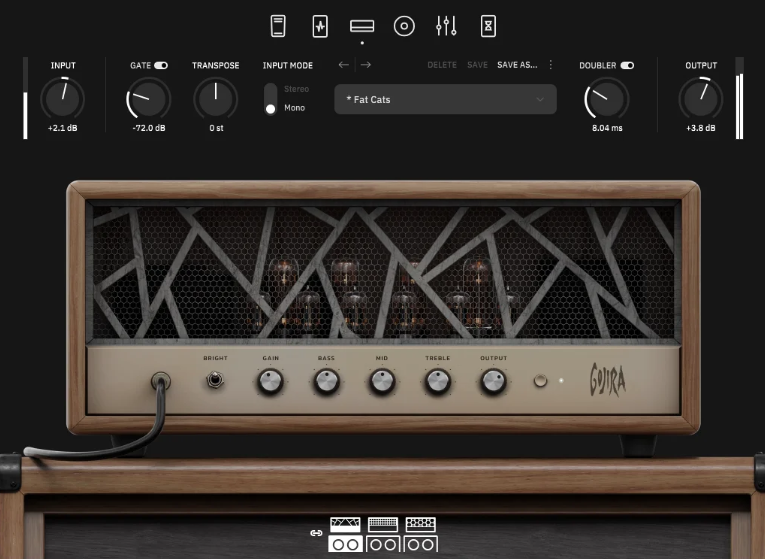
Archetype Gojira X

French metal band Gojira built their reputation on massive, crushing guitar tones that combine technical precision with raw, organic heaviness that feels almost primal in its intensity.

Archetype: Gojira X captures Duplantier’s complete studio rig including his signature amp tones, effects chain, and the specific processing techniques that define Gojira’s sonic identity, and I found it excels at delivering massive, articulate high-gain tones that stay tight and focused even with down-tuned guitars and blast beat sections.

It features two distinct high-gain channels alongside a clean channel, and I’d say the gain channels are specifically voiced for modern extreme metal with tight palm muting and fast alternate picking.

Channel 1 delivers crushing saturation with controlled low end that stays defined even when you’re chugging on the lowest strings of a seven-string guitar, while Channel 2 offers slightly more aggressive midrange that cuts through for lead work and sections that need extra presence.

The Clean channel is surprisingly versatile with enough headroom for complex chord voicings and dynamic playing, and I found it maintains clarity even when processing heavily down-tuned guitars.

Each channel has independent three-band EQ with presence and depth controls that give you surgical precision over your tone, and the EQ section interacts musically without any harsh digital artifacts that would make adjustments sound unnatural or processed.

I noticed that the low-end response is particularly well-calibrated because it gives you weight and power without the undefined muddiness that makes fast riffs sound sloppy, which is essential when you’re playing technical death metal passages that need every note to come through clearly.

  • Signature Overdrive and Gate Pedals

This neural dsp plugin includes Gojira’s actual overdrive and noise gate pedals in the pre-amp section, and to me, these are crucial for achieving Duplantier’s signature tone because they shape the signal before it hits the amp stages. The overdrive pedal adds focused midrange punch that helps rhythm tones cut through without sounding harsh or brittle, and it tightens up the low end for more percussive palm muting.

  • Pitch Shifter and Octave Effects

In addition, it includes a polyphonic pitch shifter that can generate octave-down and harmony voices, and I must say this is essential for recreating some of Gojira’s most recognizable textures. The pitch tracking stays accurate even with heavy distortion and fast playing, which I found impressive because cheaper pitch algorithms tend to glitch when processing highly saturated signals.

You can use the octave-down effect to create massive, sub-bass reinforcement that makes your low strings sound even heavier, or you can set harmonic intervals for creating layered lead lines.

  • Comprehensive Effects Rack

The effects section includes delay, reverb, chorus, and phaser that are all high-quality enough for professional production work. The delay has tempo sync with dotted and triplet note divisions that make it easy to create rhythmically locked repeats, and the delay algorithm stays clean without degrading into mush even with extended feedback settings.

The reverb offers multiple algorithms including room, hall, and plate that range from tight ambience for tracking to massive spaces for atmospheric sections and lead work.

  • Advanced Cabinet Simulation

The plugin uses Neural DSP’s impulse response technology with multiple cabinet configurations and microphone positions, and I have to say the cab sim is a major part of why Archetype: Gojira X sounds professional right out of the box. You can blend two microphones simultaneously and adjust their positioning relative to the speaker cone, which gives you control over brightness, proximity, and overall tonal character.

In the end. X version supports loading third-party impulse responses, which I found essential when you want to match specific cabinet sounds from your IR library or use captures from particular recording sessions. The cab section includes high-pass and low-pass filters that help you carve out frequency space for bass and other instruments without compromising the core guitar tone or making it sound thin and weak.

10. Darkglass Ultra – Best Aggressive Bass Tones
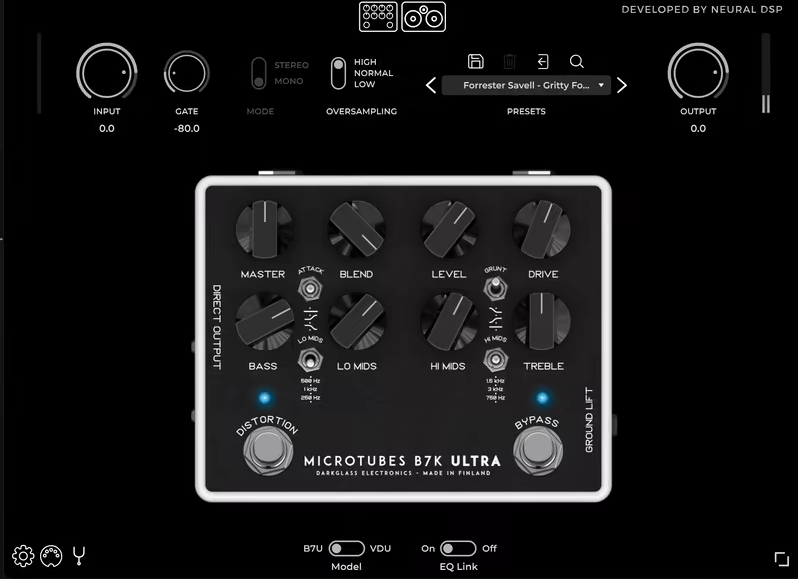
Darkglass Ultra

Bass distortion is tricky to get right because you need aggression and harmonic content without losing the fundamental low end that keeps your bass locked in with the kick drum. Darkglass Ultra delivers the complete Darkglass Electronics signal chain with their legendary Microtubes algorithms, compressor, and cabinet simulation specifically designed for modern metal and rock bass tones that need clarity, punch, and controlled saturation.

You can track everything from aggressive picked bass lines to slap techniques that need brightness and definition, and the multiband distortion architecture lets you add grit to the upper frequencies while keeping the low end tight and focused.

Wat separates Darkglass Ultra from generic bass amp sims is how it maintains fundamental weight and clarity even when you’re pushing heavy distortion, which is essential when your bass needs to cut through walls of distorted guitars without getting lost or muddy. In addition, it also comes with a free trial version.

  • Multiband Distortion Engine

Darkglass Ultra uses a multiband processing approach that splits your bass signal into separate frequency ranges where each band can be distorted independently which is the key feature that makes the plugin so effective for modern bass tones. You can add heavy saturation to the mids and highs for aggression and presence while keeping the low end clean and punchy, which prevents that muddy, undefined sound you get when distorting the entire bass signal.

Also, the crossover frequency is adjustable, so you decide exactly where the split happens based on your bass tuning and playing style. I found this approach works perfectly for five and six-string basses where you need the extended low range to stay tight while the upper strings get saturated for pick attack and string noise.

The blend control lets you mix the clean and distorted signals to taste, which gives you parallel processing without needing to set up complex routing in your DAW.

  • Darkglass Microtubes Algorithms

The plugin includes multiple Microtubes distortion algorithms based on Darkglass’s legendary hardware pedals, and I think each algorithm has a distinct character that suits different playing styles and musical contexts. The algorithms range from warm, tube-style saturation to aggressive, modern clipping that adds brightness and edge.

I found that the B3K algorithm works great for rock and punk styles where you want mid-forward aggression, while the Vintage algorithm provides smoother, more musical distortion for melodic bass lines.

The drive and blend controls for each algorithm give you precise adjustment over saturation intensity and how much of the effect gets mixed with your clean tone. The algos respond dynamically to playing technique, so you can dig in harder for more distortion or play lighter for cleaner tones without touching any knobs.

  • Built-In Compression

Darkglass Ultra includes a studio-quality compressor that’s calibrated specifically for bass frequencies, and I must say this makes the plugin way more practical for real mixing situations. The compressor evens out dynamics so your playing stays consistent whether you’re digging in hard on aggressive sections or playing softer during verses and breakdowns.

  • Tone Shaping and EQ

In addition to that, Darkglass Ultra also features a comprehensive EQ section with multiple bands that let you sculpt your bass tone before and after distortion. The EQ controls are calibrated for bass frequencies with musical curves that enhance rather than just boost or cut, and I noticed they respond naturally without harsh digital artifacts.

Basically, you can use the EQ to emphasize pick attack in the upper mids, add low-end weight, or scoop frequencies that clash with guitars or kick drums. The pre-distortion EQ shapes what goes into the saturation stage, while the post-distortion EQ refines the final output for sitting in your mix. I realized that having both EQ stages gives you control over tone that goes beyond what most bass amp sims offer, and it means you can dial in finished sounds without loading separate EQ plugins.

11. Parallax X – Best Multiband distortion for bass
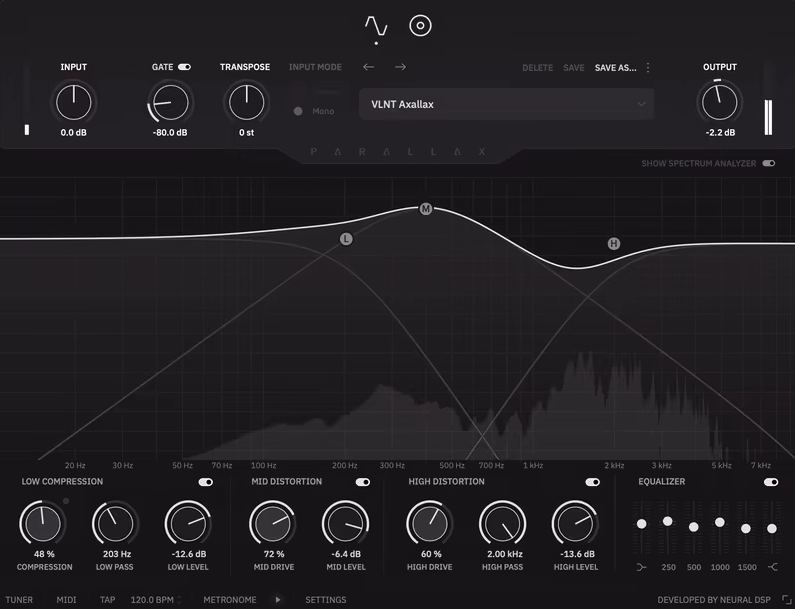
Parallax X by Neural DSP

Bass tone in modern metal needs to balance massive low-end weight with enough clarity and definition to cut through heavily distorted guitars and dense drum mixes.

Parallax X delivers Neural DSP’s complete bass processing suite with multiple amp models, effects, and mixing tools designed specifically for modern progressive metal and djent styles, and I found it excels at creating articulate, punchy bass tones that maintain clarity even in the most complex arrangements.

This Neural DSP Plugin includes three bass amplifiers with different tonal characteristics, where each one serves different playing styles and musical contexts. The amps range from clean and transparent for detailed fingerstyle work to aggressive and saturated for heavy pick playing that needs edge and presence.

The clean amp maintains clarity and punch even with extended-range basses tuned down to drop tunings, while the gain amps add harmonic content without losing fundamental low-end weight.  In addition, each amp has independent EQ controls with bass, mid, treble, and presence that let you shape the frequency response, and the EQ section responds musically without harsh digital artifacts. The amps respond dynamically to playing technique, so you can dig in harder for more saturation or play lighter for cleaner tones.

I also noticed that all three amps maintain definition across the entire frequency spectrum, which is crucial when you’re playing technical passages that need every note to come through clearly without turning into mush.

  • Darkglass-Style Distortion Module

The plugin features a multiband distortion engine, and I think this is one of the most powerful features for modern bass tones. The distortion splits your signal into frequency bands where you can add saturation to the mids and highs while keeping the low end clean and tight.

The crossover frequency is adjustable, so you control exactly where the distortion affects your tone based on your bass tuning and playing style.

I found this approach works perfectly for maintaining low-end punch while adding the brightness and aggression that helps bass cut through heavy guitar layers. The blend control gives you parallel processing, so you can mix the distorted signal with your clean tone to get the exact balance you need.

  • Studio-Quality Compression

Parallax X also includes professional-grade compression calibrated specifically for bass, and I must say this makes the plugin way more practical for finished mixes. The compressor evens out dynamics so your playing stays consistent whether you’re attacking strings hard during heavy sections or playing softer during cleaner passages.

The compression controls include threshold, ratio, attack, and release that give you enough flexibility without overwhelming you with options. I noticed the compressor is already tuned well for bass frequencies, so you don’t spend hours trying to find settings that actually work musically.

  • Comprehensive Effects Rack

The effects section includes chorus, flanger, delay, and reverb that are all high-quality enough for professional production. The modulation effects add width and movement without making your bass sound washy or undefined, and I found the chorus works particularly well for thickening clean tones and adding dimension.

The delay has tempo sync with dotted and triplet note divisions that make it easy to create rhythmically locked patterns, and the delay algorithm stays clean without degrading. The reverb offers multiple algorithms from tight rooms to larger spaces, and it maintains clarity without smearing your transients or making the low end feel muddy. All effects can be engaged or bypassed individually, and the X version gives you flexible routing so you can position effects at optimal points in the signal chain.

  • MIDI Control and Performance

Lastly you get full MIDI implementation for switching presets, engaging effects, and controlling parameters in real time, which makes it practical for live performance and complex studio templates. You can map MIDI controllers to any parameter, so foot switches and expression pedals integrate seamlessly.

Don`t copy text!
Scroll to Top