

Nearfield monitors sit close to you on your desk or on stands just behind it, and you listen at relatively low volumes with the speakers a meter or two from your ears.
That proximity is the whole point. When you’re listening nearfield, you hear more direct sound from the speaker and less reflected sound from the room, which means your untreated bedroom or home studio interferes less with what you’re hearing.
That doesn’t eliminate the need for acoustic treatment, but it does mean nearfield monitors are more forgiving of imperfect rooms than midfield or soffit-mounted speakers, which is why they’ve become the standard monitoring choice for the vast majority of producers working at home.
What I’ve learned from twenty-plus years of mixing on different monitors is that the speaker itself matters less than how well you know it. I’ve heard great mixes come out of cheap monitors and terrible mixes come out of expensive ones, and the difference was almost always the engineer’s familiarity with their system rather than the hardware quality.
That said, a better monitor does give you more accurate information to work with, and more accurate information leads to better decisions once you learn how to interpret it. I’ve picked eleven nearfield monitors that cover the range from affordable bedroom options through mid-range workhorses to premium reference speakers, each with a clear reason to exist at its level.
1. Self-Adhesive Acoustic Felt Panels (4 PCS) — from $48.99

Before the studio monitors on this list, a word on what matters more than which monitors you buy: the room you put them in.
Studio monitors reveal the truth of your mix only to the extent that your room lets them. Every hard parallel wall, every bare floor, every corner with nothing to absorb low-end buildup adds coloration that your monitors faithfully reproduce — but that coloration belongs to the room, not the mix. Producers who upgrade monitors without treating their room often find their mixes get more detailed and more misleading simultaneously. The Self-Adhesive Acoustic Felt Panels in the Pluginerds store give you a 4-panel starter pack of absorbent felt treatment in black, white, or grey at $48.99 per pack. Placing these at your first reflection points — the side walls where the monitor’s sound hits before reaching your ears — reduces the comb filtering that makes high-frequency mixing decisions unreliable. This is worth doing before or alongside any monitor purchase.
- First Reflection Points
Felt acoustic panels absorb mid and high-frequency sound energy at the room surfaces where your monitor’s output reflects before reaching the listening position.
The first reflection points — the side walls adjacent to your listening position and the ceiling between you and your monitors — are where the most damaging comb filtering originates. Treating these surfaces first produces the largest perceptible improvement in mixing accuracy per panel placed. Four panels cover a complete first-reflection treatment for a standard desk setup.
- Self-Adhesive
The self-adhesive backing mounts panels directly to walls or ceilings without tools, brackets, or drilling — important for home studio producers working in rented spaces or rooms that cannot be permanently modified.
Peel, stick, and the treatment is active immediately. The felt surface provides genuine absorption across the mid and upper frequency range where room reflections most affect mixing decisions.
- Colour Options
Available in black, white, and light grey with 4-panel and 12-panel pack options. Start with four panels at the first reflection points and assess the improvement before adding more. With 3,992 units across variants, these ship immediately from the store.
Shop at Pluginerds — Acoustic Felt Panels 4 PCS from $48.99
Get the Free Plugin Starter Kit
The genuinely useful free DAWs and plugins worth installing. No filler. Straight to your inbox.
2. KRK Rokit RP8 G5
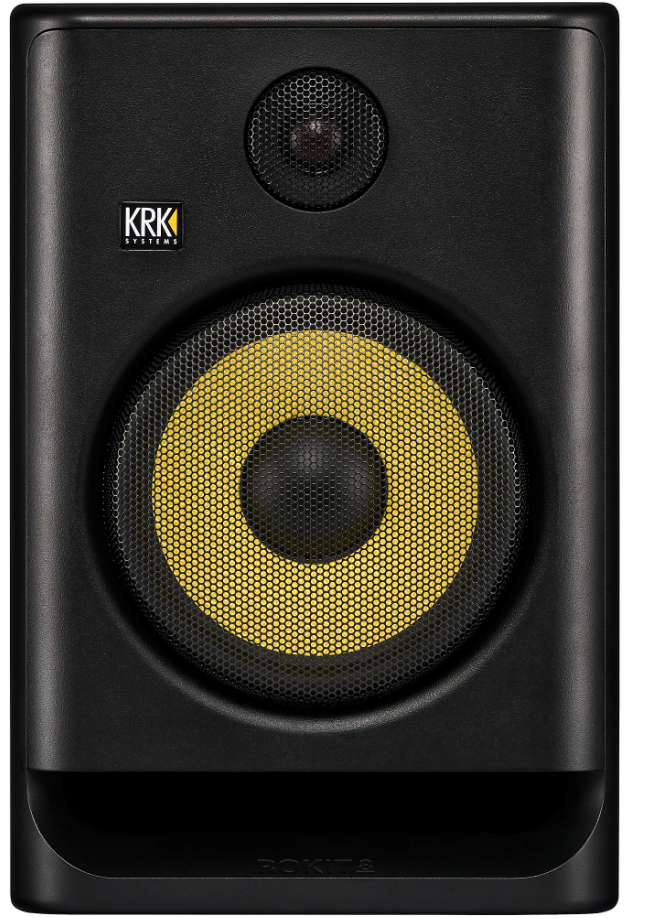
If you produce bass-heavy music and want a nearfield that handles low frequencies with authority, the 8-inch woofer on the Rokit RP8 G5 delivers more bottom end than any 5 or 6-inch monitor can physically produce. KRK Rokit RP8 G5 is the largest in KRK’s fifth-generation Rokit lineup, featuring an 8-inch Kevlar woofer, a silk dome tweeter, built-in DSP with graphic EQ, and the iconic yellow cone that has become synonymous with electronic music production.
The G5 generation added meaningful improvements over the G4, including a refined tweeter that smooths out the high end and expanded DSP processing. The graphic EQ on the speaker itself is genuinely useful because it lets you compensate for room placement issues without external processing.
- 8-Inch Low End
The 8-inch Kevlar woofer moves enough air to reproduce bass frequencies that smaller nearfield monitors simply can’t generate. If your music relies on sub-bass, deep 808 kicks, or heavy basslines, you need a woofer that physically moves enough air to show you what’s happening below 50Hz, and the RP8’s 8-inch driver does this with more confidence than any 5 or 6-inch alternative. For producers working in hip-hop, EDM, trap, or any bass-forward genre, the extra low-end reach lets you make bass decisions without constantly checking on headphones.
- DSP Processing
Built-in digital signal processing with a graphic EQ allows you to adjust the frequency response directly on the speaker to compensate for room acoustics and placement. You place the monitors on a desk against a wall and the bass builds up. Instead of buying external room correction software, you pull down the relevant frequencies on the RP8’s built-in EQ and the problem is reduced. The DSP also includes three voicing presets that adapt the speaker to different monitoring scenarios.
- G5 Tweeter
The fifth-generation silk dome tweeter delivers a smoother, more refined high-frequency response than the previous G4 model. The improved tweeter extends the usable high-frequency range and reduces the harshness that some engineers found in earlier Rokit generations. For long mixing sessions, the smoother top end causes less ear fatigue, which means you make better decisions later in the session.
- Kevlar Cone
The Kevlar woofer construction provides a rigid, lightweight diaphragm that responds quickly to transients and resists the flexing that softer cone materials produce at higher volumes. The rigidity matters for mixing because a cone that flexes under load introduces distortion that colors your bass perception. The Kevlar cone keeps the bass clean and defined even when you push the volume.
3. Yamaha HS5
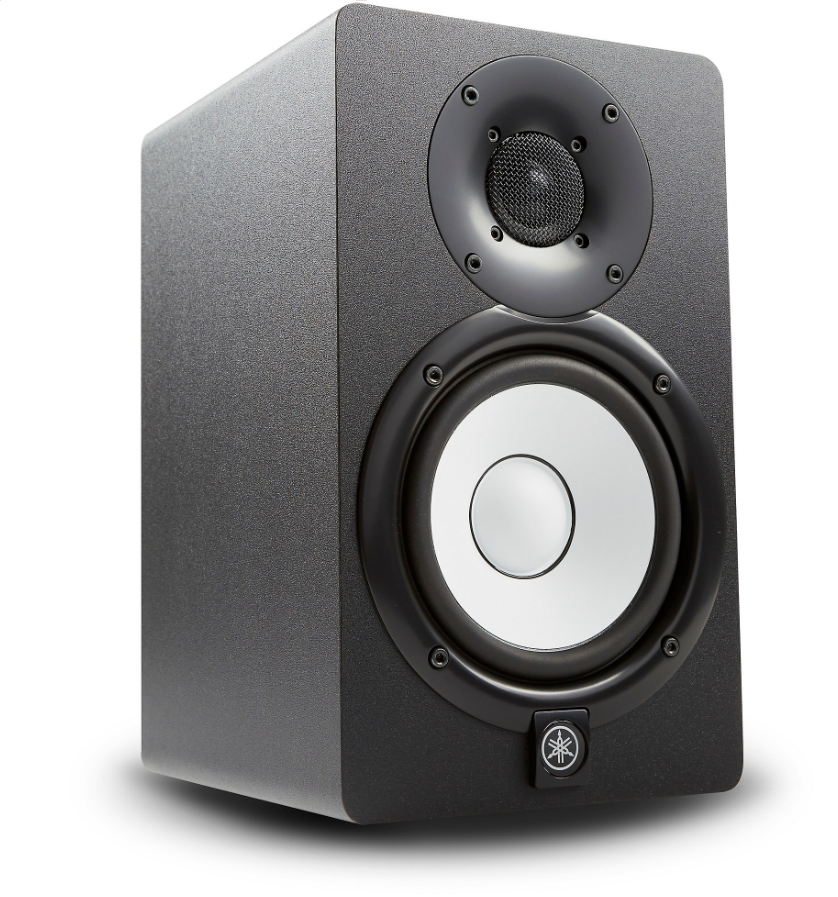
The speaker that traces its DNA directly back to the most famous studio monitor ever made. Yamaha HS5 continues the philosophy of the legendary NS-10, providing a brutally honest sound that refuses to flatter your mix. If your music sounds good on these, it’ll sound good on practically anything, because the HS5 doesn’t add warmth, bass boost, or high-end sparkle that would mask problems.
I’ve used HS5s in my home studio for several years now, and the thing I appreciate most is the honesty. They’re not fun to listen to. They’re not impressive on first hearing. But they show you exactly what’s in your mix, and once you learn their character, your mixes start translating consistently to other systems.
- NS-10 Heritage
The design philosophy directly descends from Yamaha’s NS-10, the studio monitor that became an industry standard precisely because it didn’t sound impressive. The NS-10’s theory was that if your mix sounds good on an unforgiving speaker, it’ll sound good everywhere, and the HS5 carries that same principle into a modern, powered design. The famous white cone is a visual reminder that these speakers prioritize accuracy over enjoyment, and the midrange honesty in particular is where the NS-10 legacy shows most clearly.
- Midrange Truth
The midrange frequency reproduction is where the HS5 genuinely excels. Vocals, guitars, keyboards, and the body of most instruments are presented with clarity and accuracy that helps you make critical balance decisions about the frequency range where your listeners’ ears are most sensitive. The midrange doesn’t flatter or smooth over problems. If your vocal is too loud, the HS5 tells you. If your guitar is masking your keyboard, you hear it. The honesty can be uncomfortable at first, but it’s what makes these speakers useful for mixing.
- Home Studio Size
The compact 5-inch format fits comfortably on desktop stands or shelves in small rooms without overwhelming the space acoustically. Larger monitors in small rooms create more room interaction problems because the bass they generate has nowhere to go. The HS5’s modest bass output actually works in its favor in untreated bedrooms because it avoids the low-frequency buildup that larger speakers cause in small spaces.
- Room Controls
Rear-mounted room correction switches allow basic high and low frequency adjustment to compensate for speaker placement near walls or on desks. The switches are limited compared to full parametric EQ, but they address the most common placement problems that home studio producers encounter. Cutting the bass when the speakers sit on a desk or against a wall removes the low-frequency buildup that desk reflections cause.
- Low Fatigue
The balanced frequency response without any hyped regions means you can mix for hours without the ear fatigue that speakers with boosted bass or aggressive treble cause. The HS5 doesn’t excite your ears with impressive bass thumps or sparkly highs. It presents your audio calmly and consistently, which is the quality that sustains your concentration over a four-hour mix session better than excitement does.
- Price Reality
At their cost, the HS5 delivers more mixing utility per dollar than almost any competing nearfield monitor. You’re not paying for wireless connectivity, room calibration software, or exotic driver materials. You’re paying for a well-tuned, honestly voiced speaker that does the fundamental job of showing you what’s in your audio. The value proposition has kept the HS series in studios for over a decade, and the current generation deserves that continued presence.
4. ADAM Audio T5V
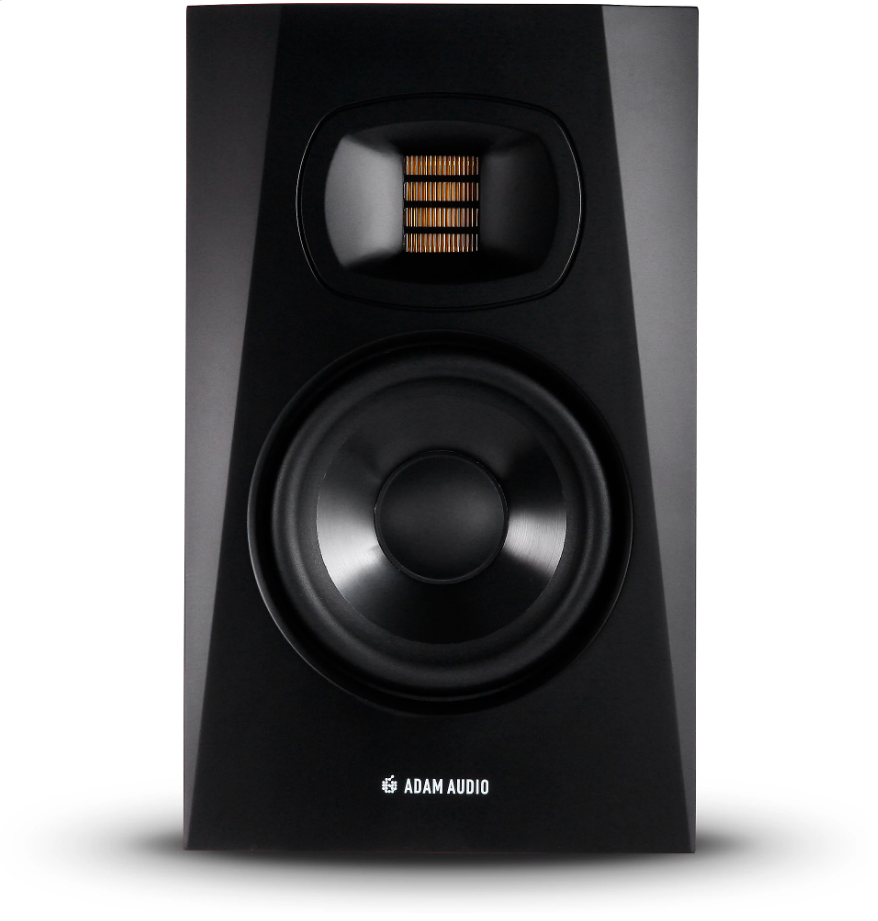
ADAM’s entry into the affordable nearfield market, bringing their ribbon tweeter technology down to a lower level than their premium lines without losing the characteristic ADAM high-frequency detail. ADAM Audio T5V features a U-ART ribbon tweeter and a 5-inch polypropylene woofer in a rear-ported design with room correction EQ.
The ribbon tweeter is the headline here. Most monitors at this level use dome tweeters, which work perfectly well. But the ADAM ribbon tweeter produces high frequencies with a speed and precision that dome tweeters struggle to match, and that difference is audible when you’re making decisions about reverb tails, hi-hat detail, and vocal sibilance.
- Ribbon Tweeter
The U-ART (Unique Accelerated Ribbon Tweeter) reproduces high frequencies with a speed, detail, and transient accuracy that standard dome tweeters at this level can’t match.
The ribbon driver accelerates air faster than a dome, which means the attack of hi-hats, the sibilance in vocals, and the shimmer of cymbals are presented with a clarity that helps you catch high-frequency problems and make precise EQ decisions in the critical treble range.
- Wide Sweet Spot
The HPS waveguide around the ribbon tweeter creates a broad horizontal sweet spot, which means the monitoring quality doesn’t degrade dramatically if your head moves a few inches off-center. The wider sweet spot is practical because you naturally shift position during long mixing sessions, and a monitor with a narrow sweet spot forces you to keep your head locked in one exact position.
- Compact Nearfield
The 5-inch format keeps the T5V sized appropriately for desktop nearfield use without demanding the space that larger monitors require. The compact dimensions mean you can place a pair on stands behind your desk or directly on the desk surface with appropriate isolation without the speakers dominating your workspace.
5. Genelec 8030 CP
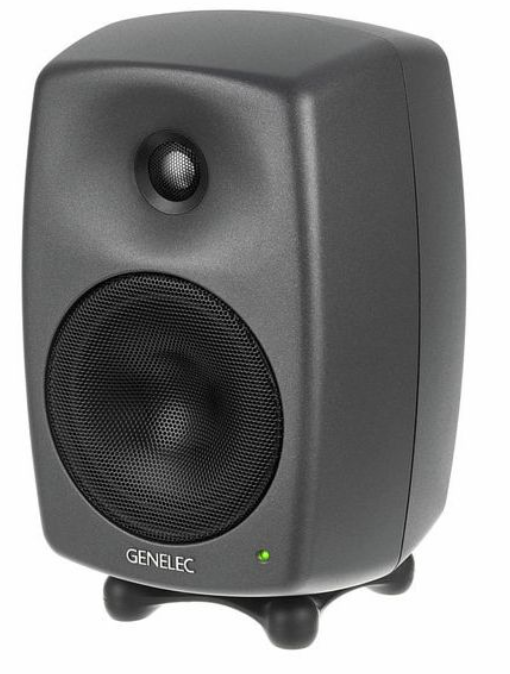
Finnish-made monitoring that represents Genelec’s decades of studio speaker engineering in a compact nearfield format. Genelec 8030 CP features a 5-inch woofer and 3/4-inch metal dome tweeter in Genelec’s distinctive die-cast aluminum Minimum Diffraction Enclosure (MDE), with the company’s Smart Active Monitor (SAM) technology for room calibration when paired with their GLM software.
Genelec monitors have a reputation among audio professionals that few other manufacturers match, and the 8030 CP carries that reputation at a nearfield scale suitable for project studios and broadcast facilities. The build quality is immediately apparent when you pick one up. These feel like instruments, not consumer electronics.
- MDE Cabinet
The Minimum Diffraction Enclosure is a die-cast aluminum housing with smooth, rounded edges designed to eliminate the acoustic diffraction that sharp-edged rectangular cabinets cause. When sound waves hit a sharp edge, they bend and scatter, creating frequency response irregularities that color the audio. The rounded MDE cabinet minimizes this scattering, producing a more accurate frequency response at the listening position. For mixing, cleaner response means your decisions are based on what’s in the audio rather than artifacts introduced by the cabinet shape.
- SAM Calibration
The Smart Active Monitor technology connects the 8030 CP to Genelec’s GLM calibration software, which measures the acoustic response at your listening position and applies correction filters to flatten the combined speaker-plus-room response. The room calibration addresses the specific acoustic problems in your particular studio rather than relying on generic EQ adjustments, which means the correction actually matches the issues your room creates.
- Finnish Build
The Genelec build quality is in a class that few competing nearfield monitors approach. The die-cast aluminum enclosure, precision crossover components, and Finnish manufacturing standards produce a monitor that’s designed to perform consistently for decades. The build quality isn’t just about durability. It’s about acoustic consistency, because a cabinet that doesn’t flex or resonate under load maintains its frequency response more accurately than a lighter, cheaper enclosure.
- Iso-Pod Mount
The included Iso-Pod isolation mount decouples the monitor from whatever surface it sits on, reducing the transmission of vibration from the speaker into your desk and back into the speaker. The isolation prevents the muddying effect that desk-coupled monitors produce, which is particularly noticeable in the bass where desk resonance adds a hollow coloration that misleads your low-end decisions.
6. Palmer Orbit 11
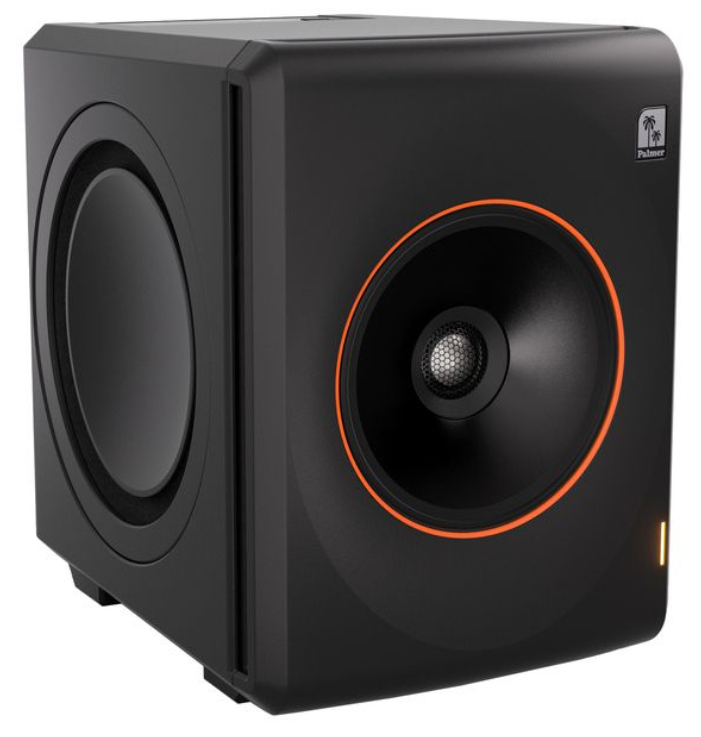
A brand-new entry from Palmer that’s generating serious attention for its combination of coaxial point source design, full-range frequency response, and competitive cost. Palmer Orbit 11 is a 3-way active studio monitor with a coaxial 6.5-inch midrange and 1-inch tweeter on a single acoustic axis, flanked by two impulse-compensated 8-inch woofers in a die-cast aluminum enclosure with 96kHz/24-bit FIR DSP, delivering frequency response from 28Hz to 28kHz.
Engineered in Germany, the Orbit 11 is unusual because it combines technologies typically found in monitors costing significantly more. The coaxial design, FIR filtering, cardioid bass pattern, and aluminum enclosure would each normally be premium features. Having all of them in one monitor at this cost has caught the attention of the professional audio community.
- Point Source
The coaxial True Point Source design places the midrange driver and tweeter on the same acoustic axis, meaning all frequencies above the bass crossover point originate from a single physical location. The result is exceptional phase coherence and stereo imaging, because the high and mid frequencies arrive at your ear simultaneously rather than from separate points. For mixing, the improved imaging helps you evaluate stereo placement, pan positions, and spatial effects with clarity that separate-driver designs handle less precisely.
- Full Range Bass
The dual 8-inch impulse-compensated woofers produce bass response down to 28Hz without a subwoofer, which is full-range performance from a nearfield monitor. The impulse compensation reduces the mechanical resonances that dual-woofer designs can produce, keeping the bass tight and controlled rather than boomy. For mixing, having reliable bass response down to 28Hz means you hear what’s happening in the sub-bass region without guessing or checking on headphones.
- Cardioid Pattern
A cardioid front baffle design directs acoustic energy forward and reduces rearward radiation, which minimizes wall reflections and room interaction. In practical terms, the cardioid pattern means you can place the Orbit 11 closer to walls than conventional monitors without the bass buildup that rear-ported or omnidirectional designs produce. For studios where placement options are limited, the controlled directivity provides more accurate monitoring in less-than-ideal positions.
7. PreSonus Eris E5
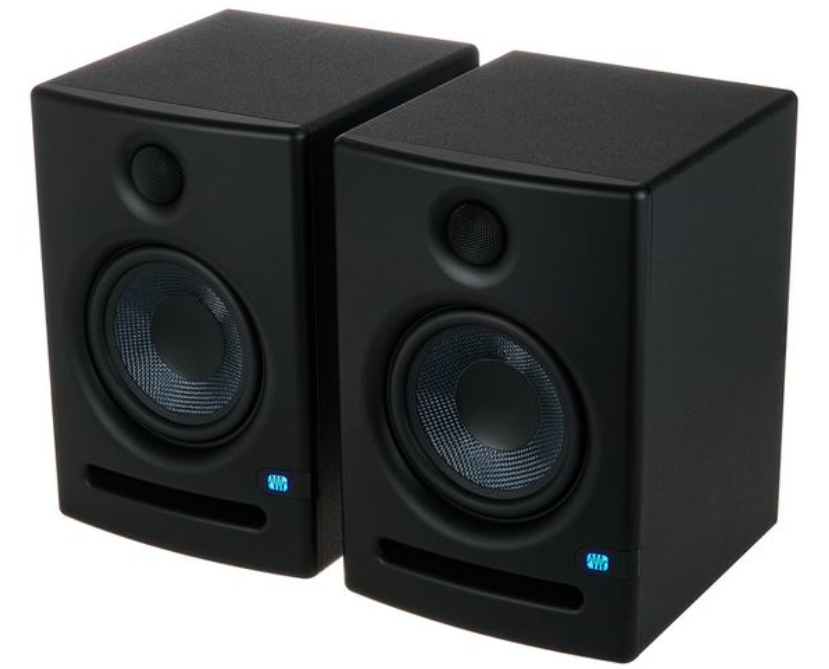
The budget-friendly nearfield that provides more features than you’d expect at its cost, including acoustic tuning controls that address the most common home studio placement problems. PreSonus Eris E5 gives you a 5.25-inch Kevlar woofer, 1-inch silk dome tweeter, and rear-panel acoustic adjustment controls in an affordable powered monitor designed to get bedroom producers mixing on speakers instead of headphones.
I think the Eris E5 serves an important role in the market because it’s often the first studio monitor that bedroom producers buy when they decide to move beyond headphone-only mixing. At this cost, the barrier to entry is low enough that the investment feels safe.
- Acoustic Tuning
The rear-panel acoustic controls include a high-frequency adjustment, a midrange control, and a low-frequency cutoff switch that let you compensate for room placement without external processing. The controls address the specific problems that home studio producers encounter: desk reflections boosting the bass, wall proximity adding low-frequency buildup, and room dimensions emphasizing certain frequencies. Having these adjustments on the speaker means you can improve your monitoring without buying additional room correction software.
- Kevlar Woofer
The 5.25-inch Kevlar woofer provides a rigid, responsive cone that handles transients cleanly and resists the breakup that softer cone materials produce at higher frequencies. The Kevlar construction keeps the midrange and bass defined even when you push the volume, which gives you cleaner information about what’s happening in your mix across the frequency range.
- Budget Access
The cost puts studio monitor mixing within reach of producers who previously assumed speakers were too expensive and mixed entirely on headphones. Moving from headphones to monitors changes how you perceive stereo width, bass energy, and spatial effects, and the Eris E5 makes that transition affordable enough that cost isn’t a valid excuse for staying headphone-only.
- Balanced Inputs
Balanced XLR and TRS inputs alongside unbalanced RCA provide flexible connectivity for different studio configurations. The balanced connections reject interference from long cable runs, which matters in home studios where audio cables sometimes run past power strips, computer monitors, and other noise-generating equipment.
- Front Port
A front-firing bass port allows closer wall placement than rear-ported designs without the bass buildup that rear ports cause when aimed at nearby surfaces. The front port gives you more flexibility in where you place the speakers, which is valuable in bedrooms and small rooms where your desk typically sits against or near a wall.
8. Focal Alpha 80 Evo
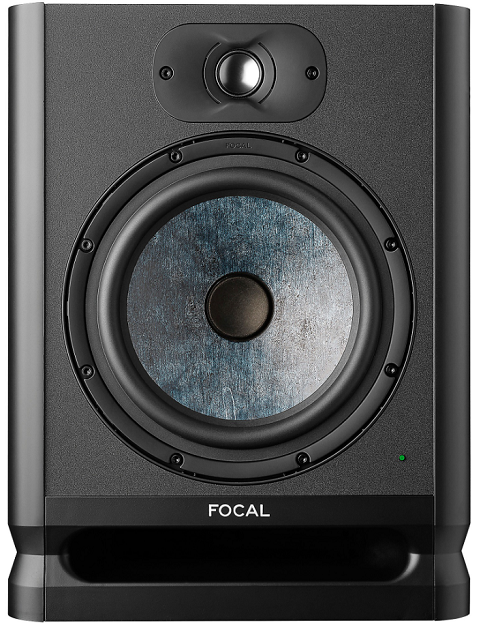
Focal’s 8-inch nearfield monitor updated with a new tweeter, improved amplification, and refined tuning. Focal Alpha 80 Evo features an 8-inch Slatefiber woofer and a 1-inch aluminum/magnesium inverted dome tweeter in a design that brings Focal’s characteristic mid-forward sound to the 8-inch nearfield format.
The Slatefiber woofer is Focal’s recycled carbon fiber composite material, which provides a rigid, lightweight cone that handles bass duties with the speed and control that Focal monitors are known for. The 8-inch driver size gives you meaningful bass extension while the Focal tweeter provides the sparkly top-end detail that the brand’s fans love.
- Slatefiber Woofer
The 8-inch Slatefiber cone is made from recycled carbon fiber, producing a driver that’s both environmentally conscious and acoustically excellent. The material provides the rigidity needed for fast, controlled bass reproduction with the lightness needed for responsive transient performance. For mixing, the Slatefiber cone handles kick drums, bass guitar, and low-frequency synths with the definition that lets you make accurate low-end decisions.
- Focal Tweeter
The aluminum/magnesium inverted dome tweeter delivers the detailed, slightly forward high-frequency character that Focal monitors are known for. The inverted dome design provides controlled directivity and smooth off-axis response, which contributes to a wide, stable sweet spot. The tweeter’s detail is where Focal monitors earn their reputation, because you hear reverb tails, vocal breathiness, and high-frequency effects with a clarity that helps you make precise decisions about the top end of your mix.
- Evo Updates
The Evolution generation adds improved amplification with higher efficiency and lower noise floor compared to the original Alpha 80. The updated amplifier provides more headroom for dynamic peaks and reduces the background hiss that the original model exhibited at close listening distances. For nearfield monitoring where you sit close to the speakers, the reduced noise floor is a practical improvement that keeps quiet passages clean.
9. Neumann KH 120 II
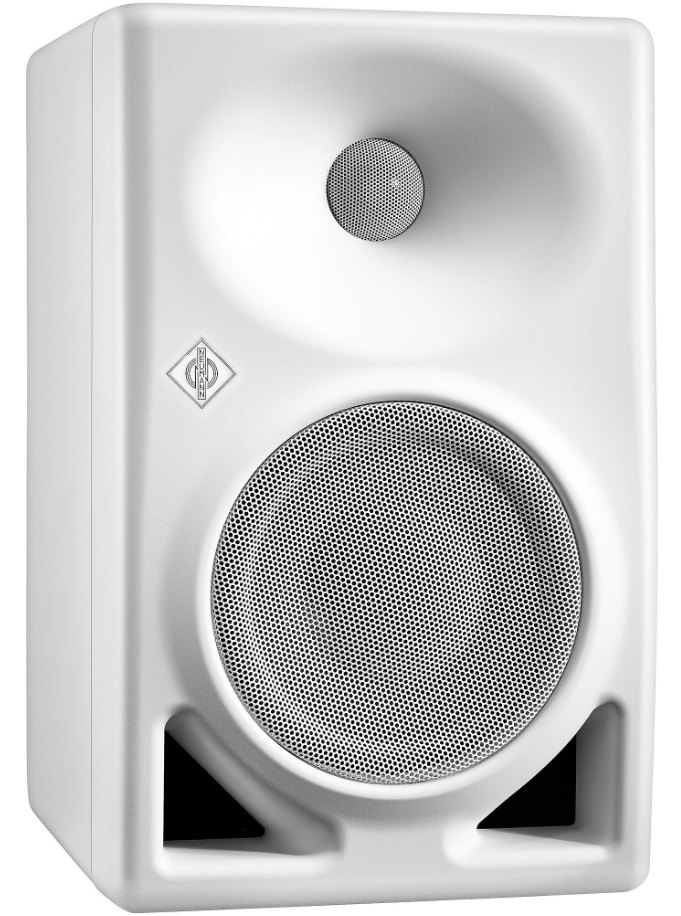
The second generation of Neumann’s compact nearfield reference monitor, featuring the company’s proprietary Mathematically Modeled Dispersion (MMD) waveguide and DSP with room calibration capability. Neumann KH 120 II builds on the original KH 120’s reputation as one of the most accurate compact monitors available, adding digital signal processing and calibration that addresses the room-specific problems that acoustic measurement reveals.
The Neumann name carries weight in professional audio, and the KH 120 II earns that weight with acoustic engineering and build quality that’s aimed at professionals who need monitoring they can trust completely.
- MMD Waveguide
The Mathematically Modeled Dispersion waveguide controls the directivity pattern of the tweeter to produce consistent frequency response across the listening area. The waveguide is designed using computational modeling to optimize the radiation pattern, which means the off-axis response matches the on-axis response more closely than conventional designs. For mixing, consistent directivity means the tonal balance stays accurate even when your head moves slightly, and the early reflections from nearby surfaces are more spectrally balanced.
- DSP Engine
The built-in DSP with network connectivity enables room calibration through Neumann’s MA-1 system, which measures the combined speaker-and-room response and applies correction filters to flatten what you hear at the listening position. The calibration is specific to your room, your speaker placement, and your listening position, which makes it far more effective than generic EQ adjustments.
- Compact Reference
The 5.25-inch two-way format delivers reference-grade monitoring accuracy in a nearfield package that fits on desktop stands without dominating your workspace. The KH 120 II is designed for close listening distances, and the monitoring quality at one to two meters is where the engineering investment pays off. The small format also means the bass output is appropriate for small to medium rooms without generating the room interaction that larger monitors produce.
- Neumann Build
The construction quality reflects Neumann’s heritage of precision studio equipment manufacturing. The KH 120 II is built to maintain its acoustic performance for decades of professional daily use, with driver quality, crossover precision, and enclosure rigidity that cheaper monitors don’t achieve. The build quality matters for long-term monitoring consistency because physical degradation of components changes the frequency response, and the KH 120 II is engineered to resist that degradation.
10. Avantone CLA-10 Active
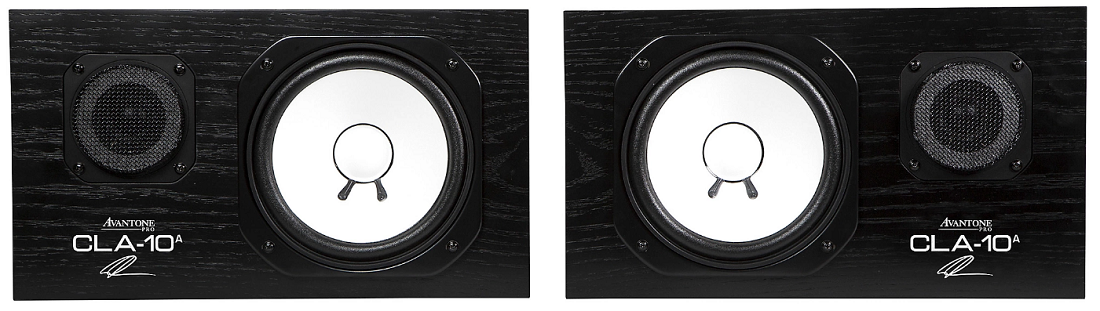
A modern, powered recreation of the Yamaha NS-10, developed in collaboration with mix engineer Chris Lord-Alge. Avantone CLA-10 Active reproduces the specific frequency response and tonal character of the NS-10 that made it the most widely used studio monitor in professional mixing history, in a self-powered format that doesn’t require an external amplifier.
The NS-10 debate is one of the oldest in pro audio: why did the industry adopt a speaker that didn’t sound particularly good? The answer is that the NS-10’s midrange honesty and lack of flattery forced engineers to make mixes that translated to every other playback system. The CLA-10 recreates that philosophy for the current era.
- NS-10 Recreation
The driver design and cabinet tuning specifically recreate the NS-10’s frequency response, including the forward midrange, limited bass extension, and slightly harsh upper frequencies that defined the original. The recreation isn’t about sounding nice. It’s about providing the same reference point that thousands of hit records were mixed on, giving you access to the same monitoring character that professional mix engineers calibrated their ears to over decades.
- CLA Involvement
Chris Lord-Alge’s involvement in the development ensured the CLA-10 accurately represents the NS-10 character that he and other top-tier mix engineers rely on. Lord-Alge has mixed records on NS-10s for his entire career, and his ear for the specific tonal balance that makes the NS-10 useful for mixing decisions informed the tuning of the CLA-10. The collaboration means the recreation was validated by someone who actually uses the reference daily.
- Active Design
The built-in amplification eliminates the need for an external power amplifier, which the original NS-10 required. The active design means you connect the CLA-10 to your monitor controller or interface and you’re ready to mix. The amplifier is matched to the drivers, which ensures the dynamic response and power handling are optimized for the specific speaker in a way that mismatched external amps sometimes don’t achieve.
- Translation Tool
The CLA-10’s primary value is as a translation checking tool rather than your only reference. You mix on your primary monitors, then switch to the CLA-10 to hear how your mix sounds on a smaller, less flattering speaker. If the mix holds up on the CLA-10, you can be confident it’ll hold up on car stereos, laptop speakers, and other limited playback systems. Many professional studios use NS-10 type speakers this way, as a secondary reference that reveals problems your main monitors might not show.
- Mid Focus
The forward, honest midrange is the CLA-10’s key mixing tool. The midrange is where vocals, snares, guitars, and the attack of most instruments live, and the CLA-10 presents this range with an unflinching clarity that shows you exactly how these elements relate to each other. If your vocal balance is wrong, the CLA-10 makes it obvious. If your snare is buried or poking out, you hear it immediately.
11. Focal Twin6
The professional-grade nearfield for producers who’ve outgrown budget monitors and work in properly treated spaces. Focal Twin6 is a 2.5-way design with two 6.5-inch woofers and a 1.5-inch beryllium inverted dome tweeter, delivering a soundstage width, frequency extension, and dynamic range that entry-level monitors can’t match.
This is the monitor I’d recommend to someone who has a dedicated, treated studio and is ready to invest in monitoring that matches the quality of the rest of their signal chain. The Twin6 is a significant investment, and it requires space and treatment to perform its best. But in the right environment, the monitoring quality is on a different level from anything else on this list.
- Beryllium Tweeter
The 1.5-inch beryllium inverted dome tweeter provides high-frequency reproduction with a speed, extension, and refinement that standard aluminum or silk dome tweeters don’t approach. Beryllium is extraordinarily rigid and lightweight, which means the tweeter dome responds to signal changes faster and with less distortion than heavier materials. For mixing, the beryllium tweeter reveals high-frequency detail, reverb tails, and spatial information with a clarity that helps you make the most precise decisions about the top end of your mix.
- 2.5-Way Design
The two 6.5-inch woofers operate in a 2.5-way configuration where one handles both midrange and bass duties while the other reinforces only the low frequencies. The 2.5-way approach provides the bass extension of a dual-woofer system with the midrange clarity of a single driver, which is why Focal chose this topology over a standard 2-way or full 3-way design.
- Soundstage Scale
Placed correctly, the Twin6 produces a stereo soundstage that’s noticeably wider and more three-dimensional than standard nearfield monitors. The scale of the presentation makes spatial mixing decisions easier because instruments occupy distinct positions in a large stereo field rather than clustering in a narrow zone. For evaluating reverb, delay, and stereo effects, the expanded soundstage shows you the spatial content of your mix with a clarity that smaller monitors can’t provide.
- Focus Mode
A Focus mode switches the Twin6 from its full 2.5-way operation to a single-woofer mode that reduces the bass extension and narrows the response, simulating a smaller, less capable speaker. The mode lets you check how your mix translates to more limited playback systems without physically switching to a different pair of monitors. Many professional mix engineers use this technique, alternating between their full monitoring and a reduced mode to ensure the mix works at every scale.
12. Kali Audio LP-6 2nd Wave
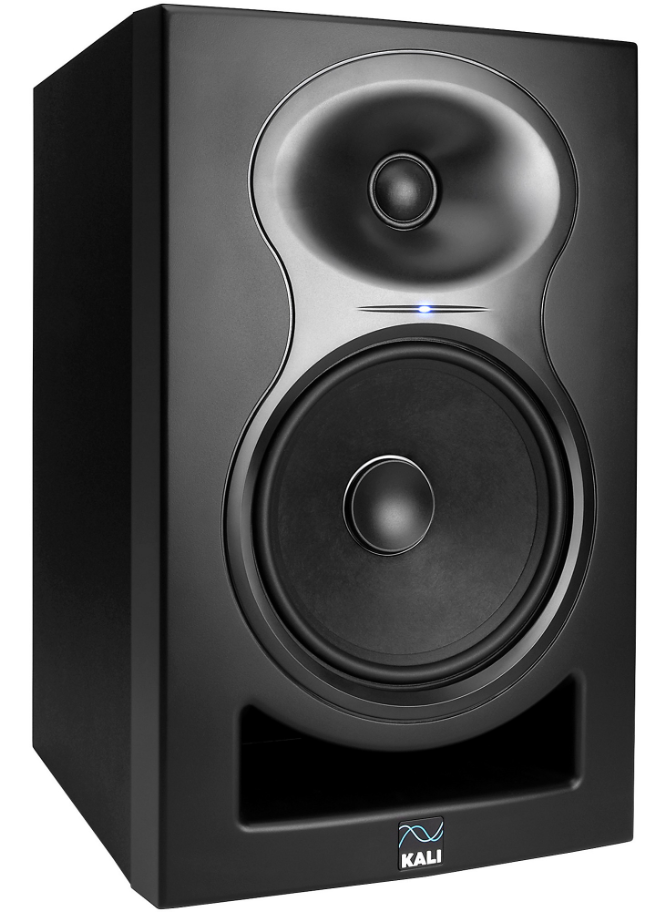
The value champion for producers who want transparent, accurate nearfield monitoring without spending more than they need to. Kali Audio LP-6 2nd Wave features a 6.5-inch composite woofer, a 1-inch soft dome tweeter, and rear-panel dip switches with printed diagrams that make room placement optimization intuitive even for producers who’ve never calibrated monitors before.
What I appreciate about the LP-6 is that Kali designed it for the real-world conditions that most producers actually work in. The dip switches have diagrams printed right on the speaker showing you which settings to use for desk placement, stand placement, wall proximity, and other common scenarios. You look at the diagram, flip the switches to match your setup, and the speaker compensates. It’s refreshingly practical.
- Dip Switch Setup
Rear-panel dip switches with printed setup diagrams make room compensation intuitive for producers at any experience level. Each diagram shows a specific speaker placement scenario, and you match your situation to the diagram and set the switches accordingly. The visual approach eliminates the guesswork that most monitors require, where you have to understand acoustic principles before you can decide whether to cut the bass or boost the treble. The LP-6 just shows you.
- Transparent Sound
The frequency response targets transparency where the monitor adds as little of its own character as possible to the audio passing through it. Multiple professional reviewers describe the LP-6 as “characterless,” which sounds like a criticism but is actually the goal. A characterless monitor means what you hear is what’s in your recording, not what the speaker adds to it. For mixing, transparency is the most useful quality a monitor can have.
- 6.5-Inch Balance
The 6.5-inch woofer hits a practical middle ground between 5-inch monitors that lack bass extension and 8-inch monitors that can overwhelm small rooms. The 6.5-inch format provides enough bass to make low-end mixing decisions without generating the room interaction problems that larger drivers cause in untreated spaces. For most home studios, the 6.5-inch size offers the best balance of bass capability and room compatibility.
- Low Self-Noise
The remarkably low self-noise makes the LP-6 comfortable at close nearfield distances where speaker hiss becomes audible on noisier designs. When you sit a meter from your monitors in a quiet room, any background hiss from the speaker’s amplifier becomes part of your listening experience. The LP-6’s low noise floor keeps the background silent, which means quiet passages in your mix stay quiet through the speaker.
- Front Port
A front-firing bass port reduces the wall interaction problems that rear-ported monitors produce when placed near boundaries. The front port directs bass energy forward toward your listening position rather than backward toward the wall, which means you get cleaner bass response in the near-wall placements that most desk setups require.
- Build Value
The MDF enclosure with textured vinyl wrap is functional rather than luxurious, and Kali doesn’t pretend otherwise. The build quality is appropriate for the cost, with a cabinet that’s solid enough for studio use without the premium materials and finishes that raise prices on competing monitors. The value proposition is clear: you’re paying for acoustic performance, not cosmetic luxury.
Get the Free Plugin Starter Kit
The genuinely useful free DAWs and plugins worth installing. No filler. Straight to your inbox.

Hello, I’m Viliam, I started this audio plugin focused blog to keep you updated on the latest trends, news and everything plugin related. I’ll put the most emphasis on the topics covering best VST, AU and AAX plugins. If you find some great plugin suggestions for us to include on our site, feel free to let me know, so I can take a look!