
The microphone is usually the first thing producers upgrade when their vocal recordings don’t sound right. The room is almost always the actual problem.
A condenser microphone in an untreated space picks up everything — the parallel walls creating flutter echo, the bare surfaces building up early reflections, the corners accumulating low-end. Processing can’t fix this after the fact because the room’s acoustic signature is baked into the recording at the point of capture. EQ doesn’t remove a reflection. Compression doesn’t fix a smeared transient. The recording either has room in it or it doesn’t.
Portable vocal booths and reflection filters address this at the source. They surround the microphone capsule with absorbing material that intercepts room reflections before they reach the signal, creating a controlled recording environment that works regardless of what the room around it sounds like. A vocalist recording inside a foldable isolation shield in an untreated bedroom gets a drier, more controlled result than one recording with a premium condenser in the open room.
The range of options runs from desk-mounted foldable shields under $100 through to standalone head booths that enclose both microphone and vocalist entirely. What separates them isn’t just price — it’s the approach. Stand-mounted reflection filters clamp to the mic stand and work from behind and around the capsule. Foldable isolation shields create a three-sided or five-sided absorbing environment around the microphone position. Standalone vocal head booths enclose the vocalist’s head and microphone inside a treated enclosure mounted on a stand.
Each approach has a specific use case, and the right one depends on your room, your microphone type, and how much physical space you’re working with. I’ve picked six that cover that range, from an immediately accessible option from the Pluginerds store through to the full-enclosure standalone booth that every producer I know who does regular vocal work eventually considers.
1. Foldable Microphone Isolation Shield Recording Filter — from $89.99

The foldable isolation shield is the format that suits most home recording setups because it doesn’t require a dedicated stand position and folds flat for storage when not in use. This one comes in three-door and five-door configurations — three doors for basic frontal and side isolation, five doors for more comprehensive wrap-around coverage — which means you can match the level of treatment to your room and your microphone without committing to a single fixed setup.
The Foldable Microphone Isolation Shield Recording Filter gives you a foldable acoustic isolation shield in three-door and five-door configurations, with a complete set option that includes additional accessories, starting from $89.99. The acoustic foam panels on each door absorb mid and high-frequency reflections at the microphone position, reducing the room ambience that a condenser capsule would otherwise capture alongside the direct vocal signal.
The five-door configuration provides more surface area around the microphone for rooms with more significant reflection problems, while the three-door version is the practical choice for tighter desk setups or less reflective rooms. Both configurations fold flat and store easily when the session is done.
- Three-Door and Five-Door Options
The three-door version creates a three-sided shield around the front and sides of the microphone position, handling the primary early reflections from straight ahead and the sides. The five-door version adds coverage to the upper angles, wrapping further around the capsule for rooms where the basic three panels leave audible room character in the recording.
For most home setups — a bedroom or spare room with some soft furnishings — the three-door configuration is sufficient. The five-door becomes relevant when the room is particularly reflective or when recording a cardioid microphone that’s sensitive to off-axis room sound.
- Acoustic Foam Absorption
Acoustic foam panels on each door absorb energy in the mid and high-frequency range — the frequencies where vocal recordings are most susceptible to room character. The foam intercepts reflections at the microphone position rather than treating the room itself, which means the benefit is immediate and doesn’t require any permanent installation.
The practical result is a drier, more controlled vocal recording from the first take. Room reflections that would otherwise add an audible sense of space to a close-miked vocal are absorbed before they reach the capsule.
- Folds Flat for Storage
The foldable construction means the shield sets up in seconds before a session and folds flat when not in use. For producers who record in rooms that serve other purposes — a bedroom, a living room, a shared office — the ability to store the shield without dedicating permanent wall space to it is a practical consideration that fixed acoustic treatment doesn’t offer.
Shop at Pluginerds — Foldable Microphone Isolation Shield from $89.99
2. sE Electronics RF-X Reflexion Filter
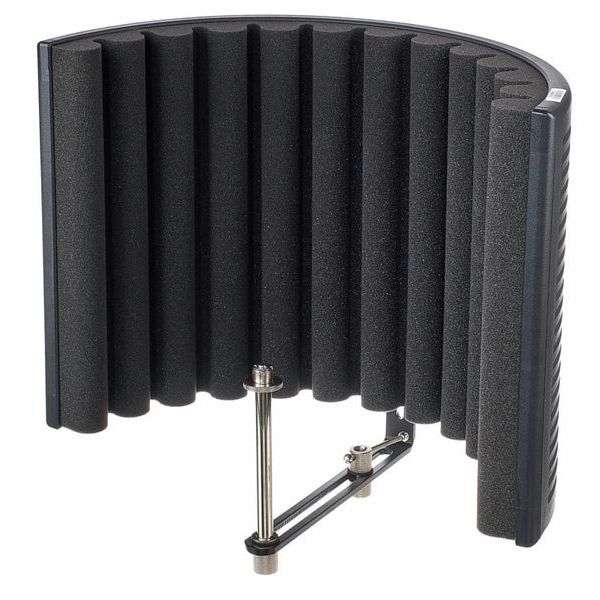
The stand-mounted reflection filter is the format sE Electronics invented in 2006, and the RF-X is their current entry-level version. It clamps to a standard mic stand and positions a curved multi-layer absorber behind and around the microphone, intercepting the room reflections that would otherwise bounce off the rear wall and re-enter the capsule. The multi-layer construction — combining foam, air gaps, and reflective material — handles more of the frequency range than single-layer foam alternatives at comparable prices.
sE Electronics RF-X Reflexion Filter is a portable stand-mounted reflection filter using multi-layer acoustic technology, with a 41cm diameter and universal mic stand compatibility via its adjustable mount. The low weight keeps stand stability manageable — heavier reflection filters require a particularly sturdy stand to avoid top-heaviness, and the RF-X is sized to work with most standard boom stands without adding significant strain.
- Multi-Layer Acoustic Construction
Multi-layer technology combines different materials in the filter’s construction to address sound absorption across a broader frequency range than a single foam layer handles. Where basic foam panels absorb primarily at high frequencies, the multi-layer approach adds absorption in the upper midrange — the range that’s most audible as “room character” in vocal recordings.
The curved panel shape also creates some diffusion as well as absorption, which helps prevent the comb filtering that can occur when reflected sound re-enters a cardioid pattern from a specific angle.
- Stand-Mounted for Positioning Flexibility
The adjustable mic stand mount lets you position the filter vertically and horizontally relative to the microphone, matching the absorber to the capsule’s pickup pattern and the room’s primary reflection surfaces. The mounting bracket fits standard mic stands, and the low weight of the RF-X keeps the stand from becoming dangerously top-heavy during sessions.
For producers who already own a solid boom stand, the RF-X adds stand-mounted reflection treatment without requiring a second stand or any floor space beyond what the existing stand occupies.
- Proven Entry Point in a Mature Product Category
sE Electronics has been making reflection filters since 2006, and the RF-X sits at the accessible end of a product line that extends through the Pro and Space at higher price points. The core multi-layer technology is consistent across the range — the differences between models are in size, layer count, and mount quality rather than in whether the fundamental approach works.
For producers who want stand-mounted reflection treatment at a practical price, the RF-X is the entry point that the category’s originator makes.
3. sE Electronics Reflexion Filter Pro Black
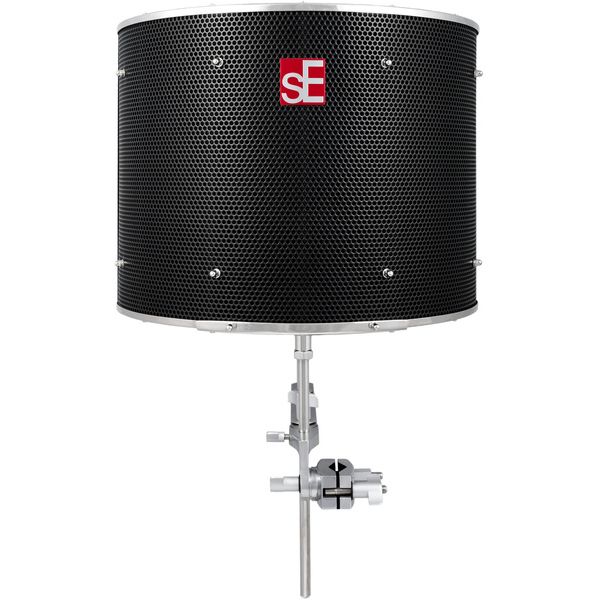
The Pro is the version of the Reflexion Filter that sE Electronics built when they wanted to do the concept properly at a higher specification. More layers, larger surface area, and an all-metal mounting system that addresses the stability complaints the original plastic bracket drew from users. If you’re recording vocalists regularly and stand-mounted reflection treatment is a permanent part of your setup rather than an occasional tool, the Pro justifies the price difference over the RF-X.
sE Electronics Reflexion Filter Pro Black is a portable absorber and diffuser with dimensions of 390 × 200 × 320mm, using six-layer multi-layer acoustic construction for absorption and diffusion across a broader frequency spectrum than the RF-X. The black finish and all-metal build quality place it firmly in the professional tier of stand-mounted treatment options.
- Six-Layer Construction for Broader Coverage
Six distinct acoustic layers — including an aluminium foil layer that dissipates energy and helps break up lower-frequency waveforms — extend the effective absorption range further down in frequency than the RF-X’s simpler construction. The result is treatment that addresses more of the vocal frequency range, including the lower-mid content that basic foam panels leave largely untreated.
The six-layer approach also provides a degree of diffusion alongside absorption, scattering some of the intercepted energy rather than purely absorbing it, which produces a more natural-sounding recording environment than total absorption creates.
- All-Metal Mounting Hardware
The metal mounting bracket addresses the main practical limitation of the original Reflexion Filter, which used plastic hardware that attracted complaints about stability and durability under regular use. The all-metal mount holds the filter at the correct angle without flex, which matters when you’re positioning a condenser microphone precisely and don’t want the absorber to drift during a take.
The metal construction also handles the weight of the Pro’s larger panel without the top-heaviness that earlier plastic-mounted versions created on lighter stands.
- The Professional Standard for Stand-Mounted Treatment
The original Reflexion Filter Pro established the category when sE Electronics introduced it, and the Black version is the current evolution of that design. It appears in commercial studios alongside permanent acoustic treatment rather than as a substitute for it — the portability value is genuine for engineers who move between recording locations, and the acoustic performance at this specification level is meaningful even in treated rooms.
4. sE Electronics Reflexion Filter Space
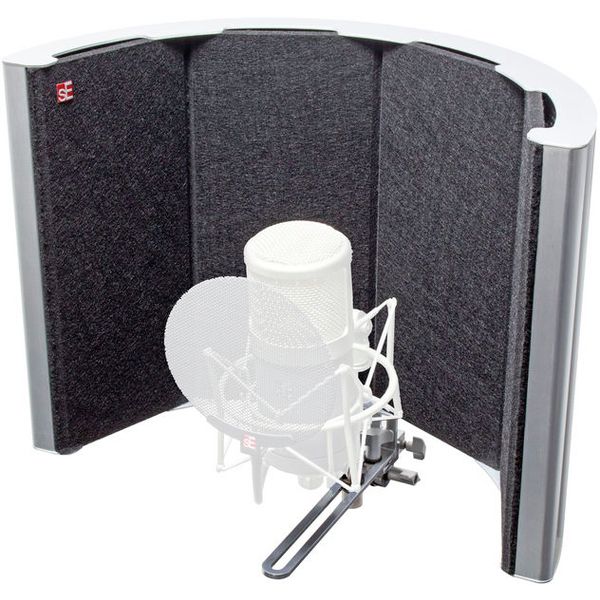
The Space is what the Reflexion Filter becomes when sE Electronics decided that the curved panel format needed more surface area to be fully effective. The larger size addresses the main limitation of compact reflection filters — that a small absorber positioned behind a microphone treats a limited angle and leaves the sides and upper-rear angles of the capsule exposed to room reflections. The Space’s expanded dimensions cover more of that angular range, which is most audible on omnidirectional and wide-cardioid microphones that pick up sound from a broader field than a tight cardioid.
sE Electronics Reflexion Filter Space is a large acoustic screen for vocal and instrument recording with 10 layers of multi-layer air-gap technology, a free-adjustable and lockable mount for both vertical and horizontal positioning, and a high degree of isolation for reducing unwanted direct reflections from walls. The 10-layer construction represents the most acoustically sophisticated version of sE Electronics’ multi-layer technology across their reflection filter range.
- 10 Layers Including Air-Gap Technology
Ten acoustic layers with integrated air gaps extend effective absorption further into the low-midrange than any other stand-mounted filter in this list. The air-gap layers disrupt waveforms at frequencies where solid-material absorption would require significantly more material depth to be effective — a physical limitation that the Space’s layered construction works around.
For recording large-diaphragm condensers that capture low-frequency chest resonance and body warmth in vocals, the Space’s extended low-end absorption is audibly different from filters that only address the upper frequency range.
- Full Vertical and Horizontal Adjustment
The freely adjustable mount locks in both axes, allowing precise positioning of the filter relative to the microphone capsule. For large-diaphragm condensers with specific off-axis characteristics, being able to align the filter exactly with the capsule’s polar pattern rather than approximating the position makes a genuine difference to the treatment’s effectiveness.
The lockable adjustment holds position during a take without drift, which the studio requires when a vocalist is moving naturally while singing close to the filter.
- For Serious Home Studio Vocal Recording
The Space is the option for producers who have identified stand-mounted reflection treatment as a permanent workflow element and want the most effective version of it. It’s heavier than the RF-X and Pro, which means a sturdy stand is essential, but the acoustic performance at this specification level is the closest stand-mounted treatment gets to the effect of a treated recording room.
5. t.akustik Vocal Head Booth
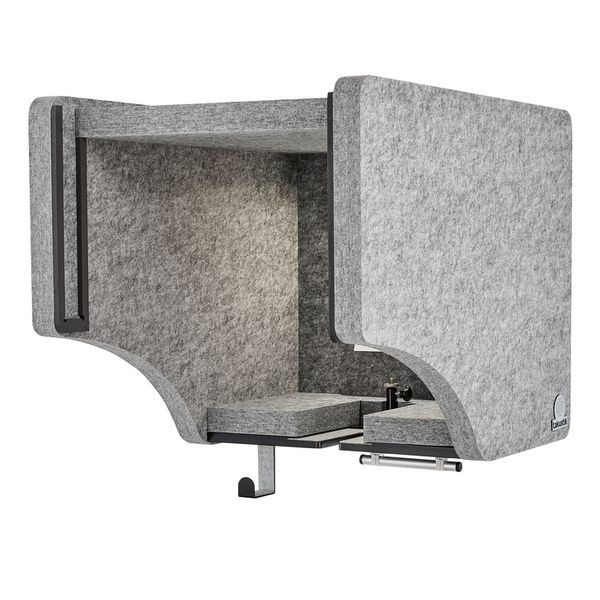
Stand-mounted reflection filters treat the area around the microphone. The Vocal Head Booth takes a different approach entirely — it encloses both the microphone and the vocalist’s head inside a treated enclosure, creating a genuinely isolated recording environment that reflection filters can’t replicate because they leave the vocalist’s acoustic environment essentially unchanged. The difference in approach is most audible in rooms with significant low-frequency problems or in spaces where the ambient noise level makes close-miked recording with a reflection filter insufficient.
t.akustik Vocal Head Booth is a standalone vocal recording enclosure designed to enable optimised vocal recordings in acoustically suboptimal spaces, with a back plate that adjusts upwards, an adjustable shock mount for microphone positioning, and acoustic foam panels with magnetic mounting hardware. The enclosure surrounds the microphone and vocalist’s head, creating an acoustically controlled capture environment that exists independently of what the room around it sounds like.
- Full Enclosure vs Partial Treatment
Where reflection filters intercept some of the room’s energy before it reaches the microphone, the Vocal Head Booth creates a separate acoustic environment around the microphone and vocalist. The foam-lined interior absorbs reflections at every angle, including from below the microphone — the one direction that stand-mounted filters and foldable shields don’t address, where desk and floor reflections enter the capsule from angles that rear-mounted absorbers don’t cover.
For untreated rooms, the acoustic isolation from the Vocal Head Booth is substantially more comprehensive than any stand-mounted or desk-mounted alternative.
- Magnetic Foam Panel Mounting
Magnetic mounting hardware for the acoustic foam panels means the enclosure assembles and disassembles quickly without tools. The foam panels click into position on the magnetic frame, which makes setup practical for producers who set up the booth per session rather than leaving it permanently assembled.
The magnetic system also allows individual panels to be repositioned or replaced without the adhesive bonding that makes permanent foam installations difficult to change over time.
- Adjustable Microphone Positioning
The adjustable shock mount bracket positions the microphone at the correct height and depth within the enclosure, adaptable to different microphone types and sizes. The back plate can be pushed upwards to accommodate taller microphones or to adjust the headroom inside the enclosure for different vocalist heights.
The positioning flexibility is important because the acoustic benefit of the enclosure depends on the microphone sitting at the correct position within the treated space — too close to the front opening loses isolation, too far back creates proximity issues.
6. Isovox Mobile Vocal Booth V2
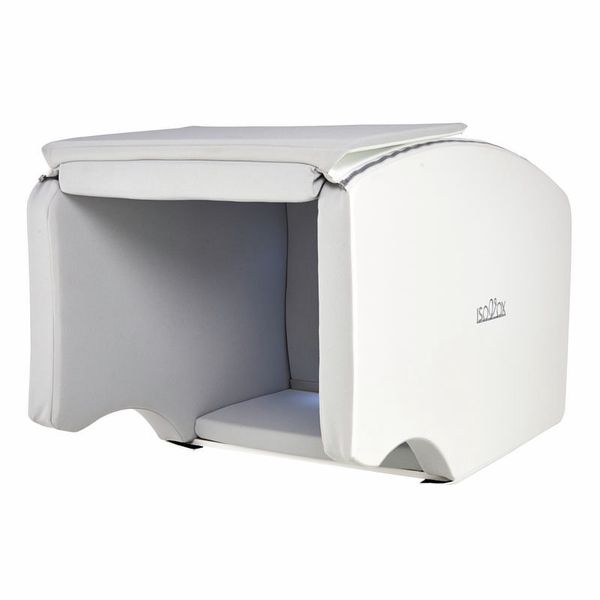
The Isovox is the standalone portable vocal booth that producers who do serious vocal work keep coming back to when the question of room treatment reaches its practical ceiling. It’s the most expensive option here by a margin, and it does something categorically different from everything else in this list — it provides up to 35dB of sound reduction, which means it’s not just treating room reflections but actually reducing the ambient noise floor around the microphone to a level where recording in genuinely noisy environments becomes viable.
Isovox Mobile Vocal Booth V2 is an insulated portable singing booth with up to -35dB sound reduction, patented 360 XYZ pro-acoustics using four layers of different acoustic materials, and LED lighting included for use in low-light sessions. The vocalist’s head and microphone sit inside the booth, which mounts on a standard mic stand, creating an isolated recording environment that travels with the setup rather than depending on the room.
- Up to 35dB Sound Reduction
35dB of passive sound reduction is a different category of treatment from reflection filters and basic isolation shields. At that level, background noise that would be audible in a condenser recording at normal monitoring levels becomes inaudible or nearly so, which opens up recording in environments where ambient sound has previously made quality vocal work impractical — shared buildings, city apartments, home offices with equipment noise.
The reduction works from the outside in as well as from the inside out, meaning the vocalist records in a controlled acoustic environment without the room’s character entering the capture signal.
- Four-Layer 360 XYZ Acoustics
Isovox’s patented four-layer construction using different acoustic materials at each layer treats sound from all directions around the microphone simultaneously — hence the 360 XYZ designation. The combination of materials addresses absorption across a wider frequency range than single-material constructions, and the 360-degree approach means there are no angular gaps where room sound can enter the microphone’s pickup pattern.
This is the feature that separates it from the t.akustik Vocal Head Booth above — where the t.akustik provides a treated enclosure, the Isovox provides both treatment and isolation at a level that requires a purpose-designed multi-material structure.
- Portable and Stand-Mounted
The stand-mounted design means the Isovox sets up wherever the mic stand goes, without requiring floor space for a freestanding enclosure. The included LED light makes it practical for recording sessions in dim rooms where the vocalist needs to read lyrics or communicate with the engineer. It disassembles and stores flat when not in use.
For producers who record vocalists regularly in varied and uncontrolled acoustic environments, the Isovox is the option where the investment reflects a genuine capability difference rather than a specification upgrade within the same approach.

Hello, I’m Viliam, I started this audio plugin focused blog to keep you updated on the latest trends, news and everything plugin related. I’ll put the most emphasis on the topics covering best VST, AU and AAX plugins. If you find some great plugin suggestions for us to include on our site, feel free to let me know, so I can take a look!