

Most recording guides tell you to grab a small-diaphragm condenser for acoustic guitar and call it a day. That advice works well in a treated room where the condenser can capture the full spectrum of the instrument without also capturing traffic noise, computer fans, room reflections, and whatever else your environment throws into the air.
But if you’re recording acoustic guitar in an untreated bedroom, a noisy apartment, or any space where the environment competes with the instrument, a dynamic mic’s focused pickup and reduced sensitivity to ambient noise can actually produce better results than a condenser that faithfully captures everything, wanted or not.
Dynamic mics also bring a different tonal character to acoustic guitar that’s worth exploring on its own merits. They naturally warm up the midrange, soften the harsh pick attack that condensers sometimes exaggerate, and produce a thicker, more grounded guitar tone that sits in a band mix without the brittle brightness that some condenser recordings need taming.
I’ve used dynamics on acoustic guitar in situations where I wanted the instrument to support a vocal rather than dominate the mix, and the darker, warmer tone a dynamic provides often serves that role better than a detailed condenser.
Here are ten dynamic microphones that handle acoustic guitar recording well, each with its own character and strengths.
1. Universal Audio SD-1
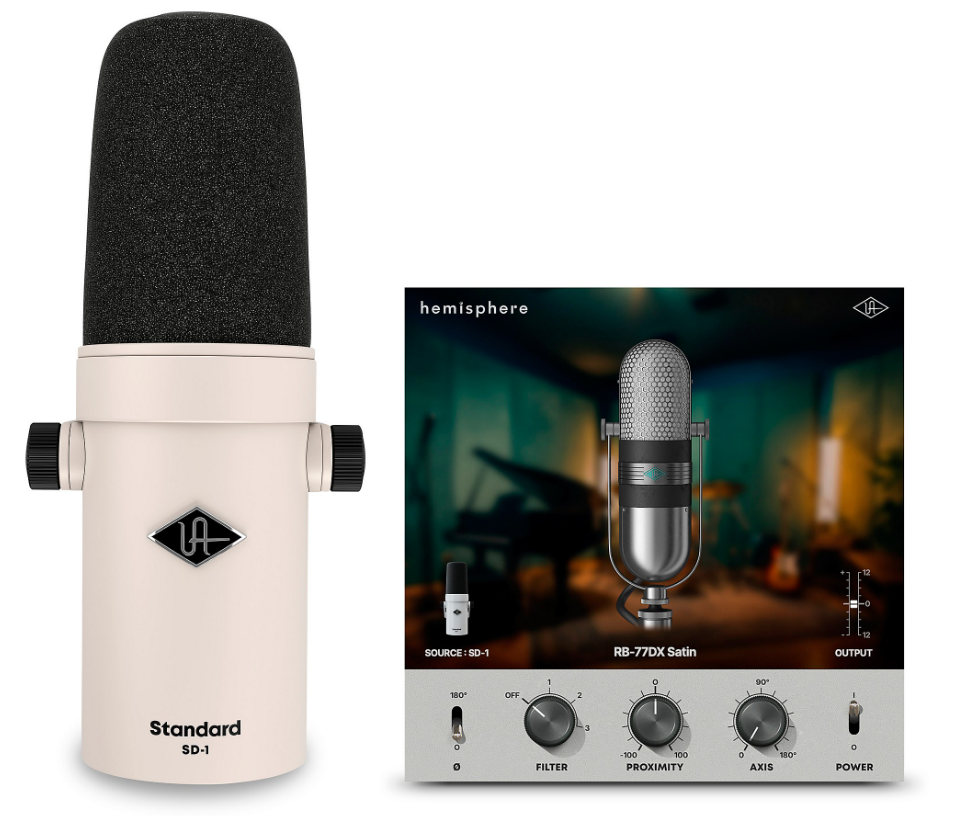
UA’s modern dynamic designed to pair with their Sphere modeling system, giving you a single microphone that can sound like many different mics after recording. Universal Audio SD-1 is a cardioid dynamic with a frequency response tuned for contemporary recording, a distinctive hemispherical grille, and optimization for UA’s Sphere plugin that lets you reshape the mic’s character in your DAW after capture.
For acoustic guitar, the SD-1 works well when you’re not sure what character you want at the recording stage. You capture the performance through the SD-1, and then use Sphere modeling to adjust the tonal balance, proximity effect, and polar pattern until the guitar sounds right in the context of your mix. It’s a safety net approach that some producers genuinely appreciate.
- Sphere Flexibility
When paired with UA’s Sphere modeling system, the SD-1 becomes a starting point that you reshape into different microphone characters during mixing. If your acoustic guitar recording needs more brightness, you model a brighter mic. If it needs more warmth, you shift toward a warmer character. For acoustic guitar sessions where the arrangement isn’t finalized and you don’t know whether you need a bright, cutting tone or a warm, supportive one, the post-capture flexibility means you never commit to the wrong character at the tracking stage.
- Modern Response
A frequency curve designed for current production aesthetics provides clarity without the boxy midrange that some classic dynamic designs impart. For acoustic guitar in pop, folk, or singer-songwriter contexts where the instrument needs to sound present and detailed, the SD-1’s voicing fits contemporary mixing expectations. If you’re recording acoustic guitar for tracks that will be heavily produced, the SD-1’s modern character integrates well with processed, polished mixes.
- Controlled Proximity
At typical close-mic distances for acoustic guitar, the SD-1 manages proximity effect without the excessive bass buildup that some dynamics produce. You can position the mic close to the soundhole area without the low end overwhelming the fundamental character of the instrument. For bedroom recordings where you need to keep the mic close to reject room noise, the controlled proximity means your guitar tone stays balanced.
- Hemisphere Design
UA’s hemispherical grille creates a different acoustic interaction with the sound source compared to traditional ball grilles. Around the 12th fret area where many producers position their acoustic guitar mic, the grille shape affects how the complex mix of string harmonics, body resonance, and air reaches the capsule. For acoustic guitar specifically, I find the open design captures a slightly less congested sound than enclosed grille shapes.
2. Austrian Audio OD505
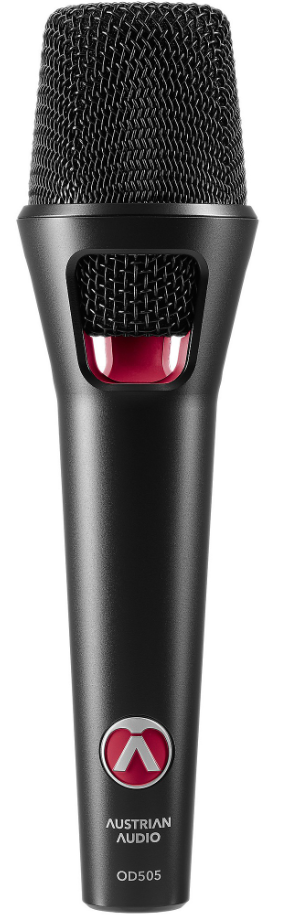
Active dynamic engineering from Vienna that blurs the line between dynamic warmth and condenser detail, making it one of the most interesting choices for acoustic guitar when you want a dynamic’s character with more high-frequency information than passive dynamics typically preserve.
Austrian Audio OD505 requires 48V phantom power and delivers condenser-like sensitivity through its active circuitry, features a dual-capsule design for handling noise cancellation, Open Acoustics Technology for reduced housing resonance, a proprietary 3D Pop Noise Diffuser, and a switchable 120Hz high-pass filter that’s genuinely useful for acoustic guitar recording.
On acoustic guitar, I find the OD505 captures more of the string shimmer and pick detail than I expect from a dynamic, which closes the gap between dynamic and condenser territory in a way that’s audibly meaningful. You get the focused pickup and noise rejection of a dynamic with more of the high-end detail that acoustic guitar recordings rely on.
- Active Sensitivity
With 48V phantom power engaged, the OD505 outputs at 4.4 mV/Pa, which falls between typical dynamic and condenser sensitivity levels.
For acoustic guitar, higher sensitivity means the mic captures more of the subtle details in your playing, including finger slides on strings, harmonics, body resonance, and the complex overtone structure that gives acoustic guitar its character. You also need less preamp gain, resulting in a quieter recording with lower noise floor.
- Open Acoustics
Open Acoustics Technology reduces contact points between capsule and housing, allowing sound to enter from multiple angles without housing resonances coloring the captured audio.
Acoustic guitar produces a complex, omnidirectional sound field with energy radiating from the soundhole, the top, the back, and the neck simultaneously. Reducing housing coloration means the OD505 captures a more natural representation of that complex sound source, without the “in a tube” quality that some dynamic grille designs introduce.
- High-Pass Filter
A switchable 120Hz high-pass filter attenuates low frequencies that can muddy acoustic guitar recordings, particularly when the mic is positioned near the soundhole where bass energy concentrates.
Engaging the filter cleans up the low end without needing a separate EQ, which gives you a tighter, more defined guitar tone from the capture itself. For fingerpicking styles that emphasize bass strings, you might leave the filter off. For strumming patterns where low-end clarity matters, it’s genuinely helpful.
- Noise Cancellation
A passive rear capsule wired in reverse polarity detects mechanical vibration and handling noise, canceling it against the active front capsule’s signal. For studio recording on a mic stand, this dual-capsule approach means floor vibrations, stand adjustments, and accidental bumps are rejected more effectively than single-capsule designs manage. Acoustic guitar sessions where you reposition between takes benefit from the reduced mechanical noise.
- 3D Diffuser
Austrian Audio’s 3D Pop Noise Diffuser handles air movement from the soundhole projection and close-mic positioning without the plosive-like thumps that acoustic guitar’s low-end air output sometimes triggers in close-placed dynamics. For close-mic positions near the soundhole where air pressure is highest, the diffuser keeps your recordings clean.
- Dual Purpose
Because the OD505 approaches condenser-level detail while maintaining dynamic noise rejection, it serves dual duty in your mic locker. You use it on acoustic guitar, then on vocals, then on guitar amps, getting quality results across sources that normally require switching between dynamic and condenser microphones. For producers building a small mic collection, the versatility means the OD505 covers more ground than most single microphones.
3. Shure KSM8 B
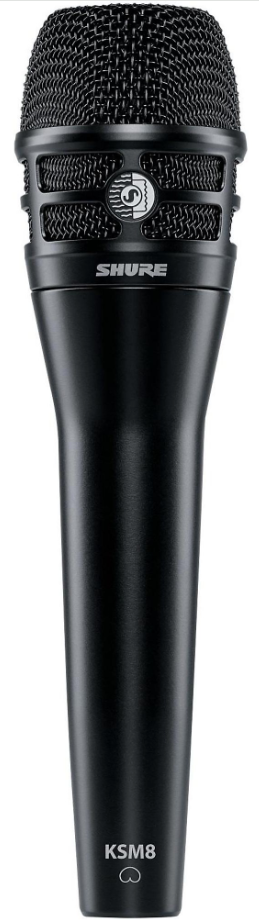
Shure’s premium dual-diaphragm dynamic that uses a second passive diaphragm to control proximity effect and maintain consistent tone across varying distances. Shure KSM8 features Shure’s patented Dualdyne dual-diaphragm cartridge with an active front diaphragm and a passive rear diaphragm that manages proximity effect, producing a more consistent frequency response as your distance from the source changes.
For acoustic guitar, the KSM8’s proximity control is genuinely useful because guitar mic positioning varies between players, songs, and sections within a performance. A mic that sounds different every time you shift six inches closer or further away is harder to work with than one that maintains its character across reasonable distance changes.
- Dualdyne Cartridge
Shure’s patented dual-diaphragm design uses a passive rear diaphragm to counteract the bass buildup that proximity effect creates in conventional single-diaphragm dynamics. For acoustic guitar, this means you can move the mic closer for more detail without the low end becoming boomy, or pull it back for more room sound without losing warmth. Your guitar tone stays more consistent across a range of mic positions, which is liberating during a recording session where you’re experimenting with placement.
- Distance Tolerance
Because proximity effect is actively managed by the dual-diaphragm system, the KSM8 maintains a more consistent tone across varying distances than conventional dynamics. For acoustic guitar players who naturally move during performance, or for sessions where you reposition the mic between takes, the distance tolerance means your recorded tone doesn’t shift dramatically with small position changes.
- Smooth Response
A notably smooth frequency response without the aggressive presence peaks that many vocal dynamics employ gives acoustic guitar a natural, uncolored capture. Many dynamic mics are voiced specifically for vocals with presence boosts that can sound harsh on acoustic guitar’s complex harmonic structure. The KSM8’s smoother curve works better on instruments where neutrality serves the recording.
4. Telefunken M80
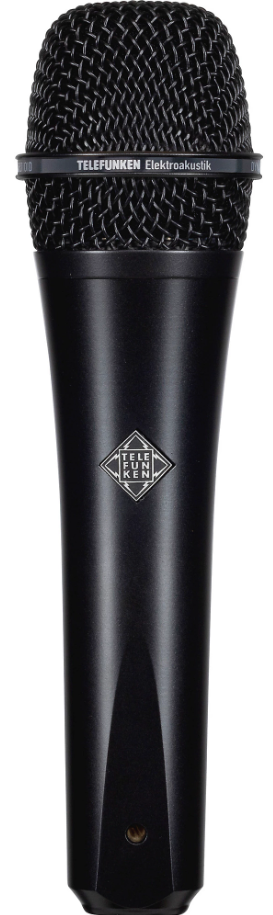
Handcrafted supercardioid dynamic from one of the most storied names in microphone history. Telefunken M80 delivers a tightly controlled supercardioid pattern, a specially tuned capsule with vocal-forward presence, low handling noise, and a vocal character that translates surprisingly well to acoustic guitar recording when you want the instrument to have a forward, present quality that cuts through a mix.
On acoustic guitar, the M80 produces a tone that’s focused, articulate, and present without being harsh. Strumming patterns come through with defined individual strings rather than a washy blur, and fingerpicked passages retain the attack and release characteristics that give the playing style its identity.
- Pattern Focus
A precisely controlled supercardioid pattern rejects more off-axis sound than cardioid designs, capturing your guitar while rejecting more of the room around it. For untreated recording spaces where room reflections would muddy an acoustic guitar recording, the M80’s tight pattern keeps the capture focused on the instrument. Positioning the mic at the 12th fret with the supercardioid pattern aimed at the intersection of neck and body gives you a clean, direct guitar sound with minimal room contribution.
- String Definition
Telefunken’s capsule tuning produces recordings where individual strings remain audible and defined within strummed chords and arpeggiated passages. Some dynamics smear the complex harmonic information of an acoustic guitar into a homogeneous blob, but the M80 preserves the separation between strings that lets your playing articulation come through in the recording.
- Handcrafted Quality
Each M80 is assembled by hand in Telefunken’s Connecticut facility and individually tested, which means tighter quality control and more consistent performance than mass production achieves. For acoustic guitar recording where subtle differences in frequency response and pattern behavior affect the captured tone, the handcrafted consistency means you get the same performance from every M80.
- USA Made
Built entirely in the United States from design through assembly, the M80 represents a level of domestic manufacturing commitment that most microphone brands at this level don’t offer. For producers who value supporting domestic manufacturing and want the quality control that accompanies smaller-scale, hands-on production, the M80’s origins matter.
5. Electro-Voice ND96
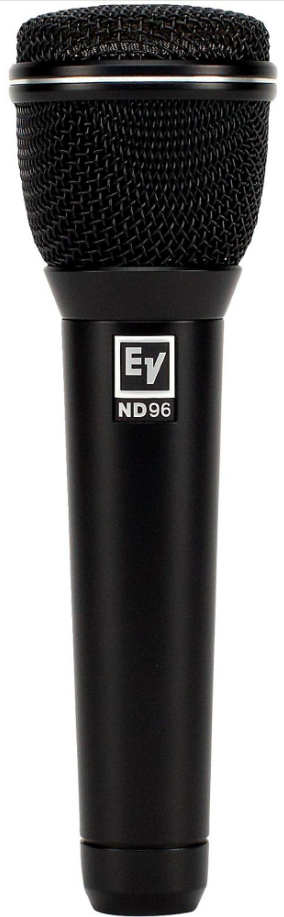
Extreme isolation in a supercardioid dynamic designed for the noisiest environments on earth. Electro-Voice ND96 provides exceptional off-axis rejection, a Memraflex self-healing grille, and a vocal character that works effectively on acoustic guitar when your primary challenge is rejecting background noise from your recording environment.
I’d reach for the ND96 on acoustic guitar when the recording environment is the main problem. Noisy roommates, street traffic, HVAC systems, or any persistent background noise that would ruin a condenser recording can be managed by the ND96’s aggressive rejection pattern. Your guitar recordings won’t have the airiest top end, but they’ll be clean.
- Maximum Rejection
A supercardioid pattern engineered for extreme off-axis isolation captures your acoustic guitar while rejecting more background noise and room reflections than any other mic on this list. In apartments, shared spaces, and rooms with persistent ambient noise, the ND96 gives you usable guitar recordings that mics with wider pickup patterns couldn’t deliver in the same environment. If your choice is between a noisy condenser recording and a clean dynamic recording, the clean recording wins every time.
- Memraflex Durability
EV’s Memraflex composite grille returns to its original shape after compression or impact, maintaining consistent acoustic performance regardless of physical wear. For a mic that might get bumped during acoustic guitar sessions or stored in a gig bag between uses, the self-healing grille ensures the acoustic environment around the capsule stays consistent over years of use.
- Close Handling
At very close positions, the ND96 maintains a controlled frequency response without the excessive bass that most dynamics produce through proximity effect. For acoustic guitar recording where close-mic positioning is sometimes necessary to reject room noise, the controlled proximity means you get a balanced guitar tone even at distances where other dynamics would need heavy low-cut filtering.
6. Heil Sound PR35
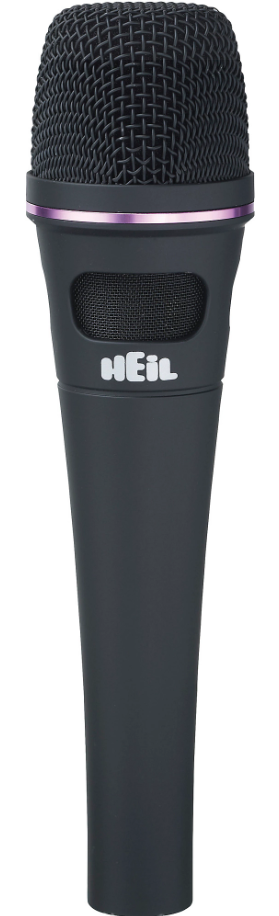
A dynamic built around a large 1.5-inch element that captures acoustic guitar with a fullness and richness that smaller-diaphragm dynamics can’t replicate. Heil Sound PR35 features a large diaphragm for enhanced bass sensitivity, a frequency response extending to 18kHz for preserved high-end detail, a humbucking coil that rejects electromagnetic interference, a neutral frequency response without hyped presence peaks, and an engineering heritage from Bob Heil’s decades designing sound systems for legendary artists.
Acoustic guitar through the PR35 has a weight and dimension that smaller dynamics don’t produce. The larger element captures more of the body resonance, the sustain of the bass strings, and the fullness that gives acoustic guitar its emotional impact in a recording. If your goal is to capture acoustic guitar that sounds rich and complete rather than thin and trebly, the PR35’s large element is a meaningful advantage.
- Body Resonance
A 1.5-inch dynamic element captures the chest and body resonance of an acoustic guitar with a completeness that standard-sized dynamic diaphragms miss. Acoustic guitar produces significant low-frequency energy from the body and soundhole that contributes to the instrument’s warmth and presence in a recording. Smaller elements don’t capture this energy as fully, resulting in guitar recordings that sound thinner than the actual instrument. The PR35’s large diaphragm preserves that body, giving you recordings that feel complete.
- 18kHz Reach
With a frequency response extending to 18kHz, the PR35 retains high-frequency string detail and air that most dynamics roll off well before that point. Acoustic guitar’s character depends partly on the shimmer of string harmonics above 10kHz, and a dynamic that rolls off at 12-14kHz loses that quality. The PR35’s extended response means your guitar recordings retain brightness and air that you’d normally only get from a condenser.
- Humbucking Rejection
A humbucking coil cancels electromagnetic interference from nearby electronics, keeping buzz and hum out of your recordings. If your recording space has your acoustic guitar positioned near a computer, interface, or studio monitor, the humbucking design prevents that equipment’s electromagnetic emissions from contaminating your audio. Clean recordings start with a clean signal chain, and the humbucking coil addresses a noise source that most dynamics ignore.
- Neutral Character
Rather than applying an aggressive vocal presence peak, the PR35 offers a more neutral frequency response that reproduces acoustic guitar honestly. Many dynamics are voiced for vocals with emphasis in the 2-5kHz range that can sound harsh on acoustic guitar’s overtone-rich signal. The PR35’s restraint in that region means acoustic guitar recordings sound natural and unforced, capturing the instrument’s own character rather than the microphone’s opinion of it.
- Bob Heil Legacy
Heil Sound’s engineering comes from Bob Heil’s experience designing live sound for The Who, Grateful Dead, and Peter Frampton, where capturing acoustic instruments accurately in loud environments was part of the job. That legacy informs the PR35’s approach of accurate reproduction over dramatic coloration, which translates directly to acoustic guitar recording where you want the mic to disappear and let the instrument speak.
7. Sennheiser MD 445
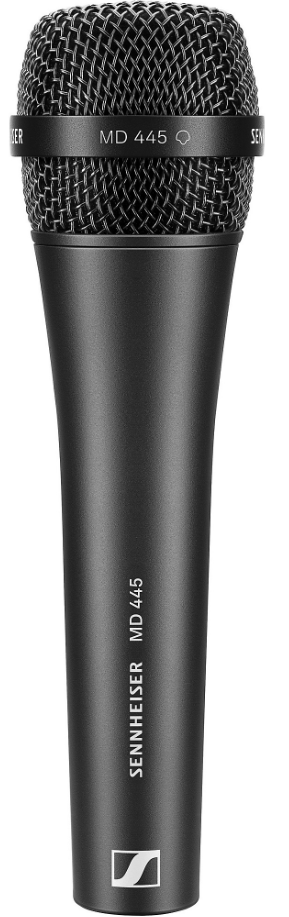
Sennheiser’s premium supercardioid dynamic with an exceptionally tight pickup pattern and a smooth, natural vocal response that translates beautifully to acoustic guitar. Sennheiser MD 445 features a tight supercardioid pattern, precision German engineering, and a vocal character that’s warm, detailed, and notably free of the harshness that some supercardioid designs introduce.
On acoustic guitar, the MD 445 produces a smooth, balanced tone with enough presence to cut through a mix but without the aggressive peaks that make some dynamics sound brittle on the instrument. If you want your acoustic guitar to sound warm and musical rather than hyped and edgy, the MD 445’s German-engineered smoothness is worth experiencing.
- German Engineering
Sennheiser’s precision manufacturing and decades of microphone development produce a capsule with exceptionally consistent behavior across the frequency range. For acoustic guitar, where the instrument produces energy from below 100Hz to above 10kHz simultaneously, a capsule that handles every frequency range with equal precision gives you a more faithful capture of the complete instrument.
- Smooth Character
A notably smooth frequency response without aggressive presence peaks produces acoustic guitar recordings that sound musical and natural. Many dynamics push the upper midrange hard for vocal projection, which works on voices but can sound brittle on acoustic guitar’s complex harmonic structure. The MD 445’s smoother approach preserves the instrument’s natural tonal balance.
- Pattern Isolation
A tight supercardioid pickup captures the guitar while rejecting room reflections and off-axis noise with Sennheiser’s characteristically precise pattern behavior. For acoustic guitar in untreated rooms, the isolation keeps your recording focused on the instrument without the room coloration that wider patterns would capture.
8. Audix OM7
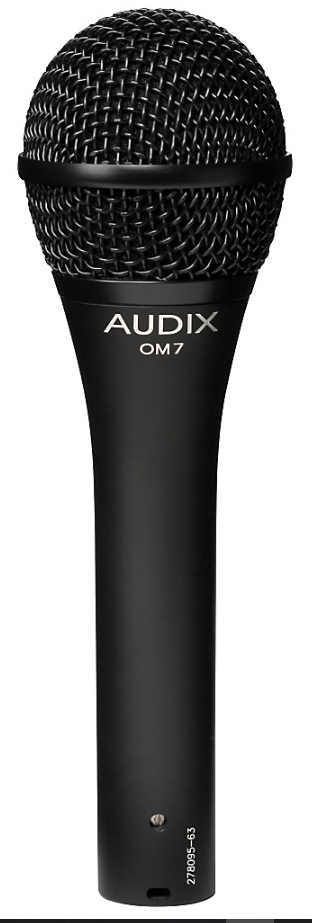
Extreme isolation from a hypercardioid dynamic designed for the most demanding rejection scenarios. Audix OM7 delivers the tightest pickup pattern of any mic on this list through its hypercardioid design, a VLM (Very Low Mass) diaphragm for fast transient response, controlled proximity effect, and 144 dB SPL handling that ensures clean capture regardless of how aggressively you play.
I should be upfront: the OM7’s intentionally low sensitivity means it needs a preamp with plenty of clean gain. Pairing it with a budget interface that runs out of gain headroom at 50dB will produce recordings with audible preamp noise. But with a quality preamp, the OM7’s isolation on acoustic guitar is remarkable, essentially eliminating room sound from your recording.
- Hypercardioid Focus
A hypercardioid polar pattern provides the most aggressive off-axis rejection of any mic in this roundup, capturing your acoustic guitar while eliminating virtually everything else in the room. For recording environments where noise isolation is the primary concern, no other dynamic format gives you this level of focus. Point it at your guitar, and it records your guitar. Everything behind and beside the mic effectively disappears.
- VLM Transients
Audix’s Very Low Mass diaphragm responds faster to transient events than heavier standard diaphragms, capturing pick attacks, string plucks, and percussive slaps with sharper definition. For acoustic guitar styles that rely on rhythmic precision and articulate attack, the VLM diaphragm preserves those qualities in the recording. Fingerstyle technique, percussive playing, and aggressive strumming all benefit from the faster transient capture.
- Gain Requirements
Being transparent: the OM7’s low sensitivity demands a preamp with at least 60dB of clean gain for acoustic guitar recording at typical distances. Interfaces like the Audient iD series, RME Babyface, or any unit with quality preamps will drive the OM7 properly. Budget interfaces with noisy preamps will add hiss that defeats the purpose of the mic’s clean rejection. Know your preamp before committing to the OM7.
- Proximity Control
Even at close distances, the OM7 maintains a controlled bass response that doesn’t balloon into muddy low-end buildup. For acoustic guitar recording where close positioning helps reject room noise, you can get the mic close to the instrument without the proximity bass overwhelming the tone. Your guitar recordings stay balanced regardless of distance.
9. Sontronics Corona
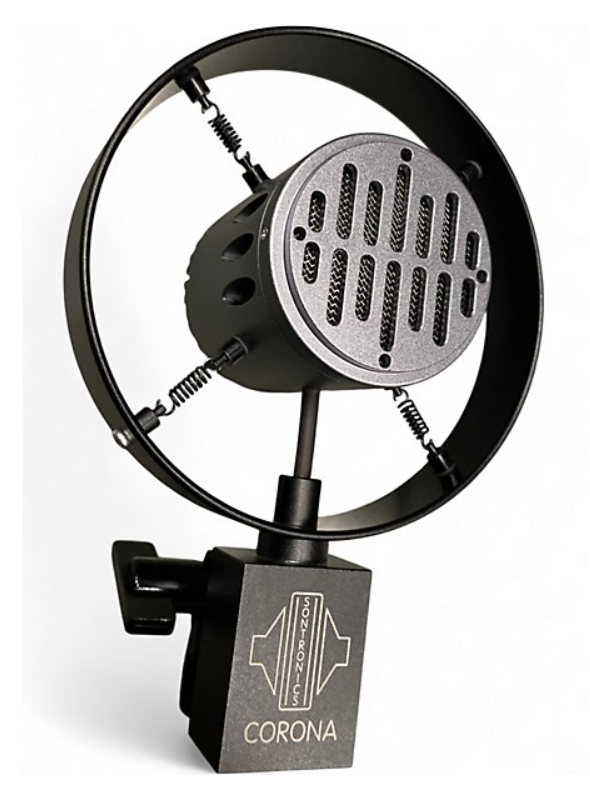
A British-designed dynamic with Art Deco styling and a tone that works surprisingly well on acoustic guitar, from the UK company known for their distinctive microphone designs. Sontronics Corona features a supercardioid capsule derived from their Solo model, a retro circular design that’s visually unlike any other mic on this list, a tailored frequency response with built-in presence that Sontronics claims requires no EQ, a superior output level for a dynamic, and the company’s lifetime warranty.
On acoustic guitar, reviewers note the Corona delivers a rich midrange with a forward presence that helps the instrument sit confidently in a mix. Some find it works best at close distances where you capture more direct sound, as pulling it too far back can thin out the tone. For singer-songwriter setups where visual aesthetics of your gear matter for livestreams or video content, the Corona’s distinctive design adds production value that standard black cylinders don’t provide.
- UK Capsule
Sontronics’ capsule is designed, developed, and manufactured in the UK, based on the technology from their Solo handheld dynamic. For acoustic guitar, the capsule produces a warm, solid low end paired with a presence-forward midrange that gives the instrument body and clarity simultaneously. Reviews consistently note a rich tone that captures acoustic instruments with a musical quality that sits well in arrangements without heavy post-processing.
- Hot Output
A superior output level for a dynamic microphone means you need less preamp gain, which translates to a lower noise floor in your recordings. For acoustic guitar where subtle playing dynamics and quiet passages are part of the performance, a hotter mic signal means those quiet moments are captured above the noise floor with more clarity. Less gain required also means less preamp coloration on your signal.
- Presence Tuning
A built-in presence emphasis that Sontronics specifically engineered to eliminate the need for EQ gives acoustic guitar recordings an immediate clarity and forward quality. For producers who want to record acoustic guitar and drop it into a mix with minimal processing, the presence tuning does the work that you’d normally apply with a high-shelf or presence EQ. Sontronics’ claim of “no EQ required” is bold, but for many acoustic guitar applications, the built-in voicing does reduce the processing needed to make the instrument sit correctly.
- Art Deco Design
A distinctive retro circular design with Art Deco styling makes the Corona visually unique in any recording setup. For producers who create video content, livestream their sessions, or simply care about the aesthetic of their studio, the Corona adds visual interest that conventional cylindrical dynamics don’t provide. On camera, it’s a conversation piece that viewers notice and ask about.
- Lifetime Warranty
Sontronics backs the Corona with a lifetime warranty, which communicates confidence in the build quality and provides long-term peace of mind. For a microphone you plan to use for years across acoustic guitar, vocals, and other sources, the warranty coverage means your investment is protected indefinitely.
10. Shure Beta 57A
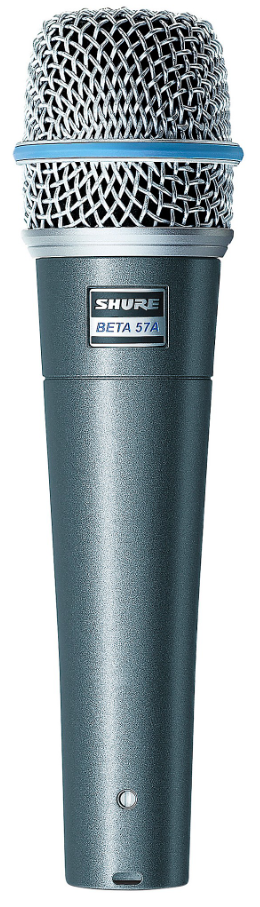
A studio workhorse that engineers have been reaching for on acoustic guitar, snare drums, and guitar amps for decades. Shure Beta 57A delivers a supercardioid pattern with tighter rejection than the SM57, a shaped frequency response with a broad presence peak that adds clarity to midrange-heavy sources, a neodymium magnet for higher output than standard dynamics, and the same legendary Shure durability that professionals depend on.
For acoustic guitar, the Beta 57A captures the instrument with a clarity and forward presence that many instrument-focused dynamics provide. It’s not as warm as some vocal dynamics used on guitar, but that directness and articulation is exactly what you want when the acoustic guitar needs to be clearly defined in a busy arrangement.
- Instrument Voicing
Unlike vocal dynamics that emphasize the narrow band where speech intelligibility lives, the Beta 57A’s presence emphasis spans a broader range that suits the wider frequency content of instruments. For acoustic guitar, this broader presence curve lifts the fundamental attack, body harmonics, and string shimmer together rather than boosting one narrow range at the expense of others. Your guitar recordings sound complete and balanced rather than artificially pushed in one frequency area.
- Supercardioid Rejection
A supercardioid pattern provides stronger side rejection than the standard SM57’s cardioid design, which is valuable for acoustic guitar recording in rooms where reflections would color the captured sound. For close-mic setups where you aim the Beta 57A at the 12th fret, the tighter pattern captures the guitar’s complex sound while rejecting more of the room’s contribution than a cardioid pattern would.
- Neodymium Output
A neodymium magnet produces higher output than standard ferrite magnets, requiring less preamp gain for a given signal level. Less gain means lower preamp noise, which matters for acoustic guitar recording where quiet passages and delicate fingerpicking need to be captured cleanly above the noise floor. For budget interfaces where preamp noise becomes audible at higher gain settings, the neodymium magnet’s hotter output helps keep your recordings clean.
- Proven Reliability
Decades of professional use on stages, in studios, and on recording sessions have established the Beta 57A as a reliably consistent performer that engineers trust without question. For acoustic guitar recording, knowing that your mic delivers predictable, consistent results every time you set it up means one less variable in your recording chain. When you position the Beta 57A at the 12th fret, you know what you’re going to get, and that predictability has value.

Hello, I’m Viliam, I started this audio plugin focused blog to keep you updated on the latest trends, news and everything plugin related. I’ll put the most emphasis on the topics covering best VST, AU and AAX plugins. If you find some great plugin suggestions for us to include on our site, feel free to let me know, so I can take a look!