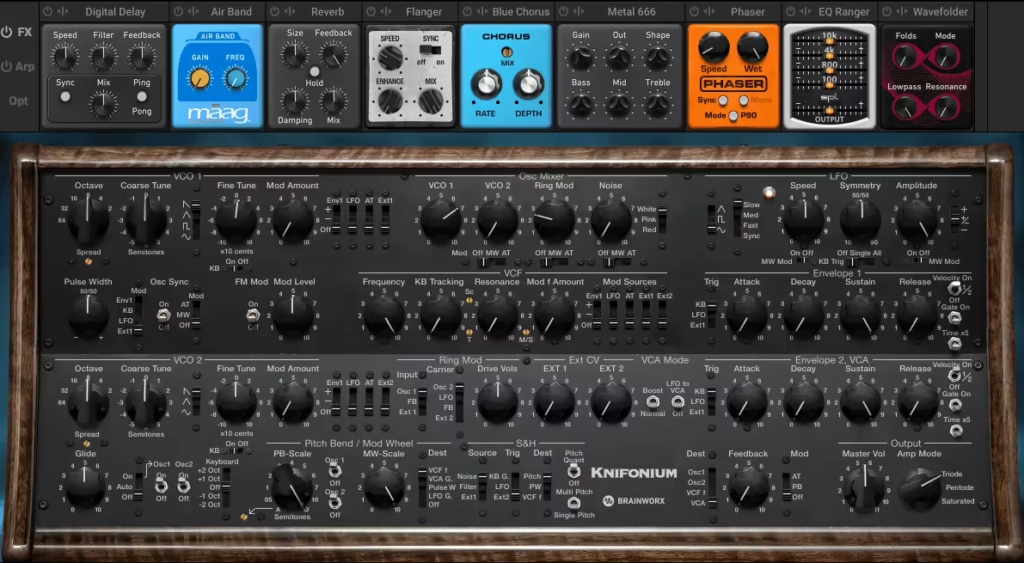
Knifonium synth you can buy at Plugin Alliance
Three brands define what “professional plugin” means for a huge portion of working engineers: Plugin Alliance, UAD, and Waves. They’ve each built catalogs large enough to cover an entire studio signal chain, they all have loyal followings that defend their choices with the kind of conviction usually reserved for tube versus solid-state arguments, and they’ve all spent years trying to figure out the best version of analog hardware emulation in software.
I want to be direct about something before diving in. These aren’t interchangeable options. They approach the job differently, they charge for it differently, and the right brand depends heavily on what you’re actually doing and how you work. I’ve spent serious time with all three and I’ll give you the honest picture of each one rather than hedging everything into meaninglessness.
Quick Comparison
| Feature | Plugin Alliance | UAD | Waves |
|---|---|---|---|
| Identity | Multi-brand aggregator, analog + modern tools | Premium vintage hardware emulation | Largest general-purpose plugin catalog |
| Catalog Size | 100+ plugins (multi-developer) | 200+ total; 60+ on Spark | 230+ plugins |
| Subscription Option | CORE and PRO subscription tiers | UAD Spark: $19.99/mo or $149.99/yr | Essential (~$14.99/mo) or Ultimate (~$24.99/mo) |
| Perpetual Licenses | Yes (primary model; deep flash sale pricing) | Yes (individual plugin purchases) | Subscription-only since 2023 |
| Hardware Required | No | No for Spark; Apollo for DSP + zero-latency | No |
| Key Analog Tech | TMT (Tolerance Modeling Technology, patented) | Circuit-level emulation, DSP + Neural Networks | NLS, Nx, analog modeling via licensing |
| Console Emulations | SSL 4000 E/G/J/9000, Neve VXS, AMEK 9098, Focusrite | SSL 4000 E/G, Neve 1073, Helios, API | SSL E-Channel, Neve 1073/1084, API 2500 |
| M/S Processing | Extensive (built into most Brainworx plugins) | Select plugins | Select plugins (Center, S1) |
| CPU Load | Moderate (native only) | Low (Spark/native); offloaded with Apollo DSP | Low (lightest of the three) |
| Free Trial | PA Free collection (20 plugins permanently free) | 14-day Spark trial; try-before-buy on DSP hardware | 7-day free trial; demo mode available |
| Flash Sales | Frequent (plugins from $9.99 to $29.99) | Regular sales; DSP plugins discounted significantly | Subscription model; occasional promo pricing |
| Best For | Console-style mixing, mastering, M/S work | Vintage hardware authenticity, professional studios | Speed, breadth, vocal production, beginners to pros |
Get the Free Plugin Starter Kit
The genuinely useful free DAWs and plugins worth installing. No filler. Straight to your inbox.
About Plugin Alliance
Plugin Alliance is a plugin aggregator and marketplace based in Santa Cruz, California that represents over 40 developers under one ecosystem, one installer, and one subscription umbrella. The core of its catalog is built around Brainworx, the German developer founded by engineer Dirk Ulrich that serves as Plugin Alliance’s primary development arm and has contributed the majority of the analog modeling work the brand is known for.
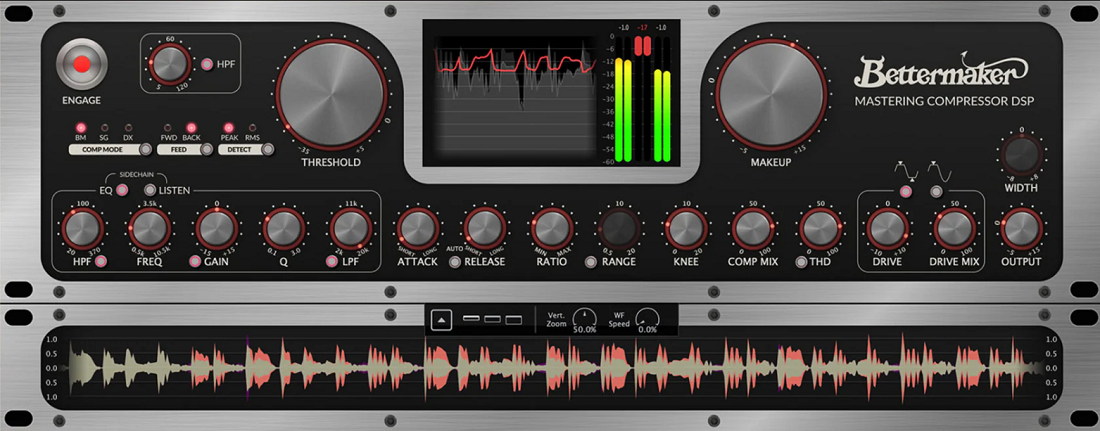
What makes Plugin Alliance distinct is the breadth of developer partnerships: alongside Brainworx’s own tools, the catalog includes plugins from SPL, elysia, Shadow Hills, AMEK, Black Box Analog Design, Lindell Audio, Bettermaker, Maag Audio, Three-Body Technology, Kiive Audio, and many others.
This means you’re not getting one developer’s take on analog hardware, you’re getting a curated marketplace of specialized developers, each with their own take on specific hardware, all available through a single login and installer.
The brand’s pricing model has historically been perpetual licenses with an aggressive flash sale culture, where plugins that list at $149 to $249 routinely appear in sales at $9.99 to $29.99 around key dates. In 2024 and 2025, Plugin Alliance expanded into subscription access through CORE and PRO tiers that make the full catalog accessible for a monthly fee, giving artists and engineers the option to subscribe or buy individual plugins permanently during sales.
About UAD (Universal Audio)
Universal Audio is a company with roots going back to 1958 in hardware studio equipment, and the software story begins in 1999 with the original UAD-1 DSP card. For most of its history, UAD plugins required dedicated SHARC DSP hardware inside Apollo audio interfaces or UAD-2 accelerator cards, creating a premium-access model that produced some of the most respected analog emulations in the plugin world but priced many engineers out of the ecosystem entirely.
In 2022, UAD launched Spark, a subscription service that makes 60+ plugins available natively on Mac and Windows with no hardware requirement, at $19.99 per month or $149.99 per year. This opened the UAD sound to producers who couldn’t or didn’t want to invest in Apollo hardware. The full UAD catalog, which spans 200+ plugins, remains hardware-dependent for DSP processing and zero-latency tracking, but the Spark selection covers the most essential tools in the collection.
About Waves
Waves Audio is the oldest of the three brands, having sold its first plugin in 1993. Over three decades, Waves built a catalog that now spans 230+ plugins covering everything from vintage compressor and EQ emulations to AI-powered noise reduction, vocal harmony generation, spatial processing, creative effects, and production tools for virtually every genre and application.
In 2023, Waves moved entirely to a subscription model called Creative Access, eliminating perpetual licensing for new purchases. The catalog is now available in two subscription tiers: Essential at approximately $14.99 per month covering 110+ plugins, and Ultimate at approximately $24.99 per month covering the full 230+ plugin catalog. Users who owned perpetual licenses before the switch retained their existing versions, but all new Waves users must subscribe.
The brand’s identity is shaped by its breadth, accessibility, and workflow efficiency. Waves plugins are known for fast load times, low CPU impact, and interfaces that work quickly across a wide range of session types. It’s the most general-purpose of the three brands, covering territory from mixing to mastering to broadcast to live sound.
Plugin Offerings
- Plugin Alliance
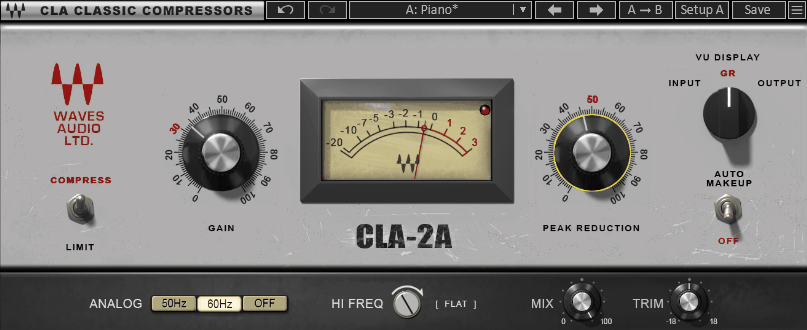
Plugin Alliance’s strength in effects is centered on analog-modeled dynamics and EQ. The bx_console series covers SSL 4000 E, SSL 4000 G, SSL 9000 J, Neve VXS, AMEK 9099, AMEK 200, and Focusrite Studio Console emulations, each with 72 TMT channels that provide subtle channel-to-channel variation.
The AMEK Analog Mastering EQ 200 is a widely praised seven-band parametric with the sound of rare 1970s and 1980s hardware. The elysia alpha compressor is an emulation of the German mastering compressor hardware known for its pristine transparency. The Shadow Hills Mastering Compressor brings the two-stage optical/transformer topology to software. The bx_masterdesk is a comprehensive mastering chain in a single plugin. The bx_refinement dynamic EQ and de-harsher has become a workhorse on high-frequency management.
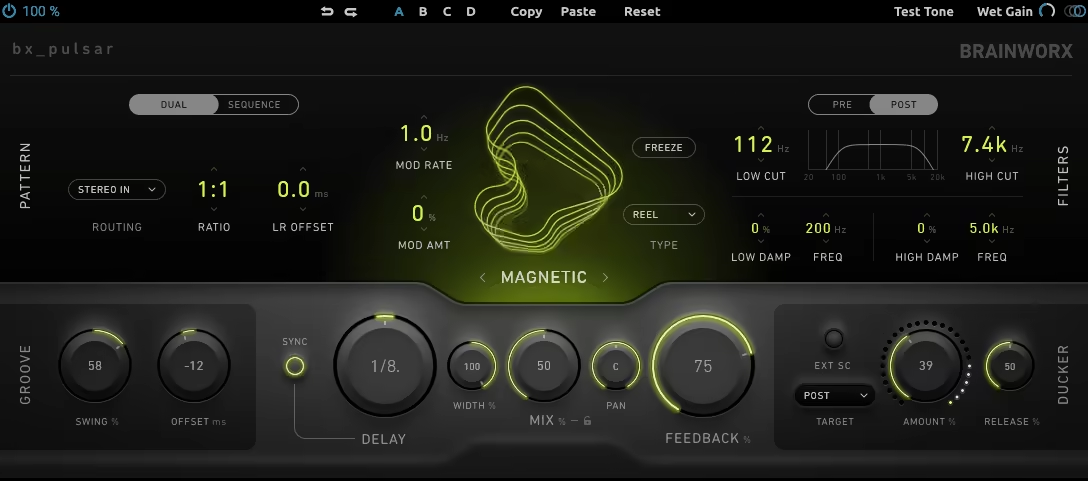
Beyond mastering and mixing tools, PA also covers creative effects through Brainworx’s bx_aura reverb, bx_pulsar delay (2025), guitar and bass amp emulations from ENGL, Diezel, and Ampeg, vocal tuning via Melodyne integration, and the bx_oberhausen synthesizer, which uses TMT to apply the same analog variation technology to a virtual synth.
- UAD
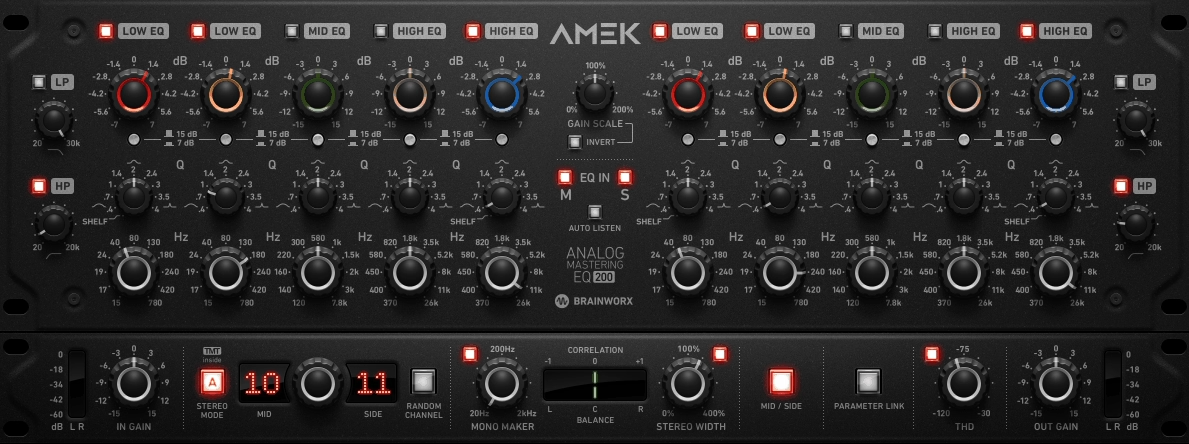
UAD’s core catalog is built on the most meticulous hardware emulations in the plugin world. The 1176 Classic Limiter Collection covers three revisions of the hardware: Rev A (Blue Stripe), Rev E (Blackface), and AE (Anniversary Edition). The Teletronix LA-2A Leveler Collection covers the original Silver panel and later Grey editions. The Pultec Passive EQ Collection covers the EQP-1A, MEQ-5, and HLF-3C. The Neve 1073 Preamp and EQ remains a reference standard for transformer-based harmonic character.
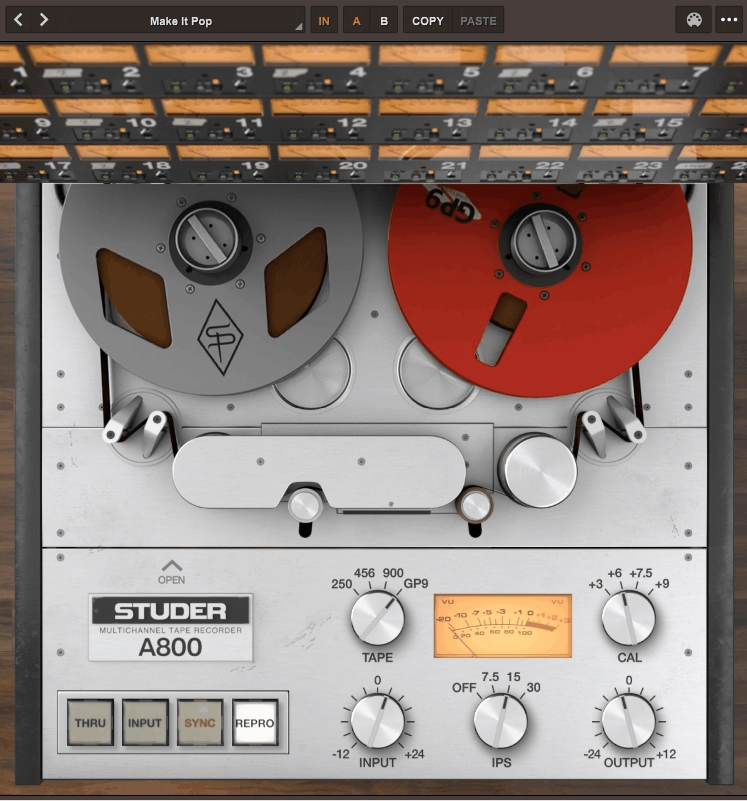
The SSL G Bus Compressor is one of the definitive software implementations of the console compressor. The Studer A800 tape machine is the most detailed tape emulation in the UAD catalog. The Lexicon 224 and 480L reverbs, the Capitol Chambers room simulation, and the Manley Variable MU and Empirical Labs Distressor round out a compressor and reverb library that covers virtually every key piece of classic studio hardware.
Instruments in the Spark subscription include the Opal Morphing Synthesizer (UAD’s original wavetable/analog hybrid), Waterfall B3 organ, Electra 88 electric piano, Ravel Grand Piano, and PolyMAX Synth.
- Waves
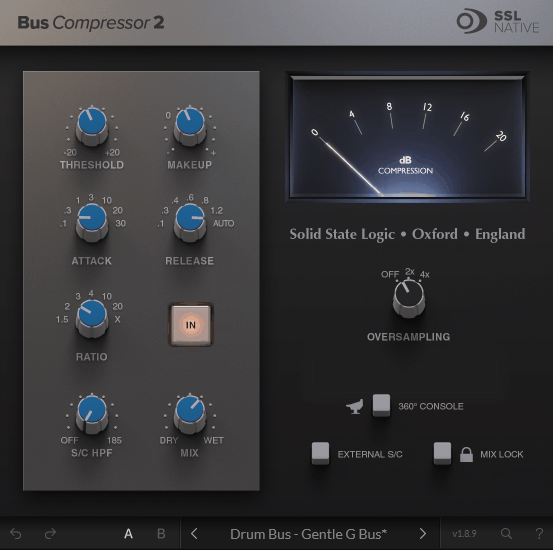
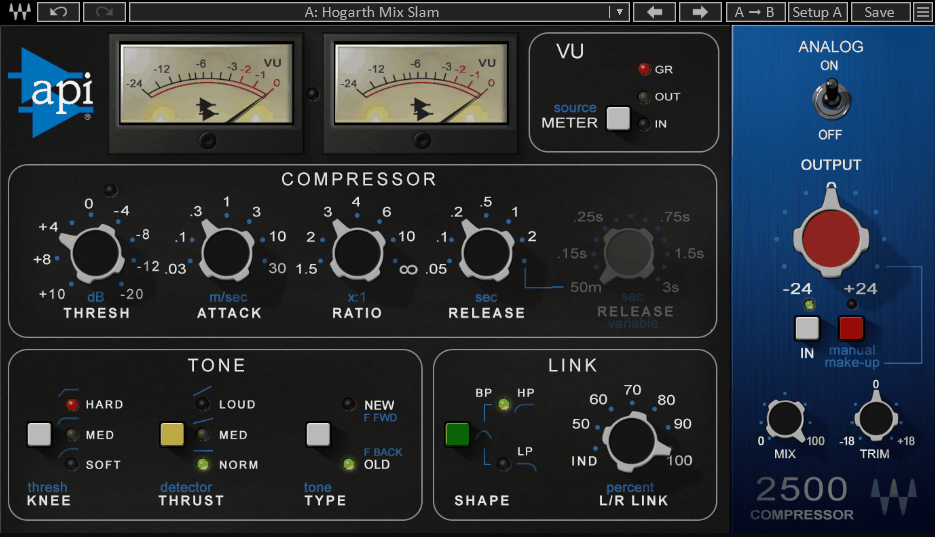
Waves covers more functional territory than either of the other two. On the analog emulation side, the SSL E-Channel and G-Master Bus Compressor, CLA-76 and CLA-2A compressors, Neve 1073 and Neve 1084 EQs, and API 2500 bus compressor are the most widely used. The Abbey Road collection covers the TG12345 Mk IV console EQ, the RS124 tube compressor, and a collection of plates, chambers, and EMT reverbs from Abbey Road Studios.
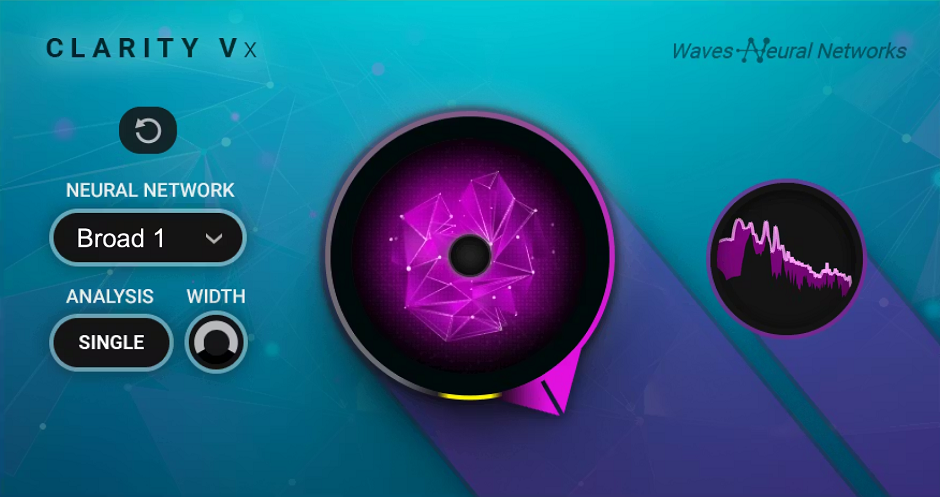
Beyond analog emulation, Waves has a significant toolkit in areas the other two brands don’t cover as deeply: Vocal Rider for automatic vocal level riding, Tune Real-Time for pitch correction, CLA Vocals and CLA Drums for genre-specific processing chains, H-Reverb for convolution-based rooms, IR-1 impulse reverb, PS22 Spread for stereo widening, Kramer PIE compressor, and a large collection of noise reduction and restoration tools including WNS Noise Suppressor, Z-Noise, and Clarity Vx AI-powered vocal isolation.
Latest Offerings
- Plugin Alliance (2024 to 2025)
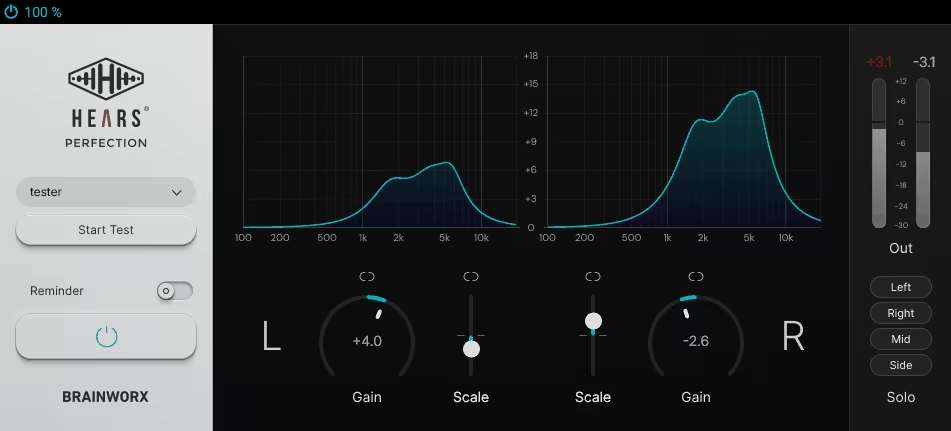
Plugin Alliance has been consistently active with new releases. In 2024 and 2025: bx_pulsar (September 2025), a creative delay with modulation, ducking, and M/S processing from Brainworx; HEARS Perfection (September 2025), a personalized hearing correction tool; HUM Audio Devices LAAL Limiter (August 2025); bx_mastering Studio standalone free mastering application (May 2025); High Flyer 1970s phaser emulation from Cut Classic (April 2025); bx_refinement V3 dynamic EQ update (April 2025); SPL BiG Stereo Image Enhancer (February 2025); Elysia Alpha Compressor V2 (July 2025); bx_boom V3 kick drum tool (November 2024); bx_aura creative reverb (October 2024); and bx_glue bus compressor (August 2024).
- UAD (2024 to 2025)
UAD has continued expanding the Spark catalog and the DSP library. The Shadow Hills Mastering Compressor Class A (September 2025) is a limited-run hardware emulation with enhanced Class A circuitry compared to the original model, plus Mid/Side processing. The Maag EQ4 MS update (September 2025) added TMT technology by Brainworx, Mid/Side processing, and expanded frequency choices alongside the classic Air Band. UAD confirmed a consistent cadence of new Spark additions through 2025.

- Waves (2024 to 2026)
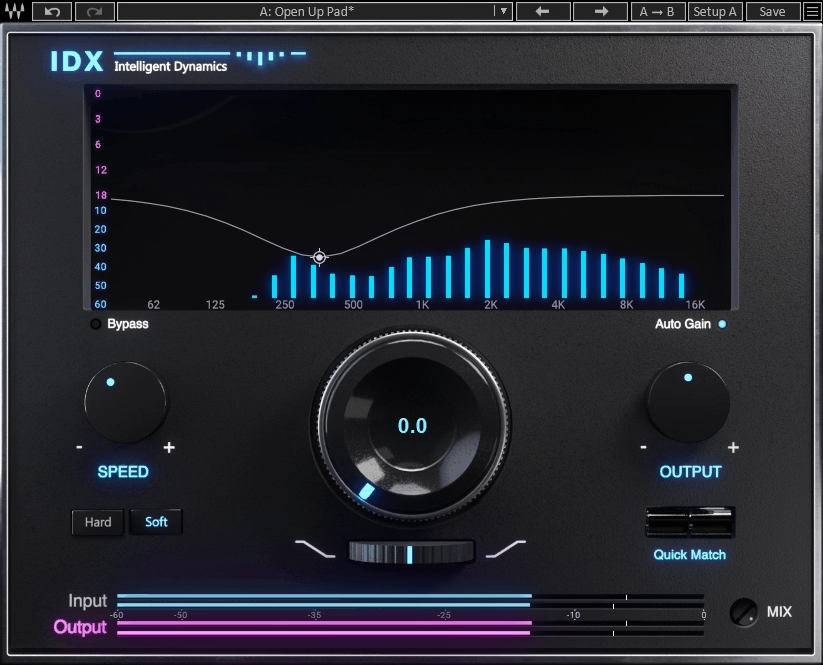
Waves has been releasing new plugins regularly under the Creative Access subscription. Recent additions include IDX Intelligent Dynamics (November 2024), an AI-powered single-knob mix vitalizer; ILLUGEN 2.0 (April 2026); StudioVerse Instruments (May 2024), covering synth leads, lo-fi keys, and analog basses with MIDI FX integration; Infected Mushroom Pusher for multiband enhancement and limiting; Space Rider reverb; and Silk Vocal intelligent EQ and dynamics processor for voice.
Bundle Options and Pricing
- Plugin Alliance Pricing
Plugin Alliance’s perpetual model with flash sales creates one of the most unusual value dynamics in the plugin world. List prices range from $129 to $249 for individual plugins, but routine flash sales bring those same plugins to $9.99 to $29.99. The All Bundle 2024 offered 187 plugins at approximately $4.99 per plugin during its intro period. Plugin Alliance flash sales are genuinely frequent: most major holidays and industry events come with deep discounts across the catalog.
The subscription tiers make the full catalog accessible on a monthly basis through the CORE and PRO plans, which cover different depths of the catalog. The subscription is worth evaluating against buying individual plugins during sales depending on how many tools you actually reach for regularly.
- UAD Pricing
UAD Spark is $19.99 per month or $149.99 per year for native access to 60+ plugins without hardware. Individual perpetual DSP licenses range from around $29 on sale to $200+ at full price, and UAD runs significant sales events including Black Friday and regular catalog promotions. A promotion running at the time of writing offers an annual Spark subscription for $79, which makes the per-plugin cost genuinely competitive.
For hardware owners, perpetual UAD-2 licenses automatically include native UADx versions for all Spark-compatible plugins at no extra cost.
- Waves Pricing
Waves moved to subscription-only in 2023. Essential at approximately $14.99 per month covers 110+ plugins. Ultimate at approximately $24.99 per month covers 230+ plugins. Annual billing provides meaningful savings over monthly. All updates and new plugins are included automatically as they’re added to the subscription tier.
Waves occasionally offers promotional pricing on the subscription entry for new users, and existing perpetual license holders kept their older plugin versions when the subscription model launched. However, new users have no path to outright ownership of Waves plugins.
Sound Character
The most honest and practically useful framing I can give is that each brand has a distinct character that serves different purposes in the same session rather than competing for the same slot.
- Waves
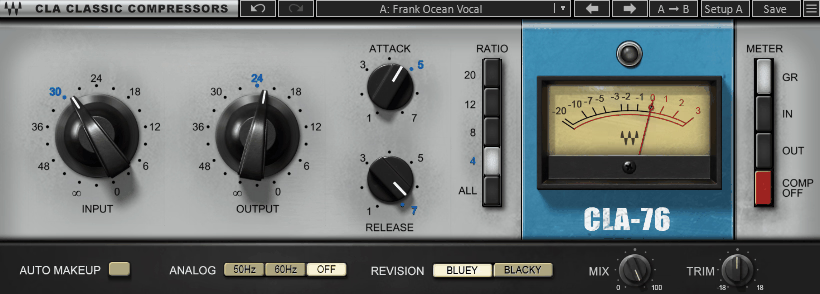
Waves has a clear, workmanlike character that gets out of the way and lets the source material breathe. The processing is generally fast, functional, and musical without being dramatic. The CLA-76 will compress your snare and sound good.
The SSL E-Channel will add subtle console character without transforming the signal. The H-Reverb will build a room around your instrument without coloring it heavily. This neutrality is a genuine strength for engineers who want tools that work quickly across a wide range of material without requiring careful calibration. I think Waves gets underestimated in this respect. Engineers who have moved to other brands sometimes forget how clean and reliable the Waves workflow actually is.
- UAD
UAD has what engineers describe as weight. When you dial in the LA-2A on a vocal, it doesn’t just compress, it adds a quality to the sound that makes the signal feel more substantial. The Pultec EQ adds air at 10kHz in a way that doesn’t quite sound like boost in any conventional sense, it sounds like the track opened up.
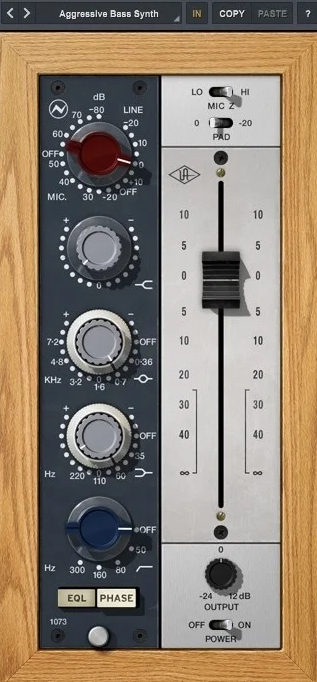
The Neve 1073 adds harmonic density through its transformer simulation that makes individual elements feel more present in a mix. This character is what UAD’s reputation is built on, and it’s real. The emulations have a quality that makes mix decisions feel more intuitive because the processing responds musically rather than surgically.
- Plugin Alliance
Plugin Alliance sits between color and precision. The TMT console emulations provide harmonic variation and width that’s genuine and functional in the context of a full mix, but the overall approach is more modern than UAD’s vintage weight.
The AMEK EQ 200 is smooth and musical in a way that’s different from the Neve character. The elysia alpha compressor is transparent in ways that traditional vintage compressors aren’t. I found that PA plugins maintain transient definition even under heavy processing, which is a genuine practical advantage when pushing a mix toward competitive loudness without collapsing the dynamic picture.
Sound Design
- Plugin Alliance for Sound Design
Plugin Alliance offers more creative and experimental tools than its reputation for mixing might suggest. The bx_aura reverb has an unusual spatial character suited for sound design applications beyond standard room emulation. The bx_oberhausen synthesizer applies TMT technology to a virtual instrument rather than a hardware emulation, creating subtle analog variation across instances.
The bx_pulsar delay has extensive modulation, ducking, and distortion capabilities that make it a creative tool as much as a utility effect. Several guitar and bass amp emulations from ENGL, Diezel, and Ampeg cover guitar production comprehensively.
- UAD for Sound Design
UAD’s sound design territory is mostly defined by its effects and reverb catalog. The Opal Morphing Synthesizer in the Spark catalog is UAD’s first major instrument designed as an original creative tool rather than a hardware emulation.

- Waves for Sound Design
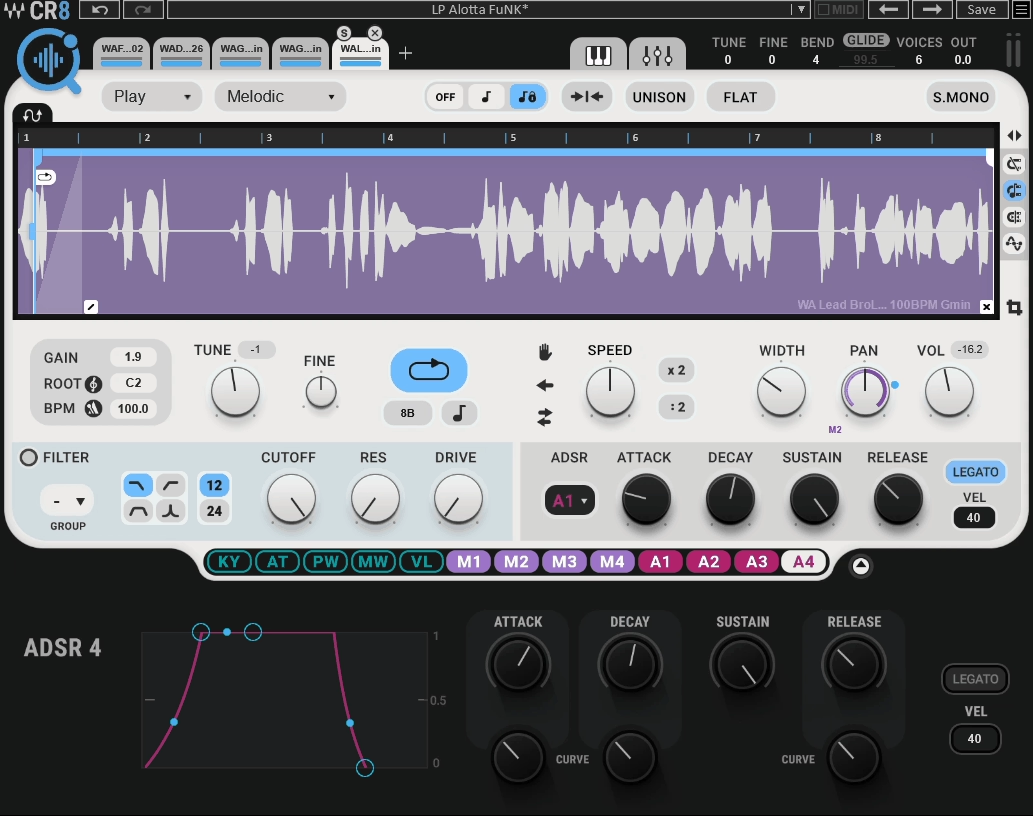
Waves covers creative effects more broadly than either competitor. The CR8 Creative Sampler offers 2500 royalty-free samples with a full synthesis engine. Infected Mushroom Pusher is a creative multiband enhancer and clipper designed for electronic music.
The Harmony vocal harmony generator, Tune Real-Time pitch correction, and Vocal Rider automation cover vocal production in detail. The Space Rider reverb has algorithm options ranging from subtle room to deeply spatial effects.
Analog Modeling Depth
- UAD’s Approach
UAD’s analog modeling has been the reference standard in the plugin world for over two decades. The goal with every emulation is circuit-level accuracy: modeling the specific transformer characteristics, tube saturation curves, tape oxide behavior, and even the subtle asymmetries and imperfections that give vintage hardware its character.
Engineers who have worked with the original hardware consistently describe UAD’s versions as the most convincing software implementations they’ve encountered.
For me, the most impressive aspect of UAD’s modeling isn’t any single plugin but the consistency of the philosophy across the entire catalog. Every plugin feels like it was made by people who care deeply about making the software behave like the hardware, not just sound similar to it.
- Plugin Alliance’s TMT
Brainworx’s Tolerance Modeling Technology (TMT), patented under US Patent No. 10,725,727, takes a different but complementary approach to analog realism. Rather than modeling the behavior of a single channel, TMT captures the natural component-to-component variations that exist across all 72 channels of a real analog console. Each instance of a TMT plugin has slightly different tonal characteristics, just as each channel strip on a real SSL or Neve console sounds slightly different from its neighbors.
This matters in practice because when you put the same console plugin on 30 different tracks in a session, TMT ensures they don’t all impart identical coloration. The cumulative effect is that width, depth, and the sense of acoustic space that real consoles provide emerge naturally from the processing, rather than requiring deliberate stereo widening after the fact.
- Waves’ Modeling Approach
Waves’ analog modeling is licensed and developed in partnership with hardware manufacturers including SSL, Neve, API, and Abbey Road Studios. The quality is genuine and functional, but the approach doesn’t quite reach the obsessive depth of UAD’s circuit-level work or the novel angle of TMT. The SSL E-Channel and G-Master Bus Compressor are useful, widely used, and sound good, but A/B comparisons against UAD’s versions often reveal that UAD has more bandwidth, cleaner highs, and more dynamic headroom before saturation.
That said, Waves has been developing plugins since 1993 and has refined the practical usability of its tools over decades in ways that newer brands haven’t matched. The workflow benefits of Waves often outweigh the marginal sonic differences in real-world sessions.

DSP Hardware Requirements (UAD)
This topic needs to be clear because it affects purchasing decisions significantly. UAD has two modes: native and DSP-accelerated.
Native UAD (Spark and individual native licenses) runs on your computer’s CPU exactly like any other plugin from Waves or Plugin Alliance. No hardware is required. A capable modern CPU handles a reasonable number of instances comfortably, and UAD’s native plugin optimization has improved significantly since Spark launched.
DSP-accelerated UAD requires an Apollo audio interface or UAD-2 hardware accelerator. This path offers two advantages that native processing cannot replicate: zero-latency real-time processing through the interface when tracking live instruments, and Unison technology that physically alters the input impedance of Apollo’s preamp circuit when a UAD preamp plugin is loaded, affecting how microphones and instruments interact with the hardware in a way software emulation alone cannot achieve.
For producers working entirely in-the-box without live tracking, the native Spark path provides the full UAD sonic experience without hardware investment. For engineers tracking live vocals, guitars, or acoustic instruments and wanting to hear processing in real time without latency, Apollo hardware remains genuinely irreplaceable.
Subscription vs Perpetual Licensing
- Plugin Alliance: Perpetual-Primary with Subscription Option
Plugin Alliance has historically been perpetual-license focused, and flash sales make that path remarkably affordable. For engineers who dislike ongoing monthly commitments, PA’s model of buying specific plugins during sales and owning them permanently is one of the most financially sensible approaches in the plugin market. A well-timed purchase of five or six key plugins during a flash sale can cost less than two months of a competing subscription.
The subscription option gives broader access for those who want to explore the catalog before committing to specific purchases, and it’s worth considering if you’re still building your primary toolkit.

- UAD: Both Paths Available
UAD now offers genuine choice. Spark subscription at $149.99 per year is a reasonable way to access the most important UAD plugins if you’re comfortable with subscription costs. Individual perpetual licenses are available for engineers who prefer ownership, and the try-before-you-buy system on DSP hardware lets you audition every plugin in the full catalog before spending anything.
I suggest Spark as the entry point for any engineer new to UAD. If you use the tools daily and find specific plugins you reach for on every session, buying those as perpetual licenses is a smart long-term investment.
- Waves: Subscription Only
Waves went subscription-only in 2023 and has not reversed course. This is a real constraint for engineers who prefer ownership. The Ultimate subscription at approximately $24.99 per month gives you 230+ plugins and all updates, which is genuinely broad access at a price that compares favorably to buying even a handful of perpetual licenses from other premium brands. But you own nothing, and if you stop paying, your access to every Waves plugin ends.
For engineers who update frequently, work across multiple machines, and value always having the current version of every plugin, the subscription model works well. For engineers who prefer to work with a stable toolkit of owned tools they’ve learned deeply, it’s a harder sell.
Sales, Deals and Flash Pricing
- Plugin Alliance Flash Sales
Plugin Alliance runs some of the most aggressive sales in the plugin industry. Individual plugins with standard prices of $149 to $249 routinely appear in flash sales at $9.99 to $19.99 around major holidays, Black Friday, Easter, and other promotional events.
The four-plugins-for-$69.99 format appears regularly, making it practical to build a comprehensive PA collection for well under $200 with patience and timing. This flash sale culture is a genuine part of PA’s ecosystem, and most experienced users recommend buying almost nothing at full price.
- UAD Sales
UAD runs significant promotions including Black Friday sales and regular promotions on individual DSP plugins. The Spark subscription has appeared at promotional prices as low as $79 for a full year during certain periods. For DSP hardware owners, individual plugin prices at sale time often drop 50% to 70% off full price, making strategic buying during sales the recommended approach for building a UAD catalog.
- Waves Pricing Evolution
The move to subscription-only means there are no flash sale prices on individual Waves plugins anymore since individual plugins are no longer sold as perpetual licenses. The subscription promotional pricing for new subscribers and occasional discounts on annual plans are the primary deals available. For engineers who bought heavily into Waves before 2023 at sale prices during their perpetual era, those licenses continue to work on existing systems.
Genre Fit
- Plugin Alliance
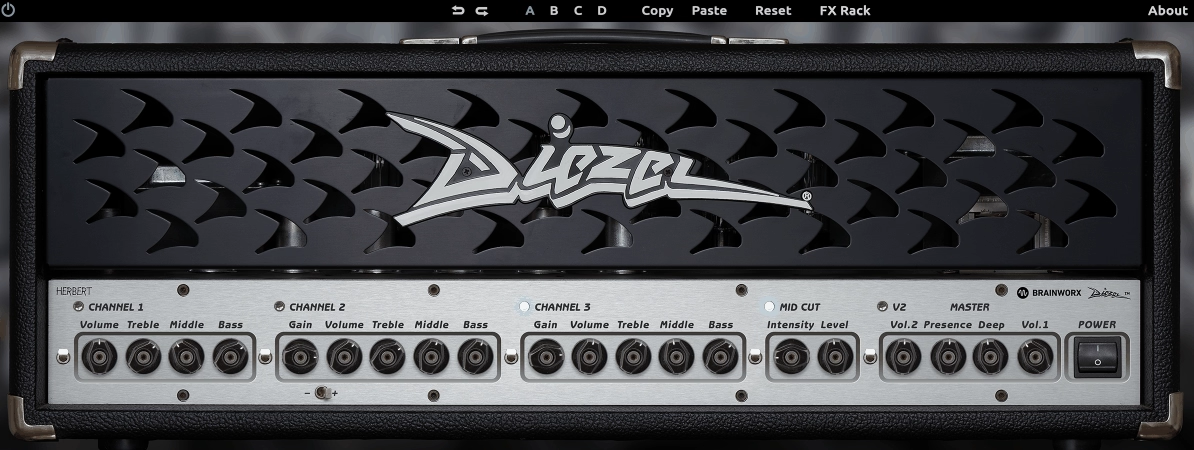
Plugin Alliance’s console emulation strength makes it particularly effective for rock, pop, hip-hop, R&B, and any genre where a traditional mixing console workflow is central. The TMT-based channel strips sound most impressive when used across a full multitrack session where dozens of instances create cumulative analog depth. The mastering tools, particularly the elysia alpha and bx_masterdesk, suit genres that benefit from transparent precision rather than heavy coloring. The guitar amp emulations from Diezel and ENGL cover rock and metal comprehensively.
- UAD
UAD’s genre strength is wherever vintage hardware character defines the sound. Rock, soul, R&B, country, blues, and acoustic music all benefit from the warmth of the 1176 and LA-2A compression, the musical depth of Neve and Pultec EQ, and the spatial character of real room and plate reverb emulations. The Capitol Chambers and Ocean Way studio emulations are practically unmatched for acoustic and orchestral material that needs to breathe in a real-sounding space.
- Waves
Waves covers the broadest genre territory of the three because the catalog is simply more diverse. Pop, electronic, hip-hop, trap, film, broadcast, and live sound all have dedicated tools built specifically for those applications. The vocal production suite covers everything from pitch correction through compression through effects.
The AI-powered tools like IDX Intelligent Dynamics and Clarity Vx suit genres where quick, polished results on contemporary material are the priority. For producers making modern mainstream music on tight timelines, Waves offers the most complete single-subscription production toolkit.
Learning Curve
- Plugin Alliance
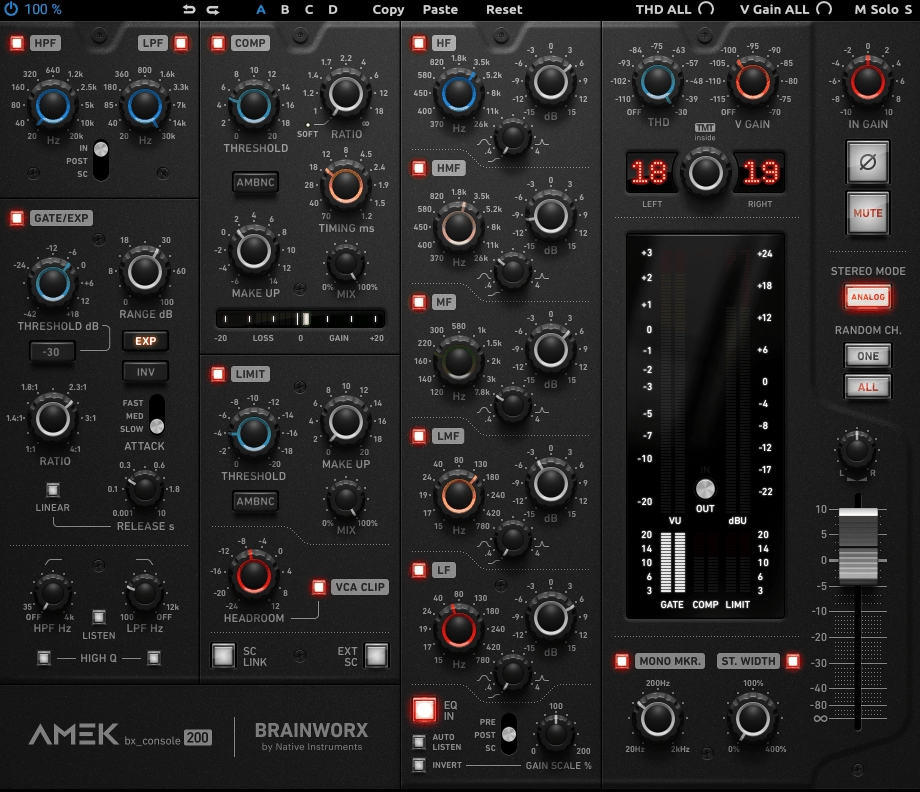
Most Plugin Alliance plugins have modern, clearly labeled interfaces with well-organized controls. The bx_console channel strips are intuitive once you understand the console signal flow metaphor, and the large GUIs make parameter reading easy on any screen.
M/S processing controls are present in virtually every Brainworx plugin but are clearly labeled and easy to understand in context. The learning curve for individual plugins is moderate; the steeper challenge is navigating a catalog of 100+ plugins across 40+ developers and identifying which specific tools are worth your attention.
- UAD
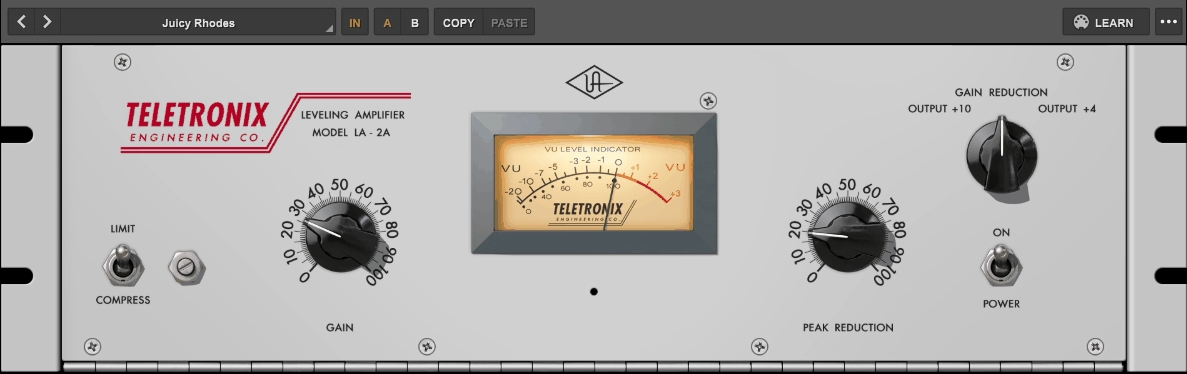
UAD’s skeuomorphic interfaces closely mirror the hardware they emulate, which means controls and knob layouts often follow hardware conventions rather than modern software norms. For engineers who have worked with the original LA-2A, Pultec, or 1176 hardware, this is immediately familiar. For producers coming from a software-only background, the first hour with UAD requires some orientation. I noticed that learning UAD plugins this way has a genuine educational benefit: the hardware-faithful interface teaches you to understand the processing as it actually works in the original signal chain rather than as an abstracted parameter in a generic plugin.
- Waves
Waves has consistently prioritized workflow accessibility throughout its product history, and the interfaces reflect that. Most Waves plugins open with preset-ready controls, clearly labeled parameters, and A/B comparison systems that make it easy to evaluate processing decisions without interrupting the creative flow. Load times are fast, CPU impact is low, and the overall experience of working with Waves in a session is frictionless in a way that matters when you’re moving quickly.
Trials and Demo Policy
- Plugin Alliance
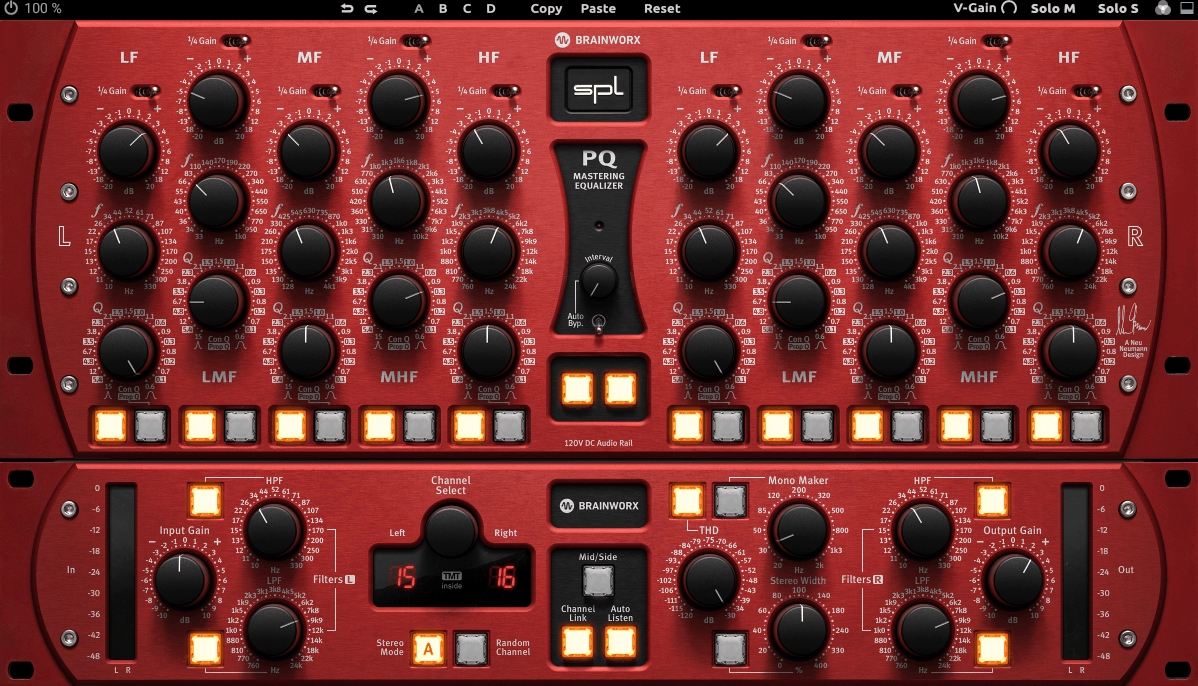
Plugin Alliance offers a permanently free collection of 20 plugins called the PA Free collection, covering tools from Brainworx, SPL, Maag, and others that provide genuine utility and serve as a real evaluation of the brand’s approach and sound character. This is a more substantial free offering than trial periods that expire, and I suggest downloading it as the first step before investing in any PA subscription or purchases.
- UAD
UAD Spark comes with a 14-day free trial with no purchase required, and Volt interface owners receive a full free month. For Apollo and UAD-2 hardware owners, the try-before-you-buy system on DSP hardware lets you run any plugin in the full 200+ catalog in a real session before purchasing, which is one of the most honest and practically useful evaluation systems in the plugin industry.
- Waves
Waves offers a 7-day free trial of the Ultimate subscription, and the Creative Access FAQ notes that all Waves plugins can run in demo mode even without a subscription, so you can install the full catalog and evaluate any plugin before deciding whether to subscribe. This demo mode approach is generous in scope even if the time window for a full trial is shorter than some competitors.
Which Brand Wins for Mixing?
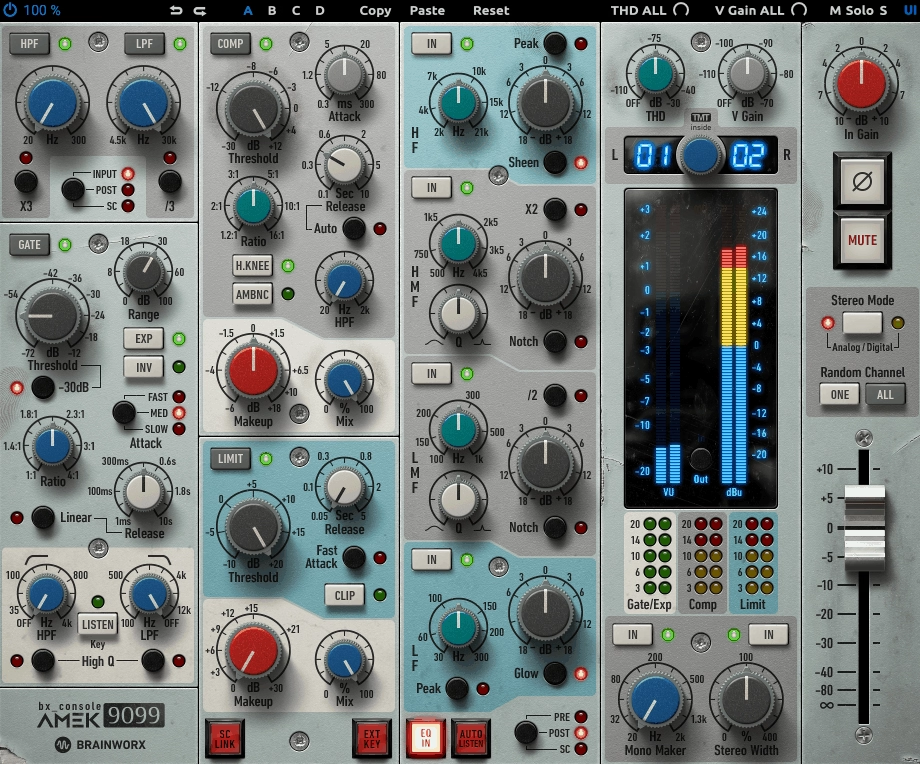
For most mixing scenarios, Plugin Alliance has the strongest practical argument. The TMT-based console emulations across SSL, Neve, AMEK, and Focusrite give you the ability to build a genuinely analog-feeling mix session where each channel has its own subtle character, and the cumulative effect of TMT across a 30-track project is noticeably different from mixing with non-TMT emulations or digital tools alone.
UAD wins for mixing engineers who prioritize the character of specific hardware compressors and preamps over the full console workflow. If the 1176, LA-2A, Pultec, and Neve 1073 are part of your daily mixing signal chain and you want the best possible emulation of each, UAD’s implementations remain reference-level. The Lexicon reverbs and room emulations are also strong enough to make a compelling case for maintaining UAD in any analog-flavored mixing workflow.
Waves wins for mixing engineers who value speed, breadth, and workflow efficiency over ultimate hardware accuracy. If you need to move fast through sessions, want tools that work reliably across every genre, and don’t want to manage multiple ecosystems, Waves provides a complete mixing toolkit in a single subscription.
Which Brand Wins for Mastering?
For mastering specifically, Plugin Alliance makes the strongest case. The AMEK EQ 200, elysia alpha compressor, bx_masterdesk, Shadow Hills Mastering Compressor, bx_XL V2 limiter, and bx_refinement dynamic de-harsher combine into a mastering chain of exceptional quality and depth. The M/S processing built into virtually every Brainworx mastering plugin is a practical advantage that makes mid/side work seamless rather than requiring dedicated M/S processors in the chain.
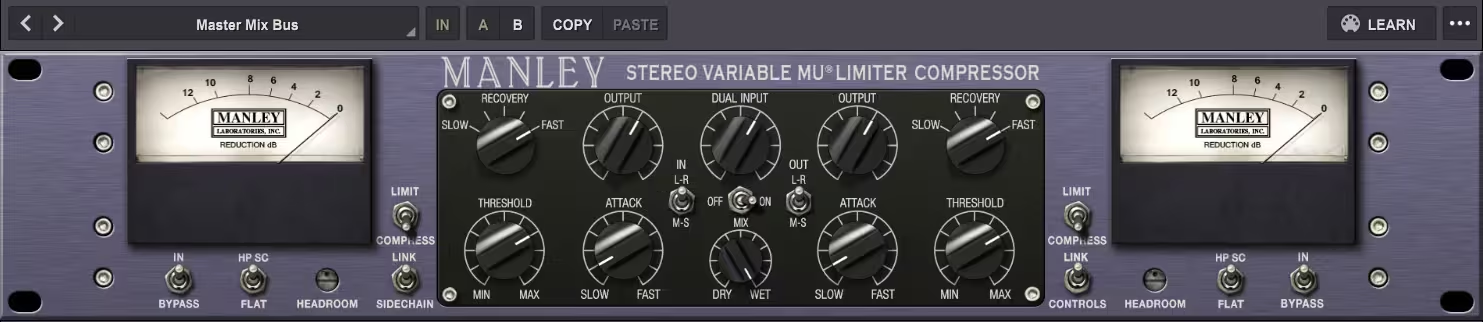
UAD competes directly in mastering with the Manley Variable MU, Shadow Hills Class A, Pultec EQP-1A, and Neve 1073 character on the mix bus. For engineers who want the character of these specific hardware references in the mastering chain, UAD delivers. The Maag EQ4 MS 2025 update with TMT technology adds meaningful flexibility for high-end mastering applications.
Waves covers mastering through the L2 Ultramaximizer, L3-LL Multimaximizer, API 2500 bus compressor, SSL G-Master Bus Compressor, and the Abbey Road TG12345 mastering chain. Competent and widely used, but not as deeply specialized as what PA offers for mastering-focused workflows.
The Bottom Line
All three brands are genuinely professional and genuinely good. The wrong choice for you isn’t about which brand is objectively best, it’s about which one fits how you actually work.
Plugin Alliance is the strongest choice if you want the most analog-authentic console mixing workflow available natively without hardware investment, particularly through TMT channel emulations that give a full mix session real analog depth. The flash sale pricing makes it the most financially flexible of the three for building a tailored toolkit. The mastering tools are among the best available. Start with the free PA collection and evaluate before spending anything.
UAD is the strongest choice if the specific character of classic hardware compressors and EQs, particularly the 1176, LA-2A, Pultec, and Neve 1073, is central to how you make records, and if you want the most accurate and musically satisfying emulations of those tools. The Spark subscription at $149.99 per year makes the entry point genuinely competitive, and the Apollo hardware path adds real tracking benefits that native processing can’t replicate.
Waves is the strongest choice if you want the broadest possible toolkit under a single subscription, value workflow efficiency and fast load times, work across a wide range of genres and session types, and don’t need the deepest possible analog hardware accuracy from any specific piece of equipment. The Essential subscription covers more practical ground than most engineers will ever need, and the Ultimate subscription is the most comprehensively stocked plugin library available from a single brand.
In practice, the most well-equipped engineers use all three. UA handles the character compressors and reverbs that define the record’s vintage feel. Plugin Alliance handles the console channel strips that build the mix’s analog depth across all tracks. Waves handles the specific-task tools that no one else makes as well, from the vocal rider to the AI noise reduction to the fast utility EQs. That’s not redundancy, it’s a complete analog-to-modern production toolkit.
Get the Free Plugin Starter Kit
The genuinely useful free DAWs and plugins worth installing. No filler. Straight to your inbox.

Hello, I’m Viliam, I started this audio plugin focused blog to keep you updated on the latest trends, news and everything plugin related. I’ll put the most emphasis on the topics covering best VST, AU and AAX plugins. If you find some great plugin suggestions for us to include on our site, feel free to let me know, so I can take a look!