At some point every independent artist faces the same decision: which distributor do you trust to get your music into streaming platforms and actually pay you what you’re owed? LANDR, DistroKid, and CD Baby are three of the most recognizable names in independent music distribution, and they’ve each built a loyal user base with genuinely different approaches to pricing, features, and what they think artists actually need.
I want to be upfront about something before diving in: these three platforms don’t just differ in price. They’re built around fundamentally different business models, and the one that makes the most sense for you depends entirely on how often you release, whether you want extra tools beyond distribution, and how you feel about paying recurring annual fees versus one-time release costs.
I’ve looked at all three in depth and I want to give you the real picture, including the fees that don’t show up on the homepage.
Platform Comparison
| Feature | LANDR | DistroKid | CD Baby |
|---|---|---|---|
| Pricing Model | Annual subscription | Annual subscription | One-time per release |
| Entry Price | $22.99/year | $24.99/year | $9.99 per single |
| Royalty Cut | 100% (85% if you cancel) | 100% (20% on YouTube CID) | 91% (keeps 9%) |
| Unlimited Releases | Yes | Yes | No (pay per release) |
| Music Stays Live If You Cancel | Yes (at 85% royalties) | No (unless Leave a Legacy paid) | Yes (permanent) |
| YouTube Content ID | Pro plan ($49.99/yr) | Add-on ($4.95/song/yr) | Included (30% cut) |
| Publishing Administration | Not available | Not available | Yes (CDB Boost, 15% cut) |
| AI Mastering | Yes (built-in) | Not available | Not available |
| Royalty Splits | Free (for subscribers) | Free (built-in) | Available |
| Distribution Speed | 2–7 days | 2–5 days (fastest) | 1–2 weeks |
| Platforms Covered | 150+ | 150+ | 150+ |
| Physical Distribution | Not available | Not available | Yes (CDs, vinyl) |
| Sync Licensing | Not available | Not available | Yes (CDB Boost) |
| Free Trial | No | No | No |
Get the Free Plugin Starter Kit
The genuinely useful free DAWs and plugins worth installing. No filler. Straight to your inbox.
Pricing and Real Costs
The headline prices look similar across all three platforms, but what you’re actually paying over time is a different conversation entirely, and I think being specific about this matters more than anything else in this comparison.
- LANDR’s Subscription Tiers
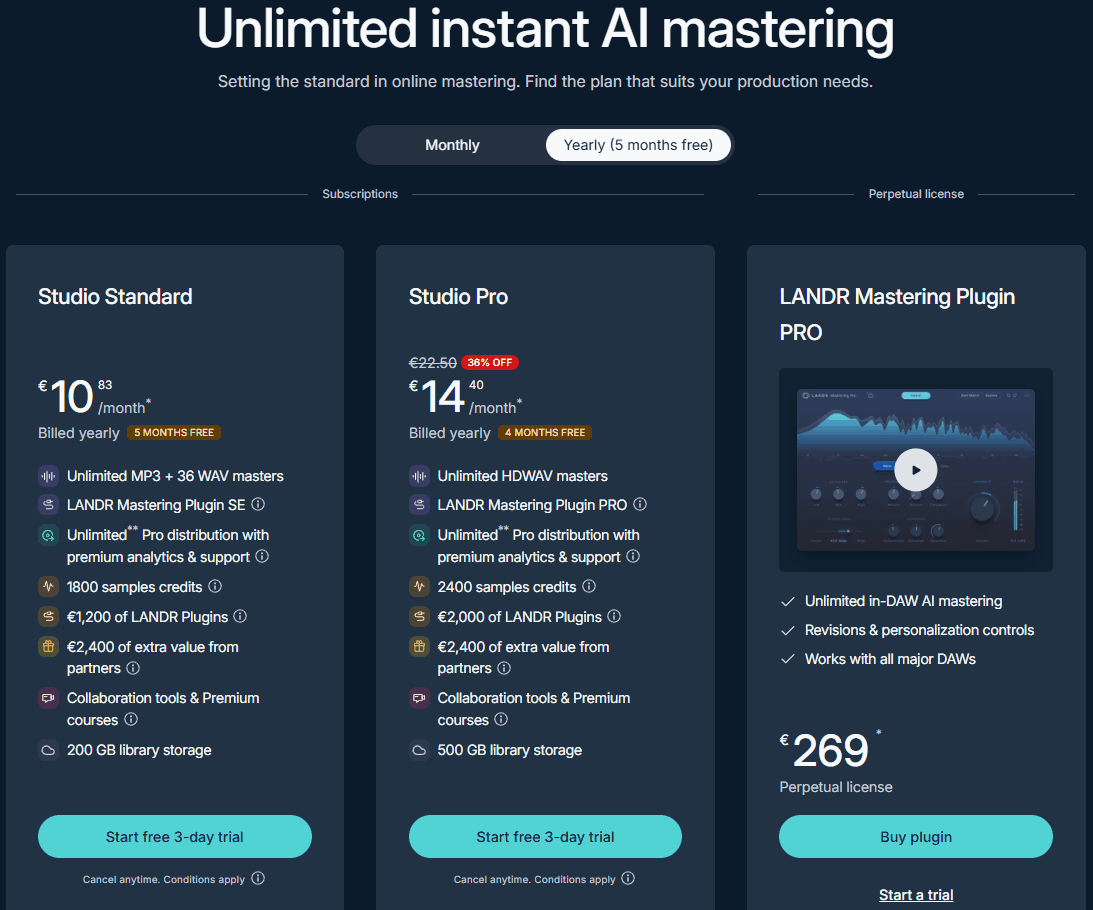
LANDR’s distribution entry price is $24 per year for unlimited releases with 100% royalties on the Basic plan. The Pro plan at $45 per year adds YouTube Content ID, TikTok monetization, and social platform monetization, which as of June 2025 is no longer available on the Basic tier.
It also has Studio bundles starting at $99 per year ($8.25/month), which bundle distribution with AI mastering, sample packs, plugin access, and courses. If those production tools are part of your workflow anyway, the bundle pricing can make sense. For pure distribution, the Basic or Pro plans are what you actually need.
- DistroKid’s Pricing and Add-on Reality
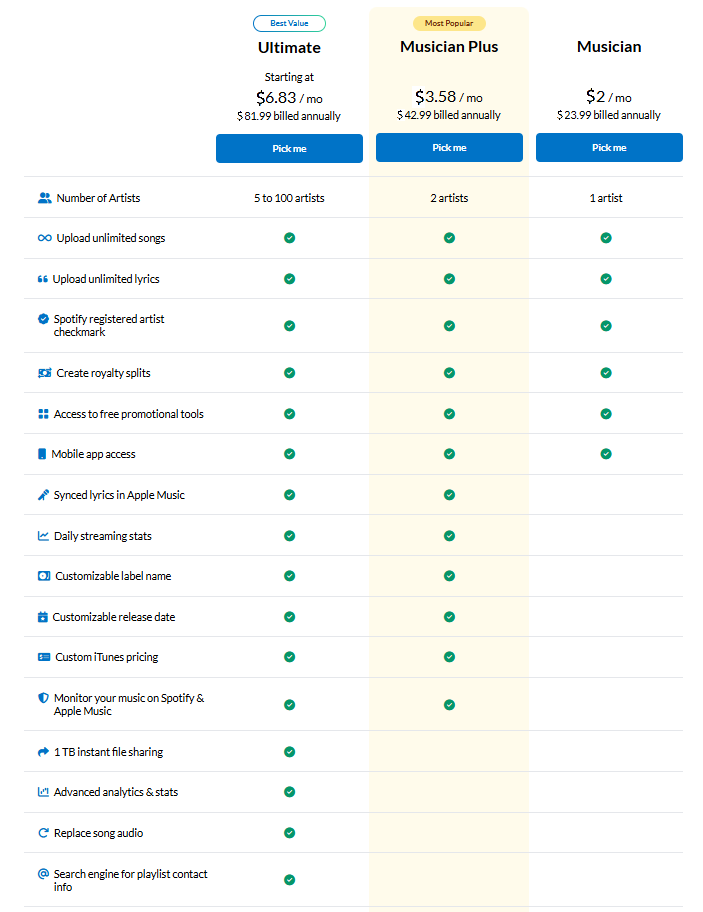
DistroKid starts at $23.99 per year for the Musician plan covering one artist with unlimited uploads. Musician Plus at $42.99 per year adds scheduling, advanced analytics, and a second artist slot. The Ultimate plan at $82.99 and up covers labels with multiple artists.
Here’s where it gets important. The base subscription price is not the real number for most artists. The Social Media Pack (YouTube Content ID + TikTok monetization) costs $4.95 per single or $14.95 per album annually, plus 20% of ad revenue.
Keeping your music live if you cancel costs $29 per single or $49 per album (Leave a Legacy, one-time fee). The Discovery Pack for databases like Gracenote and SoundScan is $0.99 per song per year. Cover song licensing is $12 per cover song per year.
For an artist releasing six songs a year who wants Content ID and catalog protection, the real annual cost lands noticeably higher than $24.99. I’d say this is DistroKid’s most commonly misunderstood aspect, and it’s worth doing the math for your specific release habits before signing up.
- CD Baby’s One-Time Model
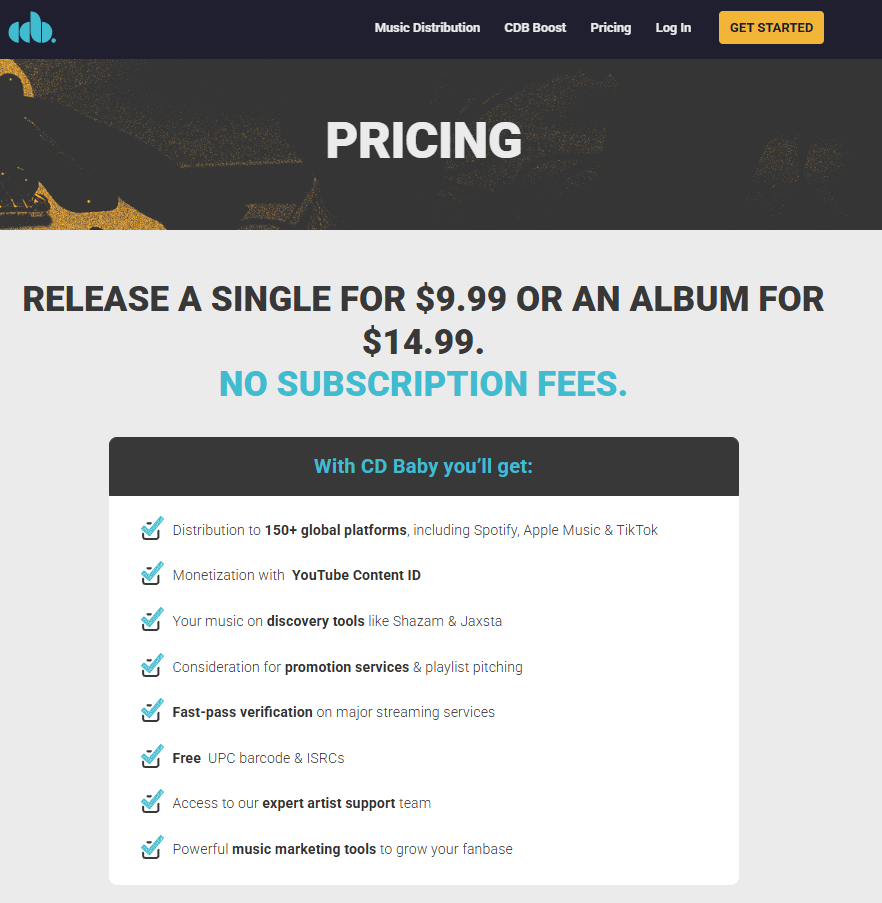
CD Baby charges $9.99 per single and $14.99 per album as a one-time fee with no annual subscription required. Your music stays live on platforms permanently, regardless of whether you ever interact with CD Baby again.
The trade-off is the 9% royalty commission taken on all digital distribution income. For high earners this adds up meaningfully: an artist earning $5,000 a year in streaming revenue pays $450 annually to CD Baby in commission, even though the upload fees themselves were one-time.
The CDB Boost add-on adds worldwide publishing royalty collection and sync licensing for an additional fee, with CD Baby taking a further commission on publishing royalties collected.
Distribution Speed and Platform Reach
Getting your music live on time matters more than most people realize, especially if you’re coordinating a release with promotion, playlist pitching, or social content.
- DistroKid: Fastest to Market
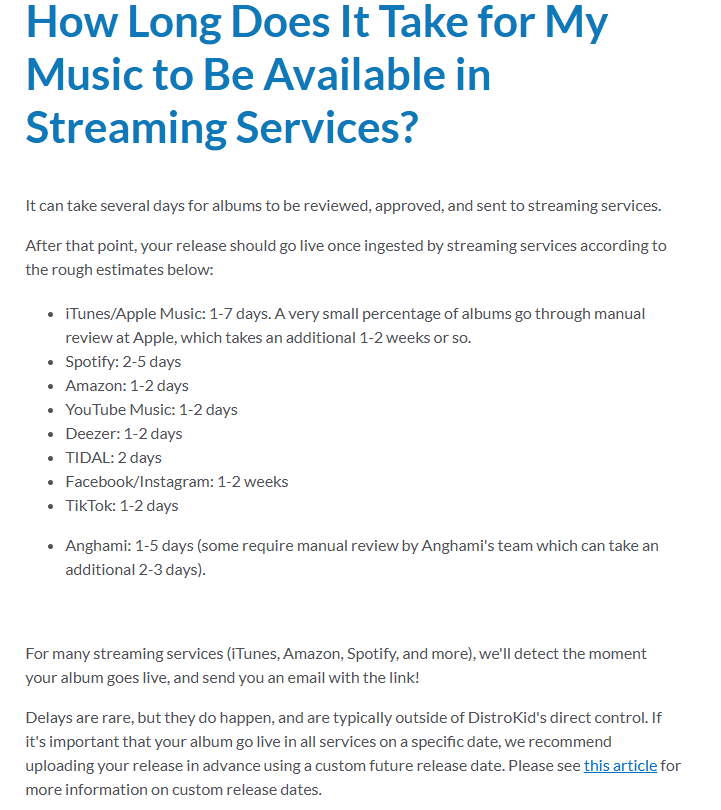
DistroKid is consistently the fastest distributor among these three, with most releases going live on Spotify and Apple Music within 2 to 5 business days. Scheduled releases are available on the Musician Plus plan and above, which is important for planning Friday drops that align with streaming algorithm refresh cycles.
For prolific artists dropping new music frequently, this speed advantage compounds. You’re rarely waiting on the distributor, which means you can plan shorter lead times between production and release.
- LANDR: Solid Speed with Caveats
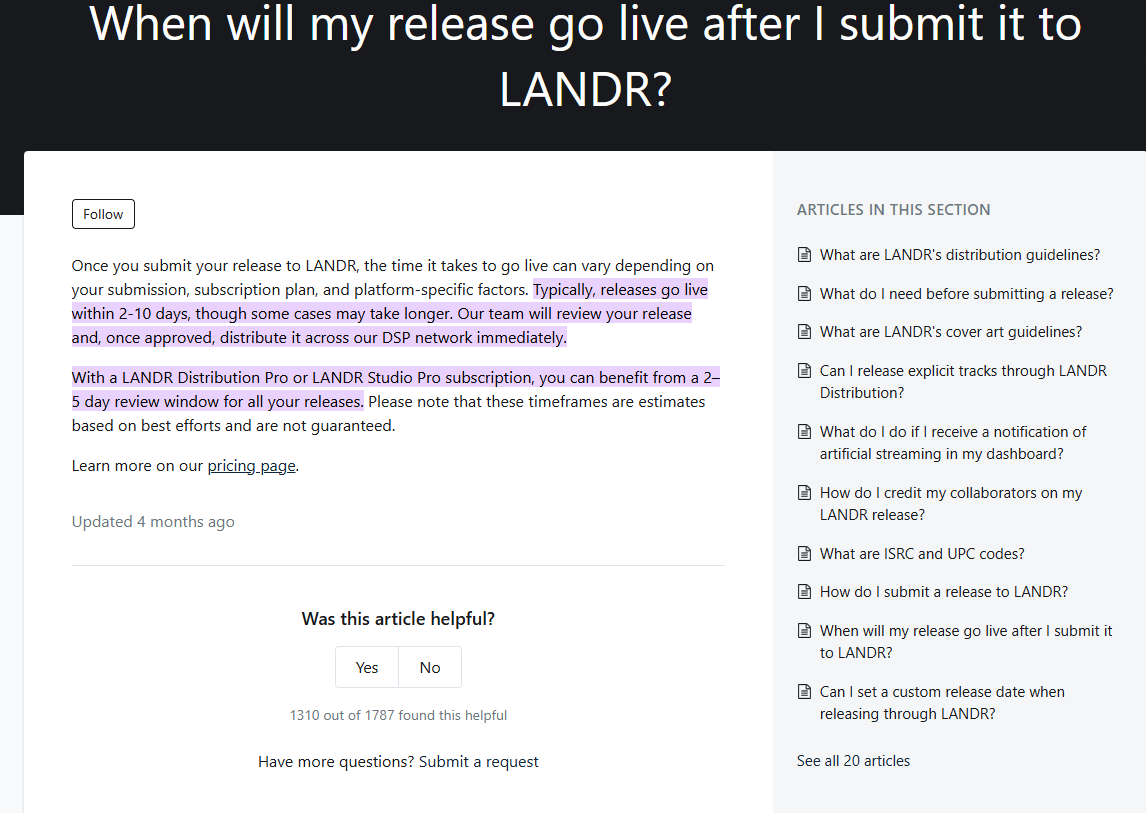
LANDR typically delivers releases within 2 to 7 days, which is competitive but not quite as consistently fast as DistroKid in practice. Scheduled release dates are available and the platform does allow you to set custom release dates regardless of plan tier.
One thing I want to note: LANDR’s aggressive audio recognition system, built partly because they sell samples, has flagged releases that contain licensed samples. If you work with samples regularly, this is worth being aware of before you distribute through LANDR.
- CD Baby: Slower but Thorough
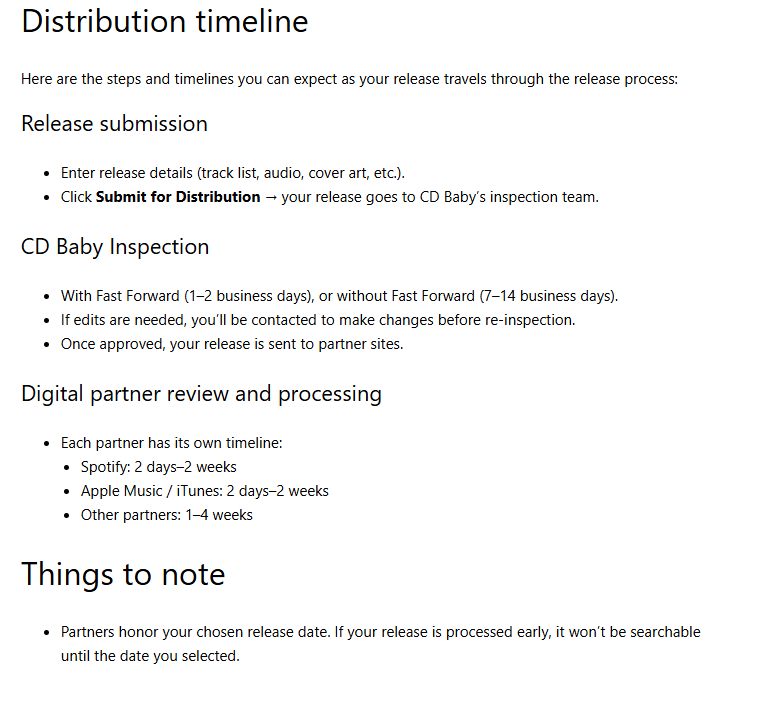
CD Baby takes the longest at 1 to 2 weeks for most releases, partly because they include manual review in their submission process. This feels slower than the other two in practice, but the payoff is that metadata accuracy tends to be higher and issues get caught before the release goes live rather than after.
All three platforms reach 150+ DSPs including Spotify, Apple Music, Amazon Music, YouTube Music, TikTok, and Instagram. The platform reach at this level is roughly equal, and no meaningful distribution gap exists between them on this metric.
Royalties and What You Keep
The royalty structure is where the real differences live, and it has long-term financial consequences that are worth thinking through carefully.
- How Does LANDR Distribution Work?
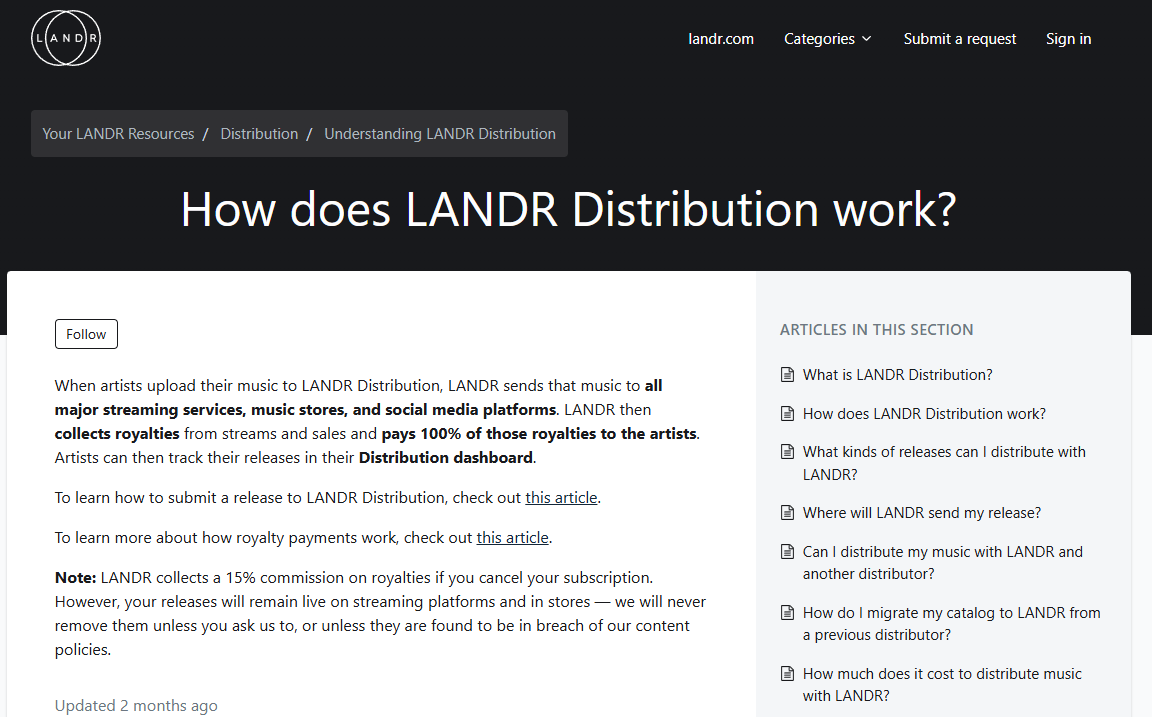
LANDR pays 100% of streaming royalties on both the Basic and Pro distribution plans. If you stop subscribing, your music remains live but the royalty split shifts to 85% to you and 15% to LANDR. This is a more generous model than losing your catalog entirely, but it’s still a meaningful financial consideration if you’re sitting on a large catalog.
LANDR takes 20% of YouTube Content ID revenue, which is consistent with the industry standard among distributors. For social platform monetization on TikTok and Facebook/Instagram, the Pro plan covers this at no extra percentage take.
- DistroKid: 100% with Platform Exceptions
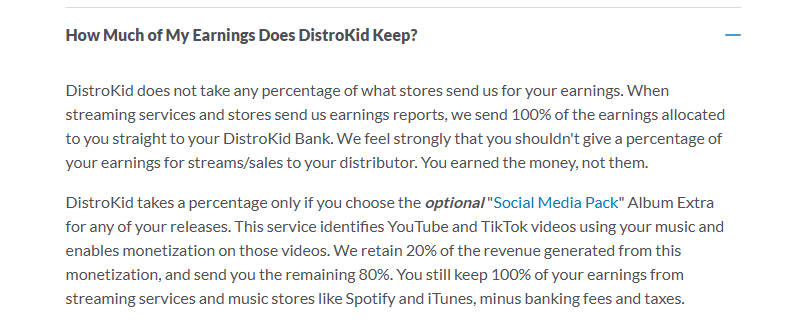
DistroKid keeps 0% of standard streaming royalties. They make money on the subscription and add-on fees, not a commission on what you earn. The exception is YouTube Content ID, where DistroKid takes 20% of revenue generated, which again is standard across the industry.
The critical thing to understand is the Leave a Legacy situation. If you stop paying your subscription and haven’t paid the one-time Leave a Legacy fee per release, every song you’ve ever distributed through DistroKid comes down from every platform. For artists who’ve been releasing consistently for several years, this is a significant risk of losing an entire catalog overnight if a payment fails.
- CD Baby: 91% Permanently
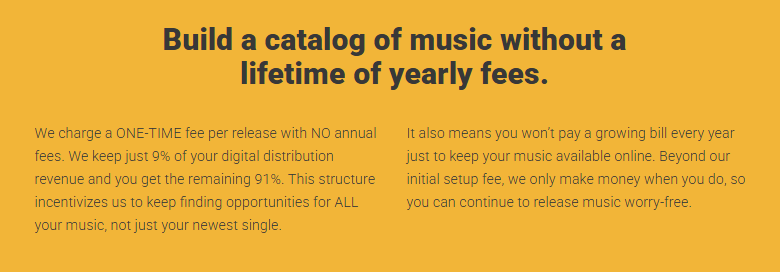
CD Baby takes 9% of all digital distribution revenue indefinitely. You keep 91%, and that relationship continues as long as your music is live, which is forever since there’s no subscription to lapse.
The 9% sounds small but it scales directly with success. An artist earning $1,000 a year pays $90. One earning $50,000 a year pays $4,500. For established artists with serious streaming numbers, this commission becomes the dominant cost of using CD Baby over time.
Extra Features Beyond Distribution
This is where the platforms diverge most clearly, and where your specific situation matters a lot.
- LANDR: The All-in-One Production Platform
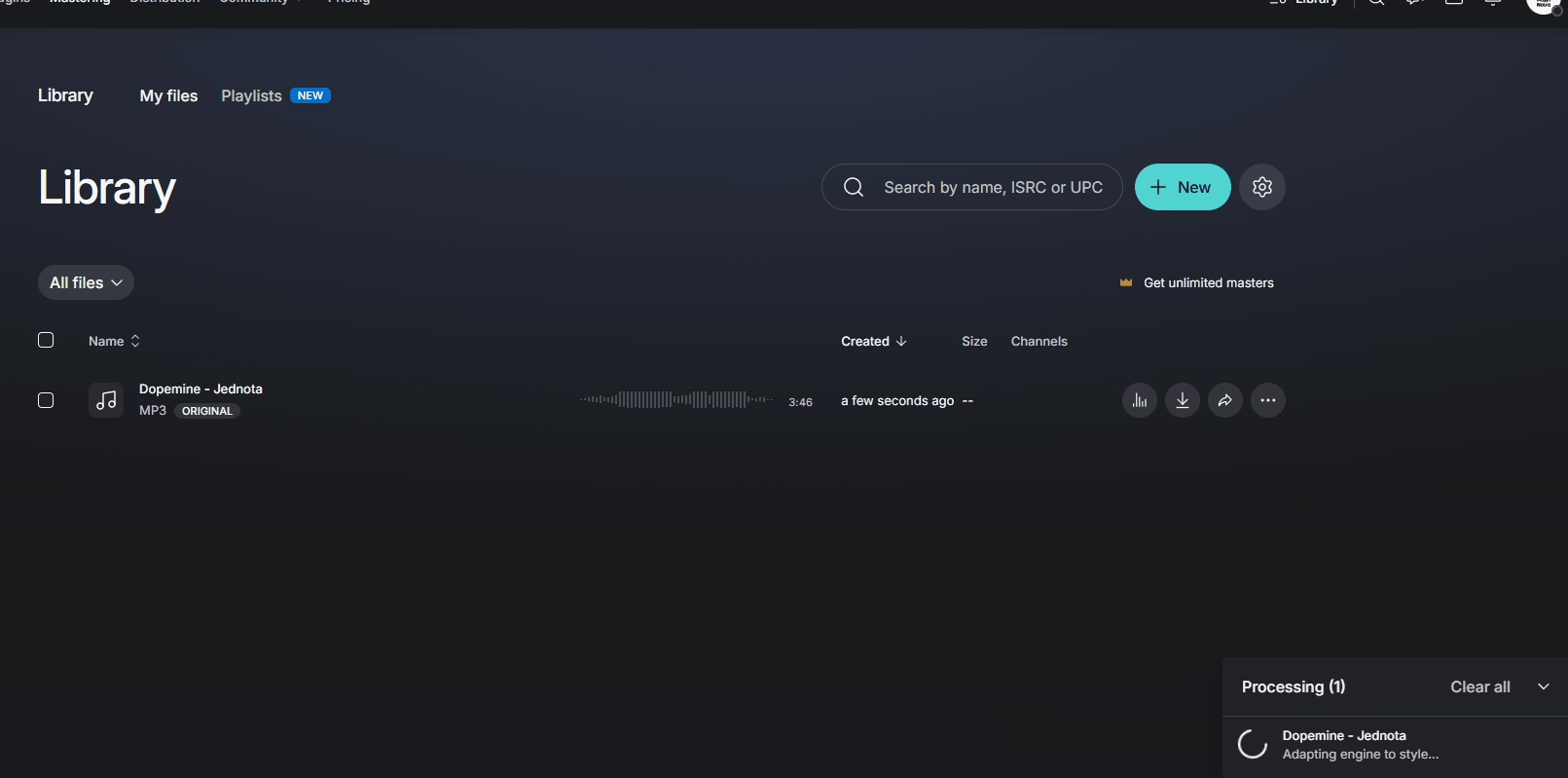
LANDR is the only one of these three that offers tools beyond distribution itself, and it’s a meaningful differentiator if those tools fit your workflow. AI mastering is built into every plan, though WAV-quality masters and the LANDR Mastering Plugin require Studio tier plans.
Sample packs covering over two million royalty-free samples are bundled in Studio plans. Plugin access, online collaboration tools, music production courses, and a release importer for migrating your back catalog from another distributor with stream counts preserved are also part of the platform.
Lyrics management through Musixmatch is included, and instant Spotify artist verification is available.
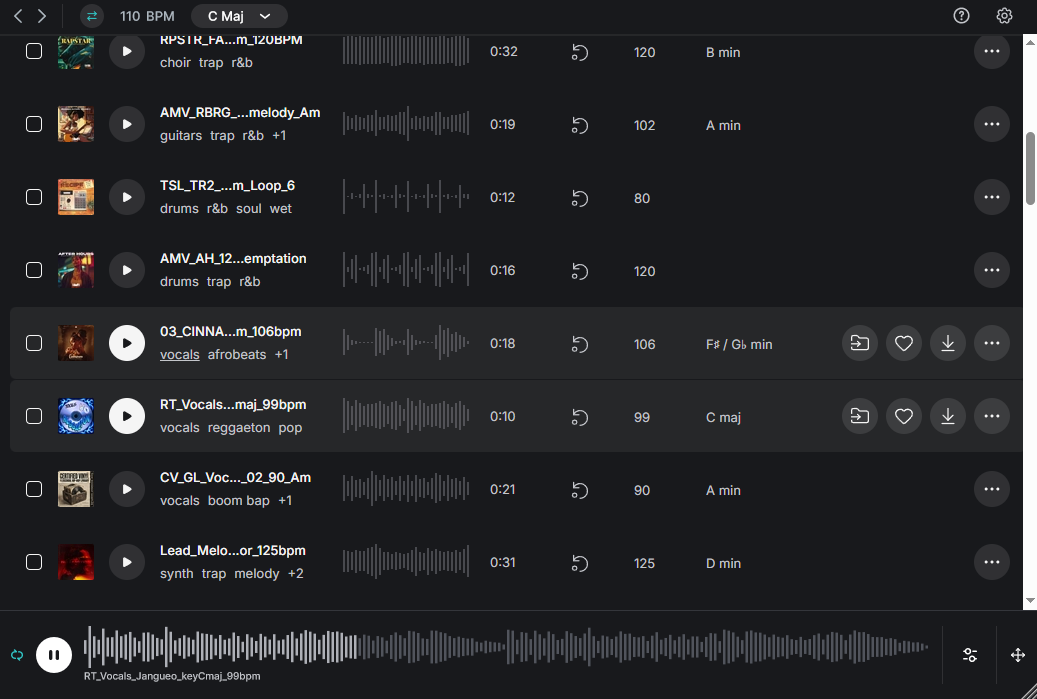
If you’re paying for mastering services, sample subscriptions, or plugin tools separately, LANDR’s bundles can actually consolidate your costs in a practical way. If you only need distribution, the production extras are background noise you don’t need to pay for.
- DistroKid: Fast and Lean
DistroKid is built to be a pure distribution tool and it doesn’t try to be anything else. The platform does a few things particularly well beyond the core upload workflow.
HyperFollow creates pre-save landing pages that let fans pre-save your upcoming release on Spotify, Apple Music, and Deezer from a single link. Promo Cards generate shareable visual assets for social media automatically.
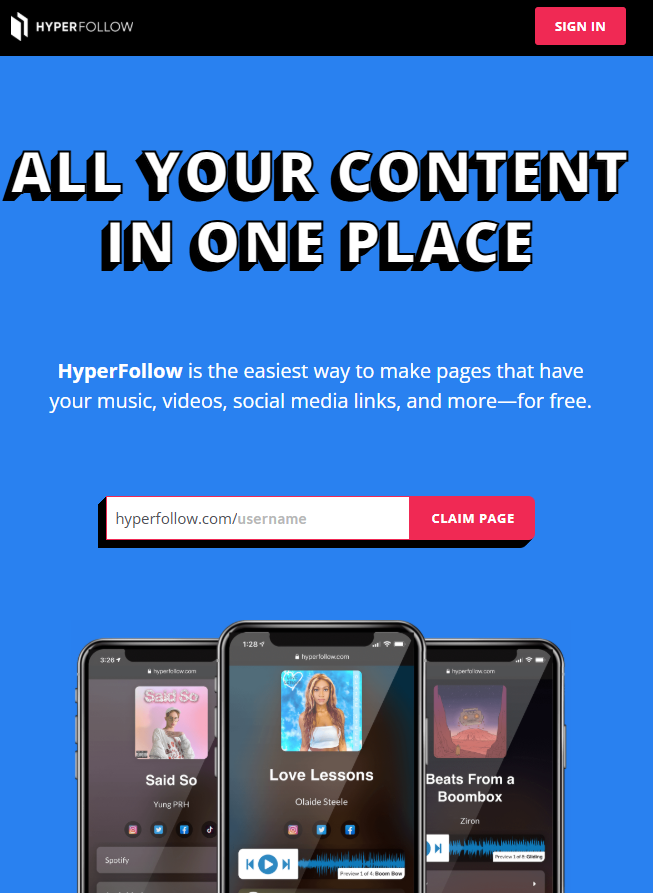
Royalty splits are built in and automatic with no percentage taken by DistroKid, which is useful for bands, production collaborations, and any release involving multiple contributors. RIAA award monitoring is available on the Ultimate plan.
The analytics are basic compared to CD Baby’s reporting, and DistroKid does not offer publishing administration, sync licensing, or any production tools. It’s a lean tool for artists who have everything else sorted and just need reliable, fast, affordable distribution.
- CD Baby: The Most Comprehensive Service Layer
CD Baby has the deepest non-distribution feature set of the three, particularly around royalty collection beyond streaming.
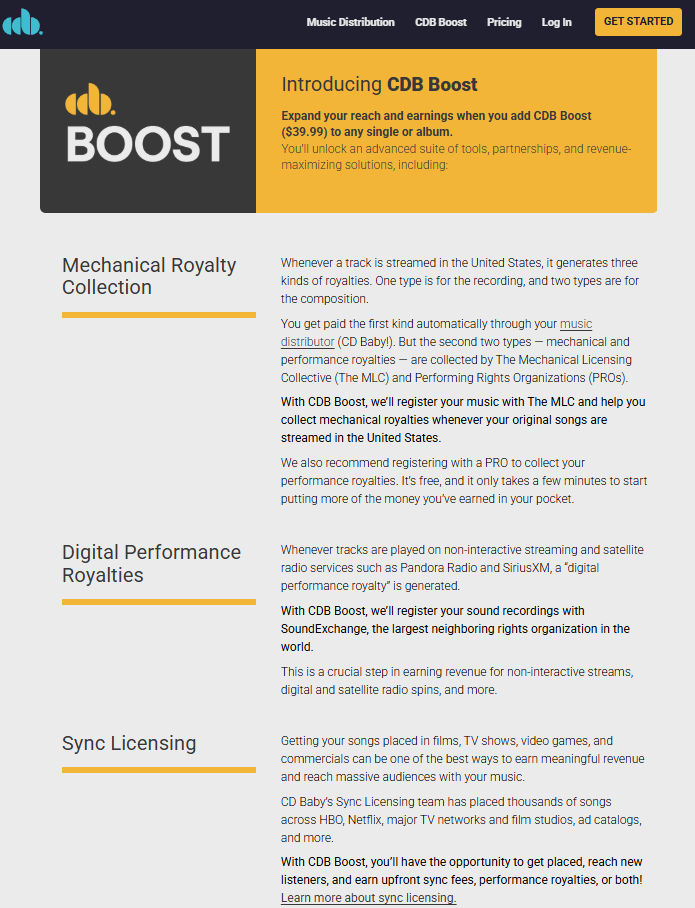
Publishing administration through CDB Boost registers your compositions with performing rights organizations globally and collects mechanical royalties from international territories that streaming platforms don’t always pay correctly on their own.
Sync licensing through CDB Boost pitches your music for use in TV, film, and advertising, which is a genuine alternative revenue stream that LANDR and DistroKid don’t offer. Physical distribution for CDs and vinyl to retail stores and Amazon is also unique to CD Baby among these three.
The Trending Reports analytics show sources of streaming activity including search, radio, and playlist traffic in more detail than DistroKid or LANDR provide, and the Stages program unlocks additional label services like editorial playlist pitching as artists grow. For a catalog-focused artist building a long-term career with multiple revenue streams, CD Baby’s service layer is the most complete.
Update Policy and Platform Stability
Something that doesn’t get discussed enough in comparisons like this is how stable and consistent these platforms are over time, because your music is going to be on them for years.
- Stability Across All Three
CD Baby is the oldest of the three, operating since 1998, and has the longest track record by far. That longevity comes with the caveat that it was recently acquired by Virgin Music, a subsidiary of Universal Music Group, and it’s not entirely clear how that ownership change affects its future direction and pricing.
DistroKid has a notable relationship with Spotify, which holds a minority stake in the company. This strengthens its Spotify integration specifically but raises its own questions about long-term neutrality as a distributor across competing platforms. LANDR has changed its pricing structure and bundled features several times over the years as it continues to figure out its positioning between production platform and distributor.
None of these platforms are guaranteed to maintain their current terms indefinitely, and that’s worth factoring into any long-term decision. The permanent release model of CD Baby provides the most protection against platform changes affecting your catalog.
Who Each Platform Is Best For
- LANDR
This one is good if you want an all-in-one platform that handles mastering, samples, and distribution under one subscription. You release music regularly and want your catalog to remain accessible even if you stop paying, and you value responsive customer support, which LANDR is frequently praised for at its price point.
In addition, it’đ good if you want built-in cover song licensing at a reasonable flat fee of $15 per track without recurring costs.
I’d say LANDR is the most sensible choice for producers who are already spending money on mastering services or sample subscriptions separately, because the Studio bundles can consolidate those costs meaningfully. For pure distribution without the extra tools, the difference between LANDR Basic and DistroKid Musician is minimal.
- DistroKid is best for you if…
You release music frequently and want the absolute fastest path to major platforms without managing per-release costs. You’re comfortable with the subscription model and either plan to keep paying indefinitely or are willing to pay the Leave a Legacy fee for releases you care about long-term. You don’t need publishing administration or sync licensing.
DistroKid is genuinely the strongest choice for high-volume artists who are releasing music constantly and want zero friction between finishing a track and getting it live. The speed, simplicity, and $0 royalty commission make it the most efficient pure distribution tool in this comparison for that specific use case.
- CD Baby is best
CD Baby works well if you release music occasionally and don’t want to commit to a recurring annual fee just to keep your catalog live. Since there’s no subscription to lapse, your releases stay on streaming platforms permanently, with no risk of losing them. It’s also a solid choice if you’re interested in publishing royalty collection, sync licensing opportunities, or physical distribution.
I believe CD Baby is the most overlooked option for artists who treat music more as a long-term catalog investment than a high-frequency content strategy. The 9% royalty commission is the real cost you have to weigh honestly, but for an artist releasing one or two projects a year and earning relatively modest streaming income, the permanent catalog protection and service depth genuinely justify that cut.
Get the Free Plugin Starter Kit
The genuinely useful free DAWs and plugins worth installing. No filler. Straight to your inbox.
Hello, I’m Viliam, I started this audio plugin focused blog to keep you updated on the latest trends, news and everything plugin related. I’ll put the most emphasis on the topics covering best VST, AU and AAX plugins. If you find some great plugin suggestions for us to include on our site, feel free to let me know, so I can take a look!