Let’s discuss some of the best Kontakt libraries for Horror & Thriller film scoring I found.
Horror scoring requires evolving tension that shifts dynamically rather than static loops or conventional orchestral articulations.
Most libraries force you to manually layer dozens of instruments, draw automation curves, and stack effects just to create atmospheres that sound genuinely unsettling instead of predictable. What actually works for horror production are performance-driven texture engines with X-Y morphing controls, cluster designers for dissonant voicings, and articulations specifically recorded for tension rather than melodic realism.
These Kontakt libraries skip traditional instrument playback and focus on morphable atmospheres, vocal clusters, string textures designed for unease, and hybrid sound sources that create uncanny timbres without extensive manual sound design. But now, let’s dive in starting with a first library:
1. Native Instruments Mysteria
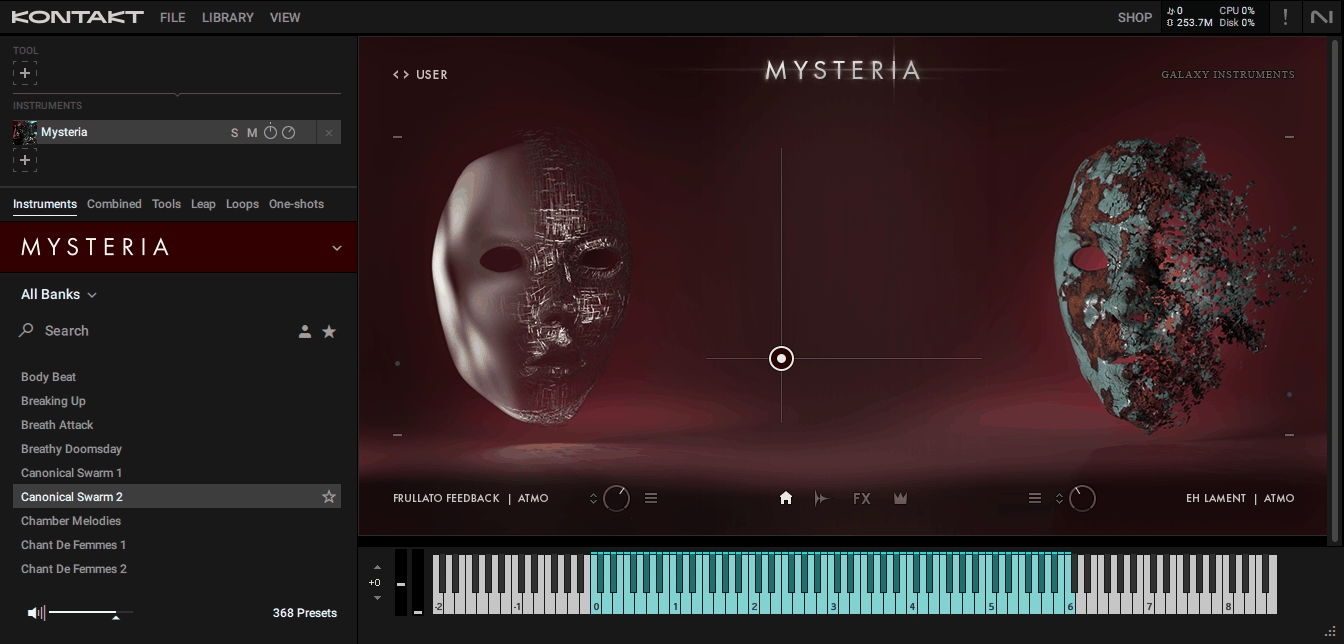
Horror scoring with traditional choir libraries means manually layering individual vocal samples, drawing automation curves for dynamics, and stacking reverb plugins just to create the sense of evolving dread that shifts between whispers and overwhelming vocal tension.
Mysteria Kontakt library functions as a choral-centric cinematic instrument that turns human voice recordings into expressive atmospheric tools with performance and texture prioritized over traditional choir playback.
The library contains 800+ sound sources from multiple vocal ensembles, 600+ layer presets, and 350+ master presets spanning approximately 29 GB download size. I think what makes this practical is the design borrowed from Thrill’s approach but built specifically around vocal and choir sources recorded from symphonic choirs, chamber choirs, and vocal quartets captured across roughly 45 hours of sessions.
- X-Y Performance Control for Emotional Intensity
At the heart of Mysteria is an X-Y pad where the horizontal axis morphs between two layers blending timbres while the vertical axis drives emotional intensity effectively shaping energy, brightness, or tension.
I’d argue this isn’t just volume automation but modulation of texture and emotional weight that can turn a whisper into an agonized swell with movement alone. I’ve experienced how automating this pad in your DAW creates dynamic vocal evolution without redrawing multiple envelope curves manually.
- Cluster Designer with 8-Voice Custom Building
The cluster designer lets you build clusters from scratch with up to 8 voices where you choose how clusters play through Glide, Add-on, or Parallel modes that change how voices behave musically or texturally. I can see how you can individually tune, pan, and shape each voice in a cluster.
I’m convinced in horror scoring this means you can craft dissonant walls, microtonal shifts, and dramatic cluster hits that don’t feel like stock choir chords, and I often find this level of control is what separates generic choir pads from genuinely unsettling vocal textures.
- Three Recorded Ensembles Covering Different Scales
Mysteria includes a large symphonic choir split male/female for vast epic swells, a 12-person chamber choir for more detailed intimate textures, and a 4-voice vocal quartet for subtle close-mic detail.
I could say this range gives you epic horror waves and quiet eerie whispers from the same interface. You can combine small-ensemble whispers with large choir swells in the same patch then automate between them as scene intensity changes.
- Integrated Modulation and Effects Chain
There are six modulatable effects plus EQ, convolution reverb, drive/saturation, and REPLIKA delay that aren’t line-level add-ons but part of the expressive engine. I’ve noticed convolution reverb can make clusters sound like cathedral hauntings or intimate haunting whispers while mod FX can introduce subtle movement so evolving atmospheres don’t feel static.
I feel like MIDI automation of effects lets you bake tension shifts directly into your DAW performance rather than managing separate effect plugins.
2. Native Instruments Thrill
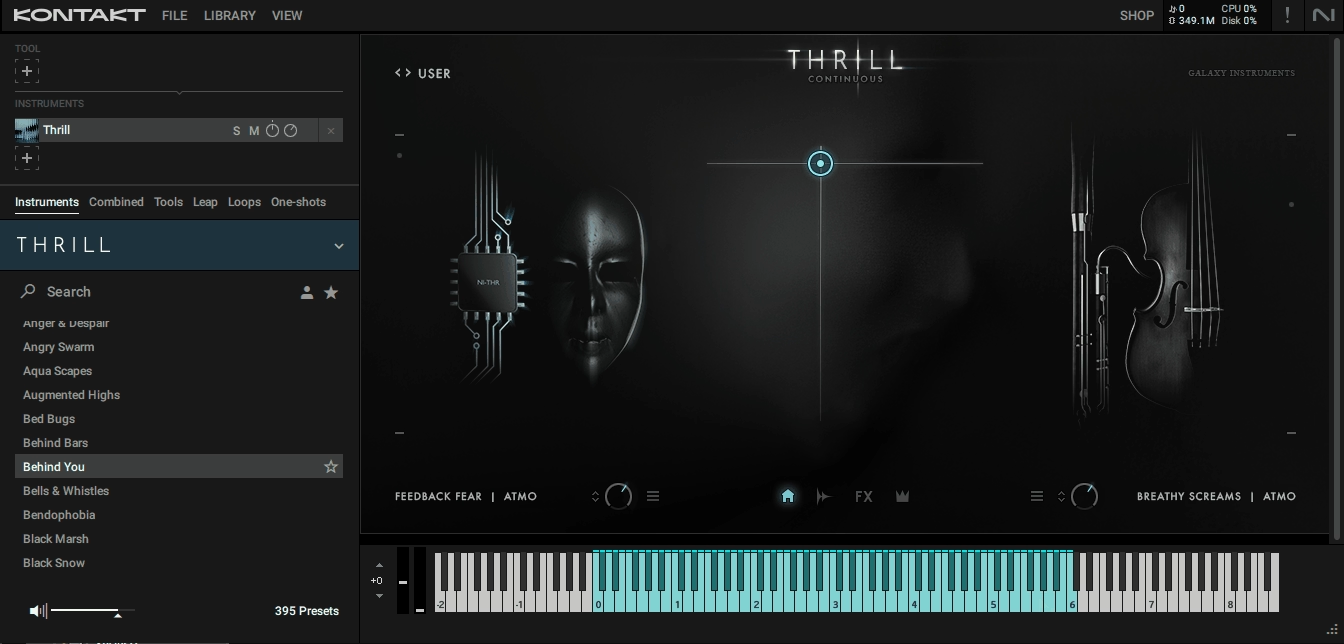
Traditional horror scoring libraries expect you to layer individual orchestral instruments, effects, and processed sounds manually then automate dozens of parameters just to create evolving tension that doesn’t sound static or predictable.
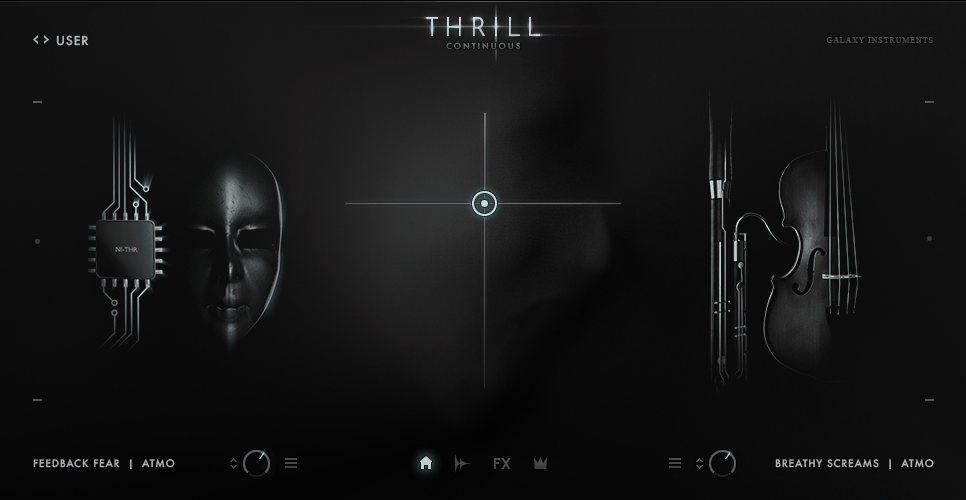
NI Thrill (similar to Mysteria) breaks from conventional Kontakt libraries by functioning as a performance-driven cinematic texture engine designed to produce evolving tension, fear, and atmospheric motion rather than offering individual instruments to sequence.
You get the massive foundation of 1,038 original sound sources including orchestral recordings, hybrid sound-designed material (voices, metallic hits, custom ambiences, drones) organized into 395 Master Snapshots, 687 Thrill Presets, and 145 Cluster Presets spanning approximately 31.6 GB compressed (42.6 GB uncompressed).
Thrill is essentially a modular texture workshop where presets are already complex layered combinations that you shape further rather than loading a violin and playing articulations.
What you get:
- Real-Time X-Y Morphing for Dynamic Tension Control
The central interface is an X-Y pad where the horizontal axis crossfades between two selected sounds or layers while the vertical axis controls “thrill factor” essentially energy and tension intensity.
I’ve experienced how this lets you go from quiet ominous hum to deep unsettling growl to full blown tension cluster with one gesture. I’d argue this is what makes Thrill performance-driven because you can automate the X-Y pad in your DAW to add evolving tension without loading multiple plugins or effects chains.
- Cluster Designer with Up to Eight Voices
Rather than fixed chord voicings you can build clusters from scratch with up to eight voices, define intervals, panning, volumes, and then drive them dynamically. This means horror stingers, shrieking clusters, and dissonant pads can all be shaped not just loaded as static presets.
I often find the Cluster Designer is particularly useful for creating dense chordal textures common in horror scoring where you need specific dissonant intervals.
- Original Sound Sources
Thrill includes 1,038 original sound sources spanning orchestral recordings and hybrid sound-designed material serving as raw building blocks. I can see how this enormous sound foundation gives you modular texture construction rather than limiting you to pre-mixed content.
The variety from voices to metallic hits to custom ambiences and drones means you can create unique atmospheres rather than relying on recognizable library sounds that appear in every horror project.
- Editable Effects Layer with Modulation Routing
Five modulation effect types including filters, drive/saturation, and convolution reverb can be applied per layer to add movement and character. I’ve noticed there’s also modulation routing, phase options, and mutators that can turn a sound into something completely different over time.
These aren’t just “reverb and delay” but tools to turn static content into living, shifting sound-design pieces without leaving the plugin, and this really matters when you need textures that evolve naturally across 30-second or longer cues.
- Thrill Presets Plus 395 Master Snapshots
The library includes 687 ready-to-play layered textures that you can morph and tweak, plus 395 Master Snapshots that give you structured layers already sitting well together. I’d say starting from Master Snapshots then tweaking the X-Y pad to shape tension is the practical workflow.
I wonder how many producers overlook the Master Snapshots, but I believe they’re the fastest path to usable results because they provide cohesive starting points rather than forcing you to build everything from individual sources.
3. Stringache by Silence+Other Sounds
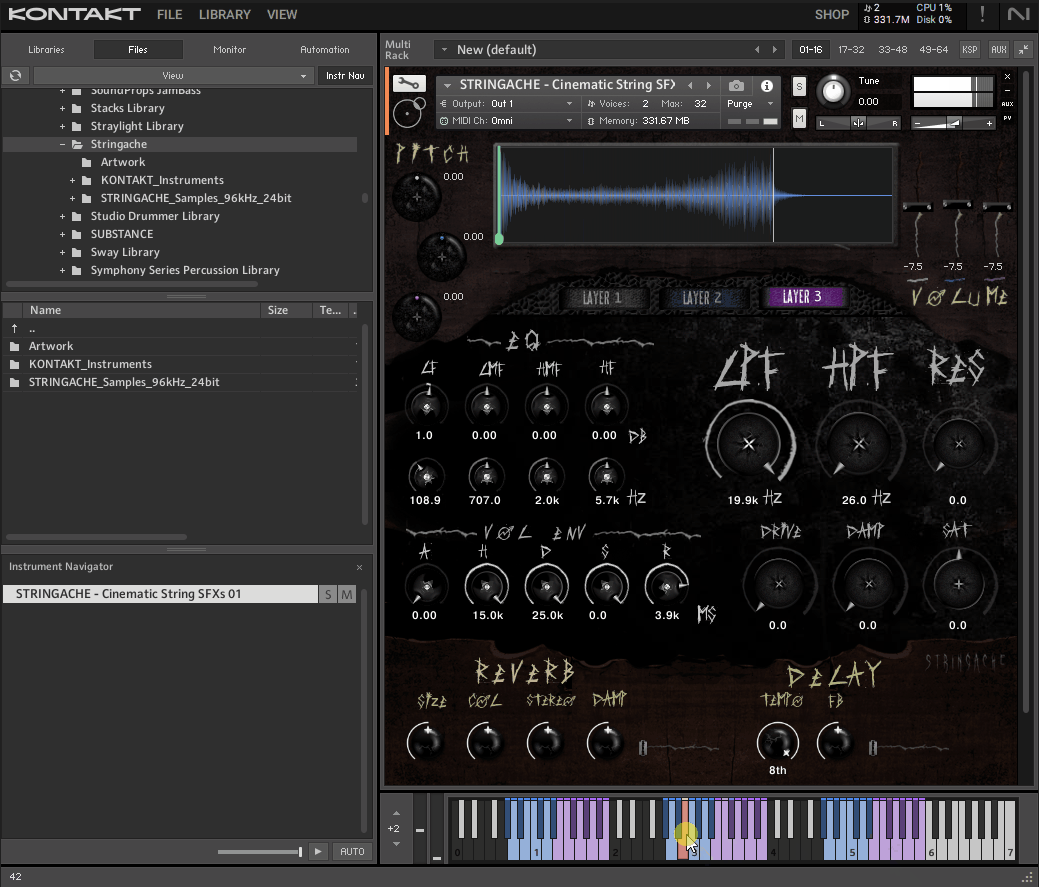
String libraries usually aim for beauty and lyrical performances, which makes them nearly useless when you need strings that genuinely disturb listeners. Stringache flips that approach by focusing entirely on abrasive string gestures, screeches, and tension cues pulled from violin, viola, cello, and double bass.
You’re getting 570+ processed WAV sounds at 96 kHz/24-bit alongside 270+ raw source recordings that function as construction blocks for deeper sound design. The library weighs in at 1.8 GB unzipped and includes 14 Kontakt instruments with custom interfaces designed specifically for manipulating these unsettling string textures.
These aren’t traditional articulations. The recordings center on experimental and often uncomfortable string events like high-register violin shrieks, crescendos that function as tension risers, and bowed noises that cut through dense mixes.
Because the sounds come from actual acoustic instruments being pushed beyond normal performance techniques, they carry organic unpredictability that synthesized string patches struggle to replicate. The processed elements are immediately usable for atmospheric horror work, while the raw recordings let you build custom textures when you need something specific that doesn’t exist in the library yet.
The Kontakt side adds practical control that saves time during composition. The instruments include tempo-synced rhythmic elements that lock to your DAW’s BPM automatically, eliminating the need to manually slice and align loops.
You also get adjustable sample offset on each patch, letting you nudge the attack of screeches or clusters ahead or behind the beat to alter perceived intensity without editing audio files. This level of per-sound control transforms what could be static samples into responsive sound design tools you can perform and automate within your sessions.
- Experimental String Articulations Built for Tension
The core sound palette revolves around string techniques that traditional libraries avoid. You get violin screeches and high-register shrieks designed to cut through mixes with piercing clarity, crescendos and rising clusters that build tension without additional processing, plus bowed noises and dissonant articulations rarely captured in standard string collections.
These recordings focus on the moments where strings sound most uncomfortable, which becomes essential when you need organic tension elements that feel unpredictable rather than polished. The frequency range these sounds occupy means they work equally well as subtle background unease or aggressive foreground stabs.
- 270+ Raw Source Recordings for Custom Design
Beyond the processed cinematic elements, you get direct access to unprocessed violin, viola, cello, and double bass recordings. These raw files function as building blocks when the processed sounds don’t quite match what your scene needs.
You can drag them into your DAW, stretch them with granular processors, pitch them down multiple octaves, or layer them under the Kontakt instruments to add acoustic weight to synthetic textures.
Having these sources means you’re not locked into the library’s processing decisions. When you need a specific bowed noise that sits at a particular frequency or evolves in a unique way, you can construct it from these foundation recordings rather than searching through hundreds of preset variations.
- Tempo-Synced Rhythmic Clusters
The Kontakt instruments include rhythmic elements that automatically sync to your project’s tempo, which eliminates a significant workflow bottleneck. Hit patterns and rhythmic clusters adjust their timing based on your DAW’s BPM without requiring manual slicing or time-stretching.
This becomes particularly useful when sketching tension sequences for game trailers or episodic horror scores where tempo might change across different cues. You can build rhythmic string patterns that evolve with your arrangement without constantly re-exporting and realigning loops.
The tempo awareness extends to cluster articulations as well, meaning complex multi-note patterns maintain their internal relationships regardless of your session’s speed.
- Per-Sound Sample Offset Control
Each Kontakt patch lets you adjust sample start offset independently for individual sounds, giving you precise control over attack timing. You can push screeches slightly ahead of the beat for aggressive impact or pull them behind to create dragging tension.
This offset control works without editing the underlying audio files, which means you can experiment with timing variations during composition rather than committing to edits in your audio editor. The feature proves especially valuable when layering multiple string elements, as you can stagger their attacks to create complex polyrhythmic textures from simple triggering patterns.
- 14 Specialized Kontakt Instruments
Rather than one massive sampler, Stringache organizes its content into 14 focused instruments tailored to different sound classes and use cases. Each instrument features a custom UI designed specifically for horror and tension work, with controls optimized for the type of material it contains.
This organization means you’re not scrolling through hundreds of presets trying to find the right screech or cluster. You load the instrument designed for that specific purpose and start shaping immediately. The instruments respond like performance tools rather than sample browsers, which speeds up the process of building tension cues when you’re working under deadline.
4. Audio Imperia Constrictor
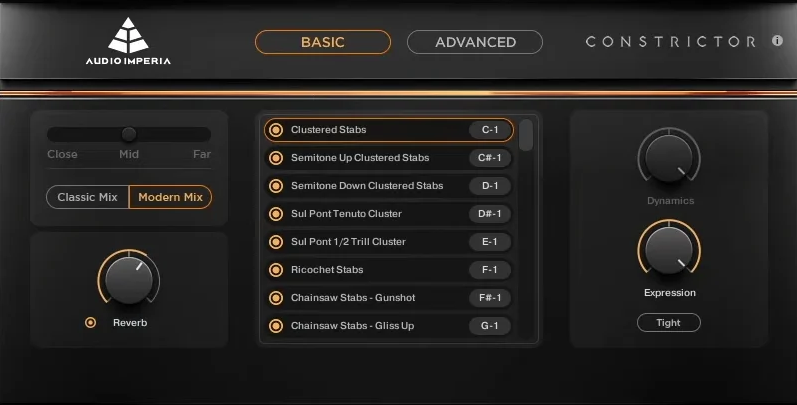
Constrictor library is Audio Imperia’s tension-centric string library for Kontakt Player built specifically for horror, suspense, and gripping cinematic sound design rather than offering conventional orchestral articulations.
I think what makes this practical is how it installs to around 30 GB in compressed NCW format with up to 4 dynamic layers and 9 round robins in longer articulations, and I believe it includes four mic positions (Close, Decca Tree, Outrigger, Far) paired with two ready-to-use mixes (Classic and Modern).
- Articulations
The library delivers over 400 articulations spread across four separately recorded string sections: 10 violins, 4 violas, 4 cellos, and 3 double basses captured at Budapest’s Rottenbiller scoring stage.
The library includes sustains, cluster sustains, tonal shorts, atonal shorts, cluster runs, risers, downers, and more all intended to give you both pulse-like energy and atmospheric unease.
I’d argue the collection of cluster sustains and atonal shorts alone lets you create walls of tension without manually layering dozens of patches. These aren’t melodic articulations but textures designed specifically for horror underscoring where unpredictability matters more than clean legato lines.
- Four Separately Recorded String Sections
Each section was recorded in situ with real players so textures have depth and spatial nuance rather than being ensemble patches glued together. I can see how because each string section is separate you don’t get “one big ensemble” by default.
I often find you can use just double bass clusters for deep subterranean rumble in low suspense scenes, bring in violins with atonal shorts for eerie whisper-like pulses, or layer cellos and violas with cluster runs for rising directional motion. I’m convinced this separation gives pinpoint control over timbre and density instead of a homogeneous orchestral wall.
- Built-In Risers and Downers
The inclusion of risers and downers directly in the articulation set saves you from building these elements from scratch or relying on separate sound design tools. I’ve noticed this is particularly handy when you need tension spikes or sudden drop cues in film/game timelines.
I feel like having these pre-programmed directional gestures means you’re not drawing pitch automation curves or manually timestretching samples to create these common horror cues.
- Mic Positions
You get four mic positions with two ready-to-use mixes where Classic gives a more intimate feel while Modern can help sit the strings prominently in your mix without heavy external FX. This lets you position Constrictor in your mix without complex external routing setup.
I tend to notice having pre-mixed options matters when you’re working quickly and need strings that fit immediately rather than requiring extensive spatial processing.
- Robins for Natural Variation
Longer articulations include up to 9 round robins which helps avoid mechanical repetition when you’re underscoring long scenes. I believe this depth of sampling is what prevents the obvious looping problem plaguing simpler libraries where you hear the same sample triggering repeatedly.
I wonder how many producers underestimate round robin importance, but I’d say in horror scoring where you often hold sustained tension for extended periods this variation is essential.
5. Native Instruments Kinetic Toys
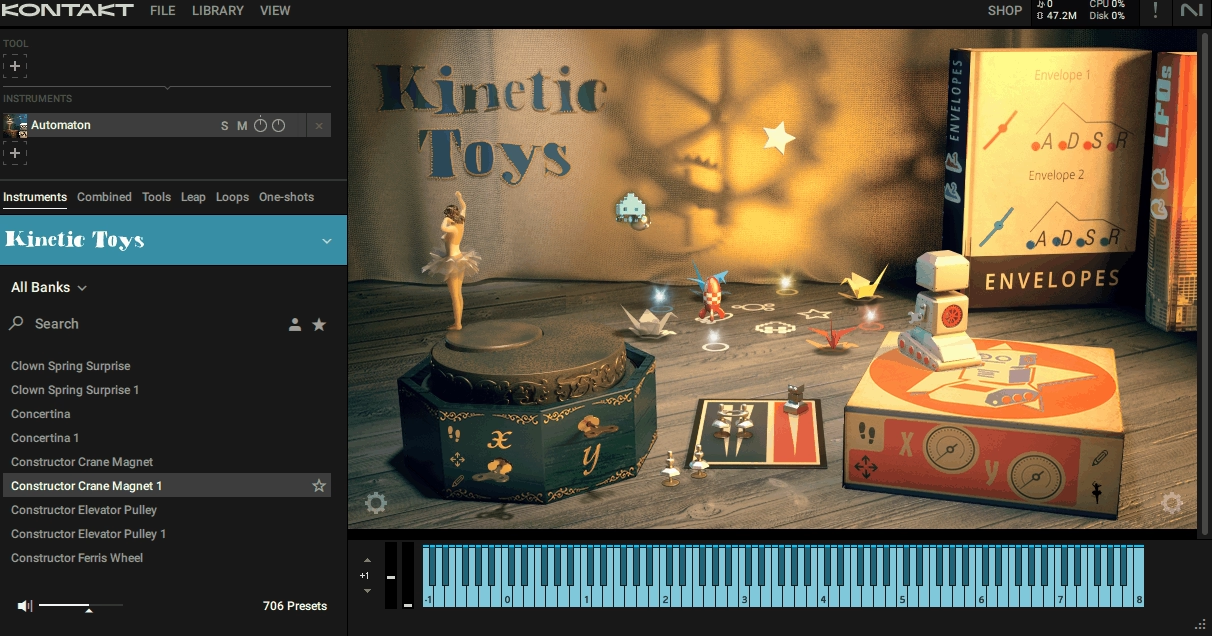
Horror scoring with conventional libraries means choosing between orchestral instruments that sound too traditional or pure synthesis that lacks organic character and physical presence.
Kinetic Toys breaks from typical approaches as a creative hybrid sound instrument built from real recordings of vintage toys, games, and quirky objects combined with synth layers packaged into a playable, morphable performance tool.
What makes this relevant for horror work is the unusual sonic identities and evolving textures you won’t get from typical sample packs because familiar raw materials get twisted into unfamiliar, uncanny timbres.
The library ships as a Kontakt or free Kontakt Player instrument with about 3.5 GB of original content and 706 presets, including over 200 individually recorded sound sources drawn from childhood toys, mechanical objects, and found sounds like toy pianos, pinball machines, train sets, and ping-pong balls.
I believe those sources are organized into 35 themed sound sets with 600+ snapshots where each set typically gives you 8 toy layers and 8 synth layers that can be mixed together.
Key Features:
- Dual X-Y Matrices for Sound and Effects Morphing
The instrument is built around two dynamic X-Y matrices where the Sound Scene lets you morph between multiple toy sources and synth layers within a performance smoothly transitioning from clockwork robot texture into something synthetic and eerie without loading new patches.
I’d argue the Effects Scene as a second X-Y pad controls up to 8 effects including resonant filters, delays, bitcrushers, distortion, and modulation tools. I’ve experienced how you can automate these just as you would morphing your sound sources making changes sound organic and dynamic, and I often find this dual-matrix approach is what separates Kinetic Toys from static preset libraries.
- Sound Sources from Vintage Toys and Objects
As I said above, the library includes over 200 individually recorded sound sources each paired with a custom synthesized layer so the results are musically usable not just noise. I can see how the toy sampling plus synth layering approach means every playable tone has a hybrid character that’s part physical and part electronic.
I’m convinced this hybrid identity is what makes it particularly useful for horror because familiar materials become unfamiliar and uncanny, and I imagine you’re not getting generic synth textures but something rooted in recognizable physical objects twisted into unsettling timbres.
- 600+ Snapshots
The library includes 600+ snapshots that are preconfigured starting points blending toy and synth layers in different ways. I think you can start with a snapshot that roughly fits your mood like something metallic and spiky or something plush and evolving then use the X-Y pad to modulate between sources.
I feel like this workflow lets you craft evolution over time rather than looping a static pad, and I tend to notice having this many starting points means you can explore different directions quickly without building everything from individual sound sources.
- Dual Envelopes and LFOs for Rhythmic Motion
There are two assignable envelopes and two LFOs that can be mapped to parameters for rhythmic motion or evolving drones. This allows you to create movement within the sound itself rather than relying entirely on external modulation.
I wonder how many producers overlook these internal modulators, but I’d say they’re what enable you to create soundscapes, leads, unpredictable textures, rhythmic ambiences, and eerie FX without stacking multiple automation lanes in your DAW.
- Themed Sound Sets
Sources are organized into 35 themed sound sets where each typically gives you 8 toy layers and 8 synth layers that can be mixed together. I believe this organization means you’re not just choosing sound sources but shaping how they interact.
I’m inclined to think this layering system is what gives Kinetic Toys its depth because you’re working with complementary materials designed to blend rather than random samples thrown together.
6. Freaktion by Silence+Other Sounds
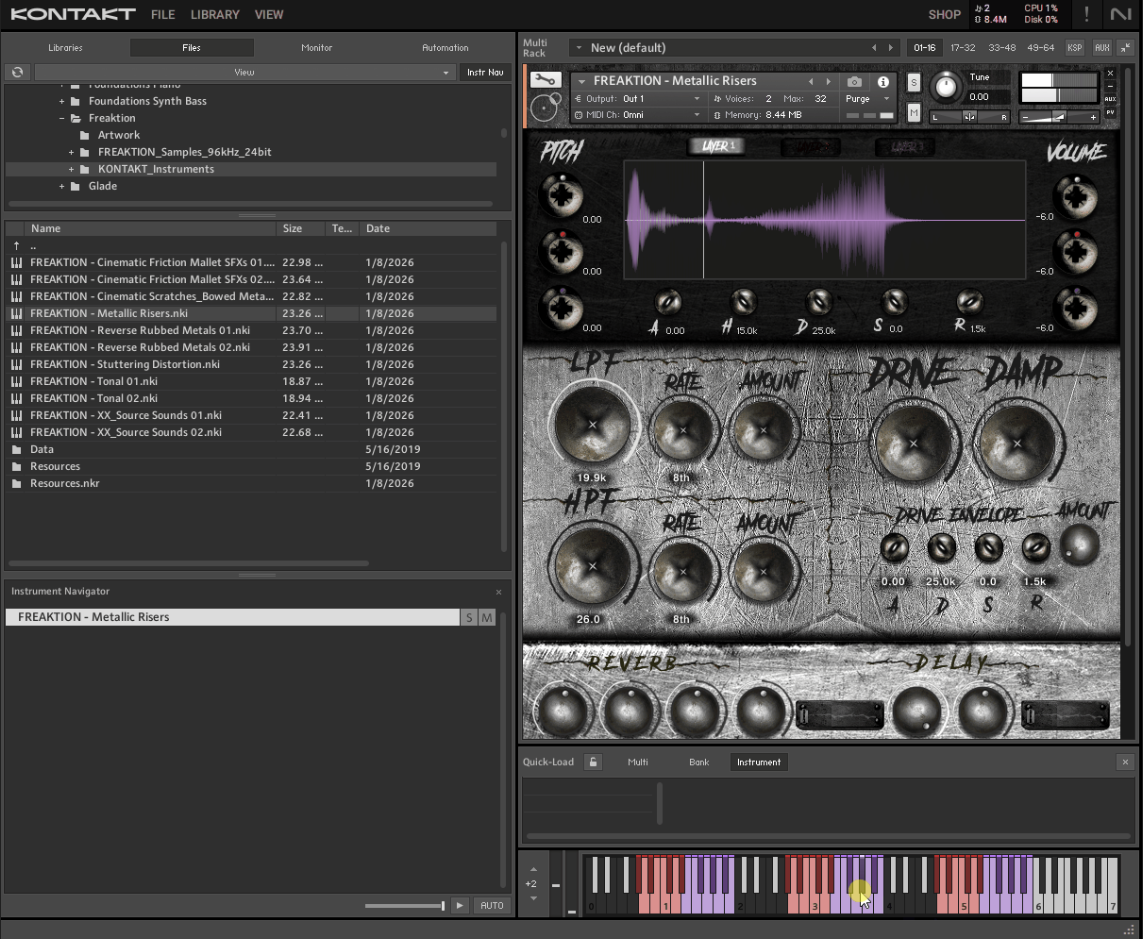
What makes Freaktion horror Kontakt library stand out is how the sounds were created.
These aren’t synthesized approximations of metallic tension. You’re hearing actual performed recordings where someone rubbed, bowed, and scraped custom metal objects to extract those organic irregularities that make skin crawl.
The long evolving textures and pitch bends feel alive in a way that synthesizers struggle to replicate. You’ll find vocal-esque metallic tones that sit perfectly under horror scenes without sounding like obvious sound effects. I’ve found that this acoustic complexity translates immediately into usable tension, especially when you need something that feels raw rather than polished.
The Kontakt side transforms these recordings into legitimate sound design engines. You can take a one-shot metallic hit and morph it into an evolving pad, control sample start points for rhythmic stutters, or layer multiple articulations within a single patch.
This means you’re not just stacking 10 tracks manually to get hybrid effects. The instruments respond like playable tools rather than static sample banks, which becomes crucial when you’re working under deadline and need expressive control without excessive routing.
- High-Resolution Metal Recordings
The core library includes over 330 sounds sourced entirely from abused metallic objects. You get rubbed, bowed, struck, and scraped metals spanning plates, coils, springs, and custom fabricated pieces. These aren’t short hits either.
Many recordings evolve over time with natural pitch bends and harmonic shifts that feel less like samples and more like living elements. The organic vocal qualities in some of the deeper metallic tones add an unsettling human-adjacent quality that works perfectly for psychological horror.
Because these are performed recordings captured at 96 kHz, the overtone complexity and irregularities survive heavy processing without falling apart.
- 11 Purpose-Built Kontakt Instruments
Rather than dumping raw samples into generic samplers, Freaktion includes 11 separate Kontakt patches tailored to different sound classes. Each instrument lets you transform source material through playable interfaces with editable parameters.
You can control sample start positions, pitch envelopes, and filter shapes to turn static textures into rhythmic elements or atmospheric drones. The layering system within patches means you can stack articulated sounds without manual routing across multiple tracks.
- 130+ Source Recordings for Custom Sound Design
Beyond the processed sounds, you get access to 130+ raw source recordings that serve as construction blocks for building your own effects. These unprocessed files let you granularly edit, time-stretch, or resample outside Kontakt’s interface when you need deeper customization.
Having these source files means you’re not locked into the library’s processing decisions. You can pitch them down two octaves, reverse them, or feed them through your own effect chains to create entirely new textures that still maintain that authentic metallic character.
- Practical Transitions and Risers
Many of the metallic crescendos and scraping textures function exceptionally well as weighted transitions or riser elements. When you layer these with sub-bass or long reverb tails, they create that building tension that horror scores demand.
The natural dynamics in the recordings mean you don’t need to heavily automate volume curves. The sounds already contain organic intensity shifts that feel musical rather than mechanical. This makes them immediately useful for scene transitions where you need something more distinctive than standard synth risers.
- Hybrid Electronic Integration
The sounds sit in an interesting space between organic acoustic recordings and harsh mechanical textures. This makes them blend naturally with modular synth patches or IDM elements when you’re building industrial or dark electronic tracks.
You can use the metallic friction sounds as rhythmic layers alongside drum machines, or let the long drones sit underneath synth leads to add unsettling complexity. The acoustic unpredictability contrasts well with the precision of electronic elements.
7. Hellen by Silence+Other Sounds
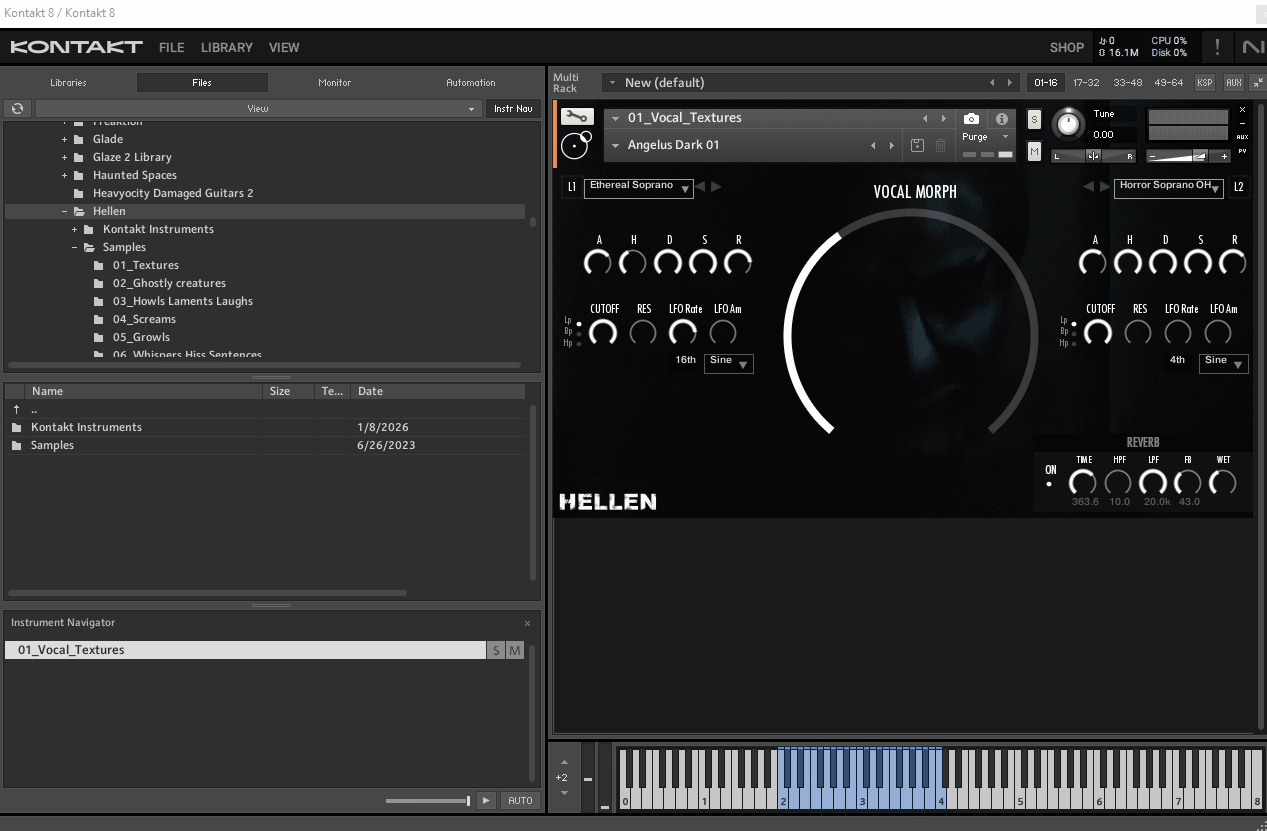
Vocal libraries for horror typically fall into two camps: either they’re choirs that sound too polished for genuine unease, or they’re random scream collections with no playability. Hellen horror Kontakt library sidesteps both problems by building 12 Kontakt instruments around 569 WAV files of processed human voice material that’s been twisted into creature-like textures.
The source recordings blend multisampled soprano vocals with extended techniques like screams, whispers, growls, gasps, and yells, then layer in animal recordings and metallic hits. Everything gets processed through spectral morphing and formant shifting to create sounds that sit uncomfortably between human and inhuman.
The library gives you 400+ unique sound effects captured at 96 kHz/24-bit, totaling around 2.6 GB unzipped. What separates Hellen from typical horror vocal packs is how the instruments are structured.
You’re not just triggering static samples. The main playable texture engine lets you morph between completely different vocal timbres in real time, blending two independent sound layers while shaping each one with filters and envelopes. This means you can pull entire phrases of breaths and half-formed syllables into evolving pads that feel disturbingly alive without manually stacking dozens of tracks.
Beyond the main engine, Hellen breaks one-shot effects into distinct categories with dedicated patches for screams, laments, creature vocalizations, whispers, monster growls, shrieks, and gasps. Each instrument gives you per-sample control over volume, pitch, filters, and playback direction
The chromatic extend switch transforms screams into playable pads or tuned effects, which becomes useful when you need melodically creepy punctuation rather than random horror stabs.
There’s also a vocalise builder that lets you construct custom monster voices from three independent layers with formant control, plus two tempo-synced sequencers for building rhythmic vocal phrases and breathing patterns.
- Morphing Playable Vocal Textures with Dual Layering
The central Kontakt instrument operates differently than standard vocal samplers. You get two completely independent sound layers that you can morph between using a dedicated control, letting you shift from ethereal sustained tones to abrasive atonal elements mid-performance.
Each layer has its own filter, envelope, and LFO controls that respond in real time. The patch includes 56 pre-configured snapshots that demonstrate different combinations, but the real power comes from building your own morphing textures.
You can pull breaths, whispers, and fragmented syllables into sustained pads that evolve organically. This dual-layer architecture means you’re creating complex vocal atmospheres from a single instrument rather than routing multiple instances across your session.
- Categorized One-Shot Effects with Chromatic Playability
Rather than dumping all effects into one sampler, Hellen organizes sounds. What makes these useful beyond standard FX libraries is the per-sample control system. You can adjust volume, pitch, and filters for individual sounds, switch between straight and reverse playback instantly, and activate the chromatic extend function to turn any scream into a playable melodic element.
This transforms static horror stabs into tuned sound design tools you can perform across your keyboard. When you need a shriek that hits a specific pitch for musical tension, you’re not stuck with whatever the original recording happened to be.
- Syllables and Breath Sequencers
These two tempo-synced engines push Hellen into legitimate sound design territory. The syllables sequencer strings short vocal fragments based on a fictional language inspired by ancient Latin, creating rhythmic spoken-like textures that lock to your project’s BPM through Kontakt’s Time Machine Pro.
The breath sequencer works similarly but focuses on breathing sounds, generating pulsing patterns that work as tense beds under dramatic moments. Both sequencers let you activate or deactivate voices per step, giving you modular control over texture density and rhythm.
I’ve found these particularly effective for building unsettling spoken patterns that don’t feel repetitive or obviously looped.
- Vocalise Builder for Custom Creature Construction
This instrument functions as a voice design workshop where you build monsters from scratch using three independent layers of source material. Each layer is playable or time-stretchable with formant control, meaning you can alter the apparent gender, size, and character of voices to create something entirely new.
- High-Resolution Source Material Access
Beyond the Kontakt instruments, you get direct access to all 569 WAV files as raw audio. These files are recorded at 96 kHz/24-bit, which means they survive heavy processing when you want to pitch them down multiple octaves or stretch them beyond recognition. Having the unprocessed sources lets you build custom effects outside Kontakt’s interface when you need deeper manipulation.

Hello, I’m Viliam, I started this audio plugin focused blog to keep you updated on the latest trends, news and everything plugin related. I’ll put the most emphasis on the topics covering best VST, AU and AAX plugins. If you find some great plugin suggestions for us to include on our site, feel free to let me know, so I can take a look!