
Starting with hardware synthesis in 2026 is simultaneously easier and more overwhelming than it’s ever been. Easier because the quality of affordable instruments has improved dramatically, with genuinely capable synths available at prices that would have been impossible ten years ago.
More overwhelming because the sheer number of options means a beginner can spend weeks researching and still not feel confident about which instrument to buy. The good news is that there really aren’t many bad choices anymore. Most hardware synths at any price point will teach you the fundamentals and produce sounds worth using.
What I think matters most for a beginner isn’t the number of features or the depth of the synthesis engine. It’s whether the instrument encourages you to keep playing.
A synth that sounds good out of the box, responds well to basic tweaking, and doesn’t require a manual just to make your first sound will teach you more in a month than a deep, complex instrument you never turn on because the learning curve feels like a wall.
I’ve selected thirteen synths (plus one bonus) that each offer a different entry point into hardware synthesis, from ultra-portable pocket devices through compact keyboards to full-size instruments that grow with you as your skills develop. Not every synth here is simple. Some are genuinely deep. But each one has a clear path from unboxing to making music that doesn’t require prior synthesis knowledge.
1. ESI XSynth
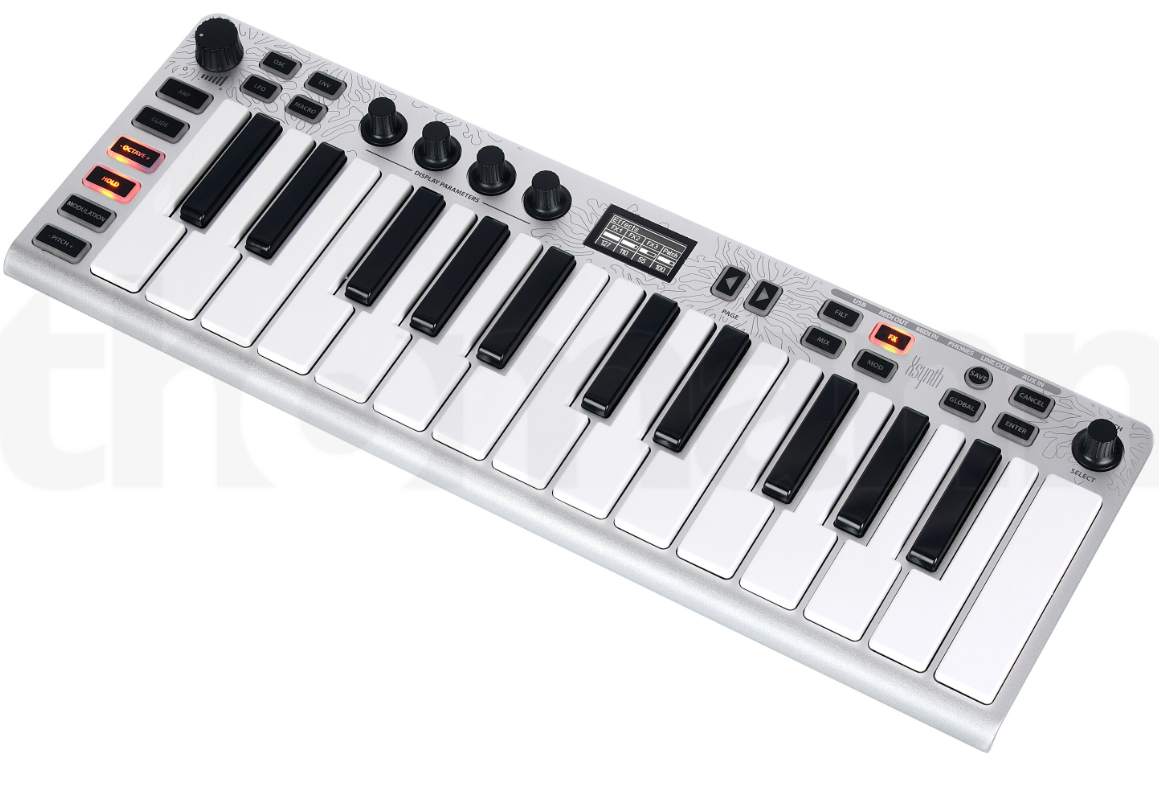
The thinnest synthesizer I’ve ever seen, and the fact that it’s a fully featured polyphonic instrument at this size makes it one of the most surprising beginner-friendly options on the market.
ESI XSynth packs a 10-voice virtual analog engine with three oscillators, a multimode filter, modulation matrix, and effects into an ultra-slim aluminum chassis that’s barely thicker than a smartphone. It also doubles as a MIDI controller and audio interface, which means it’s three devices in one for a beginner building their first studio setup.
The XSynth comes from ESI, a company known for MIDI controllers rather than synthesizers, and their first synth is a surprisingly capable instrument built on the familiar Xkey keyboard platform.
- Ultra-Slim Design
At 27mm thick and 634 grams, the XSynth is portable in a way that no other polyphonic synthesizer matches. You slide it into a laptop bag alongside your computer and you’ve got a complete synthesis and recording setup that adds almost no weight or bulk. For beginners who don’t have a dedicated studio space, the extreme portability means you can make music wherever you happen to be and store the instrument in a drawer when you’re done.
- Triple Duty
The XSynth functions simultaneously as a synthesizer, MIDI controller, and 24-bit/96kHz audio interface, which means a beginner gets three essential studio tools from a single purchase. You use the synth engine to learn synthesis, the MIDI controller function to play software instruments in your DAW, and the audio interface to record everything directly to your computer. For someone starting from zero, this combination eliminates the need to buy three separate devices.
- 512 Presets
Four banks of 128 patches covering basses, leads, pads, sound effects, and drum kits give you an immediate library of usable sounds. The preset variety is broad enough that you can find sounds suited to virtually any genre, and having quality starting points means you spend time making music rather than staring at an initialized patch wondering where to begin. For a beginner, good presets are the on-ramp to understanding what synthesis can do.
- Aftertouch Keys
25 full-size keys with polyphonic aftertouch provide per-note expression that most instruments at this size and price don’t include. The aftertouch lets you press harder on individual notes to control filter, vibrato, or other parameters, which teaches you about expressive performance from day one. The keys are based on ESI’s Xkey mechanism, which has a shallow action but consistent feel across the range.
Get the Free Plugin Starter Kit
The genuinely useful free DAWs and plugins worth installing. No filler. Straight to your inbox.
2. Teenage Engineering PO-12 Rhythm
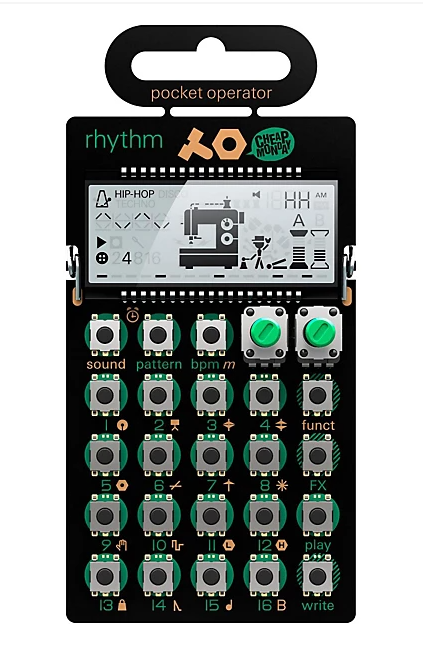
At the opposite end of the spectrum from everything else on this list, the PO-12 Rhythm is a pocket-sized drum synthesizer built on a bare circuit board that costs less than a nice dinner. Teenage Engineering PO-12 gives you 16 drum sounds, a step sequencer, parameter locks per step, and built-in effects in a device the size of a calculator, powered by a single battery.
I’m including this specifically because the barrier to entry is essentially zero. You buy it, you put a battery in, and within five minutes you’re programming beats. There’s no setup, no manual to study, and no way to feel intimidated by it.
- Immediate Results
You press a button and sound comes out of the built-in speaker. No cables, no software, no configuration. The step sequencer lets you program a complete drum pattern in under a minute by pressing the numbered buttons in time or one at a time. For a total beginner who has never touched any music hardware, the PO-12 provides the fastest path from unboxing to creating something musical that exists in any hardware instrument.
- Parameter Locks
Per-step parameter variation lets you change the sound of each drum hit independently across the pattern. You can make the kick on step 1 sound different from the kick on step 5, which teaches you about sound design through experimentation without requiring any technical knowledge. You twist the knobs, the sounds change per step, and you learn by listening.
- Effects Engine
Built-in effects including bit crushing, filtering, and modulation add variety to the basic drum sounds. The effects are applied to the overall output rather than per sound, which keeps things simple while still letting you dramatically transform your patterns with a few knob turns.
- Sync Chain
A 3.5mm sync connection links to other Pocket Operators for multi-instrument setups. You start with the PO-12 for drums, add a PO-20 for melodies later, and build a complete pocket studio incrementally as your interest grows. The sync ecosystem means your first purchase isn’t a dead end but a starting point for expansion.
- Battery Life
Single AAA battery operation with extended runtime means the PO-12 is always ready without charging cables or power adapters. You can literally pull it from a pocket, press a button, and start making beats. The always-ready nature removes the friction that stops beginners from practicing.
- Step Sequencer
The 16-step sequencer with pattern chaining teaches you the fundamentals of rhythmic programming that apply to every drum machine and DAW pattern editor you’ll ever use. The concepts you learn programming beats on the PO-12, step placement, accent, pattern length, chaining, transfer directly to more sophisticated equipment as you progress.
3. Roland AIRA Compact S-1 Tweak Synth
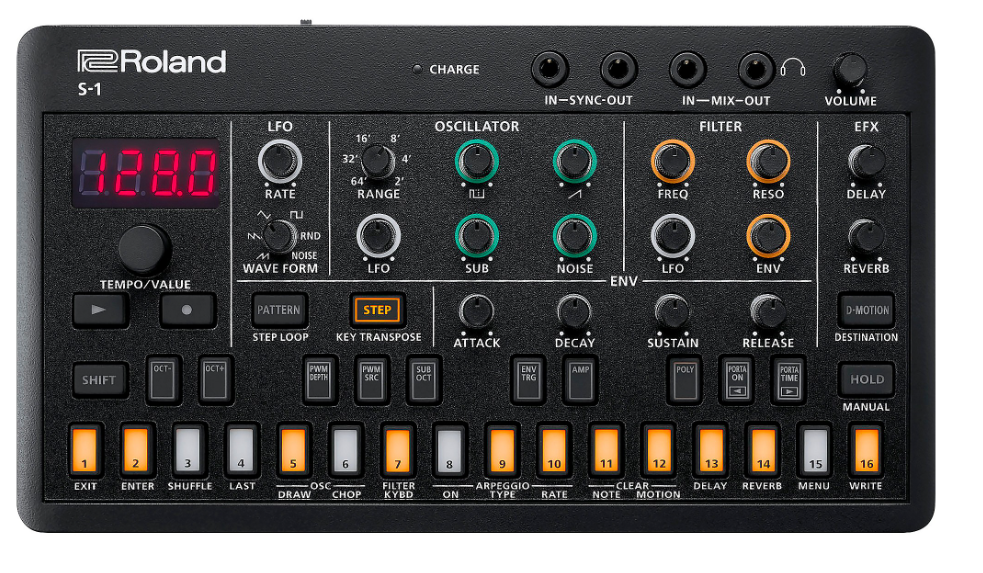
Palm-sized, battery-powered, and running the same ZEN-Core synthesis engine found in Roland’s flagship Jupiter-X. The Roland AIRA Compact S-1 proves that serious synthesis capability scales down to pocket dimensions without sacrificing sound quality. For a beginner, it provides access to Roland’s professional-grade sound engine in the least intimidating format possible.
What makes the S-1 particularly beginner-friendly is the knob-per-function layout where every parameter is directly accessible without menus, combined with a size that makes it feel approachable rather than overwhelming.
- Direct Controls
Every synthesis parameter has a dedicated physical control on the front panel, which means you learn synthesis by turning knobs and hearing the results without navigating screens or menus. The direct access teaches you what each parameter does through immediate audible feedback.
You turn the cutoff knob and hear the filter sweep. You adjust the resonance and hear the peak. The learning happens through your ears rather than through reading.
- ZEN-Core Quality
The ZEN-Core engine is the same synthesis platform that powers Roland’s professional instruments, which means the sounds you create on the S-1 are production-quality rather than toy-grade. As a beginner, having sounds that hold up in actual productions means you can use the S-1 in real music from day one rather than treating it as a training tool you’ll outgrow.
- Ribbon Input
A touch ribbon replaces a traditional keyboard for pitch input, which sounds unusual but actually removes one of the barriers beginners face: the anxiety of not being a keyboard player. You slide your finger to find notes, which feels more intuitive to non-musicians than pressing keys. The ribbon encourages experimental, gestural playing that produces interesting results without piano technique.
4. SOMA Lyra-4 Black
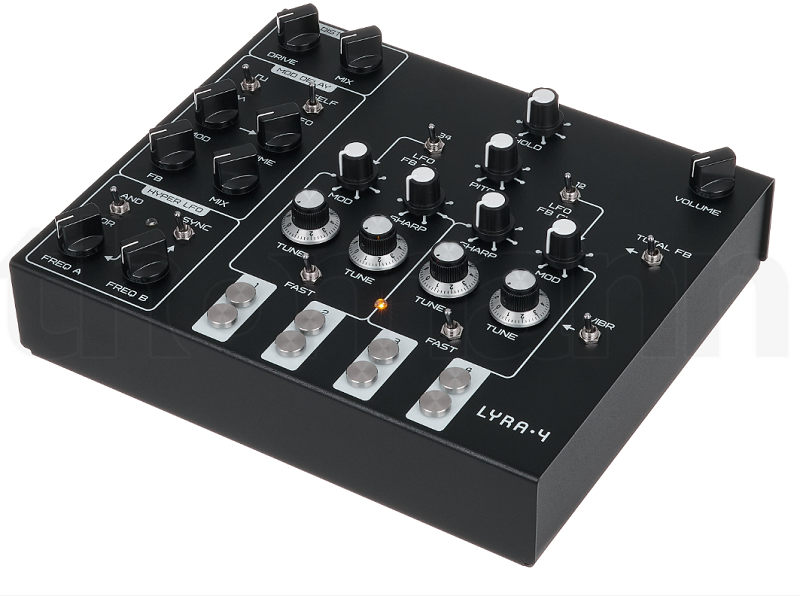
This is the unconventional pick on the list, and I’m including it because the SOMA Lyra-4 teaches a completely different lesson about synthesis than any other instrument here. Where most synths require you to understand oscillators, filters, and envelopes to get started, the Lyra-4 generates sound through analog feedback networks that respond to touch in an entirely organic, exploratory way.
SOMA Lyra-4 has no traditional keyboard, no standard synthesis parameters, and no presets. You touch metal contacts on the surface and sound emerges from the interaction between your body and the circuit. It’s more like playing an acoustic instrument than programming a synthesizer.
- Touch Interface
Metal contact points on the instrument’s surface respond to your skin’s conductivity, generating and shaping sound through direct physical touch. You place your fingers on different contact combinations and the circuit responds with tones, drones, and textures that change based on where you touch and how hard you press. The interface is completely intuitive because there’s nothing to learn except listening and experimenting.
- No Wrong Notes
There are no wrong answers when playing the Lyra-4 because there are no notes, scales, or musical conventions to follow. Every touch produces sound, and every combination of touches produces different sound. For beginners who feel intimidated by musical theory or keyboard technique, the Lyra-4 removes all of those barriers and replaces them with pure exploration.
- Analog Character
The fully analog circuit produces warm, organic, unpredictable sounds with a quality that digital synthesis doesn’t replicate. The analog character means everything you hear has a living, breathing quality where the tones shift and evolve continuously rather than sitting static. For a beginner, the organic response teaches you to listen carefully because the sound is always moving.
- Creative Freedom
The absence of conventional structure makes the Lyra-4 a tool for pure creative experimentation where you discover sounds rather than constructing them. There’s no right way to play it, which means a complete beginner is on equal footing with an experienced synthesist. The instrument rewards curiosity rather than knowledge, which is a genuinely liberating starting point.
5. Yamaha Reface DX
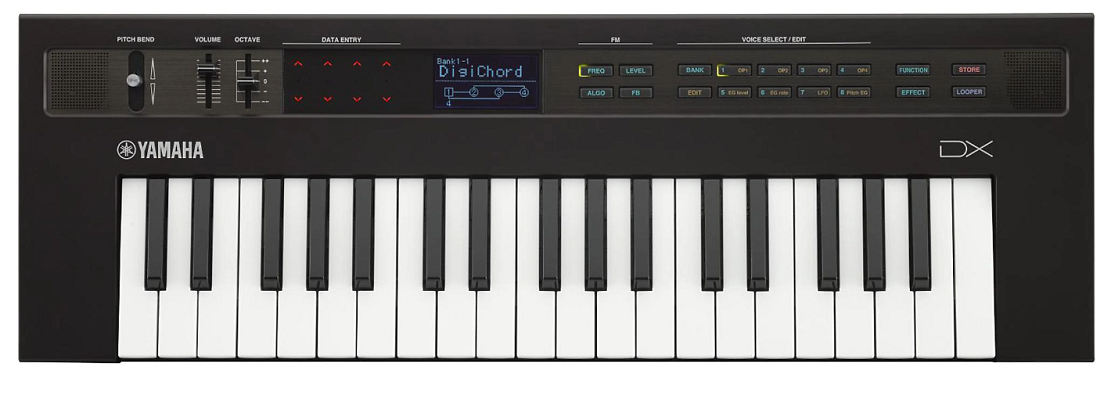
FM synthesis has a reputation for being complex and unintuitive, but the Yamaha Reface DX makes it accessible through a touch-based interface that lets you adjust FM parameters by pressing and dragging on a smooth surface rather than navigating pages of numbers.
Yamaha Reface DX gives you four-operator FM synthesis with built-in effects, a mini keyboard, battery power, and a built-in speaker in a compact format that you can use anywhere.
For beginners who are curious about sounds beyond standard analog territory, the electric pianos, metallic bells, glassy pads, and percussive textures that FM synthesis produces, the Reface DX is the most approachable way to explore that world.
- Touch Controls
The touch slider interface replaces the DX7’s notorious menu system with a surface where you see and adjust all four operators simultaneously by touching and dragging. The visual representation of the FM algorithm with direct touch manipulation makes FM programming intuitive in a way the original DX series never managed. You see which operators are active, touch to adjust their levels, and hear the result immediately.
- FM Character
Four-operator FM synthesis produces the specific crystalline electric pianos, metallic stabs, and bell-like tones that defined 1980s pop and R&B. These sounds are impossible to create with standard analog subtractive synthesis, which means the Reface DX gives you access to a completely different tonal world. For a beginner building their production palette, FM sounds fill gaps that analog and virtual analog synths leave open.
- Built-in Speaker
A built-in speaker with battery power means you can play the Reface DX anywhere without headphones, cables, or power outlets. The self-contained nature is important for beginners because it eliminates the setup friction that can prevent you from picking up the instrument and playing.
6. Arturia MicroFreak
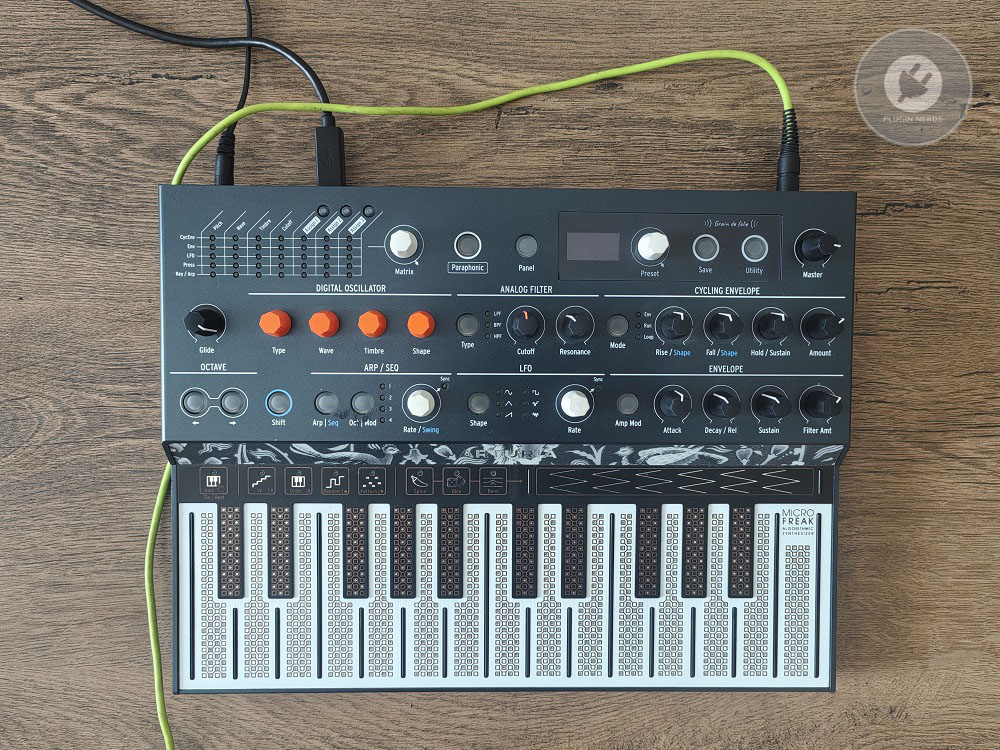
More synthesis variety per dollar than anything else on this list, with a capacitive touch keyboard that responds to finger pressure in ways standard keys don’t.
MicroFreak gives you over a dozen different oscillator engines including virtual analog, wavetable, FM, Karplus-Strong, and granular synthesis, all feeding through a Steiner-Parker analog filter in a compact format with a step sequencer and modulation matrix.
The MicroFreak is the entry point I recommend when someone asks “what beginner synth will teach me the most about synthesis?” because the engine variety exposes you to fundamentally different approaches to sound generation from a single instrument.
- Engine Variety
Over a dozen oscillator engines covering virtual analog, wavetable, superwave, FM, Karplus-Strong, granular, and more give you a survey course in synthesis methods. Instead of learning only subtractive synthesis, you encounter wavetable scanning, physical modeling, frequency modulation, and granular processing from the same instrument. The variety teaches you that synthesis isn’t one thing. It’s many fundamentally different approaches to creating sound.
- Touch Keyboard
The 25-key capacitive touch surface responds to finger pressure and position, not just key press velocity. The touch response becomes an expressive control that lets you shape sound through pressure, which is a more intuitive form of expression than standard velocity sensitivity for many beginners. The keyboard also provides a different tactile experience that feels less intimidating than traditional piano-style keys.
- Analog Filter
A real Steiner-Parker analog filter processes whatever the digital oscillator engines produce, adding the warmth and resonance character that purely digital budget synths lack. For a beginner, the analog filter teaches you about subtractive synthesis (removing frequencies to shape tone) because it processes all of the different engines consistently. You learn what a filter does once, and that knowledge applies regardless of which oscillator engine you’re using.
- Modulation Matrix
A comprehensive modulation matrix lets you connect any modulation source to any destination. The matrix teaches you about modulation routing, one of the most important synthesis concepts, through hands-on experimentation. Connecting an LFO to filter cutoff teaches you about tremolo. Routing an envelope to pitch teaches you about pitch envelopes. These fundamental connections apply to every synthesizer you’ll ever use.
- OLED Display
An OLED screen shows real-time visual feedback on waveforms, filter curves, and parameter values. The visual feedback is particularly valuable for beginners because it connects what you hear with what you see. Watching a waveform change shape as you adjust pulse width, or seeing the filter curve respond as you sweep the cutoff, builds understanding through dual sensory feedback.
7. Behringer MS-1 MKII
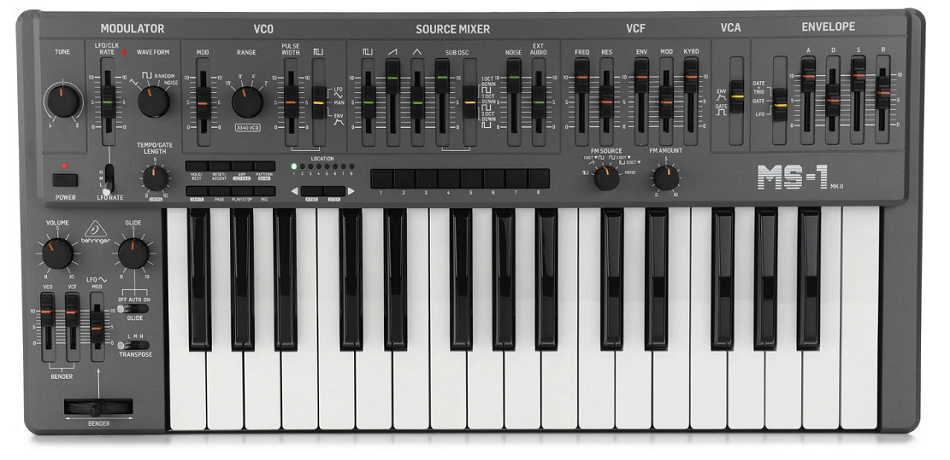
A monophonic analog synthesizer inspired by the Roland SH-101, one of the most straightforward and immediate-sounding analog synths ever made.
Behringer MS-1 MKII gives you a single analog oscillator through an analog filter with an arpeggiator and step sequencer in a format with dedicated controls for every parameter. The simplicity is the point.
For beginners who want to learn pure analog subtractive synthesis without the complexity of multiple oscillators, digital engines, or deep modulation systems, the MS-1 strips the concept down to its essentials.
- Simple Signal Path
One oscillator through one filter with straightforward envelope and LFO control gives you the cleanest possible introduction to subtractive synthesis. Every parameter change produces an obvious audible result because there’s only one sound source being processed. The simplicity means you learn what each control does without the complexity of multiple interacting oscillators confusing the results.
- Analog Sound
The real analog oscillator and filter produce the warm, organic tone quality that defines analog synthesis. Starting your synthesis education on real analog hardware means you learn what analog warmth, filter resonance, and oscillator character actually sound like, which gives you a reference point for evaluating every virtual analog and software synth you encounter later.
- Step Sequencer
The built-in step sequencer follows the SH-101’s programming approach where you enter notes one at a time and the sequence plays back through the synth’s filter and envelope settings. The sequencer teaches you about pattern-based composition and how synthesis parameters interact with programmed note sequences, which is fundamental to electronic music production.
8. Novation MiniNova
A compact polyphonic synth with a vocoder, animate buttons, and a hardware interface that makes complex sound manipulation feel immediate and performable. Novation MiniNova packs 18-voice polyphony with three oscillators per voice, extensive effects, and a 37-note mini keyboard into a format designed for hands-on performance rather than screen-based programming.
What makes the MiniNova stand out as a beginner instrument is the Animate feature, where pressing buttons triggers pre-programmed parameter changes that teach you what modulation does to sound without requiring you to program anything yourself.
- Animate Buttons
Eight Animate buttons each trigger pre-programmed parameter changes when pressed, instantly transforming the current sound. Holding an Animate button might open the filter, add distortion, engage chorus, and shift the pitch simultaneously. The buttons teach you about real-time sound manipulation by letting you hear dramatic changes before you understand how to program them. You learn what’s possible first, then learn how to create those changes yourself.
- Vocoder
A built-in vocoder with microphone input turns your voice into a synthesized instrument, which is engaging for beginners because it creates an immediate personal connection between you and the sound. You sing or talk while playing chords and hear your voice transformed through the synth engine. The vocoder makes the MiniNova feel like more than a keyboard. It feels like a performance tool from the moment you plug in a mic.
- VocalTune
Built-in vocal processing beyond the vocoder adds pitch correction and harmonization to your voice through the synth. The vocal features give you additional ways to interact with the instrument that go beyond playing keys, which keeps beginners engaged because there’s always something new to explore.
- Preset Library
A large factory preset library with sounds organized by category provides hundreds of starting points covering every common synth sound type. The presets are designed to showcase the MiniNova’s capabilities, and browsing through them teaches you about the range of sounds synthesis can produce before you start designing your own.
9. Korg Volca FM2
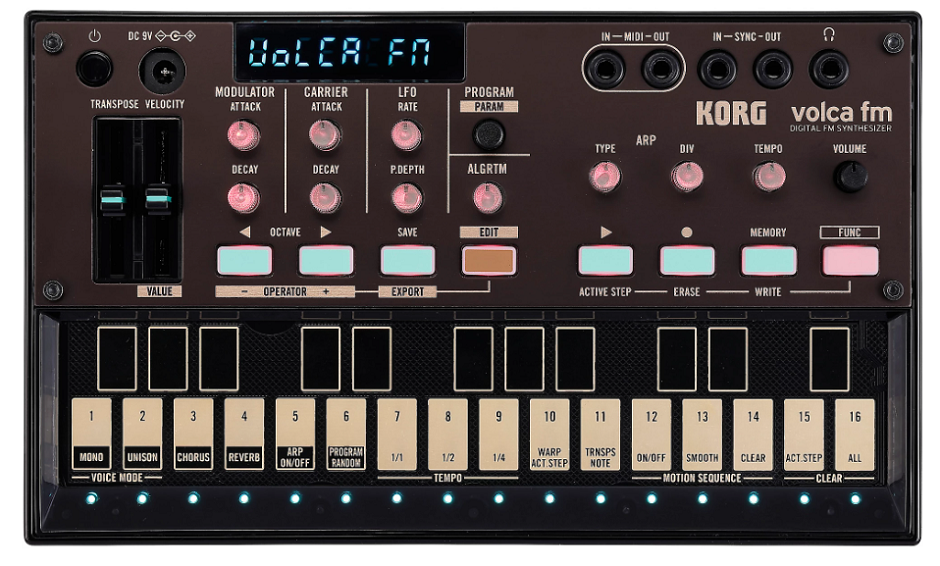
The most affordable way to get your hands on six-operator FM synthesis that’s compatible with original DX7 patches, meaning forty years of accumulated FM sounds are available to you immediately. Korg Volca FM2 gives you six voices of FM polyphony with chorus, reverb, a step sequencer, and motion recording in a palm-sized, battery-powered format.
For beginners curious about FM synthesis, the Volca FM2 provides access to the largest patch library in synthesizer history (the DX7 catalog) at the lowest possible cost, which means you can explore thousands of sounds before you program a single one yourself.
- DX7 Patches
Compatibility with original Yamaha DX7 SysEx patches gives you access to the vast online library of DX7 sounds accumulated over four decades. You download patches from free repositories, transfer them to the Volca, and explore thousands of classic FM sounds. The library gives you an enormous sonic education in what FM synthesis can do before you attempt to create your own sounds.
- Motion Sequence
Korg’s motion sequencing records knob movements and plays them back as per-step automation. The motion recording teaches you about parameter automation by letting you create evolving sequences where the sound changes on every step based on your physical gestures. You twist a knob while a sequence plays, the Volca captures your movement, and every loop sounds different from then on.
- Six Voices
Six-voice polyphony (doubled from the original Volca FM’s three) lets you play chords, which is essential for experiencing FM synthesis properly because many of its most iconic sounds (electric pianos, bells, pads) are designed to be played polyphonically.
- Battery Portable
Battery power with a built-in speaker means you can explore FM synthesis anywhere without cables or external equipment. The portability and self-contained nature lower the barrier to practice because you can pick up the Volca and start experimenting with no setup time.
- Step Sequencer
A 16-step sequencer with active step editing provides a compositional tool that interacts with the FM engine. Programming a melodic sequence and then automating FM parameters across those steps creates evolving phrases where both the notes and the timbres change, which teaches you about the relationship between sequence and synthesis.
10. Stylophone Theremin
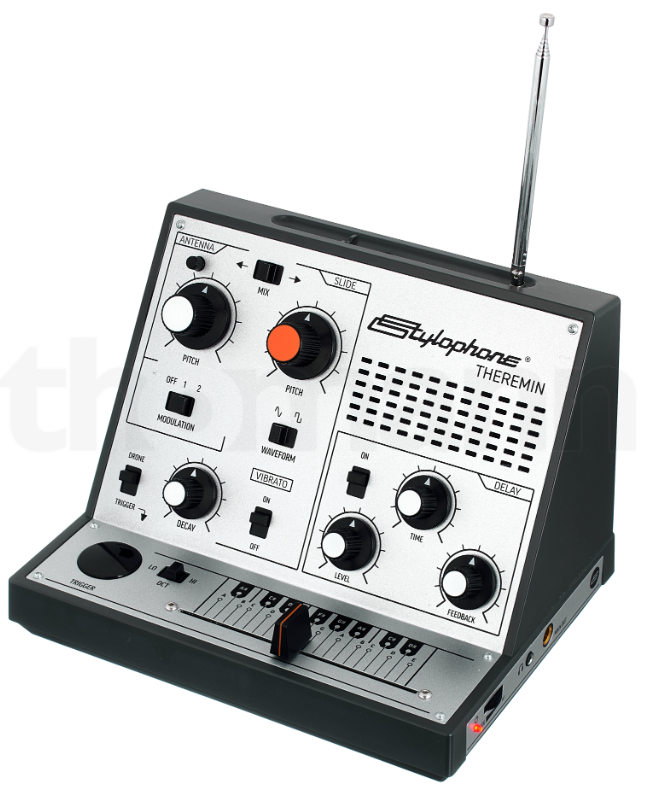
Something completely different. The Stylophone Theremin is a contactless electronic instrument where you control pitch by moving your hand through the air near the antenna, producing the eerie, swooping sounds that theremins have contributed to music and film since the 1920s.
It’s not a synthesizer in the traditional sense, but it teaches you about electronic sound generation and pitch control through one of the most intuitive interfaces imaginable.
The Theremin requires no music theory, no keyboard technique, and no technical knowledge. You wave your hand and sound happens. For someone who’s never touched an electronic instrument, that’s a powerful introduction.
- Gesture Control
You control pitch by moving your hand toward and away from the antenna, with proximity determining the note. The gestural control is completely intuitive because it works the way you’d expect: closer is higher, farther is lower. There are no buttons to press, no keys to hit, no menus to navigate. The instrument responds to your body movement in the most direct way possible.
- Volume Antenna
A second antenna controls volume through proximity, giving you independent control of pitch and dynamics using both hands. The two-antenna interaction teaches you about the relationship between pitch and amplitude, which is a fundamental concept in music and synthesis, through physical gesture rather than abstract theory.
- Analog Sound
The analog oscillator produces the smooth, continuous tone that theremins are known for. The sound is pure and unprocessed, which makes it a clean introduction to the concept of electronic oscillation that everything in synthesis is built upon. You’re hearing the most fundamental building block of electronic music in its most direct form.
- Skill Building
Playing the Theremin develops pitch control, hand coordination, and musical listening skills that transfer to any other electronic instrument. Learning to find specific pitches by ear in a continuous pitch space trains your ear more effectively than playing a keyboard where the notes are predetermined. The skill development is genuinely musical even though the interface is unconventional.
11. Modal Cobalt5s
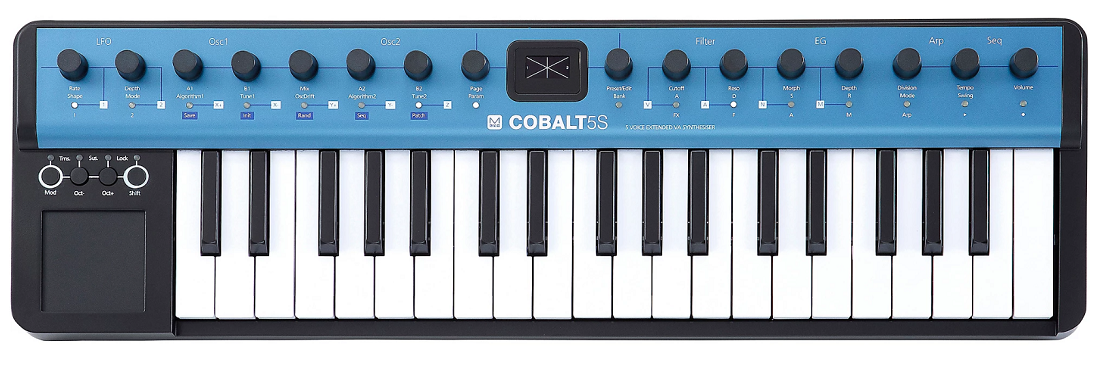
A five-voice virtual analog synthesizer with an interface designed around accessibility and immediacy. Modal Cobalt5s gives you polyphonic synthesis with multiple algorithm options, a four-axis joystick, and an arpeggiator in a compact, well-built package that feels more substantial than its size suggests.
For beginners who want polyphonic capability (the ability to play chords) in a dedicated hardware synth without the complexity of flagship instruments, the Cobalt5s provides a balanced entry point.
- Joystick Control
The four-axis joystick provides simultaneous control over multiple parameters from a single physical interface. For beginners, the joystick is more intuitive than reaching for individual knobs because you make broad, gestural movements that affect the sound in multiple dimensions at once. The interaction feels performative and immediate rather than technical and precise.
- Algorithm Options
Multiple synthesis algorithms beyond basic subtractive give you different tonal starting points that expand the Cobalt5s beyond simple filtered waveforms. The algorithm variety introduces you to different approaches to sound generation within a single instrument, broadening your understanding of what synthesis can do.
- MPE Compatible
MPE (MIDI Polyphonic Expression) compatibility means the Cobalt5s can respond to per-note expression data from MPE controllers. While you may not own an MPE controller as a beginner, the compatibility means the synth supports the most expressive MIDI standard available, which matters if you eventually invest in more advanced controllers.
- Polyphonic Chords
Five-voice polyphony lets you play chords, which is a fundamental requirement for learning harmony and creating full-sounding patches. Many budget synths are monophonic (one note at a time), which limits what you can do musically. The Cobalt5s’s five voices give you enough polyphony to play most common chord voicings.
- Build Quality
The aluminum and steel construction gives the Cobalt5s a solid, premium feel that budget instruments often lack. For a beginner making a first hardware investment, the build quality matters because it signals that you’ve bought a real instrument rather than a toy, which affects how seriously you take your practice.
- Software Editor
A desktop editor application provides visual access to deep parameters alongside the hardware controls. The editor supplements the front panel by showing the full signal flow visually, which helps beginners understand how synthesis parameters connect and interact. Seeing the signal path while hearing changes builds conceptual understanding faster than either alone.
12. Behringer DeepMind 12
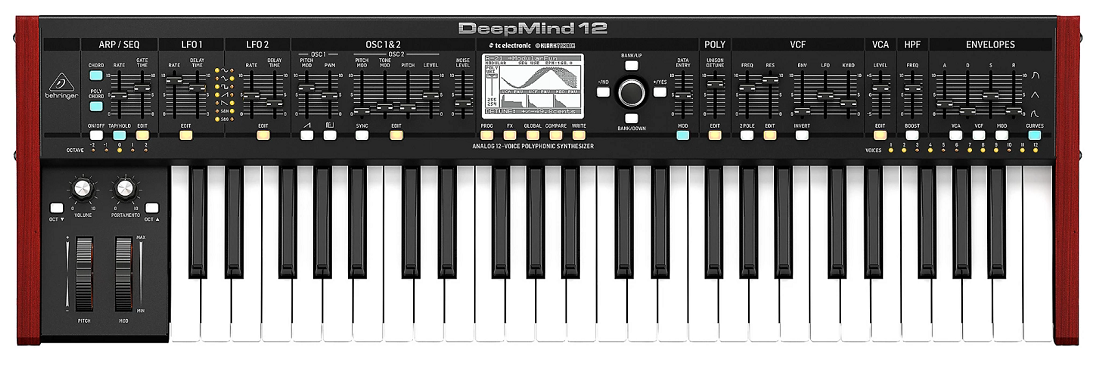
If you want to start with something that you genuinely will not outgrow for years, the Behringer DeepMind 12 is a full-featured, twelve-voice analog polysynth that offers more capability than most beginners will fully explore but remains accessible because of its logical layout and visual editing tools.
Behringer DeepMind 12 makes this beginner list not because it’s simple (it isn’t), but because its wireless tablet editor gives you a visual interface for programming that makes complex analog synthesis approachable.
- Visual Programming
The wireless tablet editor shows every parameter visually with clear graphical representations of the signal flow, modulation routing, and effects chain. For a beginner, the visual editor transforms an overwhelming number of parameters into an understandable, navigable interface where you can see how sound flows from oscillator through filter through amplifier to output. The visual approach teaches synthesis architecture while you program sounds.
- Twelve Voices
Twelve voices of analog polyphony mean you can play full chords, layer sounds, and create sustained textures without voice stealing. Starting on a twelve-voice polysynth means polyphony never limits your musical ideas, and you learn to think in chords and layers from the beginning rather than being constrained to single-note lines.
- Effects Included
The 32-slot effects engine adds reverb, delay, chorus, and more to your analog sounds internally. For a beginner, having quality effects built in means your sounds are complete and mix-ready without buying external effects. The effects also teach you about signal processing because you hear the difference between dry and processed sound in real time.
13. Arturia AstroLab 37
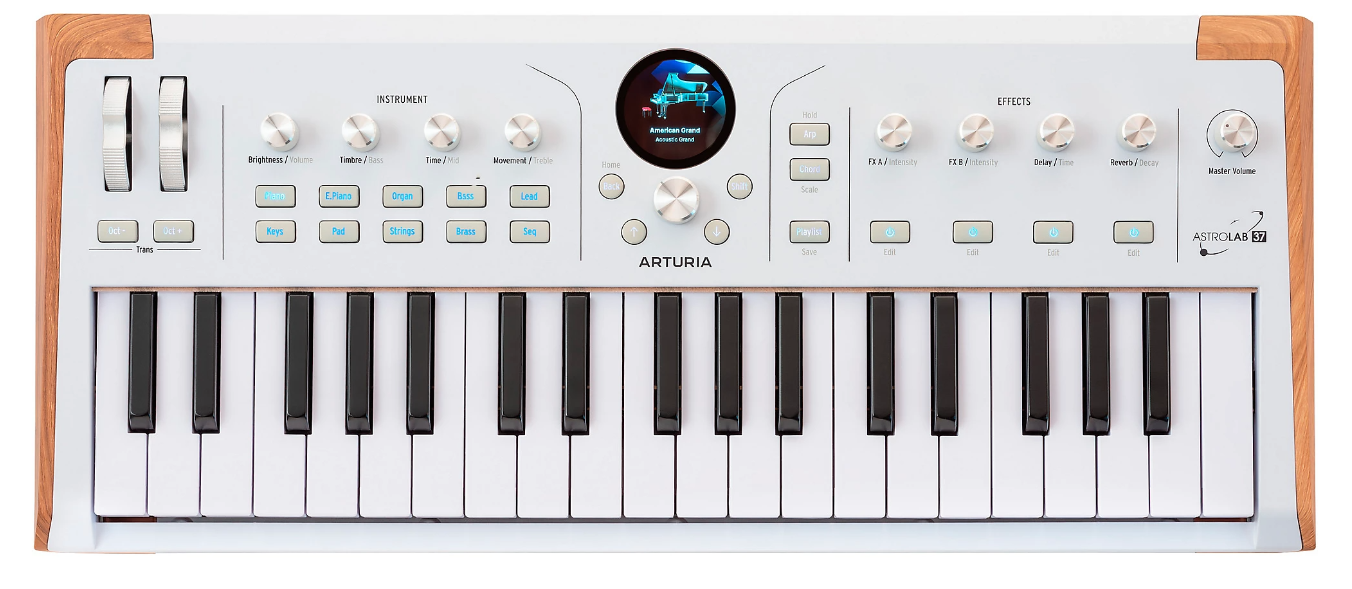
Closing the numbered list with an instrument that takes a fundamentally different approach to making synthesis accessible.
The Arturia AstroLab 37 is a standalone performance keyboard that runs Arturia’s V Collection synthesis engines natively in hardware, giving you access to over 1,800 presets modeled on more than 40 legendary keyboards and synthesizers without needing a computer.
For a beginner who wants access to the broadest possible range of high-quality sounds immediately, the AstroLab 37 delivers more sonic variety from a single instrument than anything else on this list.
- Sound Library
1,800+ presets spanning pianos, organs, analog synths, digital synths, electric pianos, and hybrid instruments give you an encyclopedia of keyboard sounds in a single instrument. The preset library covers virtually every iconic keyboard sound from the past fifty years, which means you can explore what a Minimoog sounds like, what a DX7 electric piano feels like, and what a Jupiter-8 pad does all from the same keyboard.
- Macro Shaping
Four macro controls labeled Brightness, Timbre, Time, and Movement let you shape any preset with meaningful, musical parameter adjustments without understanding the underlying synthesis. You turn the Brightness knob and the sound gets brighter. You increase Movement and the sound becomes more animated. The macros teach you about sound shaping through musical concepts rather than technical parameters.
- Chord & Scale Modes
Built-in Chord and Scale modes keep your playing locked to musically useful notes and harmonies regardless of your keyboard skill. The Scale mode prevents wrong notes entirely, and the Chord mode generates full chords from single key presses. For beginners who aren’t confident keyboard players, these modes let you create musically coherent content immediately while you develop your playing technique.
- Standalone Operation
The AstroLab 37 runs completely independently without a computer, laptop, or any external device. You turn it on, select a preset, and play. The standalone operation eliminates the complexity of software, drivers, and computer configuration that can frustrate beginners who just want to make music. You plug in headphones or connect to speakers and you’re performing.
Extra: SOMA Rumble of Ancient Times
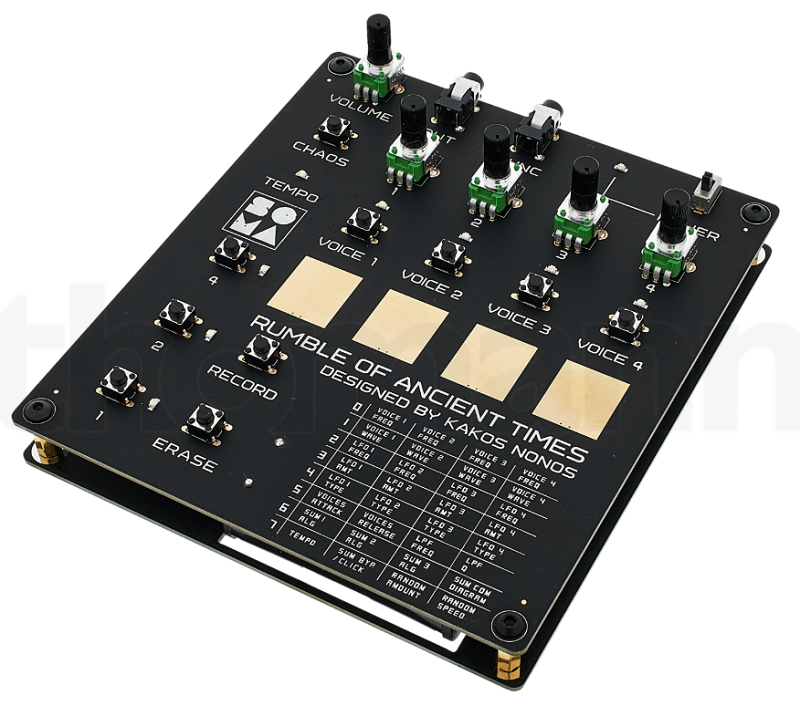
I’m adding this as a bonus because it represents a completely different philosophy about what a musical instrument can be. SOMA Rumble of Ancient Times generates sound through chaotic analog feedback networks where multiple circuit stages feed into each other, producing complex, evolving tones that emerge from the interaction between components rather than from any programmed oscillator.
For a beginner, the Rumble of Ancient Times teaches the most fundamental lesson about electronic sound: that electricity itself produces sound when circuits interact, and that musical expression can emerge from guiding chaos rather than controlling parameters.
- Feedback Circuits
The sound generation uses analog feedback loops where circuit stages feed into each other, producing textures that evolve continuously and never repeat. You don’t program sounds on the Rumble. You find them by adjusting the feedback relationships between circuit elements. The approach teaches a fundamentally different lesson about electronic sound than conventional synthesis: that musical content can emerge from systems rather than being deliberately constructed.
- Touch Plates
Metal touch surfaces let you interact with the circuit using your body, where your skin’s conductivity becomes part of the feedback network. The touch interaction creates a direct physical connection between you and the electronic sound that no keyboard, knob, or fader provides. For a beginner, the tactile intimacy teaches you that electronic music can be as physical and embodied as playing an acoustic instrument.
- Evolving Drones
The feedback architecture naturally produces sustained, evolving textures that shift and morph over time without any input. You set up a feedback state and the instrument generates content indefinitely, which teaches you about generative music and ambient production from a purely analog starting point.
- Unpredictable Results
The chaotic circuit behavior means you never fully know what sound will emerge from a given configuration, which teaches you to listen rather than plan. The unpredictability is the instrument’s fundamental lesson: that some of the most interesting sounds in electronic music come from embracing the unexpected rather than controlling every parameter.
- Analog Quality
The fully analog circuit produces warmth, harmonic richness, and organic character that digital chaos generators don’t replicate. Every sound carries a natural, living quality because the analog components introduce subtle, continuous variation that makes even simple drones feel alive. For a beginner’s ear, the analog quality establishes a reference point for what organic electronic sound feels like.
Get the Free Plugin Starter Kit
The genuinely useful free DAWs and plugins worth installing. No filler. Straight to your inbox.

Hello, I’m Viliam, I started this audio plugin focused blog to keep you updated on the latest trends, news and everything plugin related. I’ll put the most emphasis on the topics covering best VST, AU and AAX plugins. If you find some great plugin suggestions for us to include on our site, feel free to let me know, so I can take a look!