

The room is the last thing most producers think about. I was the same for a long time. By the time I had spent money on a microphone I liked, an interface I trusted, and a set of monitors I had listened to carefully, the room those things were sitting in had not changed at all. The recordings still smeared. The low-end still confused me. The mixes still did not translate.
The problem was not the equipment. I was making EQ decisions in a room that was actively lying to me — building up bass in the corners, smearing transients with early reflections, creating flutter echo between parallel walls. Compensating with processing is the instinct, and it is the wrong fix. You are correcting what the room does to the signal instead of stopping the room from doing it.
Acoustic treatment was the single change I made that improved every recording and mixing decision that followed it. Not a new microphone, not a better interface. The room. A treated space makes EQ calls that stick, gives you low-end that reads correctly across playback systems, and produces vocal recordings that do not need heavy post-processing to sound clean.
The eight products here cover the full upgrade path from a rented flat with no wall modifications permitted through to a small studio room treated properly with absorbers, bass traps, and diffusion. I have used or recommended each of these. The starting point is $48.99. The path between them is gradual and fully reversible at every step.
1. Self-Adhesive Acoustic Felt Panels — from $48.99

The reason this is the first recommendation is not performance — it is the psychology of starting. The thing that stops most producers from ever treating their room is the sense that it means drilling, permanent installation, and visually destroying whatever space they work in. These panels remove every one of those objections. I have recommended them specifically to producers in rented accommodation more times than I can count, and the response is consistently the same: the perceived barrier to starting simply disappeared.
The Self-Adhesive Acoustic Felt Panels from the Pluginerds store come in a 4-piece pack with peel-and-stick adhesive backing and multiple colour options including black, white, light grey, and light camel, starting from $48.99. If you rent, these go up without drilling and come down without leaving marks. If you want to test a treatment position before committing, you can reposition them. A 12-piece option is also available at $96.99 for more comprehensive coverage.
Felt behaves differently from open-cell foam. Where budget foam panels address mainly upper-mid and high frequencies, felt absorbs across a broader spread of the midrange — the frequencies between roughly 500Hz and 4kHz where the human voice, guitars, and keyboards all live. These are not bass traps, but for tightening vocal recordings and taking the boxiness out of a small room, they work exactly where it counts most.
- Renter-Friendly Setup
The self-adhesive backing means no drilling, no wall damage, and no deposit deducted at the end of a tenancy. For producers in rented flats or shared houses where wall modification is not permitted, this matters enormously.
The adhesive holds the panels securely during daily use and is repositionable, so you can adjust placement as you identify where your room’s worst reflection points are. Start with the wall directly behind your monitor position and the walls to your left and right at ear height before adding panels elsewhere.
- Felt Material Advantage
Felt absorbs midrange frequencies with a density that open-cell acoustic foam at comparable thickness cannot match. The material has enough density to control vocal-range reflections without the overly dead character that aggressive foam treatment creates in small rooms.
The goal for home recording is not a dead room — it is a controlled one. Felt panels at reflection points give you the clarity needed to make good recording decisions without turning your bedroom into an anechoic chamber that feels wrong to work in.
- Colour Options That Blend In
Available in black, white, light grey, and light camel, these panels can sit on your walls without looking like you wallpapered your bedroom with studio foam. The aesthetic matters when your recording space is also where you sleep, study, or have guests.
The 4-piece starter pack covers the most critical primary reflection points. Expand with the 12-piece pack once you have identified where further treatment will help your specific room.
Shop at Pluginerds — Self-Adhesive Acoustic Felt Panels from $48.99
2. t.akustik HiLo-N40
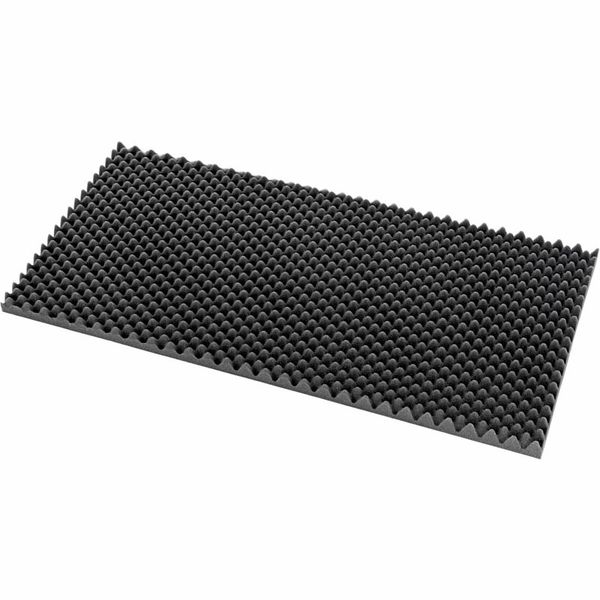
The way I treated my first proper recording space was wrong. I bought eight panels at once and installed them before I had any real understanding of where the room’s worst problems actually were. The HiLo-N40, sold individually, is the option I wish had been my default starting point — you buy four to six, put them at the positions that matter most, listen to the difference, and decide what to add next based on what you actually hear rather than what you assumed. t.akustik HiLo-N40 is a convoluted foam absorber measuring 1000 × 500 × 40mm per panel, made from HiLo-F polyurethane foam with high rigidity and low density, sold individually. You buy as many panels as you need, place them where your room’s problems are worst, and add more as you hear what is still missing.
The per-piece model is unusual in acoustic treatment where most products come in fixed sets. For producers who want to experiment with coverage — trying a panel behind the microphone first, then at side-wall reflection points, then building outward from there — the HiLo-N40 suits that approach naturally. Over 100,000 pieces sold through Thomann alone tells you this is one of the most field-tested budget acoustic foam solutions available.
- Upper Frequency Control
The convoluted surface profile achieves an effective absorption range starting from 4000Hz, making the HiLo-N40 a high-frequency and upper-midrange absorber. This is the range where acoustic guitars, cymbal shimmer, and vocal air live — controlling these reflections is what removes the harsh, bright smearing that makes home recordings sound amateurish.
At 40mm depth, the HiLo-N40 is honest about its scope. It is a high-frequency panel, not a broadband treatment solution. Producers who understand that distinction and want to address flutter echo and treble scatter as a first step will find it delivers exactly what it promises.
- Build at Your Own Pace
Per-piece pricing means you can start with four to six panels at the primary reflection points, assess the improvement, and decide whether to expand before spending more. No commitment to a room kit with panels left unused because your room needed less coverage than the set assumed.
The HiLo-N40 is light enough to test positions with removable adhesive strips before deciding on permanent placement. Test positions change what you hear more than most producers expect — spending a week with panels at a new position before gluing them is always time well spent.
- Fire Rated
The HiLo-N40 carries a fire reaction rating in accordance with MVSS 302, the standard applied to automotive and studio acoustic materials. For panels installed on walls in a room with electronics running continuously, fire behaviour is not an optional consideration.
Not every budget acoustic foam product on the market carries this certification. At the price point of the HiLo-N40, it is a meaningful detail that separates it from no-name foam alternatives.
3. t.akustik WAS-7 Absorber 8pcs Set
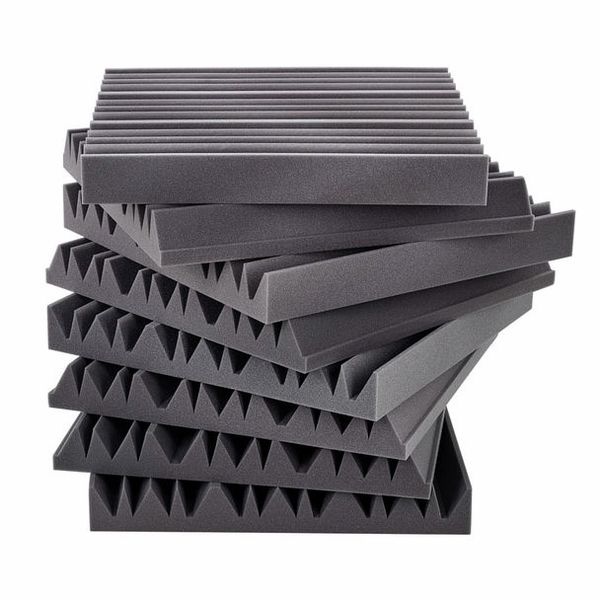
There is a specific point in treating a room where the improvement stops being subtle and starts being audible on every single recording you make. For me that point came when I had enough coverage to address both primary side-wall reflection points and the rear wall at the same time. The WAS-7 eight-piece set is sized exactly to reach that threshold in a typical bedroom or home studio space. t.akustik WAS-7 Absorber 8pcs Set gives you eight 600 × 600 × 75mm convoluted foam panels in polyurethane, with an effective absorption range from approximately 800Hz. Eight 60cm square panels cover roughly 2.88 square metres of wall — enough to address both primary side-wall reflection points, the rear wall behind your listening position, and the wall behind your microphone when recording. That combination is the minimum treatment that produces a meaningful, audible improvement in both recording and mixing quality.
The WAS-7 is the point where room treatment stops being a minor adjustment and starts making a material difference to decision-making quality. When the room’s primary reflections are controlled, EQ calls stick. You stop fighting the room through the mix.
- 75mm Depth Midrange Extension
At 75mm depth, the WAS-7 extends absorption further into the midrange than thinner panels at 40mm. The deeper the absorbing material relative to the wavelength being treated, the further down in frequency the panel’s effective range extends. At 75mm, you are absorbing not just flutter echo and high-frequency scatter but the lower-mid buildup that makes home recordings sound thick, undefined, and difficult to EQ accurately.
For mixing in particular, controlling midrange reflections is the change that makes the most difference to reliable EQ decisions. When 500–1000Hz is accurate at the listening position, you stop making compensatory midrange cuts that cause problems downstream.
- Modular Panel Compatibility
The WAS-7 panels are cut to combine with other t.akustik panel types including their diffuser series. Starting with this absorber set and adding diffuser panels to the rear wall later is a coherent upgrade path — the panels fit together cleanly without misaligned edges or gaps.
For producers planning to eventually add rear wall diffusion while keeping absorption at the primary reflection points, the WAS-7 is a natural foundation. The modular approach avoids being locked into a configuration that cannot evolve as your room and setup change.
- Optimised Convoluted Profile
The precisely cut convoluted surface increases effective absorption area relative to a flat panel of the same dimensions. The angled profile also creates some diffuse scattering at higher frequencies rather than pure absorption, which prevents the room from sounding completely dead while still controlling problematic reflections.
The result sounds controlled and even across the frequency range rather than the deadened, muffled character that cheap studio foam can create when over-applied.
4. Auralex Acoustics Roominators D36-DST Burgundy
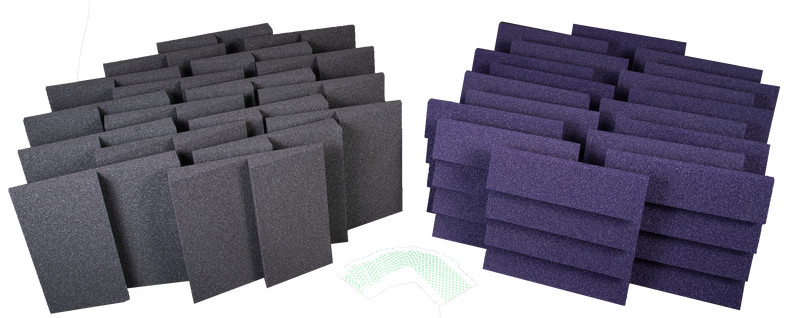
I have been using Auralex products in recording spaces for long enough that the Roominators kit has gone through several iterations while I have been recommending it. The reason I keep pointing producers toward it when they want a complete initial treatment is straightforward: every component works, the Tubetak adhesive does not damage walls, and the dual-thickness approach addresses a genuine acoustic problem rather than a marketing angle. The company has been building acoustic treatment since 1977. That is not a detail I mention casually. Auralex Acoustics Roominators D36-DST delivers 36 panels in two different thicknesses — 18 DST-112 1-inch charcoal panels and 18 DST-114 2-inch burgundy panels — plus Tubetak Pro adhesive for installation. The dual-thickness approach is deliberate: 1-inch panels target flutter echo in the upper frequencies while 2-inch panels extend treatment into the lower-mid range. Applied together at the same reflection point, they cover more of the frequency spectrum than either thickness alone.
Auralex has been making acoustic treatment since 1977. The Roominators D36-DST is their home studio entry kit, and the build quality, panel density, and adhesive system all reflect a company whose products appear in professional recording studios worldwide.
- Two-Thickness Coverage System
The combination of 1-inch and 2-inch panels in the same kit is Auralex’s approach to broadband treatment in a spot-treatment format. Thicker panels absorb lower frequencies more effectively because the depth of absorbing material relative to the wavelength determines how far down in frequency the panel works.
Alternating both thicknesses at the same reflection point — a 1-inch panel next to a 2-inch panel — gives you effective absorption across a wider frequency range than a single-thickness approach at the same total cost. The 36-panel count covers multiple reflection points without using every panel on a single wall.
- No-Damage Installation
The included Tubetak Pro adhesive bonds the panels to wall surfaces securely without the wall damage that liquid acoustic sealant causes. For producers in rented rooms, this distinction matters — Tubetak dries cleanly and panels can typically be removed without pulling paint.
The installation system is simpler and cleaner than working with acoustic adhesive sealant from a cartridge gun, which most first-time buyers are not equipped for. Everything needed to mount 36 panels is included in the box.
- Documented Acoustic Performance
Auralex panels appear in professional studios and are used by audio engineers who depend on accurate monitoring environments. The acoustic properties are independently documented and the product’s performance is not a seller claim — it is a matter of decades of professional use. For producers who want certainty rather than a gamble, the Auralex name carries genuine weight at this price point.
5. t.akustik CBT-37 Corner Bass Traps
I had been working in my home studio with wall panels covering the primary reflection points for about two years before I finally put bass traps in the front corners. The difference was not subtle — it was immediately audible on the first mix I finished after installing them. The wall panels had been controlling midrange and high-frequency reflections. The corners had been accumulating bass the entire time, and I had been compensating with EQ cuts that were making every mix worse downstream without understanding why.
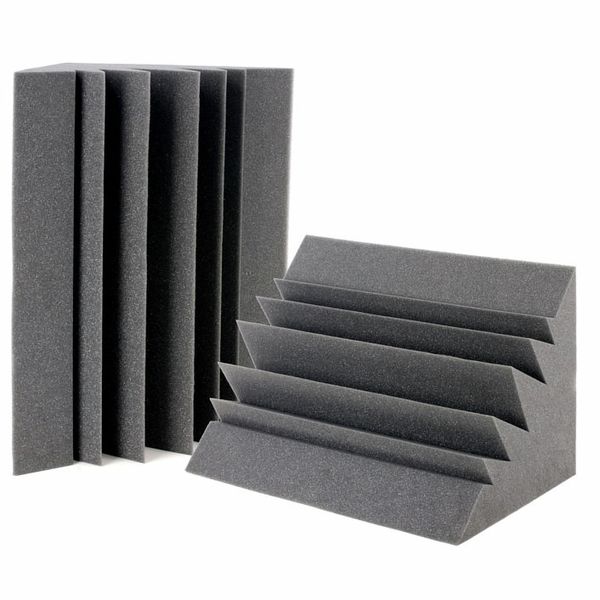
t.akustik CBT-37 Corner Bass Traps are triangular foam corner absorbers measuring 370 × 370 × 600mm per piece, sold in pairs, made from polyurethane soft foam at 25 kg/m³ bulk density. They fit into room corners vertically, stacked floor to ceiling or placed at ceiling-line corners, and address the low-frequency buildup that wall panels cannot treat because bass wavelengths require significant material mass or depth to absorb.
- Corner Mode Absorption
Room corners are where bass pressure peaks concentrate due to the interaction of axial, tangential, and oblique room modes at the room boundaries. Placing a dense absorbing mass in the corner intercepts more of this accumulated low-frequency energy than a flat wall panel, because the corner is where modal energy is highest.
Even a pair of CBT-37s in the two front corners of your room — nearest to the monitors — makes a measurable difference to bass monitoring accuracy. The improvement is most audible on kick drum, bass guitar, and sub-frequency content that would otherwise suffer from room-induced peaks and dips that make EQ decisions unreliable.
- Stackable for Increasing Treatment
The triangular profile is designed to stack vertically in corners, increasing total absorbing mass as your setup grows. Two traps in the front corners is a meaningful first improvement. Four traps covering all four floor-to-ceiling corners brings a small room substantially closer to a controlled monitoring environment for bass-heavy production.
The stackable design means you start with the minimum useful treatment and add material as your budget allows and as you hear what is still missing, rather than committing to a complete bass treatment system before establishing what your specific room actually needs.
- Freestanding in Corners
The triangular geometry allows the CBT-37 to stand unsupported in corners without adhesive, which is practical for renters and for producers who want to test treatment positions before committing to permanent placement.
The included acoustic adhesive is for permanent installation, but the traps function correctly in a corner position without it. The foam has enough mass to stay in position during normal use without risk of sliding.
6. t.akustik Desktop Absorber 120
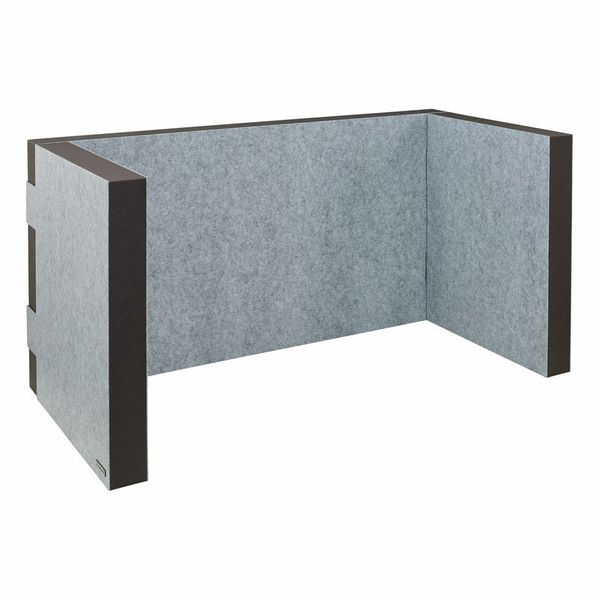
I spent a long time believing that wall treatment was all a close-mic vocal recording needed. Then a producer I work with played me a recording made inside a Desktop Absorber in a completely untreated room and put it next to a recording made in my treated space with the same microphone. The untreated-room recording inside the enclosure was cleaner. The desk surface, the screen, the keyboard — they had been adding a layer of near-field reflection to every close-mic recording I had made in a treated room, and I had not identified the source.
t.akustik Desktop Absorber 120 is a three-sided enclosed foam absorber with internal recording dimensions of 1040 × 600 × 500mm and a triple rubber decoupling system — rubber feet on the base, rubber absorbers between the panels, and elastic foam on the top panel. You place your microphone inside the enclosure and record. The recording environment is immediately cleaner regardless of what the room around it sounds like.
- Intercepts Desk Reflections at Source
The three-sided enclosure surrounds the microphone with absorbing material on the left, right, and rear sides, intercepting reflections off the desk surface and nearby objects before they reach the capsule. This is treatment that wall panels physically cannot provide — no amount of foam at the room boundaries addresses what bounces off your keyboard and screen into the microphone from 20 centimetres away.
For cardioid microphones with strong rear rejection, the biggest near-field problem is often not room reflections from behind but desk and screen reflections arriving from below and in front. The Desktop Absorber addresses exactly that.
- Triple Vibration Isolation
The rubber feet, inter-panel shock absorbers, and elastic foam top panel decouple the enclosure from desk vibrations that pass through the surface into the microphone stand. Desk vibration is an underappreciated noise source in home setups where the computer, hard drives, and audio interface share the same surface.
The triple decoupling provides simultaneous isolation from both airborne desk reflections and structure-borne vibration — which is the combination that makes close-mic home recording genuinely clean rather than merely adequate.
- Designed for Desk Recording
The Desktop Absorber 120 is sized and designed specifically for home producer, podcaster, singer-songwriter, and streamer vocal recording at a desk. If your primary use case is recording a voice or close-miked acoustic instrument at a desk setup, this is the most targeted improvement available and it works immediately, before changing anything else in the chain.
The comparison is direct: recording in the open room with all its desk and screen reflections in the signal versus recording inside the enclosure, which sounds cleaner, more direct, and more professional without touching the rest of the setup.
7. t.akustik Producer Set S Basic
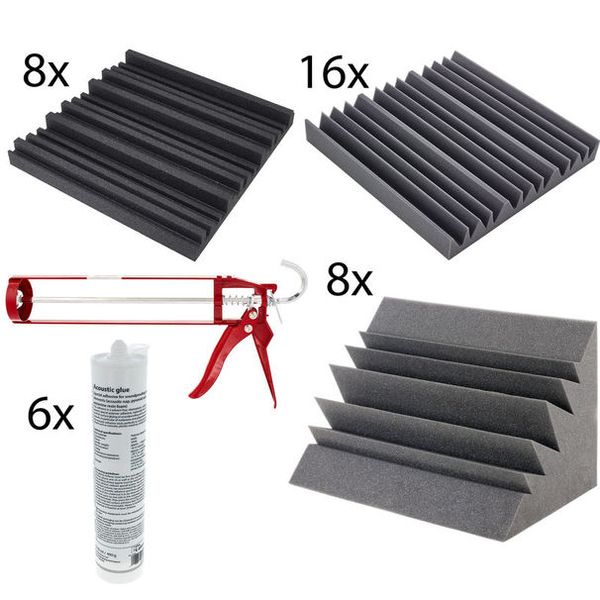
At some point building treatment incrementally stops being the right approach and a complete kit becomes the cleaner option. That point is usually when you are setting up a new space and want to treat it correctly from the start, or when you have enough coverage to understand exactly what is still missing. I recommend the Producer Set S Basic specifically because it includes diffusers alongside the absorbers — the one thing most foam packs skip and the one thing that prevents a fully treated room from feeling deadened. t.akustik Producer Set S Basic includes 16 standard absorbers, 8 broadband absorbers, and 8 diffusers, with all mounting material included, sized for small rooms. The inclusion of diffuser panels alongside the absorbers is what separates this from a foam pack — it is a complete acoustic approach, not partial treatment.
A room treated with only absorbers can become over-damped. It sounds unnaturally quiet and uncomfortable to mix in for long sessions. The Producer Set S Basic is built around the professional principle of absorption at reflection points and diffusion at the rear wall — a combination that produces a controlled room which still sounds and feels like a real space to work in.
- Absorbers and Diffusers Together
The 8 included diffuser panels are intended for the rear wall behind the producer’s listening position, where pure absorption would create an anechoic dead zone that makes extended mixing sessions uncomfortable. Diffusers scatter reflections in multiple directions at reduced amplitude, maintaining a sense of room space while eliminating the specific reflections that compromise stereo imaging and depth perception.
The professional treatment approach — absorption at the first reflection points, diffusion at the rear — is represented in the S Basic panel quantities. The counts are matched to the treatment methodology, not randomly assembled.
- Sized for Small Rooms
The panel counts in the S Basic are matched to small studio rooms — the bedroom-sized and box-room dimensions most home producers actually work in. Over-treating a small room with too much absorption creates a dead, uncomfortable listening environment. The S Basic panel density is calibrated to avoid that outcome.
Larger sets exist in the t.akustik Producer range for medium and large rooms. Buying the S Basic for a small room and expanding from there when you move to a larger space is more sensible than buying more material than the current room requires.
- Complete Mounting System Included
All acoustic adhesive and mounting hardware required for installation are in the box. This removes the additional step of sourcing compatible acoustic adhesive separately — a step that most first-time buyers do not anticipate and that frequently delays or complicates the installation.
The mounting system is compatible with all t.akustik panel types, so expanding the treatment later by adding bass traps or additional panels integrates cleanly with what is already in place.
8. Vicoustic Multifuser Wood MKII 36 Black
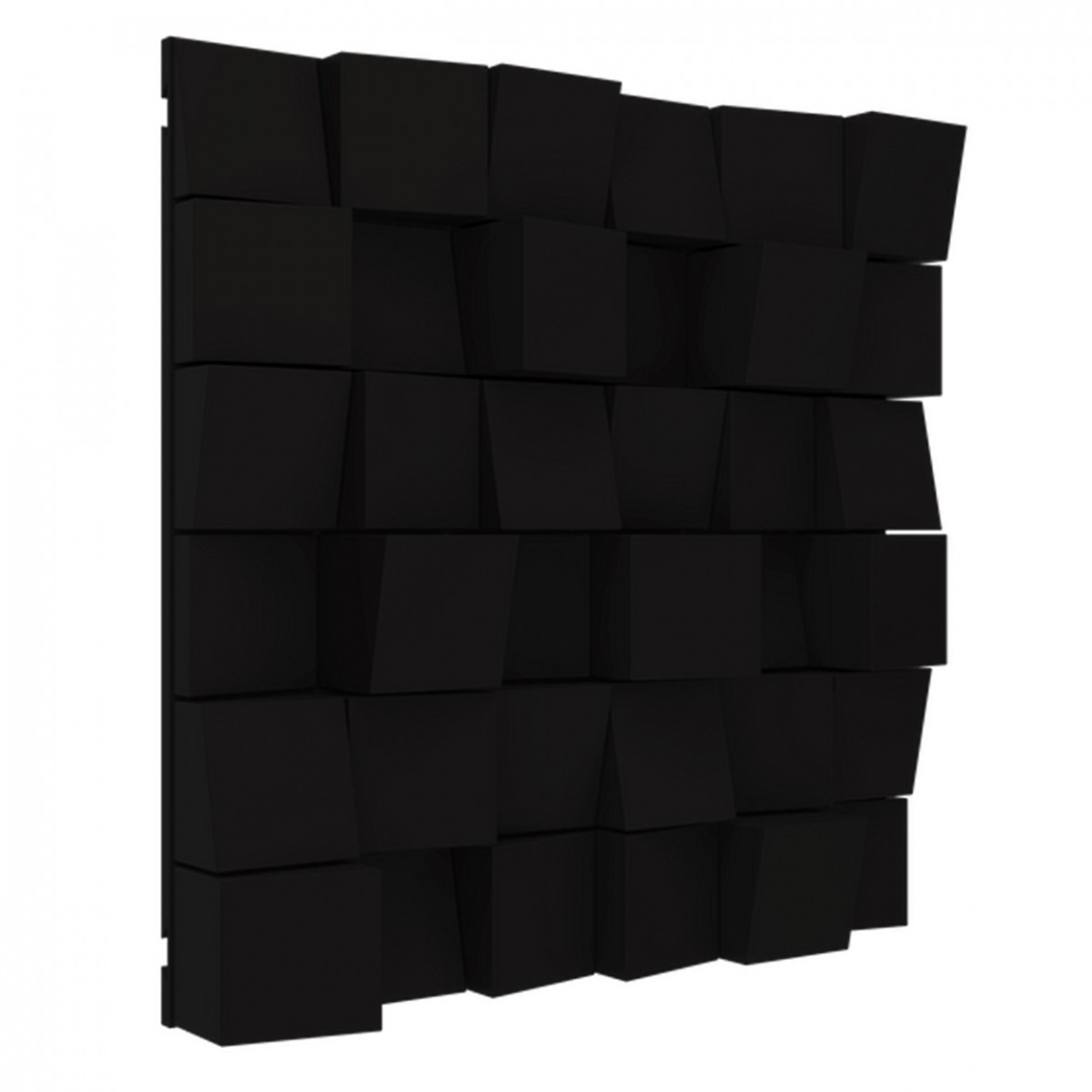
The Vicoustic Multifuser Wood MKII is the rear wall recommendation I make when the budget allows for the acoustically correct solution rather than the adequate one. By the time a producer is asking about rear wall treatment they have usually already worked through broadband absorption and corner trapping. The question at that point is whether to absorb the rear reflection or diffuse it. For long mixing sessions the answer is consistently diffusion — absorption on the rear wall removes the reflection entirely, which produces a monitoring environment that becomes fatiguing to work in.
Vicoustic Multifuser Wood MKII 36 Black is a 595 × 595 × 96mm solid wood acoustic diffuser with an effective range of 470Hz to 10kHz, finished in matte black with VicFix J Profile 80mm mounting hardware included. It scatters sound rather than absorbing it, addressing the problem of rear wall reflections in a way that pure absorption panels solve too aggressively — by removing the reflection entirely instead of dispersing it.
- Diffusion Over Absorption at the Rear Wall
An absorber on the rear wall removes the reflection. A diffuser scatters it in multiple directions at reduced amplitude. The sonic difference is reduced acoustic pressure at the listening position without the slightly muffled, claustrophobic character that a completely absorbed rear wall creates in small rooms.
For producers who mix for long sessions, diffused rear wall treatment is generally more comfortable to work in because it preserves a sense of natural space. Mixing decisions made in an acoustically comfortable room tend to be more reliable than decisions made in a fatiguing one.
- Solid Wood Construction
The real wood build is a meaningful step above plastic or foam diffusers in the same price range. Wood has more mass than foam and produces more consistent scattering across the effective frequency range. The panels maintain their geometry and acoustic performance over years of use — foam diffusers compress, chip, and discolour, while wood does not.
The matte black finish integrates with equipment racks, dark monitor setups, and black foam panels without visual conflict. The aesthetic quality is noticeably higher than budget acoustic products, which matters in a room you spend long hours working in.
- VicFix Mounting Hardware Included
Vicoustic’s VicFix J Profile 80mm system is included and creates a small air gap between the panel and the wall surface when mounted. This gap slightly improves low-frequency performance because the additional depth behind the panel extends the effective absorption range of the wood diffuser’s mass below its free-air specification.
The J Profile track system is the same across all Vicoustic panels, so adding more diffusers or Vicoustic absorbers to the same wall integrates cleanly. The mounting hardware makes the Multifuser removable — if you repaint or reconfigure the room, the panels come off cleanly without damage to the surface.

Hello, I’m Viliam, I started this audio plugin focused blog to keep you updated on the latest trends, news and everything plugin related. I’ll put the most emphasis on the topics covering best VST, AU and AAX plugins. If you find some great plugin suggestions for us to include on our site, feel free to let me know, so I can take a look!