

The first time I seriously used in-ear monitors for mixing, I expected to be disappointed. I had good monitors in a reasonably treated room and I assumed pulling them away from the speakers would mean losing accuracy. What I found instead was the opposite. Mixing through IEMs revealed problems in my low-end that my monitors had been masking — a bass buildup in my corner that I had been hearing for years and compensating for without realising it. The room had been lying to me, and I had been writing the corrections into every mix.
That is the core argument for IEMs in a home production setup. Speakers interact with the room. Every parallel wall, every untreated corner, every reflective surface modifies the frequency response at your listening position in ways you cannot control without significant acoustic investment. IEMs bypass that entirely. The signal goes directly from the converter into your ear canal, with no acoustic path to corrupt it. What you hear in IEMs is genuinely what is in the mix.
There are real limitations. You lose the physical sensation of bass through your body. The stereo imaging is inside your head rather than in front of you. Some producers find IEM-only mixing sessions fatiguing after long periods. The answer I have settled on — and that most engineers I know have also settled on — is to use IEMs and speakers together. Make decisions on IEMs, check on speakers, compare references. Each reveals something the other hides.
A production IEM is not a consumer earphone. The requirement is not exciting sound — it is accurate sound. The best production IEMs have flat-ish frequency responses, high isolation to keep room noise out of the monitoring signal, and build quality that can handle years of daily use. Consumer IEMs are tuned for enjoyment. Production IEMs are tuned for truth, which is a meaningfully different brief.
These six cover the range from an entry point well under £100 through to the professional-tier dual balanced-armature option that I reach for on anything where the mix needs to stand up under scrutiny.
1. 10mm Dynamic Driver IEM Earbuds with OFC Cable — from $76.99

The entry point for anyone who wants to start monitoring in-ear immediately without committing to a specific sound signature at a higher price. I have recommended these to producers who were unsure whether IEM monitoring was going to work for them before spending significantly more on professional options.
The 10mm Dynamic Driver IEM Earbuds with OFC Cable are available in multiple connection types including 3.5mm and USB-C, with mic and no-mic options, 10mm dynamic drivers, and an OFC (oxygen-free copper) cable for signal integrity, from $76.99. The 10mm dynamic driver is a large capsule for an IEM, delivering low-frequency extension that smaller drivers struggle to match at this price.
The OFC cable is the specification detail that separates these from cheaper alternatives. Standard copper cables develop microphonic noise over time — movement translates through the cable into the audio signal as an audible low-frequency thud. OFC cables are more resistant to this, which matters considerably when wearing IEMs during production sessions where you are moving between your keyboard, controller, and interface.
- Multiple Connection Options
3.5mm and USB-C connection variants mean these work directly with mobile devices, laptops, and audio interfaces without adapters. The USB-C version integrates its own DAC, giving you a clean digital-to-analogue conversion path regardless of what the output device is handling internally.
For producers who work across multiple setups — a desktop at home and a laptop at a second location — having both connection types available from the same IEM removes one compatibility question from the workflow.
- 10mm Dynamic Driver Advantage
Dynamic drivers move air in a way that balanced armature drivers do not. The 10mm capsule gives these IEMs a natural, physical quality to bass frequencies that smaller drivers and balanced armature designs at the same price often lack. For producers working in bass-heavy genres where the low-end judgement is critical, this translates to monitoring that communicates the weight of the kick and the body of the bass without requiring a subwoofer or large studio monitors to assess them.
- Colour and Configuration Options
Available in multiple colours and configurations including mic-equipped versions for producers who need a quick communication option without swapping devices. The mic versions function as a headset for calls, reference playback on a phone, and casual monitoring when you are away from the studio setup.
Shop at Pluginerds — 10mm Dynamic Driver IEM Earbuds from $76.99
2. Sennheiser IE 100 Pro Black
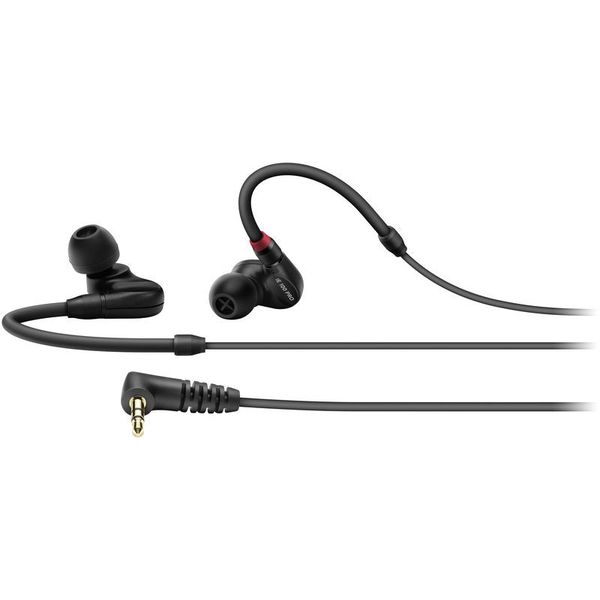
Sennheiser built the IE 100 Pro to serve musicians who need dependable monitoring in live environments, but the same qualities that make it reliable on a loud stage make it practical for studio production. I have used this in sessions where I needed to reference a mix quickly without setting up a full monitoring chain, and the consistency between sessions is what makes it useful — it sounds the same every time, which is what you want from a monitoring tool.
Sennheiser IE 100 Pro Black is a dynamic in-ear monitor with 20–18,000Hz frequency range, 115dB SPL at 1kHz/1Vrms, <26dB passive noise attenuation, and a detachable cable with three silicone and one foam eartip set included. The dynamic driver gives it a natural, cohesive sound across the frequency range that suits music listening and mix referencing.
The IE 100 Pro sits at the entry level of Sennheiser’s professional IEM range, which means it benefits from the acoustic engineering that goes into the IE 200, IE 300, and higher models, expressed within a budget that is accessible to producers who are investing in their monitoring setup for the first time.
- Detachable Cable for Longevity
The detachable cable is the most significant practical feature for producers who use IEMs regularly. IEM cables fail at the connector, the entry point, or through repeated bending stress. On fixed-cable IEMs, cable failure means replacing the unit. The IE 100 Pro’s detachable cable means a failed cable costs a cable replacement, not a new pair of monitors.
For day-to-day studio use where the same pair of IEMs is put on and taken off repeatedly, the detachable cable is the feature that determines how long the monitor lasts in regular service.
- Passive Isolation Appropriate for Production Work
The <26dB passive attenuation reduces ambient noise to a level where you can make accurate monitoring judgements without the room interfering with the signal. In a home studio with computer fan noise, air conditioning, or shared building sounds, this isolation removes those variables from the monitoring equation.
The attenuation is passive — achieved by the physical seal of the eartip in the ear canal rather than electronic noise cancellation. Passive isolation does not introduce the phase anomalies that active noise cancellation creates, which makes it more suitable for critical listening work.
- Consistent Sennheiser Sound Signature
The IE 100 Pro uses the same driver design philosophy as Sennheiser’s established professional IEM range. The consistent sound signature across their monitoring line means producers who start on the IE 100 Pro and move to a higher-tier Sennheiser IEM later hear a familiar and evolved version of the same monitoring character rather than a completely different reference point.
3. Sennheiser IE 200
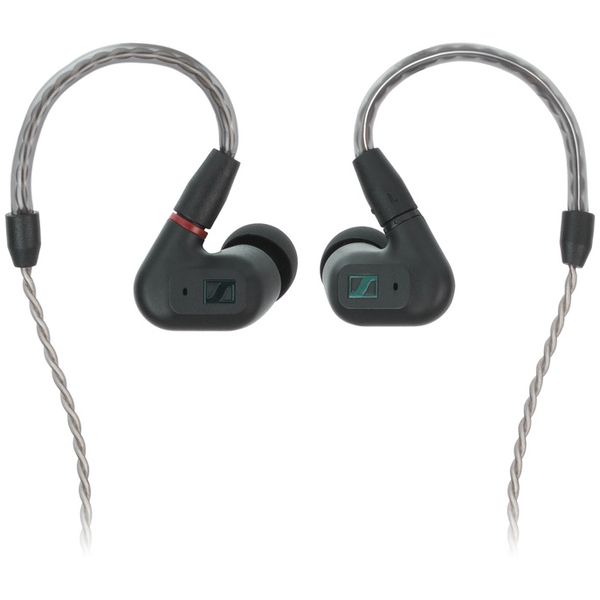
The IE 200 is where Sennheiser’s audiophile product line begins, which makes it a different proposition to the IE 100 Pro. Where the 100 Pro is designed for stage dependability, the IE 200 is engineered for listening accuracy — a distinction that matters significantly for production use. When I first tried them I was not expecting the bass extension from a 7mm driver to hold up under close scrutiny on kick-heavy mixes. It does.
Sennheiser IE 200 is a closed dynamic in-ear headphone with a 7mm extra-wide band true response driver, 6–26,000Hz frequency range, 18 Ohm impedance, MMCX detachable cable, and a 3.5mm angled gold-plated jack. The extra-wide band driver is designed specifically to reproduce frequencies at both extremes — 6Hz at the low end, 26kHz at the top — without the rolloffs that compromise monitoring accuracy on lesser IEMs.
The MMCX connector is the professional standard for detachable IEM cables, giving access to a wide range of third-party cable upgrades and replacements compared to proprietary connectors.
- Extra-Wide Band True Response Driver
Sennheiser’s 7mm XWB driver is engineered to avoid the frequency rolloffs at the high and low extremes that standard dynamic drivers exhibit. The flat-response goal of diffuse-field equalisation means the IE 200 is tuned to represent what is in the recording rather than add excitement to the listening experience.
For mixing decisions — whether a hi-hat needs trimming, whether the bass guitar has too much 80Hz, whether the vocal presence is balanced — this accuracy is the property that matters. An IEM that sounds exciting tells you what you want to hear. An IEM that sounds accurate tells you what is actually there.
- MMCX Standard Connectivity
The MMCX connector is the most widely adopted detachable IEM cable standard. This means replacement cables, balanced cables, and cables of varying lengths from any manufacturer will fit the IE 200 — a significant practical advantage over IEMs with proprietary connectors.
For producers who want to adapt their monitoring setup to different environments — a short cable for studio, a longer cable for live use, a balanced cable for specific interfaces — MMCX connectivity makes those adaptations straightforward.
- Lightweight Monitoring Comfort
At 4g per earbud, the IE 200 is light enough that long production sessions do not create the ear fatigue that heavier IEM designs cause over extended wear. This matters more than most producers anticipate before they have experienced monitoring fatigue from heavier units during a six-hour session.
4. Shure SE215 Pro CL
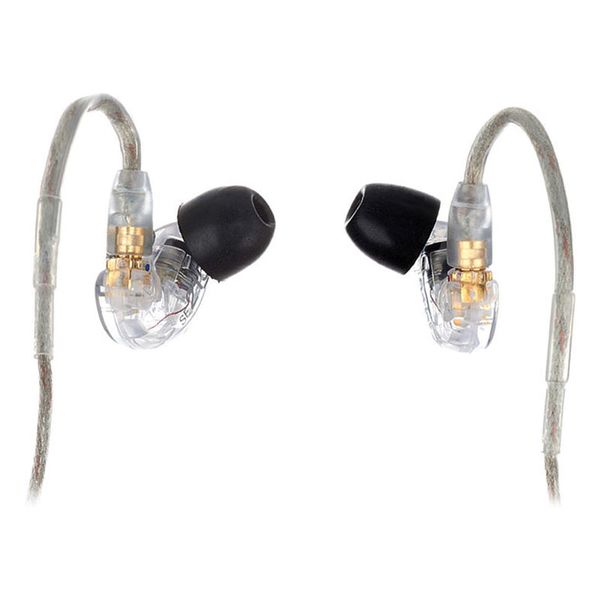
The SE215 is the IEM I have seen on more backstage monitor racks, home studio desks, and engineer bags than any other single model. That ubiquity is not coincidence — it reflects a balance of isolation, sound quality, and build durability that has kept it relevant for well over a decade. I have owned two pairs and both lasted years of regular daily use before the second cable eventually failed on one.
Shure SE215 Pro CL is a dynamic sound isolating in-ear earphone with a single dynamic MicroDriver, 22–17,500Hz frequency range, over 90% ambient noise shielding, detachable Kevlar-reinforced cable with 360° rotation, and a transport case with foam and silicone earmolds in three sizes. The 37dB isolation is among the highest of any dynamic driver IEM at this price.
The warm low end that the SE215 is known for is a consideration for mixing use — it does flatter bass frequencies slightly, which means you need to account for that character when making mix decisions. Once you have calibrated for it the consistency is extremely useful.
- 37dB Passive Isolation
The sound-isolating design achieving over 90% ambient noise reduction — approximately 37dB — is the highest passive isolation specification of any IEM on this list. In a home studio with significant ambient noise, or in a space where controlling acoustic isolation is not possible, this specification becomes the deciding factor.
At 37dB of isolation, the monitoring environment inside the IEM is consistent regardless of what is happening in the room around you. That consistency is what makes the SE215 a reliable production monitor in variable environments.
- Kevlar-Reinforced Detachable Cable
The Kevlar-reinforced detachable cable with a wire-over-ear cable guide is the SE215’s build quality signature. Most IEM cables fail at the point where repeated bending occurs. The Kevlar reinforcement and the over-ear routing — which places the stress-bearing section of the cable away from the connector — extend cable life considerably beyond standard designs.
The 360° rotation at the gold-plated connector means the cable can be adjusted to fit the ear without torque stress on the connection, which is another failure point that Shure’s cable design addresses directly.
- Comprehensive Eartip Selection
The included foam and silicone eartips in three sizes cover the fitting range for most ears. Achieving a proper seal with IEMs is the single most important factor in both isolation performance and bass response accuracy — a poorly-sealed IEM loses all bass and most isolation simultaneously.
The combination of foam tips for maximum isolation and silicone tips for comfort options means the SE215 can be optimised for the session type rather than compromising between isolation and wearability.
5. beyerdynamic DT 70 IE
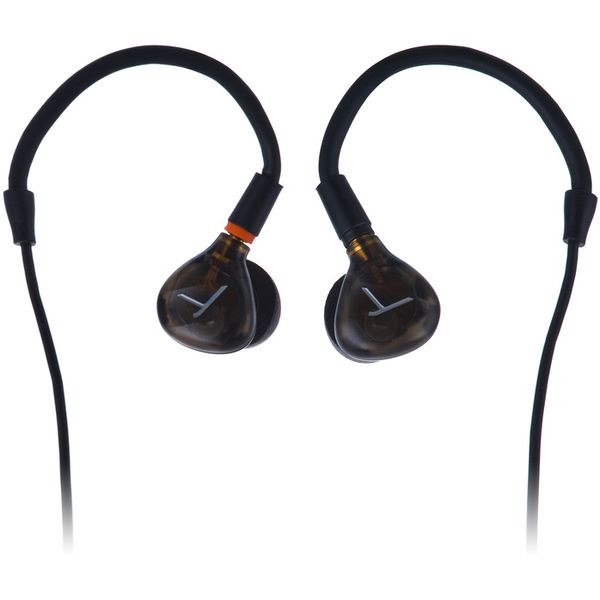
The DT 70 IE is the most production-specific product on this list in terms of stated design intent. Beyerdynamic tuned it specifically for mixing and monitoring applications, which means the frequency response decisions were made with a mixing engineer’s requirements in mind rather than a performer’s preferences. I had not used beyerdynamic IEMs before testing the DT 70 IE and was genuinely impressed by how much detail in the upper midrange — the area where harshness lives — was represented accurately without being harsh itself.
beyerdynamic DT 70 IE is a dynamic in-ear earphone with 1-way fullrange driver, tuned specifically for mixing and monitoring applications, 5–40,000Hz frequency response, 39dB passive dampening, IP68 waterproofing, detachable MMCX cable, and made in Germany. The 5Hz low frequency extension and 40kHz high extension are deliberately beyond the threshold of hearing, which gives the driver a flat operating range well within the audible band without the rolloff artifacts that occur when a driver is pushed to its limit.
The Headphone Lab software compatibility allows calibrated speaker simulation via the DT 70 IE — a useful feature for producers who want to reference how a mix sounds on typical playback systems without switching monitoring setups.
- Tuned for Mixing Specifically
The mixing and monitoring application tuning is the product’s defining feature. Beyerdynamic applied the same voicing approach used in their studio headphone line — the DT 770, 880, and 990 series — to a canal IEM format. The result is an IEM whose frequency balance was designed to communicate what needs to be heard in a mix rather than what sounds enjoyable during passive listening.
For producers who use IEMs as a primary mixing reference, the alignment between the IEM’s stated purpose and the actual use case is a meaningful advantage over using a consumer IEM that was voiced for a different audience.
- IP68 Waterproofing and German Build Quality
IP68 waterproofing — the highest achievable rating, tested at 1.5m depth for 30 minutes — means the DT 70 IE can survive the most demanding use conditions without protection. For a studio IEM that will be put on and taken off multiple times per session, the ingress protection extends the usable life of the monitor significantly.
The made in Germany manufacturing standard reflects the same quality control applied to beyerdynamic’s professional headphone range, which has a documented track record of decades-long operational life in professional environments.
- Headphone Lab Software Integration
The free beyerdynamic Headphone Lab software, compatible with the DT 70 IE, applies factory-calibrated speaker simulation profiles through the IEM. This creates a virtual speaker monitoring environment that corrects for the IEM’s physical characteristics and simulates reference speaker playback, enabling credible mixing decisions on IEMs without the mental recalibration that raw IEM monitoring requires.
For producers who primarily mix on speakers and use IEMs for referencing rather than primary monitoring, this software bridge makes the comparison between both monitoring environments more reliable.
6. Shure SE425-CL
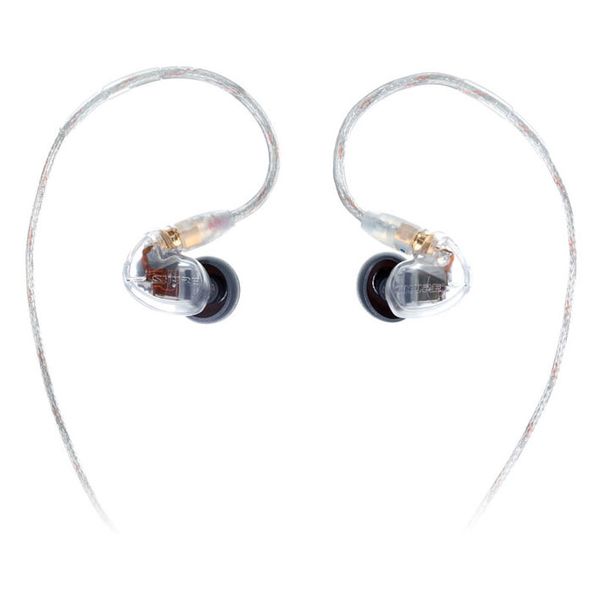
The SE425 is the IEM I reach for on sessions where I cannot afford to be wrong. The dual balanced armature driver configuration — a dedicated tweeter and woofer in each earpiece — provides the driver separation and transient accuracy that a single dynamic driver, regardless of quality, cannot fully match. I made the jump from the SE215 to the SE425 after completing a mix that I was satisfied with on the SE215 and then hearing significant differences on the SE425 that needed addressing. The SE425 found what the SE215 missed.
Shure SE425-CL is a professional 2-way stereo in-ear earphone with two balanced armature drivers — a dedicated tweeter and woofer — delivering a detailed, balanced sound with up to 90% ambient noise shielding, Kevlar-reinforced detachable cable with 360° rotation, and a comprehensive eartip selection with foam and silicone options. Balanced armature drivers are the transducer technology used in custom-fitted professional monitor systems costing many times more.
The SE425’s performance at this price point is what has kept it as Shure’s mid-range reference IEM for over a decade without meaningful replacement.
- Dual Balanced Armature Driver Architecture
Balanced armature drivers are more efficient, faster in transient response, and more precise in frequency separation than dynamic drivers of equivalent size. The two-driver crossover in the SE425 — one driver handling the full bass and lower-midrange range, one handling upper-midrange and treble — provides a level of frequency accuracy that single-driver IEMs cannot achieve.
For mixing decisions where the separation between instruments in the 2–8kHz range is critical — vocal presence, guitar definition, synth cut — the SE425’s driver architecture resolves those distinctions with a clarity that changes what decisions you can make confidently on IEMs.
- Shure Reference Monitoring Lineage
The SE425 sits in Shure’s SE series between the SE215 (single dynamic driver) and the SE535 (three balanced armature drivers). The lineage of Shure’s SE monitors in professional studio and live environments is documented across decades — these are the IEMs that have been used by audio engineers whose work you have heard, in conditions where monitoring accuracy directly affected the quality of the final result.
That track record is not a marketing claim. It is the reason the SE425 has remained in professional use for well over a decade while comparable products have been discontinued and replaced.
- Identical Build Quality to SE215
The Kevlar-reinforced detachable cable with over-ear routing and 360° rotation is the same system used on the SE215, which means the build quality and longevity profile is consistent. Producers who have experience with the SE215’s durability can expect the SE425 to behave identically in daily use.
The clear housing makes driver condition visible for inspection — after extended use, the balanced armature drivers in the SE425 can be examined for any changes that might affect performance, which is not possible with opaque housing designs.

Hello, I’m Viliam, I started this audio plugin focused blog to keep you updated on the latest trends, news and everything plugin related. I’ll put the most emphasis on the topics covering best VST, AU and AAX plugins. If you find some great plugin suggestions for us to include on our site, feel free to let me know, so I can take a look!