
The question I get asked most often by producers who are just getting a recording setup together is not about microphones. It is about audio interfaces — which one, how much, do they need phantom power, what cables. I spent years answering that question the standard way. Then I noticed that a lot of those same producers had still not recorded anything three months later. The interface had become the thing standing between them and starting.
USB condensers remove that barrier completely. No interface, no phantom power, no XLR cable chain to get wrong. You plug the microphone into a USB port, open your DAW, select it as the input, and you are recording. The first time I set one up for a vocalist who had been trying to start tracking for six months, we had a clean take in under ten minutes from taking it out of the box. That stuck with me.
The limitation is real and I will not minimise it: USB microphones cannot be routed through an interface later, and you are locked to a single polar pattern. But for the first year of most producers’ recording work — the period where capturing the idea matters more than optimising the signal path — none of that is a practical problem.
Every microphone on this list is a condenser capsule. That matters because condenser capsules capture the upper-frequency detail, the vocal air, and the nuance in acoustic instrument recordings that dynamic microphones simply do not. The range runs from $32.99 to around £160. I have been recommending and using USB condensers long enough to know which ones hold up in regular recording use.
These seven are the ones I point producers to.
1. FIFINE K669 USB Condenser Microphone — $32.99

The K669 is the microphone I mention first to any producer who tells me they need to start recording this week, not after they have spent three months comparing audio interfaces. I have pointed more first-time home recorders toward this microphone than any other single piece of equipment, and the feedback is always the same: they actually started recording instead of planning to.
The FIFINE K669 USB Condenser Microphone is a USB-A condenser microphone with a cardioid polar pattern, 16-bit/48kHz USB audio interface, a built-in headphone output for zero-latency monitoring, and a volume control knob, at $32.99. Plug it in and your DAW recognises it immediately on both Windows and Mac without any additional setup.
At this price the K669 is not competing with professional studio condensers. What it does deliver — and delivers well — is a clean cardioid condenser pickup suitable for recording vocals, acoustic guitar, and close-miked sources in a home environment. For a producer tracking a reference vocal over a beat or capturing a demo performance before setting up a full chain, the K669 handles the job without slowing the session down.
- Zero Setup Time
The class-compliant USB audio means the K669 registers as a standard audio device on any modern operating system without a driver. No installation, no troubleshooting audio routing, no phantom power checkbox to find. Open your DAW, change the input to the K669, and record.
For producers who work in bursts — a vocal idea at midnight, a guitar part before work — that instant availability matters more than specification depth. The setup time from taking it out of the bag to recording is under two minutes.
- Built-In Headphone Monitoring
The 3.5mm headphone output on the microphone body provides zero-latency direct monitoring of the capsule signal. This is meaningful for vocalists: hearing the raw microphone signal rather than the processed DAW return eliminates the disorientation of latency-induced doubling and makes pitch-critical performances noticeably more consistent.
The volume knob controls the headphone output level independently of the recording level, which gives you the basics of a monitoring mix without needing an interface or separate headphone amplifier.
- Cardioid Pattern for Home Environments
The cardioid polar pattern focuses pickup directly in front of the capsule and rejects sound from the sides and rear. In a home recording environment with fan noise, nearby hard surfaces, or an untreated room, that rejection is the difference between a usable recording and one that needs heavy processing to clean up.
Position the microphone correctly — capsule at mouth height, the back of the mic facing the noisiest part of the room — and the cardioid pattern does real acoustic work.
Shop at Pluginerds — FIFINE K669 USB Condenser Microphone — $32.99
2. Superlux E205U
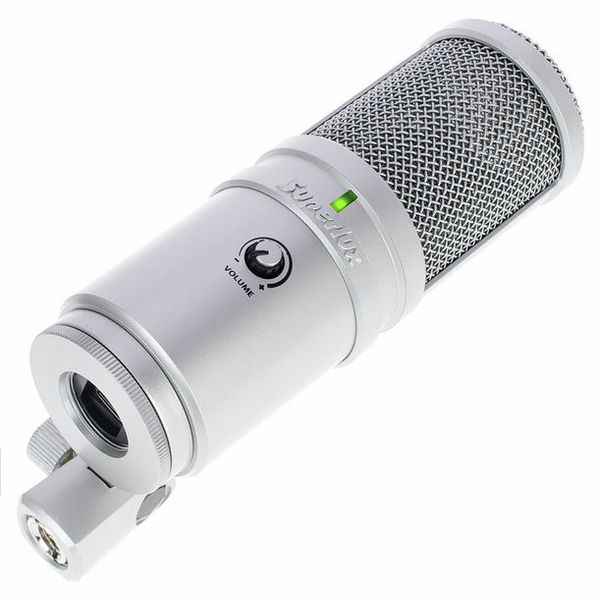
I heard the E205U being dismissed for years before I sat down and listened to a vocal properly tracked through one. The dismissal made no sense once I did. This is a large-diaphragm condenser capsule at a price that makes most competing options look overpriced, and it has been in continuous production since 2013 because it genuinely delivers for what home recording producers need from it. Superlux E205U is a USB large-diaphragm condenser microphone with a cardioid polar pattern, 16-bit/48kHz resolution, built-in headphone output with volume control, and a 30–18,000Hz frequency range. The large-diaphragm capsule is the same type found in XLR condensers costing several times more, accessed here without an interface.
The E205U has been in production long enough to accumulate a substantial body of real-world user results from home recording. It is not a podcasting microphone repurposed for vocal use — it was designed for home recording applications from the start, which shows in how it handles vocals and acoustic instruments compared to USB mics built primarily for speech.
- Large-Diaphragm Capsule
A large-diaphragm condenser capsule captures lower-frequency chest resonance and upper-frequency air more naturally than small-diaphragm designs. The result on vocals is a recording that sounds closer to a professional studio condenser than you would expect from a USB microphone at this price.
The capsule size also makes the E205U more sensitive to the recording environment than the FIFINE K669. In a treated room or with panels on the reflection points it sounds excellent. In a completely untreated room it will pick up more room character, which is worth knowing before positioning.
- Direct Monitoring with Volume Control
The 3.5mm headphone output with independent volume control provides the same zero-latency monitoring capability as the K669. Hearing yourself directly through the microphone without software roundtrip latency is particularly useful for pitched performances where timing a vocal phrase feels unnatural with even a small delay.
The physical volume knob sits on the microphone body where you can reach it during a take without looking, which is a small but practical detail when monitoring levels need adjusting between verses.
- Plug and Play on Windows and Mac
The E205U uses standard USB audio class compliance, meaning it installs automatically on any current Windows or Mac system. No driver download, no compatibility issues with specific DAW versions, no need to restart after plugging in.
The included 3-metre USB cable and pivoting stand mount provide enough setup flexibility to position the microphone correctly on most desk configurations without an additional boom arm.
3. the t.bone SC 440 USB
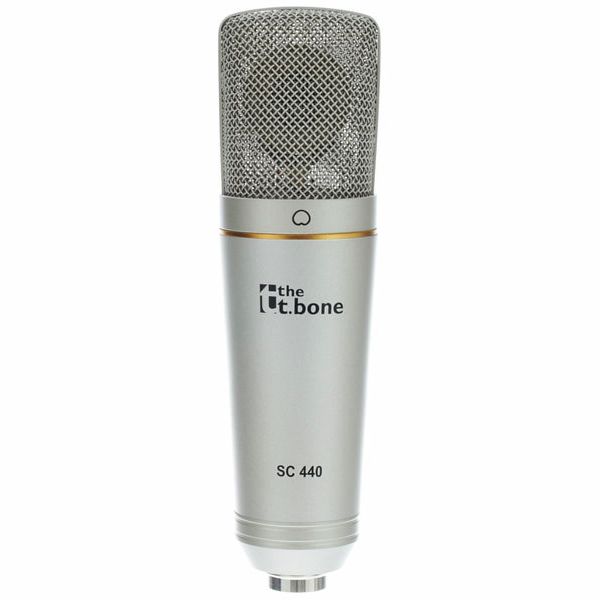
The SC 440 USB has been the starting point for more home recording setups than I can count. I have been recommending it long enough to have feedback from producers who started on one three or four years ago and still use it alongside more expensive equipment. The supercardioid pattern is what most reviews undersell — it is the specific reason this microphone performs better in imperfect rooms than the spec sheet would lead you to expect. the t.bone SC 440 USB is a studio condenser microphone with USB connection, supercardioid polar pattern, 20–18,000Hz frequency range, maximum SPL of 134dB, and a comes in a sturdy carry case. It is plug-and-play on both Windows and Mac without any driver installation.
The supercardioid pattern is narrower than a standard cardioid — it picks up less from the sides. For a home recording environment where the room is less than ideal, that tighter pickup angle keeps room reflections and ambient noise out of the recording more effectively than a wider cardioid at the same distance.
- Supercardioid Pattern for Better Isolation
The supercardioid characteristic has a tighter frontal pickup lobe than a standard cardioid and a small rear pickup lobe at 180 degrees. In practice this means the microphone rejects more of what is happening at the sides — fan noise, monitor bleed, nearby ambient sounds — and focuses more precisely on what is directly in front of the capsule.
For close-miked vocal recordings in a home environment, the supercardioid pattern on the SC 440 USB often produces a cleaner result than a cardioid microphone in the same position, because less of the room makes it into the signal.
- Case Included
The included carry case keeps the microphone protected when it is not in use and makes it practical to move between setups without risking capsule damage. For producers who record in different rooms or take the microphone to a friend’s studio, the case removes one logistical concern.
The case is a meaningful inclusion at this price point — most budget USB microphones come in cardboard packaging with no provision for ongoing storage.
- Proven Track Record
The SC 440 USB has been in continuous production long enough that its real-world performance is extensively documented. Thousands of recording musicians have used it to track vocals, acoustic guitar, and voiceover — the collective body of results is a more useful quality indicator than specifications alone.
At the price it costs, no other USB condenser offers the same combination of supercardioid isolation, carry case, and documented recording performance.
4. the t.bone SC 450 USB
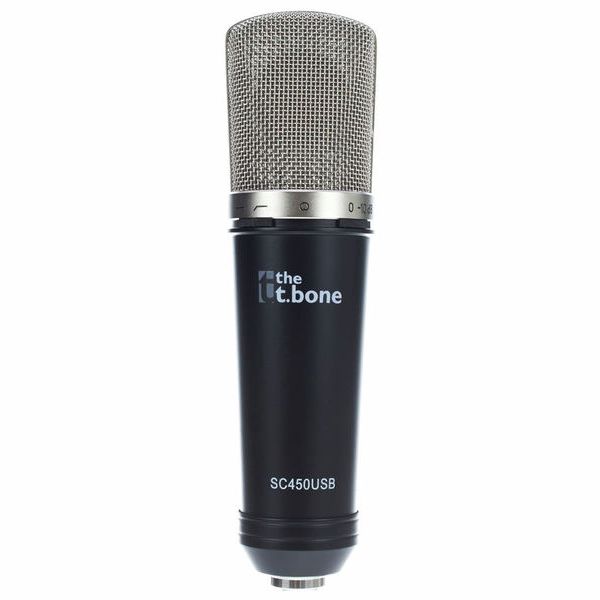
Every time I have put together a home recording setup on a moderate budget where one microphone needs to handle every source, the SC 450 USB is the one I keep coming back to. The low-cut filter and the -10dB pad felt unnecessary on paper until I needed the pad mid-session because a vocalist pushed hard unexpectedly and I had no interface gain to pull back. After that I stopped dismissing them. the t.bone SC 450 USB is a large-diaphragm studio condenser microphone with a wide cardioid polar pattern, 20–18,000Hz frequency range, switchable low-cut filter, and a switchable -10dB pad, powered via the USB port with no phantom power required.
The switchable low-cut and pad are not features you use on every recording, but when you need them — recording in a room with bass buildup, or placing the microphone closer to a louder source — having them on the microphone body rather than requiring post-recording correction in the DAW saves time and produces cleaner results.
- Switchable Low-Cut Filter
The low-cut filter switch on the microphone body rolls off low-frequency content below approximately 80Hz — the range where room resonance, air conditioning rumble, and floor vibration typically live. Activating it before a vocal recording in an untreated room removes the frequencies that would require a high-pass filter in the DAW anyway, capturing a cleaner signal from the start.
For acoustic guitar recordings in particular, the low-cut prevents proximity bass buildup from a close microphone position muddying the midrange of the instrument’s fundamental tones.
- -10dB Pad for Louder Sources
The switchable -10dB pad reduces the input sensitivity of the microphone by 10 decibels, allowing it to record louder sound sources without clipping. For vocals this is less critical, but for close-miked acoustic guitar, brass instruments, or any source that peaks unexpectedly, the pad provides a safety margin that a fixed-sensitivity microphone cannot offer.
The ability to record louder sources cleanly without having to adjust DAW input gain during a take is a practical advantage that becomes apparent the first time you use it.
- Wide Cardioid Pattern
The wide cardioid polar pattern is more forgiving of minor off-axis positioning than a standard or supercardioid design. Vocalists who move slightly while performing, or producers placing the microphone from the side for an acoustic guitar recording, will find the SC 450 USB more tolerant of imperfect capsule alignment than a tighter pattern design.
5. Rode NT-USB Mini
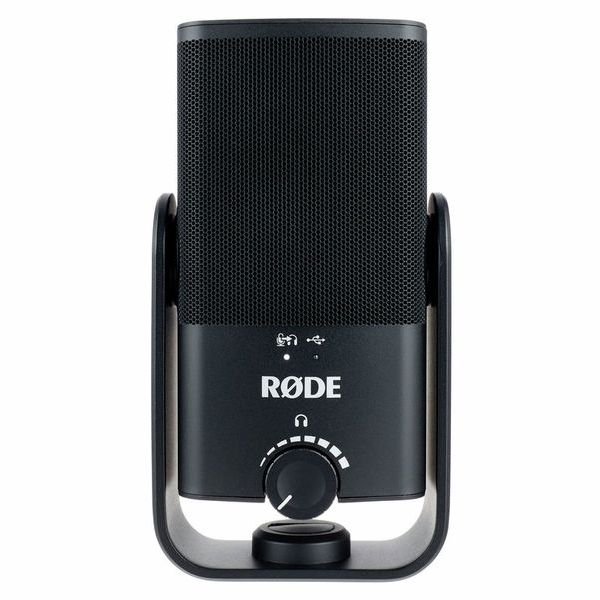
Rode makes some of my favourite microphones for home and project studio work. When the NT-USB Mini came out I expected a compromise — smaller capsule, rougher top end, less dynamic range than their XLR condensers. What I got was 24-bit recording that passed for XLR condenser quality on the first acoustic guitar session I used it on. I stopped anticipating compromises from this microphone very quickly. Rode NT-USB Mini is a compact USB condenser microphone with a cardioid polar pattern, built-in 24-bit/48kHz audio interface, USB-C connection, built-in pop filter, and latency-free direct monitoring via 3.5mm headphone output, with a detachable magnetic desktop stand.
The step up in sound quality from the budget options on this list to the NT-USB Mini is audible on any recording where the source is being captured for a final mix rather than a demo. The capsule is tuned to Rode’s studio microphone specifications, which means recordings translate better between listening environments and require less corrective EQ to sit in a mix.
- 24-Bit Resolution
The 24-bit/48kHz audio conversion delivers a 16dB improvement in dynamic range compared to the 16-bit conversion in most budget USB microphones. That headroom means the NT-USB Mini captures quiet passages and louder moments in the same recording without the noise floor rising audibly in the quieter sections.
For acoustic instrument recordings where the dynamic range of the performance is significant — a singer-songwriter moving between a barely-audible verse and a full-voiced chorus — the 24-bit resolution is the difference between a recording that sounds professional and one that requires noise reduction to clean up the quiet sections.
- Integrated Pop Filter
The built-in pop shield reduces plosive transients — the bursts of air from B, P, and D consonants that cause low-frequency spikes in condenser recordings — without requiring a separate external filter. For producers who want to set up quickly and start tracking rather than positioning a pop filter on a separate clip, this is a meaningful practical inclusion.
The integrated shield performs as effectively as most external pop filters at vocal recording distances and does not introduce the proximity effect that some clip-on filters create when placed too close to the capsule.
- Compact Form With Professional Results
The small physical footprint of the NT-USB Mini makes it practical to position precisely on a crowded desk without the microphone dominating the workspace. The detachable magnetic stand keeps it upright on flat surfaces and detaches cleanly when mounting on a boom arm.
Up to four NT-USB Minis can be connected simultaneously to a single computer without routing complications, which is useful for producers who want to record two vocalists or track multiple sources in the same session.
6. Audio-Technica AT2020USB-X
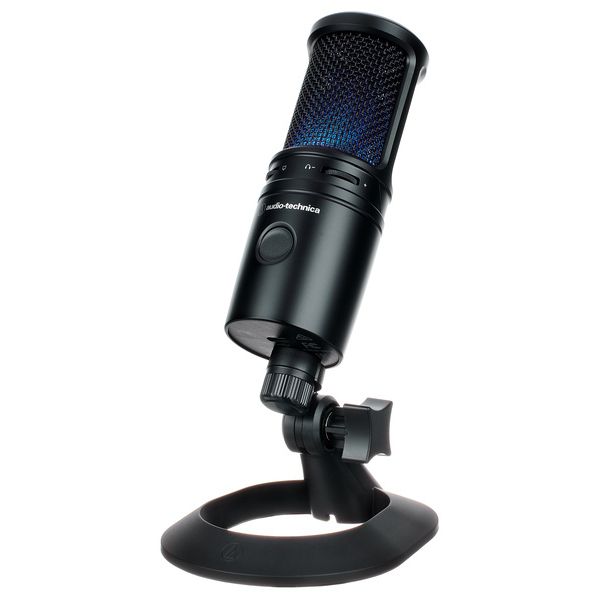
The AT2020 capsule is probably the one I have heard on more home recording vocal tracks than any other single microphone. It defined what a competent home studio condenser sounded like for the better part of a decade. The AT2020USB-X puts that same capsule into a USB format with a 96kHz converter and USB-C connection. The recording quality makes the USB delivery method essentially irrelevant. Audio-Technica AT2020USB-X is a USB studio large-diaphragm condenser microphone with a 24-bit/96kHz A/D converter, cardioid polar pattern, 20–20,000Hz frequency response, capacitive soft-touch mute button, and headphone monitoring with mix control.
The AT2020’s capsule has been validated across hundreds of thousands of home and project studio recordings. If you have heard independent vocal recordings that sound clean and present without being harsh or coloured, there is a significant probability that the source microphone was an AT2020 or one of its variants. The USB-X brings that track record to a USB format.
- 96kHz Support
The 24-bit/96kHz sampling rate doubles the frequency ceiling of 48kHz converters and captures audio up to 48kHz. For music production workflows where the final output will be 44.1kHz or 48kHz, the 96kHz capture provides a downsampling buffer that preserves high-frequency detail more accurately than recording at the final sample rate.
This matters most on acoustic instruments with significant high-frequency content — acoustic guitar, cymbals, violin — where recording at 96kHz and downsampling in the DAW consistently produces a cleaner and more detailed final file than recording at 48kHz directly.
- Mix Control for Monitoring
The headphone mix control allows you to blend the direct microphone signal with the DAW playback in the headphone output. This means you can hear both yourself and the backing track simultaneously in the headphones without needing a separate monitoring interface. For vocalists tracking to a beat or musicians overdubbing to an existing arrangement, the mix control replaces the most commonly needed function of an audio interface headphone output.
The capacitive mute button changes the LED ring from blue to red when active, providing an immediate visual indication of mute status that is readable from across a room.
- AT2020 Capsule Quality
The AT2020 cardioid condenser capsule has a frequency response tuned for vocal and instrument recording rather than speech or communication. The extended high-frequency response above 15kHz, the controlled proximity effect, and the even off-axis rejection pattern are all characteristics of a microphone designed specifically for music production.
The AT2020USB-X delivers the same capsule character as the XLR AT2020 in a USB package — which is the most useful way to describe its recording quality to anyone who has heard the XLR version.
7. Rode NT-USB+
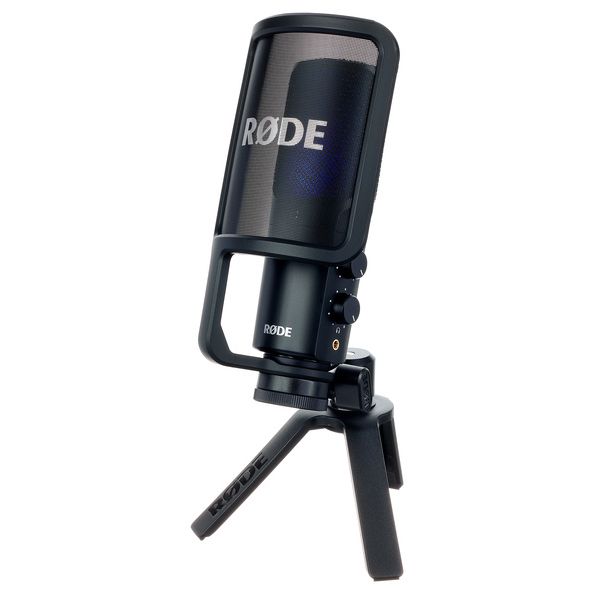
I would not frame the NT-USB+ as a USB microphone that punches above its weight. It is a professional condenser microphone that uses USB-C as its connection. The 1/2-inch gold-sputtered capsule sits on a Revolution preamp — the same architecture in Rode’s professional XLR range — and the self-noise competes with interface preamps that cost considerably more than this microphone. I recommend it to producers who are done looking for a better option. Rode NT-USB+ is a USB condenser microphone with a 1/2″ gold-sputtered cardioid capsule, ultra-low-noise Revolution preamp, USB-C connectivity, on-board DSP with APHEX Aural Exciter, Big Bottom, compressor, noise gate, and high-pass filter, and high-resolution analogue-to-digital conversion.
The Revolution preamp is Rode’s proprietary low-noise, high-gain design — the same technology used in their professional XLR microphones. Combined with a gold-sputtered 1/2″ capsule and 32-bit float recording capability (via the Rode Connect software), the NT-USB+ records at a quality level that competes with XLR studio condensers costing significantly more, without requiring the interface chain.
- On-Board DSP Processing
The built-in DSP effects accessible via Rode Connect include a compressor, noise gate, APHEX Aural Exciter, and Big Bottom processing — the last two being established studio tools for adding presence and low-end weight to vocal recordings. These run in real time on the microphone’s internal processor, meaning they are applied to the headphone monitoring signal and optionally to the recording itself.
For producers who want a compressed, excited vocal sound in the headphones while tracking — the type of sound that makes a performance feel more finished and encourages better vocal commitment — the NT-USB+ delivers that without any DAW insert processing.
- Ultra-Low-Noise Revolution Preamp
The Revolution preamp has a self-noise specification that matches professional studio interface preamps, which means the noise floor of the NT-USB+ is not the limiting factor in recording quality — the room is. For a USB microphone, that is an exceptional specification.
At high gain settings needed for quieter sources — a softly-sung verse, a fingerpicked acoustic guitar at distance — the NT-USB+ maintains a clean noise floor where most USB microphones, including the other options on this list, begin to show audible noise at the same settings.
- Up to Four Simultaneous Connections
Via Rode Connect software, up to four NT-USB+ microphones can operate simultaneously on a single computer with full DSP and routing controls for each. For podcast recordings, multi-vocalist sessions, or producers who want to record two or three sources in the same take, this multi-mic capability removes the interface requirement for multi-channel recording entirely.
The free Rode Connect software also provides a comprehensive routing environment with per-microphone faders, the on-board effects chain, and integration with streaming software for producers who additionally use their setup for live performance or content creation.

Hello, I’m Viliam, I started this audio plugin focused blog to keep you updated on the latest trends, news and everything plugin related. I’ll put the most emphasis on the topics covering best VST, AU and AAX plugins. If you find some great plugin suggestions for us to include on our site, feel free to let me know, so I can take a look!