
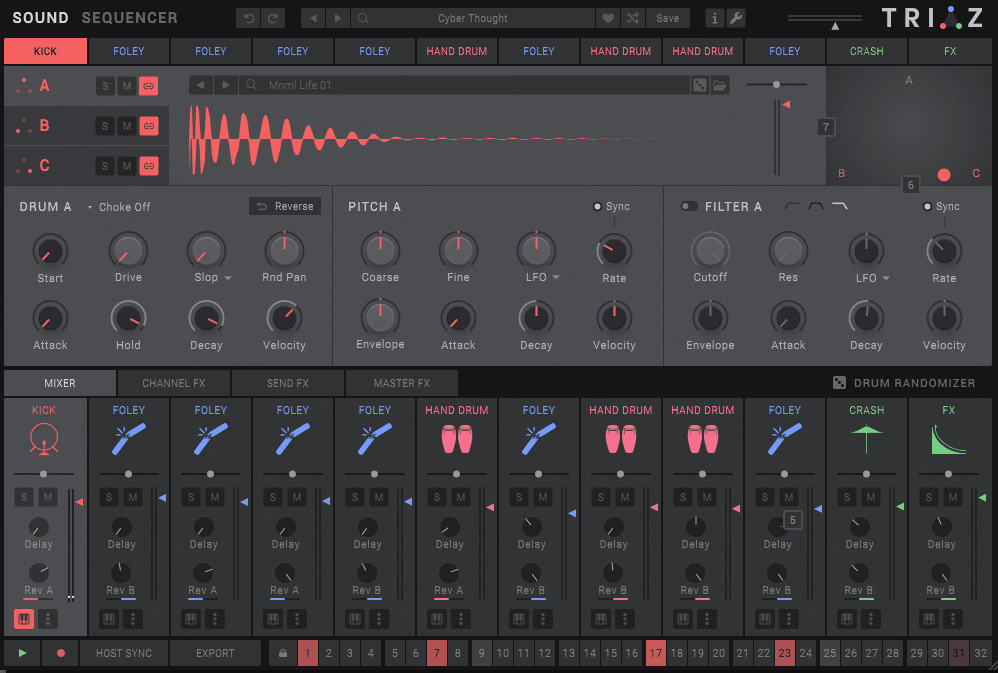
Before I write this, I want to flag that I’m not familiar with a plugin specifically called “Triaz VST.” Let me search to make sure I get the details right rather than guessing.Now I have the details. Triaz by Wave Alchemy is a drum machine plugin, originally a Kontakt instrument that was relaunched as a native VST3/AU/AAX plugin. Here’s the review:
Wave Alchemy’s Triaz has quietly become one of the most talked-about drum plugins on the market, and after spending real time with it across different projects, I understand why.
Originally launched in 2022 as a Kontakt instrument, Triaz was relaunched in 2024 as a native VST3/AU/AAX plugin with a ground-up redesign, more sounds, and a pile of new features. The native version is what most producers are using now, and it’s a significant enough upgrade that it’s worth thinking of as a different product from the original Kontakt version.
What makes Triaz genuinely different from the sea of drum plugins out there is the combination of a 3-layer drum engine, a polyrhythmic sequencer that goes way beyond standard step programming, and a sample library of over 15,000 meticulously crafted drums spanning pretty much every genre you’d realistically work in.
Is Triaz worth it? Yes it’s definitely worth it. I’d say it’s the closest thing to a true “Battery killer” that’s come out in years, and the combination of sound quality, workflow speed, and sound design depth makes it a genuinely strong investment for anyone who takes drum programming seriously.
From the Pluginerds Store
Before you get into the list below, a wireless pad controller gives you the velocity sensitivity to build patterns live alongside your main unit — a genuinely useful complement to any groovebox or sampler here.


Get the Free Plugin Starter Kit
The genuinely useful free DAWs and plugins worth installing. No filler. Straight to your inbox.
What Makes Triaz Different
Most drum plugins fall into one of two categories. They’re either traditional drum samplers with a grid of pads (like NI Battery or XO), or they’re drum machines with built-in sequencers modeled after specific hardware (like the various 808/909 emulations out there).
Triaz sits in a third category that’s harder to define. It’s a hybrid that takes the best ideas from both approaches and adds its own sound design layer on top.
Here’s what genuinely sets it apart:
- 3-Layer Drum Engine:
Each of the 12 drum channels can layer up to three different sounds, with an X/Y pad that lets you morph between them in real time. This makes sound design for individual drums significantly deeper than single-sample drum plugins.
- Polyrhythmic Sequencer:
Each of the 12 channels can run at its own independent rate and loop length, which means you can build patterns with 7-over-13 timing or any other polyrhythmic combination you can imagine. That’s something most drum plugins don’t even attempt.
- 15,000-Sample Library:
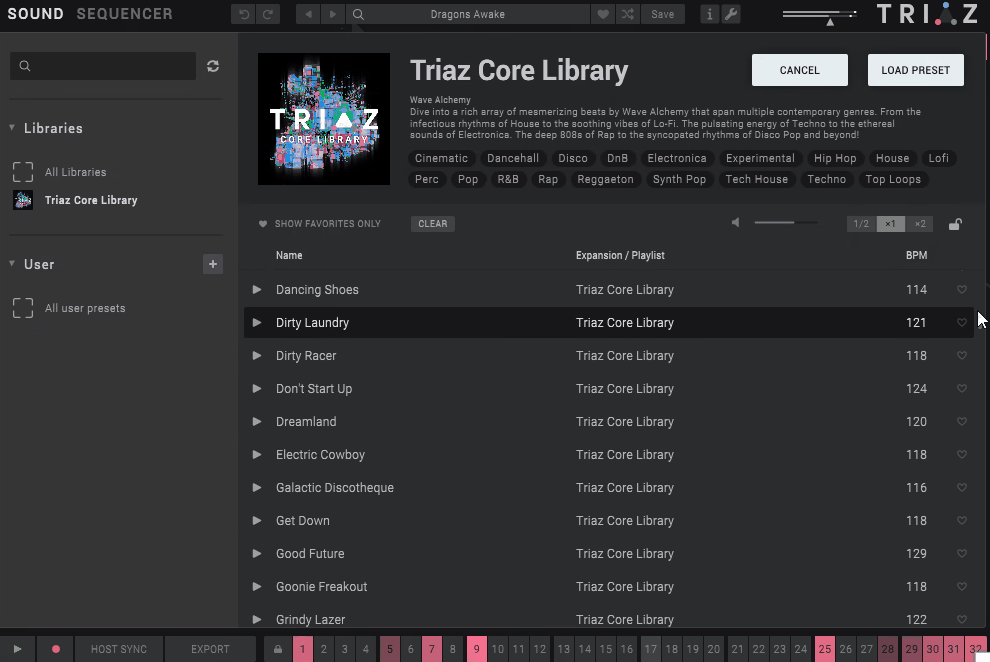
The factory library covers modern electronic beats, vintage drum machines, found sound, acoustic drums, world percussion, experimental sounds, analog magic, chords, vocal chops, and more. I’ve genuinely never run out of source material while working with it.
- 700+ Presets Across 18 Genres:
The included presets cover an unusually wide range of styles, and they’re useful as both starting points and as reference material for how the plugin can be pushed.
- Intelligent Randomization:
The randomizer can generate entire new kits and patterns with one click, or randomize specific parameters like volume, tuning, start position, panning, and filter cutoff across your existing patches.
For me, what makes Triaz click is that it doesn’t force you into any one way of working. You can use it as a simple drum sampler if that’s what you need, or you can dive into the sequencer and sound design tools and build beats that feel nothing like typical plugin drum programming.
“Triaz is hands down the best virtual drum machine I have ever put my hands upon.”
3-Layer Drum Engine
The core of Triaz is the 3-layer drum engine, and this is where most of your sound design work happens.
Each of the 12 drum channels can host up to three independent sound sources, and you blend them together using an X/Y pad that makes morphing between layers genuinely musical rather than just a technical exercise. Drag and drop sounds onto layers from the browser, adjust the blend with the X/Y pad, and you’ve got a compound drum sound that feels more alive than a single sample.
What I really appreciate about this approach is how fast it is in practice. You’re not building complex routing or dealing with separate sampler instances. You just drop sounds into the three layers and shape them together.
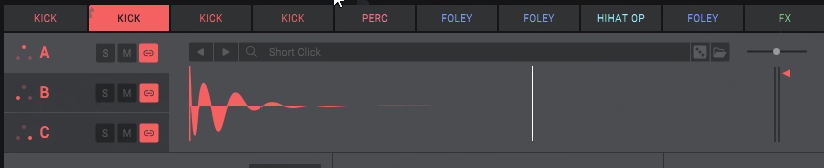
Each layer has its own sound design parameters including volume, tuning, start position, panning, filter, attack, hold, decay, velocity, and more. You can link parameters across all three layers for unified control, or adjust each layer independently for more detailed shaping.
The per-step parameter modulation is where things get genuinely interesting. You can modulate any sound design parameter on a per-step basis within the sequencer, which means you can build drum patterns where specific steps have different tuning, filter settings, or panning than others.
This is the kind of feature that sounds niche until you actually use it and realize how much life it adds to drum patterns that would otherwise feel static.
The Sequencer
The Triaz sequencer is one of the plugin’s standout features, and it’s designed to do a lot more than just step programming.
Each of the 12 channels gets its own independent sequencer lane with unique timing rate, loop length, and swing amount. This is where the polyrhythmic capabilities come from. You can run your kick at standard 16-step timing while your hi-hats are doing something weird like 7 steps at half time, and the rhythms interlock in ways that would be impossible on most drum machines.
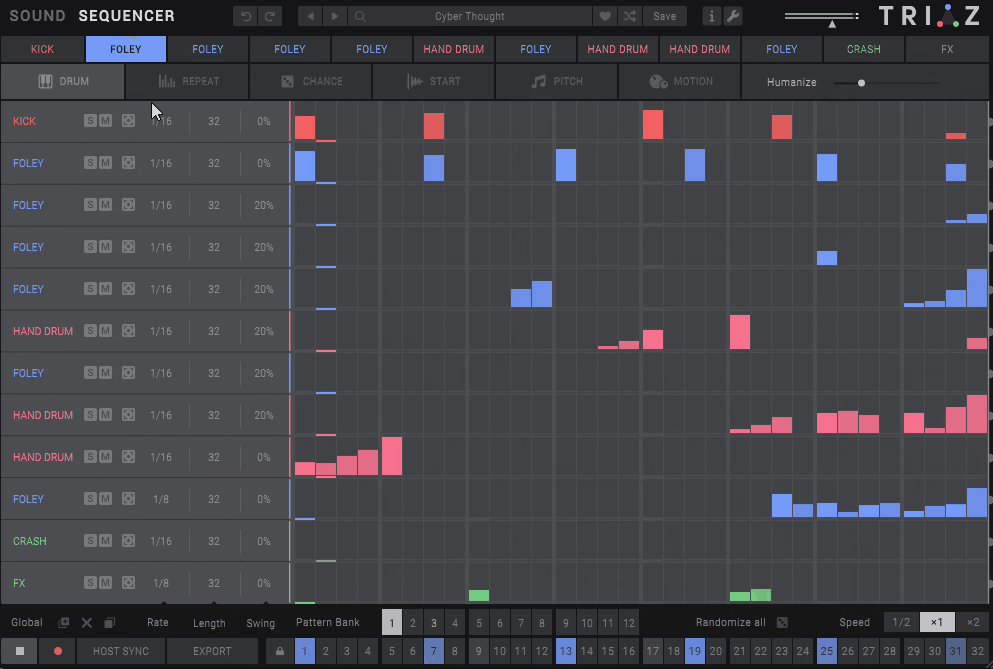
Beyond basic step programming, each step supports:
- Per-Step Modulation:
Tuning, start position, filter, panning, and other parameters can be set per step, which means individual hits can have different characters within the same pattern.
- Note Repeat and Stutter:
Individual steps can be set to repeat or stutter, giving you built-in roll effects without having to manually program them.
- Probability (Chance):
Set the probability that a step will trigger, which adds controlled randomization to your patterns and creates the kind of organic variation that makes programmed drums feel more human.
- Start Offset:
Micro-timing adjustments per step, useful for creating groove feels that go beyond what standard swing can do.
- Slop:
A global randomization of timing that adds subtle timing variations to humanize programmed drums.
- Pattern Banks:
Each preset can store up to 12 different sequencer patterns, and pattern switching is instantaneous and picks up at the same step within the loop.
I found the sequencer to be one of those features that keeps revealing more depth the longer you use it. The combination of polyrhythmic lanes, per-step modulation, and probability creates patterns that never quite repeat the same way, which is exactly what you want for modern electronic production where repetition can make tracks feel lifeless.
Sound Library
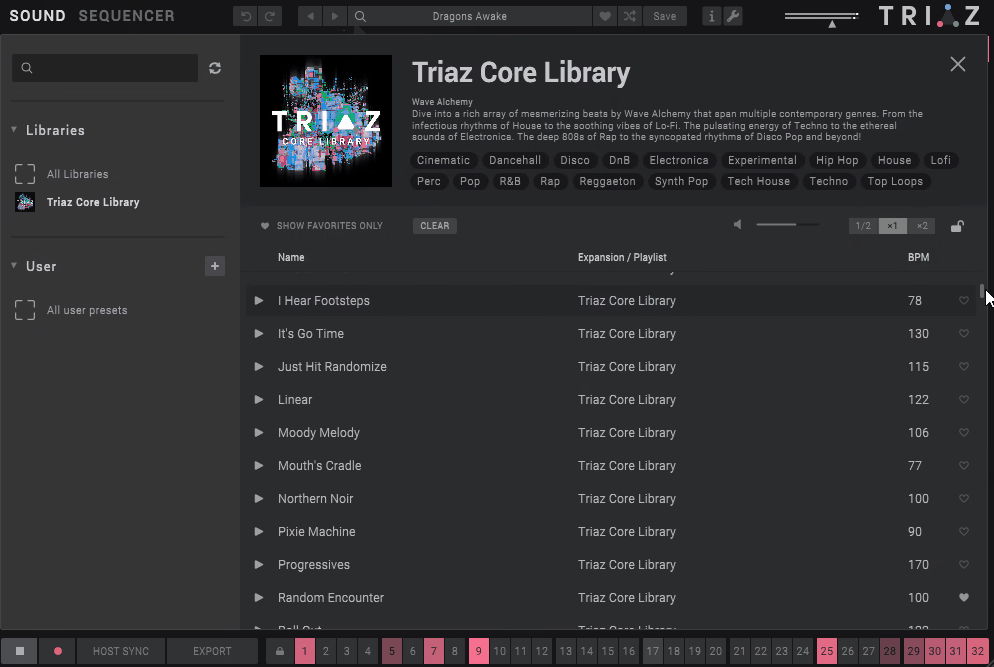
The 15,000-sample library is genuinely one of the reasons to buy Triaz on its own, and I think it’s worth talking about because the quality and variety are unusually high.
The library covers an enormous range of drum and percussion content. You get modern electronic beats, vintage drum machine samples (including material that captures classic hardware character without directly cloning specific machines), acoustic drums and percussion recorded with a musicality that’s rare in sample libraries, world percussion for producers who need ethnic and global drum sounds, and a heavy dose of experimental and found sound material that you won’t find in typical drum packs.
Beyond the pure drum content, the library also includes chords, vocal chops, and sound design elements that expand Triaz beyond just drums into a more general rhythmic instrument.
I want to note that the library is tagged and categorized in a way that makes browsing genuinely useful rather than overwhelming. The browser supports filtering by genre, type, character, and tempo, and the auto-tagging feature works well enough that even imported samples get categorized intelligently.
“The superb Triaz library is a triumph, with a large variety of sounds that make it relevant for any genre.”
Effects and Mixing
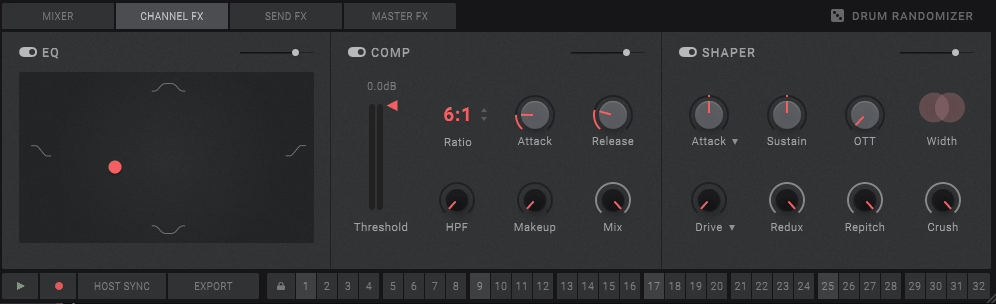
Triaz includes a genuinely deep effects section that’s split into three distinct areas, and the structure actually mirrors how professional drum busses are processed in real mix sessions.
Channel FX
The Channel FX are applied per drum channel, giving you dedicated processing for individual drums before they hit the mix bus. You get three processors per channel:
- EQ
- Compressor
- Shaper
Send FX
The Send FX work like traditional send effects in a mixing console, with each drum channel having adjustable send levels to each of the three send busses:
- Reverb A
- Reverb B
- Delay
Master FX
The Master FX sit on the master output and handle the final bus processing:
- EQ:
- Compressor
- Maximizer
Genre Fit
Triaz covers a lot of ground, but it shines brightest in specific genres where its strengths align with what the music needs.
For modern hip-hop, trap, and drill, the SP-1200 saturator, 808 bass material, and the flexible sequencer with probability and per-step modulation make Triaz genuinely powerful. The 808 content alone is worth the price if you produce in these genres.
For electronic and EDM production, the polyrhythmic sequencer, extensive electronic drum library, and the multi-effects section cover everything from house and techno to more experimental electronic territory. I’d say Triaz is particularly strong for producers who want their drum patterns to feel distinctive rather than formulaic.
For lo-fi and experimental production, the combination of found sounds, analog character samples, bitcrusher, and sound design parameters gives you a palette that fits perfectly with dusty, organic production styles.
For acoustic and organic drum work, the acoustic and world percussion libraries are surprisingly usable, though I’d say producers focused primarily on acoustic drum programming might still prefer specialized tools like Superior Drummer or BFD.
Workflow and Integration
One thing I appreciate about Triaz is how it integrates with a modern DAW workflow rather than forcing you into a specific way of working.
You can export your patterns as MIDI directly into your DAW, which means if you’ve built something you love inside Triaz, you can move it out to your DAW’s timeline and continue editing from there. You can also export individual drum hits, stems, or one-shots, which makes it easy to use Triaz as a sound design tool for building custom drum kits for other plugins.
The multi-output support means you can route individual drum channels to separate DAW tracks for detailed external mixing when you need more control than the internal mixer provides. The routing is customizable, which is useful if you’re working in complex sessions.
Drag and drop sample import means you can bring your own samples into Triaz alongside the factory content, and the automatic tagging handles categorization so your imported material shows up in the browser alongside factory sounds.
Final Thoughts
Triaz is one of those plugins that actually delivers on its marketing.
The combination of the 3-layer drum engine, polyrhythmic sequencer, 15,000-sample library, and integrated effects creates a drum production environment that genuinely accelerates how fast you can build great-sounding drum patterns. I’d say the per-step modulation and probability features are what set Triaz apart from typical drum plugins, because they let you build patterns that feel alive rather than mechanical.
I want to note that Triaz isn’t going to replace every drum tool in your arsenal. If you’re primarily doing acoustic drum programming for rock or metal, specialized tools are still more appropriate. If you only need basic 808 and hip-hop drum programming, you might find simpler tools more than sufficient.
But for producers who want a serious drum production plugin that handles modern electronic, hip-hop, lo-fi, and experimental production at a high level, Triaz is one of the most compelling options available right now. The sound library alone is genuinely impressive, and the workflow features mean you’ll actually use it rather than letting it sit unused after the initial excitement wears off.
For bedroom producers, project studio engineers, and anyone building drum patterns as a core part of their production, I would recommend this as one of the best drum plugin investments you can make in 2026. The combination of creative depth, sound quality, and reasonable pricing makes it a genuine contender for the spot that Battery or Maschine used to hold in a lot of producers’ workflows.
Check here: Wave Alchemy Triaz (Trial Available)
Get the Free Plugin Starter Kit
The genuinely useful free DAWs and plugins worth installing. No filler. Straight to your inbox.

Hello, I’m Viliam, I started this audio plugin focused blog to keep you updated on the latest trends, news and everything plugin related. I’ll put the most emphasis on the topics covering best VST, AU and AAX plugins. If you find some great plugin suggestions for us to include on our site, feel free to let me know, so I can take a look!