
There are all sorts of plugin bundles out there, and most of them come from developers with long catalogs and established track records. Minimal Audio is different: they arrived more recently and built their reputation quickly by releasing tools that immediately found a home in modern electronic music production.
What they make has a specific aesthetic that you can hear across their entire catalog, and this bundle collects all of it in one place. It’s worth adding to any list of best plugin bundles for producers working in contemporary electronic styles.
The collection spans eleven plugins covering synthesis, vocal effects, distortion, frequency shifting, modulation effects, EQ, compression, reverb, delay, filtering, and chorus. I think what Minimal Audio has done well is build each tool around a specific creative application rather than trying to be a general-purpose processor, and that specificity shows in how immediately useful each plugin is when you load it for the right job.
The shared visual design language across the catalog also means there’s very little friction when you move from one tool to another.
For producers working in modern electronic music, cinematic production, and any style where distinctive processing and synthesis character matter, the Everything Minimal Bundle is worth considering.
The combination of a full synthesizer with a complete set of creative effects tools means you can build a significant portion of a production from within a single developer’s ecosystem, and the consistency of character across all eleven tools makes that combination feel intentional rather than arbitrary.
Current 2
The most ambitious tool in the collection by scope is Current 2, which combines a wavetable synthesizer with a granular sampler in a single instrument, making it both a source of original synthesis and a processor of loaded audio material.
The wavetable engine handles standard wavetable synthesis territory well, but what pushes it beyond the standard wavetable synth offering is the granular sampler integration, which allows you to pull in any audio file and subject it to the same modulation and effects architecture that powers the synthesizer.

- Wavetable oscillators with position modulation, warp modes, and spectral processing that shape the harmonic character of the oscillator output
- Granular sampler engine that loads external audio and processes it through granular synthesis parameters including grain size, position, density, and randomization
- Unified modulation system that applies to both synthesis engines, with envelopes, LFOs, and macro controls routing to parameters across the full instrument
- Built-in effects chain that processes the combined output of both engines before the final output stage
I love how Current 2 handles the relationship between wavetable and granular content: rather than treating them as separate instruments in a multi-timbral context, both engines feed into the same modulation and effects architecture, which gives their combined output a unified character that blended synthesis approaches don’t always achieve.
Evoke

Vocal processing that transforms rather than corrects is what you get with Evoke, and I think it occupies a specific creative space that most vocal effect plugins don’t address. It’s positioned as a hypermodern vocal effect, which in practice means it applies spectral processing, pitch manipulation, and timbral transformation to create results that sit between recognizable vocal processing and genuinely unusual textural effects.
- Spectral processing that manipulates the frequency content of the vocal in ways that go beyond standard EQ and filter shaping
- Pitch transformation for shifting and harmonizing the voice with controllable character and extent
- Texture and character controls for adding synthetic quality and timbral variation to the processed vocal output
- Blend and parallel processing for maintaining connection to the original while layering in the transformed content
For me, Evoke is the plugin in this bundle that serves modern pop and electronic vocal production most directly: the specific kind of processed, slightly synthetic vocal sound that’s become central to contemporary production aesthetics is exactly what this tool is built to produce, and it gets there without requiring a chain of separate processors.
Rift 2
Distortion and saturation are among the most saturated plugin categories, and what makes Rift 2 worth attention in that competitive space is its hybrid approach: it combines multiple distortion types and routing configurations in a way that produces results that don’t easily come from conventional single-algorithm distortion tools.
I mean that in a specific sense: it’s not just multiple distortion modes, it’s a signal routing architecture that lets distortion stages interact in ways that create complex harmonic behavior.

- Multiple distortion algorithms covering soft clipping, hard clipping, bit reduction, and other distortion types that can be combined
- Parallel and series routing between distortion stages for controlling how different distortion types interact in the signal chain
- Frequency-selective distortion that applies different processing to different parts of the frequency spectrum
- Pre and post filtering for shaping the input signal before distortion and the output after it
I believe Rift rewards exploration more than most distortion plugins because the combination of routing options and algorithm types produces results that vary significantly depending on configuration, and some of the most interesting results come from configurations that aren’t immediately obvious from the interface.
Wave Shifter

Frequency shifting is a processing technique that’s distinctly different from pitch shifting in a way that’s worth explaining, because the two are frequently confused.
Where pitch shifting transposes all harmonics by a fixed ratio and maintains their harmonic relationships, frequency shifting moves all content by a fixed number of Hz, which changes the relationships between harmonics and produces the specific metallic, inharmonic quality that distinguishes it. The tool that Minimal Audio built for this, Wave Shifter, adds modulation and stereo processing on top of the core algorithm.
- Frequency shift amount with fine and coarse controls for adjusting how many Hz the signal is shifted up or down
- Stereo offset that shifts the left and right channels by different amounts, creating stereo width from the frequency differential between channels
- LFO modulation of the shift amount for animated, moving frequency shift effects rather than static shift
- Blend control for mixing the shifted signal with the dry original in parallel
I’d say Wave Shifter is the most specialized tool in the bundle in terms of its use case: frequency shifting is a specific effect that suits specific contexts, and when those contexts arise, having a well-implemented dedicated tool is more useful than trying to replicate the behavior with other plugins.
Flex Chorus
What distinguishes Flex Chorus from a standard chorus plugin is the degree of control over how the chorus voices behave individually rather than as a fixed algorithm you adjust with rate and depth.
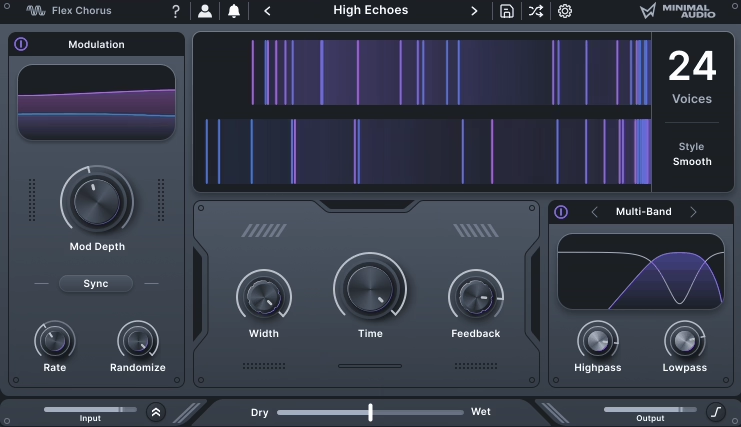
The name reflects the flexibility of the voice configuration, allowing you to shape how many chorus voices are generated, how they’re distributed across the stereo field, and how their modulation behavior is configured.
- Multiple voice configuration for setting how many chorus copies are generated and how they’re arranged
- Stereo spread control for distributing the chorus voices across the stereo image
- Independent modulation per voice for creating more complex and less uniform chorus behavior
- Drive and saturation for adding harmonic character alongside the pitch and timing modulation of the chorus
I must say that the control over voice behavior is what sets this apart from typical chorus effects: the ability to configure how the voices move and spread creates results that range from the classic lush chorus character through to wider, more diffuse stereo enhancement effects that feel less obviously like a chorus effect.
Ripple Phaser
Phase shifting with a modern approach to the modulation and configuration options is what you get with Ripple Phaser, and the “ripple” name suggests the specific visual and sonic metaphor Minimal Audio had in mind: a phaser that creates a spreading, wave-like quality to the phase modulation rather than a standard uniform sweep.
- Multiple phaser modes for different phase shifting character and notch depth
- Ripple modulation shaping for controlling how the phase sweep propagates across the frequency spectrum
- Tempo sync for locking the phase modulation to the project BPM
- Feedback control for increasing the prominence of the phase notches
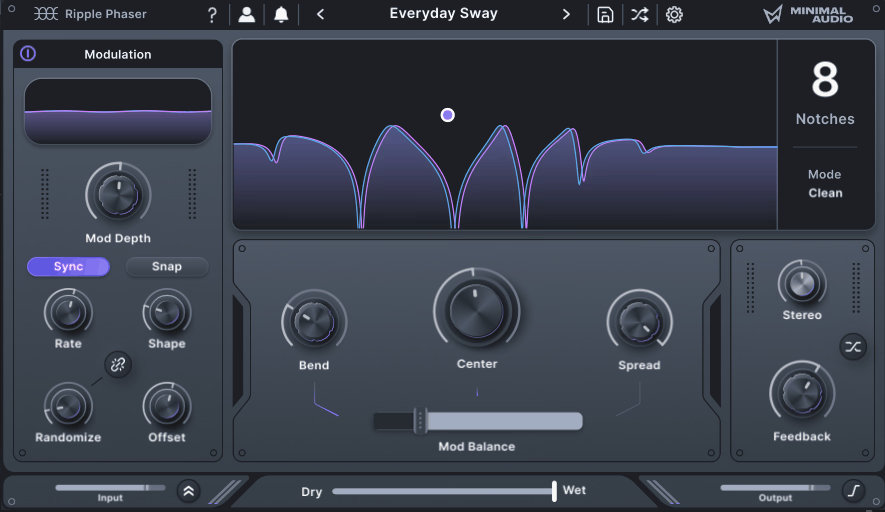
I appreciate the specific character that Ripple Phaser brings: the modulation behavior has a quality that feels more organic than standard sine-wave-driven phaser effects, and on synthesizer pads and textural content it adds movement that enhances rather than distracts from the source material.
Cluster Delay
Multiple simultaneous delay echoes arranged in a cluster pattern rather than as simple discrete repeats is the defining characteristic of what Cluster Delay does, and I’ve covered this plugin in other contexts before. The cluster approach creates a denser, more textural echo than a standard single-tap delay, which suits modern electronic production aesthetics where delay is part of the sonic texture rather than a simple rhythmic repeat.
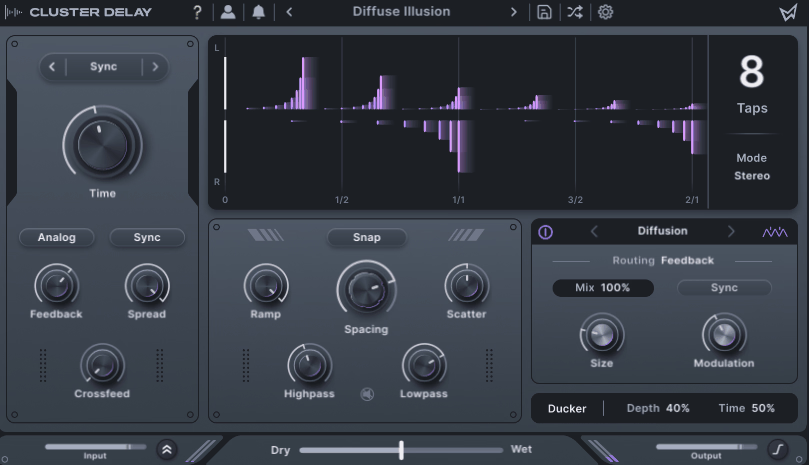
- Multiple delay taps arranged in a cluster configuration with individual control over timing and level
- Cluster spread control for adjusting how tightly or loosely the echo cluster is grouped in time
- Filtering and tonal shaping of the cluster output for controlling how the cluster echoes relate to the dry signal tonally
- Modulation of cluster parameters for animated, evolving cluster behavior over time
The cluster approach is what I find most useful about this delay in the context of the rest of the bundle: it complements the textural and atmospheric character of the other Minimal Audio tools in a way that a conventional single-tap delay wouldn’t, because the cluster output has the same density and complexity that characterizes the rest of the collection.
Morph EQ
Standard equalization changes the frequency response of a signal in a fixed way, but the approach behind Morph EQ is different: it creates two EQ states and allows you to morph between them either manually or through modulation, which means the EQ behavior itself becomes an expressive and animated parameter rather than a static setting.
- Dual EQ states that define the two endpoints of the morph, each with independent band settings
- Morph control that moves between the two states smoothly, with any intermediate position possible
- Modulation of the morph position via LFO, envelope follower, or macro assignment for automated morphing behavior
- Standard parametric EQ architecture for each state, with the typical band types and frequency controls
I have to say that Morph EQ changes how I think about equalization in a production context: instead of EQ as a correction or shaping tool applied once and left static, the morphing capability makes it a performance and expression tool where the frequency response participates in the dynamics of the arrangement.
Fuse Compressor
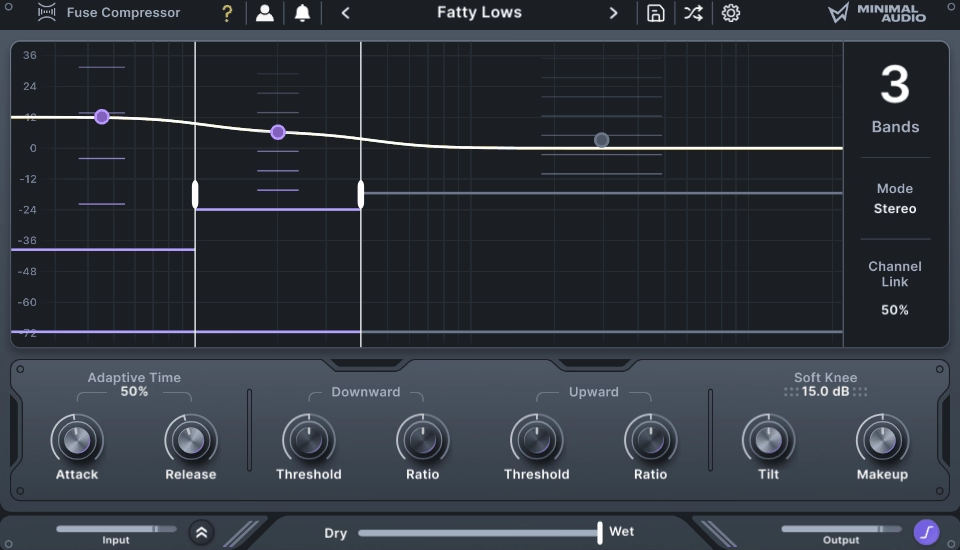
Dynamic sculpting across multiple frequency bands is what a multiband compressor is designed for, and the version that Minimal Audio built, Fuse Compressor, approaches multiband compression with the same design philosophy of expressive control and visual feedback that characterizes their effects plugins.
- Multiband architecture with independent compression settings per band for frequency-specific dynamic management
- Visual display of the compression activity per band for monitoring what the processing is doing across the spectrum
- Transient shaping integrated into the compression architecture for controlling attack character alongside gain reduction
- Parallel compression mode for blending the heavily compressed signal with the original in parallel
I realized that Fuse Compressor is most compelling in the context of this bundle specifically on mix buses and instrument buses where you want the dynamic control to match the sonic character of the other Minimal Audio processing in the same chain. There’s a consistency of aesthetic between how Fuse handles transients and how the distortion and filter tools handle harmonic content.
Swarm Reverb
Rather than a single-stage reverb algorithm, the dual-stage architecture of Swarm Reverb processes the incoming signal through two reverb stages in sequence, which allows the early reflections and late reverb tail to have different characters and be independently configured. The “swarm” name reflects the dense, multi-layered quality of the reverb it produces.
- Dual reverb stages with independent size, decay, and character settings for each stage
- Routing control for adjusting how the first stage feeds into the second and how they combine at the output
- Modulation of reverb parameters for animated, evolving reverb character rather than static tail behavior
- Stereo width and positioning for controlling how the reverb sits in the stereo image independently from the dry signal
I found Swarm Reverb most compelling for pads and synthesizer textures in this bundle’s context: the dual-stage processing creates a reverb tail that has more internal complexity and movement than single-algorithm alternatives, which suits the layered, textural approach that Minimal Audio’s synthesis and effects tools encourage.
Hybrid Filter
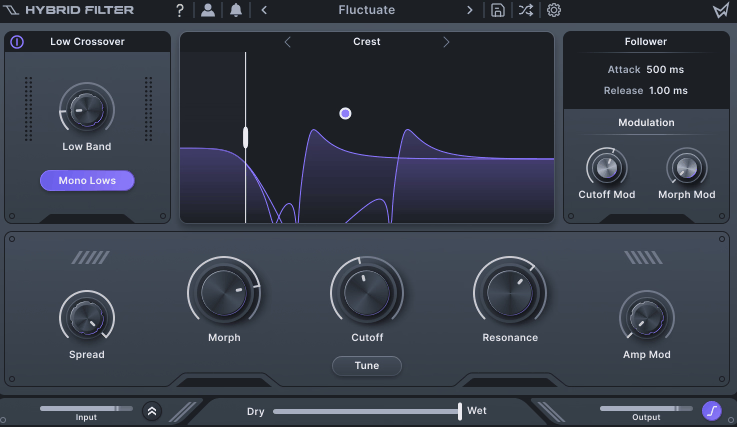
A multi-mode filter that covers multiple filter types in a single plugin with smooth morphing between them is what the last tool in the collection, Hybrid Filter, provides, along with the modulation and routing options that transform it from a standard filter into a creative sound design tool.
- Multiple filter modes including lowpass, highpass, bandpass, notch, and more exotic filter types accessible from a single plugin
- Smooth morphing between filter modes for transitioning from one filter character to another without clicks or discontinuities
- Drive and resonance saturation for adding harmonic content alongside the filtering behavior
- Modulation routing for animating filter cutoff, resonance, and mode morphing from LFOs, envelopes, and macro controls
I noticed that the mode morphing is what makes Hybrid Filter genuinely creative rather than just convenient: being able to smoothly transition between filter characters while modulating other parameters creates filter motion that’s more complex and interesting than a standard filter sweep, and in the context of the rest of the Minimal Audio tools it contributes to a sense of a fully animated, constantly evolving processing chain.
Final Thoughts
The Everything Minimal Bundle holds together because of the consistent visual and sonic identity across all eleven tools. Minimal Audio’s design philosophy emphasizes expressive control, modern aesthetics, and creative results over technical transparency, and that philosophy is visible in how every plugin in this collection prioritizes interesting behavior over neutral behavior.
Whether you’re using Current 2 for synthesis, Rift for character distortion, Evoke for vocal transformation, or Swarm Reverb for atmospheric depth, the results share a family resemblance that makes the bundle feel like a unified creative environment.
For producers looking to build a toolkit that’s specifically oriented toward modern electronic music production, there are few more focused and coherent options at this price point.
Check here: Everything Minimal Bundle (Support Pluginerds)
Check here: Everything Minimal Bundle (Trial Available)

Hello, I’m Viliam, I started this audio plugin focused blog to keep you updated on the latest trends, news and everything plugin related. I’ll put the most emphasis on the topics covering best VST, AU and AAX plugins. If you find some great plugin suggestions for us to include on our site, feel free to let me know, so I can take a look!