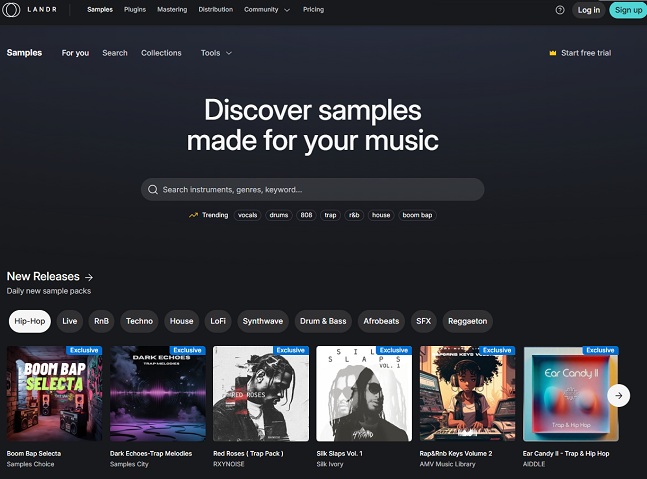
Choosing a sample subscription is one of those decisions that sounds simple on the surface but gets more involved the deeper you go. LANDR and Splice are both massive platforms with millions of sounds, subscription-based access, and broad genre coverage, so on paper they look like close competitors.
Spend some time with both of them, though, and the differences become pretty clear, and they matter quite a bit depending on how you actually produce music.
I want to give you an honest, grounded breakdown of where each one genuinely delivers and where it falls short, so you can make a smarter decision rather than just going with whichever one you heard about first.
Quick Comparison
| Feature | LANDR Samples | Splice |
|---|---|---|
| Library Size | 3+ million samples | Millions (unspecified, vast) |
| Pricing Model | Credit-based subscription or Studio bundle | Credit-based subscription |
| Entry Price | $5.99/month (75 credits) | $9.99/month (100 credits) |
| Keep Samples If You Cancel | Yes | Yes |
| Credit Rollover | Limited rollover | Yes (rolls over monthly) |
| Royalty-Free | Yes | Yes |
| Loops Included | Yes | Yes |
| One-Shots Included | Yes | Yes |
| MIDI Packs | Limited | Yes (extensive) |
| Plugin Presets | Limited | Yes (Serum, Sylenth1, Massive, and more) |
| DAW Plugin / Browser | Yes (LANDR Samples plugin) | Yes (Bridge plugin + direct DAW integrations) |
| Plugin Rent-to-Own | No | Yes (Serum, Arturia, Spitfire, and others) |
| Bundled with Mastering | Yes (Studio plans) | No |
| Free Trial | No | Yes (14 days) |
Get the Free Plugin Starter Kit
The genuinely useful free DAWs and plugins worth installing. No filler. Straight to your inbox.
About LANDR Samples
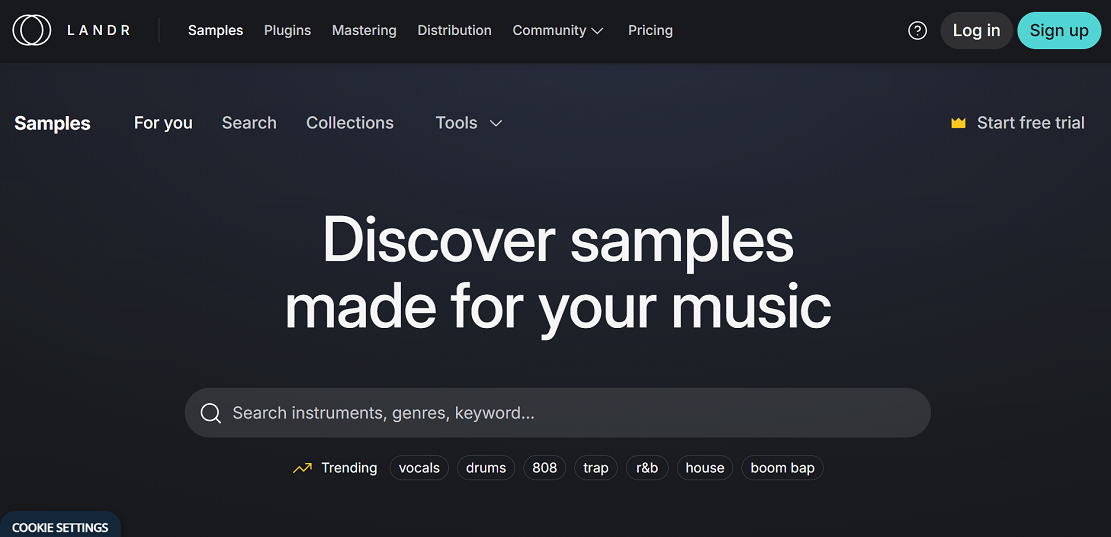
LANDR started as an AI mastering service and expanded into a full production platform over the years. Samples is one layer of that platform, and it’s available either as a standalone subscription or bundled into LANDR’s Studio plans alongside mastering, distribution, plugins, and collaboration tools.
- The Library
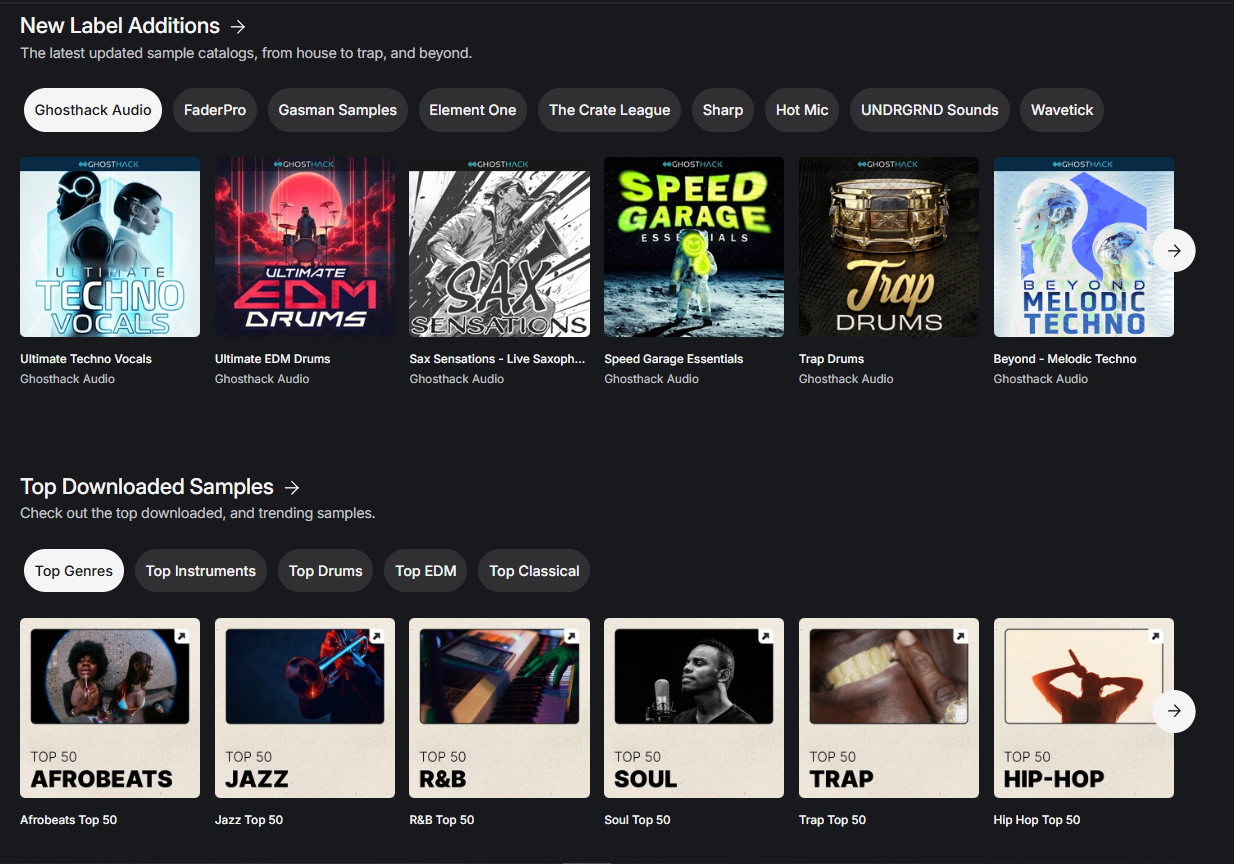
LANDR’s sample library holds over 3 million royalty-free sounds across loops, one-shots, and sample packs. The catalog covers a wide range of genres including hip-hop, EDM, pop, trap, lo-fi, house, afrobeats, drum and bass, and more. Packs come from exclusive providers under labels like Apex, Jet Set, and LANDR’s own imprint, alongside third-party contributors.
The library is genuinely large, though some producers have noted that the overall curation can feel broader and less selective than some competitors with smaller but more tightly edited collections.
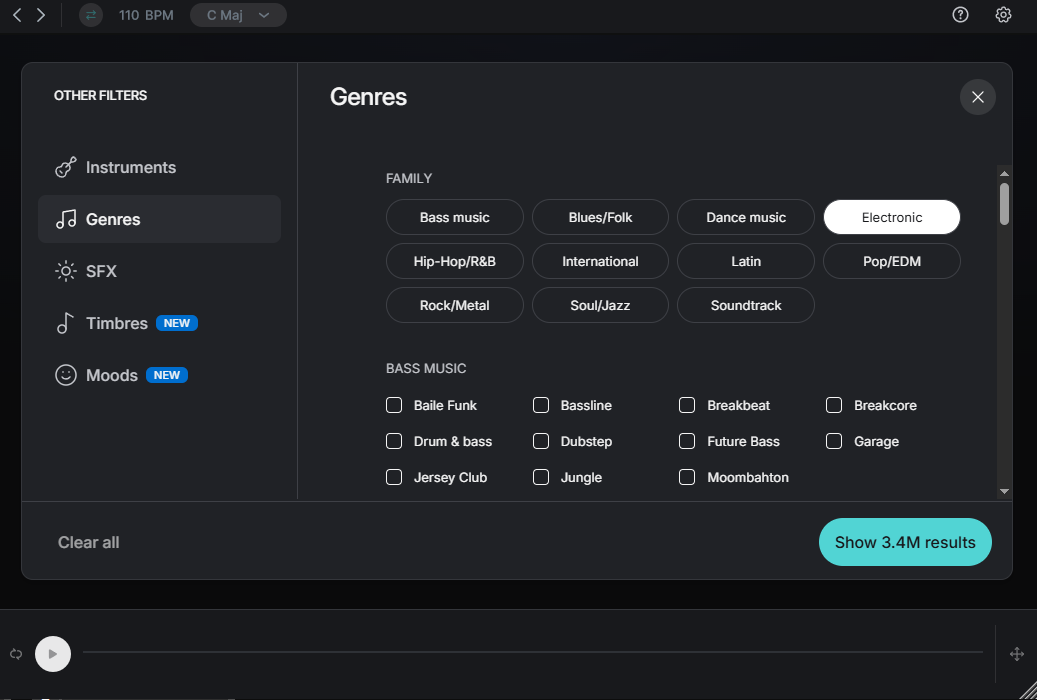
The Selector feature is LANDR’s main tool for browsing, letting you filter by genre, instrument, key, BPM, and mood to narrow down what you’re looking for quickly.
There’s also a built-in Creator tool that lets you audition loops and sketch out basic ideas directly inside the platform without opening your DAW first, which is a nice workflow shortcut for when you’re in an exploratory phase.
- The Plugin
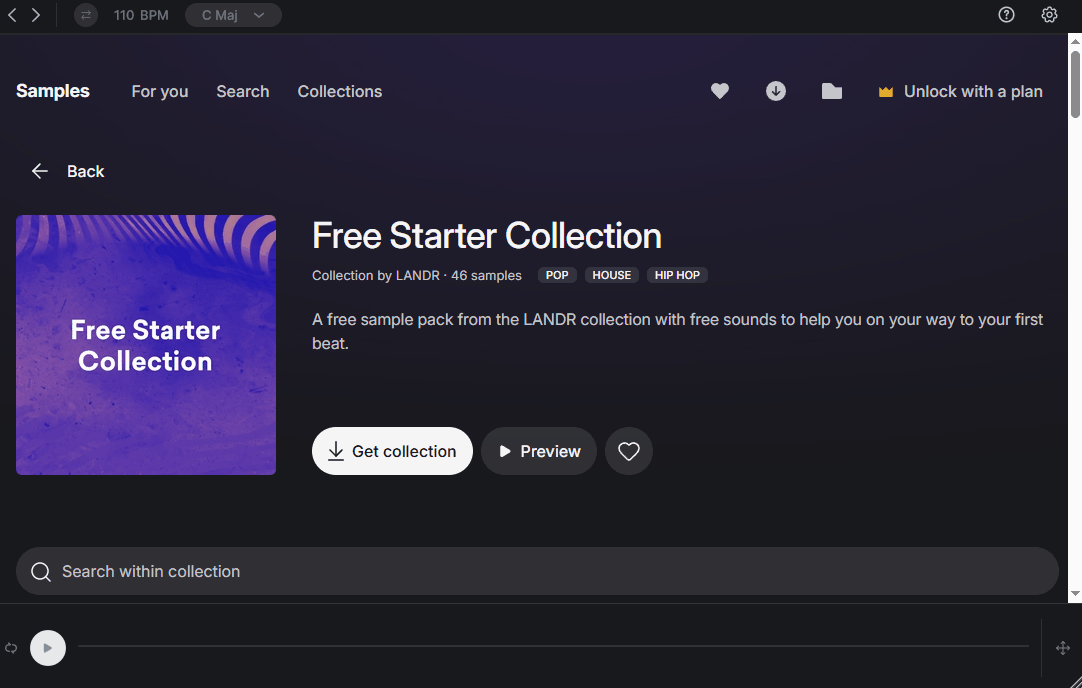
The LANDR Samples plugin installs directly in your DAW, letting you browse and preview samples in the context of your session without switching windows. It’s a straightforward browser that pulls from the full library, and the real-time previewing within your project tempo and key makes it faster to evaluate whether something actually works before you spend a credit.
I appreciate this kind of DAW integration because it removes the main friction point of browser-based sample shopping, which is not being able to hear things in context.
- Bundled Value
Where LANDR Samples genuinely stands out is the bundle potential. If you’re already paying for mastering and distribution, the Studio plans fold samples access in at a price that makes the per-credit cost feel more reasonable than if you were paying for samples alone.
For producers who want an all-in-one platform rather than multiple separate subscriptions, this bundling is a real practical advantage.
About Splice
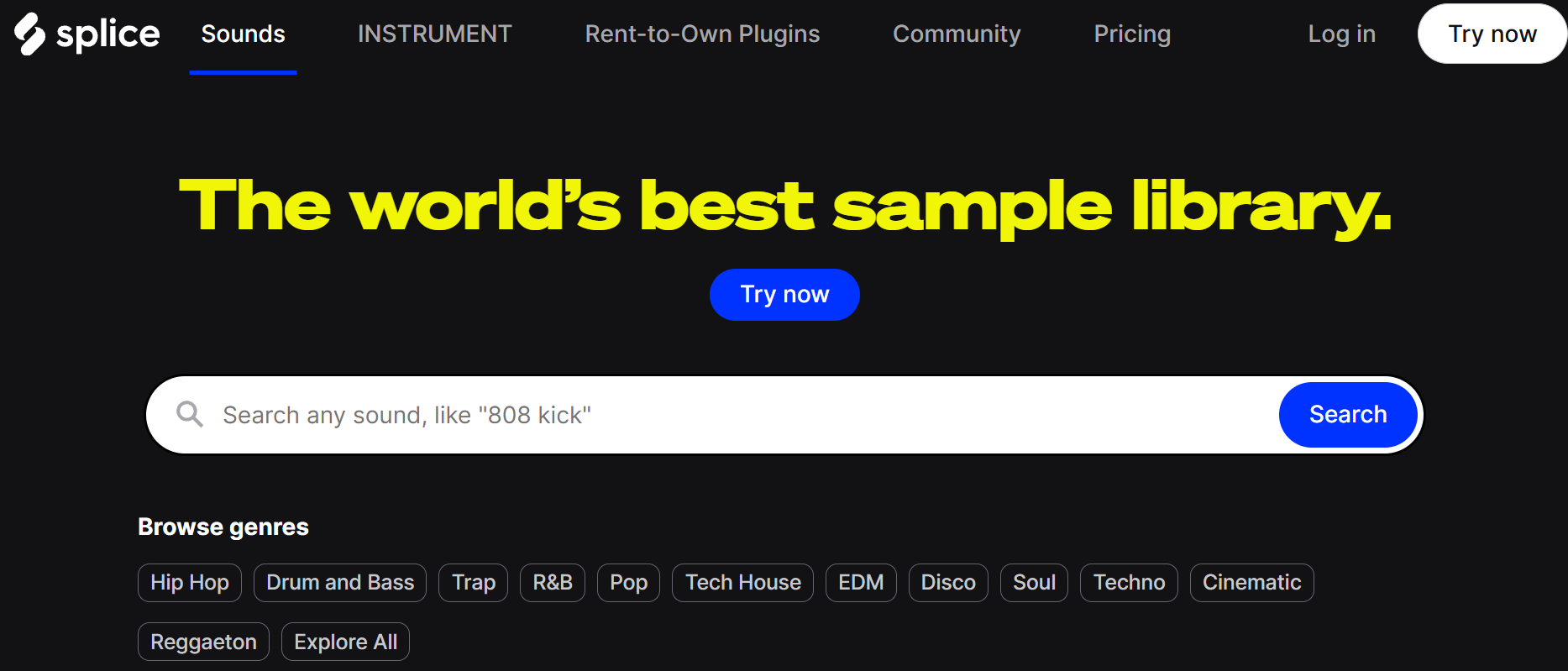
Splice has been one of the defining platforms in the sample world for over a decade, and it’s hard to overstate how much it shaped the way independent producers build their sound palette.
The credit-based model it popularized is now standard across the industry, and the library it has built is genuinely one of the largest and most genre-diverse available anywhere.
- The Library
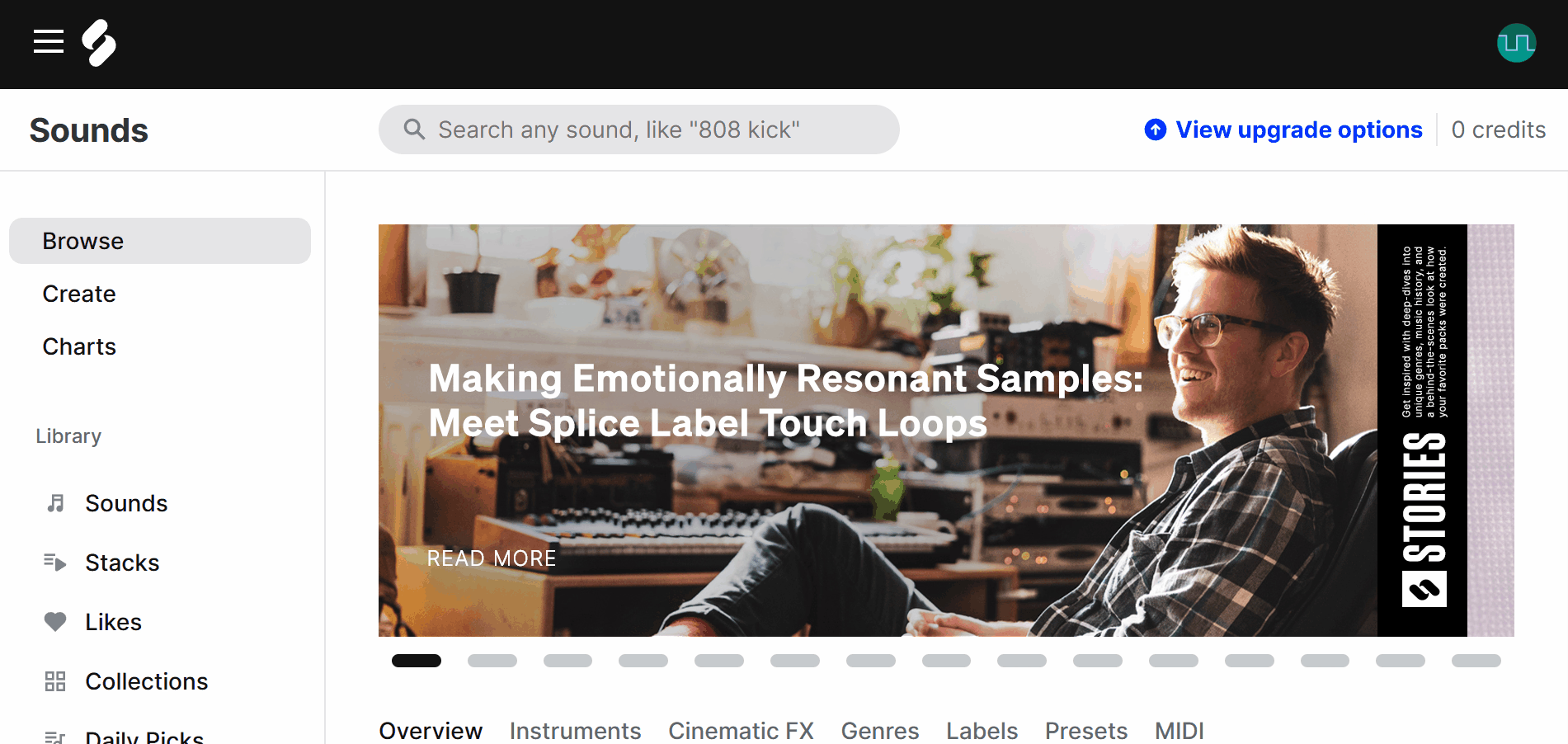
Splice’s library is pretty much enormous. A search for a common term like “808” returns more than 30,000 results, which gives you a sense of the scale. The depth covers virtually every genre from trap and hip-hop to techno, ambient, cinematic, reggaeton, jazz, and experimental, and the packs come from a wide range of established sample labels and producers who contribute directly to the platform.
Beyond audio samples, Splice also offers a substantial MIDI pack library, which LANDR doesn’t match. If you work heavily with MIDI melodies, chord progressions, and drum patterns, this is a meaningful difference.
There are also plugin presets for major synthesizers including Serum, Sylenth1, Massive, and Spire, with over 40,000 Serum presets alone available through the platform. For producers building sounds from scratch rather than flipping audio samples, this extended content makes Splice considerably more versatile as a single subscription.
- The Plugin and DAW Integration
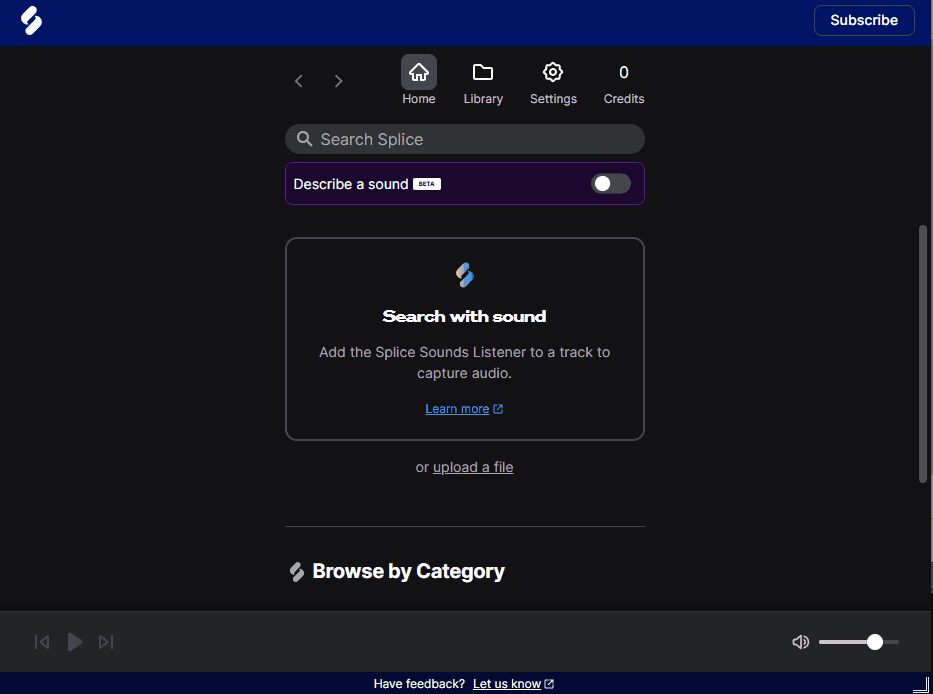
Splice’s Bridge plugin (now “Splice Sounds”) lets you audition samples in the context of your DAW session at matched tempo and key before committing a credit, which is the same core functionality as LANDR’s plugin but with a longer track record and broader DAW compatibility.
In 2025, Splice also expanded its in-DAW integrations to include Pro Tools, Studio One, and Ableton Live in beta, which pushes the workflow integration noticeably deeper for users on those platforms.
How the Libraries Differ
The character and curation of what’s inside them feels different in practice, and that affects how useful each one is day-to-day.
- Splice’s Depth and Producer-Sourced Content
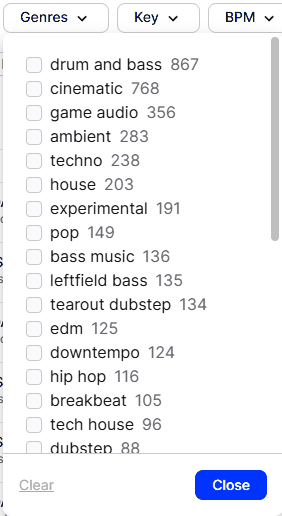
Splice’s library has a particular strength in sounds that feel current and genre-specific, partly because so much of its content comes from active producers and sample labels who are making music in those genres right now.
When you search for a specific type of trap hi-hat, a particular style of house chord loop, or a drum break with a specific character, you’re likely to find multiple credible options quickly.
I think this is Splice’s most underrated quality.
It’s not just that the library is large, it’s that a significant portion of it feels like it was made by people who actually use these sounds in finished records, which gives the content a different level of relevance than a library built purely to fill a catalog.
- LANDR’s Breadth and Platform Integration
LANDR’s library is genuinely broad and continues to grow, but some producers find that the depth within specific genres or sub-genres doesn’t match what Splice offers at the same level of specificity.
The overall quality is solid, but the curation can feel less focused in certain areas, particularly for niche electronic genres where Splice tends to have more targeted content from labels that specialize in those styles.
Where LANDR wins is the integration with the rest of the platform. Being able to go from finding a sample to sketching something in Creator to mastering and distributing a finished track without leaving the LANDR ecosystem is genuinely convenient for producers who value that all-in-one workflow.
For someone who just needs the best possible sample library and has their mastering and distribution sorted elsewhere, that ecosystem advantage matters less.
Licensing
Both platforms offer royalty-free licensing, but the practical details differ enough to matter once you’re actually releasing music commercially.
- Splice
When you download a sample from Splice, you get a perpetual, non-exclusive royalty-free license that stays valid even if you cancel your subscription. That covers commercial use across music productions, films, games, ads, and live performances, with no additional royalties owed to Splice or the original creator.
Two details are worth flagging. The license is non-exclusive, so other subscribers can use the same sounds you do, which means no individual sample is ever truly yours alone. And Splice requires you to disclose third-party materials to distributors, which is where the Certified License PDF comes in. You can generate one for any downloaded sound and use it as proof of your license when submitting to distributors or streaming platforms.
This matters because content ID systems and some distributors can still flag recognizable loops, particularly unaltered vocal samples, even when your license is legitimate. Having the paperwork ready makes resolving those flags much faster.
- LANDR
LANDR’s terms follow the same basic structure: royalty-free commercial use when samples are combined with other elements, and you keep everything you’ve downloaded if you cancel.
The thing to be aware of with LANDR is their audio recognition system, which is notably aggressive. It exists to protect against unauthorized use of their catalog, but it can occasionally flag legitimate releases from paying subscribers and create friction in the distribution process. If you release frequently, this is worth factoring into your decision.

Which Has Better Loops?
Loops are the most commonly used element from any sample library, and the quality and variety here is what most producers spend the majority of their credits on.
- Splice for Loop Variety and Currency
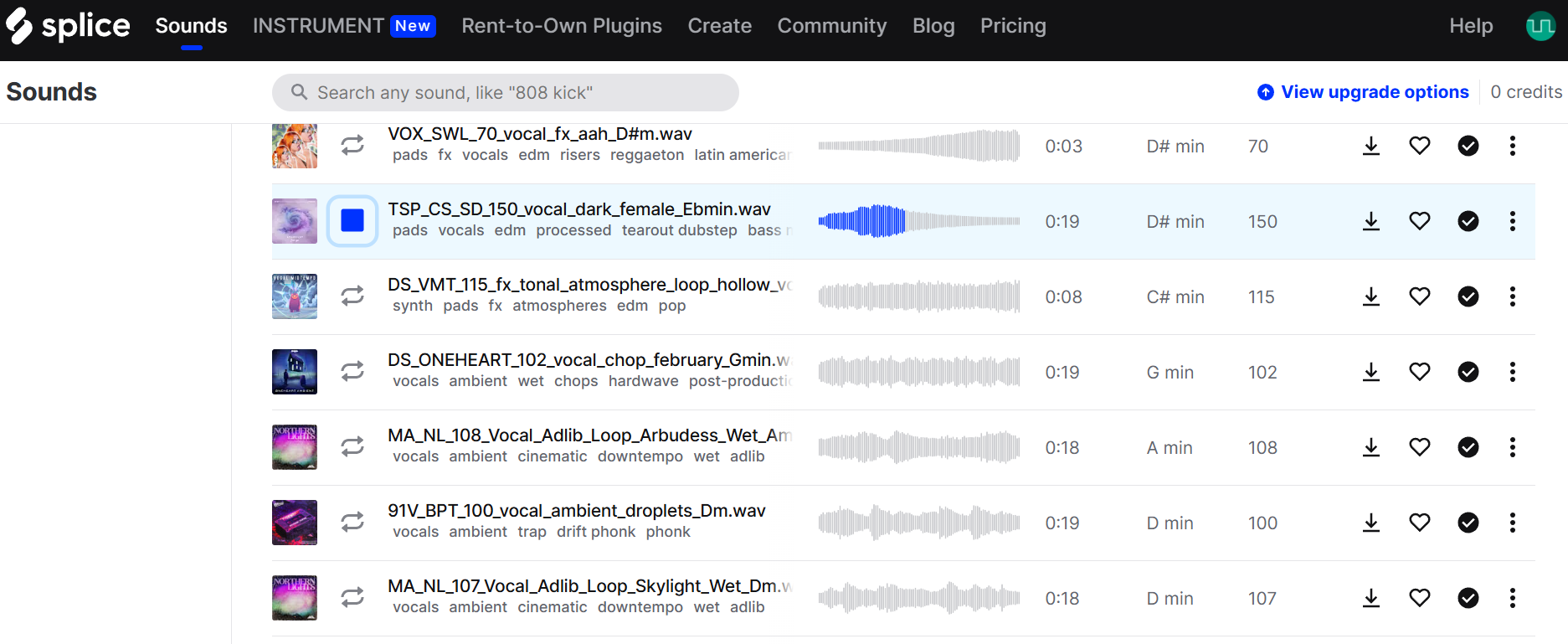
For me, Splice has the edge on loops across most modern genres, and it comes down to how the content is sourced. The loop content on Splice tends to reflect what’s actually being made in those genres at the time, because the labels and producers contributing to the platform are active in those scenes. When a new subgenre emerges or a specific aesthetic becomes dominant in production circles, Splice tends to have content that fits within a reasonable timeframe.
The filtering system on Splice is also well-developed, letting you narrow by key, BPM, genre, instrument, mood, and pack, and the preview system plays back loops at matched tempo so you can hear them in context before downloading.
The Bridge plugin handles this seamlessly in the DAW, and I found that browsing for loops in Splice feels more efficient than in LANDR’s browser when you know specifically what you’re looking for.
- LANDR for Accessible Discovery
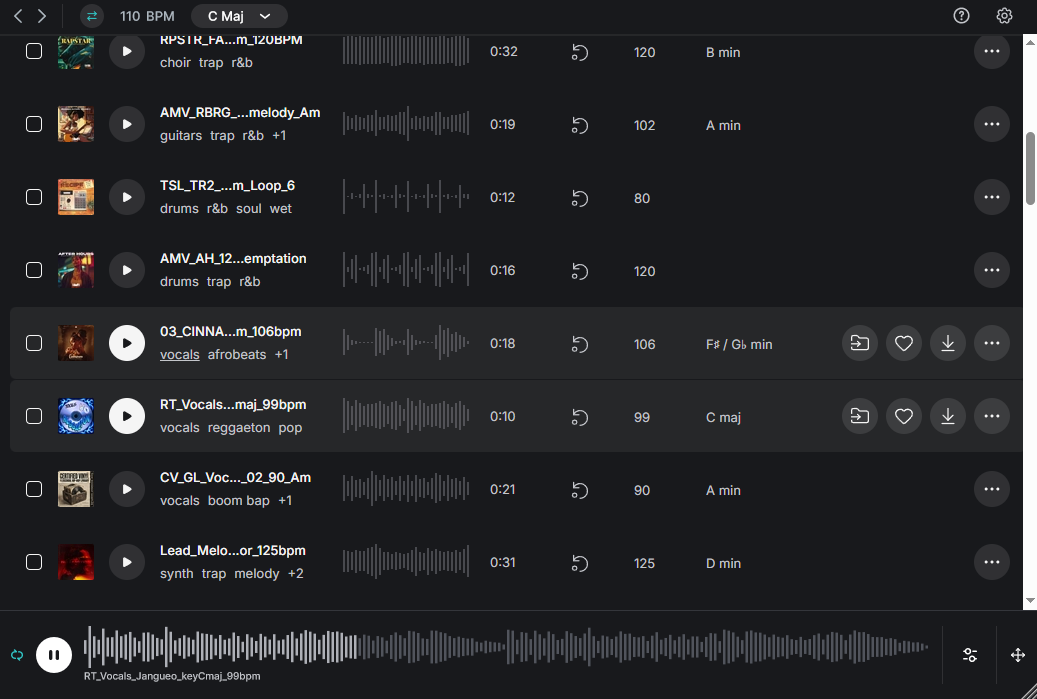
LANDR’s loop library is large and covers the major bases. For producers who are in more of an exploratory phase and want to browse broadly across genres without a specific target, the Creator tool built into the platform is useful for combining loops quickly to evaluate how things sit together.
The loop quality overall is solid, though the selection in very specific sub-genres can feel thinner than what Splice offers.
The practical reality is that most producers who have used both platforms tend to reach for Splice when they need a specific loop quickly, while LANDR is more of a browsing experience where you’re open to discovering what’s there.
Which Has Better One-Shots?
One-shots are where the real tonal character of your productions comes from, particularly in the drum and percussion department, and both platforms have enough to keep you busy for years.
- Splice One-Shots
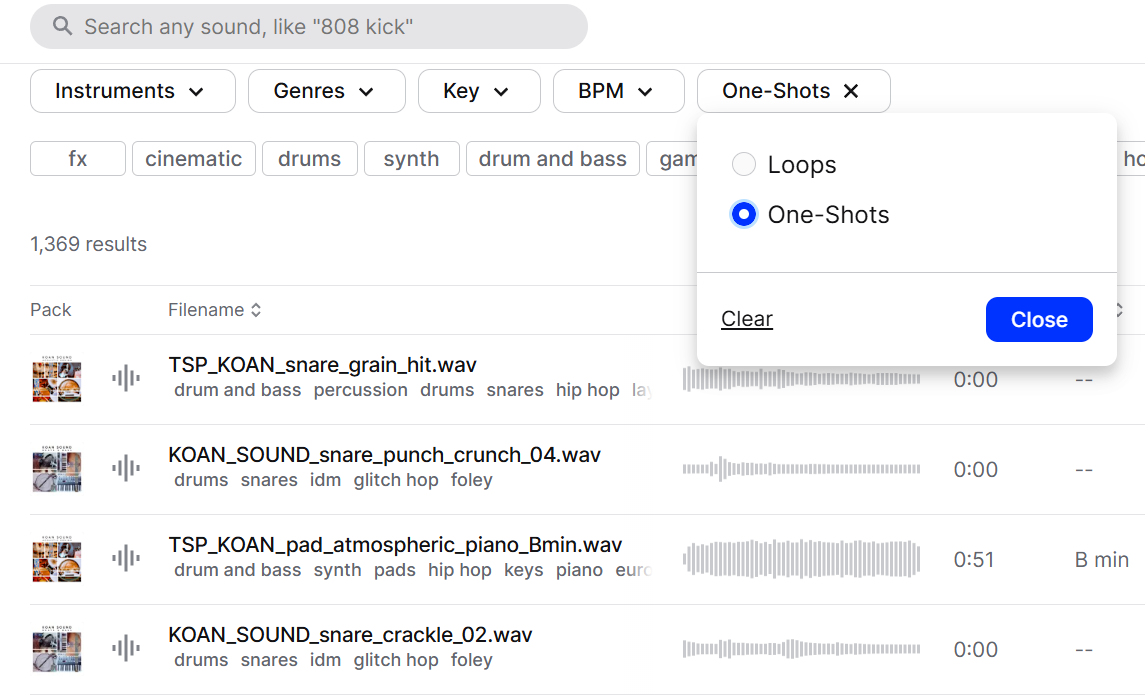
Splice has an extensive one-shot library covering kicks, snares, hi-hats, percussion, bass hits, synth stabs, vocal chops, foley, and sound design textures. The depth within the drum department specifically is impressive, with enough variation across just about every genre and sub-genre that you can build entire drum kits from scratch without touching a drum machine preset or a bundled library sample.
The ability to filter by specific instrument type, key, and character makes finding the right kick or snare much faster than scrolling through a generic list.
For one-shots specifically, this kind of precise filtering matters a lot because the right snare for a trap record is very different from the right snare for a techno track, even if they’re both broadly labeled as “drums.”
- LANDR One-Shots
LANDR’s one-shot selection is good and covers the major categories. I found that for common use cases like basic drum sounds, synth stabs, and standard percussion, LANDR delivers reliably.
The selection is narrower in very specialized territory, such as unique sound design textures, foley, and genre-specific tonal elements that producers working in specific electronic subgenres rely on.
For most producers making mainstream genres, LANDR’s one-shot library is more than adequate. For producers who need highly specific one-shots and rely heavily on individual hits to build unique sounds, Splice’s greater depth gives you more options.
Subscription Breakdown
Understanding exactly what you get at each price point is important before committing to either platform.
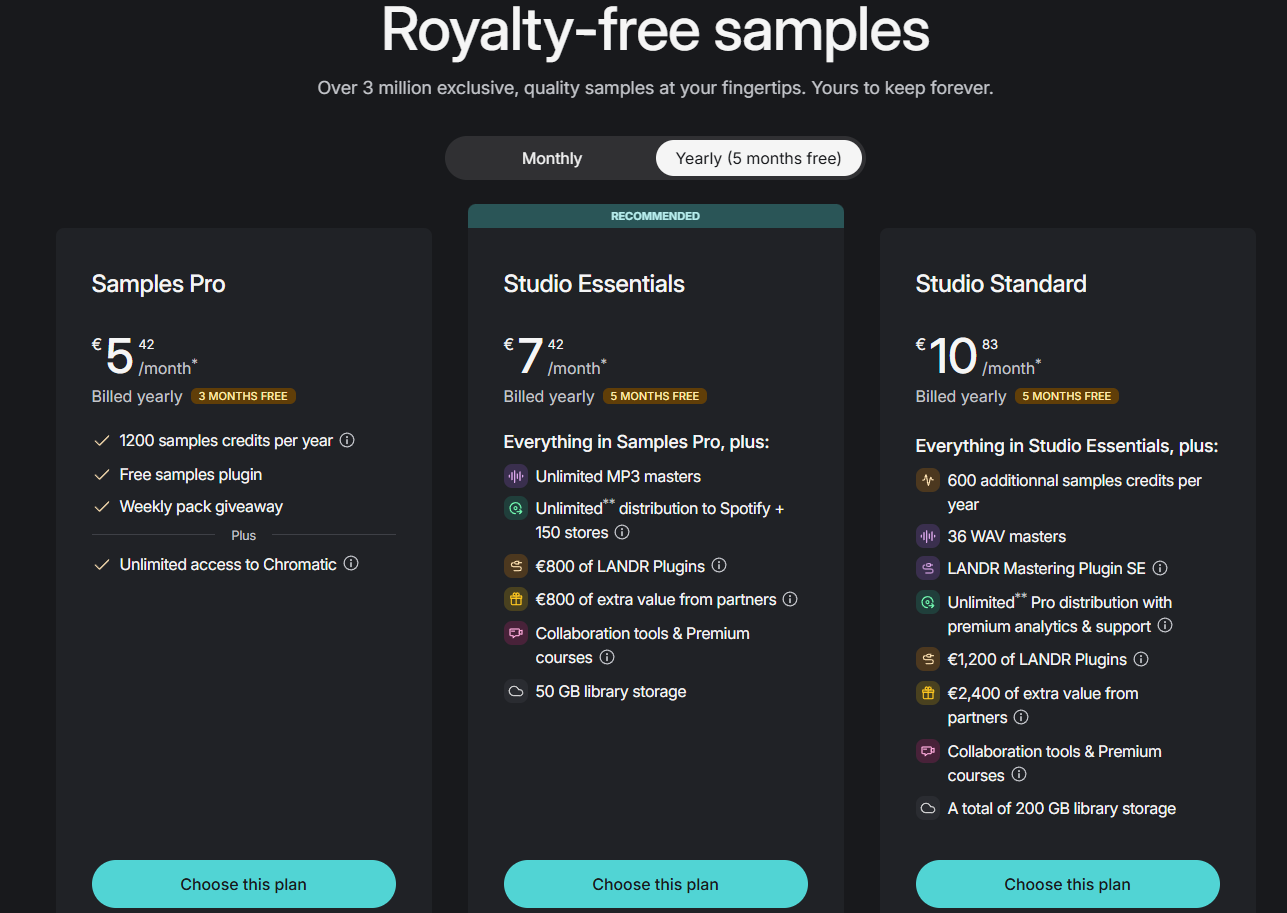
- LANDR Samples Plans
LANDR Samples standalone pricing runs at $5.99 per month for 75 credits, $9.99 per month for 200 credits, and $49.99 per year for 1,000 credits. Each credit downloads one sample, whether it’s a loop or a one-shot.
The more interesting option for many producers is the Studio bundle at $99.99 per year, which includes samples access alongside unlimited mastering in MP3 format, unlimited distribution, plugin access, online courses, and collaboration tools.
If those other services are part of your workflow, the bundle pricing makes the sample library essentially free as part of the package. The Studio Standard at $143.88 per year and Studio Pro at $191.88 per year add WAV-quality masters and the LANDR Mastering Plugin respectively.
- Splice Plans
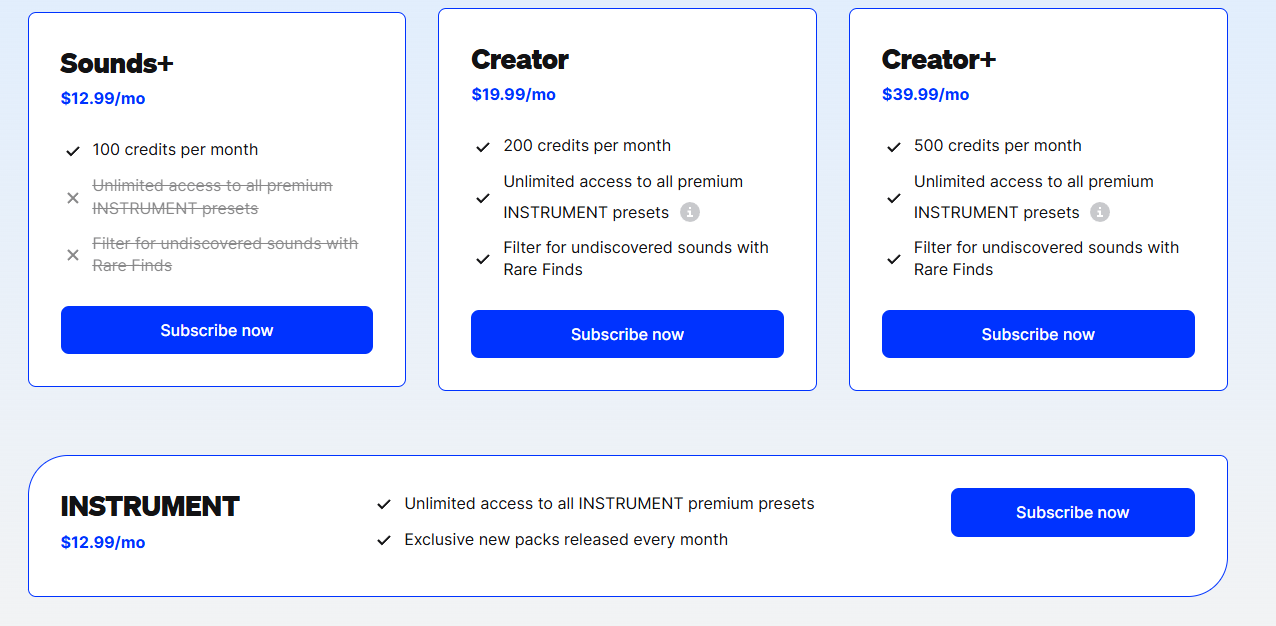
Splice’s Sounds+ plan at $9.99 per month gives you 100 credits per month plus the Bridge plugin, desktop and mobile app access, and access to sounds, MIDI, and presets.
The Creator plan at $19.99 per month doubles the credits to 200 per month and adds access to the Astra synthesizer plugin, the Beatmaker plugin, and the Skills tutorial section. Annual billing is available at $99.99 and $199.99 respectively for savings across both tiers.
One important difference: Splice credits roll over month to month, so if you don’t use all your credits one month they carry forward. This is a meaningful practical advantage for producers who don’t release constantly and whose credit usage varies. LANDR’s rollover terms are more limited.
Also worth noting: if you cancel Splice abruptly rather than pausing, you lose unspent credits. Splice allows you to pause your subscription for up to two months to preserve your banked credits, but beyond that you’d lose them if you stop paying. It’s an important consideration if your production schedule is irregular.
Who Is Each Platform For?
- Choose LANDR Samples if…
You’re already using LANDR for mastering, distribution, or other services and want to consolidate into one platform. The bundle value genuinely justifies the samples access as part of a broader subscription. You want a simpler, more integrated workflow where finding a sample, sketching something, and distributing a finished track all happen in one ecosystem.
I’d say LANDR makes the most sense for artists and producers who think about production and release as a connected workflow rather than separate steps, and who value simplicity and integration over having the absolute deepest library in every category.
- Choose Splice if…
You primarily need a sample library and aren’t interested in bundled mastering or distribution tools from the same platform. You work heavily with MIDI patterns, synth presets, or want access to a rent-to-own plugin program alongside your samples.
You produce in specific sub-genres where depth of selection matters more than breadth, and you want content that feels current and producer-sourced.
For me, Splice is the stronger pure sample library, and it’s the better choice if that’s all you need. The MIDI content, the plugin presets, the rent-to-own program, and the sheer depth of the loop and one-shot library in genre-specific territory all give it an edge as a standalone tool for production specifically.
Check out Splice Samples
Get the Free Plugin Starter Kit
The genuinely useful free DAWs and plugins worth installing. No filler. Straight to your inbox.

Hello, I’m Viliam, I started this audio plugin focused blog to keep you updated on the latest trends, news and everything plugin related. I’ll put the most emphasis on the topics covering best VST, AU and AAX plugins. If you find some great plugin suggestions for us to include on our site, feel free to let me know, so I can take a look!