
SSL’s position in recorded music is unlike almost any other brand in professional audio. The 4000 Series consoles shaped the sound of the 1980s and 1990s so thoroughly that their specific EQ curves, compression characteristics, and general sonic weight became the benchmark against which virtually everything else in mixing was measured.
Peter Gabriel, Phil Collins, U2, Metallica, Kate Bush – the list of records made through SSL hardware is essentially the record collection of several generations of producers.
What makes the software side of this story interesting is that SSL themselves now make the plugins, which means you’re not relying on a third party’s interpretation of what an SSL sounds like. You’re getting the actual engineering team’s own translation.
The seven plugins below represent the best of what SSL’s native plugin range has to offer right now, across channel processing, dynamics, EQ, saturation, and sibilance control.
From the Pluginerds Store
Before you go — if you're putting together or upgrading a home studio setup, we run our own store alongside the blog at Pluginerds Shop. Everything on it is picked by people who actually make music, not sorted by whoever paid for placement on a marketplace. Worth a look if you're filling in the gaps in your setup.
Visit Pluginerds Shop1. SSL Channel Strip 2
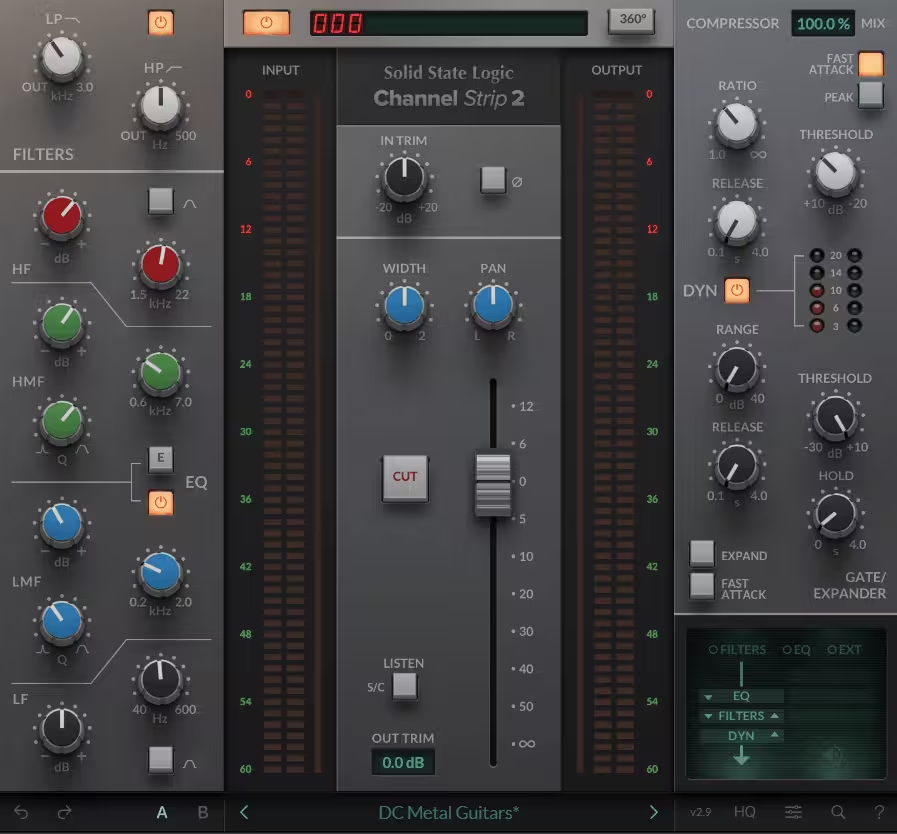
For the people who just want to know what the SSL sound actually is in a single plugin without reading a console manual, Channel Strip 2 is the answer. It’s the official, first-party version of an SSL 9000 K-inspired channel strip and it’s built by the company that made the hardware. Sweetwater engineers describe it as one they reach for on almost every session, and reviewers consistently note it sounds more open and transparent in the mids than most third-party SSL emulations.
The reason for that is simple: SSL designed it with anti-cramping EQ technology from the ground up, meaning the filter shapes behave correctly at extreme settings rather than exhibiting the phase-response degradation that plagues many parametric EQ implementations.
I’ve found it works on anything like vocals, drums, bass, guitars, synths and it just sits things in the mix in a way that feels natural rather than processed.
- E and G Series EQ:
The 4-band EQ section can be switched between E Series and G Series characteristics with a single button, giving you two genuinely different EQ personalities in one plugin. The E Series is punchier and more forward, while the G Series is smoother and more refined.
Both the LF and HF shelving bands can be switched to Bell mode for more surgical shaping, and the entire EQ section can be applied to the dynamics sidechain for frequency-dependent compression, which I find genuinely useful on bass-heavy material.
- Compressor and Gate/Expander:
The dynamics section includes a compressor with switchable soft and hard knee and an independent gate/expander, both with fast and slow attack switches and independent sidechain inputs.
The compressor has that SSL grab and release character that engineers spend a lot of time chasing, and the gate is tight enough to be used on drums without sounding gated in the obvious, embarrassing 1980s sense. Both sections have individual sidechain filters for frequency-specific triggering.
- HPF and LPF Sidechain Routing:
High-pass and low-pass filters are included and, importantly, they can be routed into the dynamics sidechain as well as the main signal path. This lets you, for instance, apply a high-pass filter only to what the compressor responds to while letting the full bandwidth through to the output, a standard studio trick for preventing low-end content from triggering excessive gain reduction on a mix bus.
- Output Section with Width and Pan:
The v2 update added a dedicated Output section with Fader Level, Pan, and mid-side Width controls that sit alongside the existing Output Trim, plus advanced DAW Solo and Cut integration for Ableton Live, Studio One, and REAPER via VST3.
The HQ mode enables intelligent oversampling for higher audio quality at the cost of some CPU. SSL 360° integration means all instances are controllable from a single virtual console view and from hardware controllers like the UC1.
Get the Free Plugin Starter Kit
The genuinely useful free DAWs and plugins worth installing. No filler. Straight to your inbox.
2. SSL Bus Compressor 2
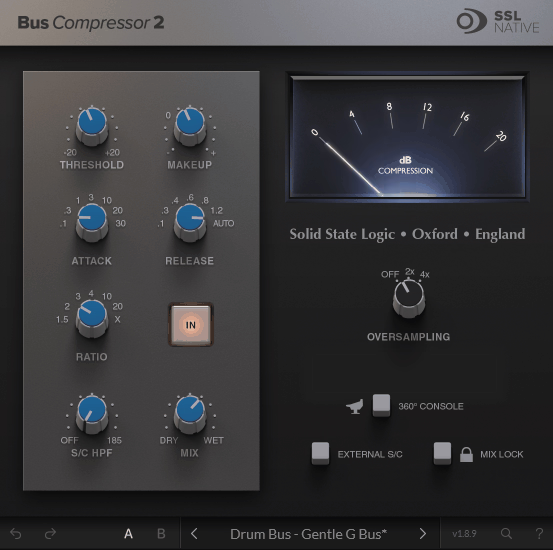
There is probably no more widely referenced compressor in the history of commercial music production than the SSL G-Series Bus Compressor. It’s the center-section compressor from SSL’s 1980s G-Series analogue console, and the phrase engineers reach for when describing what it does is “audio glue.”
You strap it across your mix and it sounds like a record, that’s the actual SSL marketing line and it’s basically accurate. Bus Compressor 2 is SSL’s own direct emulation of that hardware, and unlike the third-party versions from Waves, UAD, and Plugin Alliance, this one was built by the people who made the original circuit. Gearspace users consistently describe it as cleaner and more transparent than competing emulations while still delivering that specific glued, cohesive quality the hardware is famous for.
- Extended Attack, Release, and Ratio Options:
The hardware G-Series compressor had fixed options: attack of 0.1/0.3/1/3/10/30ms, release of 0.1/0.3/0.6s/Auto, and ratios of 2/4/10:1. Bus Compressor 2 adds new attack, release, and ratio values beyond those found on the original hardware, including a 20ms attack option, additional release times at 0.4, 0.8, and 1.2 seconds, and extra ratio options including 1.5:1, 3:1, 20:1, and the aggressive X ratio.
This makes it genuinely useful on individual tracks and subgroups as well as the mix bus, which the hardware wasn’t designed for.
- Sidechain High-Pass Filter:
The sidechain HPF removes low-frequency content from what the compressor responds to, preventing kick drums and bass from triggering excessive gain reduction and causing that pumping, breathing quality that ruins a lot of mix bus compression attempts.
It’s a filter that the original hardware didn’t have, and on bass-heavy modern productions from hip-hop, electronic music to R&B, it’s basically essential.
- 2x and 4x Oversampling:
Switchable 2x and 4x oversampling reduces aliasing artifacts and is particularly noticeable in the high-frequency smoothness of the plugin. Gearspace users in the original Channel Strip 2 thread commented that the oversampling “makes a difference” and is worth the CPU cost. I agree. At 4x you’re spending more headroom but the result is noticeably more refined.
- SSL 360° Integration with Up to 8 Instances:
Up to 8 instances of Bus Compressor 2 can be controlled simultaneously from the SSL 360° Plug-in Mixer, with hands-on hardware control available via the center section of the UC1 controller. For anyone using multiple bus compressor instances across subgroups and the master bus simultaneously, this turns what would be a tedious click-to-each-plugin workflow into something that feels much more like working on a physical console.
- Auto Release Mode:
The Auto release mode adapts the release timing based on the content of the signal rather than applying a fixed release time to everything. On a full mix with a wide variety of transient material, auto release consistently produces a more musical result than any fixed release setting I’ve found, particularly during chorus builds where the density of the arrangement changes rapidly.
3. SSL X-DynEQ
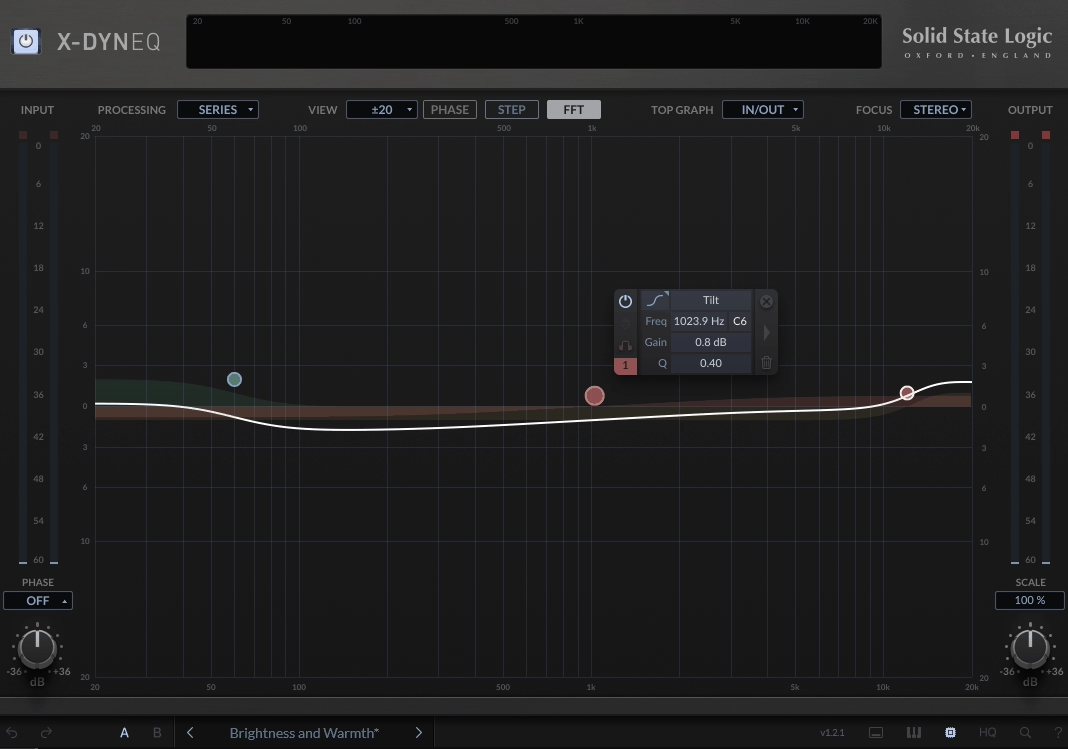
The thing that sets X-DynEQ apart from most dynamic EQs on the market is the Auto Attack, Release, and Threshold system, which draws directly from SSL’s decades of engineering expertise in program-dependent compression, the same understanding behind the Bus and Channel Strip compressors that have shaped professional mixes for forty years. SSL’s first-ever dynamic EQ plugin, released in April 2024, builds on the X-EQ 2 and extends it with full dynamic processing across every band.
It’s the most technically advanced EQ plugin SSL has ever made, and for anyone who already uses X-EQ 2 presets, the backward compatibility means nothing is lost in the transition.
- 24 Bands with 20 EQ and Filter Types:
X-DynEQ gives you up to 24 bands of dynamic EQ with 20 different EQ types and filter shapes, including the three types added exclusively for this plugin which are Notch, Bandpass, and Tilt EQ.
Every shelf and bell filter can be switched to dynamic mode independently, which means each band can function as a static EQ node or a frequency-sensitive compressor/expander depending on what you need. The combination of bandwidth, filter variety, and per-band dynamic capability makes this the most comprehensive EQ SSL has ever shipped.
- Auto Attack, Release, and Threshold:
When a band is switched to dynamic mode, the Auto functions for Attack, Release, and Threshold allow the plugin to adapt intelligently to the incoming signal rather than requiring manual threshold hunting. This is derived from SSL’s work on program-dependent time constants in their hardware compressors, and in practice it means you spend significantly less time adjusting dynamic EQ settings across sessions.
- Per-Band Stereo, L, R, M, S Processing:
Every individual band offers independent stereo, left, right, mid, or side processing mode, and you can run any combination of these across multiple bands within a single instance. Focus Mode lets you quickly isolate just the mid or side component of the signal for targeted correction, extremely useful for mastering and mix bus work where mid-side imbalances need addressing without affecting the full stereo field.
4. SSL VocalStrip 2
Bringing a vocal from raw recording to something mix-ready generally means several plugins in sequence: a de-esser, something for plosives, a broad EQ for tone, and compression.
VocalStrip 2 puts all four of those tools in a single plugin, built specifically for vocals, and designed so that every module is precisely calibrated for voice rather than borrowed from a general-purpose processor.
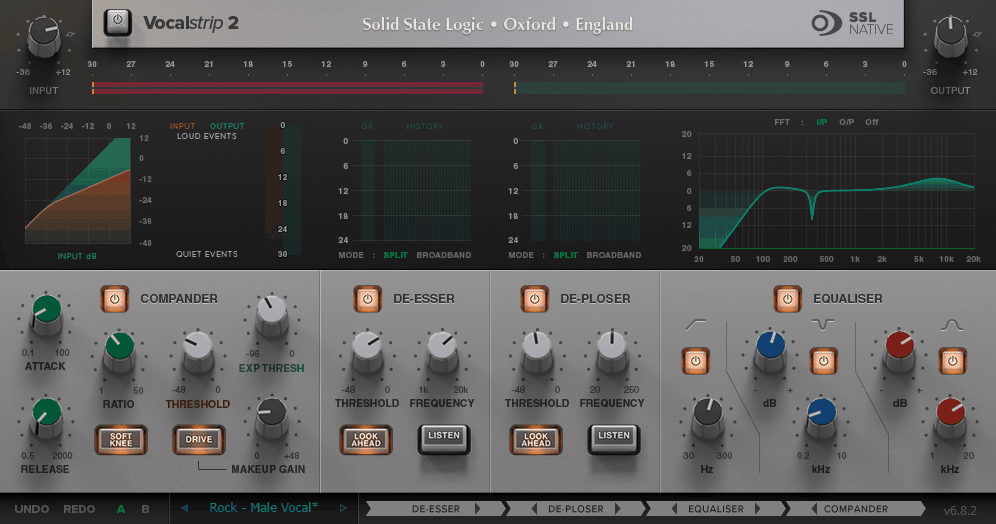
It draws on SSL’s professional engineering legacy and I found it to be one of the most immediate and effective vocal channel strips in any DAW. The four modules are a De-esser, a De-ploser, a 3-band SSL EQ, and a Compander, and you can configure the processing order to match what the specific vocal performance needs.
- De-Esser and De-Ploser with Gain Reduction History:
The De-esser uses comparative analysis and dynamic envelope detection to reduce sibilance without over-processing quiet sections, and the De-ploser applies the same approach to the low-frequency plosive energy from hard consonants. Both modules have a gain reduction history graph that shows what processing has been applied over time, which I find much more informative than a simple GR meter that you can see at a glance whether the de-esser has been working too hard during a particular phrase.
- Three-Band SSL EQ with Air Band:
The EQ section is a transparent SSL 3-band design with a high-pass filter, an asymmetric notch band, and an air band for high-frequency presence and sparkle.
The asymmetric notch is the distinctive choice here as it’s specifically shaped to address the formant resonances common in vocal recordings rather than applying a generic bell cut. The air band is genuinely musical and I’ve used it to add a professional top-end sheen to otherwise dull vocals without anything sounding processed.
- Compander Module:
The Compander combines compression and downward expansion in a single interface. The expander section reduces room ambience and background noise that compression would otherwise push up, while the compressor smooths the performance itself. The Drive control at the output stage adds harmonic content ranging from subtle warmth to noticeable grit, useful for digital vocals that need a touch of analog character without a separate saturation plugin in the chain.
- Configurable Processing Order:
You can reorder all four modules to match the specific requirements of a given vocal performance. Sometimes you want the EQ before the dynamics to clean up the frequency balance before compression sees the signal. Other times you want the compander first to control dynamics before the de-esser has to deal with them. VocalStrip 2 lets you find whatever sequence works best rather than locking you into a fixed signal path.
5. SSL autoEQ
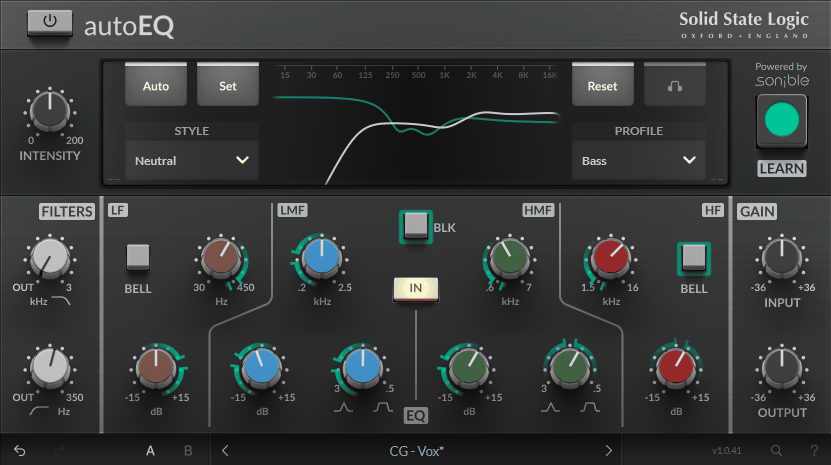
There’s an important distinction worth making about autoEQ: the AI analysis here is not replacing your decisions, it’s accelerating the starting point. This is part of SSL’s autoSeries alongside autoDYN and autoBUS, a set of plugins born from the 2023 acquisition of sonible by SSL’s parent company Audiotonix, which brought sonible’s machine-learning audio analysis directly into SSL’s own console processing. T
he EQ engine itself is the same processing as the award-winning SSL 4K E Channel Strip, so the sonic character is identical to hardware that shaped records by Peter Gabriel, Kate Bush, Metallica, and U2. What the AI layer adds is a fast, intelligent starting point based on what source material you’re working with.
- 4K E Channel Strip EQ Engine:
The EQ processing is a direct implementation of the SSL 4K E Channel Strip EQ, not a new algorithm designed around the AI system. That means you get the specific presence, clarity, and low-end weight that the SL 4000 Series is known for. All four EQ bands plus the filter sections are fully accessible and editable at any point, and the AI recommendations are just a starting point that you take over steering the ship immediately.
- Profile and Style System:
Profile tells the AI what type of source material it’s processing like kick, snare, vocal, bass, and more, which optimizes the analysis for that signal type. Style shapes the character of the suggested EQ: Neutral, Warm, or Bright. These are not fixed presets but parameters that the AI uses to bias its recommendations, meaning the same kick drum can yield different starting points depending on whether you’re after a dry, punchy sound or a warmer, vintage-tinted one.
- Intensity Control (0-200%):
The Intensity knob scales the amount of AI-suggested processing from subtle (0%) to bold (200%), which means you can apply the suggestion at half strength for a gentle nudge or push it beyond the recommended amount for a more dramatic tonal shift. I found this useful when the AI’s direction was right but the magnitude needed adjustment, rather than manually tweaking each band, a single Intensity move gets you closer faster.
- Learn Button with 10-Second Analysis:
Hitting Learn triggers a 10-second audio analysis after which the plugin applies or readies the suggested settings. MusicTech’s review described the result as a “creative starting point rather than a finite setting,” which captures it well. You re-analyze whenever the source changes, and the green ring around each control lights up when you’ve moved away from the AI suggestion so you always know what’s been manually adjusted.
- Visual Mix Assistance:
A contextual visual system shows what each adjustment is doing and why, with parameter changes highlighted in a way that helps less experienced engineers understand the relationship between EQ decisions and the resulting sound. This can be turned off for faster workflow, but I think it’s one of the most genuinely educational features built into any mixing plugin , it’s not dumbing things down, it’s making the process legible.
6. SSL X-Saturator
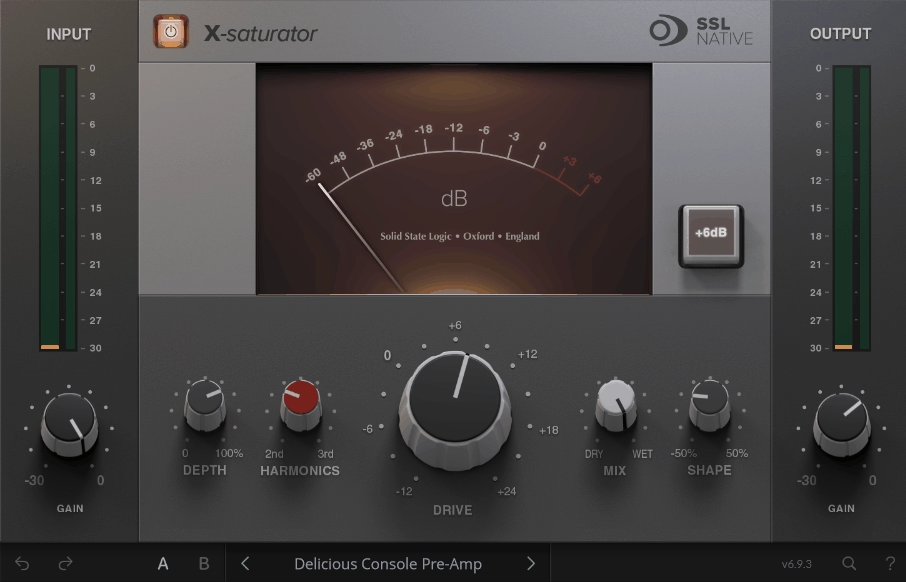
I want to be clear about something before describing what X-Saturator does technically: this is one of those saturation plugins where the reason you keep reaching for it is difficult to explain in words. Sweetwater engineers who use it say it ends up on almost every channel of every session.
Gearspace reviewers describe it as “fat and punchy” and note that it brings up the perceived loudness without increasing peaks significantly. The practical reason for this is that SSL’s circuit modeling introduces even-order and odd-order harmonics at the right levels and frequencies relative to the source material, which is what gives it that effortless analog quality that makes everything sit better in a mix. At low drive settings it’s barely there, but things just feel warmer and more present.
At high drive settings it becomes a genuine distortion tool.
- Valve and Transistor Harmonic Modes:
The Harmonics control lets you select between 2nd-order valve-style distortion, 3rd-order transistor-style distortion, or any blend of the two. Second-order harmonics give tube warmth, even-frequency richness, and a forgiving low-end roundness. Third-order transistor harmonics add edge, presence, and a more forward, aggressive character. Blending the two is where I find the most musical results on most sources, enough warmth to feel analog without the tubby quality that pure valve saturation can introduce on dense modern mixes.
- Drive, Depth, and Shape Controls:
Drive sets how hard the signal hits the saturation stage. Depth controls the overall level of harmonic content. Shape adjusts the balance of those harmonics from smooth negative values to aggressive high-frequency emphasis at positive values.
- Headroom Boost and Wet/Dry Blend:
The +6dB Headroom switch adds extra internal headroom above the saturation point, preventing internal digital clipping when driving the plugin hard. The Wet/Dry mix knob enables parallel saturation without external routing, which is essential for mix bus applications where you want harmonic content without sacrificing the transient integrity of the full signal. I use these two features together constantly on master bus saturation.
- CPU Efficiency:
For a plugin that does what it does, X-Saturator uses practically no CPU. KVR Audio users specifically mention the low CPU footprint as a reason to run it across many channels simultaneously.
7. SSL DeEss
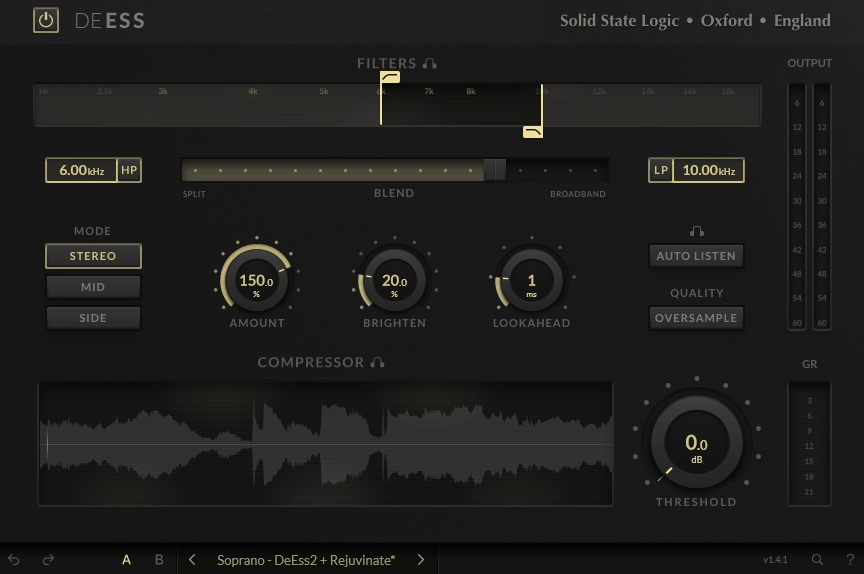
When most de-essers fail, it’s because of a fundamental flaw in how their threshold system works: the threshold is fixed, so quieter sibilant passages sail through undetected while louder ones get hammered, and any level change earlier in the chain immediately throws off the calibration.
SSL’s DeEss addresses this with a relative threshold algorithm that automatically adapts the detection threshold in relation to the input signal level, meaning it de-esses quiet sibilant events just as effectively as loud ones, and adjusting your input gain upstream doesn’t require you to recalibrate the plugin.
- Relative Threshold Algorithm:
The relative threshold system adapts detection automatically to the incoming signal level, which means the de-esser’s response stays consistent even if you change the input level of the signal earlier in your FX chain. Traditional fixed-threshold de-essers require recalibration every time the input changes.
- Split and Broadband Modes with Blend:
Split mode applies gain reduction only to the sibilant frequency band, leaving surrounding frequencies untouched. Broadband mode reduces the entire signal whenever sibilance is detected, like a compressor triggered by high frequencies. A blend slider lets you mix between the two modes continuously, so you can find the combination that sounds most natural for a given vocal or instrument.
- Mid/Side Processing:
Targeting just the Mid or Side component of a stereo signal means you can de-ess the center of a stereo bus without affecting the room information or stereo elements in the sides, which is useful on mix buses and vocal groups where standard stereo de-essing would process more of the signal than necessary. Automatic oversampling and lookahead options are available for higher-quality response when CPU budget allows.
- Brighten Control:
After de-essing, high-frequency content can sound dull because the processing has reduced overall high-end energy along with the specific sibilant peaks. The Brighten control allows you to rejuvenate the high-end of the de-essed signal without reintroducing the sibilance
- Voice-Type and Instrument Presets:
Carefully designed presets for Tenor, Alto, and Soprano vocal types give you tuned starting points for different voice ranges rather than a generic one-size-fits-all default.
Get the Free Plugin Starter Kit
The genuinely useful free DAWs and plugins worth installing. No filler. Straight to your inbox.

Hello, I’m Viliam, I started this audio plugin focused blog to keep you updated on the latest trends, news and everything plugin related. I’ll put the most emphasis on the topics covering best VST, AU and AAX plugins. If you find some great plugin suggestions for us to include on our site, feel free to let me know, so I can take a look!