

Not all condenser microphones are created equal when it comes to capturing the human voice, and the differences go beyond just cost. Some condensers are designed to flatter vocals with built-in warmth and presence.
Others aim for clinical neutrality that reveals every detail, good or bad, and leaves the tonal shaping entirely to you. Some handle sibilance gracefully while others exaggerate it. Some work beautifully on delicate, breathy performances but crumble when a powerful singer opens up.
Choosing the right condenser for vocals means understanding what kind of character you want your recordings to start with.
What connects every mic on this list is that they’re all designed with vocal capture as a primary use case. Several of them started life as stage vocal condensers, which actually works in their favor for recording because stage design priorities like feedback rejection, controlled proximity effect, and consistent off-axis response translate directly into cleaner, more controllable studio recordings.
I’ve focused on seven condenser microphones that handle vocal recording with particular distinction, each bringing a different character and set of strengths that suit different voices, rooms, and production styles.
1. Neumann KMS 105
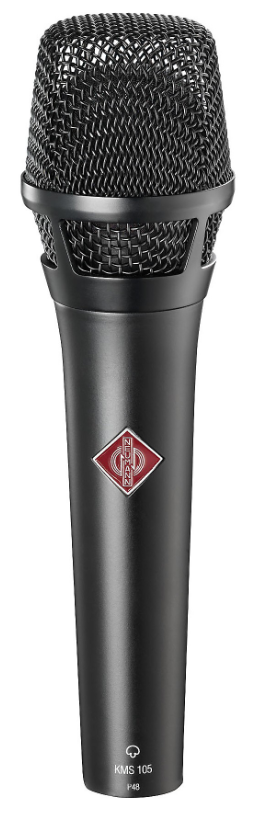
A studio-grade Neumann capsule in a handheld format designed for demanding vocal applications.
Neumann KMS 105 features a supercardioid polar pattern with exceptional off-axis rejection, a hand-selected condenser capsule from the company that has defined professional vocal recording for decades, a presence lift that adds clarity without harshness, and a frequency response engineered to sound transparent and detailed on voices across the entire dynamic range.
For studio vocal recording, I find the KMS 105 interesting because it combines Neumann’s renowned capsule quality with the tight pickup pattern and controlled proximity effect of a stage mic design.
You get the detail and air of a Neumann without the extreme sensitivity to room reflections that large-diaphragm studio condensers exhibit, which is a genuine advantage in untreated rooms.
- Neumann Capsule
A hand-selected Neumann condenser capsule delivers the clarity, detail, and natural tonal balance that has made the Neumann name synonymous with professional vocal recording for over 90 years.
On vocals, the capsule captures breath control, dynamic variation, and tonal texture with a fidelity that reveals why engineers pay Neumann prices. You hear the full complexity of a vocal performance, from the quietest whispered passage to the loudest sustained note, with a consistency that maintains quality across the entire dynamic range.
- Supercardioid Benefit
A supercardioid polar pattern provides tighter rejection of off-axis sound than standard cardioid condensers, which translates directly to cleaner vocal recordings in untreated rooms. If your recording space has reflective walls, a noisy computer, or any ambient sound source, the KMS 105’s tighter pattern captures less of that contamination than a wide-pattern studio condenser would.
For vocalists who record at home without professional acoustic treatment, the supercardioid pattern is a practical advantage that produces cleaner results from imperfect environments.
- Presence Clarity
A gentle presence lift in the upper midrange adds vocal clarity and intelligibility without the harsh, sibilant quality that more aggressive presence boosts introduce. Neumann’s approach to presence enhancement is subtle, adding just enough lift for your voice to cut through a mix without making it sound processed or brittle. For singers whose voices naturally sit back in a mix, the built-in presence helps them push forward without EQ.
- Proximity Control
Unlike many large-diaphragm studio condensers that produce dramatic bass buildup at close distances, the KMS 105 manages proximity effect with restraint, giving you warmth when you work close without the boomy, muddy quality that forces heavy high-pass filtering.
For intimate vocal recording techniques where the singer works close to the microphone for a warm, present sound, the controlled proximity means you get closeness without losing definition.
2. Shure Beta 87A
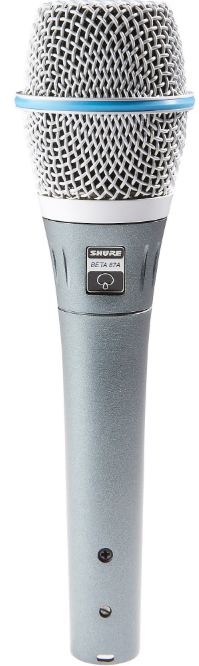
Shure Beta 87A features a supercardioid pattern with excellent off-axis rejection, a smooth, detailed frequency response without aggressive peaks, an internal shock mount system that reduces handling noise, a hardened steel grille with integrated pop protection, extremely low self-noise, and a vocal character that professional engineers consistently describe as refined, detailed, and flattering without being dishonest.
What I appreciate about the Beta 87A for recording is the frequency response character. Many condenser mics designed for vocals push the presence range hard, which sounds impressive on first listen but creates sibilance problems that require de-essing during mixing. Shure tuned the Beta 87A for a smoother, more even presence that avoids that trap, giving you clarity without the harsh aftermath.
- Refined Response
A smooth frequency response with a controlled, even presence rise provides vocal clarity without the aggressive sibilance that many vocal condensers introduce. On voices that naturally carry strong S and T sounds, the Beta 87A captures those consonants with definition but without the ice-pick harshness that requires heavy de-essing in post. For recording vocals that need to sound polished and radio-ready with minimal processing, the Beta 87A’s tuning gets you closer to that goal from the source.
- Self-Noise Floor
Extremely low self-noise means quiet vocal passages, breathy performances, and delicate dynamic moments are captured above the noise floor with full clarity. In recording scenarios where the singer delivers passages that range from whisper to full voice, the low self-noise ensures the quiet moments aren’t buried in microphone hiss. For intimate vocal styles where dynamic range is a creative tool, the Beta 87A’s noise performance preserves that range completely.
- Integrated Pop Shield
A hardened steel grille with built-in pop protection handles plosive consonants without an external pop filter, simplifying your recording setup. Removing the external pop screen means one less piece of hardware between the singer and the microphone, which can be psychologically freeing for performers who feel enclosed by a forest of studio equipment. For quick vocal sessions where setup speed matters, the integrated protection means you mount the mic and record.
- Internal Isolation
An advanced internal shock mount reduces mechanical vibration transmission from mic stands and boom arms. For home studio recording where the mic stand sits on the same floor as the desk, chair, and foot-tapping vocalist, the internal isolation keeps those vibrations out of your recording. Clean vocal tracks start with a clean signal, and reducing mechanical contamination is one less problem to solve during mixing.
- Pattern Stability
A supercardioid pattern that maintains its rejection characteristics consistently across the frequency range prevents the low-frequency widening that some designs exhibit. Consistent directionality means room reflections are rejected evenly whether they’re bass-heavy or treble-heavy, which produces a more uniform rejection quality. For recording in rooms where reflections arrive from multiple directions at various frequencies, pattern stability means more predictable, controllable results.
- Professional Trust
Shure has shipped Beta 87As to stages and studios worldwide for decades, and the consistency across production runs means you know what you’re getting regardless of when your unit was manufactured. For producers who read reviews, listen to audio samples, and then purchase, the expectation-matching quality control means the mic you receive sounds like the mic you researched. Manufacturing consistency is an underappreciated quality that Shure’s production standards reliably deliver.
3. Sennheiser e 965
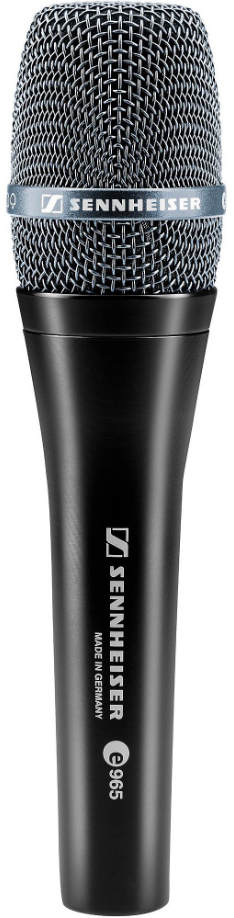
A rare large-diaphragm condenser designed for handheld use, with switchable polar patterns that give you flexibility most handheld condensers don’t offer. Sennheiser e 965 features a switchable cardioid/supercardioid pattern, a large true condenser capsule, and a built-in pop filter engineered to handle close-up vocal performance without external screening.
For recording, the pattern switching is the standout feature. You set cardioid when you want a slightly warmer, fuller capture with more room ambience, and switch to supercardioid when you need tighter isolation and drier recordings. Having both options in one mic means you adapt to different vocal styles and room conditions without buying two separate microphones.
- Pattern Switch
Switchable cardioid and supercardioid patterns give you two distinct vocal characters from a single microphone.
Cardioid mode provides a warmer, fuller sound with a wider pickup area that captures some room ambience, while supercardioid tightens the focus for drier, more isolated recordings. For producers who record different vocalists with different needs, or who work in rooms that vary in acoustic quality, the pattern switch lets you optimize without changing mics.
- Large Capsule
A large true condenser capsule in a handheld format provides the sensitivity and low-frequency richness that large-diaphragm condensers are known for. Most handheld condensers use small-diaphragm capsules that sound detailed but thinner in the low end. Sennheiser’s large capsule gives you the body and warmth of a studio condenser with the practical form factor of a handheld.
- Built-In Pop
An engineered pop filter integrated into the grille design handles plosive consonants without the external screening that studio condensers typically require. For vocal recording where you want a clean setup with minimal hardware between the singer and the capsule, the built-in pop protection eliminates one piece of equipment while still managing the air blasts that close vocal recording produces.
4. Earthworks Audio SR314
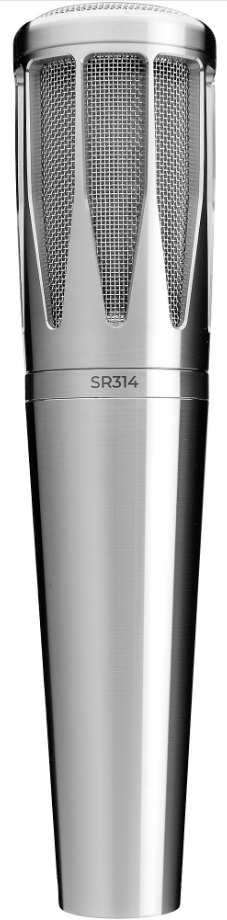
A precision-engineered small-diaphragm condenser that brings measurement-grade accuracy to vocal recording, from the company known for reference microphones used in acoustic testing.
Earthworks SR314 features a small-diaphragm condenser capsule with a Class-A amplifier circuit, a 20Hz to 30kHz frequency response, an exceptionally tight cardioid pattern with consistent off-axis response, 145 dB SPL handling, and a stainless steel housing that’s machined to a standard you normally see in precision instruments rather than microphones.
On vocals, the SR314 sounds remarkably natural and uncolored, which is a departure from the flattering character that most vocal condensers deliberately pursue. If you want to hear your voice as it actually sounds rather than as the microphone thinks it should sound, the Earthworks approach of honest, transparent reproduction gives you that truth. It’s not always comfortable, but it’s always accurate.
- Time Coherence
Earthworks’ design prioritizes time coherence and fast impulse response, which means the mic captures transient events, consonants, and rapid dynamic changes with exceptional accuracy.
On vocals, this translates to recordings where every syllable, breath, and dynamic shift is preserved with precision, giving you a vocal track that’s rich in detail and articulation. For producers who value the natural rhythmic quality of a vocal performance, the time-accurate capture preserves that quality better than slower transducer designs.
- Flat Accuracy
A remarkably flat frequency response from 20Hz to 30kHz reproduces your voice without the tonal shaping that most vocal microphones apply.
If you’ve ever wondered what your voice actually sounds like without a microphone coloring it, the SR314 comes closer to answering that question than most condensers you’ll encounter.
For mixing where you want full control over the tonal character through EQ rather than having the mic impose its own opinion, the neutral starting point gives you maximum flexibility.
- Distance Tolerance
Reviewers consistently note that the SR314 maintains a remarkably consistent tone as the singer varies their distance from the microphone. Moving closer adds gentle warmth without the dramatic proximity bass that most condensers produce, and pulling back doesn’t cause the voice to thin out as quickly as competing designs.
For vocalists who move naturally during performance, the SR314’s distance tolerance means their tone stays stable.
- Stainless Build
A precision-machined stainless steel housing gives the SR314 a weight, feel, and durability that standard microphone construction doesn’t approach.
Beyond aesthetics, the rigid metal construction contributes to the mic’s acoustic performance by eliminating the resonances that lighter housings introduce. For a microphone that lives in your studio for years, the stainless steel construction maintains its performance and appearance indefinitely.
5. Audio-Technica AE 5400
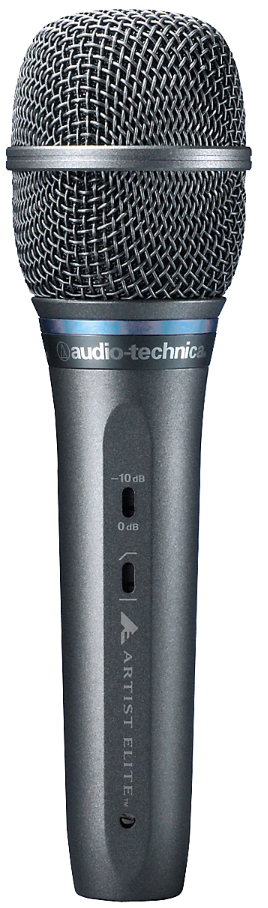
Audio-Technica’s flagship handheld condenser, bridging their studio microphone engineering with a form factor designed for live vocal performance.
Audio-Technica AE 5400 delivers a large-diaphragm condenser capsule derived from the acclaimed AT4050 studio mic, a cardioid polar pattern, and a frequency response designed to capture vocals with the detail of a studio condenser while handling the practical demands of handheld use.
What connects the AE 5400 to recording use is the AT4050 capsule lineage. If you know the AT4050’s vocal sound and appreciate its balanced, detailed character, the AE 5400 carries that DNA into a handheld format with added handling noise rejection and a pop-filtered grille.
- AT4050 Lineage
A large-diaphragm capsule derived from Audio-Technica’s AT4050 studio microphone provides vocal recording quality that connects to one of the most respected studio condensers in production.
For recording, this capsule lineage means you capture vocals with the balanced, detailed character that the AT4050 is known for, but in a format that also handles close-up handheld technique without the handling noise issues that studio-only condensers suffer from.
- Balanced Detail
A frequency response tuned for balanced vocal reproduction captures detail across the full vocal range without emphasizing one frequency area at the expense of others.
Vocals sound complete and natural, with presence that helps intelligibility, warmth that adds body, and high-frequency extension that preserves air and breathiness. For diverse vocal styles from soft jazz to aggressive rock, the AE 5400’s balanced tuning works across genres without requiring character-specific EQ.
- SPL Headroom
With generous SPL handling capability, the AE 5400 captures powerful vocal performances without capsule distortion. Singers who deliver loud, projected passages benefit from headroom that ensures clean capture regardless of volume. For recording sessions where the vocalist’s dynamic range spans from whisper to full belt, the SPL headroom means you never worry about overdriving the capsule.
6. Neumann KMS 104 Plus
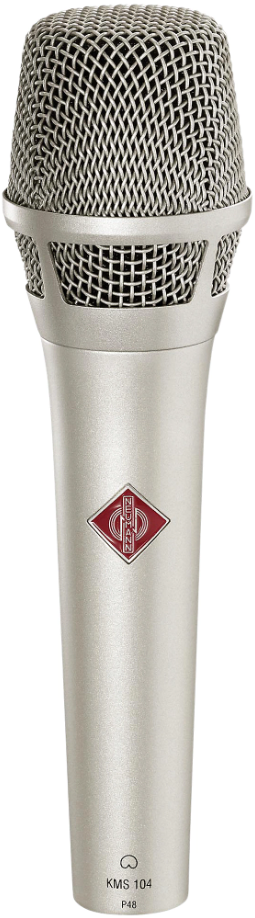
Neumann’s cardioid handheld condenser with an extended low-frequency response compared to the standard KMS 104, making it particularly suited to voices that need more bottom-end weight.
Neumann KMS 104 Plus features a cardioid polar pattern (wider than the KMS 105’s supercardioid), Neumann’s hand-selected condenser capsule, an extended bass response below 80Hz that the standard KMS 104 rolls off, a presence rise for vocal clarity, and the warm, full tonal character that the cardioid pattern’s wider pickup provides.
I find the KMS 104 Plus serves a different vocal profile than the KMS 105. Where the 105 excels with voices that need focused clarity and tight isolation, the 104 Plus works better with voices that benefit from a fuller, warmer capture with more low-end body. Baritones, bass vocalists, and singers with naturally thin voices often sound better through the 104 Plus because the extended bass and wider pattern add the weight their voice needs.
- Extended Bass
An extended low-frequency response below 80Hz captures chest resonance and the fundamental weight of deeper voices that the standard KMS 104’s built-in rolloff removes.
For baritones, bass vocalists, and singers whose low-register performances rely on the body and resonance of their chest voice, the extended bass preserves that weight in the recording. If your voice naturally lacks bottom-end presence, the 104 Plus captures more of what’s there rather than filtering it away.
- Cardioid Warmth
A cardioid polar pattern provides a wider pickup area than supercardioid alternatives, capturing more of the room’s ambience and producing a warmer, more spacious vocal sound. For recording in acoustically pleasant rooms where the room’s contribution adds character to the vocal, the wider cardioid pattern lets that ambience into the recording. If your space sounds good, the KMS 104 Plus incorporates that quality.
- Neumann Clarity
Same Neumann capsule technology and hand-selection process as the KMS 105, providing the clarity, detail, and natural tonal balance that makes Neumann the most trusted name in professional vocal recording. Your vocal recordings carry the quality standard that professional studios rely on, regardless of whether you’re recording in a commercial facility or a bedroom.
- Voice Matching
Because the KMS 104 Plus captures a fuller, warmer vocal picture than its supercardioid sibling, it’s often the better choice for voices that need more weight and body.
Selecting between the 104 Plus and the 105 should be based on your voice’s characteristics: if you’re naturally warm with a full low end, the 105’s tighter pattern and brighter focus might suit you. If you’re naturally thin or bright, the 104 Plus’s extended bass and warmer pattern compensate for what your voice lacks.
- Close Performance
Neumann’s engineering manages proximity effect to add warmth at close distances without the excessive bass buildup that makes close-mic’d vocals boomy. For intimate vocal recording where the singer works close to the capsule, the 104 Plus adds body and intimacy while maintaining definition. You get the warmth of close technique without the muddy low-end consequences.
7. Shure KSM9 HS
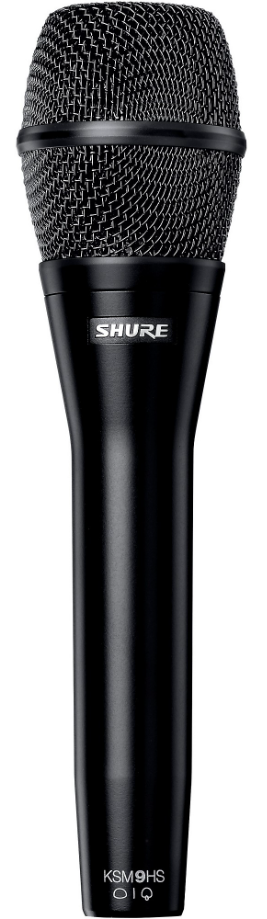
Shure’s premium dual-diaphragm condenser with switchable polar patterns, designed for vocalists who need both focused isolation and more open capture from a single microphone. Shure KSM9 HS features switchable cardioid and supercardioid patterns, a dual-diaphragm capsule with Shure’s thin Mylar diaphragm technology, and a frequency response that emphasizes vocal presence while maintaining a smooth, controlled character.
For vocal recording, having both patterns available means you switch between a warmer, fuller cardioid capture and a tighter, more isolated supercardioid capture depending on your room, your voice, and your production needs. If you record multiple vocalists with different voices in different environments, the KSM9 adapts rather than forcing you to compromise with a fixed pattern.
- Dual Pattern
Switchable cardioid and supercardioid patterns give you two distinct vocal recording approaches from one microphone. Cardioid provides wider pickup with more warmth and room ambience, while supercardioid tightens the focus for drier, more isolated vocals. For producers who work with different vocalists in varying room conditions, the pattern switch lets you optimize each session without changing microphones.
- Thin Diaphragm
Shure’s thin Mylar diaphragm technology in a dual-diaphragm configuration captures transient detail and high-frequency information with a speed that thicker diaphragms don’t achieve. On vocals, the faster diaphragm preserves the articulation of consonants, the texture of breathy passages, and the subtle nuances that distinguish one vocal performance from another.
- Charcoal Finish
Available in a charcoal grey (HS) finish that’s visually neutral under any lighting condition. For recording sessions where the microphone is visible on camera or in artist photos, the understated finish doesn’t distract visually the way bright metallic finishes can. A small aesthetic detail, but one that matters for video content and promotional photography.

Hello, I’m Viliam, I started this audio plugin focused blog to keep you updated on the latest trends, news and everything plugin related. I’ll put the most emphasis on the topics covering best VST, AU and AAX plugins. If you find some great plugin suggestions for us to include on our site, feel free to let me know, so I can take a look!