

Dynamic microphones get overlooked for vocal recording because the conventional wisdom says you need a condenser for studio work. And there’s truth to that advice if you’re recording in a treated room with a quiet environment. But plenty of us don’t have that luxury.
If your recording space has traffic noise bleeding through the walls, a computer fan whirring two feet away, or untreated reflections bouncing off every surface, a condenser microphone picks up all of that alongside your voice. A dynamic mic’s lower sensitivity becomes an advantage in those situations because it captures what’s directly in front of it and largely ignores everything else.
Beyond noise rejection, dynamic mics bring their own character to vocal recordings that condensers don’t replicate. They tend to warm up the midrange, smooth over harsh sibilance naturally, and add a weight to vocals that sits well in dense mixes without aggressive processing.
Some of the most iconic vocal sounds in recording history came through dynamic microphones, and there’s a reason producers keep reaching for them even in professionally treated studios.
I’ve selected twelve dynamic microphones including a bonus pick that handle vocal recording well, from budget workhorses you can abuse without worry through to premium options that challenge condenser territory in detail and sensitivity.
1. FIFINE K669 USB Condenser Microphone — $32.99

Before the dynamic microphone list, one honest note about the alternative: if you are recording in a quiet, reasonably treated room, a condenser microphone may serve you better than dynamic, and the FIFINE K669 is where to start that comparison before committing.
The FIFINE K669 USB Condenser Microphone from the Pluginerds store gives you cardioid condenser capsule clarity, USB direct connection without an audio interface, and a cardioid polar pattern at $32.99. No interface required, no phantom power needed, plug it in and record. Dynamic microphones excel in untreated rooms, live environments, and close-miking setups where off-axis rejection and proximity effect handling matter. If your home studio has some basic treatment and you are recording in a controlled environment, the condenser’s extended high-frequency response captures vocal detail that dynamic microphones at the same price point compress or lose. The dynamic microphones below are the right choice for the situations where dynamic characteristics genuinely matter — this is the low-cost way to test whether condenser clarity suits your setup first.
- USB Direct
USB connectivity means the K669 connects directly to your laptop or desktop without an audio interface, phantom power supply, or XLR cable.
For producers who do not yet own a dedicated audio interface, the USB condenser path is the quickest way to start recording and to hear the difference between condenser clarity and dynamic microphone character on your voice before deciding which suits your setup.
- Cardioid Pattern
The cardioid polar pattern focuses sensitivity in front of the capsule and rejects sound from the rear and sides, which reduces room reflections in untreated spaces and keeps your vocal recording centred and clean.
Cardioid condensers at this price point produce more detailed high-frequency capture than dynamic microphones in controlled environments — the consonants, breath, and upper vocal harmonics that define the character of a voice come through more clearly.
- No Interface Required
41 units in stock, ships immediately from the store. The USB K669 gives you a working recording setup for $32.99 — then the dynamic microphones below take over when off-axis rejection, humidity tolerance, and the specific proximity character of moving-coil dynamics become the priority.
Shop at Pluginerds — FIFINE K669 USB Condenser $32.99
Get the Free Plugin Starter Kit
The genuinely useful free DAWs and plugins worth installing. No filler. Straight to your inbox.
2. Behringer XM8500
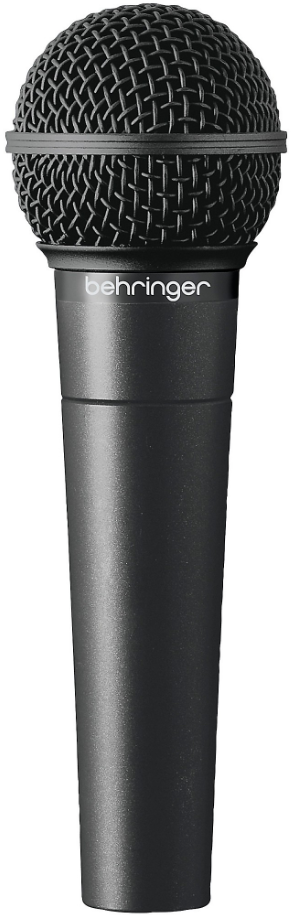
Proof that you don’t need to spend much to get a usable dynamic vocal microphone. Behringer XM8500 is a cardioid dynamic with a smooth midrange presence peak, a built-in shock mount system, and construction that handles the realities of budget studio life where gear gets treated roughly. For the cost, I find the XM8500 surprisingly capable on vocals, though you shouldn’t expect it to compete with microphones at five or ten times its price.
Where the XM8500 makes sense is as a first dynamic mic for beginners who want to experiment with dynamic vocal recording without committing serious money, or as a backup you keep in a drawer for when a friend needs a mic. It records perfectly usable vocals, and for learning purposes, that’s enough.
- Budget Entry
At its remarkably low cost, the XM8500 puts dynamic vocal recording within reach of anyone who can afford a cable to connect it. You can buy this mic, an XLR cable, and still spend less than a single mid-range dynamic. For beginners who aren’t sure if dynamic mics suit their voice, the XM8500 lets you find out without financial risk.
Your recordings won’t be reference quality, but they’ll be clean enough to evaluate whether the dynamic mic character works for your voice and your room.
- Vocal Presence
A midrange presence peak around 5kHz adds clarity and cut to vocal recordings without sounding harsh or aggressive. For singers whose voices lack bite in a mix, the XM8500’s built-in presence lift helps the vocal push forward without EQ. I find the frequency emphasis well-placed for most singing styles, landing in the range where vocal intelligibility lives rather than in the harsh sibilance zone.
- Shock Isolation
A pneumatic shock mount system inside the body reduces handling noise and vibration transmission from the mic stand. For home studios where the microphone sits on a desk-mounted boom arm that picks up keyboard vibrations and desk bumps, the internal isolation helps keep your recordings clean. Most budget dynamics don’t bother with internal shock mounting at this level.
- Road Worthy
Solid metal construction with a steel mesh grille means you don’t worry about damaging the XM8500 through normal use. Drop it, throw it in a bag, hand it to someone who doesn’t know how to handle microphones, and it survives. For budget studios where gear doesn’t get treated gently, the durability means the XM8500 keeps working long after cheaper plastic alternatives would have broken.
3. Shure SM58 LC
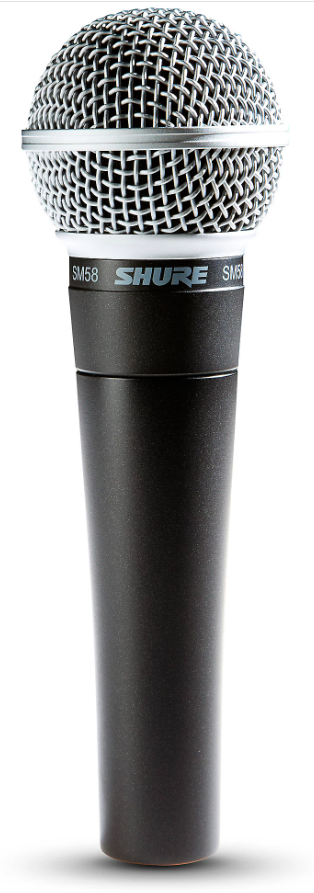
Probably the most recognizable microphone on the planet, and still the default dynamic vocal mic for a reason that goes beyond brand loyalty. Shure SM58 uses a tailored frequency response with a presence rise optimized for vocals, a highly effective internal shock mount, a hardened steel mesh grille with a built-in pop filter, an industry-standard cardioid pickup pattern, and the kind of near-indestructible build that has made it the microphone found in every rehearsal room, live venue, and home studio on earth for over half a century.
I could recommend newer, arguably better-sounding dynamics on this list, and I do. But the SM58 earns its place because it’s the reference point that everything else gets compared against, and because its specific frequency response and proximity effect characteristics have become part of the sonic vocabulary of recorded music. When producers say a vocal sounds “like an SM58,” everyone knows what that means.
- Vocal Tailoring
A frequency response specifically shaped for vocal reproduction with a presence rise in the 2-5kHz range and a controlled bass rolloff that reduces proximity boominess gives you a vocal sound that sits in a mix with minimal processing. Shure didn’t design the SM58 to be flat. They designed it to make voices sound good, and decades of use across every genre of music have proven that the tailoring works. You can record a vocal, add minimal EQ and compression, and get a result that works in a finished track.
- Built-In Pop Filter
A spherical steel mesh grille with integrated pneumatic shock mount and pop filter handles plosive consonants and breath noise without an external pop screen. For home studio recording where you might not have a separate pop filter, the SM58’s grille does a reasonable job of taming plosives on its own. Removing the external pop filter from your setup also means one less piece of gear between you and the microphone, which simplifies your recording chain.
- Indestructible Build
Shure’s construction quality has become legendary for good reason. SM58s have been run over by tour buses, dropped from stages, submerged in water, and continued working afterward. For a recording microphone, this durability means you stop worrying about babying your equipment and focus on recording. The build quality also means SM58s hold their resale value and last decades, which makes the initial purchase a long-term investment.
- Universal Reference
Every audio engineer, producer, and musician knows the SM58’s sound, which makes it a universal reference point for vocal recordings. If you record a demo on an SM58, anyone listening through their own SM58 will hear approximately what you intended. For collaborative work, sending files to mix engineers, or auditioning for projects, recording through a universally known microphone eliminates one variable in how your voice is perceived.
- Proximity Character
Working close to the SM58 produces a warm, full-bodied proximity effect that adds weight and intimacy to vocal recordings. Many producers deliberately use the SM58’s proximity effect as a creative tool, recording with the singer’s lips nearly touching the grille to get the thick, warm vocal sound that defines genres from hip-hop to indie rock. Learning to use proximity effect on the SM58 teaches you a technique that applies to every cardioid dynamic.
- Consistent Pickup
A well-defined cardioid pickup pattern rejects sound from the sides and rear of the microphone with predictable, frequency-consistent behavior. For home studios where noise sources exist behind or beside the microphone, the SM58’s rejection helps keep your recordings clean. Compared to tighter patterns like supercardioid, the SM58’s cardioid pattern is also more forgiving of slight off-axis singing, which benefits vocalists who move while performing.
4. Universal Audio SD-1
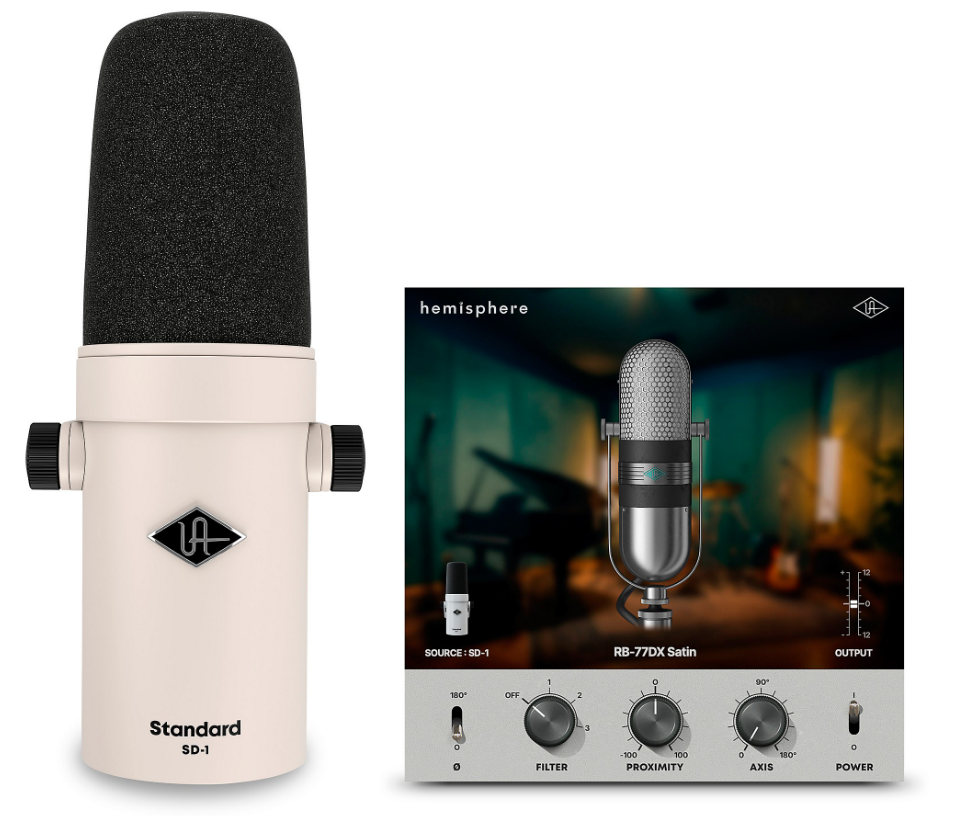
UA’s entry into the dynamic microphone market, designed to pair specifically with their interfaces and plugins for an integrated recording workflow. Universal Audio SD-1 is a cardioid dynamic with a frequency response tuned for modern vocal recording, a distinctive hemispherical grille design, and optimization for UA’s Sphere modeling technology that lets you change the microphone’s character in software after recording.
What makes the SD-1 interesting is the Sphere integration. You record through the SD-1, and in your DAW, you can use UA’s modeling to make it sound like different classic microphones. It’s a neat concept if you’re already in the UA ecosystem.
- Sphere Modeling
When paired with UA’s Sphere plugin system, the SD-1 becomes a platform for modeling the characteristics of classic microphones after recording. You track through the SD-1 and then adjust the polar pattern, proximity effect, and frequency response in software to emulate different mic characters. For producers who want versatility from a single dynamic, the modeling adds flexibility that no other dynamic mic provides.
- Modern Voicing
A frequency response designed for contemporary vocal production provides clarity and presence without the boxy midrange that some classic dynamics exhibit. UA tuned the SD-1 for modern mixing contexts where vocals need to cut through dense, bass-heavy productions. If your music skews toward pop, R&B, hip-hop, or electronic genres, the SD-1’s voicing suits those contexts better than vintage-voiced dynamics.
- Hemisphere Grille
A distinctive hemispherical grille design provides a different acoustic environment around the capsule compared to traditional ball-shaped grilles. The design affects how sound reaches the diaphragm, contributing to the SD-1’s specific tonal character. It also gives the mic a visual identity that distinguishes it from every other dynamic on the market.
5. AKG D5
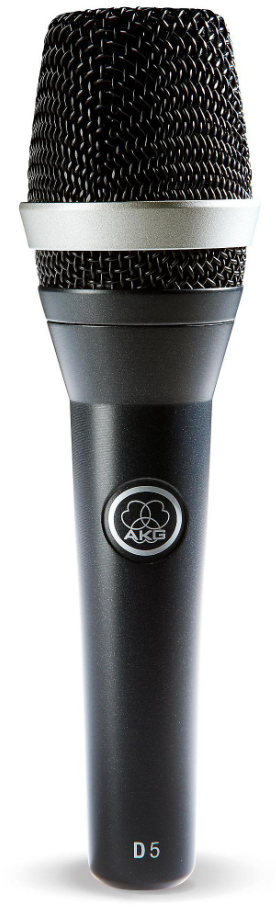
AKG’s professional dynamic vocal mic with a presence-forward frequency response designed for voices that need to cut through loud stage environments. AKG D5 is a supercardioid dynamic with a pronounced presence boost in the upper midrange, a laminated varimotion diaphragm for extended high-frequency response, and tighter off-axis rejection than standard cardioid designs.
For recording, the D5’s supercardioid pattern and presence boost give you a vocal sound that’s brighter and more forward than the SM58. If your voice is naturally dark or warm and you want more clarity without EQ, the D5’s built-in character does that work for you.
- Supercardioid Pattern
A supercardioid pickup pattern provides tighter front pickup and stronger side rejection than standard cardioid microphones. In home recording environments where sound sources exist off to the sides of the mic, the tighter pattern captures more of your voice and less of everything else. For singers who record in rooms with reflective walls nearby, the D5’s rejection helps keep those reflections out of the recording.
- Presence Boost
A pronounced presence rise in the 2-8kHz range adds brightness and intelligibility to vocal recordings, giving your voice an immediate clarity that darker dynamics require EQ to achieve. I find the boost well-suited for voices that sit back in a mix, because the built-in lift pushes the vocal forward without processing. If your voice is already bright, the D5’s emphasis might be too much for your taste.
- Varimotion Diaphragm
AKG’s laminated varimotion diaphragm provides extended high-frequency response compared to standard dynamic diaphragms. The technology produces treble detail that gets closer to condenser performance than most dynamics manage, which means your vocal recordings retain airiness and shimmer that typical dynamics roll off.
- Dual Shock Mount
An integrated dual-layer shock mount system isolates the capsule from mechanical vibration and handling noise. For studio recording on a stand or boom arm, the isolation keeps floor vibrations, desk bumps, and accidental mic stand contact out of your recordings. Combined with the supercardioid pattern, you get clean recordings even in less-than-ideal physical environments.
6. Sennheiser e 945
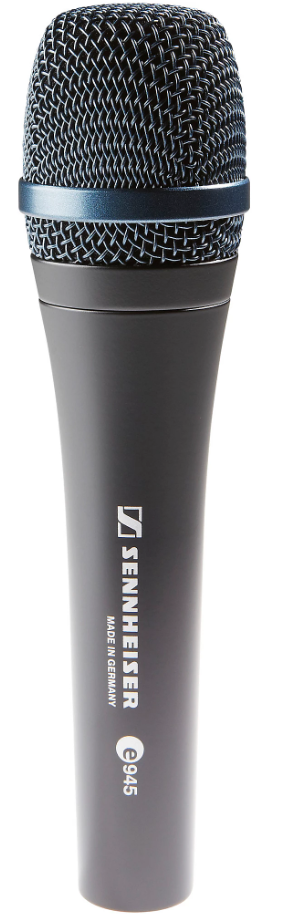
Sennheiser’s premium supercardioid vocal dynamic, built for singers who need maximum isolation and a detailed, present vocal sound. Sennheiser e 945 features a supercardioid pattern with excellent off-axis rejection, a metal housing with a Neodymium magnet for high output, and a vocal character that’s notably brighter and more detailed than Sennheiser’s more common e 835 and e 845 models.
Recording with the e 945 gives you a vocal that’s crisp, forward, and cuts through a mix with authority. If you find the SM58 too warm or too dark for your voice, the e 945’s brighter, more detailed presentation might be exactly what you’re looking for.
- Tight Rejection
A supercardioid polar pattern with excellent off-axis rejection isolates your voice from room reflections, background noise, and other sound sources more effectively than cardioid alternatives. For home recording where your environment isn’t acoustically treated, the tight pattern means less room sound in your recordings, which gives you a drier, more controllable vocal signal to work with in your mix.
- Neodymium Output
A Neodymium magnet system produces higher output than standard magnets, which means you get a stronger signal with less preamp gain required. Lower preamp gain means lower noise from your interface’s preamp stage, which results in a cleaner overall recording. For dynamic mics that typically require more gain than condensers, the higher output of the e 945 helps close that sensitivity gap.
- Metal Precision
Sennheiser’s metal construction with precision-machined housing provides durability alongside acoustic consistency. Each e 945 maintains tight manufacturing tolerances, which means the frequency response and pattern behavior are consistent from unit to unit. For producers who might buy a second e 945 for stereo recording or as a backup, the consistency means both mics will sound matched.
7. Heil Sound PR35
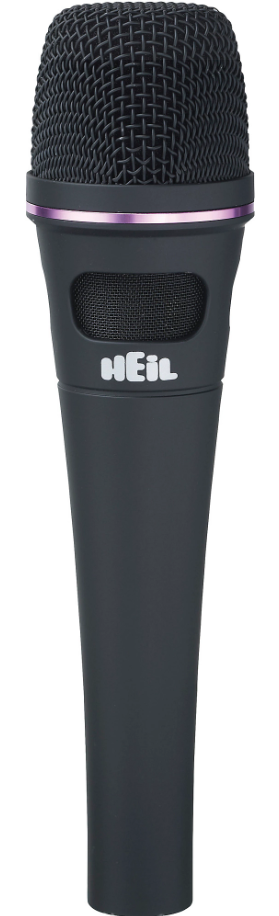
Heil Sound PR35 features a large 1.5-inch dynamic element that’s significantly bigger than the diaphragms in most dynamic vocal mics, a cardioid pattern optimized for vocal pickup, a frequency response extending to 18kHz, a humbucking coil for noise rejection, and an internal design philosophy that prioritizes natural vocal reproduction over hyped presence peaks.
What sets the PR35 apart from other dynamics on this list is the large element. Bigger diaphragms capture more low-frequency energy and produce a fuller, more natural bass response, which gives your vocal recordings a richness that smaller-diaphragm dynamics don’t achieve. For singers with deep or resonant voices, the PR35 captures the full weight of their range.
- Large Element
A 1.5-inch dynamic element is substantially larger than the diaphragms in most handheld dynamic microphones, providing greater sensitivity to low-frequency detail and a fuller, more natural bass response. For vocal recording, the larger diaphragm captures the chest resonance and lower harmonics of your voice with a completeness that standard-sized elements miss. If you want your vocal recordings to have a warm, full-bodied character that sounds natural rather than artificially boosted, the PR35’s large element delivers that quality from the capsule itself.
- Extended Response
A frequency response reaching 18kHz captures high-frequency detail that many dynamic mics roll off well before that point. Most dynamics begin losing treble content above 12-15kHz, which is why they can sound dull compared to condensers. The PR35’s extended response bridges that gap, providing airiness and detail in the top octave that gives your vocal recordings a more open, less constricted quality.
- Humbucking Coil
A humbucking coil design rejects electromagnetic interference from nearby electronics, stage lighting, computer monitors, and other sources of electrical noise. In home studios where your microphone sits near a computer, interface, or other electronic equipment, the humbucking design keeps electromagnetic buzz and hum out of your recordings.
- Natural Voicing
Rather than applying a dramatic presence peak like many vocal dynamics, the PR35 uses a more neutral, natural frequency response that reproduces your voice accurately without imposing a strong character of its own. If you want a dynamic that sounds like you rather than like the microphone’s opinion of how you should sound, the PR35’s restrained voicing lets your natural tone come through. The neutral character also means the mic works well across a wide range of vocal styles and genres.
- Bob Heil Heritage
Heil Sound’s engineering philosophy comes from Bob Heil’s experience designing live sound systems for legendary artists, where vocal clarity and natural reproduction weren’t optional. The PR35 reflects that philosophy by prioritizing accurate vocal capture over dramatic coloration. For producers who value authenticity in their vocal recordings, the Heil approach delivers a sound that represents the singer rather than flattering or altering them.
8. sE Electronics V7
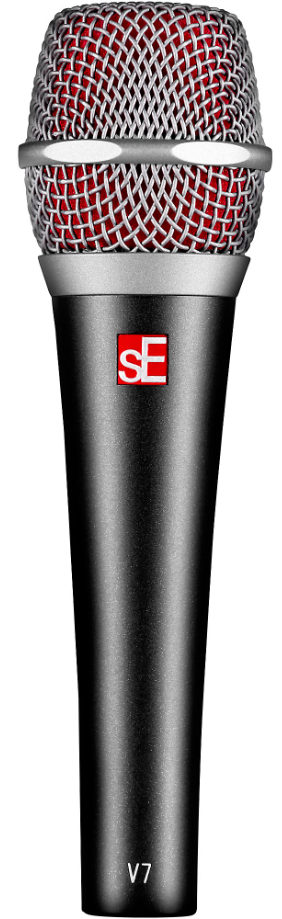
A dynamic that’s been earning a devoted following among vocal producers for its detail and clarity that genuinely approaches condenser territory. sE Electronics V7 features a custom-designed aluminum voice coil for extended high-frequency response, an integrated grille and capsule assembly for reduced resonance, and a frequency response that’s notably more open and detailed than typical dynamics at any cost.
When I first heard the V7 on vocals, what struck me was how much high-frequency detail it preserved compared to other dynamics. Cymbal bleed, room reflections, and sibilance were all more present, which means the V7 captures more information but also demands a better recording environment than less sensitive dynamics.
- Aluminum Coil
A custom-designed aluminum voice coil reduces the moving mass of the diaphragm assembly, allowing the capsule to respond faster to transients and capture higher frequencies than standard copper-wound coils achieve. For vocal recording, the lighter coil preserves the attack characteristics of consonants, the detail in breathy passages, and the high-frequency harmonics that give a voice its individual texture.
- Integrated Assembly
An integrated grille and capsule assembly minimizes internal resonances by reducing the air space between the protective grille and the capsule. Most dynamic mics have a separate grille that creates a small resonant chamber, which colors the sound. The V7’s integrated design reduces this coloration, producing a cleaner, more transparent signal.
- Vocal Clarity
sE’s tuning of the V7 targets vocal clarity without harsh presence peaks, providing a frequency response that reveals detail without the aggressive upper-midrange emphasis that many vocal dynamics use to create the impression of clarity. Genuine clarity comes from reproducing the full spectrum of vocal frequencies accurately, and the V7 achieves this through capsule design rather than frequency manipulation.
9. Electro-Voice ND96
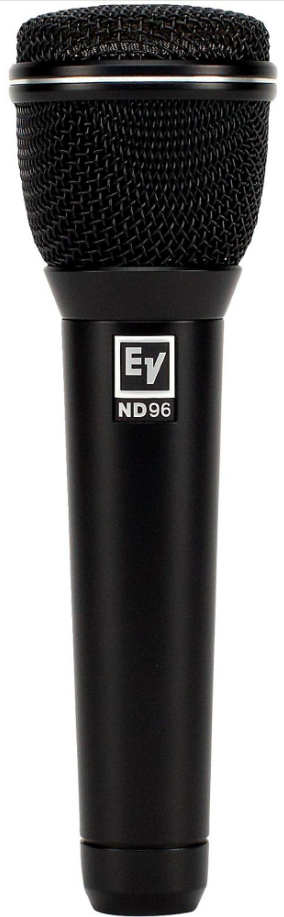
A supercardioid dynamic engineered for extreme noise rejection, making it one of the most isolation-focused vocal microphones you can buy. Electro-Voice ND96 provides a supercardioid pattern with exceptional off-axis rejection, a Memraflex grille that resists dents and pops back to shape, and a vocal character that maintains clarity even at very close working distances where proximity effect would overwhelm lesser mics.
I’d recommend the ND96 for recording in environments where background noise is a serious problem. If you’re tracking vocals in an apartment with thin walls, a room with a loud HVAC system, or any situation where isolating your voice from the environment is the primary challenge, the ND96’s rejection is among the strongest available in a handheld dynamic.
- Extreme Rejection
A supercardioid pattern engineered specifically for maximum off-axis rejection provides the strongest isolation from background noise and room reflections of any mic on this list. In recording environments with significant ambient noise, the ND96 captures your voice while rejecting more of the surrounding environment than standard supercardioid designs. For vocalists who record in noisy apartments, shared spaces, or rooms with audible HVAC, the rejection makes usable recordings possible in environments where other mics would pick up too much noise.
- Memraflex Grille
EV’s Memraflex composite grille resists dents and returns to its original shape after being compressed or impacted. A dented grille on a conventional mic changes the acoustic environment around the capsule, which alters the frequency response. Memraflex prevents this degradation, maintaining consistent sound quality even after physical abuse.
- Close-Work Control
At extremely close working distances where most dynamics produce excessive bass buildup from proximity effect, the ND96 maintains a controlled, usable frequency response that doesn’t require aggressive low-cut filtering to sound balanced. For intimate vocal recording techniques where the singer works very close to the mic for a warm, present sound, the ND96 lets you get close without the bass becoming unmanageable.
- High SPL Handling
With an ability to handle very high sound pressure levels, the ND96 captures powerful, belted vocals without distortion. Singers who deliver loud, dynamic performances can push the ND96 harder than most dynamics before the capsule begins to distort. For recording styles that range from whisper to scream within a single take, the SPL headroom means you capture the full dynamic range cleanly.
10. Telefunken M80
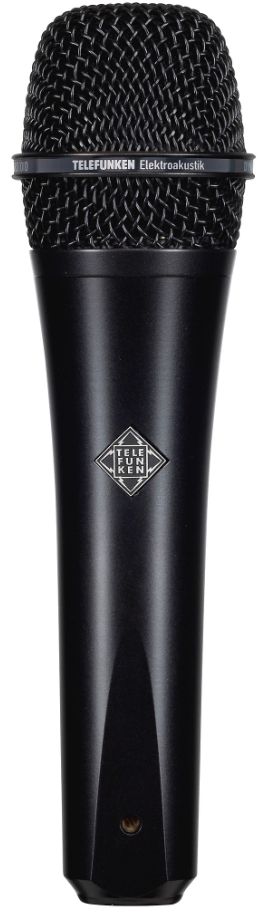
Handcrafted in the USA by a company that carries one of the most legendary names in microphone history. Telefunken M80 features a tightly controlled supercardioid pattern, a specially tuned capsule with a frequency response designed to reproduce vocals with clarity and presence, low handling noise through an advanced internal shock mount, exceptional off-axis rejection that rivals shotgun microphones in some frequency ranges, and a vocal character that professional vocalists describe as sitting in a mix with almost no processing required.
Every M80 is built by hand in their Connecticut facility, which isn’t something you encounter at this level of the microphone market. For vocal recording, the M80 has developed a reputation among professional vocalists and engineers as a dynamic that sounds like it shouldn’t be a dynamic. The clarity, detail, and presence exceed what most people expect from the format.
- Handcrafted Build
Each M80 is assembled by hand in Telefunken’s USA facility with attention to quality that mass-produced microphones don’t receive. Handcrafting means each unit is individually inspected and tested, resulting in tighter quality control and more consistent performance across production runs. For producers investing in a premium dynamic, the handcrafted construction means you’re getting a mic that’s been personally verified by the people who built it.
- Vocal Presence
A specially tuned frequency response delivers presence and clarity that makes vocals sit forward in a mix with minimal processing. Producers who use the M80 frequently describe its vocal recordings as needing almost no EQ to sound finished, because the capsule’s frequency curve is already shaped to complement the human voice in a modern mix context. If you want a dynamic that produces mix-ready vocals from the recording stage, the M80’s voicing is designed for exactly that purpose.
- Pattern Precision
A tightly controlled supercardioid pattern provides off-axis rejection that’s unusually precise for a handheld dynamic, maintaining its rejection characteristics consistently across the frequency range. Many supercardioid mics have patterns that widen at lower frequencies, which lets bass-heavy spill through the sides. The M80’s pattern stays tight across the spectrum, giving you cleaner recordings in imperfect environments.
- Low Handling
An advanced internal shock mount reduces handling noise to levels that are remarkably quiet for a dynamic microphone. For studio recording where the mic sits on a stand or boom arm, the low handling noise means vibrations from the floor, desk, or accidental contact don’t contaminate your recordings.
- Mix-Ready Sound
Multiple professional engineers have noted that the M80 produces vocal recordings that require less post-processing than other dynamics. Compression sits naturally, EQ adjustments are minimal, and the vocal occupies its space in the mix without fighting with other elements. For producers who value efficiency in the mixing stage, starting with a source that’s closer to finished means less work after recording.
11. Austrian Audio OD505
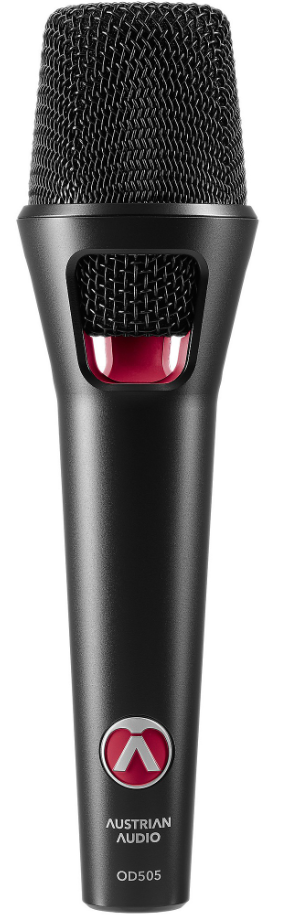
Viennese engineering meets the dynamic microphone format in a mic that challenges the boundary between dynamic and condenser performance. Austrian Audio OD505 is an active dynamic requiring 48V phantom power, featuring a dual-capsule design with an active front capsule and passive rear capsule for handling noise cancellation, Open Acoustics Technology that reduces housing resonances, a proprietary 3D Pop Noise Diffuser, and a switchable 120Hz high-pass filter.
What makes the OD505 unusual is the active circuitry. With phantom power engaged, it produces sensitivity closer to a condenser than a typical dynamic, which means you get more detail and a hotter signal that requires less preamp gain. For recording, this translates to cleaner, more detailed vocal captures than passive dynamics deliver.
- Active Circuit
Requiring 48V phantom power, the OD505’s active circuitry produces a sensitivity of 4.4 mV/Pa, which falls between typical dynamic and condenser levels. Higher sensitivity means you need less preamp gain, which means less preamp noise in your recording. For dynamic mic users who’ve always wished their recordings had the detail and signal strength closer to condenser levels, the active design bridges that gap meaningfully.
- Dual Capsule
A dual-capsule design uses an active front capsule for audio capture and a passive rear capsule wired in reverse polarity to detect and cancel handling noise. Because both capsules sense mechanical vibration equally but only the front capsule captures audio, the reverse-polarity cancellation removes handling noise while preserving the vocal signal. The result is handling noise performance that’s exceptionally quiet for a dynamic mic.
- 3D Pop Diffuser
Austrian Audio’s proprietary 3D Pop Noise Diffuser is specifically designed for the OD505 to reduce plosive impact on the capsule. For studio recording without an external pop filter, the built-in diffuser handles plosive consonants effectively enough that you might not need a separate screen, which simplifies your recording setup and eliminates one piece of hardware between you and the mic.
- Open Acoustics
Open Acoustics Technology reduces the contact points between capsule and housing, allowing sound to enter from multiple directions. Fewer contact points mean fewer housing resonances color the captured audio, producing a more natural, transparent sound. For vocal recording where you want the mic to capture your voice without adding its own coloration, the Open Acoustics design contributes to a cleaner, more honest signal.
12. Audix OM7
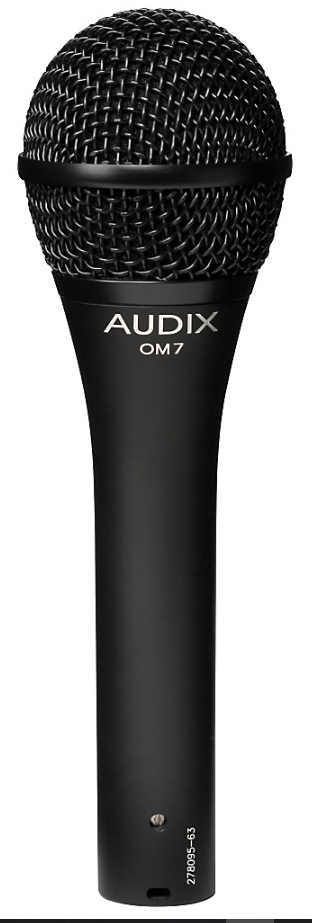
Designed for the loudest stages and the most challenging vocal isolation scenarios, with the tightest pickup pattern of any vocal dynamic on this list. Audix OM7 features a hypercardioid pattern with extreme off-axis rejection, a VLM (Very Low Mass) diaphragm for fast transient response, a controlled proximity effect that stays manageable at close distances, extremely high SPL handling up to 144 dB, a vocal character that’s clear and articulate without harshness, and a low sensitivity that rejects everything except what’s directly in front of the capsule.
I want to be honest about the OM7: the low sensitivity means it needs more preamp gain than most dynamics, which demands a clean, quiet preamp to avoid adding noise. If your interface has a cheap, noisy preamp, the OM7 will reveal that weakness. But in the right signal chain, the isolation and clarity are remarkable.
- Hypercardioid Focus
A hypercardioid polar pattern provides the tightest front pickup and strongest side rejection of any mic in this roundup. For recording in environments where you need to capture only the voice and exclude everything else, the OM7’s pattern is the most effective tool available in a handheld dynamic format. Reflective rooms, noisy backgrounds, and nearby instruments are all rejected more aggressively than cardioid or standard supercardioid patterns achieve.
- VLM Diaphragm
Audix’s Very Low Mass diaphragm technology reduces the weight of the moving element, allowing it to respond faster to transient audio events. Faster transient response means consonants, vocal attacks, and rapid articulations are captured with more definition and clarity. For detailed vocal recording where intelligibility and articulation matter, the VLM diaphragm preserves those qualities better than heavier standard diaphragms.
- SPL Headroom
Handling up to 144 dB SPL, the OM7 captures the loudest vocal performances without any capsule distortion. Belting singers, screamers, and vocalists with extremely powerful delivery can push the OM7 harder than virtually any other dynamic without degrading the audio. For recording vocal styles that range from gentle to explosive, the SPL headroom guarantees clean capture across the entire dynamic range.
- Gain Consideration
The OM7’s intentionally low sensitivity is a design choice that maximizes rejection but requires high-quality preamps with sufficient clean gain to produce optimal recordings. Pairing the OM7 with a preamp that provides 60+ dB of clean gain, like those in the Audient iD series or RME Babyface, gives you the signal level you need without the noise that budget preamps would add. Understanding this requirement upfront means you set up for success rather than discovering the limitation during a session.
- Controlled Proximity
Even at very close working distances, the OM7 maintains a controlled bass response that doesn’t balloon into the muddy low-end buildup that many dynamics produce when you sing right into the grille. For intimate vocal recording techniques where proximity warmth is desired but excessive bass isn’t, the OM7 gives you closeness without losing clarity.
- Articulation Focus
In live sound, the OM7 is prized for vocal articulation and clarity that cuts through the loudest bands. In the studio, that same quality translates to recordings where every word is intelligible and every consonant is defined, giving you vocal tracks that sit clearly in a mix without fighting for space.
Extra: sE Electronics V7 MK
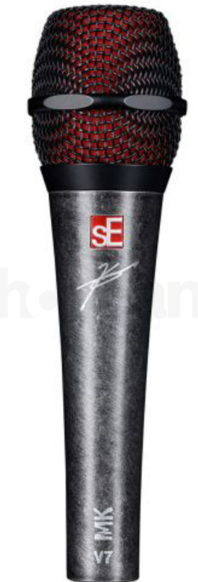
Worth mentioning as an alternative to the standard V7 for producers who want the V7’s capsule quality with additional options. sE Electronics V7 MK uses the same custom aluminum voice coil capsule as the standard V7 with a modified grille and body design, providing the same detail and clarity in a format that some vocalists prefer ergonomically.
The V7 MK gives you V7 sound quality with design variations that affect handling feel and aesthetics without changing the core audio performance.
- V7 Capsule
Identical custom aluminum voice coil capsule to the standard V7, delivering the same extended high-frequency response, transient detail, and vocal clarity that made the V7 a standout in its category. For producers who love the V7’s sound but want variations in the physical design, the MK provides that option without compromising the audio performance.
- Modified Design
A different grille and body configuration changes the handling characteristics and visual appearance while maintaining the same acoustic performance. For vocalists who find the standard V7’s ergonomics not quite right for their hand size or grip style, the MK variant offers an alternative physical format.
- Consistent Quality
sE’s manufacturing maintains the same quality standards and component tolerances across the V7 range, meaning the MK delivers identical measured performance to the standard V7. You choose between variants based on physical preference rather than audio quality differences, which simplifies the decision if you already know you like the V7’s sound.
Get the Free Plugin Starter Kit
The genuinely useful free DAWs and plugins worth installing. No filler. Straight to your inbox.

Hello, I’m Viliam, I started this audio plugin focused blog to keep you updated on the latest trends, news and everything plugin related. I’ll put the most emphasis on the topics covering best VST, AU and AAX plugins. If you find some great plugin suggestions for us to include on our site, feel free to let me know, so I can take a look!