
Jazz is one of those genres where the gap between virtual instruments and real players is still painfully obvious if you’re not careful. The swing feel, the ghost notes on a ride cymbal, the way a saxophone player bends into a note all carry micro details that programmed MIDI struggles to replicate.
A quantized jazz piano part sounds stiff. A sampled bass without proper slide scripting sounds mechanical. And a straight eighth note drum loop will never feel like jazz no matter what you label it.
That said, the tools have gotten genuinely good. Between physically modeled bass instruments, deeply sampled brush kits, pattern based big band engines, and specialized solo instruments, you can build convincing jazz arrangements entirely in the box.
The trick is choosing the right tool for each chair in the ensemble, because jazz is all about how individual instruments interact, and using the wrong plugin for a specific role breaks the illusion fast.
I’ve assembled sixteen plugins covering bass, drums, piano, saxophone, guitar, horn sections, and complete big band ensembles that handle jazz, swing, blues, and lo fi production contexts.
1. IK Multimedia MODO BASS 2
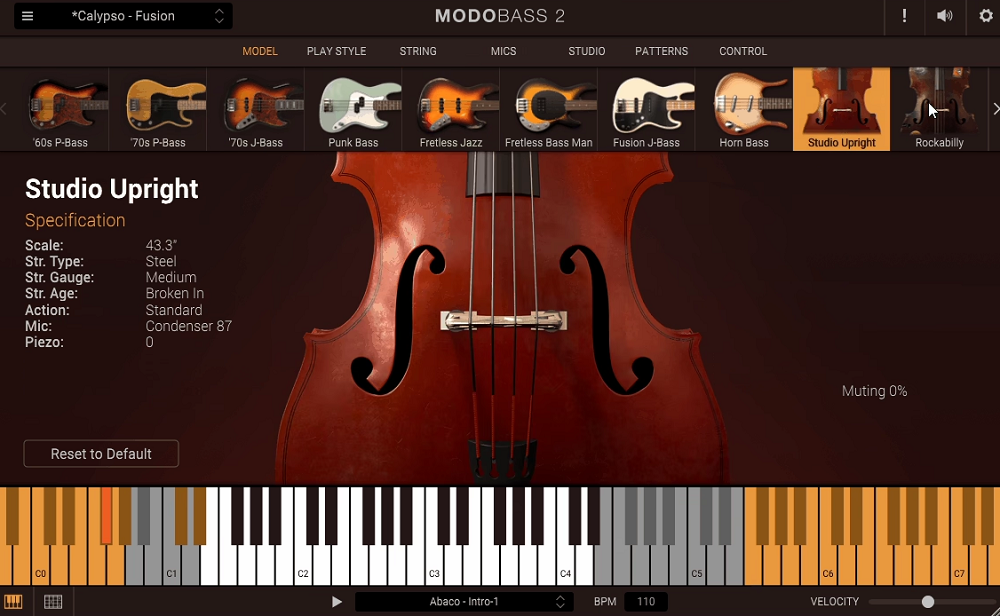
I’m putting this first because it covers the most ground for jazz production out of any single plugin on this list. MODO BASS 2 uses physical modeling rather than samples to generate bass sounds, which means every note is produced mathematically from simulated string vibration, body resonance, and finger interaction. The result is a bass instrument that responds to your playing in ways sampled libraries simply can’t.
The physical modeling covers 22 bass models including a Studio Upright inspired by a jazz style double bass, a Fretless Jazz modeled on the Fender Jaco Pastorius, and a Fusion J Bass inspired by the Marcus Miller. That’s jazz, blues, swing, and fusion covered by one plugin.
- Upright Model
The Studio Upright model simulates the acoustic properties of a jazz double bass including the large body resonance, string buzz, and the way the sound changes depending on where your virtual fingers pluck. The physical model captures how harder plucks produce not just more volume but more overtones and string noise, exactly as the real instrument behaves. For walking bass lines and pizzicato jazz parts, the upright model gives you convincing results without the sample cycling and round robin limitations that sampled upright libraries fight against.
- Fretless Jazz
The Fretless Jazz model captures the singing, mwah quality of a fretless bass that’s essential for fusion and smooth jazz contexts. The physical modeling handles the specific way a fretless string vibrates against the fingerboard, producing that characteristic sustain and tonal bloom that defines the fretless sound. You can adjust finger position on the string to change the tonal character from warm and thumpy to bright and singing.
- Player Controls
You can adjust finger position, plucking force, string damping, and playing technique in real time through MIDI controllers. These player parameters give you control over aspects of the performance that sampled libraries can’t vary continuously, like moving from gentle fingertip plucks to aggressive thumb slaps within the same passage. The continuous control is what makes the physical model feel responsive rather than like you’re triggering pre-recorded gestures.
- No Repetition
Because every note is generated mathematically, there’s zero repetition or sample cycling. Walking bass lines, which repeat the same notes frequently, never exhibit the telltale signs of a sampled instrument where you hear the identical recording triggering twice in a row. For jazz bass parts where the same root note might appear a dozen times in sixteen bars, the absence of repetition is a practical advantage you notice immediately.
2. XLN Audio Jazz Collection
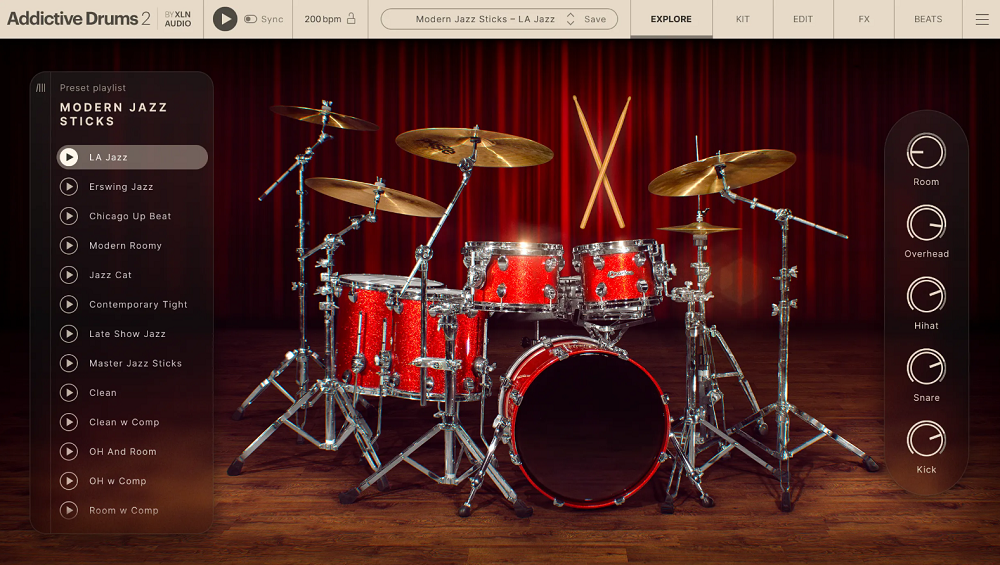
Image: XLN Audio
When you need jazz drums that sound like a real drummer in a real room, this collection for Addictive Drums 2 delivers the specific kit sounds, articulations, and feel that jazz demands. The XLN Jazz Collection includes jazz specific kits with brushes, mallets, and stick variations that cover the range of jazz drumming styles.
The quality of the multi velocity sampling and round robin variation means rapid ghost notes, brush sweeps, and ride cymbal work sound natural rather than mechanical.
- Kit Selection
The collection includes multiple jazz specific drum kits with the smaller sizes, lighter tuning, and specific cymbal choices that define the jazz drum sound. These aren’t rock kits relabeled as jazz. The shell sizes, head selections, and tuning reflect what actual jazz drummers use, which affects the tonal character and response in ways that EQ alone can’t replicate. The kits cover everything from tight bebop configurations to looser, more resonant setups suited to modal and contemporary jazz.
- Brush Articulations
Detailed brush sampling captures sweeps, taps, accents, and the specific way brushes interact with coated drum heads. Brush playing is essential to jazz ballads and medium tempo swing, and the sampling depth here handles the nuance of brush technique convincingly. The sweeps in particular carry the continuous, textural quality that makes brushed snare sound like someone is actually painting circles on the head rather than triggering isolated hits.
- Mic Blending
Individual microphone channels for close, overhead, and room perspectives let you shape the drum sound from tight and dry to open and ambient. The mic blending gives you control over how much room sound is present, which matters in jazz where the interaction between the kit and the acoustic space is part of the sound. Close mics give you definition for intricate ride work, while room mics add the natural ambience that makes the kit feel like it’s in a real space.
- MIDI Grooves
Pre-recorded MIDI patterns from session drummers provide authentic jazz grooves, fills, and transitions that you can drag directly into your arrangement. The patterns capture real human timing and feel rather than quantized programming, which saves you from trying to program convincing swing yourself. You can customize the patterns by adjusting velocity, timing, and ghost note intensity to match the specific energy your track needs.
- Ghost Notes
The sampling captures quiet ghost notes at multiple velocity levels with enough round robin variation that rapid ghost note passages sound natural. Ghost notes are what give jazz drumming its feel and pocket, and having them properly sampled across multiple dynamics means you can program or perform parts where the quiet notes between main beats carry authentic dynamic variation.
- Individual Processing
Built in per channel processing including EQ, compression, and saturation lets you shape the kit sound within the plugin. The processing is designed for drum specific use, meaning the compressor responds well to drum transients and the EQ targets frequency ranges that are relevant to kit instruments. You can get a polished, mix ready drum sound without loading separate plugins.
3. Virtual Pianist VIBE by ujam
For producers who need a jazz piano that sounds convincing immediately without spending hours programming realistic voicings and articulations, ujam’s VIBE handles the performance side automatically. The plugin generates jazz piano parts from your chord input using a phrase and pattern engine.
The trade off is obvious: you don’t get note by note control. But for getting a convincing jazz piano accompaniment into a track quickly, nothing else on this list matches the speed.
- Jazz Voicings
The engine generates proper jazz piano voicings with extended chords, voice leading, and the specific spread and register choices that jazz pianists use. You play basic chords on your keyboard and the engine voices them with 7ths, 9ths, and 13ths in positions that sound idiomatic rather than like a keyboard player hitting every note in a chord at once. The voicing intelligence is what makes the output sound like someone who understands jazz harmony rather than someone playing block chords.
- Pattern Engine
Pre-performed jazz piano patterns cover comping styles, ballad accompaniment, and rhythmic figures that respond to your chord changes. The patterns carry the human timing and dynamic variation of real performance, including the subtle swing and rhythmic displacement that makes jazz piano comping feel alive. Switching between patterns lets you quickly find the accompaniment style that fits your track’s energy.
- Instant Results
The plugin produces usable jazz piano within seconds of loading. You play chords, the engine performs, and the output sounds musical without MIDI editing. For songwriters and producers who need jazz piano as accompaniment rather than a featured solo instrument, the time savings are real.
4. VG Jazz Alto Saxophone
Getting a convincing solo saxophone in a virtual instrument is notoriously difficult, because the saxophone is one of the most expressive instruments in existence and listeners are acutely sensitive to its nuances. VG Jazz Alto Saxophone focuses specifically on capturing the alto saxophone with enough articulation depth and dynamic response for solo jazz writing.
The library’s strength is the MIDI connectivity and real time control that lets you shape the phrasing in ways that respond to your performance.
- Alto Focus
The library captures the alto saxophone specifically rather than trying to cover the full saxophone family, which means the sampling depth for this single instrument is greater than what a multi saxophone library would provide. The focused approach gives you more velocity layers, more round robins, and more articulation variations for the alto than you’d get from a broader collection that spreads its sampling budget across multiple instruments.
- Expression Control
The MIDI control mapping provides enough expression parameters to shape phrasing, dynamics, and tonal character in real time. The connectivity with breath controllers and modulation sources gives you the kind of continuous performance control that makes the difference between a saxophone part that sounds played and one that sounds triggered. The nuances available through the real time control approach something close to what the actual instrument can produce.
- Size Efficiency
The library occupies relatively small disk space compared to similarly detailed alternatives, which means it loads quickly and doesn’t consume excessive system resources. The efficient size makes it practical to keep loaded in your template without it becoming a resource burden alongside your other instruments.
- Articulation Set
The available articulations cover the techniques that jazz alto saxophone writing requires, including legato, staccato, vibrato control, bends, and ornamental figures. The articulation set is practical rather than exhaustive, covering the techniques you’ll actually use in jazz contexts without overwhelming you with options you won’t need.
5. MONSTER Sax (Free)
If you need a saxophone in your production and your budget is zero, MONSTER Sax provides a free saxophone instrument that handles basic jazz and pop saxophone needs. The library won’t match the depth or realism of paid alternatives, but for the price of nothing, the quality is genuinely useful.
I include this specifically because not everyone can afford specialized saxophone libraries, and having a functional free option matters.
- Free Access
The plugin is completely free without trial limitations or feature restrictions. You get a functional saxophone instrument at zero cost, which makes it accessible to every producer regardless of budget. For students, hobbyists, and producers just starting to explore jazz production, free access removes the financial barrier.
- Playable Tone
The saxophone tone is warm and usable for basic jazz and pop applications without extensive processing. The sound won’t fool experienced saxophone players in exposed solo passages, but it handles background horn parts, layered sections, and less exposed melodic lines competently. For the price, the tonal quality exceeds expectations.
- Basic Needs
The library covers the fundamental saxophone techniques that most productions require. It’s not going to give you the nuanced expression of a premium library, but it handles sustains, basic articulations, and melodic playing well enough for productions where the saxophone isn’t the primary featured instrument.
6. Ample Guitar WF
For blues and jazz guitar specifically, Ample Sound’s Guitar WF captures a fingerstyle acoustic guitar with enough articulation depth and performance scripting to handle the specific techniques that blues playing demands. The library goes deeper into fingerpicking and slide articulations than most acoustic guitar plugins.
Blues and jazz guitar share a lot of technique, and the fingerstyle focus makes this useful for both contexts.
- Fingerstyle Depth
The sampling captures fingerstyle specific techniques including fingerpicking patterns, thumb bass work, and the specific way fingerstyle players attack strings differently from flat picked playing. The fingerstyle orientation means the tonal character and articulation behavior reflect the softer, more nuanced attack that finger playing produces, which is essential for blues and jazz acoustic guitar parts that need to feel intimate and human.
- Slide Articulations
Recorded slide transitions capture the smooth and expressive pitch connections that define blues guitar phrasing. The slides include the specific finger pressure variation and string noise that accompany real slide movements, adding the connective tissue between notes that makes guitar parts feel performed rather than programmed note by note.
- Tab Player
An integrated tablature player lets you import guitar tab files and have the instrument perform them with realistic articulations and technique applied automatically. The tab import is practical for blues and jazz contexts where you might find guitar parts written in tablature and want them performed by the virtual instrument.
- Strummer Engine
A built in strumming engine generates realistic chord strumming with proper string by string timing, velocity variation, and voicing. The strummer handles both gentle fingerstyle chord work and more aggressive strumming, covering the range of accompaniment styles that blues and jazz guitar parts require.
- String Resonance
The sampling captures sympathetic string resonance and the interaction between vibrating strings that occurs on a real guitar. The resonance adds the harmonic richness and sustain character that makes a guitar sound like a resonating wooden instrument rather than a collection of isolated note samples.
7. Fluffy Audio Jazz Drums Brushes
If there’s one drum library on this list I’d call essential for jazz ballads and medium tempo swing, it’s this one. Fluffy Audio’s Jazz Drums Brushes focuses exclusively on brush playing, capturing the delicate, textural quality that defines this specific drumming technique with intimate detail.
Brushes are to jazz what distorted guitars are to rock. You can technically make jazz without them, but you’re missing something fundamental.
- Brush Focus
The entire library is dedicated to brush technique, which means the sampling depth for sweeps, taps, accents, and the continuous texture of brushes on coated heads is deeper than any general purpose jazz drum library provides. The exclusive focus means more velocity layers, more round robins, and more performance variation for brush playing specifically, which is where general libraries that include brushes as one option among many fall short.
- Intimate Detail
The recording captures the subtle, quiet dynamics of brush playing with enough sensitivity to reproduce the barely there ghost sweeps and gentle taps that give brushed jazz drumming its characteristic intimacy. Brush playing lives in the quiet dynamic range that many drum libraries handle poorly because their sampling concentrated on louder, more dramatic playing. This library gets the quiet end right.
- Textural Quality
The samples capture the continuous textural quality of brushes on snare heads, including the circular sweep sound that defines the technique. The textural content is what separates a convincing brush kit from one that sounds like someone tapping a snare with soft sticks, because the sweep between taps is as much a part of the sound as the taps themselves.
8. ProjectSAM Swing!
Want to sound like a golden age film score or a classic big band in one click? ProjectSAM’s Swing! is a complete big band and vintage jazz ensemble library that gives you brass sections, saxophones, rhythm section instruments, and ensemble multis designed to produce that Hollywood golden era sound.
The library won’t give you the same level of individual instrument control as dedicated solo libraries, but it gets you a convincing big band blend faster than anything else available.
- Big Band Multis
The ensemble multi patches let you trigger complete big band sections from your keyboard, with brass, saxophones, and rhythm section elements voiced and balanced together. The multis capture the specific blend and interaction of a big band playing together, which is fundamentally different from layering individual instrument patches and hoping they gel. You play a chord and you hear a big band section, with the voicing, balance, and spatial positioning already handled.
- Mic Channels
Multiple microphone perspectives (direct, ambient, wide) with a close to room balance slider let you shape the spatial character of the ensemble. The mic flexibility means you can push the band close and dry for a tight studio sound or pull it back into a roomier, more live feeling ambience depending on the context.
- Swing Feel
The performances and articulations are specifically oriented toward swing and vintage jazz styles rather than adapted from orchestral sampling. The swing orientation means the timing feel, articulation character, and tonal quality reflect the specific aesthetic of the genre rather than a generic approach to brass and woodwind sampling.
- Lead Instruments
Solo instrument patches for trumpet, trombone, saxophone, and clarinet give you the option to write featured solos alongside the ensemble content. The solo instruments have enough character and expression for melodic writing, though they won’t match the depth of dedicated solo libraries for extended, exposed passages.
9. Ample Bass J
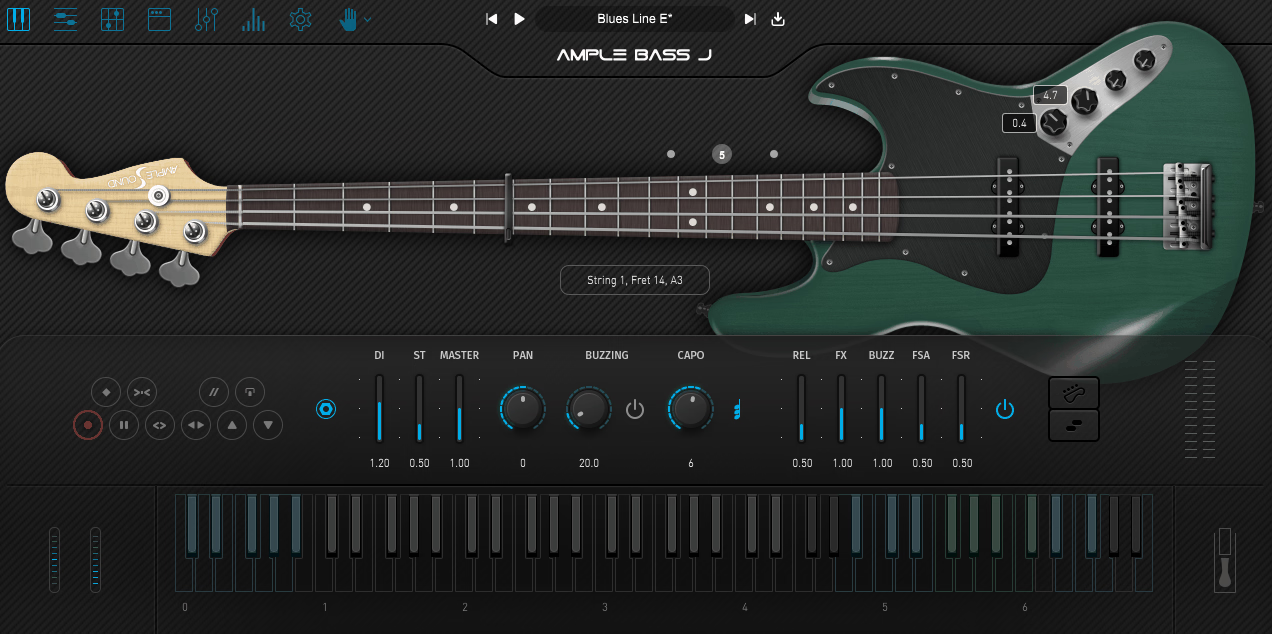
Modeled on the Fender Jazz Bass, one of the most recorded electric bass guitars in jazz and funk history, this library from Ample Sound captures the specific tonal character and playing response of the J Bass with deep sampling and performance scripting. Ample Bass J gives you the scooped, clear, slightly nasal tone that the Jazz Bass is known for.
The Fender Jazz Bass sound appears on so many jazz fusion, funk, and R&B records that having it available as a well sampled virtual instrument is practically a requirement for those genres.
- Jazz Bass Tone
The sampling captures the specific tonal character of the Fender Jazz Bass, including the scooped midrange, clear high end, and punchy attack that define the instrument. The J Bass tone sits differently in a mix than a Precision Bass or an upright, occupying a specific frequency space that’s immediately recognizable in jazz fusion, funk, and contemporary jazz contexts. The dual pickup configuration is sampled with both pickups active, giving you the characteristic J Bass clarity.
- Articulation Depth
A comprehensive articulation set covers fingerstyle, slap, pop, harmonics, slides, hammer ons, pull offs, and muted techniques with multiple velocity layers and round robins. The articulation coverage handles everything from gentle fingerstyle walking lines through aggressive slap funk passages, which means you can cover the full range of electric bass techniques in jazz and related genres from a single library.
- Legato Engine
A scripted legato system handles the transitions between notes with recorded interval samples, producing connected phrases that sound like continuous playing. The legato is particularly important for jazz bass where melodic walking lines need to flow rather than sound like a sequence of individually triggered notes.
- Tab Player
An integrated tablature player imports bass tab files and performs them with automatically applied articulations and realistic technique. The tab player is useful for converting written bass parts into performed output without manually programming every articulation switch and finger position.
- String Resonance
The sampling captures sympathetic resonance between strings, adding the harmonic interaction that occurs on a real bass when one string vibrates in response to another being played. The resonance adds subtle richness that makes the instrument sound more like a physical object in a room rather than isolated samples.
10. Insanity Samples The Cool Jazz Collection
A curated collection of jazz specific samples, loops, and construction kits designed for producers who work with jazz influenced material in hip hop, lo fi, and contemporary production. The Cool Jazz Collection provides ready made jazz content that you can chop, flip, and process into your own productions.
The collection is oriented toward sample based production rather than traditional performance, which makes it useful for a different workflow than the instruments on this list.
- Jazz Loops
The collection includes performed jazz loops covering piano, drums, bass, guitar, and horn elements recorded with authentic jazz feel and harmonic content. The loops carry the swing, extended harmony, and tonal warmth that define jazz, providing source material that you can use directly or chop and rearrange into new patterns. The performances are played by musicians rather than programmed, which means they carry natural timing variation and dynamic expression.
- Construction Kits
Multi track construction kits provide complete jazz arrangements broken into individual instrument stems that you can mix, process, and rearrange independently. The stem separation gives you control over the balance and processing of each element, which is more flexible than working with pre-mixed loops. You can isolate the piano from a kit and process it with lo fi effects while keeping the drums clean, for example.
- Chop Friendly
The material is recorded and organized for chopping and flipping, with clear transients, consistent levels, and musical phrases that yield interesting results when sliced and rearranged. The chop friendly design means the loops are practical starting points for sample based production rather than fixed arrangements you’re stuck using as is.
- Genre Crossover
The content is designed to work across jazz, lo fi hip hop, neo soul, and contemporary R&B production contexts. The harmonic sophistication and tonal warmth of the jazz source material translate naturally into these related genres, which share jazz’s appreciation for extended harmony and organic instrumentation.
11. Virtual Bassist Dandy by ujam
Following ujam’s pattern based approach, Virtual Bassist DANDY provides an electric bass with a warm, vintage character suited to blues, classic rock, and retro productions. The plugin handles bass performance automatically through its groove engine, generating complete bass lines from your chord input.
For blues specifically, the tonal character and pattern library lean toward the warm, round bass sound that defines the genre.
- Vintage Tone
The bass tone is warm, round, and vintage with the specific midrange character and gentle saturation that suits blues, classic soul, and retro production contexts. The tonal quality sits in the frequency range that classic blues bass occupies, providing a sound that feels era appropriate without requiring extensive processing to remove modern brightness or sterility.
- Blues Grooves
Pre-performed bass patterns include styles and rhythmic figures specific to blues, classic rock, and vintage R&B. The patterns carry the specific timing feel and note choices that define blues bass playing, including the characteristic emphasis on roots and fifths with passing tones that walk between chord changes. The blues specific content is what distinguishes this from ujam’s other bass plugins that focus on different genres.
- Chord Following
The patterns respond to your chord input in real time, transposing the bass line to follow your harmony as you play. You focus on the chord progression while the engine handles the bass performance, selecting appropriate notes and rhythmic patterns that fit the harmonic context musically.
12. Ample Bass Upright
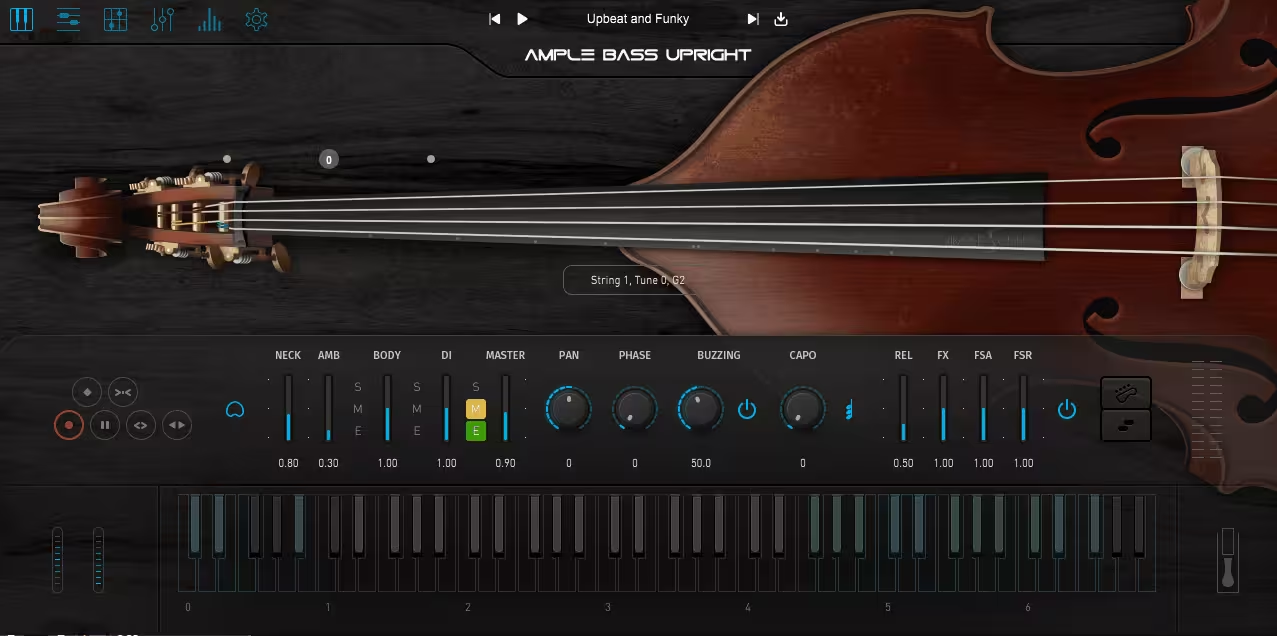
For acoustic upright double bass specifically, this library from Ample Sound provides deep sampling with performance scripting designed for the particular challenges of reproducing a bowed and plucked acoustic instrument. Ample Bass Upright captures the woody resonance, string buzz, and body thump that define the upright bass sound.
The quality of the slide scripting and legato transitions is particularly strong, which is important for jazz where the bass lines need to flow rather than feel disconnected.
- Acoustic Detail
The sampling captures the full acoustic character of the upright bass including body resonance, finger noise, and the way the sound changes at different dynamic levels. The acoustic detail gives you an instrument that sounds like a physical object resonating in a space rather than a collection of isolated notes. For jazz contexts where the bass is often exposed, this level of detail is what makes the difference between a convincing virtual performance and an obviously sampled one.
- Legato Slides
Recorded slide transitions capture the smooth pitch connections between notes with the specific finger pressure variation and string noise that accompany real upright bass slides. The slide quality is where Ample Sound’s attention to detail shows, because the slides sound like a finger moving along a string rather than a pitch bend applied to a static sample. For walking bass lines where the connection between notes defines the musicality, the legato slides are essential.
- Tab Player
An integrated tablature player imports bass tab files and performs them with automatically applied articulations and finger positioning. The tab player is practical for jazz bass parts where you might have written or found a walking line in notation and want it performed with realistic technique.
- Dynamic Response
The velocity response is mapped across enough dynamic layers that the full range from ghosted notes to hard plucks produces naturally varying tone alongside volume changes. The dynamic response matters in jazz where the bassist frequently varies their touch to create groove and emphasis within a walking line.
13. Vir2 Instruments MOJO 2 Horn Section
I covered MOJO 2 in the brass article, but it deserves a place here because the era system and solo instrument focus make it one of the most useful horn section libraries for jazz and swing specifically. Vir2’s MOJO 2 captures individual trumpets, trombones, and saxophones with the tonal character and articulations that jazz horn writing demands.
The era settings in particular give you instant access to different decades of jazz brass sound, from modern clarity through 1920s grit.
- Era Settings
The four era presets (Modern, Retro, Vintage 1, Vintage 2) transform the tonal output to match different recording decades. Modern gives full bandwidth clarity. Retro adds 60s/70s analog warmth. Vintage 1 narrows to the midrange focused big band era sound of the 40s and 50s. Vintage 2 pushes into the gritty, lo fi character of early recording. For jazz production that needs to evoke a specific era, these settings get you there without building separate processing chains.
- Solo Character
The individual instrument recordings have enough personality and tonal detail for exposed solo writing where each horn needs to sound like a distinct player rather than a generic sample. The solo focus is what jazz arranging needs, because jazz horn parts are typically written for individual voices rather than massed sections.
- Section Building
A mixer panel builds sections of up to ten players from the solo recordings with humanization to simulate the natural variation between players. The section building gives you control over exact ensemble size and blend.
- Built In FX
The effects section includes convolution reverb, tape saturation, and cabinet emulation that let you shape the final tone within the plugin. The tape saturation combined with the era settings is particularly effective for vintage jazz production.
14. The Maverick by Native Instruments

A versatile piano that works across jazz, blues, lo fi, and classical contexts, The Maverick captures an upright piano with the warm, slightly imperfect character that makes it suited to genres where a pristine concert grand would sound wrong. The upright character carries a woody, intimate quality that sits naturally in jazz and blues contexts.
For producers who need one piano that handles multiple genres rather than a specialized jazz piano, The Maverick covers the most ground.
- Upright Character
The upright piano tone carries a warmth, woodiness, and slight mechanical character that distinguishes it from grand pianos. The upright quality is what jazz, blues, and lo fi production often needs, because the imperfections and resonance of an upright piano contribute to the genre’s aesthetic rather than detracting from it. The sound feels intimate and lived in rather than polished and concert ready.
- Genre Flexibility
The tonal character works across jazz, blues, lo fi, classical, and singer songwriter contexts without needing to switch instruments. The versatility comes from the upright piano’s inherent tonal neutrality, where it doesn’t impose a specific genre association the way a bright concert grand or a heavily processed lo fi piano does. You can shape it toward different contexts through your playing and processing choices.
- Kontakt Platform
The library runs in Kontakt and integrates into NI’s NKS ecosystem with tagged browsing and hardware control. The Kontakt platform means it fits into existing orchestral or production templates that most composers have already built.
- Dynamic Range
The velocity response covers a broad dynamic range from gentle, barely touched notes through full forte playing with natural tonal variation across the spectrum. The dynamic range lets you express the full emotional scope of jazz piano playing, from delicate ballad touches to more assertive comping.
- Room Character
The recording captures a natural room ambience that adds subtle spatial character without overwhelming the instrument. The room sound provides depth and dimension that dry close miked recordings lack, making the piano feel like it exists in a physical space rather than in a digital vacuum.
15. Orange Tree Samples Evolution Jazz Archtop
For the jazz guitar sound specifically, this library captures an archtop hollow body guitar with the warm, round tone and specific playing techniques that define jazz guitar. Evolution Jazz Archtop gives you the mellow, woody character of a proper jazz box that solid body guitar libraries can’t approximate.
The archtop guitar sound is essential to jazz combo and small group recordings, and this library captures it with the articulation depth and performance scripting that OTS is known for.
- Archtop Tone
The sampling captures the specific warm, round tone of a hollow body archtop guitar with the mellow attack, quick sustain roll off, and woody resonance that define the jazz guitar sound. The archtop character is fundamentally different from solid body electric guitar tone, and it can’t be approximated by EQing a Les Paul or Strat sample. The instrument has a specific acoustic behavior that this library captures faithfully.
- Jazz Articulations
The articulation set covers the specific techniques jazz guitarists use, including chord comping, single note melody, muted chords, harmonics, and the gentle fingerstyle approach that defines the genre. The articulations reflect how jazz guitarists actually play rather than generic electric guitar techniques, which means the output sounds idiomatic to the genre.
- Evolution Engine
The library runs on OTS’s Evolution engine with strumming patterns, chord voicing, and performance scripting that handles the translation of MIDI input into realistic guitar behavior. The engine makes the guitar respond musically to your playing, selecting appropriate articulations based on velocity, timing, and note overlap.
16. ProjectSAM Swing More!
Building on the original Swing!, this expanded library adds more instruments, more ensembles, and over 120,000 samples to the big band and vintage jazz toolkit. ProjectSAM Swing More! extends the original with additional saxophones, brass, rhythm section instruments, and expanded ensemble multis.
The expansion adds instruments the original lacked, including nylon guitars, banjos, mandolins, ukuleles, and more, which broadens the stylistic range beyond traditional big band into territory that covers vintage pop, film noir, and Broadway.
- Expanded Ensembles
The additional ensemble multi patches extend the big band palette with new voicings, articulations, and instrument combinations that the original Swing! didn’t include. The expanded multis cover more stylistic ground, from intimate small combos to fuller big band configurations with additional instrument variety.
- String Instruments
Nylon guitars, banjos, mandolins, ukuleles, and bass add a rhythm section dimension that the original library’s brass and woodwind focus didn’t cover comprehensively. The stringed instruments include key switchable chord shapes with proper voicing displayed on screen, making it practical to program authentic chord accompaniment for vintage jazz and swing contexts.
- Extended Samples
Over 120,000 samples across all instruments provide the articulation depth and variation needed for extended composition work. The sample count means you have enough round robin variation and articulation coverage that prolonged passages don’t reveal repetition or limited sampling.
- Vintage Versatility
The expanded instrument selection covers big band, film noir, Broadway, vintage pop, and retro jazz contexts, which is a broader stylistic range than the original Swing! provided. The versatility makes it practical as a single library for multiple vintage and jazz production contexts rather than needing separate libraries for each style.

Hello, I’m Viliam, I started this audio plugin focused blog to keep you updated on the latest trends, news and everything plugin related. I’ll put the most emphasis on the topics covering best VST, AU and AAX plugins. If you find some great plugin suggestions for us to include on our site, feel free to let me know, so I can take a look!