
There’s something about brass that hits different from every other section in the orchestra. A French horn sustain can make you tear up, a trombone section at full blast can rattle your chest, and a muted trumpet adds a vibe no synth pad or string patch will ever touch. The problem is, recording real brass players costs serious money. Even a single session trumpeter in a decent room will set you back more than some of these plugins cost outright.
The good news is that virtual brass has come a long way. Some of the libraries on this list sound close enough to the real thing that even seasoned composers double take. Others deliberately move beyond realism, processing brass recordings into cinematic textures and hybrid content that acoustic instruments could never produce on their own.
I’ve pulled together thirteen options (twelve plus a extra option) that cover orchestral scoring, pop horn sections, jazz, hybrid sound design, and everything between. Whatever your budget or production style, there’s something here that’ll work for you.
1. Native Instruments Valves Pro
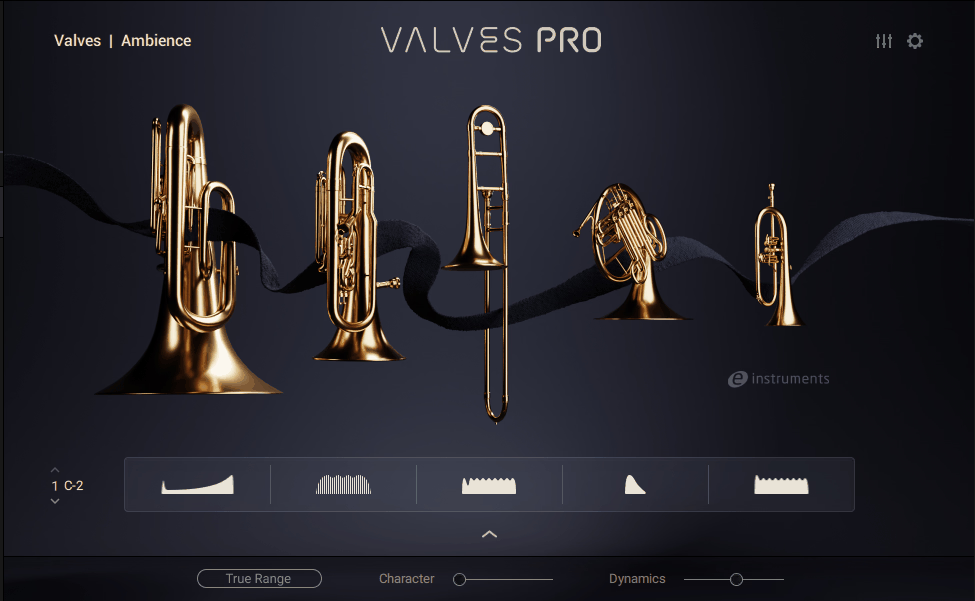
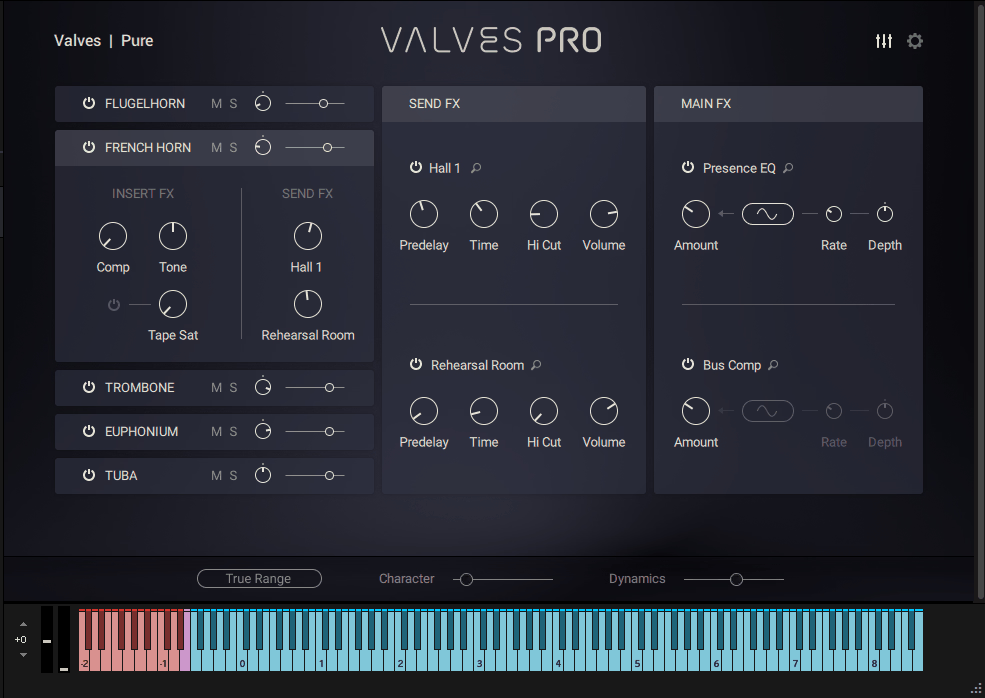
While most libraries on this list cover the full brass section, NI Valves Pro zooms in on trumpet and flugelhorn specifically, capturing these instruments with the intimate detail and character of a close miked studio session.
The focus means these specific instruments are sampled more deeply than they’d be in any general brass library.
If you need a solo trumpet that sounds like a real person playing in a real room for jazz, soul, or pop production, the depth here delivers that.
- Trumpet Depth
The library provides deeply sampled trumpet and flugelhorn with more velocity layers, more round robins, and more articulation detail than these instruments receive in broader brass collections.
The focused sampling means rapid repeated notes, exposed melodic lines, and dynamic passages all sound natural rather than revealing the limitations that general purpose libraries hit when their trumpet patches are pushed. When the trumpet is the featured voice in your arrangement, you hear the difference immediately.
- Mute Variations
Multiple mute types (straight, harmon, cup, and others) are individually sampled with the same depth as the open instrument. This matters because muted trumpet is one of the most distinctive and recognizable sounds in jazz and pop, and different mutes produce fundamentally different characters.
A harmon mute sounds nothing like a cup mute, and approximating one from the other with EQ doesn’t work. Having each properly sampled gives you the specific character you need.
- Performance Phrasing
Pre-recorded phrases capture falls, doits, shakes, and the ornamental techniques that define jazz and pop trumpet playing. These idiomatic details are what separate a convincing trumpet performance from a keyboard player triggering samples, and programming them note by note is tedious. Having them as performed content gives you authentic stylistic detail quickly.
- Session Character
The recording approach captures the close, present quality of a studio session rather than the ambient distance of a scoring stage. The session character makes these instruments sit naturally in pop and jazz mixes where the trumpet needs to feel intimate and personal. The recording also preserves subtle breath and valve noise that adds realism.
- Smart Scripting
Intelligent performance scripting handles articulation selection and dynamic response to produce musically appropriate results from simple MIDI input. The scripting fills in the idiomatic details that make the output sound like genuine trumpet playing rather than keyboard triggered samples, reducing the gap between what you play and what a real trumpeter would perform.
- NKS Ready
Full NKS compatibility provides tagged browsing and hardware parameter mapping for NI keyboard users. The integration streamlines the workflow if you’re already in the NI ecosystem, though the library works fine without NI hardware too.
2. VSL Synchron Brass
If you want brass that sounds like it was recorded in a proper scoring stage, because it literally was, VSL Synchron Brass delivers. The library was captured at the Synchron Stage Vienna, a purpose built recording space, and every sample carries that room’s warm, dimensional acoustic character baked right in.
You load a patch, play a note, and it sounds like you’re hearing musicians performing in a real concert space. No fiddling with reverb plugins to fake it.
- Articulation Depth
This is where VSL flexes harder than anyone else. The articulation coverage is borderline obsessive: sustains, multiple legato variations, marcato, staccato, sforzando, fortepiano, trills, flutter tongue, muted versions, and a bunch of specialty techniques I didn’t even know existed before exploring this library.
Each one is recorded with enough velocity layers and round robins that you don’t get that dreaded machine gun repetition when a trombone hits the same note twice. If you need a specific brass technique for a score, chances are it’s in here somewhere.
- Room Sound
The Synchron Stage acoustics give you that cinematic brass tone from the first note without needing to load up a convolution reverb and hope for the best.
The room sound is warm and detailed without being overpowering, and you can blend between close, mid, and room mic perspectives to place the brass exactly where you want them in your orchestral depth field. I find myself reaching for the tree mics most of the time, but the close position is useful when you need more definition in a busy arrangement.
- Legato Quality
VSL’s recorded legato transitions are among the most natural I’ve heard in any brass library.
The connections between notes capture real air flow continuity and lip slur behavior, which is what makes the difference between a brass line that sounds like a performance and one that sounds like a series of separate notes glued together.
The legato handles slow, expressive intervals and faster agile movement, and it adapts the transition character to how quickly you’re playing.
- Synchron Player
Everything runs in VSL’s Synchron Player, which is a proper modern interface with drag and drop preset building, a built in mixer, and effects. It’s a significant improvement over their older Vienna Instruments software, which, if I’m being honest, felt like navigating a spreadsheet.
The Synchron Player makes articulation switching, expression mapping, and general navigation much faster and more visual.
3. Output Analog Brass & Winds
This one is not about realism at all, and that’s the whole point. Output’s Analog Brass & Winds takes real brass and woodwind recordings and runs them through synthesis, effects, and creative processing until they become something entirely different.
The result is textures that carry brass DNA but sound nothing like what any acoustic section could actually produce.
If you already own a straight orchestral brass library and want something for when things need to get a little weird, this is your complement. It’s also just genuinely fun to play.
- Four Macros
The interface is dominated by four programmable macro sliders that can completely transform any preset with a single gesture. One slider might sweep a filter while another brings in distortion or shifts the spatial character. The macros make real time sound shaping immediate and physical, which is way more inspiring than digging through sub menus. I’ve lost hours just sweeping these controls and discovering sounds I wasn’t looking for.
- Searchable Browser
Output’s preset browser lets you search by mood, texture type, and character rather than just instrument name. You can type “dark” or “pulsing” and get results that actually match, which is faster than scrolling through hundreds of presets organized by technical categories.
The browser design reflects the fact that most producers think about sounds emotionally rather than technically, and it makes finding the right starting point significantly faster.
- Dual Engine
A two layer architecture lets you blend and morph between different processed brass sources. You can combine a warm sustained pad layer with a rhythmic filtered pulse, crossfading between them for evolving textures that change character over time. The in between spaces where both layers are active produce sounds that neither layer creates on its own, which is where the creative gold lives.
- Era Settings
Built in era processing changes the overall tonal character to evoke different recording decades, from full bandwidth modern clarity to vintage warmth with frequency rolloff and saturation.
The era settings mean you can match the brass character to the production aesthetic without building separate processing chains for vintage versus contemporary sounds. The retro and vintage modes in particular add a quality that’s difficult to achieve with generic effects processing.
- Modulation Routing
A comprehensive modulation system connects LFOs, envelopes, and performance inputs to any parameter, which is what turns static processed textures into evolving, breathing instruments. Without modulation, the sounds are interesting but frozen.
With it, they become living elements that sustain interest across long passages. The modulation depth is what makes this genuinely useful for scoring and production rather than just a novelty.
- Effects Integration
The built in effects including reverb, delay, chorus, and distortion are integrated into the sound design rather than slapped on as post processing. They respond to the modulation system, so the effects evolve alongside the brass textures for cohesive results.
It’s a small detail but it makes a noticeable difference in how organic the output sounds.
4. Orchestral Tools Berlin Brass
Recorded at the Teldex Scoring Stage where the Berlin Philharmonic has recorded, this library carries the weight and character of one of Europe’s finest scoring rooms in every sample. OT Berlin Brass is one of those libraries that professional film composers actually use in their templates, and for good reason.
The Teldex room sound gives you an immediately cinematic quality that no amount of reverb plugin tweaking will replicate. It’s expensive, but you hear where the money went.
- Teldex Character
The Teldex room has a warmth and richness that other scoring stages don’t quite match. That acoustic signature is present in every note, giving the brass a specific cinematic weight that defines the Berlin series.
I’ve tried approximating this sound with dry libraries and convolution reverb, and it’s not the same. There’s something about the interaction between the instruments and this particular room that you can’t fake after the fact.
- Solo & Section
Both individual solo instruments and full brass sections are included with enough quality for exposed solo passages alongside powerful ensemble moments.
The solo horns in particular have a character and detail that makes them usable for lyrical, exposed melodies where every note is under scrutiny. The sections deliver the massed power you need for climactic moments.
- Expression Mapping
The dynamics and expression system responds to velocity and CC input in ways that feel musical and responsive. The tonal character changes alongside the volume the way real brass behaves, where louder playing produces not just more volume but brighter, more aggressive tone.
The mapping makes the instruments feel like they’re responding to your musical intent rather than just your finger pressure.
5. Arturia Augmented BRASS
Arturia takes a different path here, combining real brass recordings with synthesis, effects, and granular processing to create hybrid content that sits between acoustic sampling and electronic sound design.
Augmented BRASS produces sounds that neither a purely sampled library nor a purely synthetic instrument can make on its own.
If you’re working on contemporary scoring or electronic production where you want brass warmth fused with synthetic texture, this is built for exactly that situation.
- Hybrid Layers
The instrument blends real brass recordings with synthesized layers that you can mix from mostly organic to mostly synthetic at any ratio.
The acoustic layer provides the tonal warmth that only real brass has, while the synthesis layer adds evolving textures and movement that acoustic instruments can’t produce. Pushing the blend toward the middle creates sounds that exist in neither world individually, and that in between territory is where the interesting content lives.
- Layer Morphing
Crossfade morphing between the acoustic and synthetic layers lets you transition between warm brass pads and electronic textures smoothly. Automating the morph over time creates passages that shift character gradually, which is more interesting than static sounds that stay the same from start to finish. The morphing is really where this plugin earns its keep creatively.
- Modulation Engine
A deep modulation system with LFOs, envelopes, and sequencers animates both layers simultaneously. The modulation keeps the textures breathing and evolving rather than sitting still, which is the difference between atmospheric content that sustains interest and content that gets boring after four bars. The sequencer is particularly useful for adding rhythmic pulse to cinematic brass textures.
- Effects Processing
Built in effects including reverb, delay, distortion, and modulation effects are wired into the sound design workflow and respond to the modulation system. The integration means the effects evolve with the brass content rather than sitting as static post processing, which produces more cohesive results than loading separate effect plugins.
6. Vir2 MOJO 2 Horn Section
While most libraries on this list focus on orchestral brass, Vir2’s MOJO 2 is all about solo instruments and small group configurations for jazz, big band, funk, and pop. The library captures individual trumpets, trombones, and saxophones with enough personality for exposed solo writing where the instrument needs to sound like a real player rather than a section blend.
If you write for a specific horn voice rather than massed brass power, this is where you’ll find it.
- Era System
This is my favorite feature and something unique to MOJO 2. Four era settings (Modern, Retro, Vintage 1, Vintage 2) completely change the tonal output to evoke different recording decades. Modern gives you full bandwidth clarity. Retro adds the saturated analog warmth of the 60s and 70s.
Vintage 1 narrows things to a midrange focused big band era sound. And Vintage 2 pushes even further into gritty, early recording character. Switching between eras on the same performance is like hearing the same musician recorded in different decades, and it’s remarkably effective for matching brass to a specific production aesthetic.
- Section Building
A mixer panel lets you build sections of up to ten players from the solo recordings, with humanization and stereo spreading to simulate the sound of a group. The humanization is what makes it work, because it introduces subtle timing and pitch differences between the virtual players. Without it, you just hear the same recording stacked. With it, you get a convincing impression of multiple musicians.
- Mic Positions
Three mic positions with independent levels give you control over the spatial character, from intimate close miked solo sound to a more open, room influenced blend. I usually start with the close mic for detail and blend in the room to taste.
7. ujam Symphonic Elements BRAAASS

If you need brass in your production and you need it now, ujam’s BRAAASS is the fastest path from nothing to a convincing brass part that I’ve encountered. The plugin uses a pattern and performance engine that generates complete brass arrangements from simple chord input.
You sacrifice the note by note control of traditional libraries. In exchange, you get brass parts that sound musical and properly voiced in seconds rather than hours.
- Phrase Engine
The performance engine handles voicing, rhythm, articulation, and dynamics automatically when you play chords. The output includes proper voice leading, breath phrasing, and dynamic contour that would take serious MIDI editing to achieve in a traditional library.
You play a chord progression and the engine performs an idiomatic brass arrangement, which is genuinely impressive the first time you hear it work. The phrase coverage spans stately orchestral chorales through punchy staccato figures.
- Style Selection
Genre specific styles reconfigure the entire instrument for different musical contexts, from cinematic scoring to funk horn sections to pop arrangements. Each style adjusts the patterns, performance behavior, and tonal character. You can audition different styles on the same progression to find the right brass character without rebuilding anything, which makes experimentation fast and low commitment.
- Instant Output
The plugin produces usable brass within seconds of loading. That’s the core value proposition, and it delivers on it.
For songwriters, producers, and anyone who needs brass as part of a bigger picture rather than the main event, the time savings are real. You spend your energy on musical decisions rather than MIDI programming.
- Tone Shaping
Built in tonal controls adjust the character from bright and cutting to dark and warm. The shaping affects the overall quality of the performed brass rather than just applying EQ, which means you can match the tone to different production contexts without external processing.
- Humanization
Adjustable humanization introduces timing and dynamic variation that prevents the patterns from sounding mechanical. You can dial it from tight and precise to relaxed and loose depending on what the music needs. At moderate settings, the output sounds performed rather than programmed, which is the whole point.
8. NI Session Horns Pro

This library exists for a specific purpose: pop, funk, jazz, and soul horn sections. It’s not trying to be an orchestral brass library. NI Session Horns Pro captures a four piece horn section with the punchy, tight studio sound that defines popular music brass arrangements.
If you’ve ever wanted that Uptown Funk, Stevie Wonder, or Tower of Power horn section vibe in your production, this is designed for exactly that context.
- Smart Voice Split
The Smart Voice Split automatically distributes notes across the four instruments (trumpets, trombones, saxophones) the way a professional horn arranger would voice them. You play a chord and the engine figures out which notes go to which instrument, following proper voicing conventions without you needing to know what those conventions are.
For producers who aren’t horn arrangers, this is the feature that makes the library accessible. For those who are, it saves time on routine voicings.
- Pop Articulations
The articulation set is designed for pop and soul contexts specifically: staccato punches, swells, falls, doits, shakes, and the specific attack styles that make funk and soul horn sections sound the way they do. These aren’t orchestral articulations repurposed for pop.
They’re the specific techniques that studio horn sections actually play on records, which is why the output sounds like a real horn date rather than an orchestra trying to play funk.
- Phrase Builder
A phrase tool lets you build horn section riffs that respond to chord changes with proper voice leading and rhythmic feel. The builder handles the arrangement side, distributing your rhythmic pattern across the four instruments as you change chords. It’s a faster way to create horn section lines than programming each instrument separately.
9. NI Symphony Series Brass
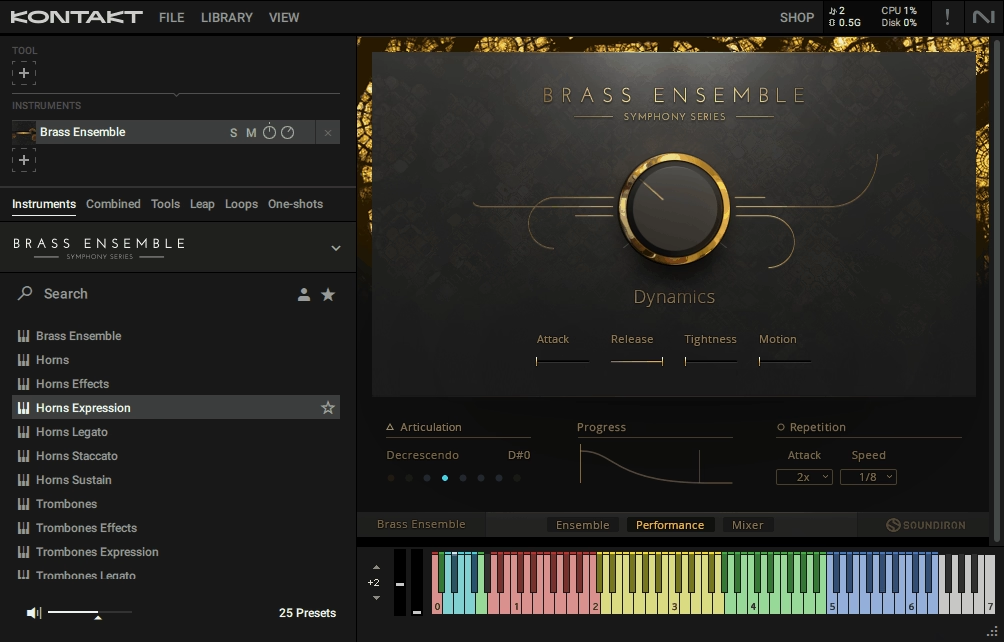
Part of Native Instruments’ cinematic lineup, this library provides orchestral brass sections and solos aimed squarely at film, television, and game scoring. NI Symphony Series Brass isn’t trying to be everything to everyone. It focuses on the specific dynamic range and expression that media composers actually use day to day.
The NI ecosystem integration is a practical bonus if you already work with Komplete Kontrol hardware, since everything maps automatically.
- Scoring Focus
The sounds and articulations are selected for what actually shows up in professional scoring rather than trying to cover every obscure classical technique.
You get the dynamic range from delicate pianissimo through massive fortissimo, the sustains, legatos, and short notes that form the backbone of 90% of brass writing for media. The focused selection means less time browsing through articulations you’ll never touch and more time writing music that needs to be delivered on deadline.
- Section & Solo
Both ensemble sections and individual solo instruments are included, which is important because scoring regularly requires both. A lonely horn melody needs the solo patch. A climactic brass chorale needs the section. Having both from the same library means they share the same room tone and recording character, so combining them sounds cohesive rather than like you patched two different libraries together.
- NKS Integration
Full NKS compatibility means tagged browsing from your keyboard’s display, automatic parameter mapping to hardware knobs, and light guide visualization.
If you use NI hardware, this integration keeps you in a creative flow where you browse, audition, and perform without constantly reaching for your mouse. If you don’t use NI hardware, the NKS features don’t matter much, but the library still sounds good on its own merits.
- Dynamic Layers
The dynamic sampling covers a wide range with smooth crossfading between layers. Brass crescendos from nothing to full power are one of the most emotionally powerful things you can write, and the smoothness of the dynamic transition determines whether that crescendo sounds real or stepped. The crossfading here is refined enough that you don’t hear the layers switching, which is the baseline requirement for convincing brass writing.
10. Spitfire Audio Studio Brass
Recorded at Spitfire’s own studio rather than a massive scoring stage, this library provides a closer, drier brass sound than the big hall libraries. Spitfire Studio Brass sits forward in a mix without the distance and wash that something like Berlin Brass carries naturally.
The drier recording makes these instruments work in pop, jazz, and media contexts where a massive orchestral room sound would overpower everything else in the arrangement.
- Studio Character
The close studio recording gives you a present, direct brass sound that’s fundamentally different from scoring stage libraries. There’s no large room ambience softening the attack or blurring the detail.
You hear the instruments clearly and upfront, which is what you want when brass needs to cut through a pop mix or sit tight in a jazz arrangement. The drier starting point also gives you more control because you’re adding your own reverb to a clean source rather than trying to work around baked in room sound.
- Mic Blending
Multiple mic positions let you move between very dry and slightly more open without ever reaching the large hall sound of dedicated scoring stage libraries.
The close mic is my go to for definition, and blending in the tree position adds just enough space to prevent the instruments from sounding clinical. The flexibility means you match the spatial character to different production contexts without loading a different library.
- Spitfire Engine
The library runs in Spitfire’s dedicated plugin, which is consistent across their entire range. If you use any other Spitfire products, the interface is immediately familiar, so there’s no learning curve when adding this to your setup. The engine handles expression, articulation switching, and mic management in a clean layout that stays out of your way.
- Articulation Coverage
The articulation set covers sustains, legato, staccato, marcato, muted variations, flutter tongue, and other essential techniques with enough dynamic layers and round robins for detailed orchestral writing. The coverage handles the vast majority of brass writing needs, and the recording quality holds up in exposed passages where lesser libraries reveal their weaknesses.
- AIR Studios Quality
The recordings were made at AIR Studios in London with high end signal chains, and you can hear the difference in the full harmonic richness and dynamic range of each instrument. The raw tone of every patch holds up under close scrutiny, which matters when you’re writing solo horn melodies or exposed trumpet lines where there’s nothing to hide behind.
11. Audio Imperia Talos
This library isn’t about subtlety. Audio Imperia’s Talos is built for massive, impactful brass moments, the kind that make trailers feel epic and action sequences feel larger than life. The recording approach emphasizes raw power and aggressive dynamic range rather than delicate nuance.
If your scoring work involves trailers, blockbuster action, or any context where the brass needs to physically move air, Talos is purpose built for that.
- Cinematic Power
The library is designed for wall shaking fortissimo moments where the brass section needs to hit with physical force. The ensemble recordings capture that specific quality of massed brass at full volume that makes cinema audiences feel the music in their bodies. The sound is deliberately larger than life, which is appropriate for trailer scoring and action cues where restraint isn’t the objective.
- Ensemble Blend
The brass is captured as full ensemble recordings rather than individual instruments layered together, which means you get the natural blend and interaction of musicians playing in a section.
The massed ensemble approach produces a cohesive wall of brass that’s difficult to achieve by stacking solo instruments, because the acoustic interaction between players in a room adds a complexity that layering doesn’t replicate.
- Production Ready
The samples come processed and balanced for immediate cinematic use.
You load a patch and it sounds like it belongs in a trailer without needing to spend thirty minutes on EQ and compression to get it there. The production ready approach saves time when you’re working to deadline and need impactful brass quickly.
- Rhythmic Content
Tempo synced brass patterns provide driving, energetic content for action scoring. The patterns give you brass based momentum and ostinato figures that add forward drive to cues, covering a role that sustained brass alone can’t fill.
The patterns lock to your project tempo for tight integration with your arrangement.
12. EastWest Hollywood Pop Brass
Engineered by Grammy winner Moogie Canazio, this library captures the big band and pop horn section sound that’s been on hit records from Motown through Bruno Mars. EastWest Hollywood Pop Brass is perhaps most famous for its use on Uptown Funk, which gives you a concrete reference point for exactly what this library sounds like.
If you’re making pop, soul, funk, or latin music that needs a horn section, this is designed specifically for that world rather than adapted from orchestral sampling.
- Hit Record Sound
The library captures the specific punchy, tight brass tone that defines hit pop and soul records.
The sound is deliberately different from orchestral brass, with a closer, more present, more aggressive character that cuts through pop mixes the way horn sections on classic Motown and modern soul records do. You’re getting the production aesthetic of pop brass, not an orchestral library someone told you could also do pop if you tweaked the EQ enough.
- Genre Range
The brass convincingly covers pop, soul, funk, latin, jazz, and big band with enough stylistic variety because the library was designed with these specific genres in mind. The articulations, tonal character, and performance behavior shift between these contexts naturally rather than feeling like one genre’s brass forced into another.
- Section Voicing
The library provides properly voiced horn section arrangements that distribute notes across trumpets, trombones, and saxophones with idiomatic voicing. The voicings sound arranged rather than just harmonized, with the note distribution and instrument assignments that professional horn arrangers use on real sessions.
Extra: Chris Hein Orchestral Brass eXtended
Closing with a library from one of the most meticulous samplers in the business. Chris Hein Orchestral Brass Extended provides an almost absurd number of articulations per instrument that goes further than any other brass library I’ve encountered.
If you’re the type of composer who needs precise control over every nuance of brass performance, this is the library that won’t run out of options before you do.
The articulation count is the defining feature, and for detailed orchestral writing where specific techniques matter, the depth is genuinely useful rather than just impressive on paper.
- Articulation Count
The library offers an enormous number of articulations per instrument, covering virtually every technique brass instruments can produce. Beyond the standard sustains, legatos, and staccatos, you get specific dynamic attacks, release variations, ornamental techniques, and extended playing methods.
For composers who program detailed brass parts where the exact articulation choice matters for every note, this depth gives you options that no other single library matches.
- Note Head Editor
A note head editing system lets you shape the attack and release of individual notes beyond what the pre-recorded articulations provide.
The editor is unique to Chris Hein’s approach and gives you a layer of customization for situations where no pre-recorded articulation exactly matches what you need. It’s a specific, nerdy feature that most producers won’t touch, but for the composers who need it, nothing else offers this.
- Adaptive Legato
The legato system adapts to your playing speed, selecting lyrical transitions for slow passages and agile connections for fast ones automatically. The adaptive behavior means you write naturally without manually switching legato modes as the music changes character, which keeps the creative flow unbroken.
- Velocity Switching
A velocity based articulation system lets you access different techniques through how hard you play rather than requiring keyswitch changes. Moving between articulations through playing dynamics rather than pressing separate keys keeps the performance feeling natural and uninterrupted, which matters during those moments when you’re recording a part and don’t want to break your flow to hit a keyswitch.

Hello, I’m Viliam, I started this audio plugin focused blog to keep you updated on the latest trends, news and everything plugin related. I’ll put the most emphasis on the topics covering best VST, AU and AAX plugins. If you find some great plugin suggestions for us to include on our site, feel free to let me know, so I can take a look!