
Acoustic guitar is one of the most requested instruments in music production, and it’s also one of the hardest to fake convincingly with software. The problem isn’t just capturing the right tone. It’s replicating the complex interaction between pick or fingers, strings, body resonance, and fretboard position that makes a real acoustic guitar performance feel alive.
A single strummed chord involves six strings being hit at slightly different times with slightly different forces, and the body of the guitar resonates differently depending on which notes are ringing. Recreating all of that from a MIDI keyboard is a tall order.
The good news is that acoustic guitar plugins have improved significantly in the last few years. The strumming engines have gotten smarter about timing and velocity distribution.
The sampling depth has increased to the point where round robin variation prevents the obvious mechanical repetition that plagued earlier libraries.
And the fingerpicking and articulation systems now handle hammer ons, slides, and legato transitions well enough that single note passages can sound genuinely convincing. You still won’t fool an experienced guitarist into thinking they’re hearing a real performance, but you can absolutely produce acoustic guitar parts that work in a professional mix.
I’ve selected seven plugins that cover the range of acoustic guitar needs, from dreadnoughts and parlor guitars to twelve strings and nylon string classical instruments. A solid free option is included as well.
From the Pluginerds Store
Before you get into the plugins on this list, a few things that make playing and recording guitar feel more natural day to day — straps, hangers, and the small maintenance tools that never come included with anything.


1. Ample Sound Guitar M (Martin Dreadnought)
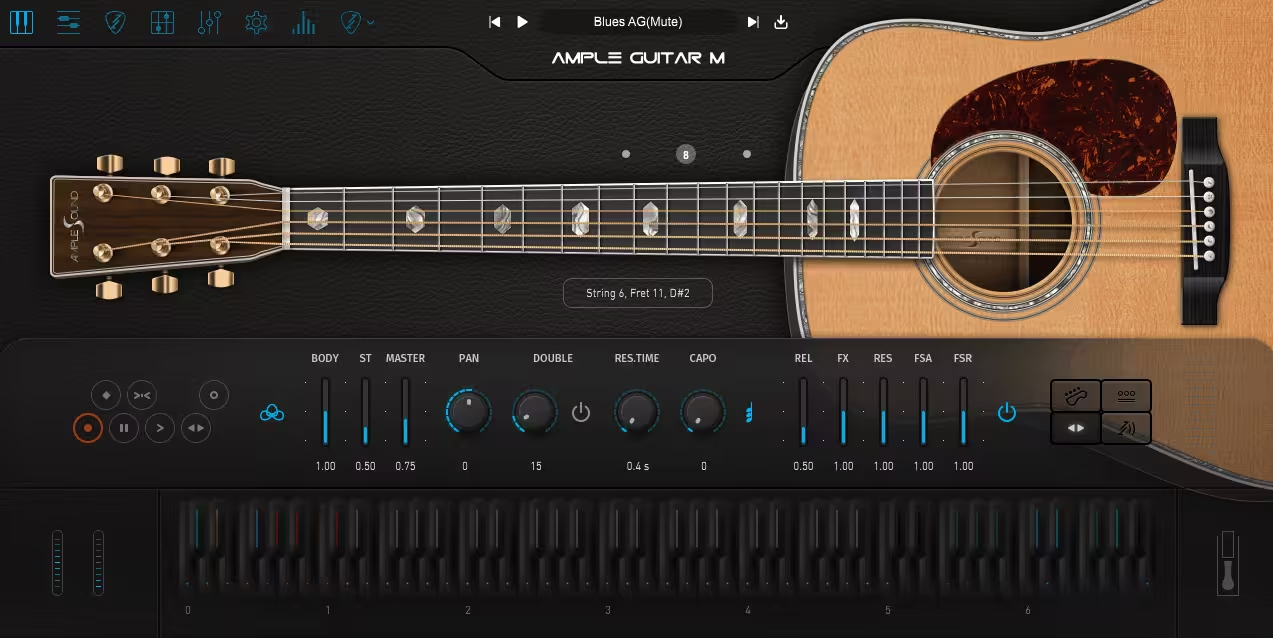
When it comes to deeply sampled acoustic guitar plugins with full articulation support, Ample Guitar M (modeled after a Martin D-41 dreadnought) sets the standard that other libraries are measured against.
The sampling captures the Martin’s rich, balanced tone and strong midrange projection across the full fretboard with multi velocity round robin sampling that prevents the mechanical repetition you hear from simpler guitar libraries.
I covered Ample Guitar M in the instruments article, but it deserves deeper attention here because of specific features that matter for acoustic guitar work. The body resonance simulation adds the sympathetic vibration between strings and body that gives an acoustic guitar its fullness. The strumming engine generates realistic rhythm parts from chord input. The fingerpicking mode produces multi string patterns that respond to your chord voicings.
And the tab player imports guitar tablature and performs it with appropriate articulations. Together, these features provide multiple ways to create acoustic guitar parts depending on your skill level and the complexity of the part you need.
- Martin Tone
The sampling captures the specific tonal characteristics of a Martin D-41, including the rich low end, clear midrange, and sparkling highs that define the dreadnought sound. Multiple microphone positions were used during recording, and you can blend them to suit the perspective and character your mix needs.
- Strummer Module
A dedicated strumming engine generates realistic acoustic guitar rhythm performances from chord MIDI input. The strumming speed, dynamics, up/down patterns, and feel are all adjustable, and the engine produces the natural timing variation between strings that makes strummed chords sound like they were performed by a hand rather than triggered simultaneously.
- Fingerpicking
A fingerpicking mode generates multi string picking patterns that respond to your chord voicings with the independent string timing and dynamic variation that characterizes real fingerstyle playing. Programming convincing fingerpicking by hand is one of the most difficult aspects of virtual guitar, and this engine handles the mechanical challenge for you.
- Body Resonance
A body resonance simulation adds sympathetic vibration and acoustic coupling between strings and the guitar body. The resonance contributes the sense of a physical instrument in a real space that dry multisamples alone don’t convey, adding fullness and sustain that makes the guitar sound more three dimensional.
- Tab Player
An integrated tablature player imports guitar tab files and performs the parts with appropriate articulations and string assignments. If you can find guitar tab for a part you want to include in your production, the tab player converts it directly into a performed acoustic guitar part.
- Articulation Range
Comprehensive key switching covers sustain, mute, harmonics, hammer ons, pull offs, slides, and legato transitions. The articulation depth is what allows you to create parts that sound like actual guitar performances rather than keyboard triggered samples, and the transitions between articulations are smooth enough to maintain the illusion.
Available from Ample Sound in VST, VST3, AU, and AAX formats.
Get the Free Plugin Starter Kit
The genuinely useful free DAWs and plugins worth installing. No filler. Straight to your inbox.
2. ujam Amber 2 (Phrase Based Acoustic)
Taking a fundamentally different approach from the sampled guitar libraries that make up most of this list, ujam Amber 2 generates acoustic guitar performances from chord input and pattern selection rather than requiring you to program individual notes and articulations.
You select a strumming or picking style, play chords on your MIDI keyboard, and the plugin produces complete acoustic guitar performances with realistic timing, dynamics, and string interaction.
The trade off here is control versus speed. You won’t be programming specific fingerpicking patterns note by note or placing individual string hits exactly where you want them. What you will do is produce convincing acoustic guitar rhythm parts and arpeggiated passages in minutes rather than the hours that detailed MIDI programming in a sampled library requires.
I reach for Amber 2 when a track needs acoustic guitar as a supporting element rather than a featured instrument, and the results consistently pass in a full mix context.
- Phrase Engine
The performance engine generates complete acoustic guitar parts from your chord input, handling strumming patterns, arpeggio figures, and picking sequences automatically. You focus on the harmonic progression while the engine manages the physical guitar performance, which eliminates the most tedious aspect of programming acoustic guitar from scratch.
- Style Library
A collection of performance styles organized by genre and playing approach provides different rhythmic patterns, strumming intensities, and picking methods.
Switching between styles transforms the character of the generated performance entirely, from gentle fingerpicking to aggressive strumming, without requiring you to reprogram anything.
- Real Time Control
The generation responds to your playing in real time, creating performances that follow your chord changes naturally as you play them.
You can experiment with progressions and immediately hear how they sound with a full acoustic guitar arrangement, which makes the plugin useful for songwriting and arrangement exploration beyond just final production.
- Mix Ready Sound
The guitar tones are processed and polished to sit well in a production context without extensive additional processing. You don’t need to spend time on amp simulation, room emulation, or heavy EQ work to get the output sounding professional. The sounds are designed to drop into a mix and work immediately.
Available from ujam in VST, VST3, AU, and AAX formats.
3. Ample Sound Guitar T (Taylor Grand Auditorium)
Ample Guitar T captures a Taylor 714CE Grand Auditorium, which has a brighter, more balanced tone with tighter low end and more articulate highs than the Martin D-41 that Ample Guitar M models. The Grand Auditorium body shape produces a sound that’s particularly well suited to fingerpicking, recording, and sitting in a mix without dominating the low midrange the way a large body dreadnought can.
I find myself choosing the Taylor over the Martin in sessions where the acoustic guitar needs to coexist with other instruments in the same frequency range. The tighter low end means the Taylor doesn’t compete as aggressively with bass and kick drum. The brighter top end cuts through a busy arrangement more easily. For pop, singer songwriter, and indie productions where acoustic guitar plays a supporting role alongside vocals and other instruments, the Taylor’s balanced character often works better than the Martin’s fuller sound.
- Taylor Character
The sampling captures the specific tonal balance of a Taylor 714CE: the bright, articulate top end, the focused midrange, and the controlled, tight low end that distinguishes the Grand Auditorium from larger body shapes. The Taylor sits in a mix differently from the Martin, which is the whole reason to have both available.
- Recording Clarity
The brighter, more defined tone of the Taylor translates particularly well to recorded music where clarity matters. In a full arrangement, the Taylor’s articulate character ensures individual notes and chord voicings remain distinguishable rather than blending into a warm, indistinct wash.
- Strumming Engine
Ample Sound’s strumming system adapted for the Taylor generates rhythm parts that capture the guitar’s quick response and bright attack. The Taylor’s body responds faster than heavier dreadnoughts, and the strumming engine reflects this with tighter, more percussive strumming character.
Available from Ample Sound in VST, VST3, AU, and AAX formats.
4. MusicLab RealGuitar 6 (Pattern Based Acoustic)
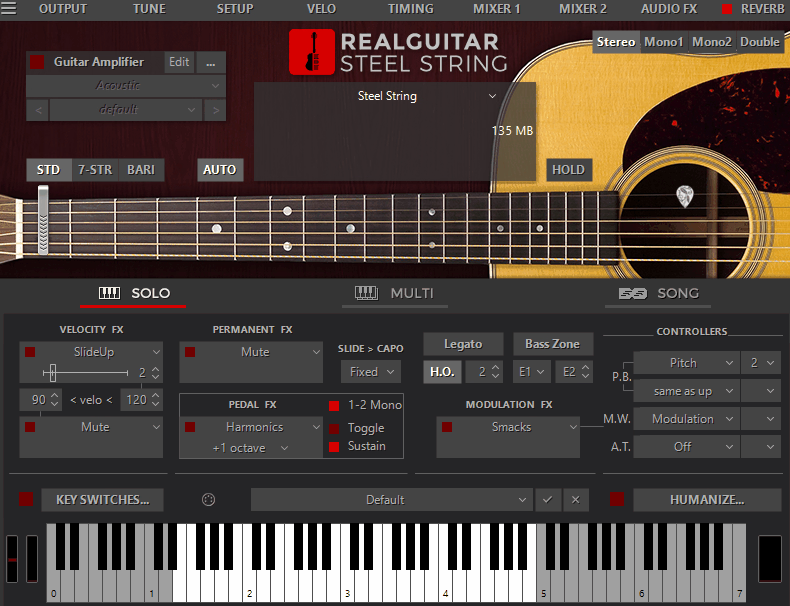
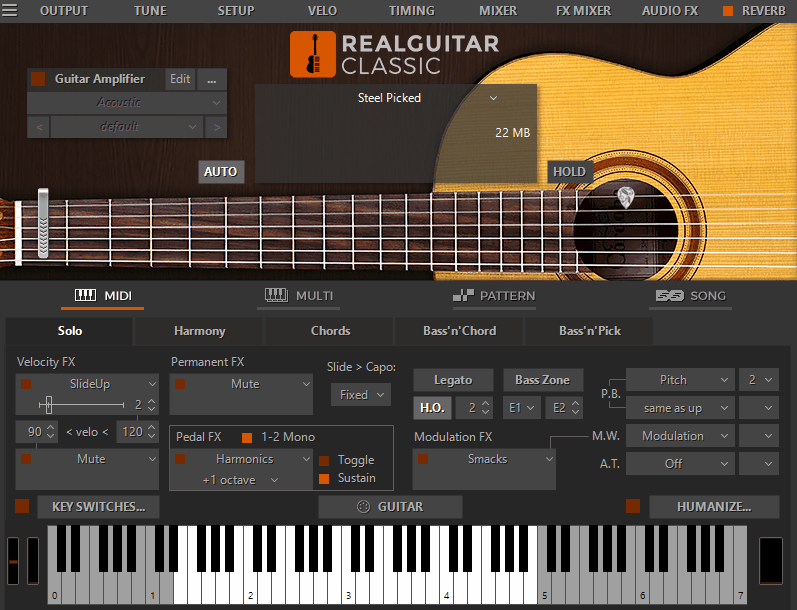
Where Ample Sound focuses on deep sampling with manual articulation control, MusicLab RealGuitar 6 focuses on making it as easy as possible to produce realistic acoustic guitar performances from a MIDI keyboard without extensive programming knowledge. The plugin uses a performance pattern system that handles strumming, picking, and rhythm generation from simple chord input, with an approach that’s been refined across six major versions.
What draws me to RealGuitar 6 for certain projects is the speed of getting usable results. The performance modes are designed so that even someone with minimal guitar knowledge can produce parts that sound natural and musically appropriate.
You select a style, play basic chords, and the plugin generates a performance that includes proper string voicing, realistic timing, and appropriate articulations for the chosen style. For producers who need acoustic guitar regularly but don’t want to invest hours learning the intricacies of a deeply sampled library, RealGuitar offers a more accessible workflow.
- Performance Modes
Multiple playing modes (Solo, Harmony, Chords, Bass & Chord, Bass & Pick) change how the plugin interprets your MIDI input and generates guitar output. Each mode is optimized for a different type of guitar part, from single note melodies to full strummed accompaniment, and switching between them adapts the behavior completely.
- Pattern Library
A large rhythm and picking pattern library organized by genre and style provides ready made performance templates. You load a pattern, play chords, and the plugin generates a complete guitar performance that follows the pattern’s rhythm and picking approach. The library covers folk, pop, rock, country, and other acoustic guitar styles.
- Guitar Voicing
The plugin automatically generates proper guitar chord voicings from simple MIDI input rather than playing the notes you press in keyboard voicing.
When you play a C major chord on your MIDI keyboard, RealGuitar voices it the way a guitarist would actually finger it on the fretboard, with appropriate string assignments and open strings.
- Six Versions Refined
With six major versions of refinement, the performance engine has been continuously improved based on user feedback and advancing technology. The current version represents years of iteration on the core challenge of generating convincing guitar performances from MIDI input.
Available from MusicLab in VST, VST3, AU, and AAX formats.
5. Ample Sound Guitar SJ (Small Jumbo Acoustic)
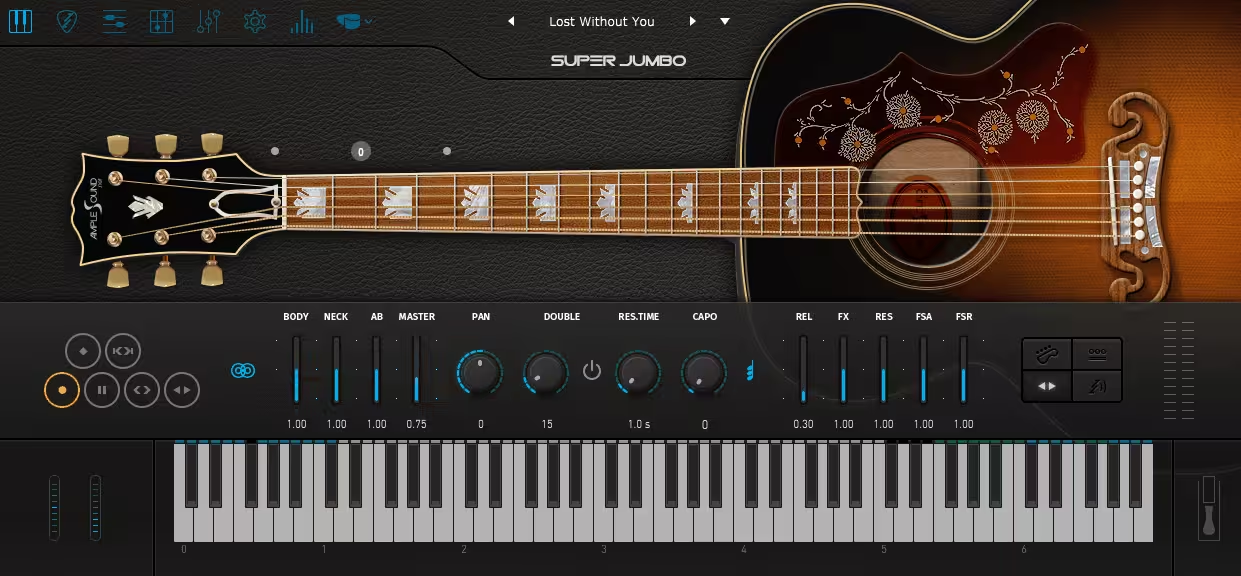
Between the full bodied dreadnought and the focused Grand Auditorium sits the small jumbo body shape, and Ample Guitar SJ captures this specific acoustic character.
The small jumbo produces a tone that combines the low end warmth of a larger body with the midrange clarity of a smaller instrument, creating a balanced, versatile sound that works well across a wide range of production contexts.
For producers who want one acoustic guitar plugin that handles the widest variety of situations, the small jumbo might actually be the most practical choice.
It doesn’t have the booming bass of the Martin dreadnought or the cutting brightness of the Taylor, but it occupies a middle ground that works convincingly for folk, pop, rock, country, and singer songwriter material. I find myself reaching for Ample Guitar SJ when I’m not sure what body type the track needs, because the balanced character rarely sounds wrong.
- Balanced Tone
The small jumbo body produces a frequency balanced tone that sits between the warmth of a dreadnought and the brightness of a Grand Auditorium. The balanced character means you rarely need to fight with EQ to make the guitar sit properly in a mix, because the natural tone is already centered and even.
- Versatile Application
The balanced tone makes Ample Guitar SJ usable across a wider range of genres and arrangement contexts than more tonally extreme guitar types. The same plugin handles gentle fingerpicking, strummed rhythm parts, and percussive playing without needing different instruments for different tasks.
- Strumming Engine
Ample Sound’s strumming system generates chord performances tailored to the small jumbo’s response. The engine captures the guitar’s even string balance and moderate body resonance, producing strumming that sounds natural without requiring extensive parameter tweaking.
Available from Ample Sound in VST, VST3, AU, and AAX formats.
6. Ample Sound Guitar M Lite (Free Martin Acoustic)

Building a production toolkit on a budget doesn’t mean you have to skip acoustic guitar entirely. M Lite provides a free, streamlined version of the full Ample Guitar M library, giving you access to the Martin D-41 dreadnought samples with a reduced feature set and smaller sample count.
The core tone is the same warm, rich Martin character, just with fewer velocity layers and round robin variations than the paid version.
I want to be straightforward about the limitations: M Lite doesn’t include the strumming engine, the fingerpicking mode, or the tab player from the full version. The articulation set is reduced, and the round robin depth means repeated notes are more prone to the mechanical, identical quality that plagues basic sample libraries.
That said, for simple chord parts, arpeggiated passages, and production contexts where the acoustic guitar isn’t featured prominently, the free version produces results that are genuinely usable. It’s the best free acoustic guitar plugin I’ve found, and you can always upgrade to the full version later if you need the additional features.
- Martin Foundation
The core Martin D-41 samples from the full Ample Guitar M library provide the same warm, rich dreadnought tone in the free version. The fundamental character of the guitar is preserved, even though the sampling depth and feature set are reduced compared to the paid product.
- Basic Articulations
A reduced but functional articulation set covers the essential playing techniques: sustain, mute, and basic slides. The articulations are fewer than the full version but sufficient for simple guitar parts that don’t require advanced techniques like harmonics or complex legato passages.
- Upgrade Path
The free version serves as a practical audition for the full Ample Guitar M library. If you like the tone and want the strumming engine, fingerpicking mode, and complete articulation set, you can purchase the full version and immediately have access to everything the Lite version lacks.
- Zero Cost
Completely free from Ample Sound with a simple registration.
The plugin provides a legitimate, high quality acoustic guitar at no cost, which makes it an essential download for any producer who needs acoustic guitar sounds but isn’t ready to invest in a premium library.
- Learning Tool
For producers new to programming virtual guitar, the Lite version provides a low stakes environment to learn how acoustic guitar MIDI programming works before investing in a more complex paid library. You can develop your skills with the free version and apply them immediately when you upgrade.
Available from Ample Sound in VST, VST3, AU, and AAX formats. Free.
7. Ample Sound Guitar Twelve (12 String Acoustic)
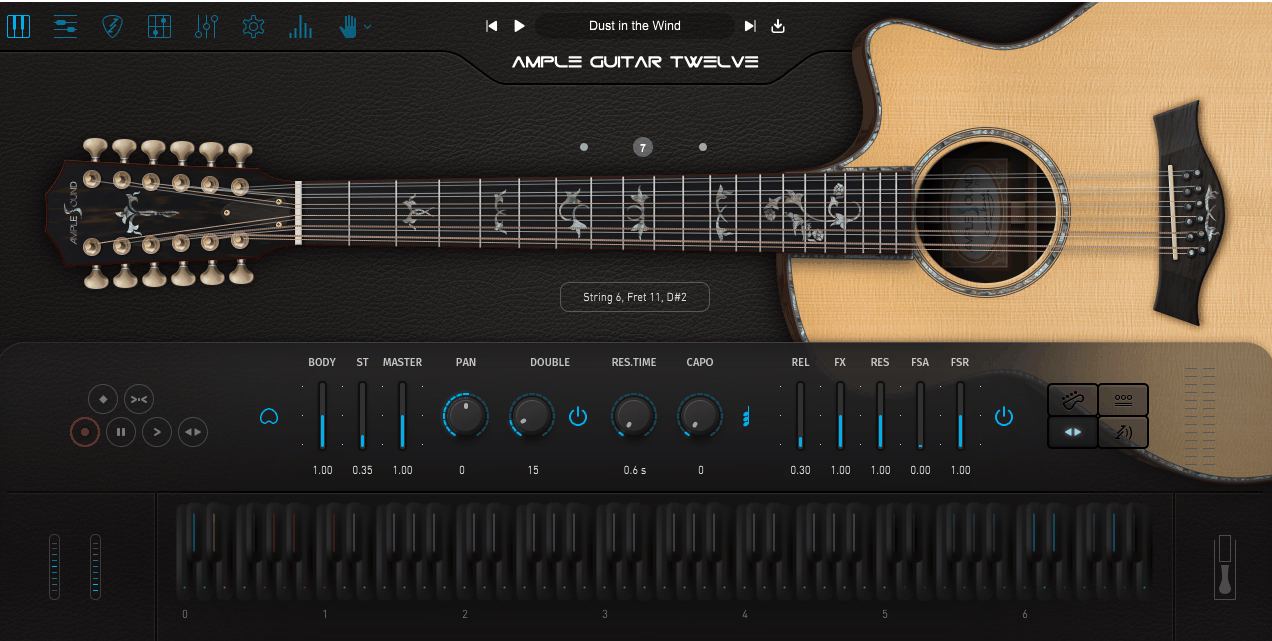
No other acoustic guitar type sounds quite like a twelve string, and Ample Guitar Twelve is one of the few plugins that captures this specific instrument convincingly.
The twelve string pairs each standard string with an octave doubled companion (on the lower four strings) or a unison doubled companion (on the upper two), creating the characteristic shimmering, chorus like fullness that has defined the sound of folk rock, classic rock, and cinematic acoustic music for decades.
The twelve string sound is immediately recognizable and impossible to fake by simply doubling a standard six string recording or applying chorus effects.
The physical interaction between paired strings, the way they vibrate slightly differently against each other, and the natural beating and shimmer that results from two strings at nearly but not exactly the same pitch: these are qualities that only emerge from sampling the actual instrument.
I use Ample Guitar Twelve primarily for intros, choruses, and sections that need a bigger, more expansive acoustic presence than a standard six string provides.
- Paired Strings
The sampling captures the specific interaction between paired strings on a twelve string guitar, including the octave doubling on the lower strings and unison doubling on the upper strings. The paired string interaction produces the characteristic shimmer and fullness that distinguishes twelve string from six string guitar with chorus applied.
- Natural Shimmer
The subtle beating and detuning between paired strings that creates the twelve string’s signature shimmer is captured in the original recordings rather than being synthesized after the fact. The natural shimmer sounds more organic and complex than any effect processing can replicate from a six string source.
- Strumming Engine
Ample Sound’s strumming system adapted for twelve string generates chord performances with the full, dense character that twelve string strumming produces. The strumming accounts for the doubled string count, creating the thick, rich chord voicings that are the twelve string’s primary musical contribution.
Available from Ample Sound in VST, VST3, AU, and AAX formats.
Get the Free Plugin Starter Kit
The genuinely useful free DAWs and plugins worth installing. No filler. Straight to your inbox.

Hello, I’m Viliam, I started this audio plugin focused blog to keep you updated on the latest trends, news and everything plugin related. I’ll put the most emphasis on the topics covering best VST, AU and AAX plugins. If you find some great plugin suggestions for us to include on our site, feel free to let me know, so I can take a look!