
Guitar mixing is a different discipline from mixing vocals or drums, and it benefits from tools that understand the specific frequency range, dynamic behavior, and tonal expectations of the instrument.
A guitar sits in a crowded part of the spectrum where it competes with vocals, keyboards, and other midrange elements for attention.
Getting it to cut through without being harsh, sit in the mix without disappearing, and carry the right amount of weight and character requires processing that’s tuned for the job.
The plugins I’ve selected here cover the full guitar mixing chain: channel strip processing designed specifically for guitar, EQ with the right character for guitar frequencies, compression that handles the instrument’s transients properly, reverb choices that suit guitar’s tonal range, amp and effects modeling, gating for clean tracks, and tape saturation for analog warmth.
Some of these you’ll use on every guitar track. Others are situational tools you’ll reach for when a specific track needs a specific treatment. Together, they give you everything you need to mix guitar professionally.
What you won’t find on this list are generic mixing tools that happen to work on guitar.
Every plugin here was chosen because it does something particularly well on guitar, whether by design (like the SSL Guitarstrip) or because its specific sonic character suits the instrument (like the Pulsar 1178’s FET compression on electric guitar).
From the Pluginerds Store
Before you get into the plugins on this list, a few things that make playing and recording guitar feel more natural day to day — straps, hangers, and the small maintenance tools that never come included with anything.


1. SSL Guitarstrip (Guitar Channel Strip)
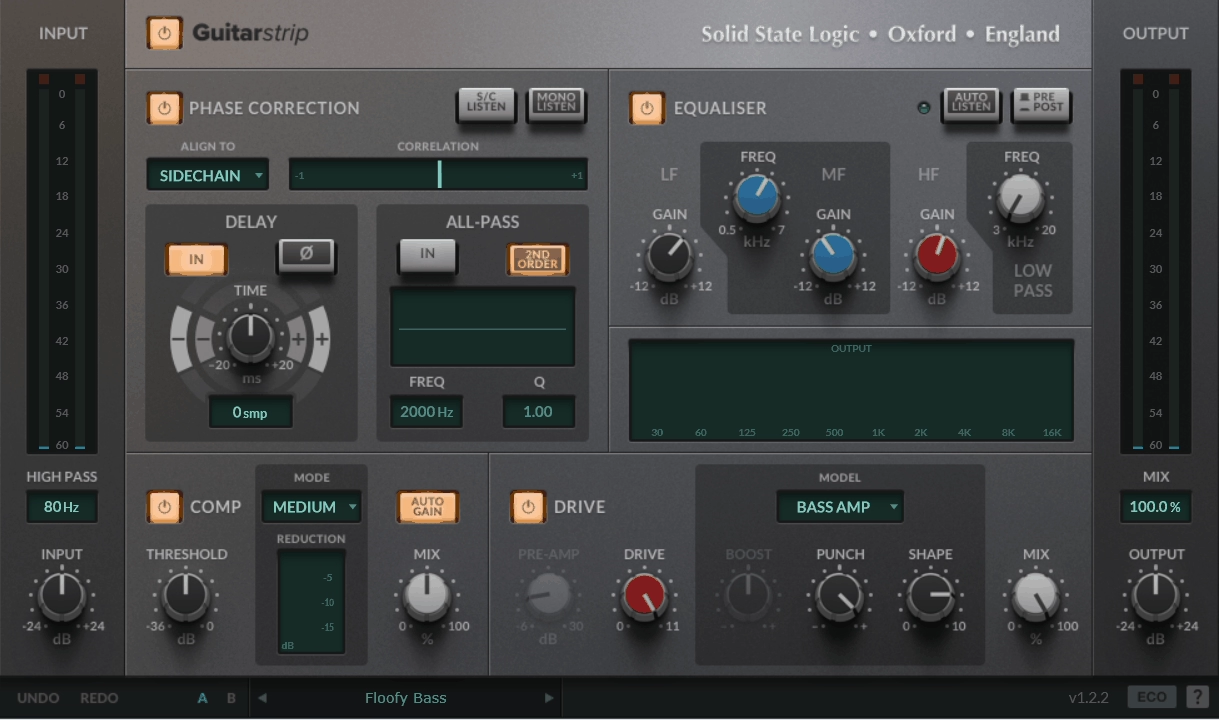
Rather than cobbling together separate EQ, compression, and effects plugins for every guitar track, SSL Guitarstrip provides a dedicated channel strip designed from the ground up for guitar processing.
Solid State Logic developed this plugin specifically for the instrument, which means the EQ frequencies, compression response, and processing order are all tuned for the range and behavior of electric and acoustic guitars rather than being generic tools that you adapt to guitar.
What I appreciate about Guitarstrip is how much faster it makes the initial guitar mixing phase. Instead of loading four or five separate plugins and configuring each one for guitar, I load one plugin and the controls are already in the right ballpark.
The EQ bands are centered on guitar relevant frequencies. The compressor responds to guitar dynamics appropriately. The gate handles palm mutes and stop starts without chopping the sustain. For sessions with multiple guitar tracks, having a single, focused tool per track keeps the session organized and the CPU load manageable.
- Guitar EQ
The EQ section provides bands centered on frequencies that matter for guitar: the low end weight around 100 to 200 Hz, the body and warmth region around 400 to 800 Hz, the presence and bite around 2 to 4 kHz, and the air and shimmer above 6 kHz.
The frequency centers and Q values are chosen based on how guitars actually behave rather than using generic parametric EQ defaults that require you to hunt for the right frequency on every track.
- Dynamics Section
The compressor is voiced for guitar transient behavior, handling pick attacks, strumming dynamics, and sustained notes with a response that feels musical on guitar. The compression character adds body and consistency without squashing the dynamics that make a guitar performance feel alive and responsive.
- Gate Module
A noise gate tuned for guitar handles the specific challenges of gating a guitar signal: the sustain that shouldn’t be cut, the amp noise between phrases that should be removed, and the palm muted passages that need to pass through without triggering the gate closed. The gate parameters are designed for these guitar specific scenarios.
- Signal Flow
The processing modules can be reordered to change the signal path, because gating before compression produces different results than the reverse, and EQ placement relative to the dynamics affects the overall character significantly. The flexible ordering lets you find the chain that works best for each specific guitar recording.
Available from SSL in VST, VST3, AU, and AAX formats.
Get the Free Plugin Starter Kit
The genuinely useful free DAWs and plugins worth installing. No filler. Straight to your inbox.
2. SSL Acoustifier (Guitar Multi Effect)
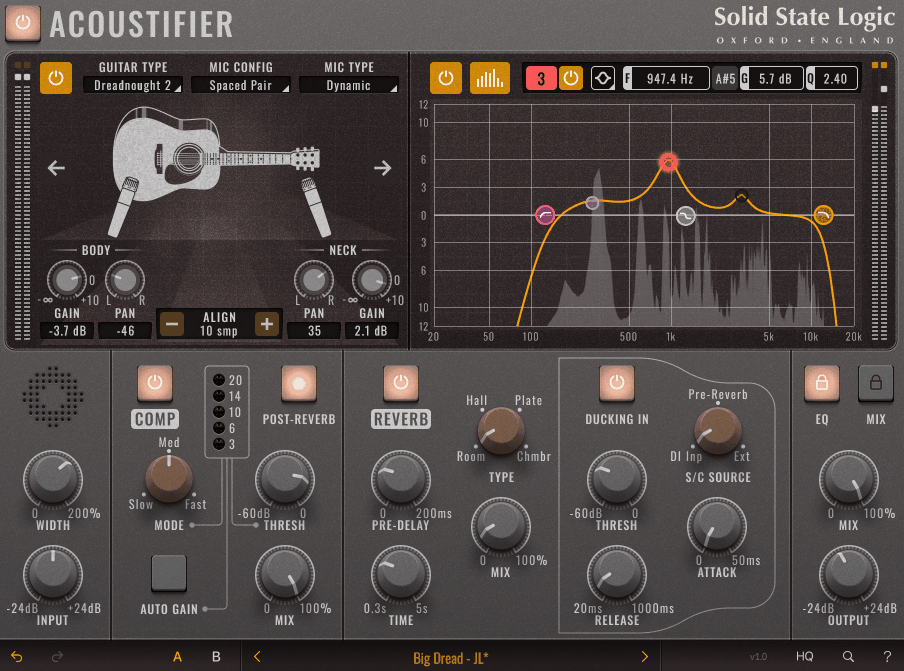
Where Guitarstrip handles the mixing fundamentals, SSL Acoustifier provides creative effects processing designed for guitar. The plugin combines multiple effect types including modulation, spatial processing, harmonic enhancement, and tone shaping in an interface that’s oriented toward making guitar sound bigger, wider, and more interesting in a mix context.
The name suggests acoustic guitar, but Acoustifier works equally well on electric guitar, bass, and other stringed instruments. I use it most often on clean electric guitar and acoustic guitar where I want to add width, shimmer, and spatial depth without loading separate chorus, reverb, and exciter plugins.
The effects are voiced for the frequency range and harmonic content of guitars, which means the processing enhances the instrument’s natural character rather than fighting against it. The modulation in particular avoids the metallic, artificial quality that generic chorus plugins sometimes produce on guitar.
- Width Enhancement
The stereo widening creates convincing width from mono guitar recordings using techniques specifically tuned for guitar frequencies. The widening avoids the phase problems that generic stereo enhancers introduce, producing a natural, speaker like spread that maintains mono compatibility.
- Harmonic Excitation
A harmonic enhancement section adds presence and sparkle to guitar recordings by generating new high frequency content related to the guitar’s harmonics. The excitation is voiced for guitar, adding the bite and clarity that helps guitar cut through a dense mix without needing aggressive EQ boosting.
- Modulation Engine
The modulation effects include chorus, ensemble, and movement tools that are tuned to sound natural on guitar rather than producing the obvious, processed quality that generic modulation plugins often create on stringed instruments. Subtle modulation settings add the kind of natural width and movement that makes a guitar recording sound like it was captured with multiple microphones.
- Spatial Processing
A spatial section adds depth and dimension to the guitar signal, placing it in a convincing acoustic space. The spatial processing works differently from a standard reverb, creating a sense of environment and distance that helps the guitar sit naturally in the mix rather than feeling like a dry, isolated recording.
- Tone Shaping
Dedicated tone controls adjust the overall brightness, warmth, and body of the guitar sound with broad, musical curves. The tone section provides quick adjustments when the guitar needs to be darker or brighter overall, without the precision of a full parametric EQ but with the speed of a simple tone knob.
Available from SSL in VST, VST3, AU, and AAX formats.
3. Pulsar Audio MP-EQ (Passive Color EQ)
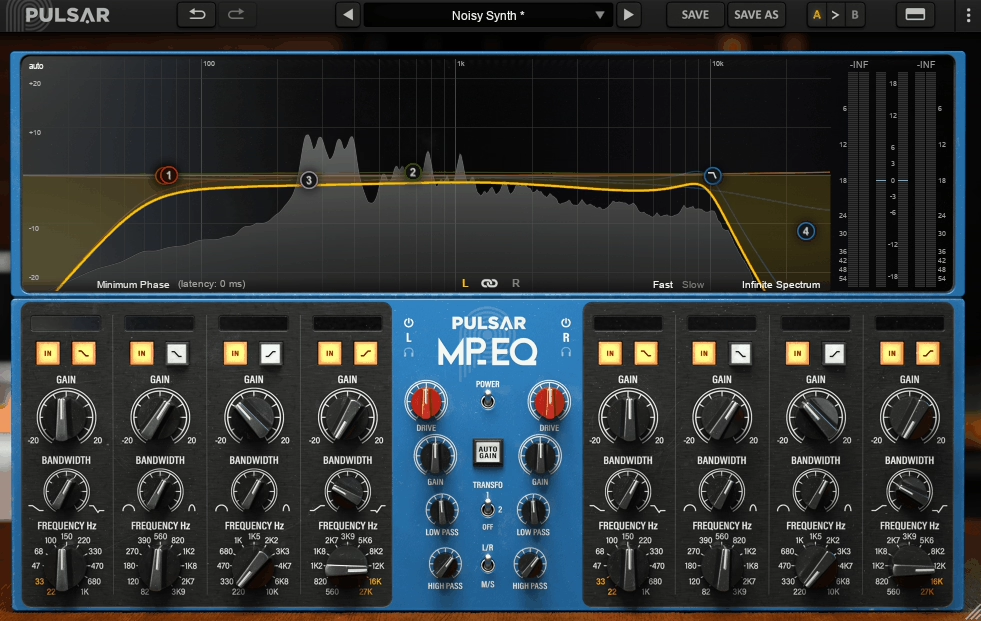
Not every guitar EQ task calls for surgical precision. Sometimes you need an EQ that adds character and tone to the guitar signal as much as it adjusts frequencies. Pulsar Audio MP-EQ models a passive EQ design that imparts a specific harmonic coloration alongside the frequency adjustments, giving your guitar tracks the kind of warm, musical EQ character that vintage hardware is prized for.
I reach for the MP-EQ on guitar when I want the EQ to add something to the sound rather than just subtract problems. The passive design means the processing has a smooth, broad quality that affects a wide frequency range with gentle, overlapping curves rather than surgical narrow bands.
On electric guitar, this produces the kind of tonal shaping that sounds like you changed the amp settings rather than applied EQ. On acoustic guitar, it adds warmth and body that sits beautifully in a mix.
- Passive Character
The passive EQ topology produces broad, overlapping frequency curves that interact with each other musically. The passive design adds harmonic coloration to the signal as you adjust bands, which is part of why vintage passive EQs sound different from modern parametric designs. The coloration is flattering on guitar, adding warmth and presence that enhances rather than merely corrects.
- Broad Curves
The EQ bands use wide, gentle curves that affect broader frequency ranges than a typical parametric EQ. For guitar, these broad adjustments sound more natural than narrow surgical cuts, producing tonal changes that feel like the guitar itself sounds different rather than like processing was applied.
- Analog Modeling
Pulsar’s component level analog modeling captures the specific transformer, inductor, and capacitor behavior of the original hardware, including how the saturation increases as you drive the input harder. The analog behavior adds warmth and weight to guitar tracks beyond what the frequency adjustments alone provide.
Available from Pulsar Audio in VST, VST3, AU, and AAX formats.
4. Pulsar Primavera (Spring Reverb)

Spring reverb has been inseparable from guitar tone since Fender built it into amplifiers in the early 1960s. The characteristic boingy, metallic, splashy quality of a spring reverb tank is a fundamental part of surf, country, rockabilly, blues, indie, and shoegaze guitar sounds.
Primavera provides a dedicated spring reverb emulation that captures the specific physical behavior of spring tanks with more detail and control than the spring reverb simulations built into most amp modeling plugins.
What makes Primavera worth having separately from the spring reverb in your amp sim is the level of control and the modeling depth. A typical amp plugin’s spring reverb gives you a mix knob and maybe a dwell control. Primavera models the mechanical behavior of the springs, including how they respond to transients, how the sound develops over time, and the characteristic drip and splash that real spring tanks produce on hard picked notes.
If you care about getting the spring reverb sound right on your guitar tracks, a dedicated plugin does the job more convincingly.
- Spring Modeling
The emulation models the physical behavior of spring reverb tanks, including the mechanical vibration, resonance, and non linear response to transients that defines the spring reverb character. The modeling captures the way springs respond differently to soft and hard playing, producing more splash and drip on aggressive picking.
- Tank Variations
Multiple spring tank configurations provide different reverb characters, from tight and bright short spring tones to longer, darker, more diffuse settings. Different tank sizes and spring counts produce meaningfully different reverb textures, giving you options beyond a single generic spring sound.
- Drip Control
A drip parameter adjusts the intensity of the characteristic spring reverb splash that occurs on transients. The drip is the signature quality that makes spring reverb sound like spring reverb rather than a generic short reverb, and having direct control over its intensity lets you dial in exactly the amount of character you want.
- Tremolo Integration
A built in tremolo effect that interacts with the spring reverb reproduces the classic guitar amp combination of tremolo and reverb that defined the surf and vintage rock sound. The tremolo can modulate the reverb signal, the dry signal, or both, creating the pulsing, atmospheric quality associated with vintage Fender amps.
Available in VST, VST3, AU, and AAX formats.
5. Guitar Rig 7 Pro (Amp & Effects Suite)
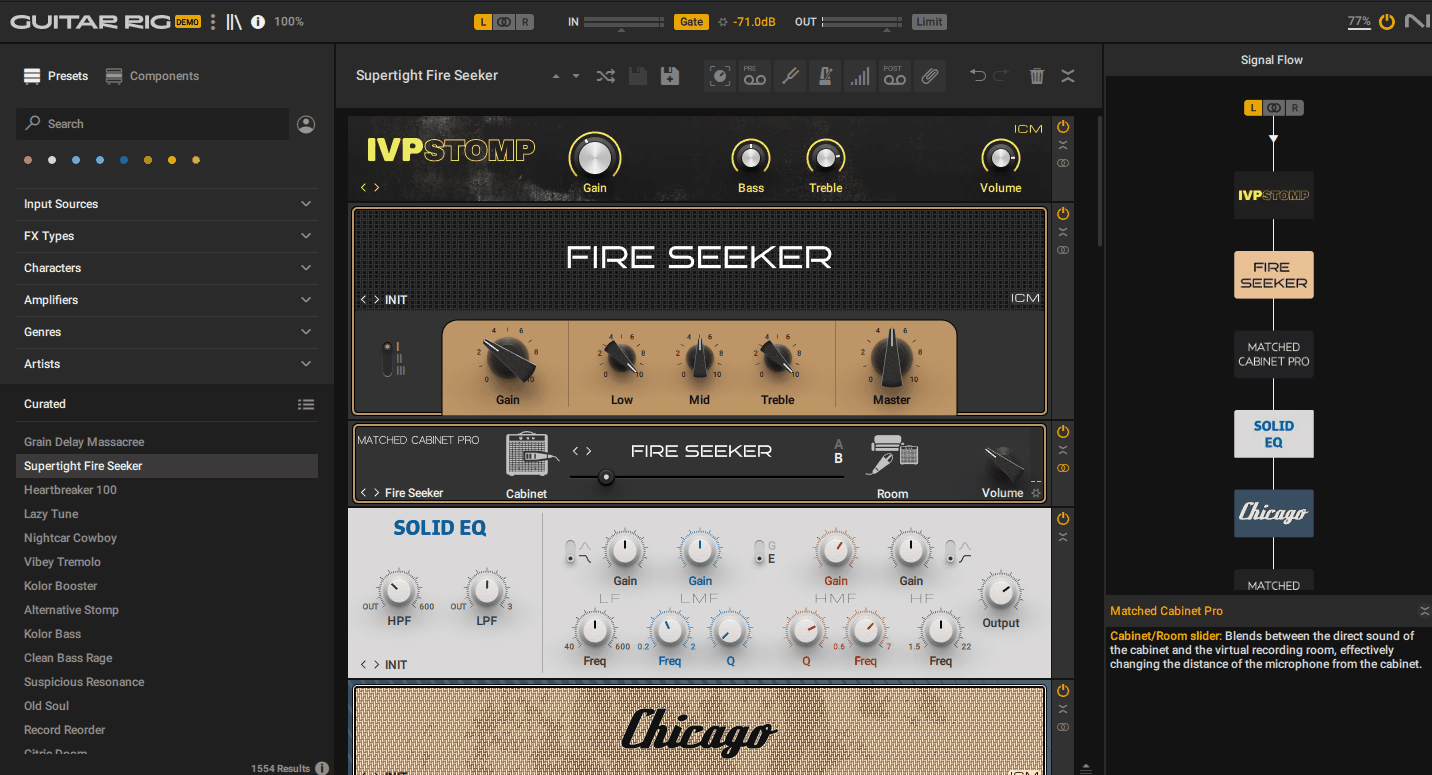
Guitar Rig 7 Pro is a comprehensive amp modeling and effects suite that provides everything from classic amplifier emulations through studio effects to experimental sound design tools. The modular signal chain lets you build custom guitar rigs by stacking amp models, cabinet simulations, stomp boxes, and rack effects in any order.
For guitar mixing specifically, Guitar Rig fills the role of both a tone shaping tool and a creative effects platform. Sometimes you have a DI recorded guitar that needs amp character in the mix. Sometimes you have an amped recording that needs additional effects or a different cabinet flavor. Guitar Rig handles both scenarios. I also find it useful for re amping situations where the recorded guitar tone isn’t working in the mix and you need to reshape it without re recording. The signal chain flexibility means you’re not locked into any single approach.
- Amp Models
A collection of amplifier emulations covering classic and modern designs from clean to high gain provides the tonal foundation. The amp models respond to pick dynamics and guitar volume changes realistically, which matters for maintaining the expressive qualities of the original performance.
- Cabinet IRs
Impulse response based cabinet simulations paired with virtual microphone positioning let you shape the post amp tone precisely. You can move the virtual mic from on axis (brighter, more focused) to off axis (darker, smoother) and adjust the distance for more room character.
- Effects Library
A large collection of stomp box and rack effects covers modulation, delay, reverb, compression, EQ, distortion, and more exotic processing. The effects can be placed anywhere in the signal chain, before or after the amp model, which dramatically affects how they interact with the guitar signal.
Available from Native Instruments in VST, VST3, AU, and AAX formats.
6. Soundtoys SuperPlate (Plate Reverb)
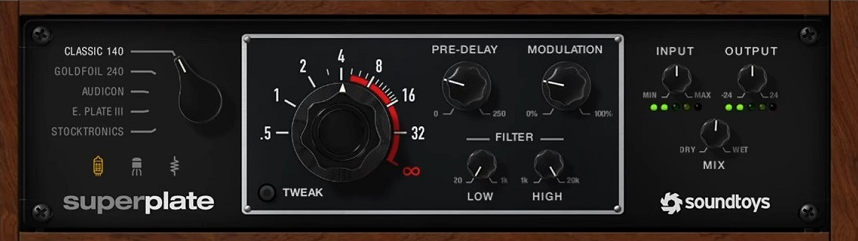
While spring reverb covers the vintage and character side of guitar reverb, plate reverb handles the polished, professional side. Soundtoys SuperPlate models five classic plate reverb hardware units that produce the dense, smooth, metallic reverb character that sits differently in a mix than room or hall algorithms. On guitar, plates add dimension and sustain without the diffuse wash that can make a guitar track feel distant or unfocused.
Each of the five plates in SuperPlate sounds noticeably different, and I’ve found that different guitar tones respond better to different plates. Clean electric guitar and acoustic guitar tend to work well with the brighter plate models that add shimmer and air. Overdriven and distorted guitar often sounds better with the darker, denser plates that add space without accentuating the high frequency content of the distortion. Having five options in a single plugin lets you audition different plate characters quickly rather than loading and comparing separate reverb plugins.
- Five Plates
Five distinct plate reverb emulations model different physical hardware units, each with its own density, decay character, and tonal quality. The variety ranges from bright and metallic to dark and smooth, and the differences are meaningful enough on guitar that choosing the right plate for each track affects how the guitar sits in the final mix.
- Mod Control
A modulation section adds movement to the reverb tail, preventing the static, metallic quality that unmodulated plates can exhibit on sustained guitar chords and held notes. Even subtle modulation amounts add an organic, breathing quality to the reverb that makes it feel less mechanical.
- Pre Delay
An adjustable pre delay separates the direct guitar signal from the reverb onset. On rhythm guitar, a short pre delay keeps the attack clear and rhythmically defined. On lead guitar, a longer pre delay lets the notes speak before the reverb fills in behind them, maintaining clarity during melodic passages.
- Low Cut
A low frequency filter on the reverb signal prevents the plate from adding muddy low end to the guitar’s reverb tail. Guitar reverb that’s too bass heavy can cloud the low end of a mix, and the low cut keeps the reverb focused on the midrange and highs where it adds dimension without introducing problems.
- Decay Time
The decay control adjusts how long the plate reverb sustains, from short, tight ambience that adds subtle depth to long, lush tails that carry notes into the next phrase. On guitar, the decay time significantly affects how the instrument breathes within the arrangement and how much space it occupies in the mix.
Available from Soundtoys in VST, VST3, AU, and AAX formats.
7. Pulsar Audio 1178 (FET Compressor)

FET compression and guitar have a natural affinity. The fast attack, aggressive character, and harmonic coloration of FET compressors complement the transient behavior of guitar in ways that slower compressor designs don’t match. Pulsar Audio 1178 models the dual channel version of the 1176 with component level accuracy, and on guitar specifically, the FET character adds the punch, energy, and forward presence that helps guitar cut through a dense arrangement.
I use the Pulsar 1178 on both clean and overdriven guitar tracks, but the application differs. On clean guitar, the fast attack catches pick transients and adds a consistent, polished quality to the dynamics. On distorted guitar, I use a slower attack to let the pick transient through and compress the sustained body, which adds weight and density to the rhythm without squashing the initial attack. The all buttons in mode (a creative technique where all ratio buttons are engaged simultaneously) produces extreme compression that works as a creative effect on guitar, particularly for shoegaze and ambient textures.
- FET Character
The modeled FET gain reduction circuit produces the specific fast, aggressive compression character that guitar benefits from. The FET response catches pick transients faster than optical or VCA designs, which is why the 1176/1178 has been a studio standard on guitar for decades.
- All Buttons Mode
The all buttons in mode produces extreme, heavily colored compression with dramatic harmonic saturation. On guitar, this mode creates thick, sustained textures with significant tonal coloration that works as a deliberate creative effect rather than transparent dynamic control.
- Transformer Color
The modeled transformers add harmonic warmth that increases with signal level, contributing body and thickness to the guitar signal independently of the compression amount. The transformer coloration gives the 1178 its characteristic weight that you can hear even at minimal gain reduction.
Available from Pulsar Audio in VST, VST3, AU, and AAX formats.
8. FabFilter Pro-G (Gate For Guitar)
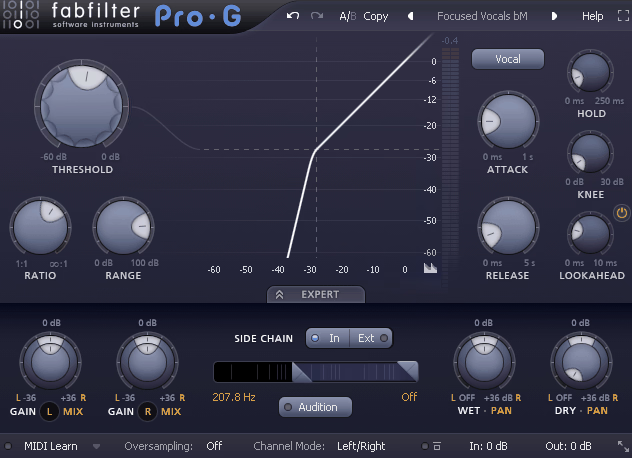
Noise gating on guitar is a common need but a tricky one to execute well. Amp hum between phrases, feedback during pauses, and noise floor from high gain settings all need to be cleaned up without cutting off the natural sustain and decay of the guitar. FabFilter Pro-G provides a precision gate/expander with the kind of visual feedback and detailed control that makes guitar gating reliable rather than a source of frustration.
What makes Pro-G effective on guitar specifically is the lookahead and the expert panel that gives you control over the hold time and hysteresis. Standard gates often chop the tail of a sustained note or fail to close during a palm muted passage. Pro-G’s visual display shows you exactly what the gate is doing to the signal, and the detailed controls let you configure it to handle the specific behavior of your guitar recording rather than applying a generic gate that misses the nuances.
- Visual Display
A real time waveform view shows the gate threshold alongside the incoming signal and the gate state (open/closed), letting you see exactly when the gate is engaging and whether it’s catching all the noise while passing all the guitar. The visual feedback eliminates the guesswork from setting the threshold and timing parameters.
- Lookahead
A lookahead buffer lets the gate anticipate transients and open before the signal arrives, preventing the gate from clipping the very beginning of a note. Without lookahead, fast gates can cut the initial pick attack of a guitar note, which sounds unnatural. The lookahead ensures the gate is already open when the transient hits.
- Hold and Hysteresis
Detailed hold time and hysteresis controls determine how long the gate stays open after the signal drops below the threshold and how much level difference is required to re trigger the gate. On guitar, where the signal can fluctuate rapidly during tremolo picking or palm muting, these controls prevent the gate from chattering open and closed on fast, dynamic passages.
- Sidechain EQ
A sidechain filter controls which frequencies trigger the gate, letting you make the gate respond primarily to the guitar signal while ignoring noise in frequency ranges where the guitar has less energy. This prevents amp hum (which is often at specific frequencies) from keeping the gate open during pauses.
Available from FabFilter in VST, VST3, AU, AAX, and CLAP formats.
9. Studer A800 (Tape Emulation)
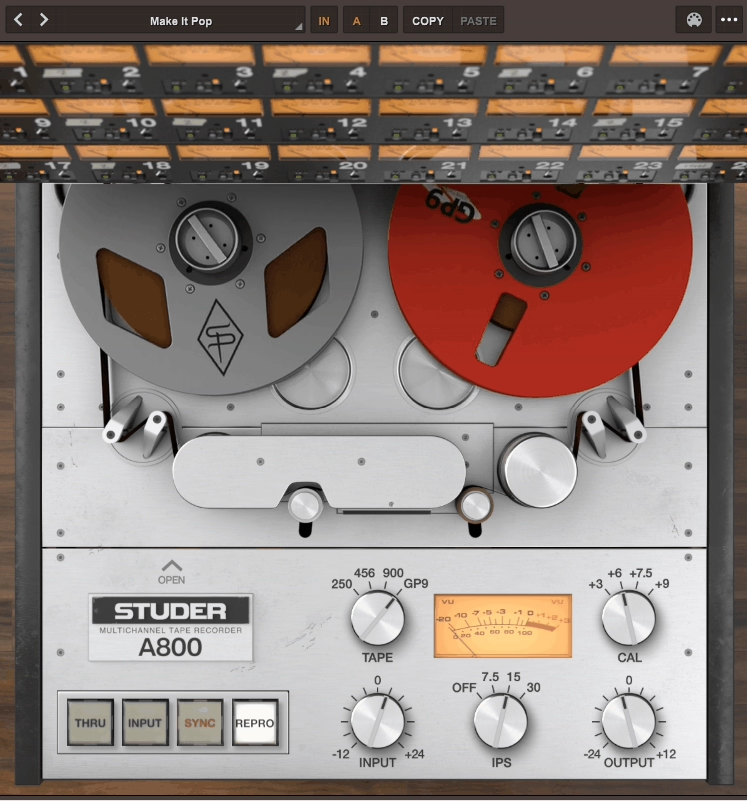
Running guitar through tape is one of the oldest tricks in the studio playbook, and the Studer A800 plugin (available from Universal Audio and other platforms) models one of the most respected multitrack tape machines in recording history. The processing adds tape saturation, subtle compression, high frequency smoothing, and low end warmth that collectively make a guitar recording sound more finished, more cohesive, and more “expensive” without any obvious processing artifacts.
I put the Studer A800 at the end of the guitar processing chain, after EQ, compression, and effects, as a final tone shaping stage. The tape emulation softens any remaining harshness in the upper frequencies, adds subtle compression that glues the processed signal together, and contributes low end warmth that makes the guitar sit more comfortably in the mix. The effect is subtle at conservative settings, but A/B comparisons reveal that the tape processing makes a meaningful difference in how polished and professional the guitar track sounds.
- Tape Saturation
The tape saturation adds warm, musical harmonic content to the guitar signal that increases as you drive the input harder. At low levels, the saturation adds subtle warmth and fullness. At higher levels, it produces audible compression and harmonic richness that thickens the guitar without the harshness of electronic distortion.
- Tape Formula
Multiple tape type options (including different tape formulations and speeds) produce different saturation characters and frequency responses. Higher tape speeds (30 ips) produce a cleaner, more extended sound. Lower speeds (15 ips) produce more saturation and a characteristic bass bump that adds weight to guitar.
- HF Smoothing
The natural high frequency roll off of tape gently tames the harsh upper frequencies that digital recording can accentuate, particularly on distorted guitar. The smoothing is gradual and musical, producing results that sound like the guitar was simply recorded better rather than like a filter was applied.
- Wow and Flutter
Subtle pitch modulation from the tape transport mechanism adds organic movement to the guitar signal. At low settings, the modulation is inaudible as a distinct effect but contributes a sense of warmth and liveliness that perfectly stable digital recordings lack. On clean guitar and acoustic guitar, the subtle movement is particularly effective.
- Crosstalk
The modeled inter channel crosstalk between tape tracks adds a subtle interaction between left and right channels that contributes to the cohesive, glued quality that tape recordings are known for. The crosstalk is extremely subtle but contributes to the overall sense that the guitar recording belongs in a professional production.
Available from Universal Audio in VST, VST3, AU, and AAX formats (native UADx version available).
Get the Free Plugin Starter Kit
The genuinely useful free DAWs and plugins worth installing. No filler. Straight to your inbox.

Hello, I’m Viliam, I started this audio plugin focused blog to keep you updated on the latest trends, news and everything plugin related. I’ll put the most emphasis on the topics covering best VST, AU and AAX plugins. If you find some great plugin suggestions for us to include on our site, feel free to let me know, so I can take a look!