
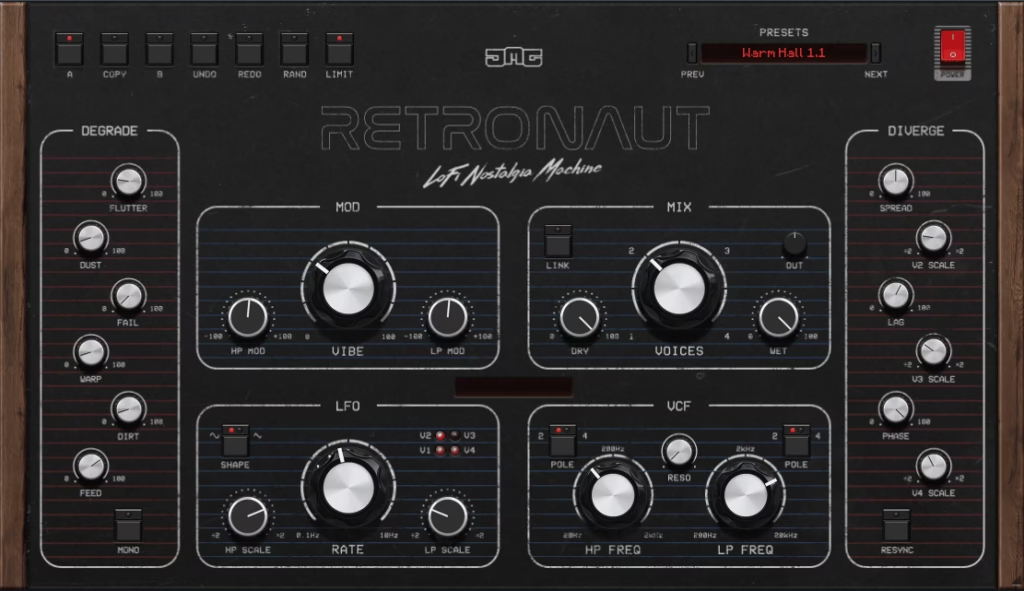
Synthwave lives and dies on tone. The genre is built on a very specific palette of sounds: lush polysynth pads, punchy analog bass lines, bright arpeggiated sequences, gated reverb drums, and that warm, slightly degraded quality that makes everything sound like it was recorded to tape in 1985. Getting these sounds right in a modern DAW requires either the right plugins or a lot of processing to make generic tools sound vintage. Having the right plugins is easier.
I’ve been producing synthwave and retro electronic music for a while, and the biggest lesson I’ve learned is that the synth itself matters less than you’d think. What matters more is the character.
A pristine, clean digital synth can technically produce the same frequencies as a vintage analog emulation, but it won’t have the warmth, the slight detuning, the filter resonance behavior, or the harmonic richness that gives synthwave its identity. That’s why this list includes both dedicated synth emulations and effects plugins that add the vintage coloration your sounds need.
Here are thirteen plugins covering vintage synth emulations, retro effects, and dedicated synthwave production tools. Some recreate specific classic hardware. Others add the analog warmth and lo fi character that ties the aesthetic together.
1. Roland Jupiter-8 (Cloud)
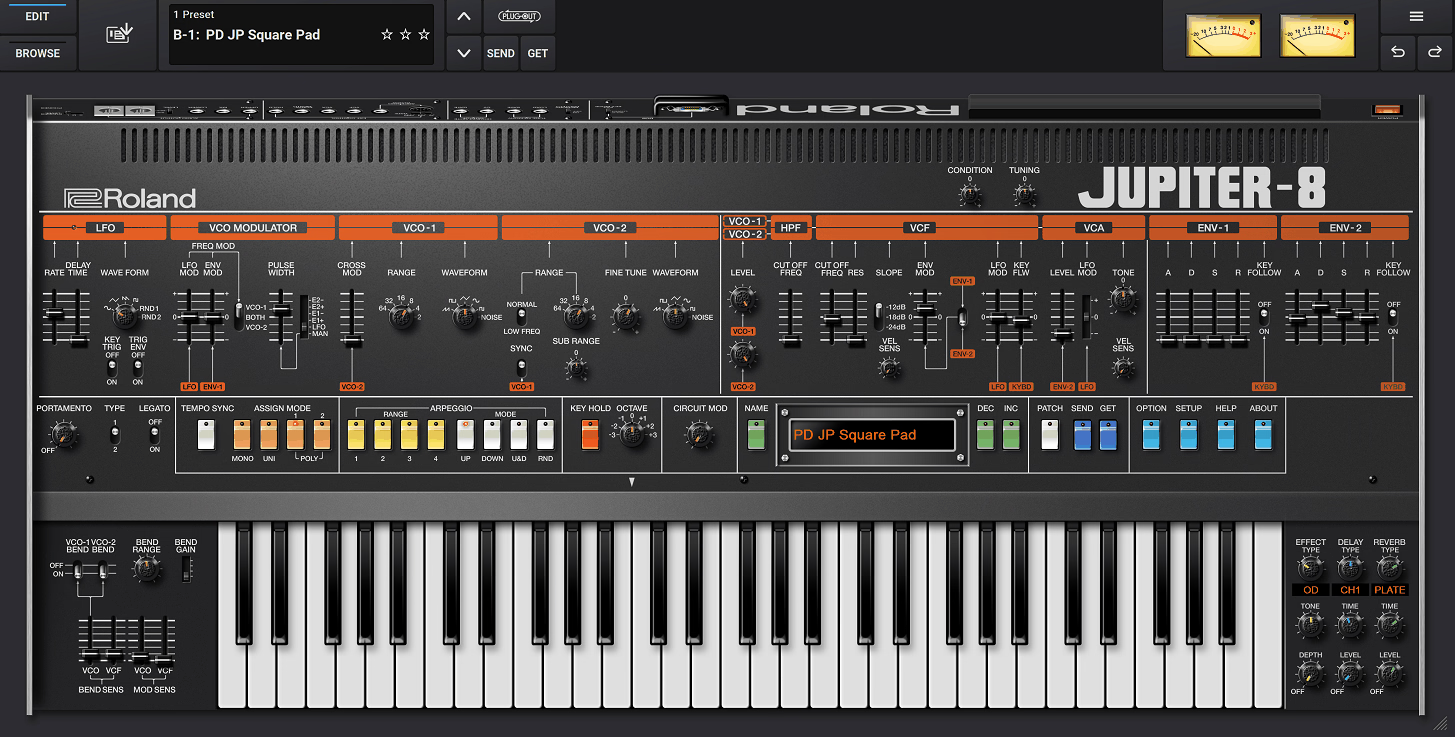
The Jupiter-8 is one of the most important synthesizers in the history of electronic music, and its thick, shimmering polysynth sound is the foundation of countless synthwave productions. Roland’s own plugin emulation through Roland Cloud captures the specific character of the JP-8 with the authority of the company that actually designed the original hardware. The voice architecture, the filter behavior, the cross modulation, and the legendary chorus effect are all modeled from the original circuits.
I use the Roland Jupiter-8 plugin primarily for pads and brass sounds, which is where the original hardware earned its reputation. The unison mode with all eight voices stacked produces one of the fattest lead sounds in synthesis history, and the chorus gives pads a width and shimmer that instantly places your production in synthwave territory. It’s not the cheapest option, and the Roland Cloud subscription model isn’t everyone’s preference, but the sound quality justifies it for serious synthwave work.
- Original Chorus
The Jupiter-8’s built in chorus is one of the most copied effects in synth history, and Roland’s modeling captures its specific character accurately. The chorus adds a wide, shimmering stereo quality to pads and strings that is immediately recognizable as “the Jupiter sound.” This single effect is responsible for more synthwave atmosphere than probably any other processing tool I can think of.
- Cross Modulation
The oscillator cross modulation creates metallic, clangorous tones that add an aggressive edge to leads and bass patches. This is a feature of the original hardware that many cheaper emulations skip or simplify, and its presence here gives you access to the full range of sounds the JP-8 can produce, not just the polite pad territory.
- Voice Architecture
The faithful reproduction of the dual oscillator per voice architecture with the original’s specific filter and envelope behavior means patches respond to playing dynamics the way the real hardware does. The filter’s particular resonance character and the envelope curves are what give the Jupiter-8 its distinctive feel under your fingers.
- Unison Mode
Eight voice unison stacking produces the massive, detuned lead and bass sounds that have become a synthwave staple. The specific detuning spread of the Jupiter-8’s unison mode has a character that generic unison in other synths doesn’t quite replicate. You can hear this exact sound on hundreds of synthwave records.
Available through Roland Cloud in VST, AU, and AAX formats.
Get the Free Plugin Starter Kit
The genuinely useful free DAWs and plugins worth installing. No filler. Straight to your inbox.
2. Moog Minimoog (Model D App/Plugin)
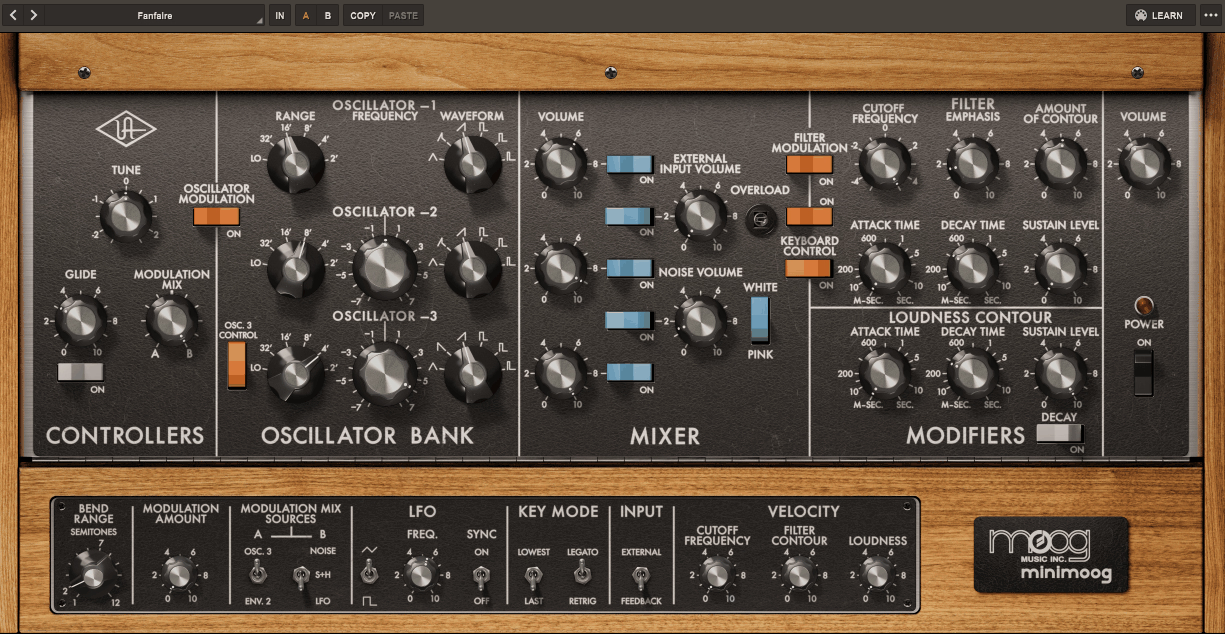
No synth has shaped the sound of bass and lead tones more than the Minimoog, and its fat, warm, harmonically rich output is essential for synthwave bass lines and screaming solo leads. Moog’s own Minimoog Model D plugin captures the three oscillator, single filter design that defined monophonic synthesis, with the specific ladder filter behavior that gives the Minimoog its unmistakable low end weight.
Moog Minimoog occupies a specific role in my synthwave productions: bass and mono leads. It doesn’t do pads (it’s monophonic), it doesn’t do arpeggiated sequences particularly well, and it’s not the synth for bright, shimmery textures. But for thick, warm bass that sits in the low end like a foundation and for singing lead lines that cut through a mix with authority, nothing else sounds quite like it. Knowing its limitations helps you use it where it actually shines.
- Ladder Filter
The 24 dB/oct Moog ladder filter is the most famous filter design in synthesis, and this emulation captures its specific resonance behavior, including the way it reduces bass content as resonance increases. The filter’s character is what gives the Minimoog its distinctive midrange honk and warm, rounded low end. For synthwave bass, this filter is the ingredient that separates a good bass patch from a great one.
- Three Oscillators
Three independently tunable oscillators with multiple waveform options provide the raw harmonic material that the filter then shapes. Detuning the oscillators slightly against each other creates the thick, chorused quality that makes Minimoog basses sound massive. The third oscillator can also function as a modulation source for vibrato and filter modulation, which opens up expressive performance options.
- Overload Behavior
The modeling captures the specific distortion characteristics of the original’s mixer and filter stages when driven hard. Pushing the oscillator levels into the red creates a warm, musical saturation that adds aggression and presence to bass and lead sounds. This overload behavior is a significant part of the Minimoog’s character that clean digital synths completely lack.
- Glide Control
The portamento/glide control adds smooth pitch slides between notes that are essential for expressive Minimoog bass lines and lead performances. The glide time and behavior are modeled on the original circuit, producing the specific slide character that has defined Moog bass for decades. Automating glide on and off within a performance adds the kind of expression that makes programmed parts sound played.
- Modulation Routing
The modulation bus provides vibrato, filter modulation, and oscillator modulation options that follow the original’s architecture. The mod wheel’s effect on filter cutoff is one of the most expressive performance controls in synthesis, and it’s central to how the Minimoog is played in both live and studio contexts. For synthwave leads, sweeping the filter with the mod wheel while playing is what gives solos their emotional character.
- Noise Generator
A white and pink noise generator feeds through the filter for creating wind effects, percussive transients, and adding breath to lead sounds. Mixing a small amount of filtered noise with an oscillator adds a subtle air and presence that gives mono leads a more organic, breathing quality that sits better in a mix.
Available from Moog in VST, AU, AAX, and as an iOS app.
3. Native Instruments Analog Dreams

Rather than emulating a specific hardware synth, Analog Dreams is a Kontakt library built from multi sampled recordings of classic analog synthesizers that have been processed, layered, and organized into a playable instrument. The approach is fundamentally different from modeling: instead of simulating circuits, it captures the actual output of real hardware, which means you’re hearing real analog character rather than a digital approximation of it.
I find Analog Dreams useful as a quick access tool for synthwave textures when I don’t want to spend time programming a synth from scratch. The presets are organized by character (pads, keys, bass, leads, sequences) and they all have that warm, slightly imperfect quality that comes from being sourced from real analog hardware. It’s not a deep sound design tool and I wouldn’t call it a replacement for a proper synth, but for quickly laying down convincing analog textures during the arrangement phase, it does the job reliably.
- Sampled Hardware
The sounds are captured from actual analog synthesizers rather than digitally modeled, which means the warmth, noise, and harmonic character of the original hardware is baked into every sample. The analog imperfections are authentic rather than simulated, and you can hear the difference compared to modeled alternatives, especially in the high frequency behavior and the subtle noise floor.
- Dual Layer Engine
Two independent layers can be blended and processed, with each layer drawing from different source recordings. The interaction between layers creates complex, evolving textures that shift between different analog characters as you adjust the blend. I find this layering approach produces richer results than either layer on its own.
- Macro Performance
Simplified macro controls provide quick access to the most impactful parameters, letting you shape sounds without diving into the full Kontakt interface. The macros are mapped to produce musically useful results across the factory patches, and you can get significant tonal variation from just the macro knobs without touching anything else.
Available as a Kontakt library from Native Instruments.
4. United Plugins Retronaut
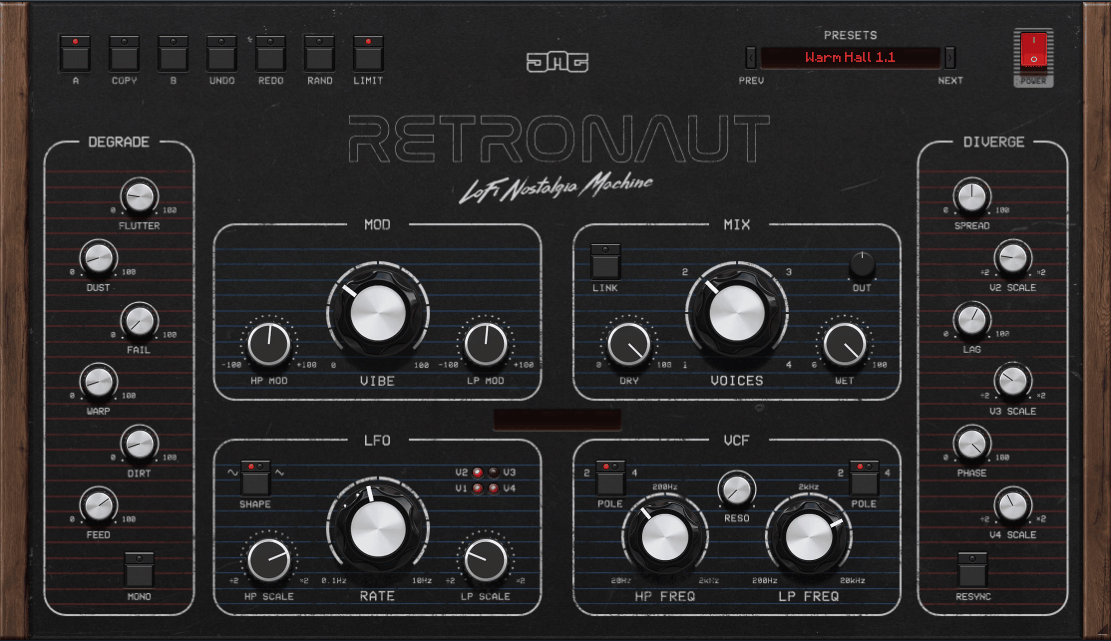
Most vintage effect plugins focus on one specific aspect of retro character, a tape simulator here, a vinyl crackle generator there. United Plugins Retronaut takes a broader approach, combining multiple aging and degradation effects into a single interface designed to make modern, pristine recordings sound like they were produced on vintage equipment from the 1970s and 1980s. It covers tape saturation, wow and flutter, vinyl noise, tube warmth, and lo fi degradation all in one plugin.
I use Retronaut as a master bus effect to give entire synthwave mixes a cohesive vintage character. Rather than processing individual tracks with separate tape, noise, and saturation plugins, Retronaut applies a unified aging treatment that affects everything consistently. The controls are intuitive enough that you can dial in the amount of vintage character by feel rather than having to understand the technical parameters of each degradation type individually.
- Multi Stage Aging
Retronaut combines tape saturation, analog noise, wow and flutter, frequency roll off, and harmonic coloring in a single signal path. Each stage can be adjusted independently, but they’re designed to work together as a cohesive vintage treatment rather than separate effects bolted together. The way the stages interact produces results that are more convincing than stacking individual effect plugins.
- Decade Selector
A time period control adjusts the overall character to match different eras of recording technology. Settings range from relatively clean early digital to heavily degraded vintage analog, and the various aging parameters shift together when you adjust the era, maintaining a cohesive character throughout the range. I typically set this somewhere around 1983 for synthwave work.
- Vinyl Simulation
The vinyl modeling adds surface noise, crackle, and the specific frequency response of vinyl playback. The noise character varies naturally rather than looping, which prevents the repetitive quality that cheaper vinyl simulators produce. The crackle density and volume are independently adjustable, letting you dial in anything from subtle warmth to obvious record player character.
- Tube Coloring
A tube saturation stage adds the harmonic warmth of valve amplification, which is a core part of the pre digital recording chain that synthwave draws its aesthetic from. The saturation responds to input level dynamically, adding more color to louder passages while remaining subtle on quieter material. This dynamic response makes the saturation feel natural rather than static.
Available from United Plugins in VST, VST3, AU, and AAX formats.
5. TAL-U-No-62
The Roland Juno-60 is arguably the most important synth in synthwave production, and TAL-U-No-62 is widely regarded as one of the most accurate software recreations of it. The Juno’s appeal for synthwave is its simplicity and its sound: a single DCO per voice, a resonant filter, and the famous Juno chorus that gives pads and strings their characteristic width and warmth. It’s a synth that’s almost impossible to get a bad sound out of, which is a big part of its enduring popularity.
What I appreciate about TAL-U-No-62 is that it captures the specific limitations of the Juno that are actually part of its charm. The single oscillator per voice means the sound is inherently simpler than a Jupiter or Prophet, but that simplicity is what makes Juno patches sit so well in a mix. They fill space without dominating it, which is exactly what you want from a pad or string layer in a synthwave arrangement where the leads and bass need to stay in front.
- Juno Chorus
The Chorus I and II emulations capture the specific BBD based chorus circuit of the Juno-60 that is single handedly responsible for more synthwave pad sounds than any other effect in existence. The chorus adds a wide, warm stereo quality that transforms simple waveforms into lush, animated textures. I use Chorus I for subtle width and Chorus II for the more dramatic, sweeping movement that’s become a synthwave signature.
- DCO Character
The digitally controlled oscillator modeling captures the specific waveform character of the Juno’s DCO, including the slight inconsistencies and noise that distinguish it from a mathematically perfect digital waveform. The DCO sounds cleaner than a VCO but retains enough analog character to sound warm rather than sterile. The pulse width modulation on the pulse wave is particularly useful for creating the classic Juno pad movement.
- Filter Response
The resonant low pass filter is modeled with attention to the Juno-60’s specific filter curve, including how the resonance interacts with the signal at different cutoff settings. The filter has a sweet, musical quality that makes it genuinely difficult to get a bad sound out of this synth. Even aggressive filter sweeps sound smooth and musical rather than harsh, which is why the Juno became such a staple.
Available from TAL Software in VST, VST3, AU, and AAX formats.
6. KBplugs Tonus 2813 (Free)
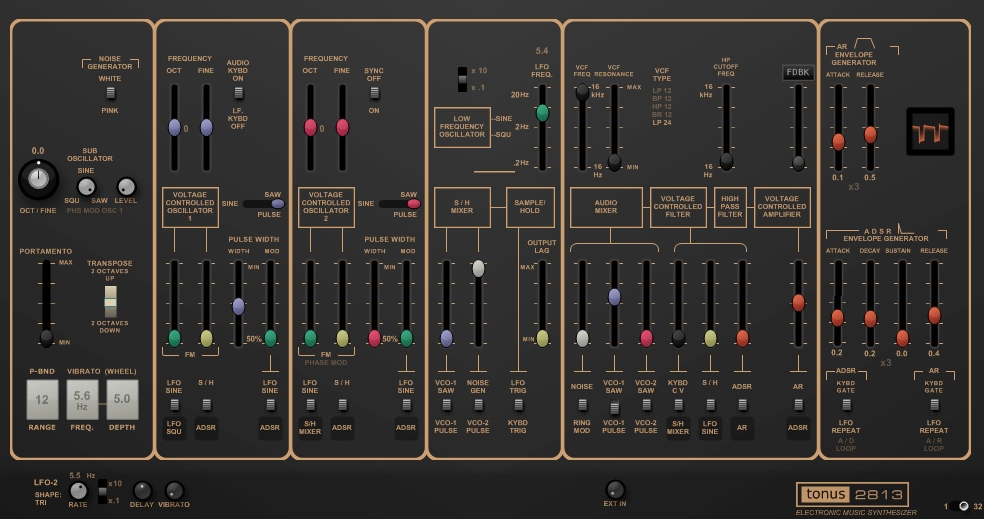
For producers looking for synthwave sounds on a zero budget, KBplugs Tonus 2813 is a free plugin inspired by the ARP Odyssey, one of the classic duophonic synthesizers from the 1970s. The developer is upfront that this is inspired by rather than an exact emulation of the original hardware, but the sound has a raw, analog quality that works surprisingly well for synthwave bass lines and lead sounds when you take the time to program it.
I should be honest about the limitations: Tonus 2813 is a Windows 32 bit only plugin, which means you’ll need a bridge like jBridge to run it in a 64 bit DAW. The interface is basic, there are no factory presets (just like the real ARP Odyssey shipped without presets), and the feature set is minimal compared to premium alternatives. But the sound has character, it’s completely free, and if you’re willing to program your own patches from scratch, it can produce some genuinely useful synthwave tones that have a roughness and personality that polished commercial plugins sometimes lack.
- Dual Oscillator
Two independently tunable oscillators with multiple waveform options provide the raw sound generation, following the ARP Odyssey’s duophonic design. The oscillators can be mixed, synced, and ring modulated for tonal variety. The ring modulation in particular produces the metallic, sci fi tones that work well for synthwave effects and transition sounds.
- Filter Section
The resonant filter captures the aggressive, singing quality of the Odyssey’s filter design. The filter character is brasher and more forward than a Moog or Roland filter, which gives leads and basses a cutting presence that helps them stand out in a mix. The self oscillation behavior is also useful for creating sweeping effects and percussive tones.
- Raw Character
The plugin’s analog modeling has a raw, unpolished quality that adds grit and character to patches. This roughness actually works in synthwave’s favor, where some imperfection and warmth is desirable rather than the pristine cleanliness of modern digital synthesis. The slight unpredictability in the sound is part of what makes it interesting.
- Modulation Options
The LFO and modulation routing follow the Odyssey’s architecture, providing vibrato, filter sweeps, and pulse width modulation. The sample and hold modulation option is particularly useful for creating the random, bubbling sequences associated with 1970s electronic music and early synthwave productions.
- Zero Cost
Completely free download with no registration or account required. The price point makes it accessible to anyone starting out, though the 32 bit limitation and basic interface mean it’s best suited to producers who are comfortable with manual patch programming and don’t mind using a bridge for 64 bit compatibility.
Available as a free download in VST format (Windows 32 bit only).
7. Waves Retro Fi
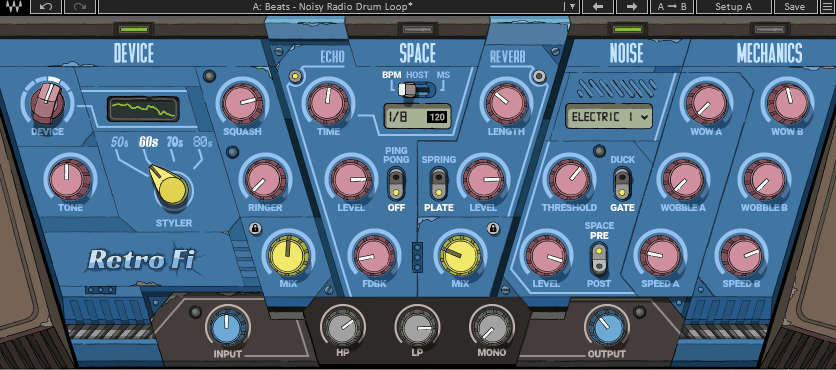
Waves Retro Fi is a dedicated lo fi and vintage effects processor that adds tape, vinyl, and analog degradation to any audio source. Where Retronaut takes a broader approach to vintage aging across an entire mix, Retro Fi focuses specifically on the gritty, degraded quality of old consumer playback formats. It’s designed to make things sound old, worn, and characterfully imperfect in a way that serves the synthwave aesthetic.
I use Retro Fi on individual tracks rather than the master bus, adding different amounts and types of degradation to different elements. A little vinyl crackle on a synth pad, some tape wobble on a chord stab, bit reduction on a lead. This layered approach to degradation creates a more convincing vintage aesthetic than applying a single effect uniformly across the entire mix, and it gives you the control to decide which elements sound more worn than others.
- Multi Format Degradation
Retro Fi combines tape, vinyl, VHS, and bit reduction effects in a single interface. Each format has its own characteristic distortion, noise, and frequency response that you can blend to create hybrid degradation effects. The VHS mode in particular produces a specific kind of warped, unstable pitch quality that immediately evokes the 1980s home video aesthetic.
- Wobble Control
A pitch instability control adds the wow and flutter of imperfect playback mechanisms, from subtle tape drift to dramatic VHS warble. The wobble rate and depth are adjustable for different levels of instability, and the character changes depending on which format mode you’re using. I find the slower wobble rates most useful for synthwave, where you want gentle pitch movement rather than obvious warping.
- Space Section
A built in reverb and ambience section adds the roomy, diffuse quality of vintage recordings played back in physical spaces. The reverb character is intentionally colored and lo fi rather than pristine, which complements the degradation effects by adding spatial warmth alongside the tonal aging. Combining the space section with the tape mode produces a convincing “playing from another room” effect.
Available from Waves in VST, VST3, AU, and AAX formats.
8. UJAM Beatmaker: VICE
Programming convincing 1980s drum patterns requires the right sounds and the right patterns, and UJAM Beatmaker: VICE provides both in a single instrument. It’s a dedicated 80s drum machine and beat maker loaded with drum sounds sampled from vintage drum machines and processed to capture the gated reverb, compressed character of 1980s pop and synth pop production. If you’ve struggled to make modern drum samples sound authentically retro, VICE solves that problem.
The beat patterns in VICE are what make it genuinely practical for production. Instead of programming 80s drum patterns from scratch (which requires understanding the specific rhythmic conventions of the era, the particular hi hat patterns, the snare placements, the fill styles), VICE provides pre built patterns that capture the feel of different 1980s styles. You trigger patterns from your keyboard and the plugin handles the performance, which is useful for quickly sketching arrangements even if you plan to replace the drums with more customized programming later.
- 80s Drum Sounds
The sample library covers the classic 80s drum palette: LinnDrum style kicks and snares, gated reverb toms, electronic hi hats, claps, and the specific processed quality that defined the decade’s drum production. The sounds are ready to use without additional processing, which saves the time you’d otherwise spend trying to make modern samples sound vintage through layering effects.
- Pattern Library
Pre programmed beat patterns capture the rhythmic conventions of various 1980s styles, from synth pop to new wave to Italo disco. Patterns adapt to your arrangement’s tempo and can be triggered and switched from your keyboard. The patterns cover intros, verses, choruses, fills, and endings, giving you enough structural variety to build complete drum arrangements.
- Mix Controls
Individual level and processing controls for each drum element let you balance the kit to fit your track. The built in effects are designed to enhance the vintage character rather than modernize it, with the kind of compression and reverb that suits the 1980s aesthetic. You can adjust the overall wetness and room character to fit different synthwave sub styles.
- Style Variations
Multiple fills, transitions, and variations for each pattern provide enough rhythmic diversity to build complete drum arrangements without the patterns becoming repetitive over a full song length. The variations are musically appropriate to the style, meaning a synth pop fill sounds like a synth pop fill rather than a generic drum roll.
Available from UJAM in VST, VST3, AU, and AAX formats.
9. Softube Model 72 Synthesizer System
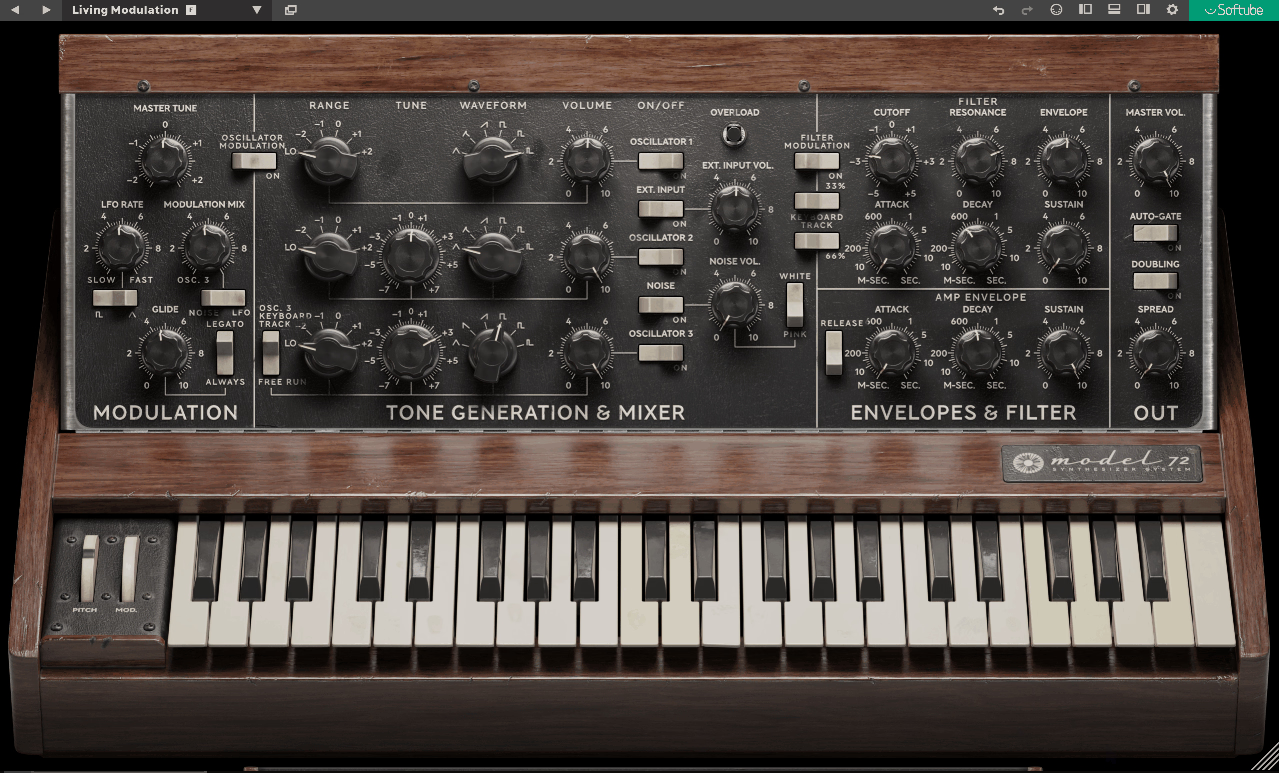
Softube Model 72 is a virtual synthesizer modeled after the EMS Synthi, the quirky British portable synthesizer known for its distinctive pin matrix routing and otherworldly sound. While not a conventional synthwave tool by any means, the Model 72 excels at producing the weird atmospheric effects, filtered noise textures, and experimental sounds that add depth and interest to synthwave productions beyond the standard pad/bass/lead formula.
I wouldn’t recommend Model 72 as your primary synthwave synth. It’s too idiosyncratic for bread and butter patches, and the pin matrix interface takes time to understand if you’re used to conventional synth layouts. But as a secondary texture generator for atmospheric effects, filtered sweeps, and experimental transitions, it adds a dimension that more conventional synths genuinely can’t reach. The spring reverb alone is worth having for its characterful, metallic ambience that sounds different from every other reverb plugin I own.
- Pin Matrix Routing
The signature pin matrix lets you connect any source to any destination by placing virtual pins at grid intersections, mirroring the original EMS Synthi’s unique routing system. This produces unexpected signal routings and feedback paths that create sounds you wouldn’t arrive at through conventional synthesis programming. The experimentation is the point, and the matrix rewards curiosity with genuinely surprising results.
- Ring Modulation
A built in ring modulator produces metallic, inharmonic tones that work well for special effects, atmospheric textures, and the weird background sounds that give synthwave productions their sci fi character. The ring modulator interacts with the filter and other processing in complex ways that produce different results depending on the signal routing.
- Spring Reverb
The modeled spring reverb adds the characterful, resonant ambience of the original hardware’s spring tank. The spring reverb has a specific boingy, metallic quality that adds vintage character to any sound you process through it. For synthwave producers, this spring reverb provides a distinctly retro spatial quality that algorithmic reverbs don’t capture.
- Filter Character
The voltage controlled filter has a distinctive, aggressive character that’s different from Moog or Roland filters. It produces howling self oscillation and sharp, resonant sweeps that cut through a mix dramatically. The filter is one of the most characterful aspects of the EMS design, and Softube captures its quirky behavior well.
- Joystick Control
A virtual joystick provides two axis real time control over any pair of parameters, making the Model 72 a responsive performance instrument that encourages real time sound manipulation. Mapping the joystick to filter cutoff and resonance simultaneously produces the kind of expressive, living filter sweeps that make synthwave transitions feel dynamic rather than automated.
Available from Softube in VST, VST3, AU, and AAX formats.
10. Arturia Jup-8 V
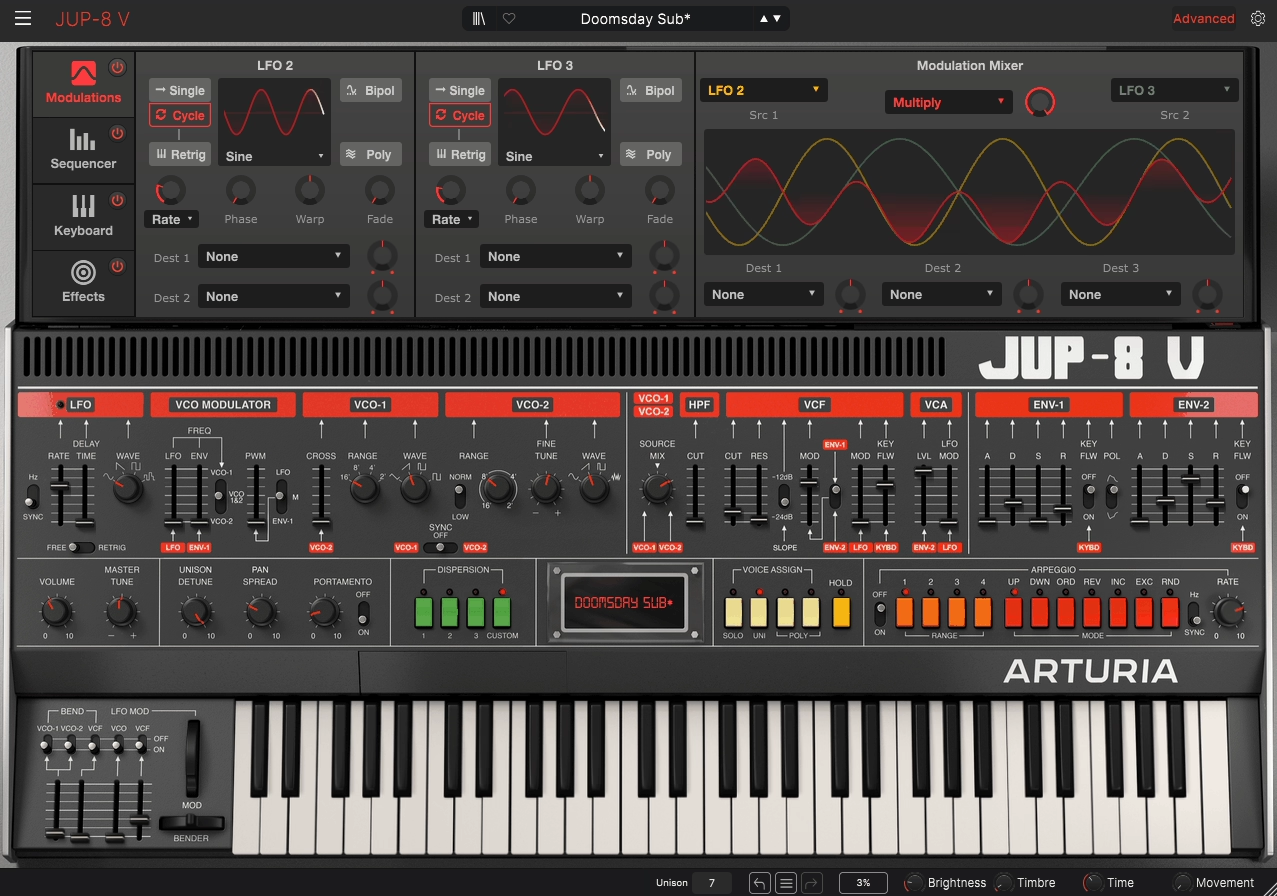
While Roland’s own Jupiter-8 emulation is the definitive version, Arturia Jup-8 V provides an alternative take that many synthwave producers prefer for its slightly different character and the additional features Arturia has added beyond the original hardware specification. It’s part of the V Collection, which means if you own the collection for other instruments, you already have access to this without an additional purchase.
What I find useful about the Arturia Jup-8 V compared to Roland’s version is the extended modulation options and effects that Arturia layers on top of the original architecture. The core Jupiter-8 sound is recognizably there, but you also get modern modulation routing, additional filter modes, and a more comprehensive effects section. For producers who want the Jupiter foundation with more sound design flexibility than the original hardware allowed, Arturia’s version delivers that extra headroom.
- Extended Modulation
Arturia adds modulation capabilities beyond the original hardware, including additional LFOs, assignable modulation sources, and more flexible routing options. This lets you create evolving, animated patches that the original Jupiter-8’s limited modulation section couldn’t achieve. Slowly modulating the filter cutoff with a second LFO while the first handles vibrato produces the kind of complex movement that defines modern synthwave pad design.
- Galaxy and Arpeggiator
The built in arpeggiator and sequencer go well beyond the original’s basic arpeggio function, providing programmable patterns and sequences that create rhythmic, moving patches. For synthwave arpeggiated sequences, this is a valuable addition that lets you build classic 16th note patterns with accent control and swing directly within the synth rather than programming MIDI separately.
- Additional Filters
Beyond the original Jupiter-8 filter, Arturia adds alternative filter modes that expand the tonal range into territory the original hardware couldn’t explore. These additional options let you take the Jupiter voice architecture in directions the real JP-8 couldn’t go, which is useful when you want the basic Jupiter character but need a different filter response for a specific mix context.
- V Collection Value
If you own the Arturia V Collection, the Jup-8 V is included alongside dozens of other vintage emulations, making it part of a comprehensive analog synthesis toolkit rather than a standalone purchase. The V Collection also includes the Juno, Prophet, Oberheim, and many other classic synths that are all relevant to synthwave production, making the collection itself one of the best value propositions for the genre.
Available from Arturia in VST, VST3, AU, and AAX formats.
11. Arturia Delay TAPE-201
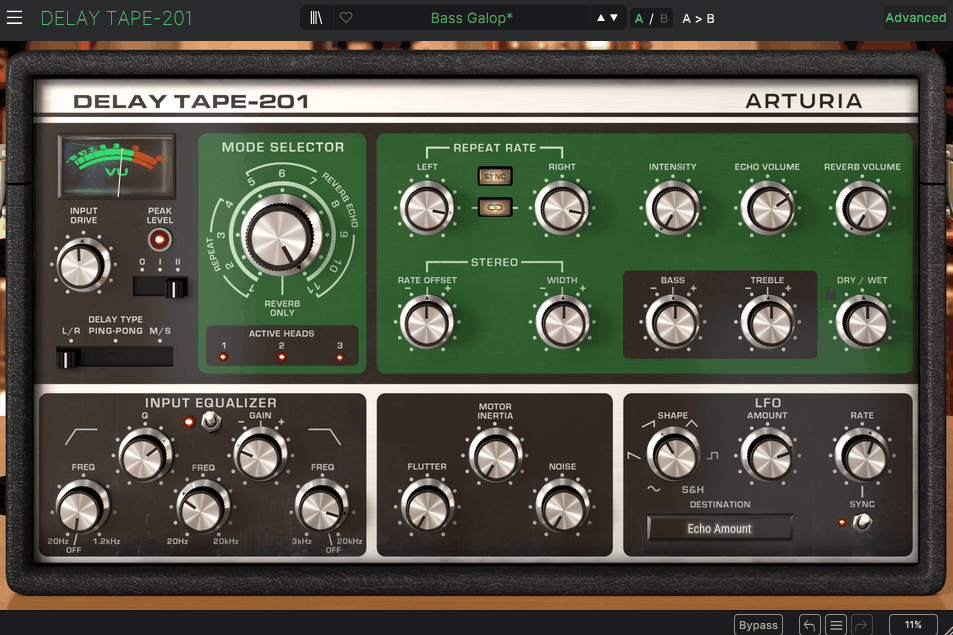
The Roland RE-201 Space Echo is one of the most iconic delay units in music history, and Arturia Delay TAPE-201 recreates its specific tape delay character with the wobble, saturation, and gradual degradation that make tape delay sound completely different from digital alternatives. For synthwave, tape delay isn’t just an effect. It’s part of the fundamental tone of the genre, adding warmth and movement to synth lines, vocals, and drums in a way that clean digital delay simply doesn’t replicate.
What makes Delay TAPE-201 useful beyond generic tape delay plugins is how it captures the mechanical behavior of the RE-201’s tape loop. The wow and flutter aren’t just random pitch modulation. They follow the specific patterns created by the tape transport mechanism, including the way the pitch instability changes as the virtual tape ages during playback. This mechanical authenticity makes the delay sound organic and alive rather than digitally simulated, which matters in a genre that’s built on the aesthetic of vintage equipment.
- Tape Transport Modeling
The plugin models the physical tape loop mechanism including motor speed variations, tape head alignment, and the specific wow and flutter patterns that the RE-201’s transport creates. The tape behavior changes naturally over time, mimicking how a real tape loop degrades during a performance. This progressive degradation adds realism that static wow and flutter settings can’t match.
- Multi Head Playback
Three independently selectable playback heads provide different delay time relationships, and the combination of active heads creates the specific rhythmic delay patterns that the RE-201 is famous for. Each head has its own character based on its physical position in the original hardware. Combining heads 1 and 3, for example, produces a dotted rhythm pattern that’s become a synthwave production staple.
- Spring Reverb
The built in spring reverb models the RE-201’s internal spring tank, adding the characterful, metallic ambience that many synthwave producers use as a primary reverb sound. The spring reverb interacts with the tape delay, meaning the reverb feeds into the delay and vice versa, creating complex, evolving ambient textures that neither effect produces alone.
- Tape Saturation
The tape saturation adds harmonic warmth that increases with input level and feedback amount. As the delay repeats feed back through the circuit, each repetition becomes progressively warmer and more colored, producing the natural, musical decay that tape delay is loved for. The saturation character is distinctly different from digital warmth plugins and adds authentic analog coloration to whatever you process.
- Intensity Control
The feedback intensity can be pushed to self oscillation, where the delay feeds back on itself to create swelling, pitch shifting ambient washes. This technique is used extensively in synthwave for transitions and atmospheric buildups. The self oscillation behavior is musical and controllable rather than immediately running away into chaos, which makes it practical for actual production use.
- Motor Speed
Variable tape speed control changes the delay time continuously rather than in discrete steps, creating pitch bending effects as the delay time changes. Automating the speed produces the warbling, pitch shifted delay tails that are a signature synthwave production technique. Sweeping the speed slowly during a breakdown creates the feeling of the entire mix being pulled through a tape machine.
Available from Arturia in VST, VST3, AU, and AAX formats.
12. RC-20 Retro Color
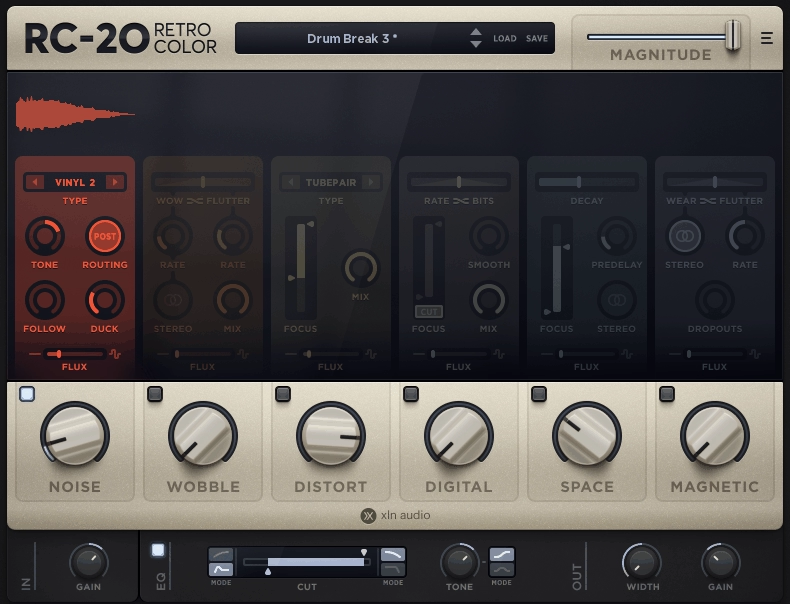
RC-20 Retro Color by XLN Audio has become one of the most widely used lo fi and vintage processing plugins in modern production, and for good reason. It provides six effects modules covering Noise, Wobble, Distortion, Digital degradation, Space, and Magnetic tape simulation, all organized in a signal chain that you can reorder and blend to taste. The modular approach means you have precise control over exactly which aspects of vintage character you’re adding.
I keep RC-20 on my synthwave template as a go to for adding vintage character to individual tracks. What makes it more useful than cheaper alternatives is the quality of each individual module. The tape saturation sounds good on its own. The noise generator produces convincing vinyl and tape hiss. The wobble adds musical pitch instability. Each module works well independently, and combining them produces layered vintage character that sounds natural rather than like a single effect stamped uniformly across the signal.
- Six Effect Modules
The Noise, Wobble, Distortion, Digital, Space, and Magnetic modules each handle a different aspect of vintage degradation. They can be independently engaged, reordered, and blended, giving you precise control over which types of character you’re adding and how much of each. The ability to reorder modules matters because distortion before reverb sounds completely different from distortion after reverb, and having that flexibility lets you craft specific vintage textures.
- Flux Control
The Flux parameter adds randomized variation to the degradation effects, preventing the processing from sounding static and repetitive over time. The random modulation changes the noise character, wobble rate, and saturation behavior continuously, producing a more organic, living quality that mimics the natural inconsistency of real vintage equipment. Without Flux, the effects can sound obviously digital after extended listening. With it, they breathe.
- Preset Diversity
The preset library covers a range of vintage aesthetics from subtle analog warmth to aggressive lo fi degradation. The presets are organized by intensity and character, making it fast to find a starting point that matches your production. I typically start with a preset that’s in the right ballpark and then adjust individual modules to fine tune the vintage character for each specific track.
Available from XLN Audio in VST, VST3, AU, and AAX formats.
13. DiscoDSP OB-Xd
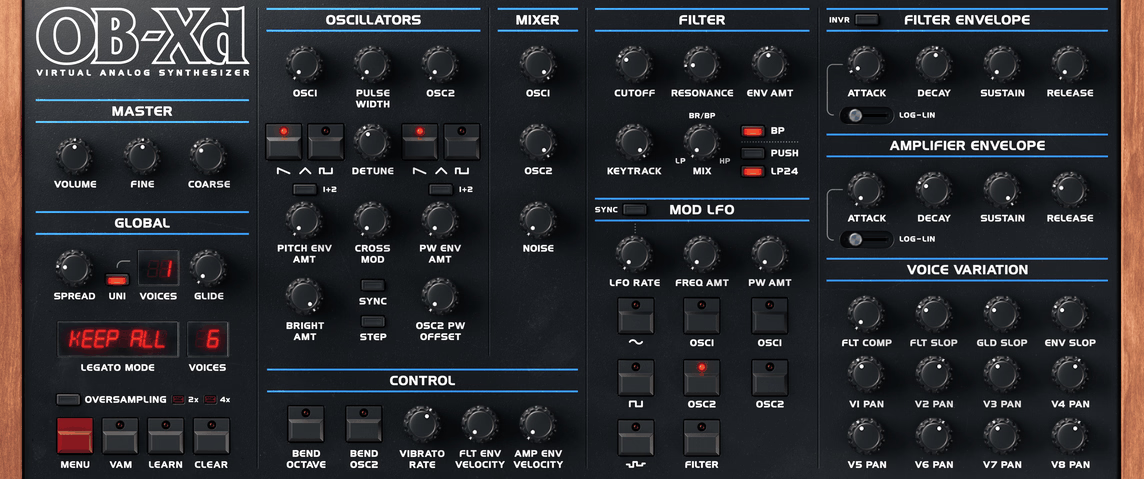
Rounding out the list, DiscoDSP OB-Xd is an emulation of the Oberheim OB-X, a polysynth revered for its thick, rich sound and straightforward interface. The OB-X occupies a different tonal space from the Juno and Jupiter, with a warmer, fatter midrange character and a distinctive filter that produces smooth, creamy pad sounds ideal for synthwave chord progressions and string layers.
I include OB-Xd partly because the Oberheim sound fills a gap that Roland and Moog emulations don’t cover. If your synthwave production sounds too bright and thin, the OB-Xd’s warm, thick character can balance things out. The morphable filter is a feature the original hardware didn’t have, letting you transition between different filter types smoothly.
- OB-X Sound
The emulation captures the thick, warm midrange character of the Oberheim OB-X, which has a rounder, fatter quality than Roland synths. The sound is particularly well suited to chord pads, string ensembles, and warm, sustained textures that form the harmonic bed of a synthwave arrangement. Where a Jupiter sounds bright and shimmery, the OB-Xd sounds dark and enveloping, which gives you a different tool for a different job.
- Morphable Filter
A morphable filter lets you transition smoothly between different filter types, which is a plugin exclusive feature not found on the original hardware. This adds tonal flexibility beyond what the OB-X could originally produce, letting you find in between filter characters that suit specific mix contexts. Morphing the filter type while a pad sustains creates subtle tonal evolution that keeps sustained chords interesting.
- Voice Variation
Per voice detuning and variation controls add the subtle differences between voices that make analog polysynths sound wide and alive. Each note triggers a slightly different version of the same patch, preventing the static, identical quality that digital synths can have. This variation is particularly noticeable on chords, where the slight differences between voices create a natural chorus like width without any effects processing.
Get the Free Plugin Starter Kit
The genuinely useful free DAWs and plugins worth installing. No filler. Straight to your inbox.

Hello, I’m Viliam, I started this audio plugin focused blog to keep you updated on the latest trends, news and everything plugin related. I’ll put the most emphasis on the topics covering best VST, AU and AAX plugins. If you find some great plugin suggestions for us to include on our site, feel free to let me know, so I can take a look!