
The original Pultec EQP-1A is one of those pieces of gear that engineers describe in almost mystical terms. Boost 3 dB at 10 kHz on a vocal and suddenly the track has “air” and “presence” in a way that a standard parametric EQ just doesn’t deliver.
The reason is partly the passive inductor based circuit design, partly the tube makeup gain stage, and partly the unique interaction between the boost and cut controls that creates filter shapes you can’t replicate with conventional EQ. It’s a specific flavor of equalization that has defined the sound of recorded music for over six decades.
The good news for those of us who can’t afford a $10,000 vintage unit (or even a $3,000 clone) is that there are some solid plugin emulations available. I should be honest though: no plugin perfectly replicates the experience of turning real knobs on a real Pultec through real transformers.
What the good ones do capture is the general tonal character, the musical filter shapes, and the way the circuit adds a subtle warmth and weight to everything you run through it. That’s enough to be genuinely useful in a mix.
Here are five Pultec style plugins that I’ve spent time with, each taking a slightly different approach to capturing that classic passive EQ sound.
1. Lindell Audio PEX-500
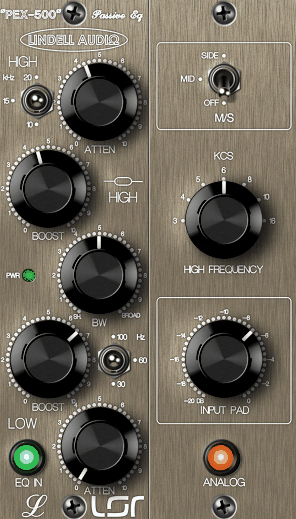
Lindell Audio PEX-500 started life as a physical 500 series hardware module before being emulated as a plugin through Plugin Alliance. That hardware heritage matters because it means the plugin was modeled from an actual circuit that Tobias Lindell designed and built, not from abstract measurements of someone else’s gear. The all discrete, transformer coupled design uses a 990 style amplifier rather than tubes, which gives it a slightly tighter, more present character compared to tube based Pultec designs.
I would use the PEX-500 when I want the Pultec filtering behavior but with a bit more snap and definition than the softer tube based options provide. It’s particularly good on drums and bass where you want the low end boost/cut trick but don’t want to lose transient clarity. The plugin version adds stereo operation and Mid/Side processing that the original hardware module doesn’t have, which extends its usefulness considerably.
- Boost and Cut Trick
Like any proper Pultec design, the PEX-500 lets you simultaneously boost and cut the same low frequency, which creates a resonant shelf peak followed by a dip just above it. This is the classic Pultec move for tightening kick drums and bass. The interaction between boost and cut on the PEX-500 follows the same curve behavior as the original circuit, producing results that feel natural and musical rather than forced.
- Mid/Side Matrix
The plugin adds a Mid/Side processing matrix not found on the original hardware, letting you apply different EQ settings to the center and side channels of a stereo signal. Boosting high frequencies on the sides while leaving the mids untouched adds width and sparkle without affecting the center vocal or kick. This is one of those plugin only features that genuinely extends what a Pultec style EQ can do.
- Analog Button
An Analog mode introduces the noise, hum, and transformer saturation characteristics of the physical hardware unit. This is subtle at normal settings but adds a layer of analog texture that helps the plugin sit in a mix the way hardware does. I leave it on for most applications unless I’m stacking multiple instances where the cumulative noise would become noticeable.
- Input Pad
A plugin exclusive Input Pad control lets you level match your input signal for accurate A/B comparisons between processed and bypassed states. This is more useful than it sounds, because the Pultec circuit adds gain when you boost, and our ears naturally prefer louder signals. The pad ensures you’re hearing the tonal change, not just the volume increase.
Available through Plugin Alliance in VST, VST3, AU, and AAX formats.
Get the Free Plugin Starter Kit
The genuinely useful free DAWs and plugins worth installing. No filler. Straight to your inbox.
2. Bettermaker EQ232D (Pultec Style EQ)
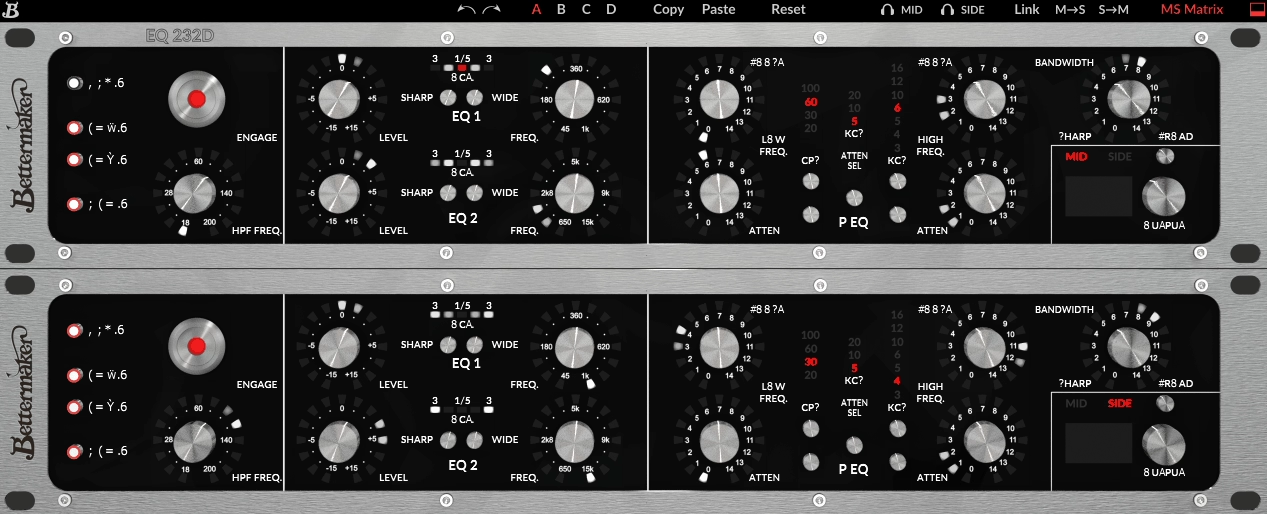
What distinguishes Bettermaker from most Pultec emulations is the build quality of the source hardware. This isn’t modeled from a budget clone or a vintage unit of uncertain provenance. It’s based on a modern, precision built mastering EQ that was designed to capture the Pultec character with contemporary manufacturing standards.
EQ232D is great when you want a Pultec flavor that feels a bit more refined and controlled than some of the grittier emulations on this list. The character is recognizably Pultec, smooth shelves, musical interactions between boost and cut, but with a clarity and low noise floor that reflects the modern mastering hardware it’s based on. For bus work and mastering applications where you want the tone but not the grit, it handles the balance well.
- Mastering Heritage
The plugin is modeled from Bettermaker’s mastering grade hardware EQ, which means the source circuit was built to higher tolerance standards than vintage Pultec units or budget clones. This translates to a Pultec character that’s smooth and refined rather than rough and characterful. The difference is subtle but noticeable on program material where transparency matters.
- Stepped Controls
Stepped, precision controls provide repeatable settings that you can recall exactly, unlike the continuous knobs on original Pultec designs where returning to a previous setting requires careful visual matching. For mastering work where you might need to revisit a session months later, stepped controls are a practical advantage.
- Clean Signal Path
The low noise floor and controlled harmonic profile reflect the modern mastering design philosophy of the source hardware. You get the Pultec filter shapes and musical character without the noise, hum, and unpredictable coloration that actual vintage units introduce. For pristine mastering applications, this cleanliness is a feature, not a limitation.
Available in VST, VST3, AU, and AAX formats.
3. Antelope Audio VEQ-1A
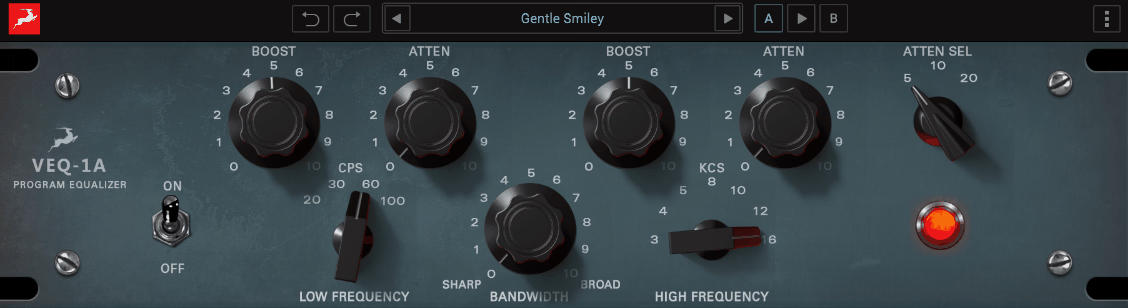
Where the Gyratec XIV expands the Pultec concept into new territory, Antelope Audio VEQ-1A goes in the opposite direction: it’s a straightforward emulation of the original Pultec EQP-1A with the standard two band layout, the familiar boost/attenuate controls, and the classic tube makeup gain stage. If you want the traditional Pultec experience without additions or modifications, this is Antelope’s take on it.
I use the VEQ-1A as my quick reach Pultec for the standard moves: boosting 100 Hz and cutting at the same frequency on a kick drum, adding a shelf at 10 kHz or 12 kHz on vocals for air, or gently warming up a guitar bus. It does the expected things in the expected way, and the Antelope modeling captures the feel of working with the original controls. It’s not trying to reinvent the Pultec. It’s trying to put one in your DAW, and it does a reasonable job of that.
- Classic Two Band Layout
The plugin faithfully reproduces the original EQP-1A control layout with low frequency boost and attenuate (sharing a frequency selector), high frequency boost with bandwidth control, and high frequency attenuate with a separate frequency selector. The interaction between these controls follows the same behavior as the original hardware, including the simultaneous boost/cut trick on the low band.
- Tube Output Stage
The modeled tube makeup gain adds the harmonic warmth and gentle saturation that’s characteristic of the original Pultec’s output amplifier. The saturation is subtle at normal gain settings but becomes more pronounced when you push the levels, which is useful when you want to add analog warmth beyond what the EQ curves alone provide.
- Low Latency Operation
The plugin runs with minimal latency, making it suitable for tracking and real time monitoring situations. When used with Antelope Audio interfaces, latency drops to near zero through the Synergy Core processing. Even as a native plugin in other DAWs, the processing delay is low enough to not cause monitoring issues.
- Affordable Entry Point
At $9.99 during sales (frequently discounted from the regular price), the VEQ-1A is one of the most affordable Pultec emulations available from a reputable developer. The low price makes it easy to try a Pultec style EQ without a significant investment, and the quality is respectable for the cost.
Available from Antelope Audio in VST3, AU, and AAX formats.
4. Waves PuigTec EQs
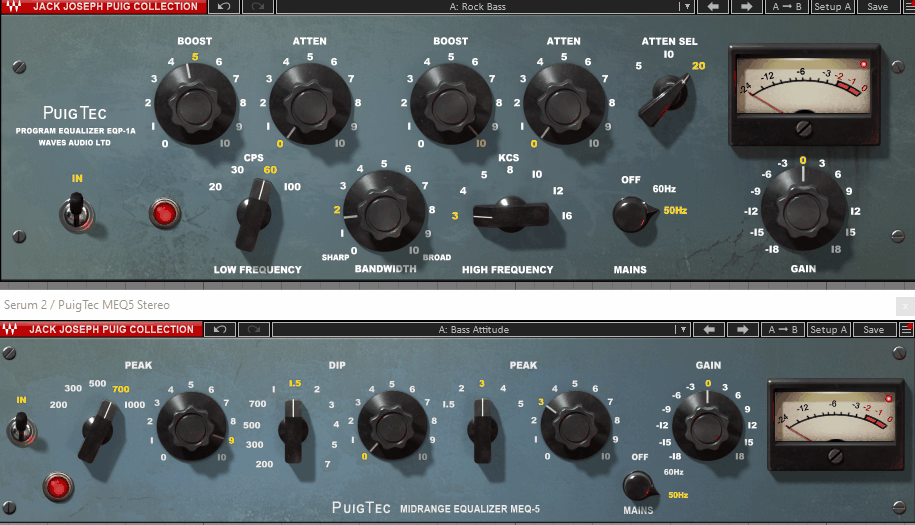
Waves PuigTec EQs are a pair of Pultec emulations, the EQP-1A and MEQ-5, modeled from the personal units owned by Grammy winning mixer Jack Joseph Puig. The significance of modeling from Puig’s specific units is that vintage Pultecs vary considerably from one unit to another due to component aging and manufacturing tolerances. The character of Puig’s particular EQPs is what defines the sound of this plugin, which means it has a specific personality rather than being a generic Pultec approximation.
I should note that the PuigTec EQs have been around for a while now and the modeling reflects Waves’ earlier technology rather than their most recent efforts. They’re still usable and they sound good, but if you A/B them against newer Pultec emulations you’ll notice they don’t capture quite as much of the low level harmonic detail and saturation behavior as more recent plugins do. That said, the included MEQ-5 midrange EQ is a valuable addition that many Pultec plugin bundles don’t offer.
- Two Plugin Bundle
You get both the EQP-1A (the standard low/high Pultec) and the MEQ-5 (a dedicated midrange Pultec EQ) in a single bundle. The MEQ-5 covers the 200 Hz to 7 kHz midrange with peak boost and two selectable dip frequencies, filling the gap that the EQP-1A doesn’t cover. Having both in combination gives you Pultec style control across the entire frequency spectrum.
- Puig’s Specific Units
The modeling is based on the specific hardware units from Jack Joseph Puig’s personal collection, capturing the particular component values, aging characteristics, and harmonic behavior of those individual EQs. Vintage Pultecs don’t all sound the same, and this specificity gives the PuigTec plugins a defined character that reflects decades of use on professional sessions.
- Midrange Control
The MEQ-5 plugin provides dedicated midrange EQ that the standard EQP-1A design lacks entirely. The ability to boost a peak in the mids while simultaneously dipping at two different midrange frequencies gives you tonal shaping options that are difficult to achieve with the EQP-1A alone. On vocals and guitars, the MEQ-5 is often more useful than the EQP-1A.
Available from Waves in VST, VST3, AU, and AAX formats.
5. IK Multimedia EQP-1A
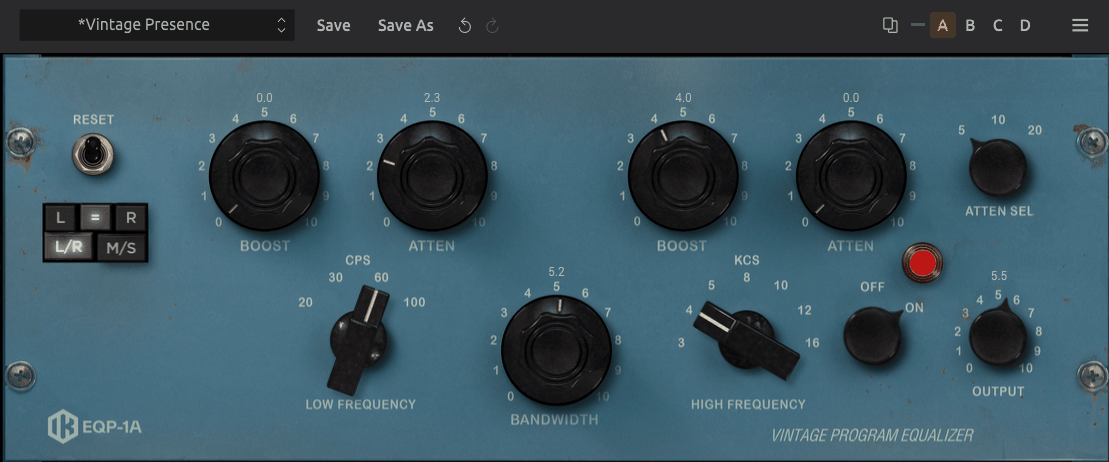
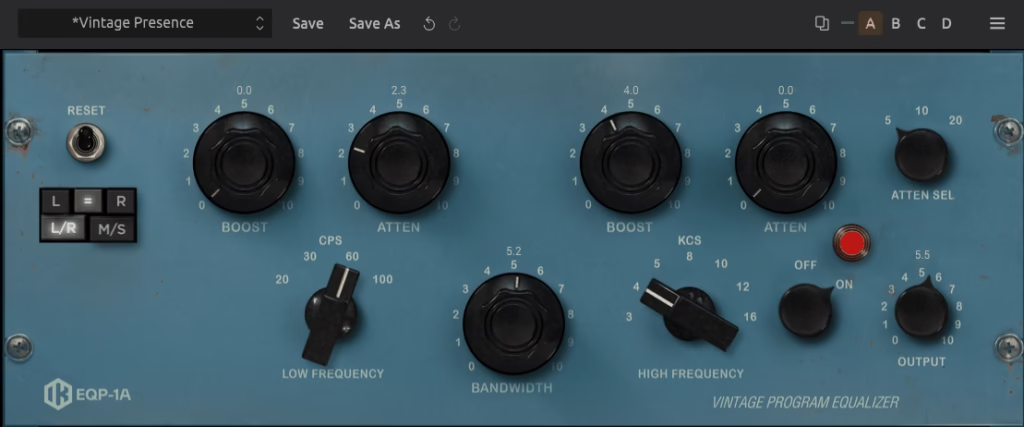
IK Multimedia EQP-1A is part of the T-RackS processing suite, and it takes a clean, functional approach to the Pultec emulation that prioritizes usability within a larger mixing and mastering workflow. If you already use T-RackS for mastering or you want a Pultec that integrates into IK’s modular processing chain, this is the natural choice. It handles the standard Pultec tasks competently without trying to be anything more than a reliable tool.
EQP-1A is not the most detailed or characterful Pultec emulation on this list. The Gyratec XIV has more features, the PEX-500 has more grit, and the Bettermaker is more refined. But the IK version works well enough for the typical Pultec moves, it integrates smoothly with the T-RackS ecosystem, and IK’s frequent sales make it available at very reasonable prices. It’s a practical, workmanlike Pultec that does what you expect.
- T-RackS Integration
The EQP-1A loads as a module within the T-RackS processing chain, where it can be combined with other IK compressors, EQs, and limiters in a single mastering strip. The integration means you can build a complete mastering chain within one interface, switching the Pultec in and out alongside other processors without juggling separate plugin windows.
- Standard Pultec Controls
All the classic EQP-1A controls are present: low frequency boost and attenuate with shared frequency selection, high frequency boost with bandwidth, and high frequency attenuate with independent frequency selection. The boost/cut interactions behave as expected, and the filter curves are musical and usable across the standard Pultec frequency points.
- Standalone and Plugin
The EQP-1A runs both as an individual plugin in any DAW and within the T-RackS standalone application for processing outside of a DAW session. The standalone mode is useful for mastering tasks where you don’t need a full DAW environment, or for quickly processing bounced files without opening a session.
- Frequent Sales
IK Multimedia runs aggressive promotional pricing throughout the year, often making the EQP-1A available at a fraction of its list price during group buy events, holiday sales, and bundle promotions. If you’re patient with timing, you can often get this plugin for well under $50, which makes it one of the most affordable options from an established developer.
- Oversampling
Built in oversampling reduces aliasing artifacts at high frequencies, ensuring the EQ curves remain clean and accurate at the top end of the spectrum. This is particularly relevant when boosting the high shelf aggressively, where cheaper emulations can introduce digital harshness that the original hardware wouldn’t produce.
Available from IK Multimedia in VST, VST3, AU, and AAX formats.
Get the Free Plugin Starter Kit
The genuinely useful free DAWs and plugins worth installing. No filler. Straight to your inbox.

Hello, I’m Viliam, I started this audio plugin focused blog to keep you updated on the latest trends, news and everything plugin related. I’ll put the most emphasis on the topics covering best VST, AU and AAX plugins. If you find some great plugin suggestions for us to include on our site, feel free to let me know, so I can take a look!